
AquaLibs presents AquaRank Discover the world’s leading aquascapers

Explore transparent rankings built from published results across the world’s leading aquascaping contests.

Where Should Each Aquarium Plant Go? A Placement Plan for Fish, Shrimp, and Snails

Where Should Each Aquarium Plant Go? A Placement Plan for Fish, Shrimp, and Snails

Aquarium plants do more than fill empty space. Their height, texture, color, and attachment point determine where fish swim, where shrimp graze, how easily snails move, and whether a small tank looks spacious or crowded. Instead of choosing plants on...
Malaysia at IAPLC 2026: Wood, Plant Texture and the Visual Role of Fish

Malaysia at IAPLC 2026: Wood, Plant Texture and the Visual Role of Fish

A bright gap between broad wood layers, a fine-leaved canopy and a conspicuous individual fish offer three different entrances to this Malaysian selection. The photographs invite attention to the space inhabited by fish as well as the hardscape aroun...
Brazil at IAPLC 2026: Rock Landscapes and Wood Beyond the Familiar Label

Brazil at IAPLC 2026: Rock Landscapes and Wood Beyond the Familiar Label

Enchanted Hills offers an immediately recognisable rock valley, with coloured planting and fish in bright water. Three other selected Brazilian photographs build their scenes around substantial wood. Seeing them together is a useful way to revisit a ...
Ember Tetra or Green Kubotai Rasbora? Choose the School That Fits Your Planted Aquarium

Ember Tetra or Green Kubotai Rasbora? Choose the School That Fits Your Planted Aquarium

Small schooling fish can look deceptively interchangeable at the aquarium store. In a planted aquarium, however, the right choice depends on more than color. Swimming style, confidence, adult size, feeding speed, water preferences, and the amount of ...
Fresh from the rankings

Latest works from the AquaRank Top 300

A rotating selection from the newest locally archived contest works created by the world’s Top 300 aquascapers.

Aquarium Library

  • All
  • Plant
  • Fish
  • Shrimp
  • Snail

Malaysia at IAPLC 2026: Wood, Plant Texture and the Visual Role of Fish

A bright gap between broad wood layers, a fine-leaved canopy and a conspicuous individual fish offer...

Brazil at IAPLC 2026: Rock Landscapes and Wood Beyond the Familiar Label

Enchanted Hills offers an immediately recognisable rock valley, with coloured planting and fish in b...

Japan at IAPLC 2026: Nature Aquarium and Many Contemporary Visions

A pale path through hanging roots and a bright interval between exposed rocks can both make an aquar...

China at IAPLC 2026: How Layered Wood Creates Convincing Depth

The Grand Prize photograph gives this study an obvious first stop, but the comparison becomes richer...

Vietnam at IAPLC 2026: Wood, Stone and a Broader Design Identity

Vietnam’s two leading 2026 awards both invite us into wooded environments. That is an interesting st...

CIAC 2026 Official Results Update: Rankings Extend to 119

The CIAC 2026 Aquascaping Category results have received an official update. A results sheet distrib...
Top 300 spotlight

AquaRank Top 300

Explore AquaRank
Tylomelania towutensis (Gold Spotted Rabbit Snail)

Overview

The Gold Spotted Rabbit Snail (Tylomelania towutensis), sometimes referred to as the Posio snail, is a highly sought-after freshwater snail known for its unique appearance and peaceful demeanor. Native to the warm, alkaline waters of Indonesia, it is a fantastic addition to specialized tropical aquariums.
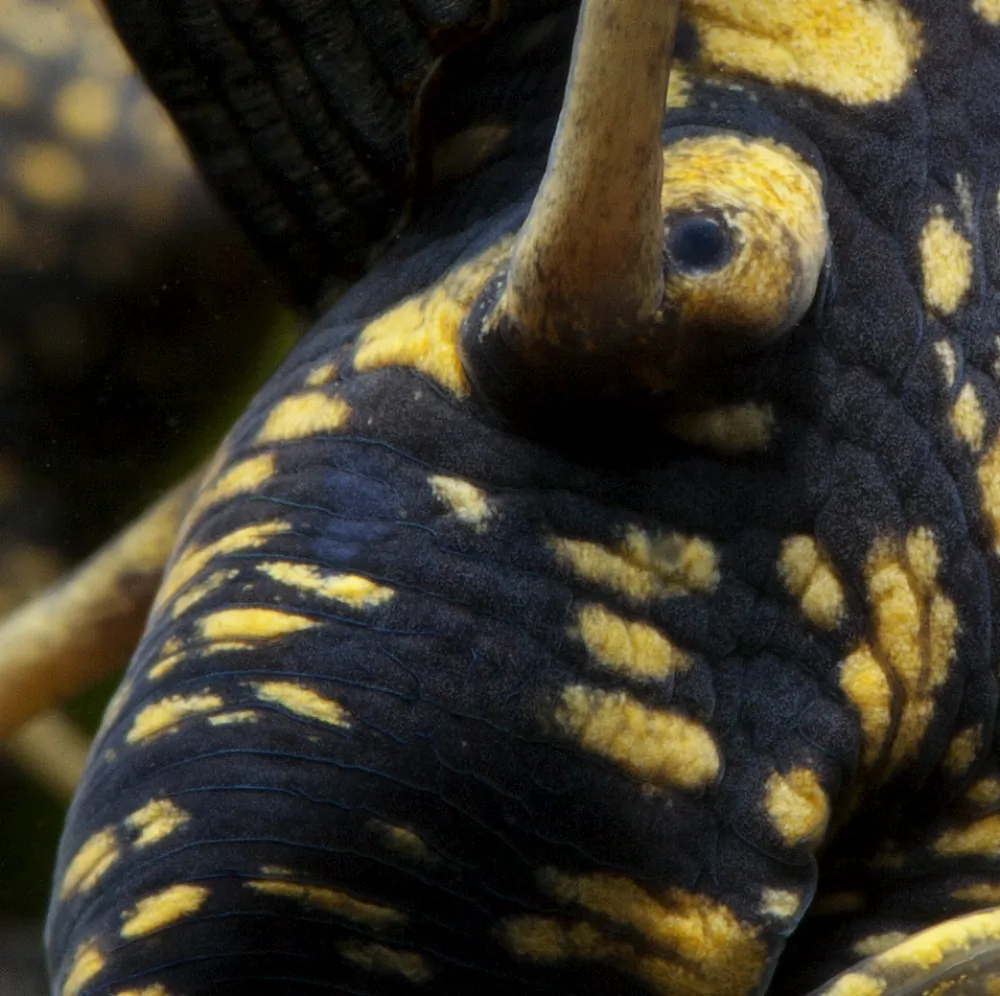
Image of gold spotted posiosnail tylomelania towutensis

Distribution and Habitat

Endemic to the Malili lake system in Sulawesi, Indonesia, specifically Lake Towuti. These snails inhabit warm, clear, and highly alkaline waters with rocky or sandy substrates where they forage for detritus and soft algae.

Description of Tylomelania towutensis

As seen in the close-up images, this species features a long, conical shell that is dark brown to black with heavy texturing and whorls. The most striking feature is its foot and head, which are deep black covered in vibrant, contrasting gold or yellow spots. They have a distinct, elongated snout resembling a rabbit, which gives them their common name.
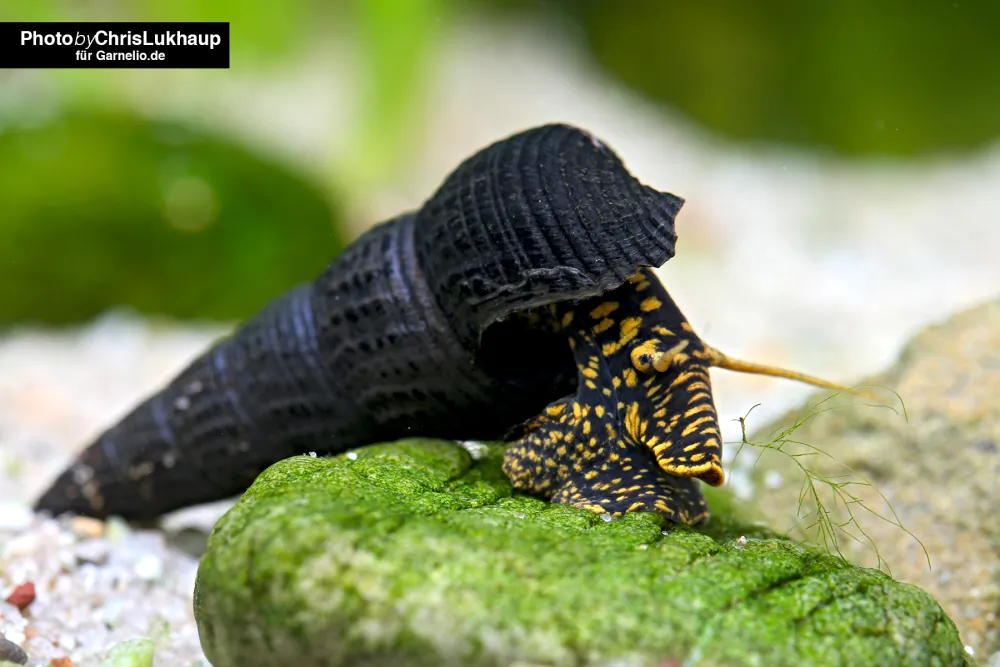
Image of gold spotted posiosnail tylomelania towutensis

Keeping and Caring for Tylomelania towutensis

Caring for these snails requires attention to their specific water requirements, as they are less tolerant of poor water quality or acidic conditions than common aquarium snails.

Tank size:

A minimum of 20 gallons is recommended. They can grow up to 3-4 inches in length and need plenty of floor space to roam and forage.

Water Parameters:

Replicating the Sulawesi lake environment is crucial for their long-term health.

Temperature

77°F - 86°F (25°C - 30°C). They thrive in warmer waters.

pH

7.5 - 8.5. Acidic water will erode their shells and lead to health issues.

Hardness

KH 4-8 dKH and GH 4-10 dGH. Adequate calcium is necessary for shell maintenance.

Ammonia, Nitrite, Nitrate

Ammonia and Nitrite must be 0 ppm. Nitrates should be kept as low as possible, ideally below 20 ppm.

Feeding the Tylomelania towutensis

They are omnivorous scavengers. In the aquarium, they will readily accept sinking pellets, algae wafers, blanched vegetables (like zucchini, spinach, and cucumber), and powdered invert foods. They also continuously graze on biofilm and decaying plant matter.

Breeding Tylomelania towutensis

Breeding is slow but possible in home aquariums. Tylomelania are viviparous (livebearers). They reproduce slowly, typically releasing only one fully formed juvenile snail at a time, encased in a milky white sac that the baby quickly consumes.

Conclusion

The Gold Spotted Rabbit Snail is a truly magnificent specimen for the dedicated aquarist. While they require specific water parameters to mimic their native Sulawesi habitat, their gentle nature and spectacular gold-spotted appearance make them well worth the effort.
Snail info

  • Temperature : 77°F - 86°F (25°C - 30°C)
  • pH: 7.5 - 8.5
Leave your comments
Latest on Snails
  • Piano Snail (Taia naticoides)

    Piano Snail (Taia naticoides)

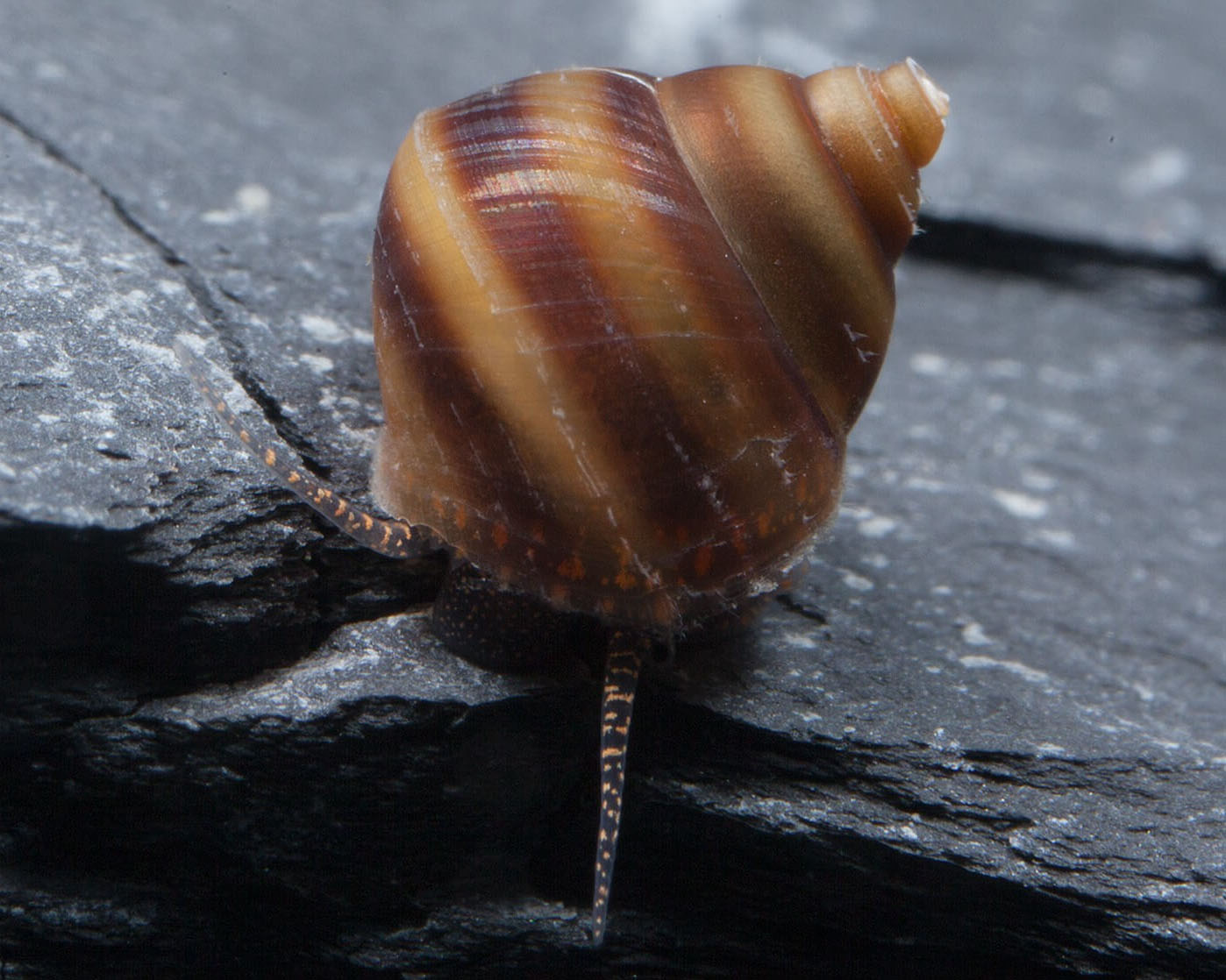
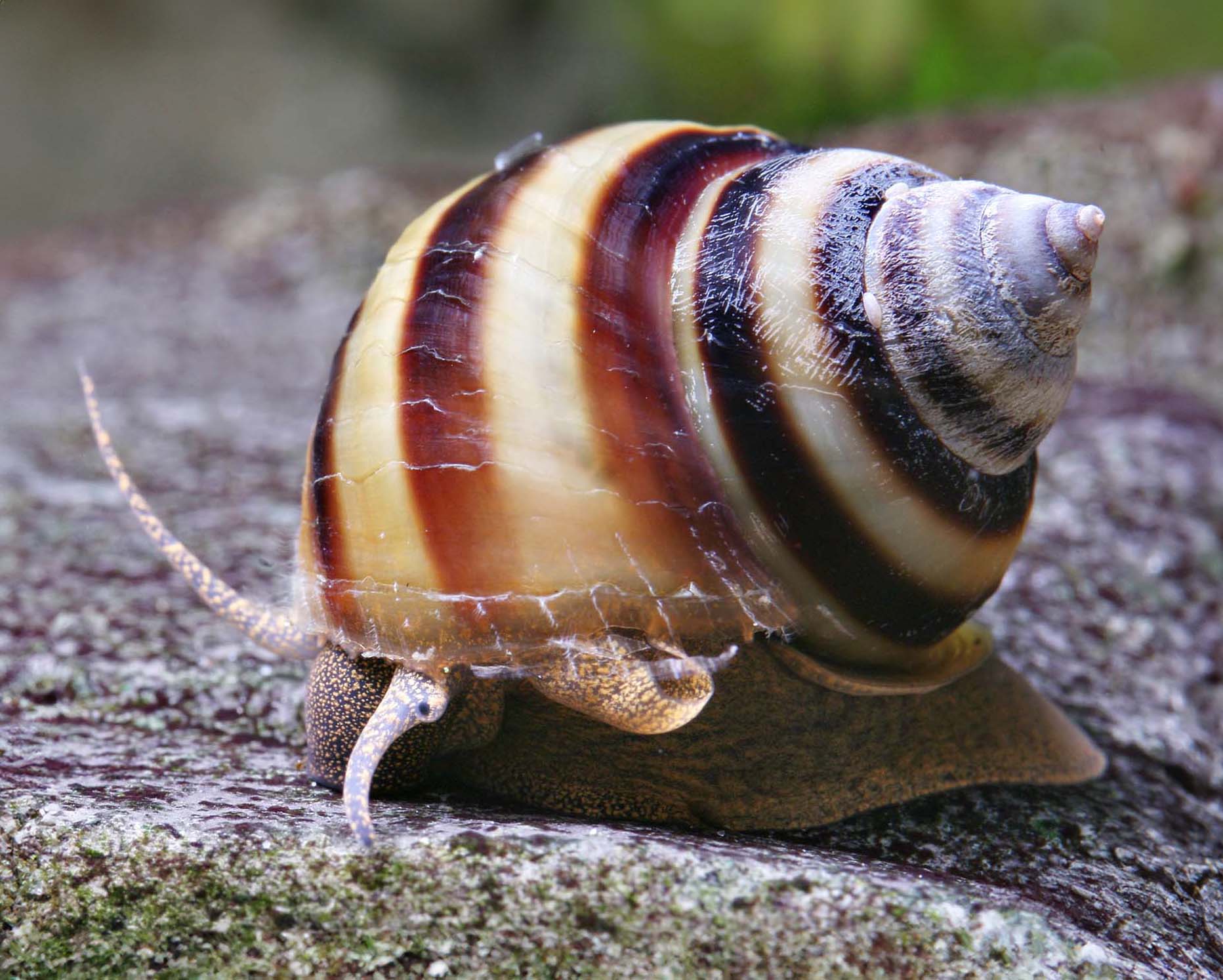
    Taia naticoides is a freshwater, live-bearing snail sold under names such as piano snail. It has a rounded, banded shell and is valued as a grazer of algae and aquarium biofilm. The supplied photographs resemble this trade identification, but images alone cannot confirm species, age, or whether the specimen is a juvenile. Good calcium availability, stable alkaline water, and regular access to natural or supplemental food are important for long-term care.
  • Piano Snail (Taia naticoides)

    Piano Snail (Taia naticoides)

    The piano snail, also sold as the brush algae snail, is a large freshwater operculate snail with a rounded, banded shell. Taia naticoides is associated with Southeast Asian freshwater habitats and is valued for grazing surface growth and consuming organic debris. Aquarium identification can be complicated because common names are applied inconsistently; confirm the species with a reliable supplier. It is generally peaceful, plant-safe and live-bearing, but it needs mineral-rich water and should not be treated as a solution for heavy algae growth.
  • Orange Track Racing Snail (Vittina semiconica)

    Orange Track Racing Snail (Vittina semiconica)

    The Orange Track racing snail, Vittina semiconica, is a freshwater nerite valued for algae grazing and its patterned orange shell. It is generally peaceful, plant-safe and suitable for established community aquariums. Identification from shell pattern alone can be difficult because several Vittina and related nerite species resemble one another, so the supplied trade name should be treated as provisional unless confirmed by a specialist examination.
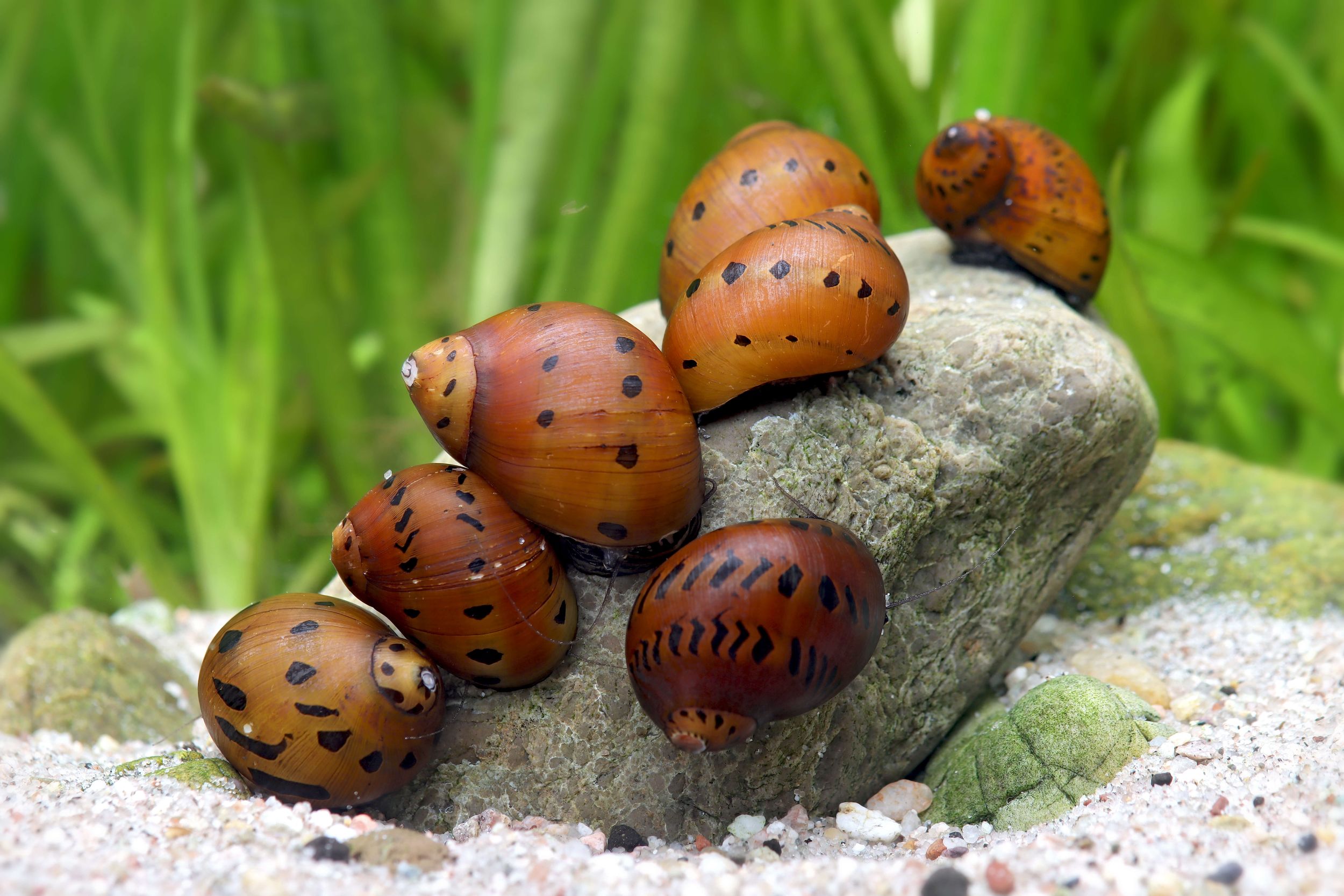
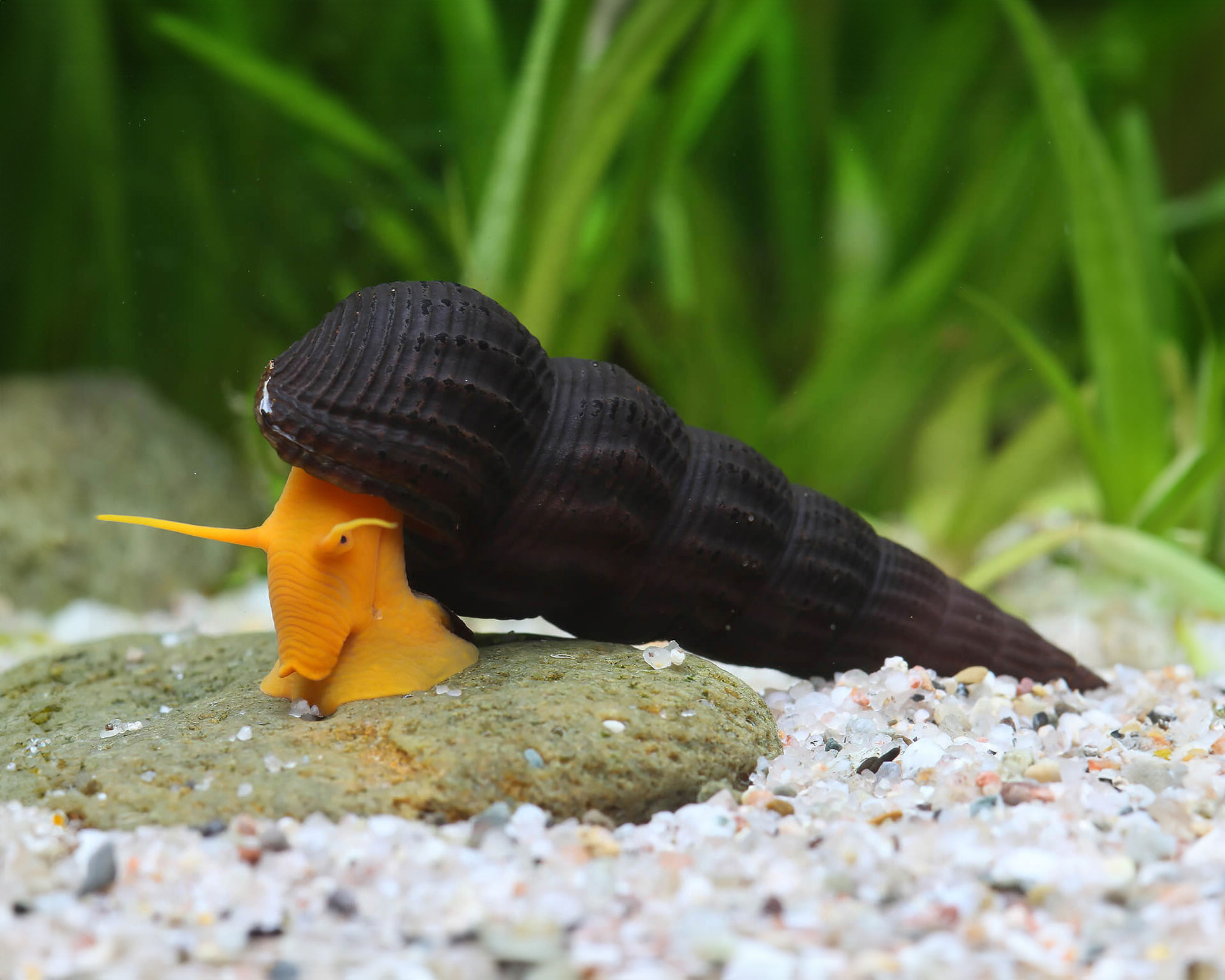
  • Orange Rock Snail (Orange Tylomelania)

    Orange Rock Snail (Orange Tylomelania)

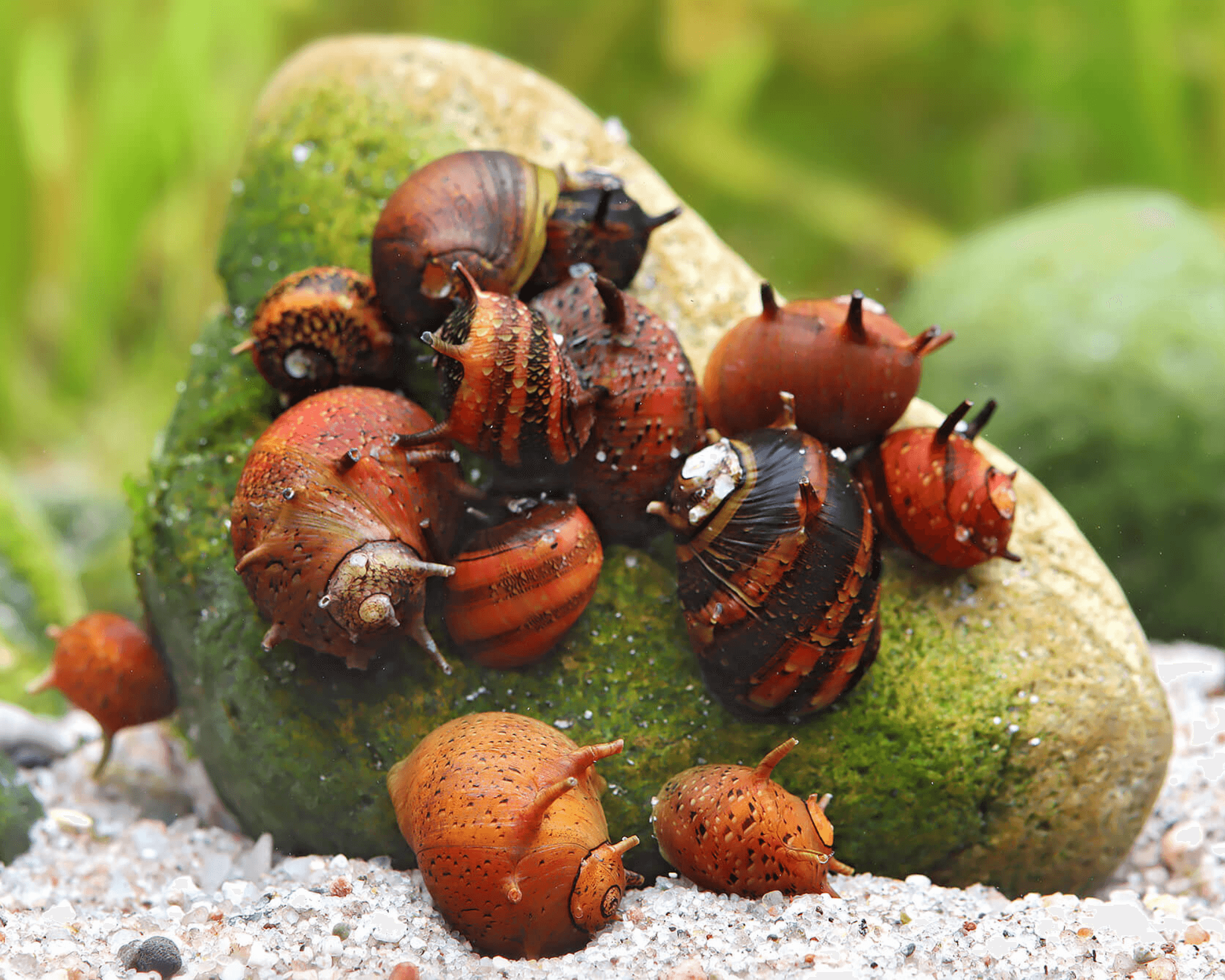
    The Orange Rock Snail is a trade name commonly used for orange-bodied Tylomelania, a group of freshwater snails associated with Sulawesi. Its dark, strongly ridged shell contrasts with the bright orange foot and head. Exact species identification is uncertain from the trade name and photographs alone, so care should follow general Tylomelania requirements. These snails are peaceful, active mainly at night, and best kept in mature, warm, alkaline aquariums with stable mineral content.
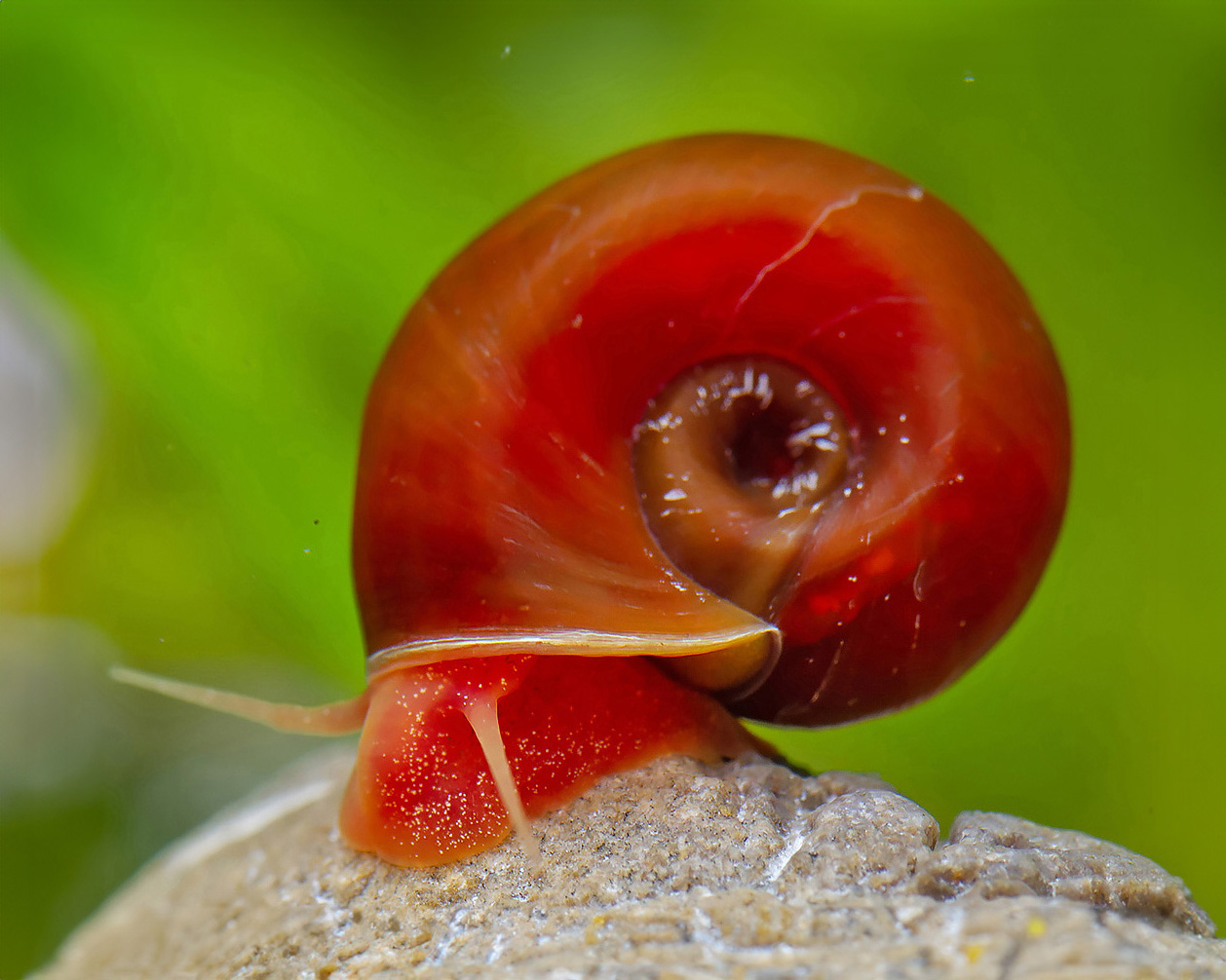
  • Orange Red Ramshorn Snail (Planorbella duryi duryi)

    Orange Red Ramshorn Snail (Planorbella duryi duryi)

    The orange red ramshorn snail is a freshwater planorbid recognized by its flat, coiled shell and brightly colored body. Planorbella duryi duryi is associated with freshwater habitats in the southeastern United States, especially Florida, although aquarium specimens may be selectively bred and their exact locality is often unknown. It is generally peaceful, useful as a grazer and scavenger, and capable of reproducing quickly when food is abundant.
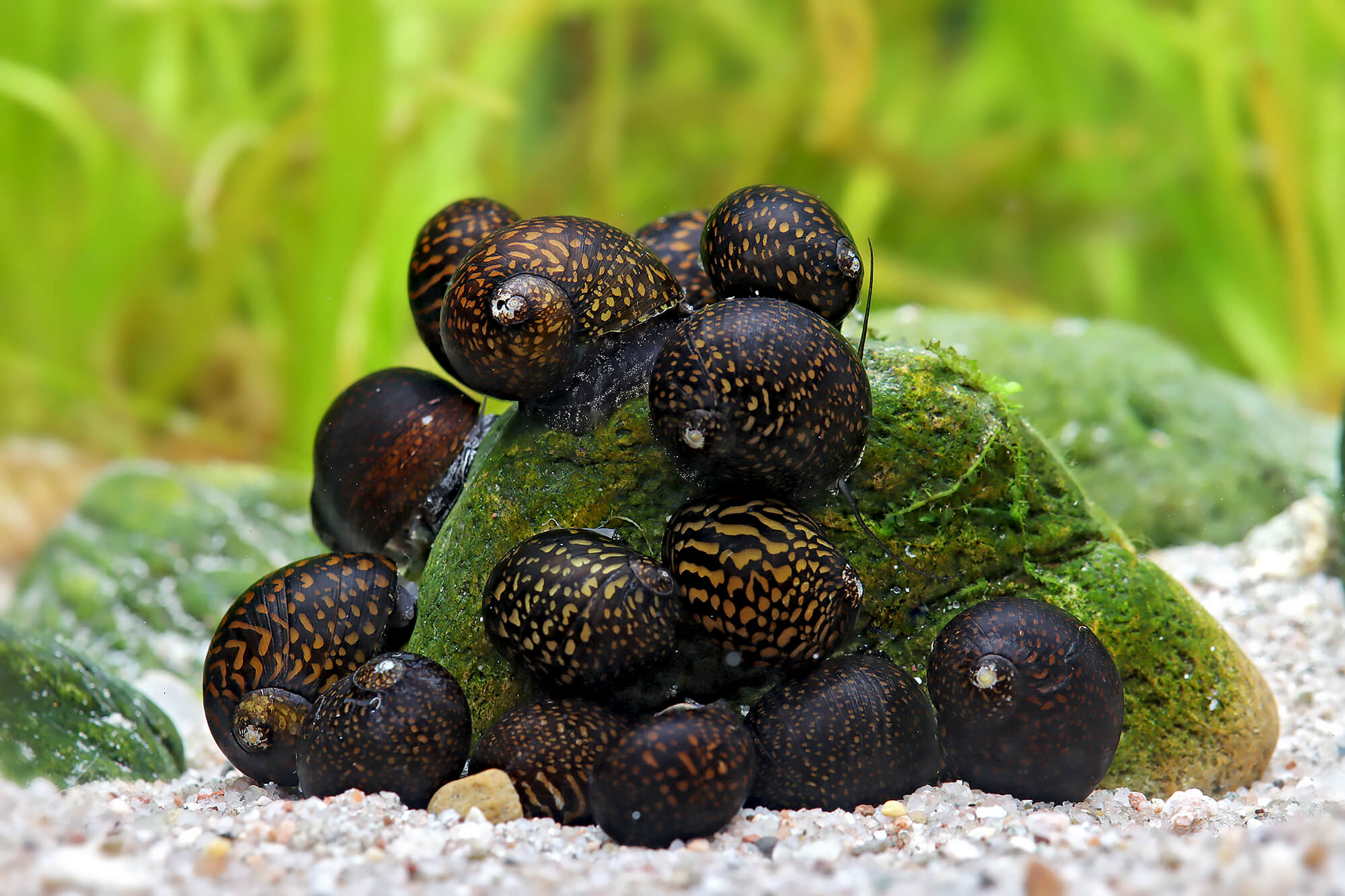
  • Midnight Lady Snail (Vittina sp.)

    Midnight Lady Snail (Vittina sp.)

    The Midnight Lady Snail is a dark, patterned nerite sold under the aquarium trade name Midnight Lady Schnecke. It is identified here as Vittina sp., because the exact species cannot be confirmed from the supplied name and photograph alone. These snails are generally peaceful algae grazers for mature freshwater aquariums, but successful breeding requires conditions that are not normally present in freshwater tanks.
  • Ivory Predatory Snail: Anentome helena

    Ivory Predatory Snail: Anentome helena

    The ivory predatory snail, commonly sold as Clea helena, is a freshwater assassin snail from Southeast Asia. It has a strongly ribbed, ivory to yellow-brown shell and a mottled gray-brown body. This active carnivore hunts or scavenges other small snails and accepts meaty foods in aquaria. It is generally plant-safe, but its predatory diet and egg-laying reproduction require planning when keeping it with ornamental snails or maintaining a controlled population.
  • Hedgehog Snail (Brotia armata)

    Hedgehog Snail (Brotia armata)

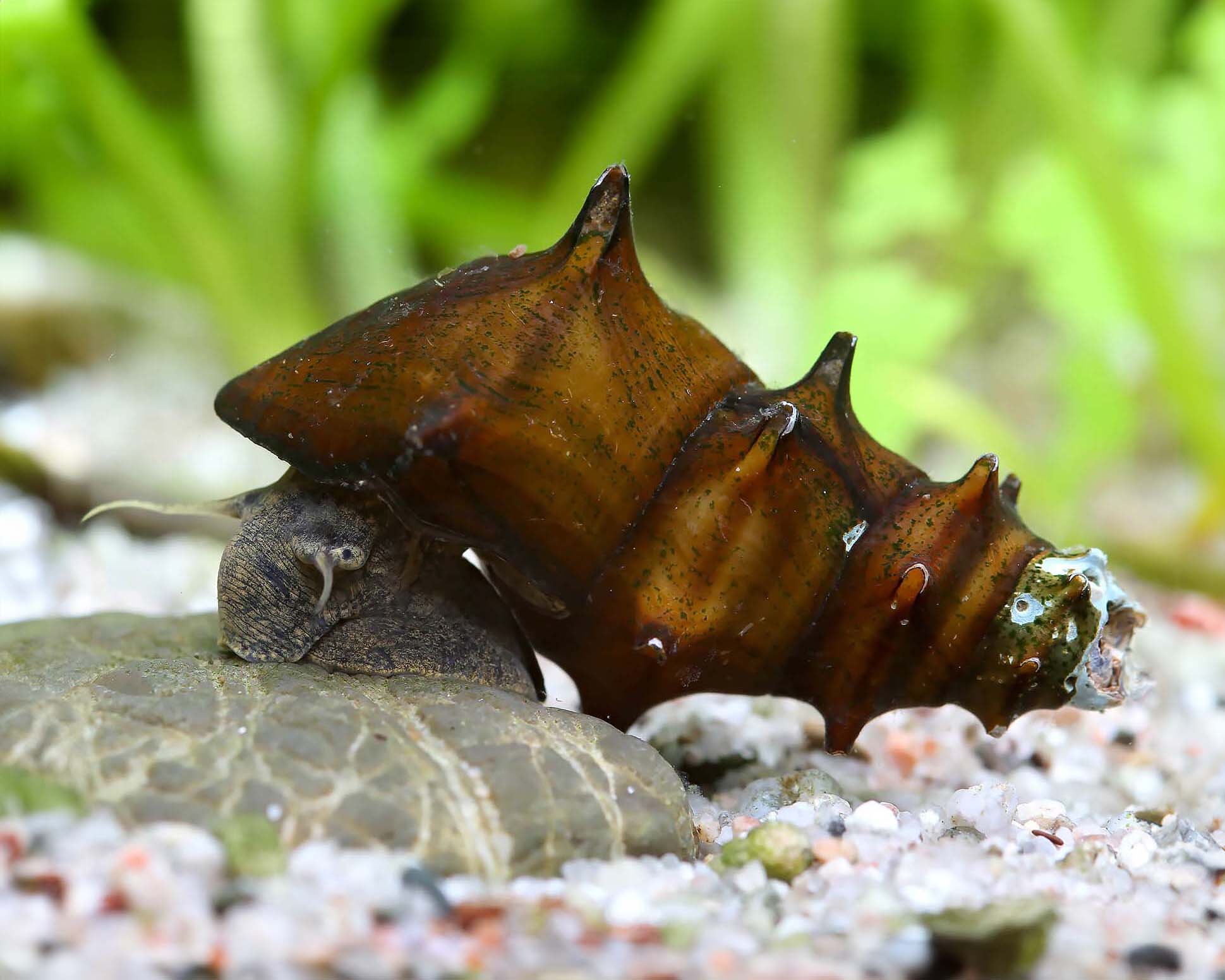
    The hedgehog snail, Brotia armata, is a large freshwater pachychilid recognized by its strongly ridged, spiny shell. It is a grazing and scavenging snail rather than a dedicated algae-control species, and it needs mature aquariums with clean, oxygenated water and adequate mineral content. Identification from photographs can be uncertain because several Brotia species have similar shell forms, so locality information is useful when confirming specimens.
  • Indian Malayan Louver Snail (Melanoides tuberculata)

    Indian Malayan Louver Snail (Melanoides tuberculata)

    Melanoides tuberculata is a small, conical freshwater snail commonly known in aquaria as the Malaysian trumpet snail. It spends much of the day burrowing through substrate and becomes more active after dark. This adaptable species consumes biofilm, algae, detritus and uneaten food, while generally leaving healthy plants alone. Its live-bearing reproduction can produce a large population when food is abundant. The name supplied for this article is retained, although common names vary and aquarium specimens may be confused with related thiarid snails.
  • Green staghorn snail (Clithon corona)

    Green staghorn snail (Clithon corona)

    The green staghorn snail, Clithon corona, is a nerite snail valued for grazing algae and biofilm in freshwater aquariums. It is generally peaceful, plant-safe and unlikely to overpopulate in freshwater because its larvae normally require brackish or marine conditions. Provide mature surfaces for grazing, mineral-rich water and a secure lid. Identification can be difficult because aquarium trade names overlap among Clithon species, so the supplied name should be treated as a probable identification rather than a definitive one.
  • Geweihschnecke Tricolor (Clithon sp.)

    Geweihschnecke Tricolor (Clithon sp.)

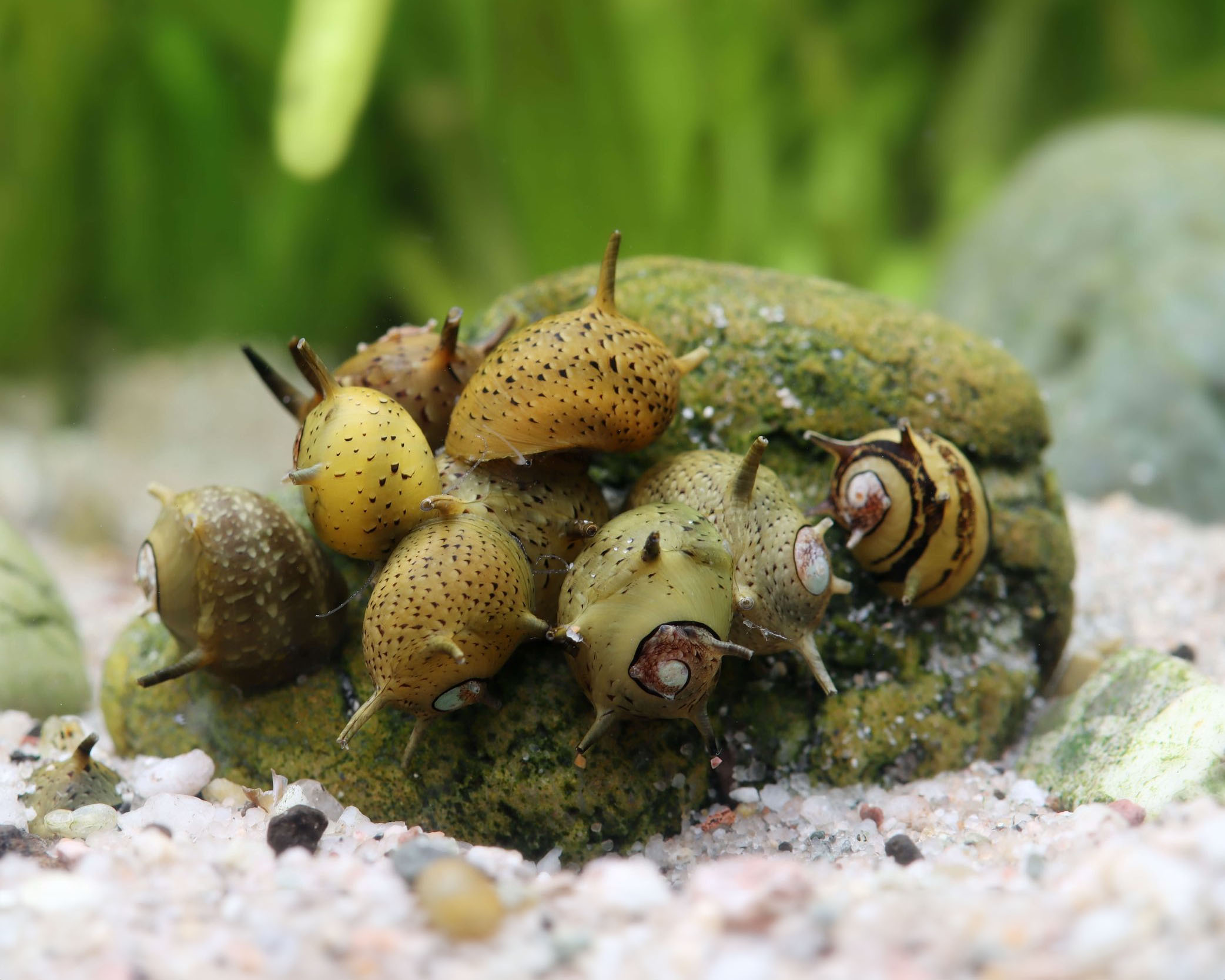
    Geweihschnecke Tricolor is a trade name for a colourful horned nerite in the genus Clithon. Exact species identification is uncertain because several closely related Clithon species and colour forms are sold under similar names. These small algae-grazing snails suit mature freshwater aquariums with stable, mineral-rich water. They are generally peaceful, plant-safe and unable to establish a large population in ordinary freshwater, although they may leave small white egg capsules on hard surfaces.
  • Geweihschnecke Red Venom (Clithon sowerbianum)

    Geweihschnecke Red Venom (Clithon sowerbianum)

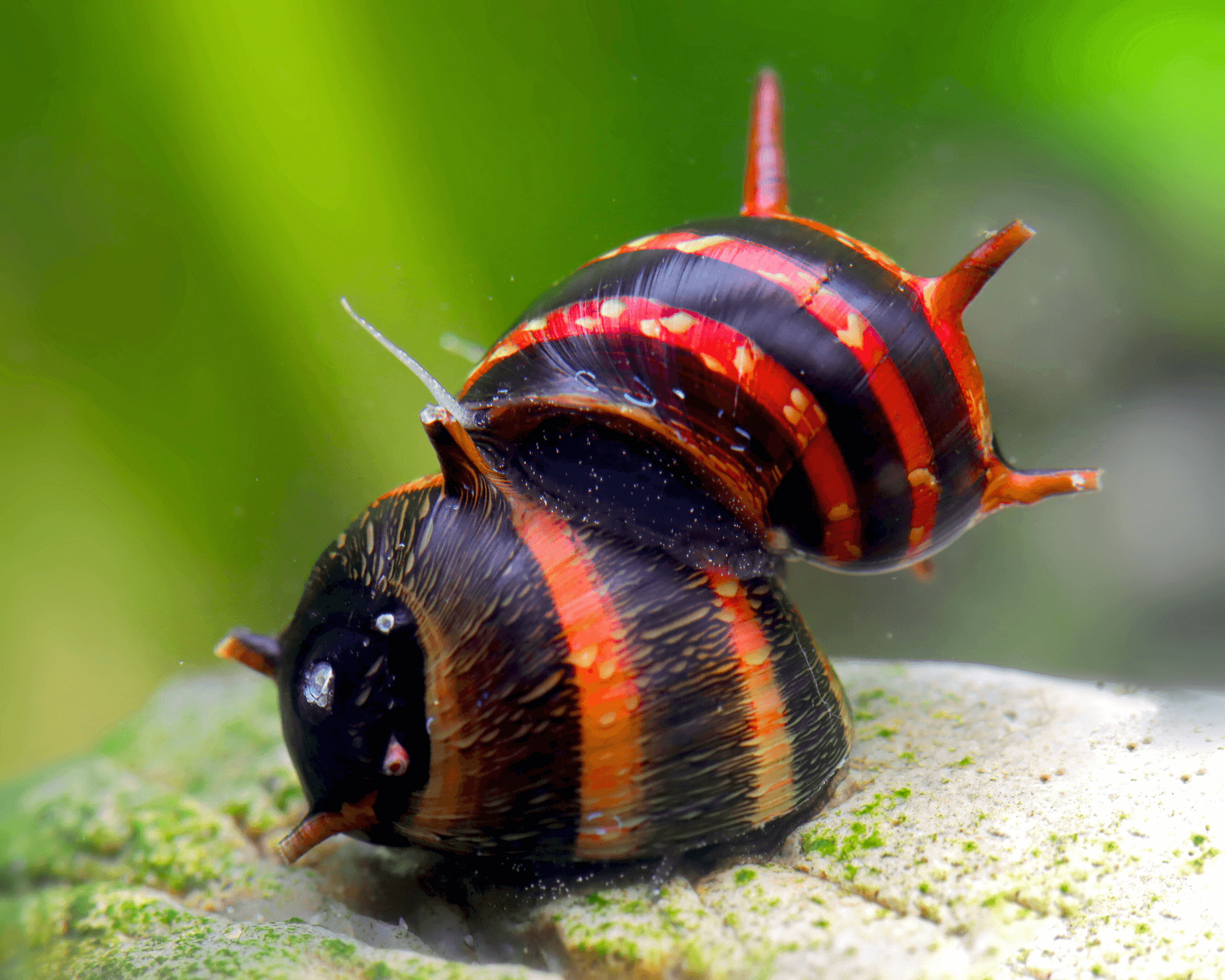
    The Red Venom Geweihschnecke is a striking horned nerite sold for freshwater aquariums. Its dark shell, red-orange bands and small projections make it distinctive, although trade names and shell patterns can overlap among Clithon species. It is mainly a grazer of algae and biofilm, is generally safe with healthy plants, and usually cannot establish a self-sustaining population in freshwater because its larvae require different conditions.
  • Geweihschnecke Volcano Red (Clithon sowerbianum)

    Geweihschnecke Volcano Red (Clithon sowerbianum)

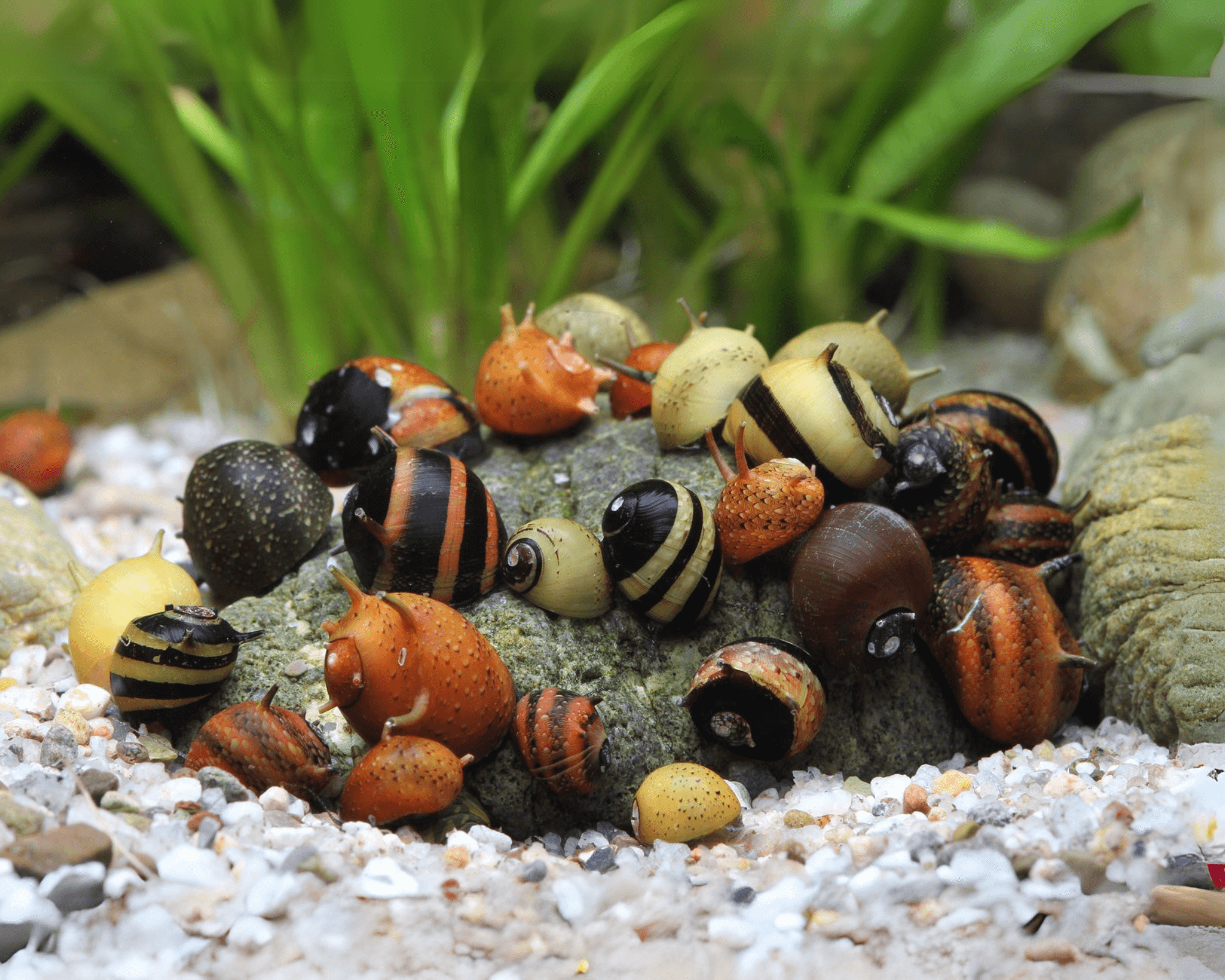
    The Volcano Red Geweihschnecke is a small freshwater nerite-type snail sold under the scientific name Clithon sowerbianum. Its shell commonly shows red, orange, brown, and dark patterns, with horn-like projections in some individuals. It grazes algae and biofilm from hard surfaces without normally damaging healthy plants. Identification and the exact validity or spelling of the supplied scientific name should be treated with some caution because aquarium trade names and Clithon nomenclature are not always used consistently.
  • Yellow Baby Poso Snail, Tylomelania sp.

    Yellow Baby Poso Snail, Tylomelania sp.

    The Yellow Baby Poso Snail is a juvenile Tylomelania identified in the trade as Tylomelania sp. Its yellow to golden body contrasts with a dark, strongly ribbed shell. The “Poso” name suggests a Sulawesi lake lineage, but the exact species and locality cannot be confirmed from the supplied trade name or photographs alone. This is a freshwater snail for warm, mineral-rich aquariums and should be kept with peaceful tank mates that will not damage its soft body or feelers.
  • Gelbe Rennschnecke (Vittina waigiensis)

    Gelbe Rennschnecke (Vittina waigiensis)

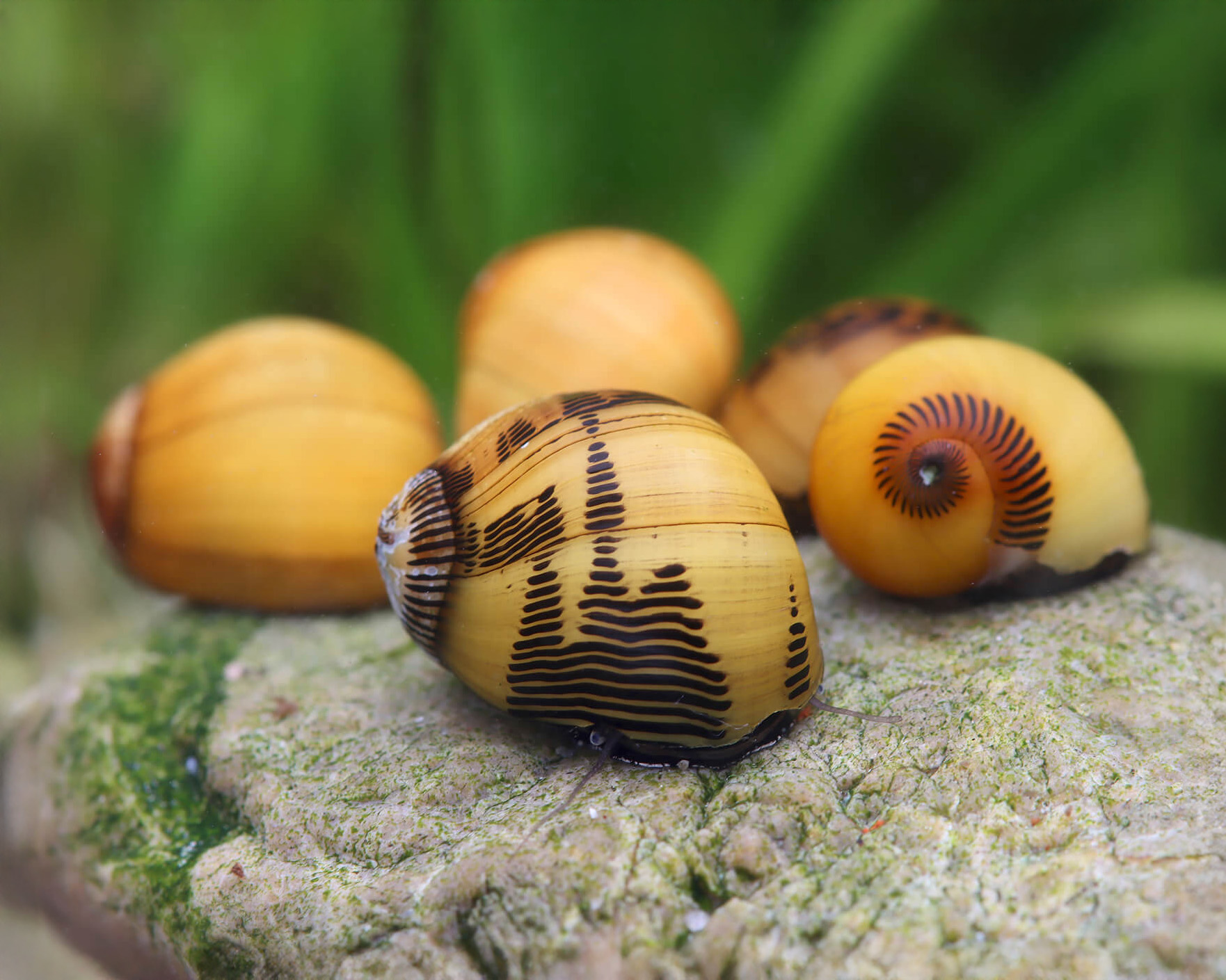
    Vittina waigiensis is a nerite snail kept for grazing algae and biofilm on aquarium glass, rocks and hardscape. Its rounded shell may show yellow, orange or reddish tones with dark markings, but commercial names are not always applied consistently. Identification from photographs alone can be uncertain, so shell pattern should be checked against a reliable taxonomic reference. Adults are generally peaceful and do not normally damage healthy aquarium plants.
  • Devil's Thorn Snail (Faunus ater)

    Devil's Thorn Snail (Faunus ater)

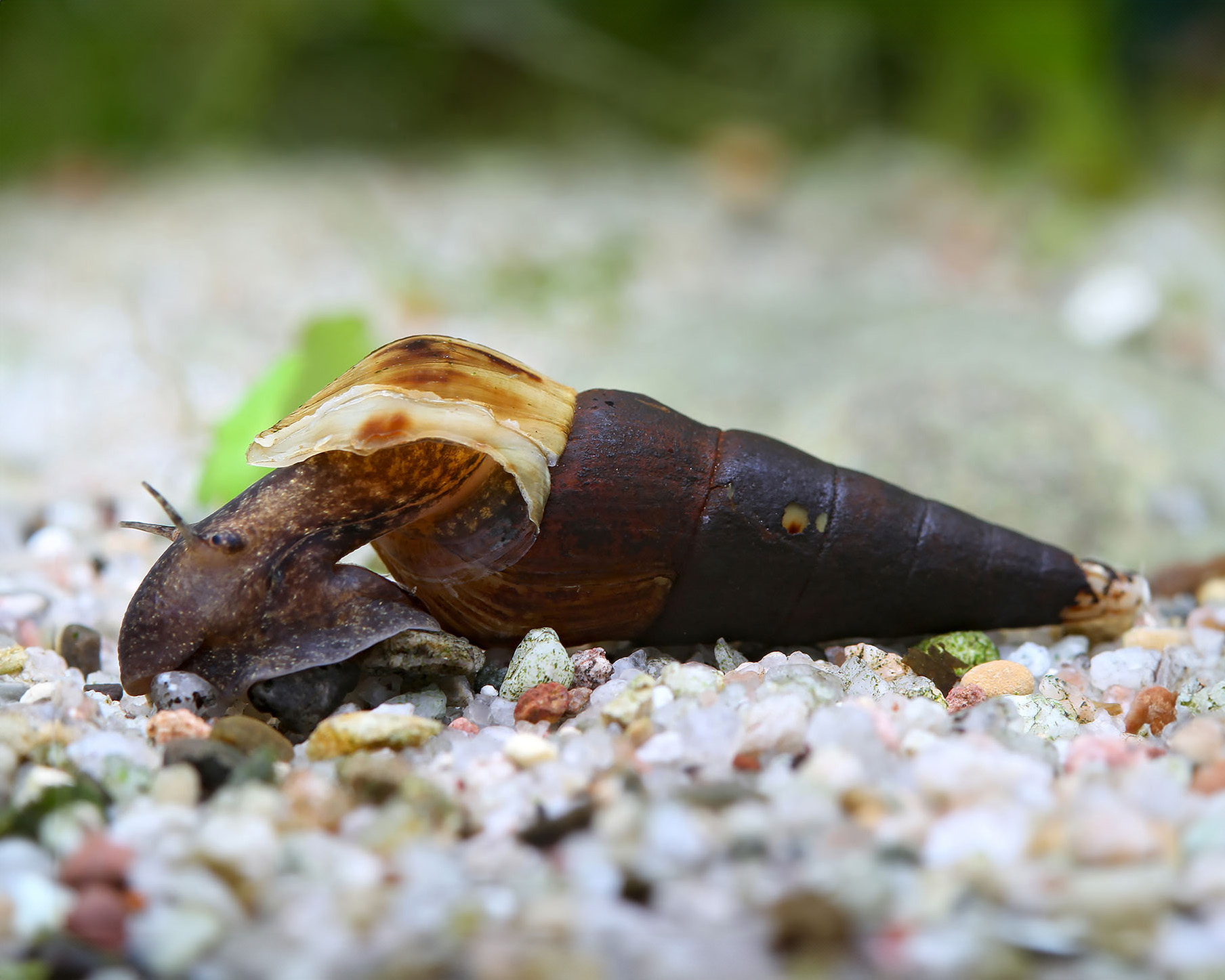
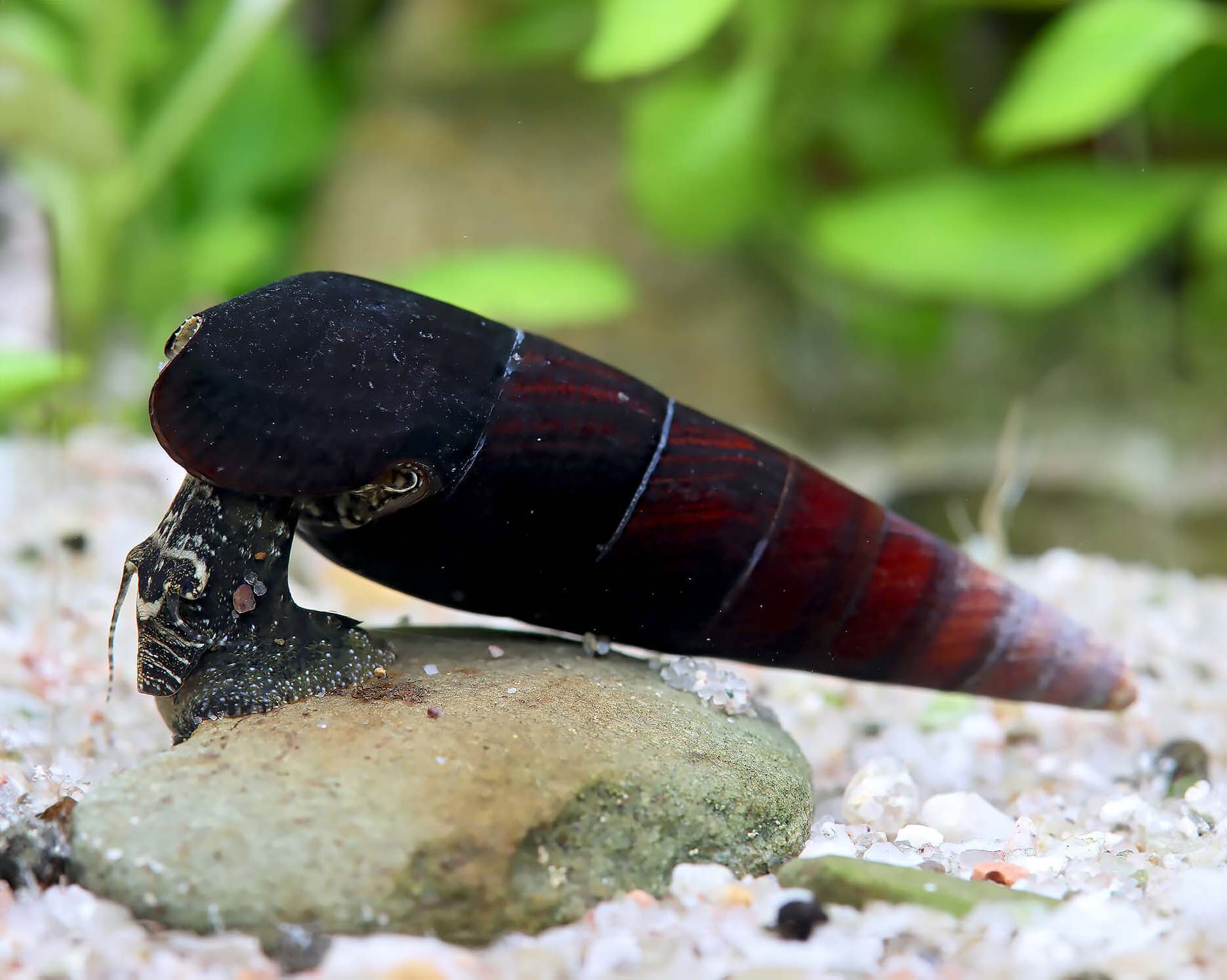
    Faunus ater is a large, elongated pachychilid snail from tropical Indo-West Pacific waters. It is associated with freshwater streams, rivers and estuarine habitats, and aquarium specimens are often kept in freshwater or mildly brackish conditions. Its dark, banded or reddish-brown shell is distinctive, although identification from photographs alone can be uncertain. It is generally peaceful, plant-safe and slow to reproduce in typical freshwater aquaria.