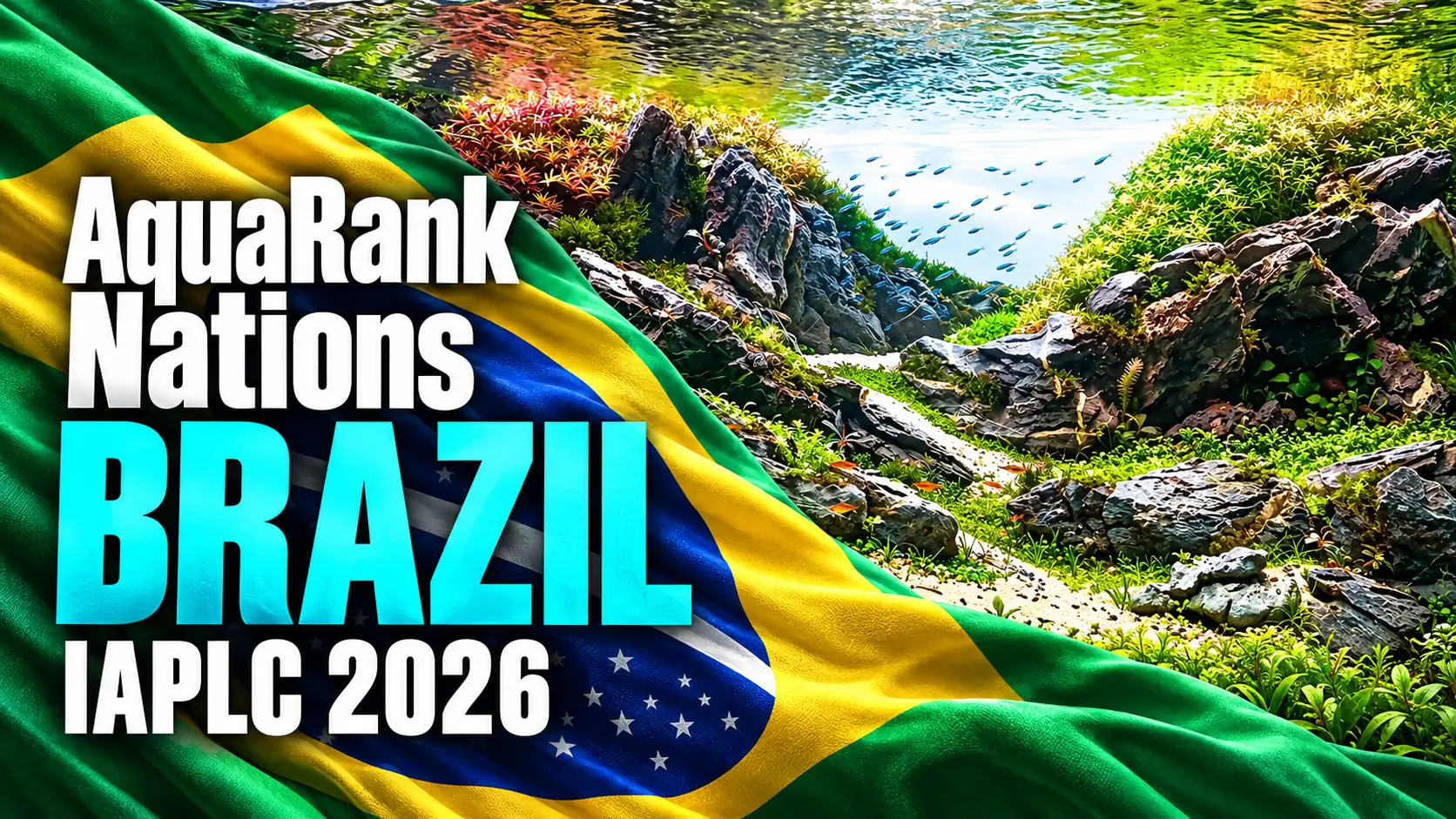
Follow the photographs into the wider country story with the new AquaRank Nations: explore Brazil’s IAPLC 2026 results and the creators behind them.
This is part of AquaLibs’ IAPLC 2026 Country Studies, returning to our archived Brazil introduction through this season’s photographs. The archive is historical commentary; the new observations are AquaLibs’ independent visual analysis, separate from official judging. The 4 selected works form an editorial comparison, not a census of national styles.
The 2026 result in context
| Published ranking range | Brazil places |
|---|---|
| Ranks 1–7 | 0 |
| Ranks 1–27 | 1 |
| Ranks 1–100 | 2 |
| Ranks 1–300 | 9 |
Counts are calculated from the official final ranking, using the country-and-area label Brazil. They count published places, not total submissions or participants. Rank 61 is vacant, so the global ranks 1–300 contain 299 published names.
From individual aquariums to the national view
A leading award and a strong national average answer different questions. Brazil’s Nations calculation includes five creators, extending beyond the four photographs selected here to rank 185. Open the country’s edition page to meet that contributing group, then compare the rocky award work with the wooded examples below. A familiar national label becomes more useful when it leads to individual aquariums.
| AquaRank Nations · IAPLC 2026 | Brazil |
|---|---|
| AquaRank national position | #9 |
| Average of five contributing overall ranks | 99.8 |
| Contributing individual ranks | #8, #39, #121, #146, #185 |
| Published country results in the full edition | 24 |
These are AquaRank’s calculated national standings, not official IAPLC national awards. The average uses the five lowest overall ranks from five confirmed aquascapers; a lower average is better. The 2026 edition is marked as complete on Nations. This full-ranking view is broader than the Top 300 photo selection used in this article. Figures were checked on 16 October 2026.
Explore Brazil at IAPLC 2026 on AquaRank Nations →
Open the contributing five, follow available artwork and creator profiles, then use the edition selector or Brazil’s IAPLC history to explore other available seasons. Use the IAPLC 2026 nations comparison to see the same method applied across countries and regions.
Inspired by Josh Sim’s IAPLC Nations Challenge. Read the Nations methodology for coverage and ranking rules. The average describes results; it does not measure a design style or explain a judge’s decision.
Follow the country journey
Explore Brazil through the years below. Switch between nation position and average rank, then open an edition or its contributing aquascapers to continue the journey.
Brazil at IAPLC
Loading country history…
Returning to the archive
The archived Brazil introduction, published in 2021 and attributed to IAPLC Nations Challenge, stressed stone, colourful stems, detailed sandy routes and surface reflections. Those were observations about earlier examples; its rough historical percentages should not be treated as 2026 statistics. Our four-work selection includes that rocky vocabulary and several different wooded arrangements, giving the old description room to be tested rather than simply repeated.
The photographs to study
| World rank | Creator | A detail to follow |
|---|---|---|
| #8 | Luiz Andre Lemos De Oliveira Junior | Rock faces, a pale route and bright water |
| #39 | Carlos Souza | A green valley carried by branching wood |
| #121 | Luis Carlos Galarraga | A planted bridge links two wooded banks |
| #146 | Fabricio Rufino De Souza | A wooded frame with colour beyond it |
Rank 8 — Luiz Andre Lemos De Oliveira Junior
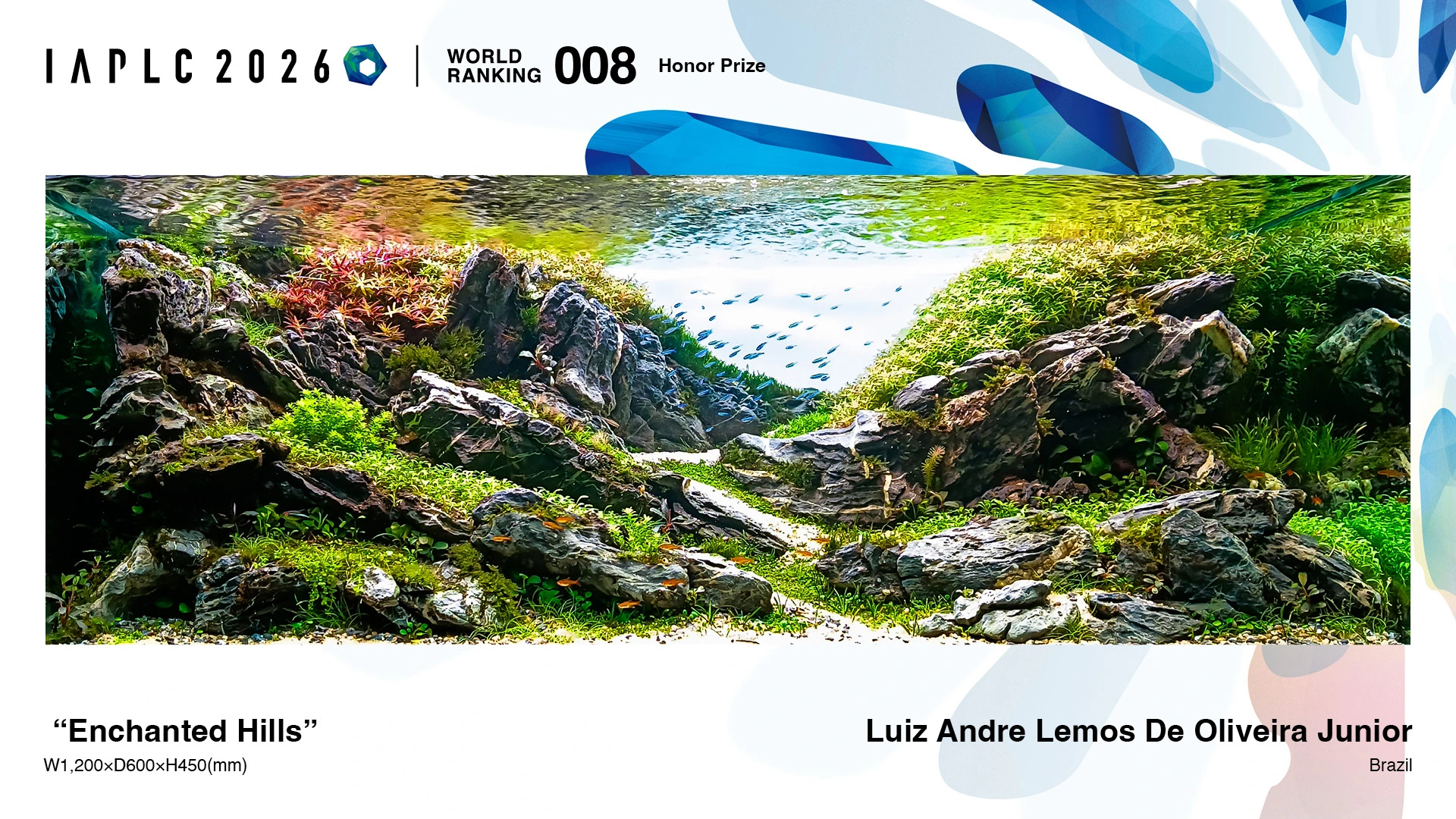
Rock faces, a pale route and bright water. Jagged rock groups frame a winding pale passage and a broad opening. Smaller stones step between the foreground and the distance, while warm left-side planting contrasts with greener growth on the right. Blue fish are conspicuous in the light background water. The exposed stone faces remain important: they give the soft foliage firm edges and prevent the valley from becoming a continuous green bank.
Look closer: Trace the passage while comparing the scale of nearby and distant rocks.
Explore Luiz Andre Lemos De Oliveira Junior’s recorded work on AquaRank · Back to the selected works
Rank 39 — Carlos Souza
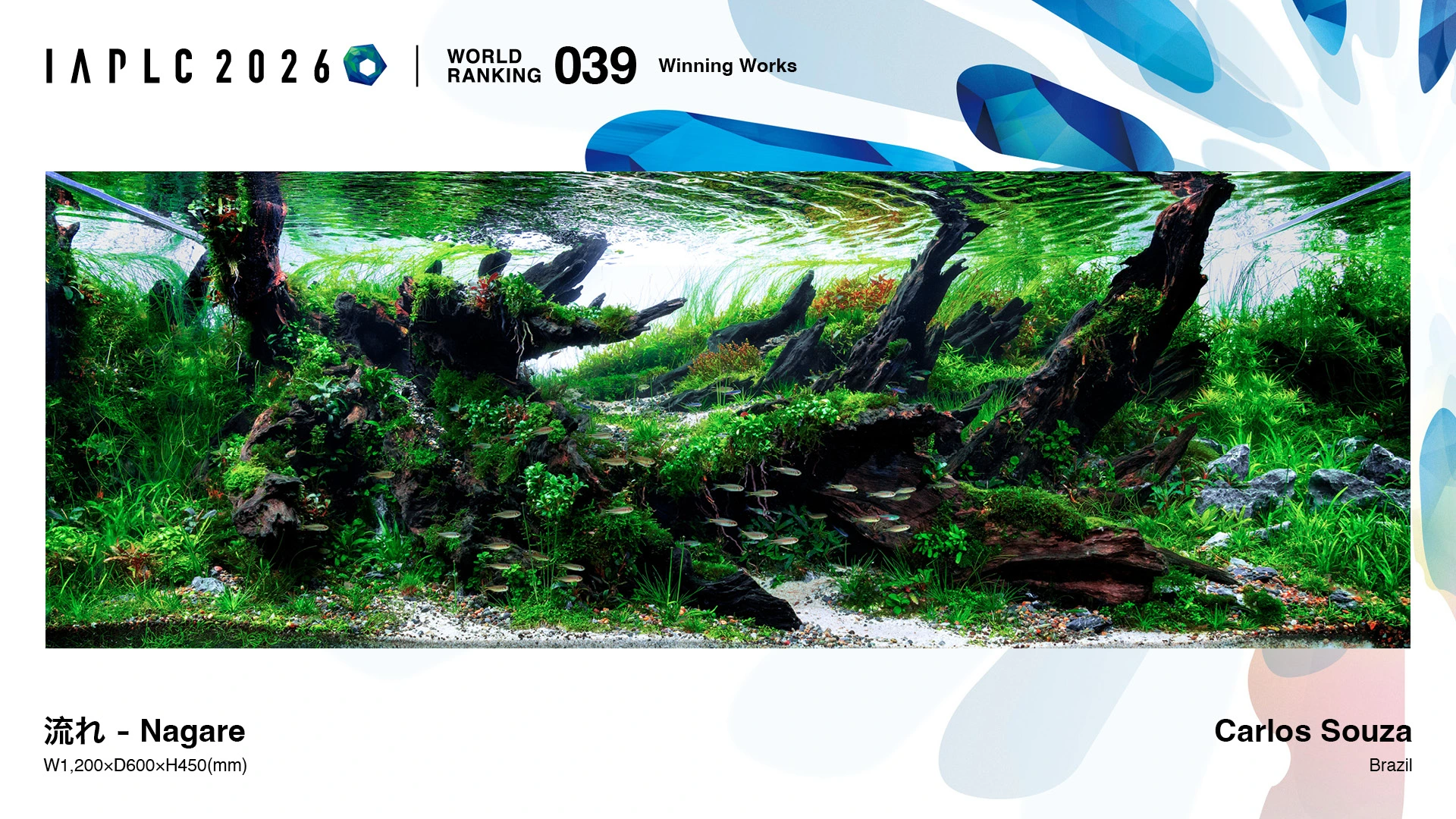
A green valley carried by branching wood. Dark wood rises around a planted central valley, with finer pieces and pockets of brightness between the larger forms. The foreground includes pale, textured ground and several kinds of low greenery. Small plant accents break up the greens without dominating them. The composition feels directional because the main branches share an inward movement, while exposed surfaces make that movement readable beneath the planting.
Look closer: Trace the main wood directions towards the central valley.
Explore Carlos Souza’s recorded work on AquaRank · Back to the selected works
Rank 121 — Luis Carlos Galarraga
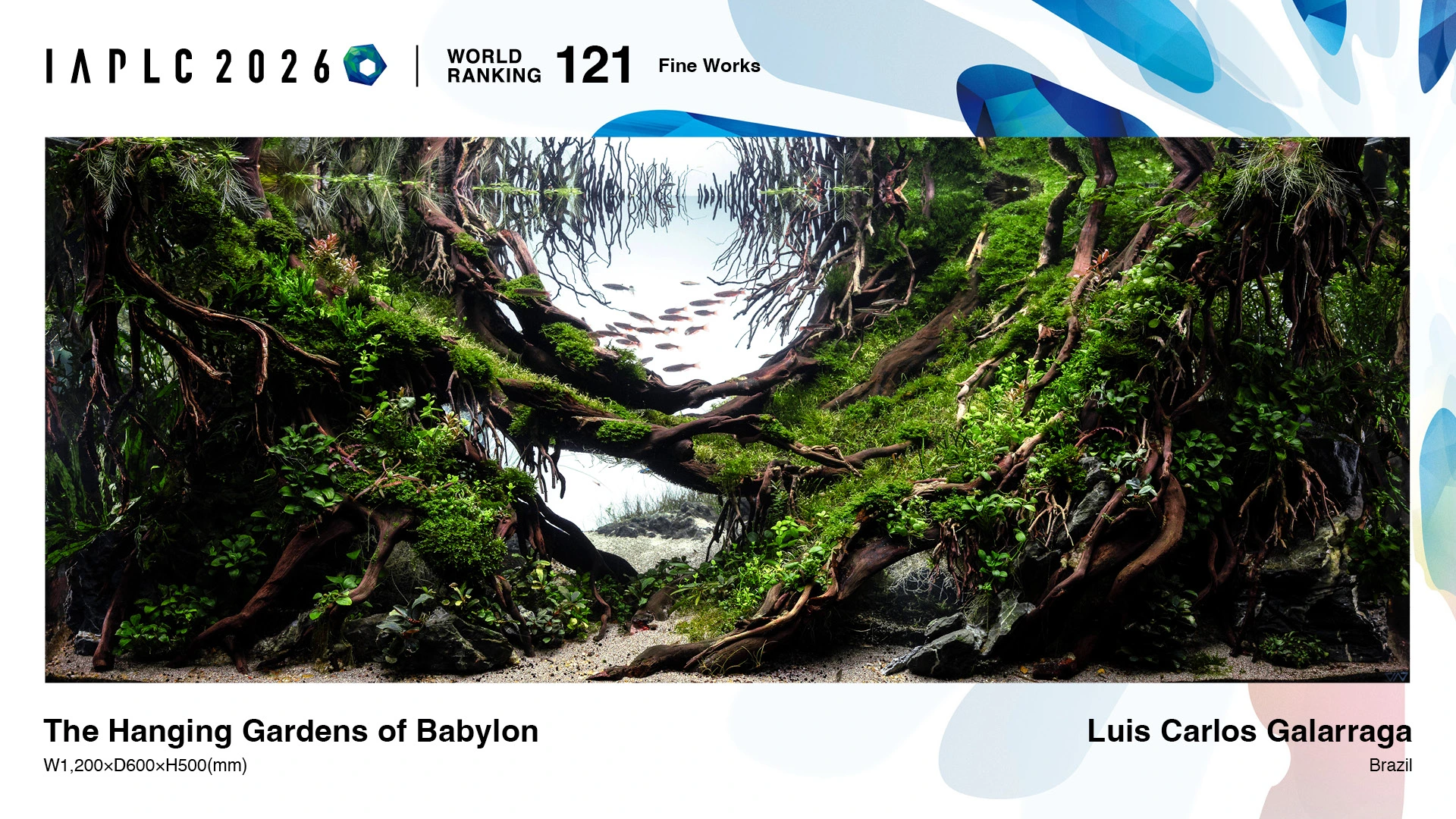
A planted bridge links two wooded banks. Large wood structures on either side are connected by a low, planted crossing in the middle. Hanging forms create an upper curtain, with fish visible against the bright water beyond it. Low greenery and exposed ground make the nearest plane distinct from the bridge. The scene develops depth through the relationship between banks, crossing and rear water, rather than through a single continuous slope.
Look closer: Read the space beneath the crossing as well as the crossing itself.
Explore Luis Carlos Galarraga’s recorded work on AquaRank · Back to the selected works
Rank 146 — Fabricio Rufino De Souza
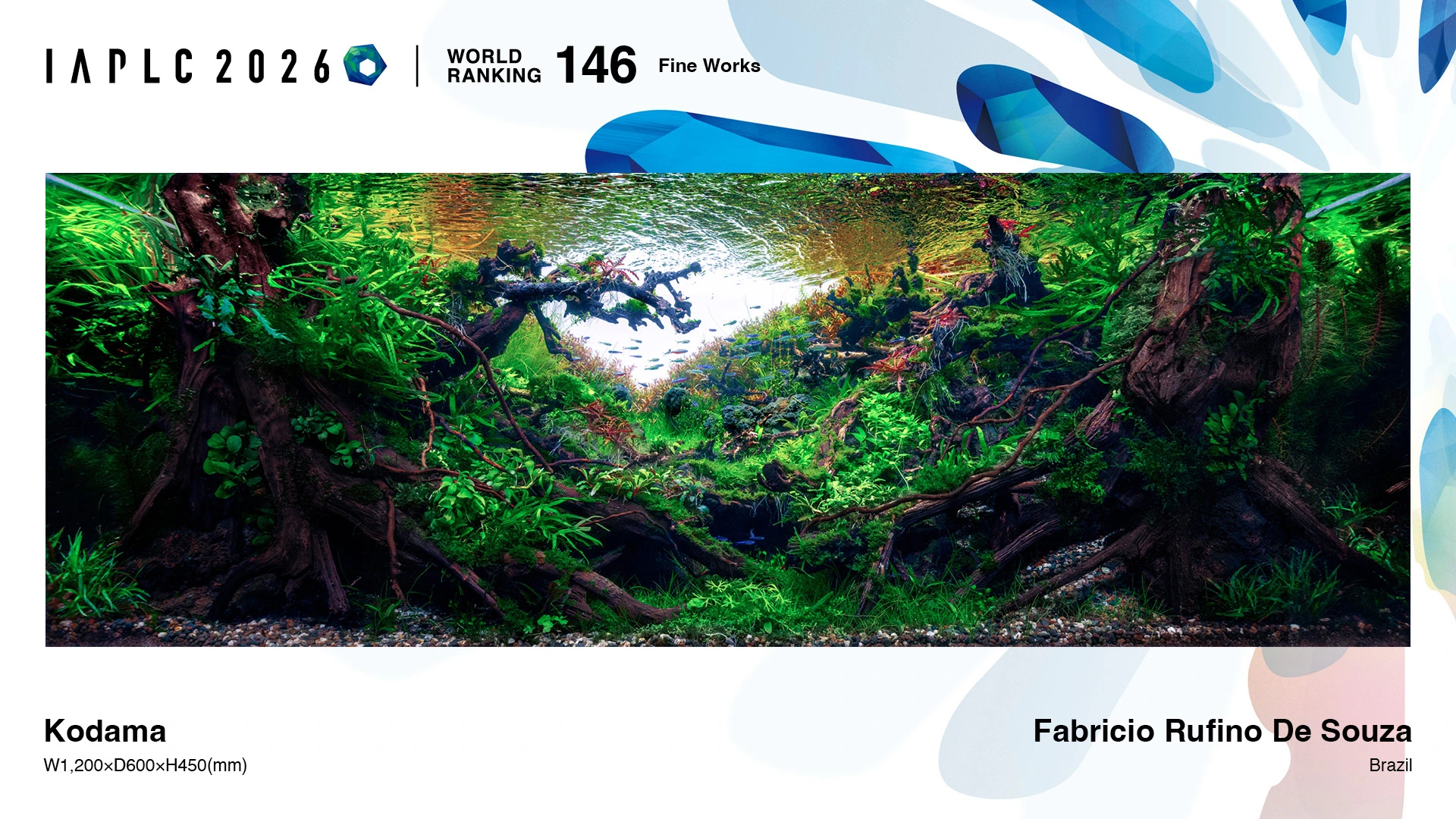
A wooded frame with colour beyond it. Substantial planted trunks stand at both sides of a lighter middle, while smaller roots and leafy growth connect the lower ground. Warmer plants introduce colour further back without covering the dark framing timber. The nearer wood and brighter foliage therefore occupy distinct planes. The scene invites the viewer past a strong foreground into a softer, more colourful interior, with details around the roots rewarding a closer view.
Look closer: Look at how colour is placed behind, rather than uniformly over, the main frame.
Explore Fabricio Rufino De Souza’s recorded work on AquaRank · Back to the selected works
What the comparison reveals
The first contrast is atmospheric. Enchanted Hills exposes rock faces and opens towards broad bright water. Carlos Souza instead develops a planted wood valley. Luis Carlos Galarraga connects wooded banks with a crossing, while Fabricio Rufino De Souza uses colour behind a strong near frame. The visual routes are not interchangeable even where they share an interest in depth.
What connects these examples is the way planted edges mediate between hardscape and space. Stone ledges, branching wood and a low crossing each retain readable boundaries. Colour helps distinguish planes rather than needing to fill the whole image. The lesson from this selection is a flexible design language; four chosen works cannot establish that the entire country has changed from rocks to wood.
A design exercise to take away
Compare an exposed hardscape edge in each photograph. Does planting clarify the line, soften it or replace it? That decision changes the atmosphere regardless of the material.
All published places at ranks 1–300
| World rank | Published name | Country / area |
|---|---|---|
| 8 | Luiz Andre Lemos De Oliveira Junior | Brazil |
| 39 | Carlos Souza | Brazil |
| 121 | Luis Carlos Galarraga | Brazil |
| 146 | Fabricio Rufino De Souza | Brazil |
| 185 | Leandro Eduardo | Brazil |
| 189 | Kaio Marques | Brazil |
| 193 | Aldo Santana | Brazil |
| 220 | Cliverton Dantas | Brazil |
| 278 | Felipe Dias De Camargo | Brazil |
Continue through the archive
Revisit the original Brazil introduction, then open the IAPLC 2026 gallery to view the selected works at full size and keep browsing beyond them. For a related reading, explore our IAPLC 2025 design review.
Keep exploring with AquaRank Nations. Open Brazil’s country overview to move from this season’s photographs to recorded results across available competitions and years. Start with the 2026 IAPLC result, choose an earlier available edition, and follow a creator whose work catches your attention. Country overviews keep competition and edition context visible; they do not combine raw ranks from different contests into one overall score.
Which Brazilian work would you use as the starting point for a longer journey through Nations?





Leave your comments