AquaLibs presents AquaRank Discover the world’s leading aquascapers

Explore transparent rankings built from published results across the world’s leading aquascaping contests.

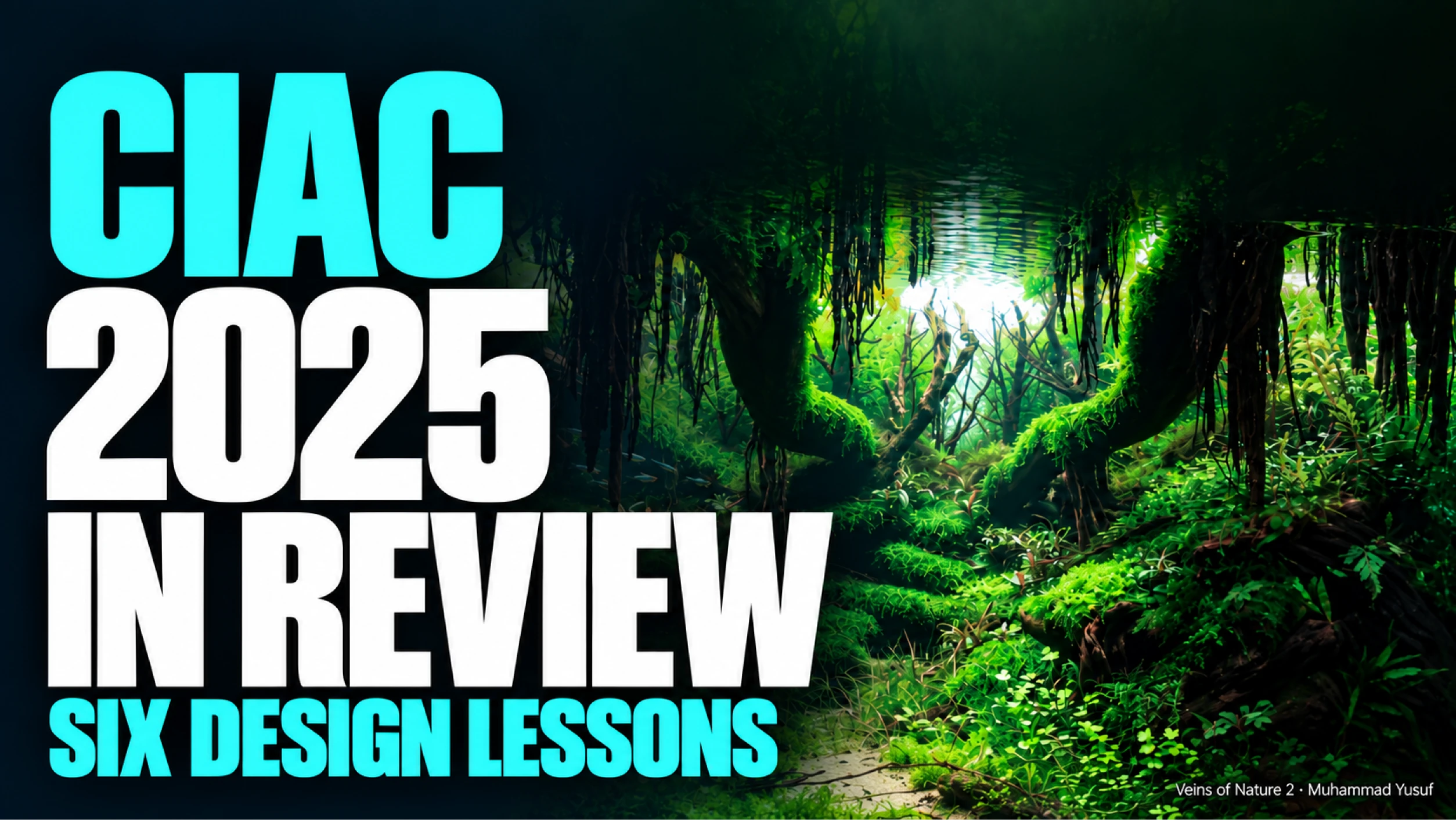
CIAC 2025 Review: Six Lessons Before the 2026 Results

This CIAC 2025 review brings together six works from the Aquascaping Group, spanning first to nineteenth place. Each offers a different lesson: guiding the eye through wood, protecting open space, using plant colour, arranging rock, shaping atmosphere with light, or giving fish a meaningful place in the image.

The selection is an editorial reading of the published photographs, rather than an explanation of the official scores. Explore the CIAC 2025 gallery alongside this article, then follow the linked AquaRank profiles to discover the people behind the layouts.

1. Build a route through the landscape

Veins of Nature 2 — Muhammad Yusuf, Indonesia — CIAC 2025, Rank 1

Veins of Nature 2 by Muhammad Yusuf, CIAC 2025 champion, showing curved wood and a bright opening in a planted forest

Veins of Nature 2 — Muhammad Yusuf — CIAC 2025, Rank 1. Published contest photograph from the AquaLibs archive.

Muhammad Yusuf's winning aquascape makes a dense forest feel navigable. Large wood forms occupy the foreground, hanging roots interrupt the upper space, and a brighter opening draws attention into the distance. The eye has obstacles to travel around, but it also has a destination.

The curved wood establishes continuity between the near and far parts of the scene. Planting softens its surfaces while leaving enough of the structure visible to preserve that movement. The restrained sandy opening at the front provides an entrance into a landscape that might otherwise feel closed.

In his official CIPS interview, Yusuf identified the Petungkriono rainforest in Central Java as his inspiration. That context helps explain the scene's sense of enclosure and discovery.

The design lesson: establish a visual route before adding detail. Follow the main wood lines with your eye: do they carry you into the composition, or stop against unrelated objects?

For 2026: will the strongest forest layouts offer a fresh spatial experience as well as impressive construction?

Explore Muhammad Yusuf's AquaRank profile.

2. Give the empty space a shape

The Pulse of Life — Gang Zhao, China — CIAC 2025, Rank 2

The Pulse of Life by Gang Zhao, CIAC 2025 rank 2, with planted rock shelves framing a bright canyon opening

The Pulse of Life — Gang Zhao — CIAC 2025, Rank 2. Published contest photograph from the AquaLibs archive.

Gang Zhao, listed as Zhao Gang in the official interview, gives the central opening as much importance as the rock around it. Projecting shelves divide the scene into overlapping levels, while the pale background remains visible through a narrowing passage.

This negative space has an irregular outline. It changes width as the surrounding forms move forward and recede, giving the canyon a stronger sense of depth than a straight, uniform gap would provide. Dark undersides make the brighter planted surfaces appear more prominent.

The official judges' comments also discuss the layout's spatial structure. They include criticism of some planting details, a useful reminder that a highly placed work can still offer opportunities for refinement.

The design lesson: sketch the open space as carefully as the hardscape. Its contour, interruptions and connection to the foreground help determine how the whole aquarium reads.

For 2026: how will designers keep ambitious rock structures readable once the planting fills in?

Explore Gang Zhao's AquaRank profile.

3. Use plant colour to connect the composition

Eternal Blaze — Rahul Mukherjee, India — CIAC 2025, Rank 6

Eternal Blaze by Rahul Mukherjee, CIAC 2025 rank 6, showing warm plant accents among green growth and angled wood

Eternal Blaze — Rahul Mukherjee — CIAC 2025, Rank 6. Published contest photograph from the AquaLibs archive.

Eternal Blaze places warm tones within a predominantly green landscape. Reddish planting appears across the upper background and in smaller accents through the middle, creating connections between areas separated by wood and shadow.

The colour is effective because it has a supporting structure. Sloping wood and planted surfaces carry the eye through the scene; the warmer accents reinforce those relationships. Broad leaves, fine growth and moss-like textures also prevent the green areas from becoming a single visual mass.

The photograph shows how colour and texture can work together without making every planting group equally conspicuous. It does not establish the species used or the conditions that produced those colours.

The design lesson: decide where colour should lead attention. A repeated accent can connect the foreground, middle and background more effectively than one isolated patch added for contrast.

For 2026: will warm planting become an essential part of more compositions, or remain a finishing accent?

Explore Rahul Mukherjee's AquaRank profile.

4. Make the rocks share a direction

Takachiho Gorge — Gustavo Pimenta do Nascimento, Brazil — CIAC 2025, Rank 10

Takachiho Gorge by Gustavo Pimenta do Nascimento, CIAC 2025 rank 10, with dark angled rocks and a pale receding channel

Takachiho Gorge — Gustavo Pimenta do Nascimento — CIAC 2025, Rank 10. Published contest photograph from the AquaLibs archive.

Takachiho Gorge is a useful contrast to the more enclosed forest scenes. Its central rock mass projects above smaller surrounding forms, with dark exposed faces set against bright planting and a pale opening behind.

The stones differ in size, but several sloping edges create a related directional rhythm. Smaller rocks and low planting carry that rhythm into the foreground. A pale channel travels between these forms, helping the eye move from the front towards the brighter distance.

The vegetation leaves important rock faces visible. That restraint matters: covering every surface would weaken the shapes that give the landscape its character. The alternation of exposed stone and planted pockets gives the viewer enough information to read the terrain.

The design lesson: choose a dominant direction, then vary it. Supporting stones should contribute to the landscape's movement while retaining differences in angle, height and spacing.

For 2026: can a relatively open composition hold attention through strong structure and precise detail?

Explore Gustavo Pimenta's AquaRank profile.

5. Let light reveal the structure

The Returning Breeze — Lich Do, Vietnam — CIAC 2025, Rank 15

The Returning Breeze by Lich Do, CIAC 2025 rank 15, with diagonal planted wood beneath a bright reflected water surface

The Returning Breeze — Lich Do — CIAC 2025, Rank 15. Published contest photograph from the AquaLibs archive.

The Returning Breeze is organised around a contrast between a bright upper opening and a darker lower landscape. Long, planted forms cross the aquarium diagonally, while the reflected surface extends the luminous area above them.

Light helps separate those forms. Green growth remains readable against dark recesses, and the brighter background provides a reference point beyond the foreground structure. The effect gives the photograph a sense of movement without requiring a conspicuous central path.

The image cannot tell us exactly how the lighting or photography was arranged. What it does show is the value of tonal separation: different parts of a complicated composition remain distinct because they are not all equally bright.

The design lesson: use contrast to reveal relationships. A dark area should support an adjoining shape or suggest depth; too much uniform darkness can conceal the design you worked to build.

For 2026: which photographs will use atmosphere while still preserving enough detail for a closer look?

Explore Lich Do's AquaRank profile, listed as Do Lich.

6. Give fish a visible role in the landscape

Lost World — Raúl Gargallo — CIAC 2025, Rank 19

Lost World by Raul Gargallo, CIAC 2025 rank 19, with small colourful fish visible against a dark planted forest foreground

Lost World — Raúl Gargallo — CIAC 2025, Rank 19. Published contest photograph from the AquaLibs archive.

Lost World frames a bright background opening with a substantial overhead wood structure. Beneath it, planted ledges, exposed roots and stones create a landscape with several levels of enclosure.

Small blue and reddish fish are especially noticeable against the darker water around the lower middle and right. Their scale helps the large wood forms read as a surrounding landscape, while their colour gives the eye another reason to explore the foreground.

Their position in this photograph also shows why fish presentation deserves attention alongside hardscape and plants. Fish need visible space within the composition; if every part of the image is equally crowded or bright, their contribution can disappear. A single photograph, however, cannot establish schooling behaviour or long-term suitability.

The design lesson: consider fish as living inhabitants throughout the design process. Appropriate care comes first; visual scale, contrast and swimming space can then strengthen how the finished aquarium is presented.

For 2026: which works will make the relationship between fish and landscape feel especially convincing?

Explore Raúl Gargallo's AquaRank profile.

What should we look for when CIAC 2026 is revealed?

These six works offer different answers to the same design challenge: how to make a small, bounded space feel coherent, expressive and alive. Their most useful lessons emerge from relationships—wood and distance, stone and open water, colour and texture, light and shadow, fish and their surroundings.

They also suggest a way to approach the new results. Look first at the whole image. Then trace the route through it, examine the transitions between materials and planting, and notice where the fish become visible. Finally, return to the overall impression: do the details strengthen it?

The official CIAC schedule lists October 10 as the 2026 results date. Until then, the previous season remains an excellent place to look, compare and learn.

Which of these six works would you like us to analyse in greater detail? Tell us the title or rank in the comments.

Discover the careers behind the aquascapes

A gallery captures a season. An aquascaper's portfolio shows how ideas develop across years and competitions. Follow the profiles linked above to explore earlier works, published results and achievements through AquaRank.

Continue with the CIAC 2025 gallery, or explore the AquaRank Top 300 to discover more creators across international aquascaping competitions.

AquaRank is AquaLibs' independent ranking of competition records. It is separate from official contest rankings.
Leave your comments
Latest on News & Press
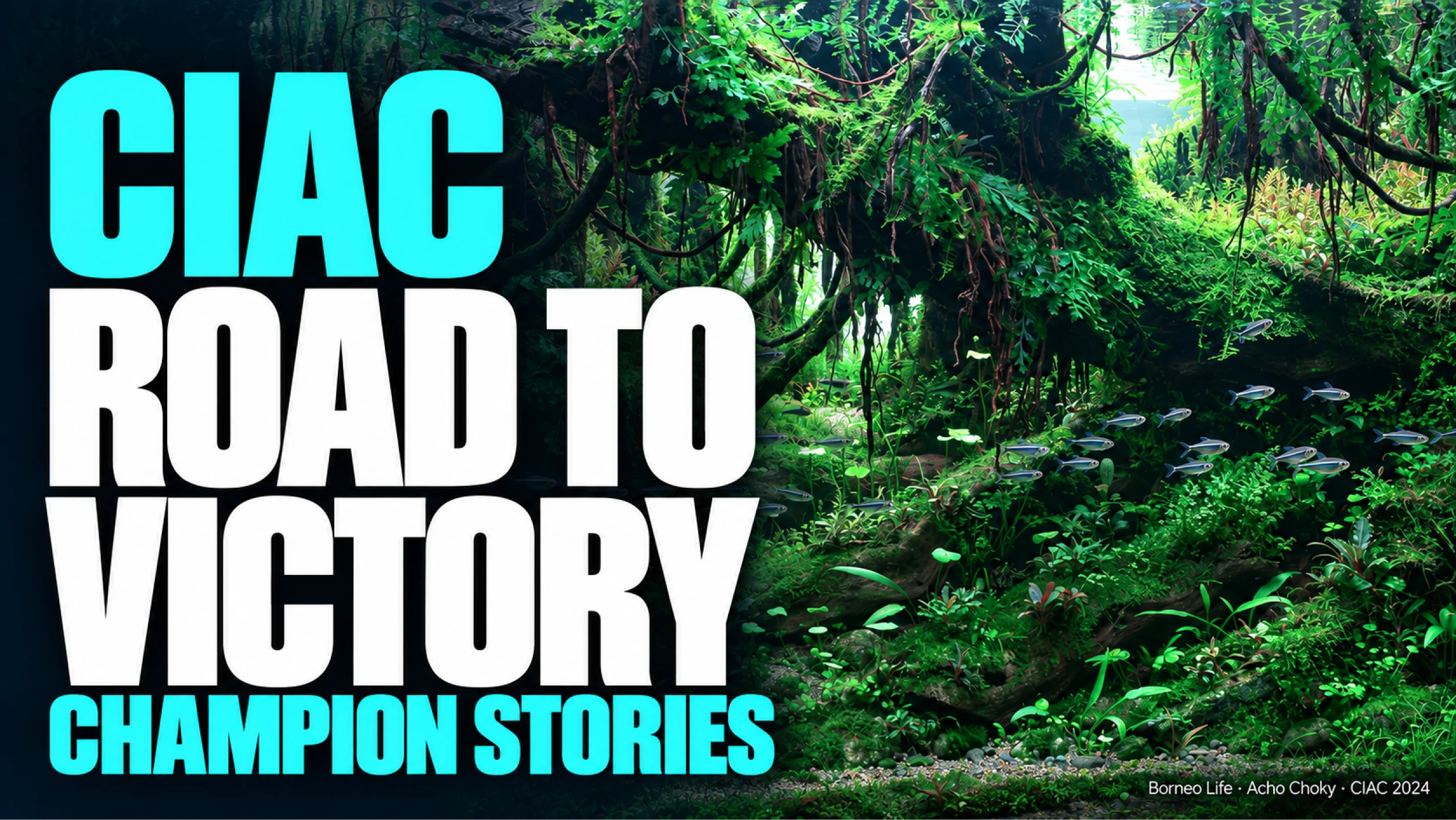
  • CIAC Champions: The Stories Behind Their Winning Aquascapes

    CIAC Champions: The Stories Behind Their Winning Aquascapes

    Every CIAC results announcement gives the aquascaping community a new collection of works to discuss, study and remember. Behind the winning photograph is a longer story: earlier competitions, ideas developed across seasons, and the practical work of bringing a landscape to life.
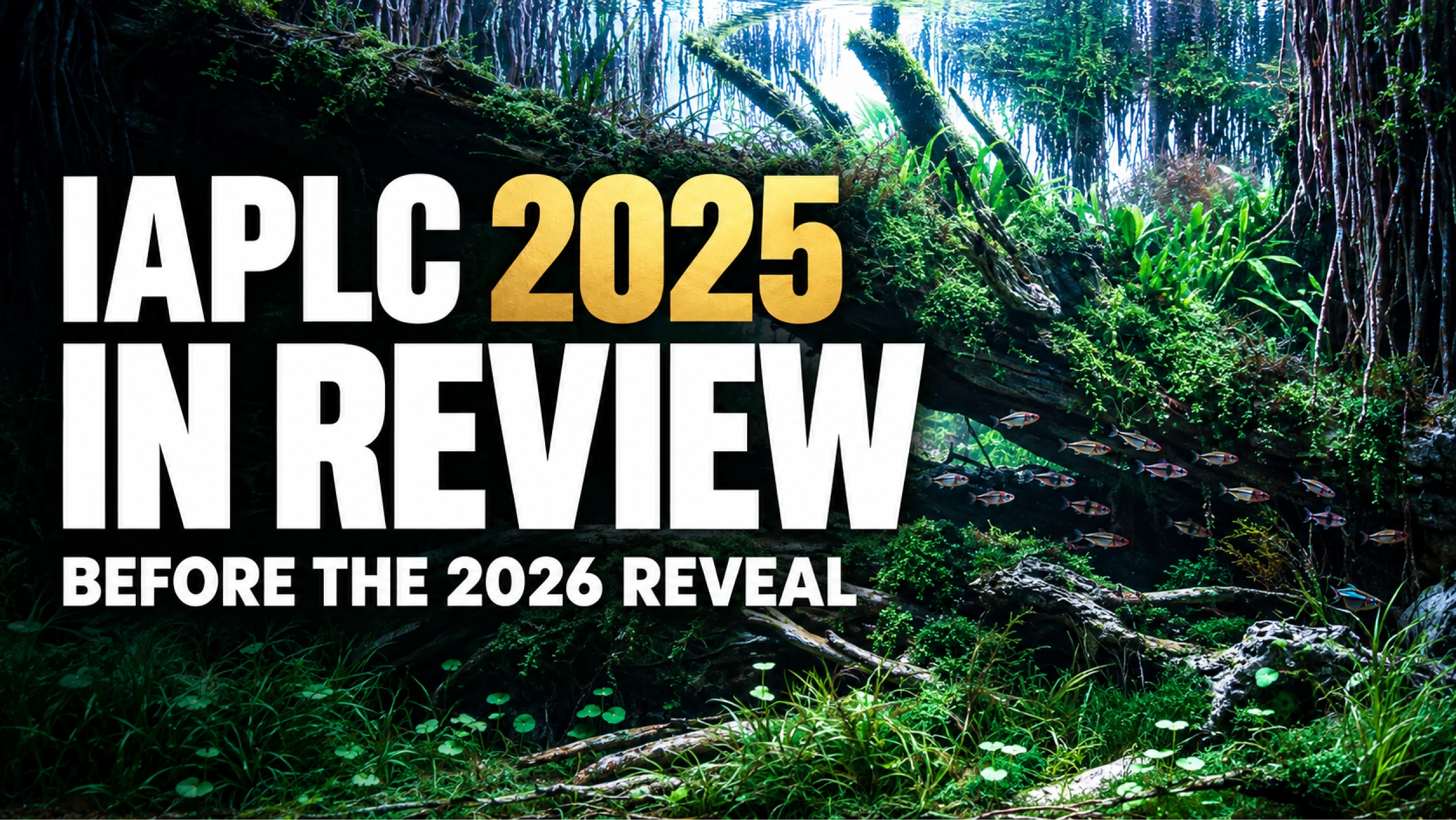
  • IAPLC 2025 in Review: Top 300 Aquascaping Styles Before the 2026 Results

    IAPLC 2025 in Review: Top 300 Aquascaping Styles Before the 2026 Results

    Before a new IAPLC winner is revealed, the previous season deserves a closer look. Which aquascaping styles filled the TOP 300 in 2025? Did the same visual families become more common in the TOP 100, TOP 27 and TOP 7? And what can those layouts teach us about depth, planting and the way fish bring a composition to life?
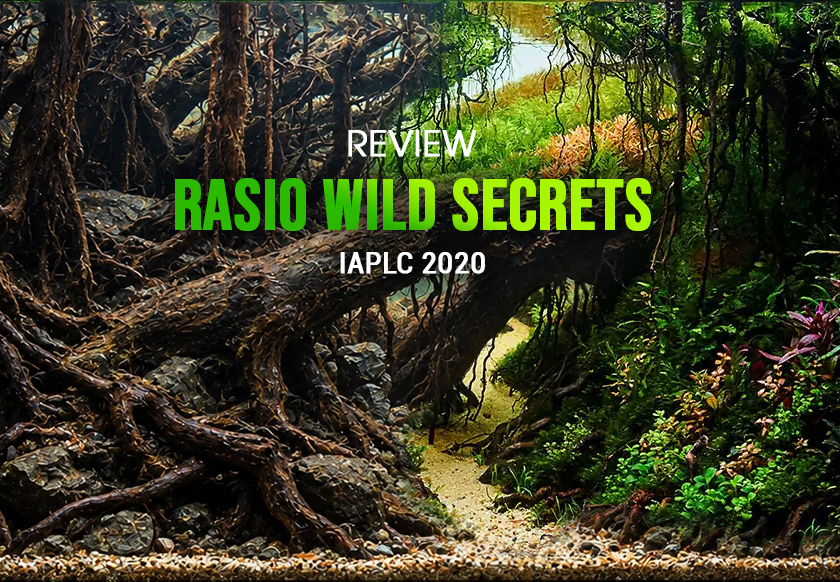
  • Rasio Wild Secrets - Heri Amir / Indonesia - Honour Prize  IAPLC 2020 - Rooted Forest Canopy Framing a Bright Sandy Underwater Trail

    Rasio Wild Secrets - Heri Amir / Indonesia - Honour Prize IAPLC 2020 - Rooted Forest Canopy Framing a Bright Sandy Underwater Trail

    This image presents a densely planted underwater scene organized around a pale sandy trail that recedes beneath an arch of roots and foliage. A school of small fish occupies the upper-left and central water, while layered greens, reddish plant accents and hanging root-like forms create strong vertical depth. The composition is highly atmospheric and technically controlled, with darkness at the edges directing attention toward the illuminated opening. Because the photograph does not reveal maintenance history, livestock identification or construction details beneath the planting, those aspects are judged conservatively from visible evidence only.
  • IAPLC GRAND PRIZE WINNERS · 2001–2025

    Every IAPLC Grand Prize Winner, 2001–2025: Design Trends, National Milestones and the Amano Legacy

    Twenty-five years. Twenty-five winning aquascapes. Twenty-two individual champions. The history of the IAPLC Grand Prize is a record of how aquascaping has expanded its visual language—from lush planted habitats and open swimming spaces to forests, rock corridors, caves and intricately constructed underwater worlds.
  • IAPLC 2026 Fresh Faces cover with bold typography and new aquatic plant growth.

    IAPLC 2026 TOP 300: 8 Fresh Faces to Follow

    The IAPLC 2026 TOP 300 nominee list offers an opportunity to discover creators whose next work could become a new source of inspiration. Alongside familiar champions are names with a different recent story: a finish outside the Top 300 in 2025, followed by a nomination in 2026.
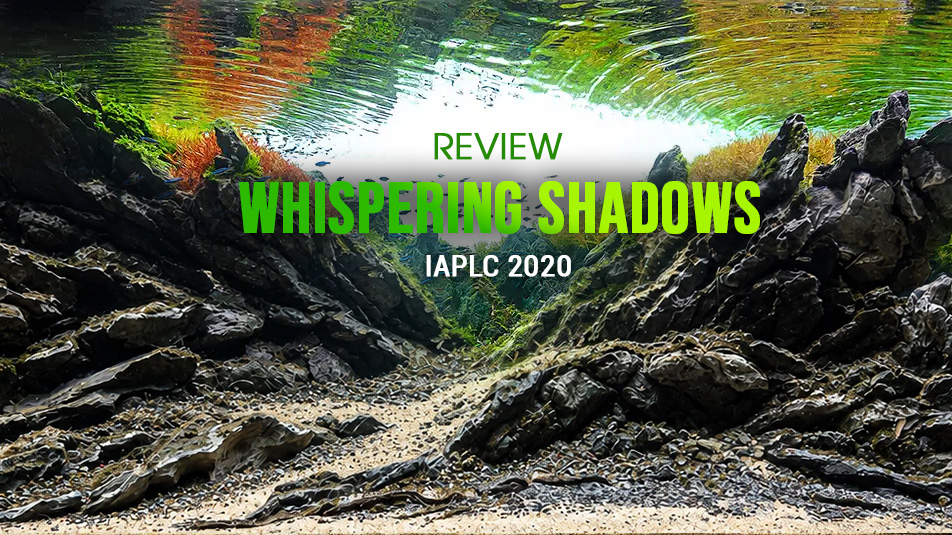
  • Whispering Shadows - Luis Carlos Galarraga / Brazil - Bronze Prize IAPLC 2020 - Jagged Rocky Valley Framed by Moss and Schooling Fish

    Whispering Shadows - Luis Carlos Galarraga / Brazil - Bronze Prize IAPLC 2020 - Jagged Rocky Valley Framed by Moss and Schooling Fish

    This image presents a densely planted rocky aquascape organized around a bright central opening that reads as a submerged valley. Dark, sharply layered stones establish the structure, while mosses and fine foliage soften their edges without obscuring the main geological rhythm. Small schooling fish add scale and movement across the upper and middle water, although their exact species and ecological requirements cannot be confirmed from the image alone. The result is a convincing naturalistic scene with strong depth, an unusually effective water-surface transition, and a few areas where planting density and visual control could be refined.
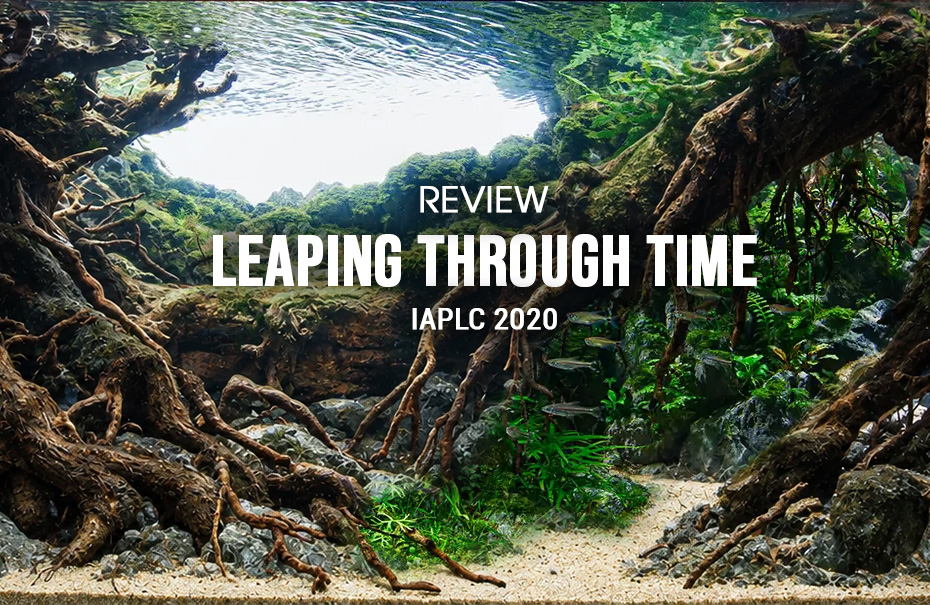
  • IAPLC 2020 - Rank 6 - Layered Jungle Stream with Schooling Fish and Bright Opening

    Leaping through time - Jheng Yu Lyu / Chinese Taipei - Bronze Prize IAPLC 2020 - Layered Jungle Stream with Schooling Fish and Bright Opening

    This image presents a densely planted underwater landscape built around a shaded, forest-like stream. Dark framing vegetation and arching wood create a strong tunnel effect, while a pale central opening supplies depth and directs attention toward the rear of the composition. A group of small fish occupies the middle water, reinforcing the impression of a living habitat. The scene is highly immersive and technically ambitious, although the darkness at both sides and the very dense planting make some structural relationships difficult to read. Scores below are editorial estimates based only on this image, not official contest results.
  • IAPLC 2026 TOP 300: 10 Notable Aquascapers to Follow

    IAPLC 2026 TOP 300: 10 Notable Aquascapers to Follow

    The IAPLC 2026 TOP 300 nominees include a compelling mix of former champions and accomplished competitors. One detail makes this year's announcement especially exciting: all four of the top finishers from IAPLC 2025 are nominated again—Josh Sim, Gang Zhao, Katsuki Tanaka and Hidekazu Tsukiji.
  • CIAC 2026 judging announcement with a minimalist illustration of the Great Wall of China.

    CIAC 2026 Enters Judging with a Record 650 Entries

    The 2026 Great Wall Cup International Aquascaping Contest (CIAC) has completed its submission phase and moved into judging, receiving 650 entries from 29 countries and regions.
  • IAPLC 2026 TOP 300 nominee counts by country, led by Japan with 68, China with 41 and Vietnam with 29.

    IAPLC 2026 TOP 300 by Country: Japan Leads

    Japan has the largest representation in the IAPLC 2026 TOP 300 nominee list, with 68 names. AquaLibs' analysis of ADA's official list counts 300 nominees across 49 countries and areas, with Vietnam third by nominee count.
  • IAPLC 2026: 29 Vietnamese TOP 300 Nominees

    IAPLC 2026: 29 Vietnamese TOP 300 Nominees

    Twenty-nine Vietnamese aquascapers have been named in the IAPLC 2026 TOP 300 nominee list published by ADA. Their nominations give Vietnam's aquascaping community a shared reason to celebrate as attention turns to the final results on October 10.
  • IAPLC 2026 TOP 300 nominees and October 10 results announcement

    IAPLC 2026 TOP 300 Nominees & Results Date

    The IAPLC 2026 TOP 300 nominee list is available, with final results scheduled for Saturday, October 10, 2026. For aquascaping enthusiasts, it is time to find familiar names and prepare for the reveal.
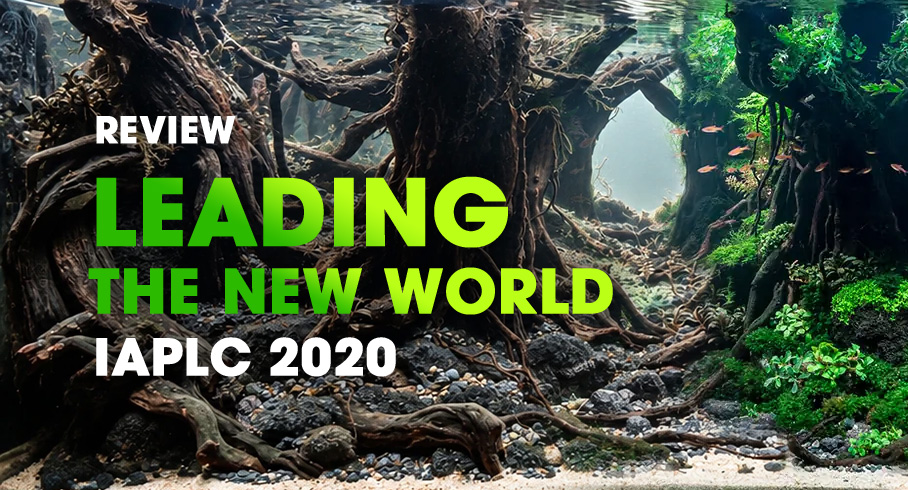
  • Leading the new world - Roger Goh / Singapore - Bronze Prize IAPLC 2020 - Rooted forest aquascape frames a luminous central waterway

    Leading the new world - Roger Goh / Singapore - Bronze Prize IAPLC 2020 - Rooted forest aquascape frames a luminous central waterway

    This image presents a densely planted forest-style aquascape organized around a bright opening and a pale, winding foreground channel. Massive dark roots create an overhead canopy and repeated vertical trunks, while small schooling fish provide scale and movement through the central space. The work is exceptionally complete visually, with mosses and compact plants covering much of the hardscape. Because the review is based on one photograph, plant identities, tank dimensions, maintenance history and the exact fish ecology cannot be verified. The scores below are an editorial estimate, not an official contest result.
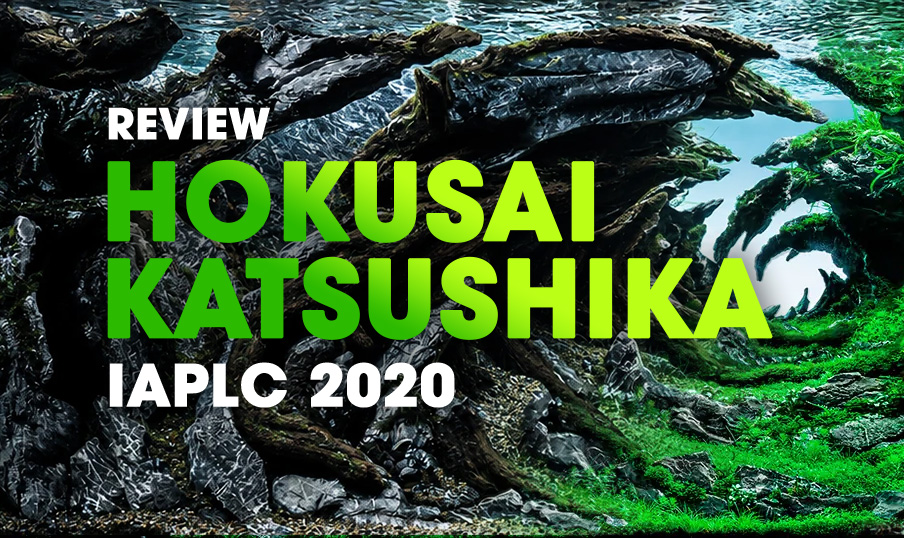
  • Hokusai Katsushika - Albert Escrihuela Cáceres / Spain - Silver Prize - IAPLC 2020 - Moss-Covered Rock Ravine Framed by a Bright Opening

    Hokusai Katsushika - Albert Escrihuela Cáceres / Spain - Silver Prize - IAPLC 2020 - Moss-Covered Rock Ravine Framed by a Bright Opening

    This image presents a densely planted underwater ravine built from dark, layered rocks and heavily mossed branches or ledges. A school of small, vividly marked fish occupies the central passage, while a bright opening behind the hardscape supplies the principal depth cue. The layout has a strong sense of enclosure, movement and vertical relief, although the very dark edges make some construction and planting details difficult to assess. The following scores are an editorial estimate based only on this submitted image, not an official contest result, and long-term maintenance cannot be verified from a single photograph.
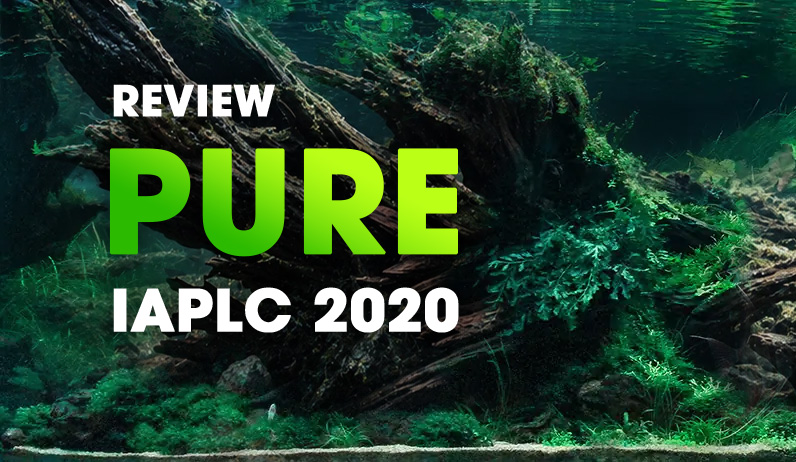
  • IAPLC 2020 - Rank 3 - Layered Driftwood Forest with a School of Striped Fish

    PURE - Josh Sim / Malaysia - Silver Prize - IAPLC 2020 - Layered Driftwood Forest with a School of Striped Fish

    This image presents a densely planted underwater forest organized around sweeping, interlocking driftwood. Fine-leaved growth covers much of the wood, while open water in the central lower area gives a school of vertically striped, long-finned fish room to move. The composition is immersive and convincingly mature in appearance, with strong depth created by overlapping branches, dark recesses and brighter planting behind the main structure. Because the image shows only one finished view, maintenance history, exact plant identities and hidden construction cannot be verified. The following scores are an editorial estimate, not an official contest result.
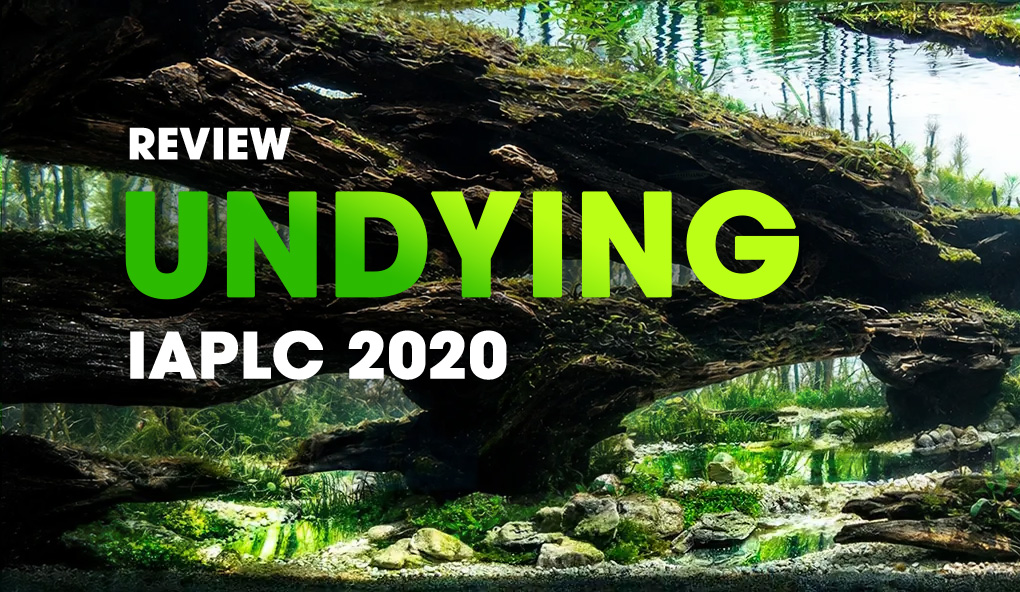
  • Undying - Steven Chong / United States of America - Gold Prize IAPLC 2020 - Layered Driftwood Arches Frame A Bright Underwater Forest

    Undying - Steven Chong / United States of America - Gold Prize IAPLC 2020 - Layered Driftwood Arches Frame A Bright Underwater Forest

    This image presents a densely planted aquatic scene organized around several dark, interlocking driftwood forms. The wood creates tunnels, ledges, and strong horizontal layers, while a bright open area behind the structure supplies depth and contrast. A compact school of small, striped-looking fish occupies the central water column and reinforces the sense of an active habitat. Mossy and fine-leaved growth covers much of the wood and foreground. Species, tank dimensions, maintenance history, and hidden construction cannot be confirmed from the image, so this review evaluates only visible evidence and treats the numerical scores as an editorial estimate, not an official result.