Follow the photographs into the wider country story with the new AquaRank Nations: explore Germany’s IAPLC 2026 results and the creators behind them.
This is part of AquaLibs’ IAPLC 2026 Country Studies, returning to our archived Germany introduction through this season’s photographs. The archive is historical commentary; the new observations are AquaLibs’ independent visual analysis, separate from official judging. The 4 selected works form an editorial comparison, not a census of national styles.
The 2026 result in context
| Published ranking range | Germany places |
|---|---|
| Ranks 1–7 | 0 |
| Ranks 1–27 | 1 |
| Ranks 1–100 | 6 |
| Ranks 1–300 | 9 |
Counts are calculated from the official final ranking, using the country-and-area label Germany. They count published places, not total submissions or participants. Rank 61 is vacant, so the global ranks 1–300 contain 299 published names.
From individual aquariums to the national view
Six German works appear in the Top 100, while the five lowest overall ranks determine the Nations average. The four photographs in this feature are a design selection rather than a reconstruction of that formula; rank 78 completes the contributing five. Use the country page to connect those results with creators, then compare hardscape, planting and open water in the images below.
| AquaRank Nations · IAPLC 2026 | Germany |
|---|---|
| AquaRank national position | #6 |
| Average of five contributing overall ranks | 49.6 |
| Contributing individual ranks | #20, #38, #52, #60, #78 |
| Published country results in the full edition | 96 |
These are AquaRank’s calculated national standings, not official IAPLC national awards. The average uses the five lowest overall ranks from five confirmed aquascapers; a lower average is better. The 2026 edition is marked as complete on Nations. This full-ranking view is broader than the Top 300 photo selection used in this article. Figures were checked on 16 October 2026.
Explore Germany at IAPLC 2026 on AquaRank Nations →
Open the contributing five, follow available artwork and creator profiles, then use the edition selector or Germany’s IAPLC history to explore other available seasons. Use the IAPLC 2026 nations comparison to see the same method applied across countries and regions.
Inspired by Josh Sim’s IAPLC Nations Challenge. Read the Nations methodology for coverage and ranking rules. The average describes results; it does not measure a design style or explain a judge’s decision.
Follow the country journey
Explore Germany through the years below. Switch between nation position and average rank, then open an edition or its contributing aquascapers to continue the journey.
Germany at IAPLC
Loading country history…
Returning to the archive
The archived Germany introduction, published in 2021, discussed increasingly refined contest layouts and the difference between individual results and depth across a national group. We revisit those ideas with the current published counts and four selected photographs. The old essay’s average rankings belong to a different historical exercise and are not mixed with the Top 300, Top 100 or Top 27 counts used here.
The photographs to study
| World rank | Creator | A detail to follow |
|---|---|---|
| #20 | Karsten Duenne | A wooded frame around a small patch of light |
| #38 | Andreas Ruppert Flerlage | A rocky valley against a dark background |
| #52 | Tanja Pechhold | Light water separates wood, stone and tall planting |
| #60 | Fabian Beck | Green contours reveal overlapping roots |
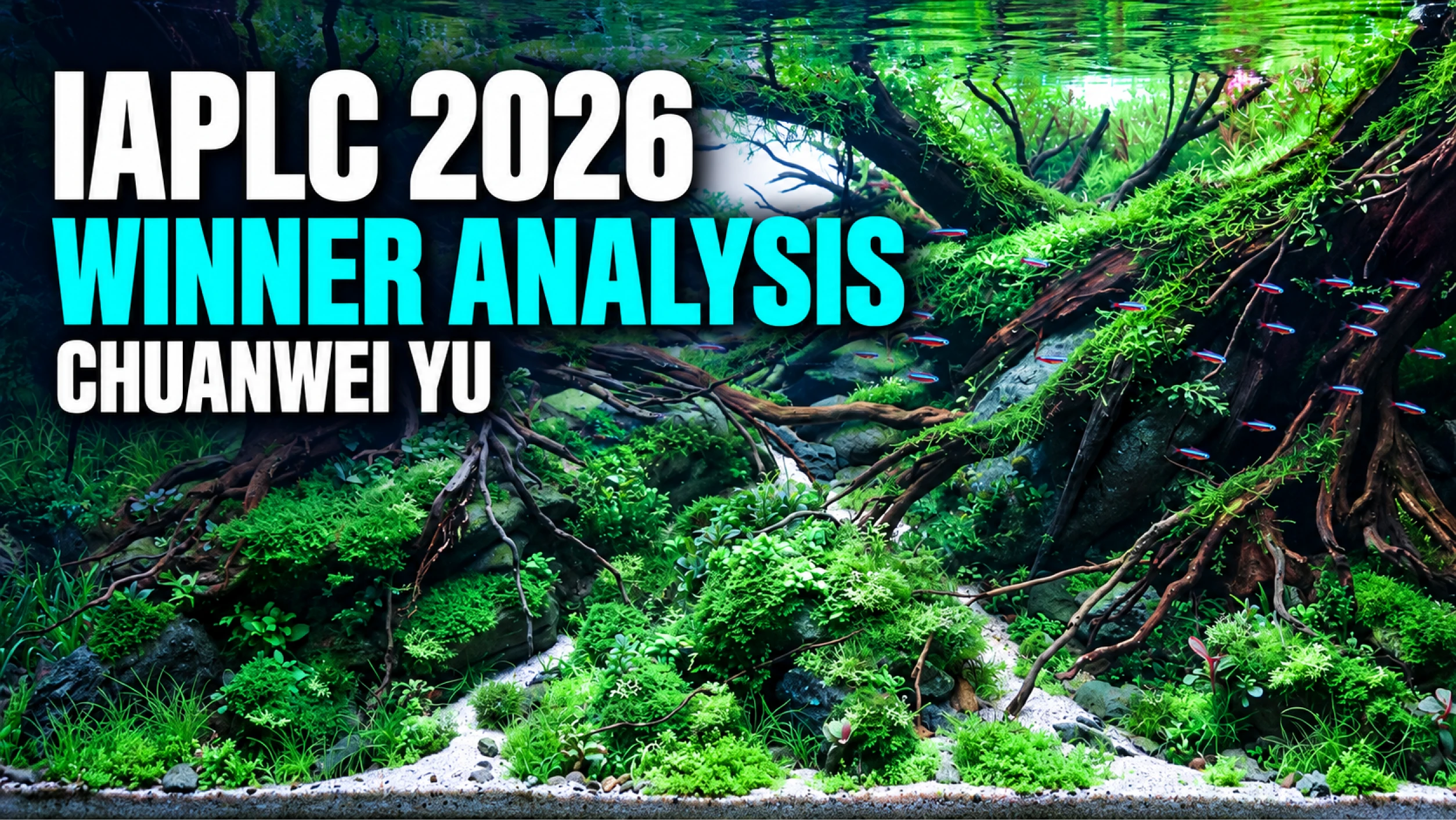
Rank 20 — Karsten Duenne
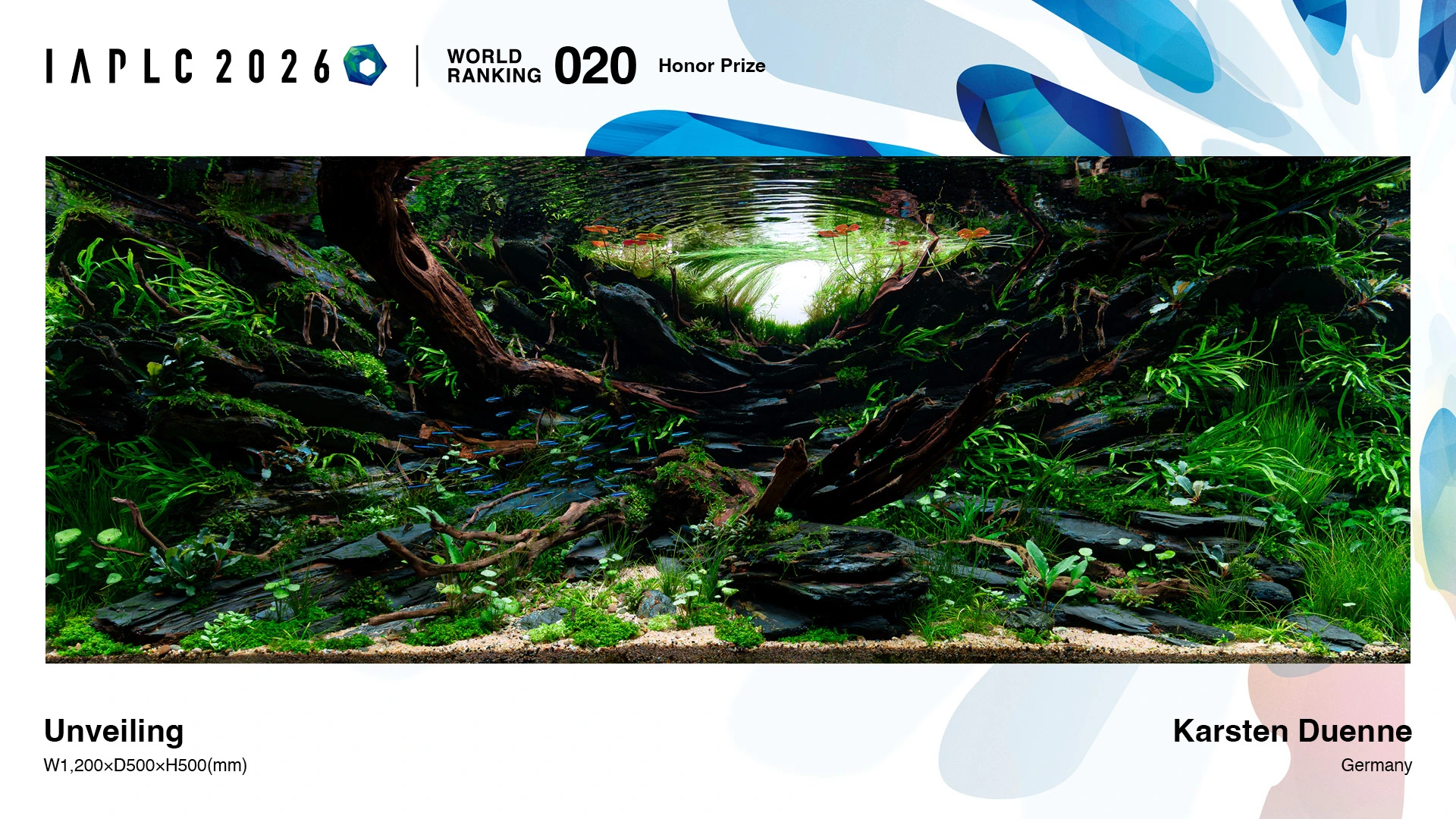
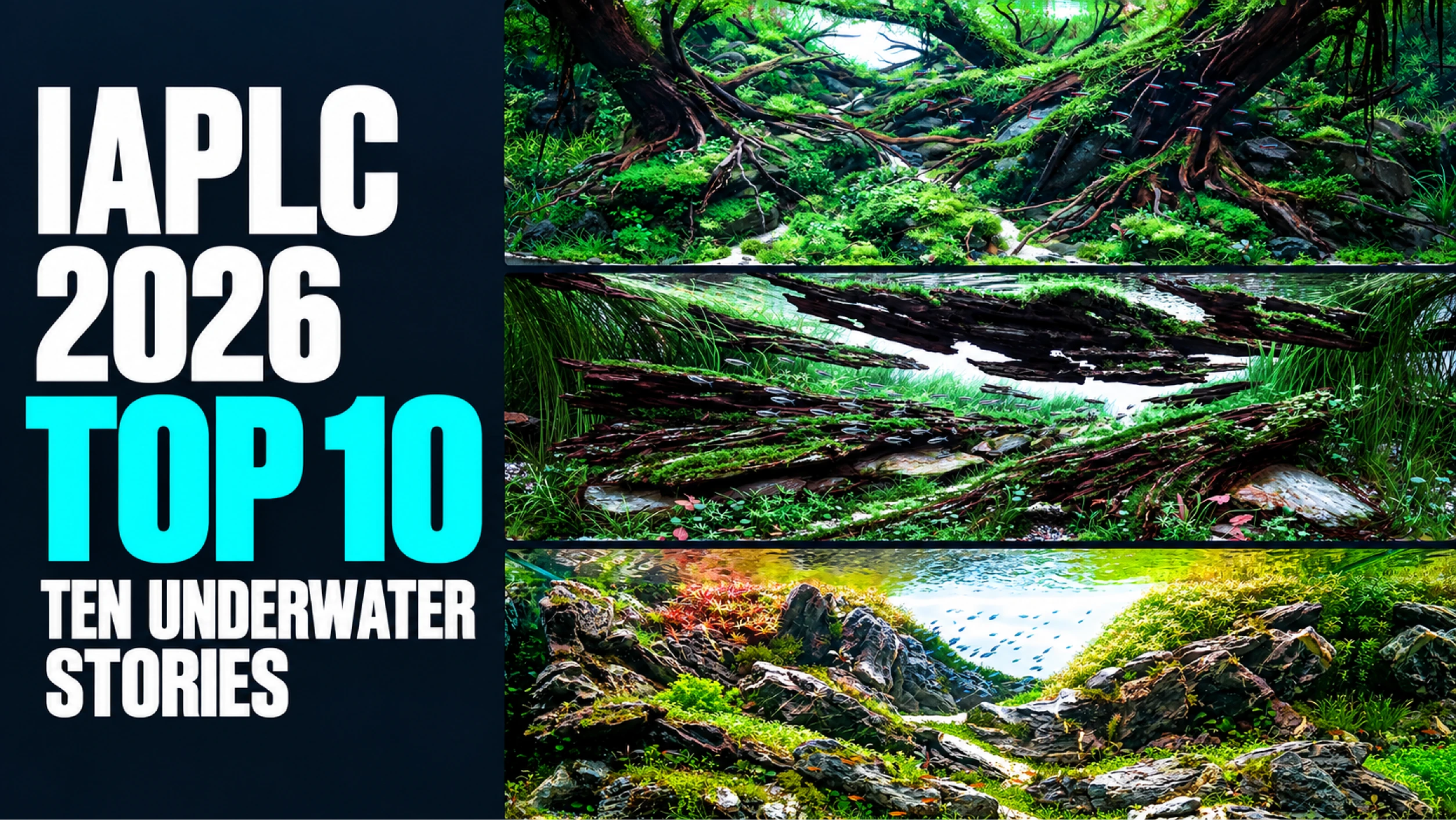
A wooded frame around a small patch of light. Sweeping dark wood guides the eye towards a luminous area near the upper middle. Leafy growth at the sides and finer planting below provide different scales of texture. The ground remains broken into small planted and pale patches rather than one uniform carpet. Fish are visible against the shaded middle. The contrast between heavy timber and that small bright destination gives the photograph a clearly organised atmosphere.
Look closer: Watch how little bright background is needed to orient the whole composition.
Discover aquascapers on AquaRank · Back to the selected works
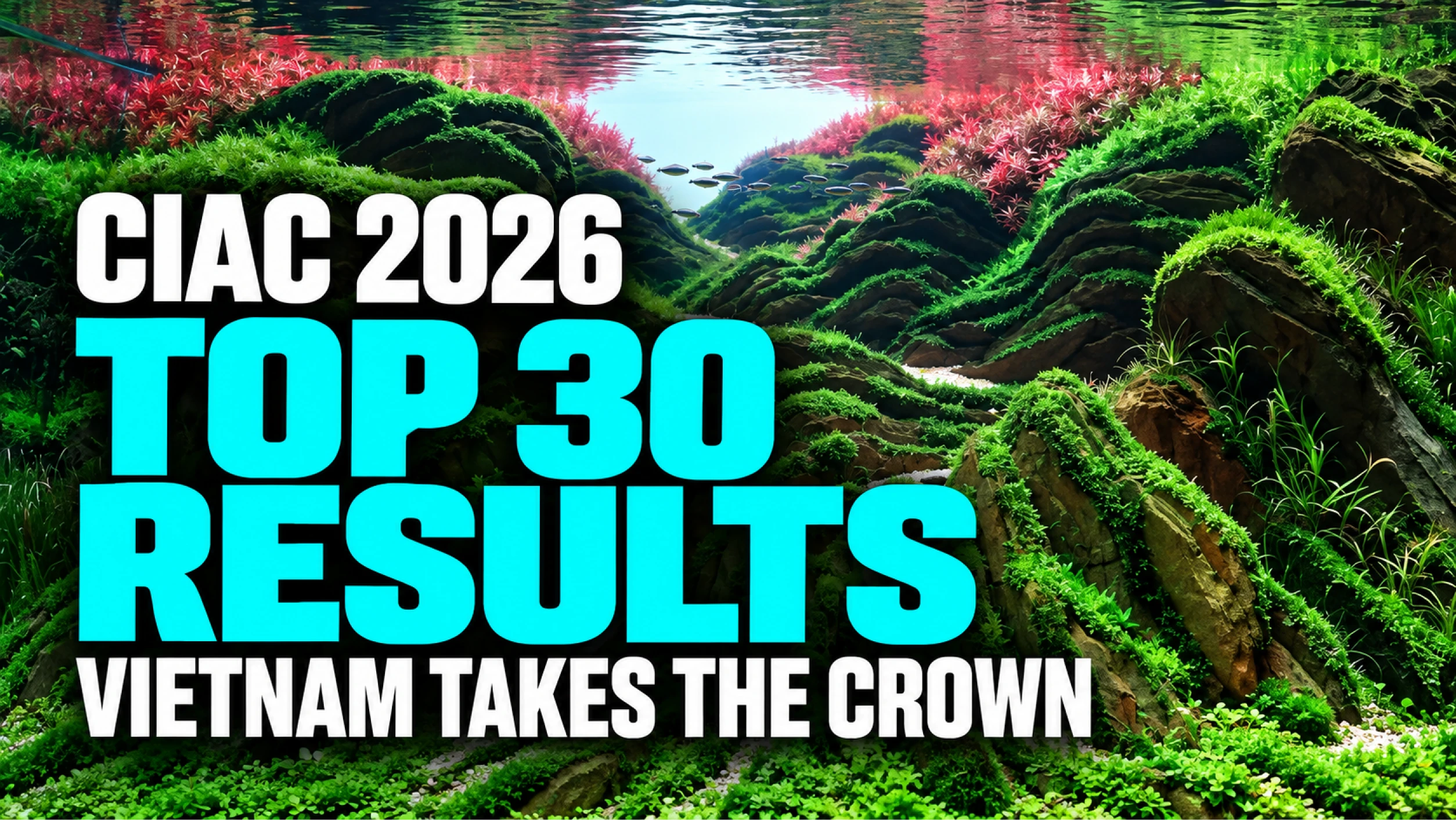
Rank 38 — Andreas Ruppert Flerlage

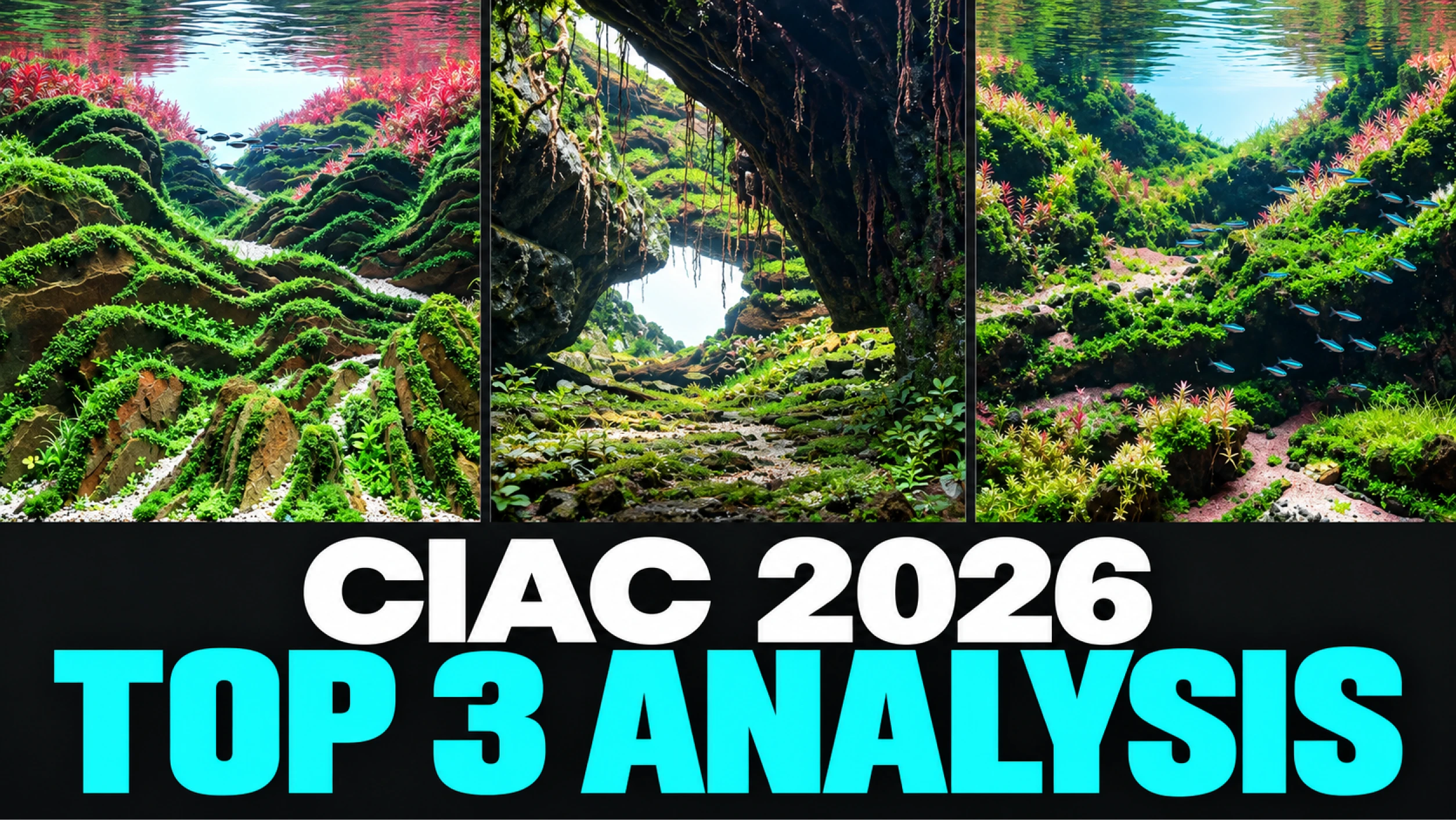
A rocky valley against a dark background. Sharp exposed rocks frame a narrow pale route, with vivid green planting connecting their bases and ledges. The rear background is notably darker than the ground, giving the stone silhouettes a firm outline. Depth comes through overlapping rock groups and the narrowing passage rather than through a bright white horizon. Fish are visible around the middle, adding scale without competing with the geological direction.
Look closer: Compare the dark upper background with the pale route below it.
Explore Andreas Ruppert Flerlage’s recorded work on AquaRank · Back to the selected works
Rank 52 — Tanja Pechhold

Light water separates wood, stone and tall planting. Rock groups and branching wood occupy the lower and middle aquarium, leaving a relatively bright opening above a narrow ground-level route. Long leaves gather towards the margins and reach across the higher water. Fish are easily seen against the lighter background. The scene offers separation rather than continuous enclosure: exposed stones, dark wood and fine plant textures each retain their own character.
Look closer: Compare the open upper water with the more closely arranged lower hardscape.
Explore Tanja Pechhold’s recorded work on AquaRank · Back to the selected works
Rank 60 — Fabian Beck
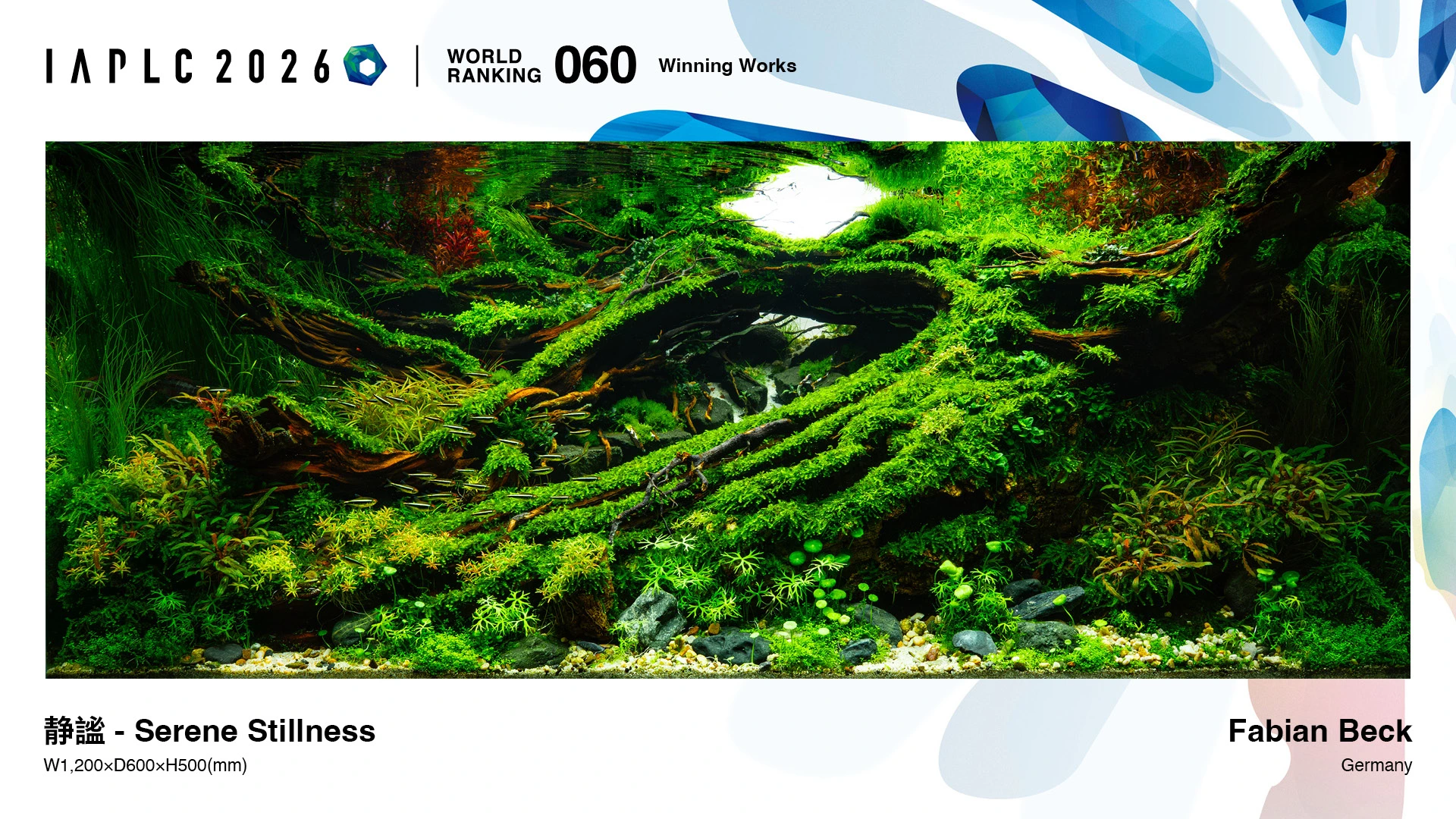
Green contours reveal overlapping roots. Plant-covered roots sweep across the middle in several directions, with darker gaps between them and a bright upper opening behind. Warmer foliage appears near the margins, while finer lower planting changes the texture close to the ground. The scene could become visually busy, but the differences in brightness help one contour stand apart from the next. Depth depends on those distinctions being preserved.
Look closer: Follow one green contour until another root conceals it.
Explore Fabian Beck’s recorded work on AquaRank · Back to the selected works
What the comparison reveals
Karsten Duenne demonstrates how a small bright destination can orient a densely wooded frame. Andreas Ruppert Flerlage uses a darker upper background to strengthen rock silhouettes. Tanja Pechhold leaves comparatively bright water around mixed wood and stone, while Fabian Beck develops depth through overlapping green contours. The photographs offer different answers to the same question: where does one main form end and the next space begin?
That distinction gives a more precise basis for discussion than calling all four simply natural or technical. The selected works show how planting may reinforce edges while brightness keeps the water legible. Their finish positions are verified outcomes, but our reading of those visible relationships is separate from the judges’ evaluation.
A design exercise to take away
Read the empty intervals as carefully as the hardscape. A bright gap, a dark background or a narrow pale route can change the apparent weight of the structure beside it.
All published places at ranks 1–300
| World rank | Published name | Country / area |
|---|---|---|
| 20 | Karsten Duenne | Germany |
| 38 | Andreas Ruppert Flerlage | Germany |
| 52 | Tanja Pechhold | Germany |
| 60 | Fabian Beck | Germany |
| 78 | Patrik Nemeth | Germany |
| 83 | Florian Friedrich Bergerhoff | Germany |
| 140 | Vico Friedsam | Germany |
| 270 | Robert Werner | Germany |
| 290 | Grzegorz Ziomek | Germany |
Continue through the archive
Revisit the original Germany introduction, then open the IAPLC 2026 gallery to view the selected works at full size and keep browsing beyond them. For a related reading, explore the IAPLC 2026 Top 10 design guide.
Keep exploring with AquaRank Nations. Open Germany’s country overview to move from this season’s photographs to recorded results across available competitions and years. Start with the 2026 IAPLC result, choose an earlier available edition, and follow a creator whose work catches your attention. Country overviews keep competition and edition context visible; they do not combine raw ranks from different contests into one overall score.
Which German creator’s earlier layouts would you compare with this season’s work?
Sources: Germany’s AquaRank Nations edition page and the linked Nations methodology (checked 16 October 2026); official IAPLC 2026 ranking; original 2026 image cards hosted in the AquaLibs gallery; the linked country introduction from the 2021 archive. Historical series: IAPLC Nations Challenge, as attributed in the archive. New visual analysis: AquaLibs. Photographs: Aqua Design Amano Co., Ltd.; creators credited above. Plant and fish species, construction methods and long-term maintenance are not inferred from the final photographs.


Leave your comments