It’s time to help contribute for biggest aquarium gallery online

SUBMIT HEREVIEW GALLERY

Cabomba plants

Introduction

How to care 

Water Conditions


Introduction

Cobomba plants are available in aqua stores. It has some names as: Green Cabomba, Carolina Fanwort, Brazilian Fanwort, or simply "Rong Đuôi Chó", "Rong đuôi chồn", "Rong la hán xanh", "Rong lá ngò" from Vietnam. Eaten locally as a vegetable. 

Cobomba plants can be green, purple or red. If you want to buy this plant from aqua stores, please check the plants. if it has some roots growing from the stems and evidence of new growth, the plant have small buds or flowers then you can buy it. These are all indications that the plant is healthy. 

It reaches 30-80 cm and each stem can become 5-8 cm wide. The least demanding of the Cabomba-species, but still causes problems in poorly lit aquariums. If there is not sufficient light, try Limnophila sessiliflora, which requires less light. Most decorative when planted in groups.

A bundle of stems or young plants gathered in an anchor. Remove the anchor and split into separate plants. Regarding stem plants, remove the leaves from the lowest 5 cm (2“). Remove any damaged leaves. Plant the individual plants with some distance into the bottom substrate. Roots will develop soon and the plant start growing.

How to care 

Commons

Cabomba care can be not hard, but it not easy. So Cabomba plants may not be the best choice for beginners. 

Cabomba care can be not easy when you are trying to keep it in low tech tanks. In low light, low tech tanks, a Cabomba plants often start to break apart and die after some days. Cabomba plants require morre watt of light per gallon for longer hours (about 7 hours). 

In addition to lighting requirements, a Cabomba plant may need liquid fertilizer or root tabs to provide supplements of iron and other necessary minerals. Cabomba plants may not need Co2 supplements but it would benefit from Co2. 

Another thing is which species of fish this plant should be kept with. Because it is delicate, so it is not the best choice for cichlids, goldfish or some types of Apple Snail may be interested in eating it. 

Planting 

With Cabomba Plants, you can plant in substrate or keep as a floating plant. 

Gently plant each stem in an inch or more of nutrient rich plant substrate, an inch or more apart. Its good to plant stems slightly apart to give them room to grow and sway. Be careful not to pack the substrate around the planted stem too tightly because the stem may break. At the same time, make sure the stem is secure because Cabomba plants have a tendency to float around. Its a good idea to plant the longer stems in the back rows and the shorter stems in the front rows. If planted correctly, Cabomba plants can create a nice “dense forest” look. After about a week or so, the plant will take root and be better able to hold itself in place.

Its also possible to keep Cabomba as a floating plant. Floating Cabomba is easy. Just drop the stems in the tank and the stems will float near the water surface. Because the stems are closer to the light source, they can grow faster floating as opposed to planted. They can also sprout fine white roots from the stem, and can even flower.

Trimming & Reproduction

Trimming Cabomba plant stems is not difficult. The key to trimming Cabomba is to cut the stems very gently. Be careful to not tug the plant and cause breaking, cracking, excessive shedding or uprooting. And if the trimmings are at least three inches long and look to be in good shape, they can be floated in the water or planted in the substrate. And they will grow into new plants on their own. 

Water Conditions

Water Parameters: Another Cabomba care issue has to do with aquarium water. A Cabomba plant likes clean tanks with clear gently moving water. If aquarium water moves too quickly, the plant might get jostled around and uprooted.

Aquarium pH: 6.8 – 7.5. Some hobbyists suggest lower is also acceptable.
Water Temperature: Tropical fish range, 72 – 82 degrees Fahrenheit.
Lighting: Medium to High
Tank Size: Small to Large
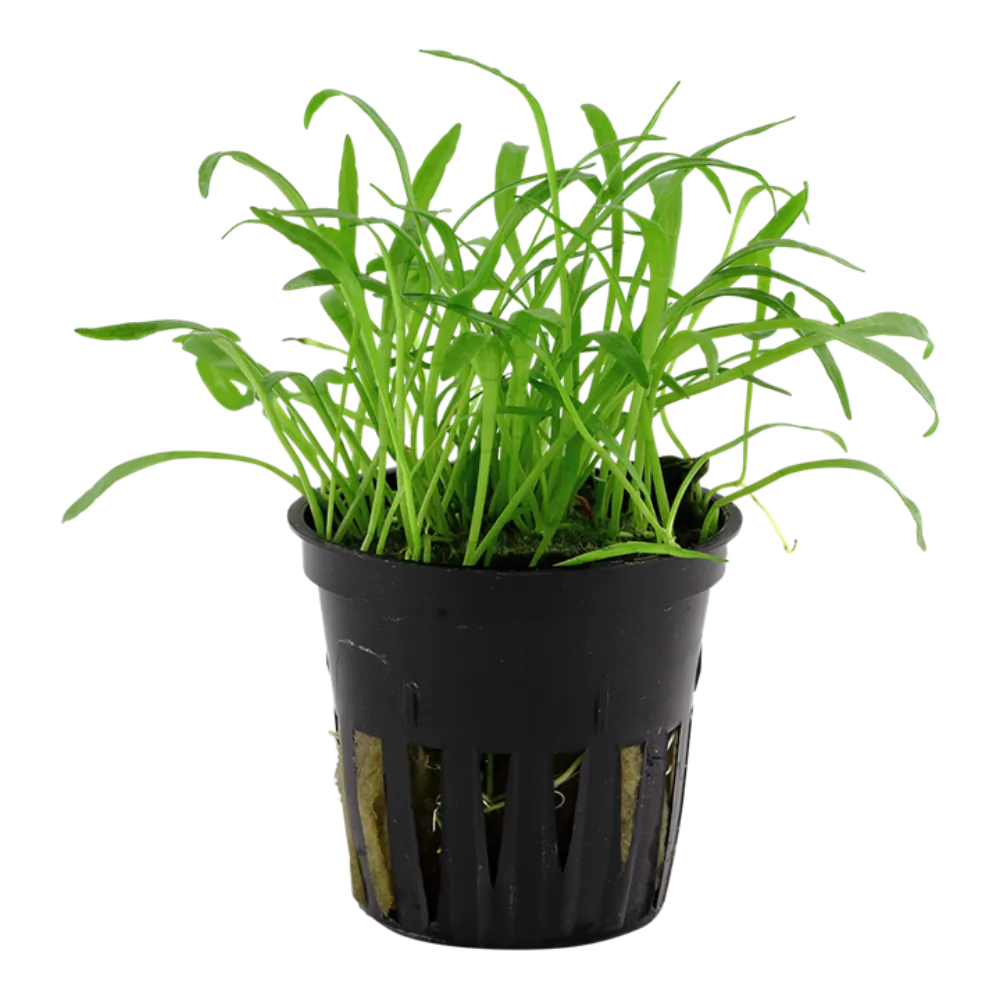
Plant info

Colors: Green
Difficulty: Easy
Origin: South America
Usage: Supporting plants
Type: Stem
Growth rate: High
Height: 20 - 30+
Light demand: Medium
CO2: Low
Leave your comments
Lastest on Plants
  • Lilaeopsis brasiliensis (Micro Sword)

    Easy
    Supporting plants
    Hailing from South America, Lilaeopsis brasiliensis, commonly known as the Micro Sword, is a highly popular foreground plant. Its grass-like appearance and low-growing habit make it perfect for creating lush, green carpets in the aquarium. It is versatile, hardy, and suitable for both beginners and experienced aquascapers alike.
  • Leptodictyum riparium (Stringy Moss)

    Easy
    Supporting plants
    Leptodictyum riparium, commonly known as Stringy Moss, is a delicate and versatile aquatic moss found in diverse habitats worldwide. Its distinctive, upright string-like growth makes it a popular choice for aquascapers looking to add natural, vertical textures to hardscapes while providing excellent hiding spots for shrimp and fry.
  • Lagenandra meeboldii 'Red' (Lagenandra)

    Easy
    Supporting plants
    Hailing from the shaded streams of southern India, Lagenandra meeboldii 'Red' is a striking rhizomatous plant. Known for its broad, beautifully colored leaves ranging from olive green to deep reddish-brown, it has become a popular, easy-to-care-for centerpiece in modern aquascapes, adding excellent contrast and texture.
  • Hygrophila serpyllum

    Medium
    Supporting plants
    Originating from the diverse waterways of India, Hygrophila serpyllum is a captivating, low-growing aquatic plant prized for its dense, creeping habit. With its vibrant light green, rounded leaves, it forms lush carpets in the aquarium foreground, making it a highly sought-after choice for aquascapers aiming for natural, verdant layouts.
  • Hygrophila polysperma 'White'

    Easy
    Supporting plants
    Hygrophila polysperma 'White' is a striking cultivar renowned for its distinctive white-veined, variegated leaves. Originating from selective breeding, this fast-growing stem plant is incredibly popular among aquascapers. Its undemanding nature makes it perfect for beginners seeking to add a bright, contrasting splash of color to their planted aquariums.
  • Hygrophila odora ’Difformis' (Water Wisteria)

    Easy
    Supporting plants
    Hygrophila odora ’Difformis', closely related to the classic Water Wisteria, originates from Asia. It is a highly popular and undemanding aquarium plant, prized for its beautiful, deeply lobed, fern-like green leaves. Its rapid growth helps balance the aquarium ecosystem by absorbing excess nutrients, making it perfect for beginners.
  • Hygrophila lancea 'Araguaia'

    Medium
    Supporting plants
    Hygrophila lancea 'Araguaia' is a striking aquatic plant known for its narrow, reddish-brown leaves and creeping growth habit. Originally hailing from Asia, it has become highly sought after by aquascapers for adding contrasting colors and unique textures to the foreground and middleground of planted aquariums.
  • Hygrophila corymbosa "Siamensis 53B"

    Easy
    Supporting plants
    Hygrophila corymbosa "Siamensis 53B" is a highly popular and undemanding aquatic plant originating from Asia. Known for its lush, light green leaves and rapid growth, it quickly forms a dense thicket in the aquarium. Its robust nature makes it a perfect choice for beginners seeking a beautiful background display.
  • Hygrophila corymbosa 'Compact' (Compact Temple Plant)

    Easy
    Supporting plants
    Hygrophila corymbosa 'Compact' is a highly popular, cultivated variant of the standard Temple Plant. Known for its dense, short growth habit, this hardy plant is perfect for beginners. Its vibrant, broad green leaves bring a lush, bushy appearance to the foreground or midground of any freshwater planted aquarium.
  • Hydrocotyle tripartita

    Easy
    Supporting plants
    Hydrocotyle tripartita, often referred to as 'Japan', is a popular, fast-growing aquatic plant originating from Asia. Known for its distinct, clover-like light green leaves and creeping growth habit, it is highly favored by aquascapers for creating dense, attractive foreground carpets or cascading bushes in planted aquariums.
  • Hottonia palustris (Water Violet)

    Easy
    Supporting plants
    Hottonia palustris, commonly known as Water Violet, is an elegant and distinct stem plant native to Europe and Asia. Characterized by its deeply lobed, bright green leaves, it brings a delicate texture to the aquarium. Its undemanding nature makes it a popular choice for beginners and experienced aquascapers alike.
  • Eriocaulon sp. 'Vietnam' (Eriocaulon Vietnam)

    Medium
    Supporting plants
    Originating from Asia, Eriocaulon sp. 'Vietnam' is a highly sought-after aquatic plant known for its striking, grassy appearance. Unlike many of its demanding relatives, this specific variant is celebrated for being relatively adaptable and easier to grow, making it a popular choice for aquascapers looking to add unique texture.
  • Eleocharis pusilla 'Mini' (Mini Hairgrass)

    Medium
    Supporting plants
    Eleocharis pusilla 'Mini', commonly known as Mini Hairgrass, is an exceptionally popular foreground plant in the aquascaping hobby. Originating as a cultivar, it forms a dense, lush, light green carpet much lower than standard hairgrass. Its short stature and relative ease of care make it ideal for nano aquariums.
  • Echinodorus x barthii (Double Red Sword)

    Easy
    Supporting plants
    Echinodorus x barthii, commonly known as the Double Red Sword, is a captivating and popular cultivar in the aquarium hobby. Renowned for its striking color transformation from deep red to dark green, this hardy rosette plant serves as a magnificent centerpiece, thriving easily in a variety of aquatic setups.
  • Echinodorus 'Reni'

    Easy
    Supporting plants
    Echinodorus 'Reni' is a highly sought-after cultivar celebrated for being one of the smallest red sword plants available in the aquarium hobby. Its striking deep red to copper foliage provides a brilliant contrast against green aquatic plants, making it a perfect centerpiece.
  • Cryptocoryne x willisii (Willis's Cryptocoryne)

    Easy
    Supporting plants
    Cryptocoryne x willisii is a robust, easy-to-grow aquatic plant originating from Sri Lanka in Asia. Highly popular among aquarists for its undemanding nature, it forms dense, grassy clusters over time. Its narrow, bright green leaves make it an excellent choice for creating lush foreground or midground aquascapes.