
It’s time to help contribute for biggest aquarium gallery online

SUBMIT HEREVIEW GALLERY

12 Peaceful Freshwater Fish and Invertebrates for Stunning Nano Aquariums

12 Peaceful Freshwater Fish and Invertebrates for Stunning Nano Aquariums

Creating a thriving nano aquarium is a rewarding challenge that combines artistic aquascaping with the joy of keeping small, vibrant aquatic life. When working with smaller water volumes, typically under 20 gallons (75 liters), selecting compatible s...
10 Best Aquarium Snails for Your Planted Tank

10 Best Aquarium Snails for Your Planted Tank

Aquarium snails are more than just tank inhabitants; they are the unsung heroes of the planted aquarium. These fascinating gastropods provide essential services, from keeping glass surfaces clear of algae to aerating your substrate. When selecting sn...
10 Vibrant Freshwater Shrimp for Your Planted Nano Aquarium

10 Vibrant Freshwater Shrimp for Your Planted Nano Aquarium

Freshwater shrimp are the unsung heroes of the planted aquarium hobby. Beyond their stunning colors and patterns, these tiny crustaceans are excellent at cleaning up algae and leftover food. For nano aquarium enthusiasts, shrimp offer a fascinating l...
13 Easy Aquarium Plants for a Thriving Beginner Planted Tank

13 Easy Aquarium Plants for a Thriving Beginner Planted Tank

Starting a planted aquarium can seem daunting, but it doesn't have to be! Many beautiful and beneficial freshwater plants thrive with minimal effort, making them ideal for beginners. Adding live plants not only enhances the aesthetic appeal of y...

Aquascaping Contest Schedule 2026

Summer Flowers - Cliff Hui / HongKong China
Cliff Hui

Summer Flowers - Cliff Hui / HongKong China

The International Aquatic Plants Layout Contest - 2014
Rain Forest (Hear the Angels) - Cliff Hui / HongKong China
Cliff Hui

Rain Forest (Hear the Angels) - Cliff Hui / HongKong China

The International Aquatic Plants Layout Contest - 2012
Forever - Cliff Hui / HongKong China
Cliff Hui

Forever - Cliff Hui / HongKong China

The International Aquatic Plants Layout Contest - 2013

Aquarium Library

  • All
  • Plant
  • Fish
  • Shrimp
  • Snail

13 Easy Aquarium Plants for a Thriving Beginner Planted Tank

Starting a planted aquarium can seem daunting, but it doesn't have to be! Many beautiful and be...

12 Colorful & Compatible Freshwater Fish for Your Community Aquarium

Creating a vibrant and harmonious freshwater aquarium is a rewarding experience. The key lies in sel...

"REFLECTION" - When the weight becomes silence: Decoding the top 4 MASTERPIECE at KIAC 2025

Amidst the "earthquake" named Vietnam at KIAC 2025, the work "Reflection" by Aquascaper Long Tran Ho...

KIAC 2025 RESULTS: A record-breaking season - Vietnam dominates with 14 works in the global top 50

The organizers of the Korea International Aquascaping Contest (KIAC) 2025 have officially released t...

AGA 2025 Results Announced: Indonesia Wins Big, USA Dominates Dutch Category

The 25th AGA International Aquascaping Contest – one of the oldest and most prestigious competitio...

ITAC International Aquascaping Contest 2025 Final result

Early this morning, the global aquascaping community turned its eyes toward Italy as the organizers ...
Cliff Hui

Cliff Hui

Hong Kong / China
Dave Chow

Dave Chow

HongKong China
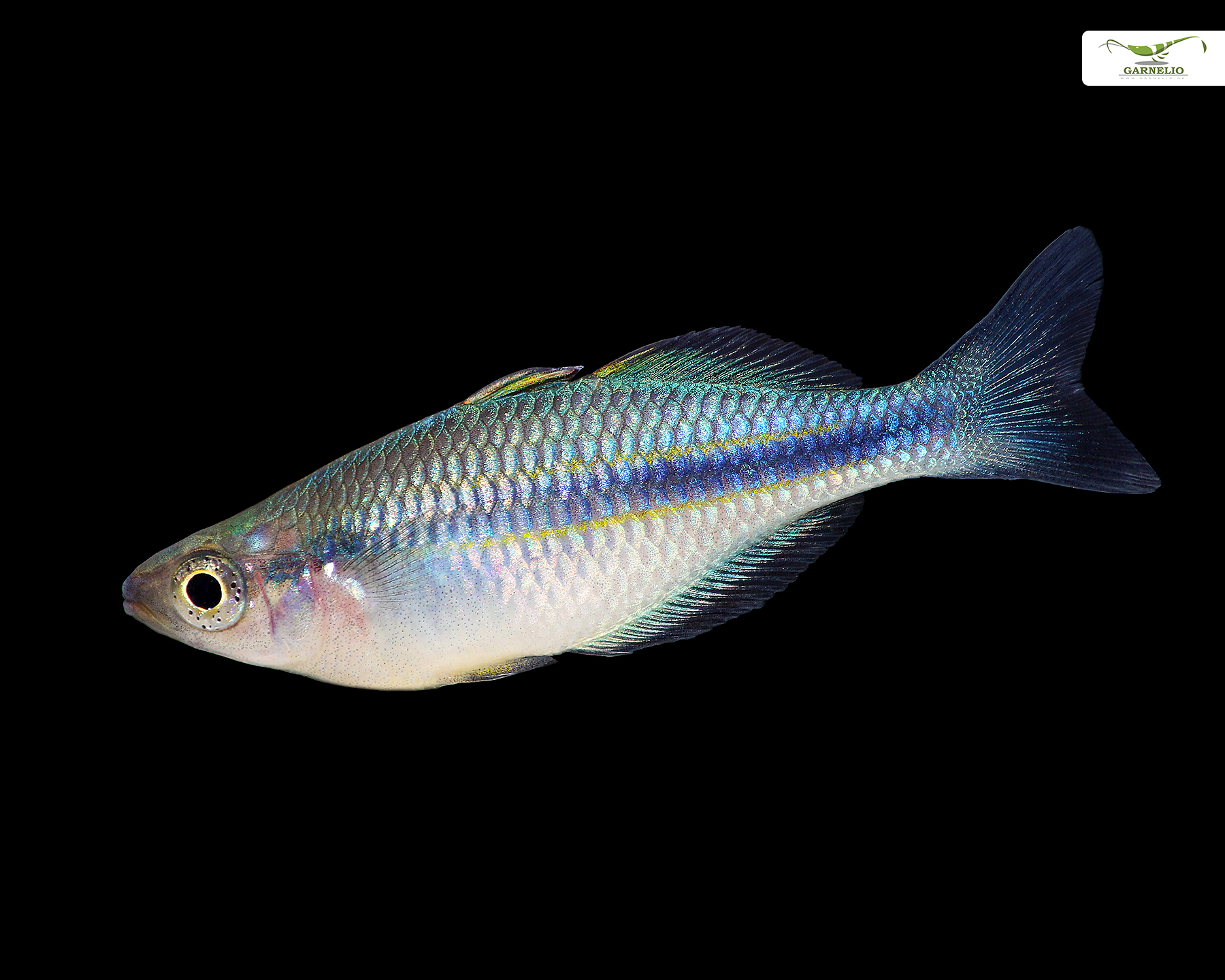
Melanotaenia lacustris (Blue Rainbowfish)

Overview

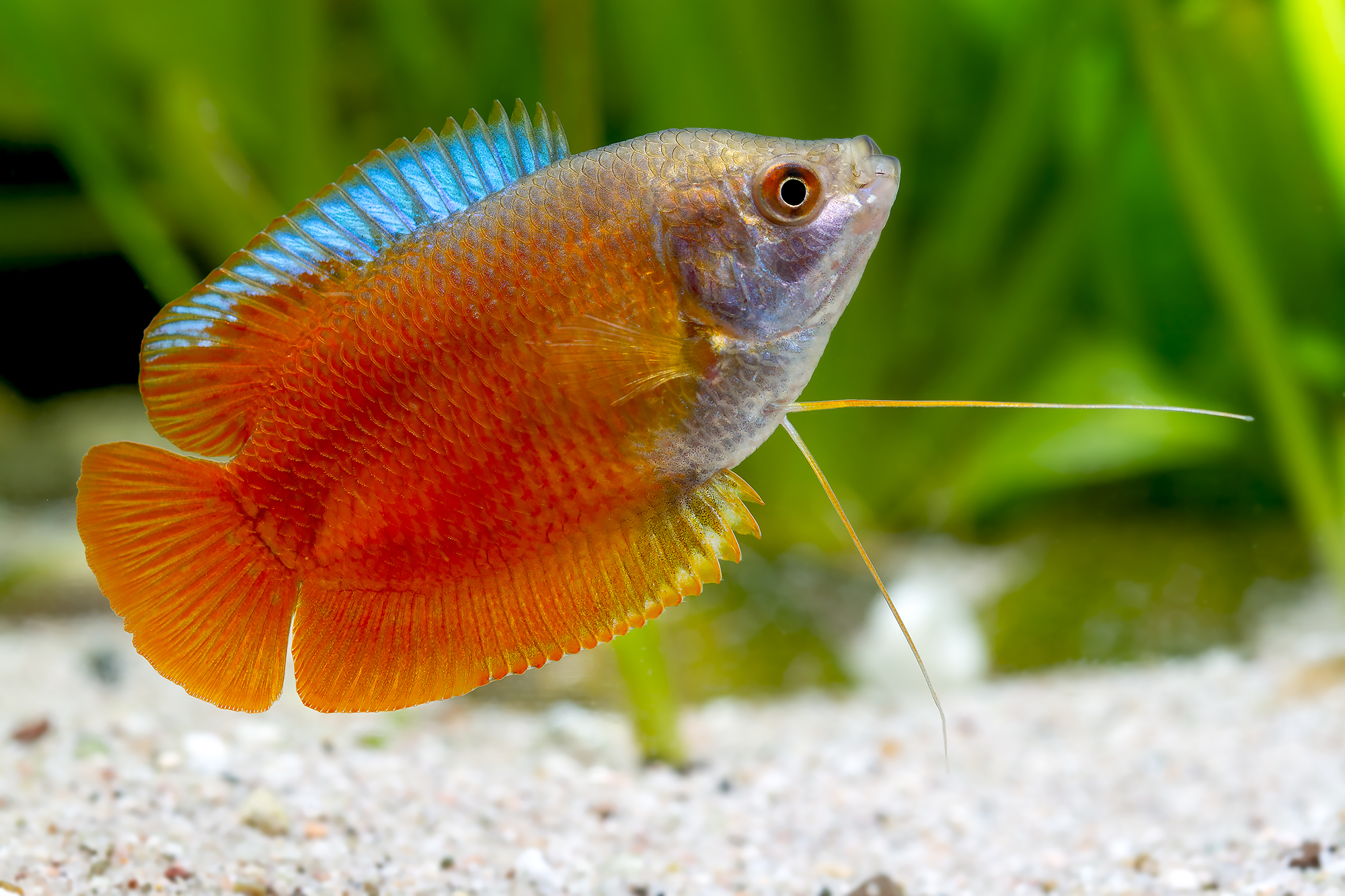
The Blue Rainbowfish (Melanotaenia lacustris) is a breathtaking freshwater species highly prized for its iridescent blue coloration. The 'DNZ' designation indicates these are German captive-bred specimens, which are known for being exceptionally hardy, disease-resistant, and well-adapted to standard aquarium conditions compared to wild-caught individuals.

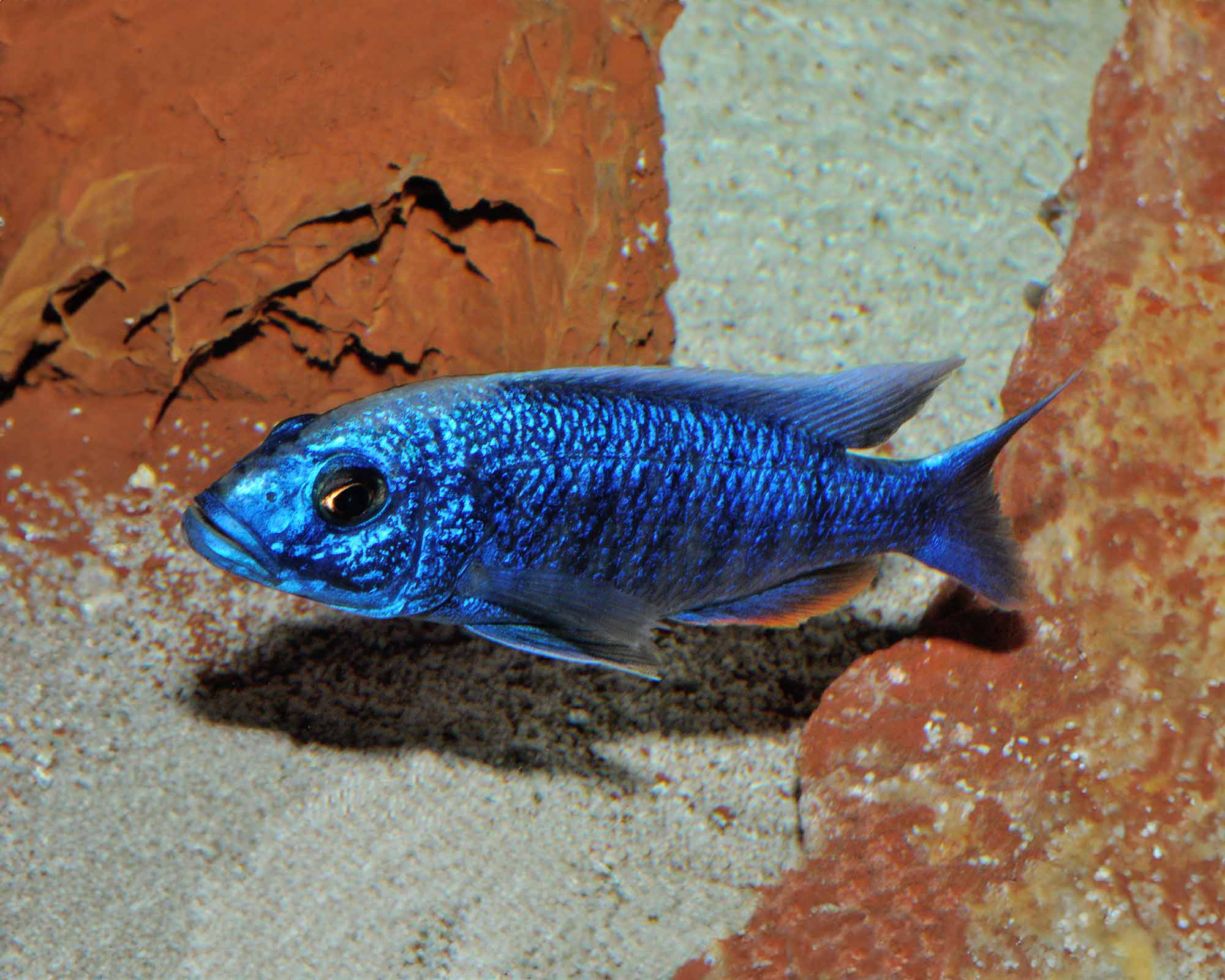
Image of blue rainbowfish melanotaenia lacustris dnz

Distribution and Habitat

In the wild, this species is strictly endemic to Lake Kutubu and its outlet, the Soro River, located in the Southern Highlands of Papua New Guinea. They inhabit clear, alkaline waters with abundant aquatic vegetation and submerged logs, where they school in the upper and middle water layers.

Description of Blue Rainbowfish

Body shape:

They possess a classic rainbowfish profile: a deep, laterally compressed body that becomes increasingly arched and deep as the fish, particularly the males, mature.

Color:

Their coloration is spectacular, featuring a cobalt blue or turquoise upper half that fades into a silver or white belly. A dark, mid-lateral stripe runs horizontally across the body, and their colors can shift in intensity based on mood and lighting.

Barbels:

They do not have barbels.

Snout:

The snout is relatively pointed, adapted for surface and mid-water feeding.

Eyes:

They have large, prominent eyes suited for spotting small insect prey in clear lake waters.

Fins:

They feature two dorsal fins. In males, the dorsal and anal fins are elongated and more pointed compared to the shorter, rounded fins of females.

The Tail:

The caudal fin is moderately forked, providing the powerful propulsion needed for their active swimming lifestyle.

Temper

They are known for their completely peaceful temperament, making them an ideal resident for community aquariums.

Sociality

Highly social, the Blue Rainbowfish is a schooling species. They should be kept in groups of at least six, which encourages natural behaviors, reduces stress, and promotes their most vibrant coloration.

Activity

They are extremely active swimmers that constantly dart around the middle and top levels of the aquarium, bringing a lot of dynamic energy and movement to the tank.

Keeping and Caring for Blue Rainbowfish

Tank size:

Due to their active swimming habits, a minimum tank size of 120 liters (approx. 30 gallons) is required, but a longer tank (at least 4 feet in length) is highly recommended to give them ample sprinting room.

Water Parameters:

Temperature

They prefer slightly cooler tropical water, ideally between 21-25°C (70-77°F).

pH

The water should be neutral to alkaline, with a pH range of 7.0-8.5.

Hardness

They thrive in moderately hard to hard water, roughly 8-15 dGH.

Ammonia, Nitrite, Nitrate

Pristine water conditions are essential. Ammonia and Nitrite must be exactly 0 ppm, and Nitrates should be kept strictly below 20 ppm through regular, generous water changes.

Lighting

Moderate to bright lighting is recommended. Good lighting, especially full-spectrum light that hits the fish from the front, highlights their incredible iridescent blue scales.

Water flow

A moderate water flow mimics their natural lake environment and provides a comfortable current for them to swim against.

Decorations and Plants

Provide dense plantings along the back and sides of the tank to offer hiding spots, but ensure a large, unobstructed swimming area in the center. Darker substrates and backgrounds will make their blue colors pop dramatically.

Diet

They are omnivorous and generally unfussy eaters. In the aquarium, they will readily accept high-quality flake foods, micro-pellets, and a variety of live or frozen foods such as daphnia, bloodworms, and brine shrimp.

Some Feeding Tips

Feed them small amounts twice a day. Incorporating color-enhancing foods rich in astaxanthin or spirulina will help maintain and intensify their brilliant blue and turquoise hues.

Breeding

Breeding is relatively straightforward. They are egg scatterers that spawn continuously over several days. Provide a separate breeding tank with a spawning mop or dense fine-leaved plants like Java Moss. Condition the breeders with live foods. Once eggs are laid in the mops or plants, remove the parents to prevent predation. Fry hatch in about 7-10 days and require infusoria or liquid fry food until they are large enough to take newly hatched brine shrimp.

Conclusion

The Blue Rainbowfish is a stunning, energetic addition to any sufficiently sized community aquarium. Their peaceful nature, combined with their breathtaking, shifting blue colors, makes them an incredibly rewarding species for both intermediate and experienced aquarists.
Fish info

  • Care level: Easy - Moderate
  • Temperament: Peaceful
  • Adult size: 10-12 cm
  • Life expectancy: 5-8 years
  • Fish type: Rainbowfish
  • Temperature : 21-25°C
  • pH: 7.0-8.5
  • Color Form: Blue, Silver, Turquoise, White
Leave your comments
Latest on Fishs
  • Metallic Cobra Guppy (Poecilia reticulata)

    Metallic Cobra Guppy (Poecilia reticulata)

    The Metallic Cobra Guppy is a selectively bred color variant of the common guppy, Poecilia reticulata. Known for its striking, iridescent scales and intricate, snake-like patterns on the tail and body, this livebearing fish is a staple in the aquarium hobby. They are hardy, adaptable, and highly active, making them an excellent choice for both beginner and experienced fishkeepers alike.
  • Bagrus meridionalis (Kapango)

    Bagrus meridionalis (Kapango)

    Expert Only
    Catfish
    The Kapango (Bagrus meridionalis) is a highly sought-after and rare predatory catfish endemic to Lake Malawi. Known for its impressive size and fascinating parental care in the wild, this magnificent species is a true rarity in the aquarium hobby, requiring massive setups and specialized care from dedicated aquarists.
  • Aphyosemion australe (Golden Lyretail Killifish)

    Aphyosemion australe (Golden Lyretail Killifish)

    Moderate
    Killifish
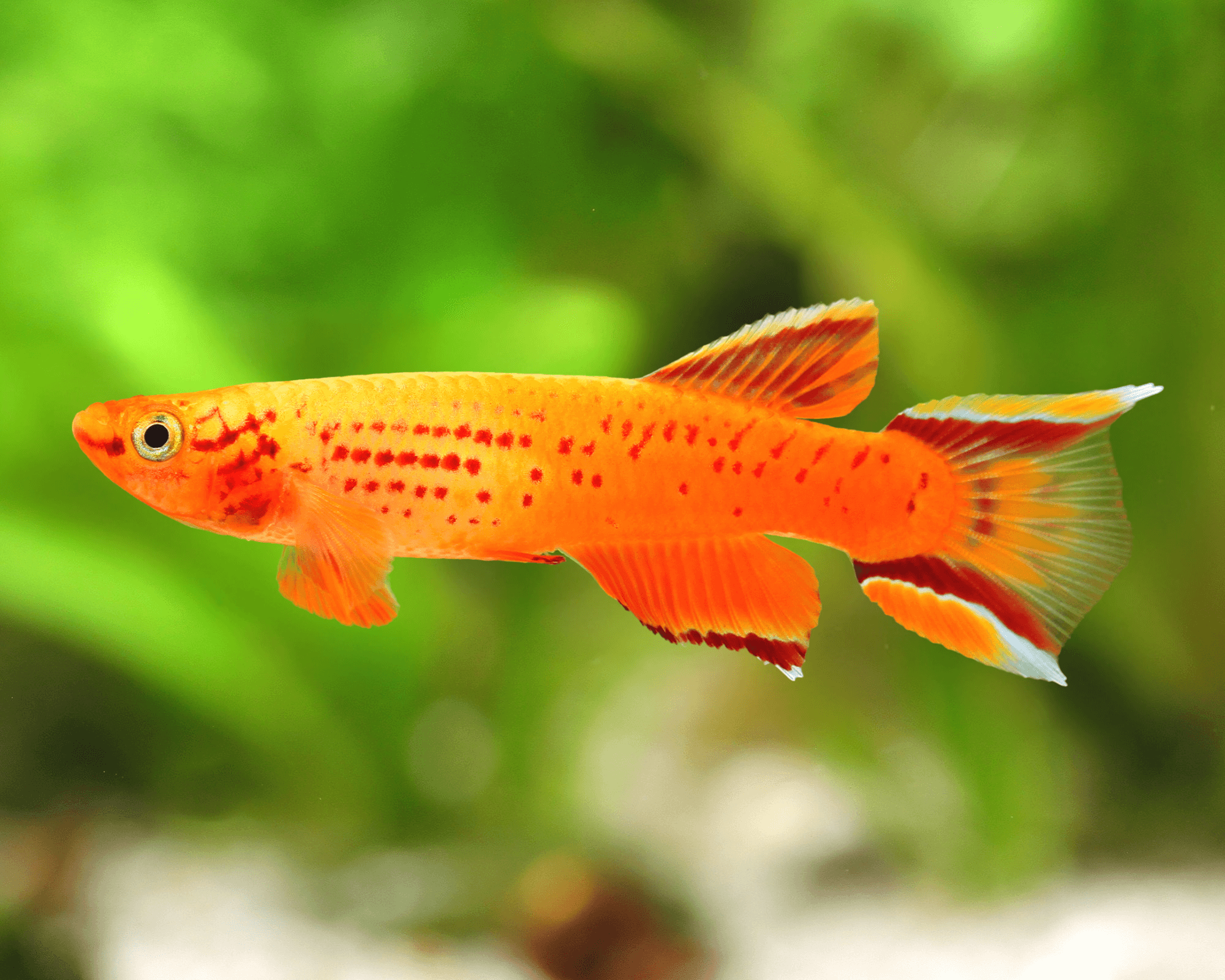
    The Golden Lyretail Killifish, a stunning selectively bred variant of the Cape Lopez Killifish, originates from West Africa. Renowned for its vibrant orange-gold coloration and elegant lyre-shaped tail, this non-annual killifish is highly prized by aquarists. It exhibits peaceful behavior but requires a well-planted, tightly covered aquarium to thrive.
  • Garra rufa (Kangal Nibble Fish)

    Garra rufa (Kangal Nibble Fish)

    Moderate
    Cyprinid
    Famous worldwide as the "Doctor Fish" used in spa treatments, the Kangal Nibble Fish is a fascinating, active bottom-dweller native to the Middle East. In the aquarium, they are prized for their peaceful nature, constant grazing on algae, and unique, highly engaging behaviors.
  • Melanotaenia trifasciata (Banded Rainbowfish)

    Melanotaenia trifasciata (Banded Rainbowfish)

    Easy - Moderate
    Rainbowfish
    The Banded Rainbowfish, also known as the Jewel Rainbowfish, is a stunning, active schooling fish native to Northern Australia. Renowned for its dazzling, location-specific color variations and peaceful nature, it brings vibrant energy to any large community aquarium. Captive-bred specimens (DNZ) are particularly hardy and adaptable to home aquariums.
  • Hyphessobrycon bentosi (White Fin Ornate Tetra)

    Hyphessobrycon bentosi (White Fin Ornate Tetra)

    Easy
    Tetra
    The White Fin Ornate Tetra, a stunning captive-bred variant of the classic Jewel Tetra, is prized for its striking white-tipped fins and rosy-silver body. Native to the Amazon basin, this peaceful, schooling species brings active charm and vibrant contrast to heavily planted community aquariums.
  • Hyphessobrycon bentosi (Jewel Tetra)

    Hyphessobrycon bentosi (Jewel Tetra)

    Easy
    Tetra
    Originating from the Amazon basin, the Jewel Tetra (Hyphessobrycon bentosi) is a captivating, peaceful schooling fish. Known for its striking finnage and energetic behavior, it thrives in planted aquariums. Its hardiness and striking appearance make it a highly popular choice for both beginner and experienced aquarists alike.
  • Hyphessobrycon bentosi (Jewel Tetra)

    Hyphessobrycon bentosi (Jewel Tetra)

    Easy
    Tetra
    The Jewel Tetra (Hyphessobrycon bentosi), often captive-bred for optimal health, is a stunning freshwater fish native to the Amazon basin. Known for its deep, rosy-red body and striking white-tipped fins, this peaceful schooling fish adds vibrant color and lively, yet gentle, activity to any planted community aquarium.
  • Pseudomugil ivantsoffi (Ivantsoff's Blue Eye)

    Pseudomugil ivantsoffi (Ivantsoff's Blue Eye)

    Moderate
    Rainbowfish
    Hailing from the pristine rainforest streams of West Papua and Papua New Guinea, Ivantsoff's Blue Eye is a captivating micro-predator. Known for its energetic schooling behavior and stunning neon-blue eyes contrasting with a vibrant golden-orange body, this peaceful nano fish is highly sought after by planted aquarium enthusiasts.
  • Carinotetraodon travancoricus (Pea Puffer)

    Carinotetraodon travancoricus (Pea Puffer)

    Moderate
    Pufferfish
    Endemic to the Western Ghats of India, the Pea Puffer (Carinotetraodon travancoricus) is a highly popular, fully freshwater micro-predator. Despite their tiny size, these intelligent fish boast massive personalities. Known for their helicopter-like swimming and insatiable appetite for pest snails, they make captivating additions to heavily planted, species-only aquariums.
  • Parambassis ranga (Indian Glass Perch)

    Parambassis ranga (Indian Glass Perch)

    Moderate
    Glassfish
    The Indian Glass Perch, native to South Asia, is a captivating schooling fish famous for its remarkably transparent body that reveals its internal organs. Peaceful but somewhat shy, this unique species adds a fascinating, ghostly elegance to freshwater and slightly brackish aquariums, making it highly popular among dedicated aquarists.
  • Ctenolucius hujeta (Hujeta Pike Characin)

    Ctenolucius hujeta (Hujeta Pike Characin)

    Moderate
    Characin
    The Hujeta Pike Characin, or Freshwater Barracuda, is a fascinating predatory fish native to South America. Known for its elongated, gar-like body and stealthy hunting behavior, it is a popular rarity among advanced aquarists. Despite its fearsome appearance, it is relatively peaceful with appropriately sized tank mates.
  • Dermogenys pusillus (Half Billed Pike)

    Dermogenys pusillus (Half Billed Pike)

    Moderate
    Livebearer
    The Half Billed Pike, or Wrestling Halfbeak, is a fascinating surface-dwelling livebearer native to Southeast Asia. Known for its unique elongated lower jaw and the males' combative 'wrestling' behavior, this slender fish adds dynamic top-level activity to planted or slightly brackish aquariums, captivating aquarists with its distinctive appearance.
  • Hyphessobrycon hyanuary (Costello Tetra)

    Hyphessobrycon hyanuary (Costello Tetra)

    Easy
    Tetra
    The Costello Tetra, scientifically known as Hyphessobrycon hyanuary, is a peaceful and active schooling fish native to the Amazon basin. Known for its subtle greenish-gold lateral stripe and distinctive black tail spot, this hardy tetra is a popular and undemanding choice for community aquariums.
  • Pethia canius (Green Dwarf Barb)

    Pethia canius (Green Dwarf Barb)

    Easy
    Cyprinid
    The Green Dwarf Barb (Pethia canius) is a captivating, peaceful micro-fish native to the densely vegetated waters of India and Bangladesh. Known for its shimmering golden-green scales and distinct black spots, this active schooling cyprinid adds life and vibrant color to any well-planted nano or community aquarium.
  • Tetraodon nigroviridis (Green Spotted Puffer)

    Tetraodon nigroviridis (Green Spotted Puffer)

    Difficult
    Puffer
    Hailing from the coastal estuaries of Southeast Asia, the Green Spotted Puffer is a highly intelligent and interactive fish. Famous for its vibrant green-yellow coloration and distinct black spots, this brackish-water species demands specialized care but rewards dedicated aquarists with its unique, puppy-like personality and fascinating hunting behaviors.