Identification and taxonomy
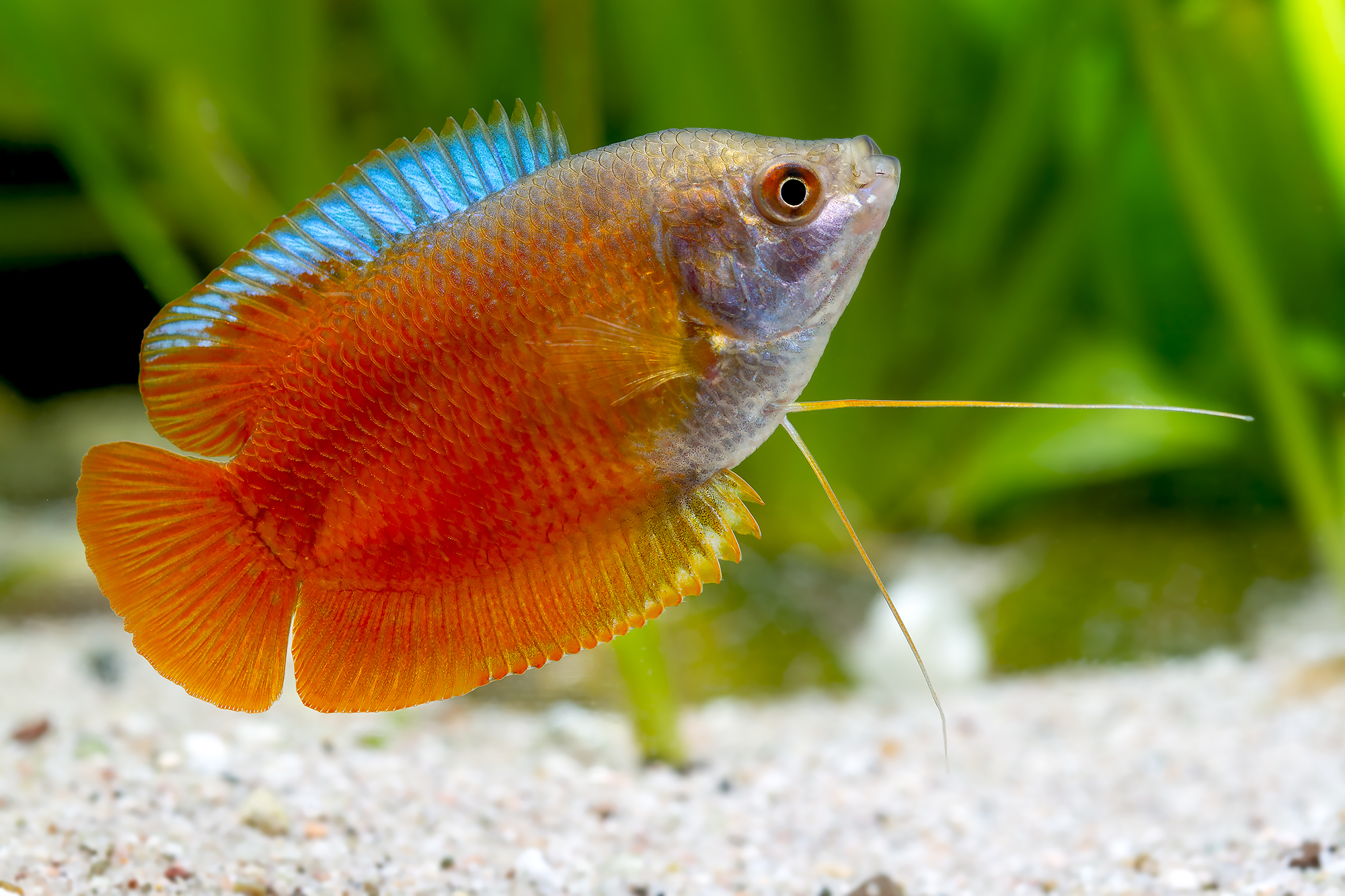
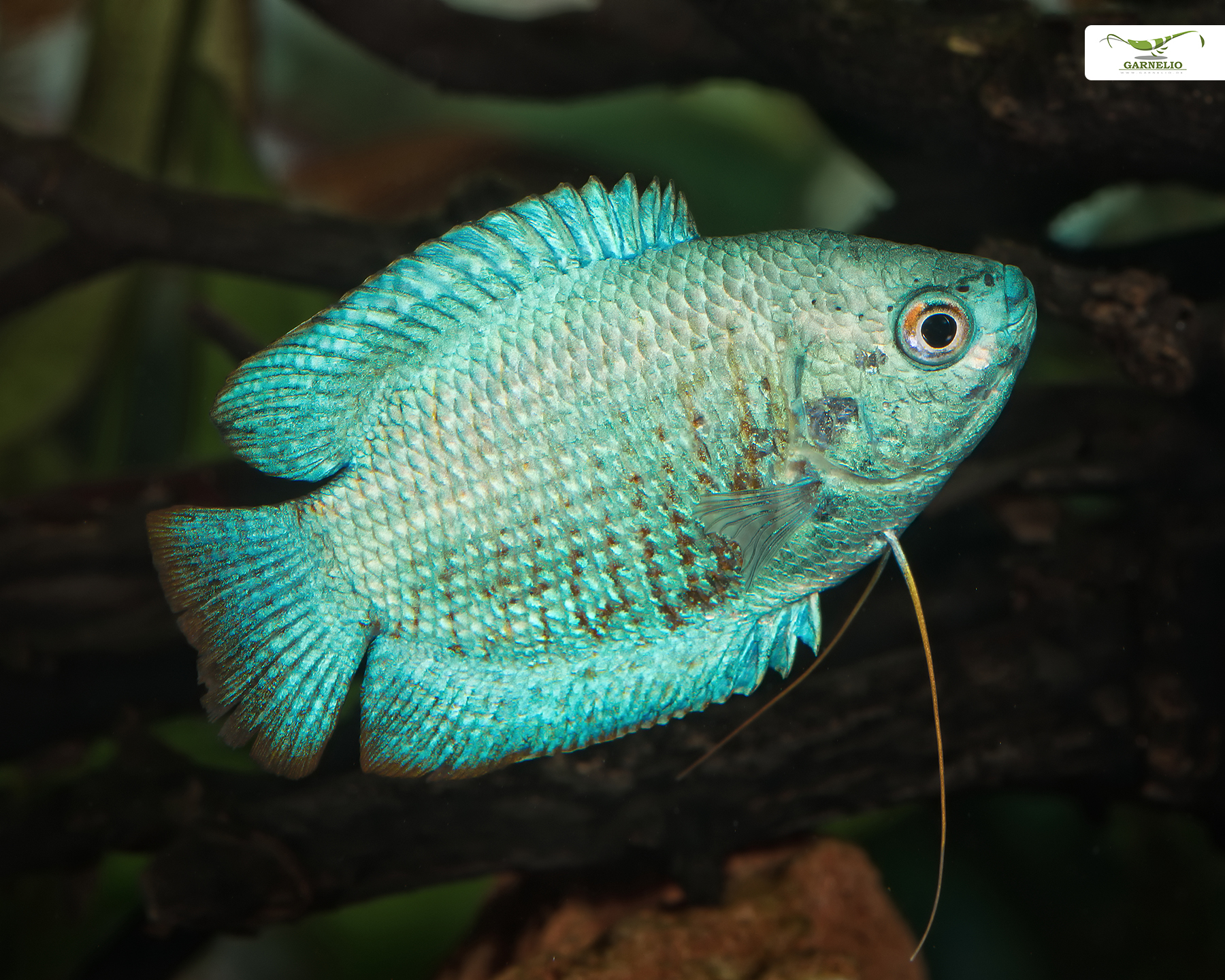
The dwarf gourami is generally classified as Trichogaster lalius; Colisa lalia is a widely used former name and remains common in aquarium literature. It belongs to the gourami family Osphronemidae and has a labyrinth organ that allows it to breathe atmospheric air. The supplied name identifies a pair sold as a red form, while the exact sex and color strain should be confirmed from the fish themselves.
Native distribution and habitat
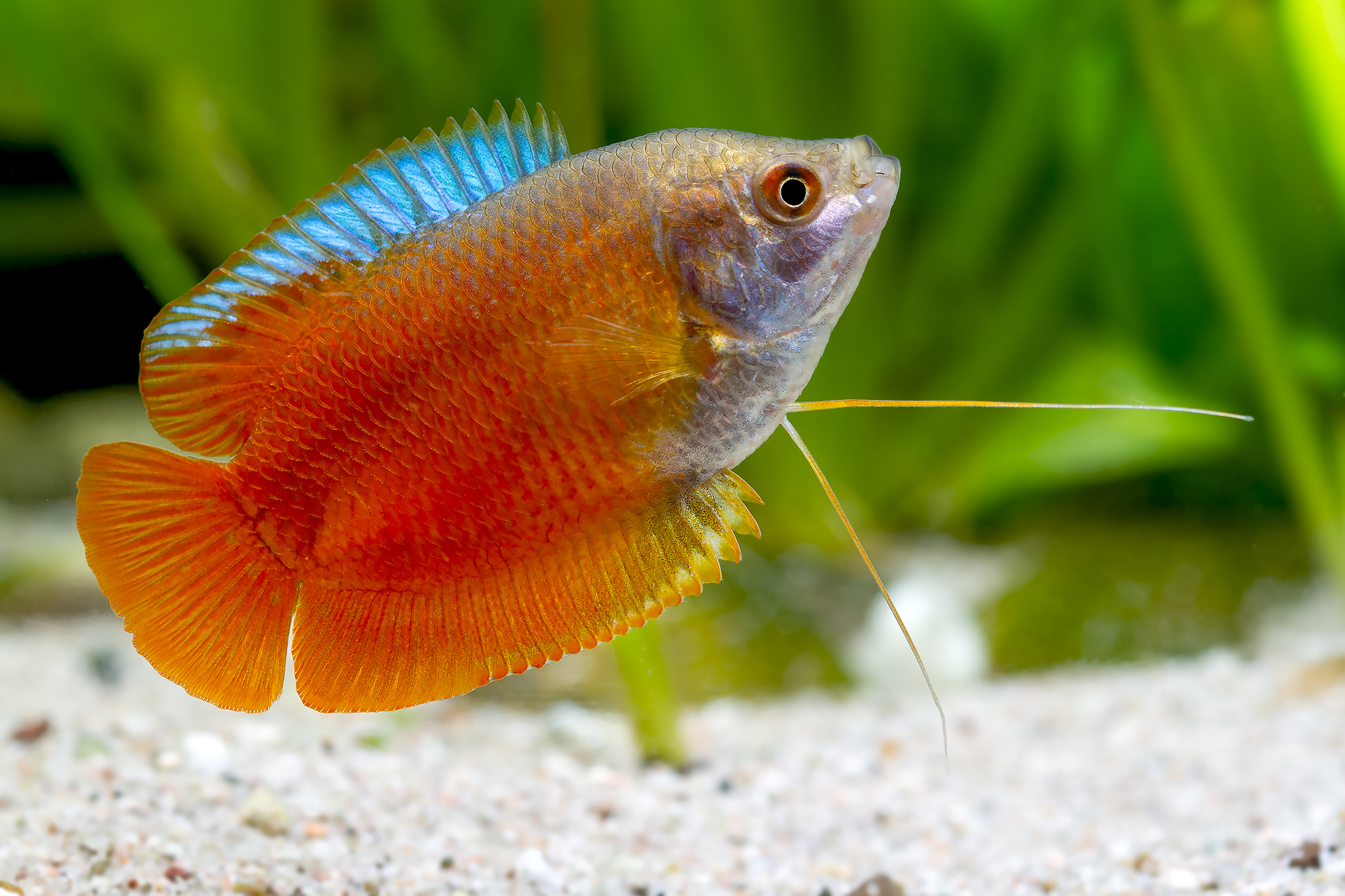
Dwarf gouramis are native to the Indian subcontinent, particularly parts of India, Bangladesh, and Pakistan. They occur in warm, slow-moving or still waters such as ponds, marshes, canals, and densely vegetated margins. Aquarium conditions should provide stable warmth, subdued lighting, floating or tall plants, and areas with little current.

Behavior
This species is usually peaceful in a suitable community aquarium, but males defend territories and may chase females or other gouramis. A pair can work in a well-planted aquarium with broken lines of sight, although it is not automatically harmonious. Provide retreats for the female and monitor for persistent chasing, fin damage, or refusal to feed. Dwarf gouramis regularly visit the surface, so leave access to warm, humid air above the water.
Aquarium size and setup
A pair should have at least about 60 litres, with a larger aquarium preferable for a community setup or a particularly assertive male. Use a secure cover, gentle filtration, and regular maintenance. Dense planting, floating plants, wood, and other visual barriers help reduce conflict. Avoid strong currents and keep the water surface reasonably calm. A newly established or unstable aquarium is unsuitable.
Water parameters
Maintain 22-28 °C, with a practical target around 24-27 °C, and pH 6.0-7.5. Stability and low pollutants are more important than pursuing a precise number. Use dechlorinated water, provide biological filtration, and perform regular partial water changes. Ammonia and nitrite should remain at zero, and nitrate should be kept low.
Diet
Dwarf gouramis are omnivorous and should receive a varied diet. Offer a quality small floating or slow-sinking pellet or flake as the staple, supplemented with frozen or live foods such as brine shrimp, daphnia, and bloodworms. Feed small portions once or twice daily and remove uneaten food. Variety supports condition but does not replace clean water and good filtration.
Compatibility
Choose peaceful, similarly sized community fish that do not fin-nip or compete aggressively at the surface. Small rasboras, peaceful tetras, many small barbs, Corydoras, and small peaceful loaches may be suitable when their water requirements overlap. Avoid aggressive cichlids, fin-nippers, very boisterous tank mates, and additional gouramis in a small aquarium. Compatibility depends on individual temperament, sex ratio, planting, and available space.
Breeding
The species is a bubble-nest breeder. In a separate, shallow, gently filtered breeding aquarium, condition the fish with varied foods and provide floating plants or other surface support. The male builds a bubble nest, courts the female, and gathers the eggs after spawning. The female should be removed if the male becomes aggressive. The male normally guards the nest and should be removed once the fry hatch and become free-swimming, because he may eat them. Newly free-swimming fry require very small first foods and stable, clean water.
Health and responsible care
Dwarf gouramis can be sensitive to poor water quality, chronic stress, and some commercially common disease problems. Quarantine new fish, avoid sudden parameter changes, and obtain specimens from reputable sources. Observe breathing, appetite, body condition, and fin integrity daily. Because the supplied source describes a pair and the images do not establish sex or a precise commercial strain with certainty, individual behavior and coloration may differ.



Leave your comments