AquaLibs presents AquaRank Discover the world’s leading aquascapers

Explore transparent rankings built from published results across the world’s leading aquascaping contests.

[TheStoriesOfTop7] Pale Wind - Takayuki Fukada / Japan - IAPLC 2013

Gold Prize winning entry depicts forest woods by a bold arrangement of driftwood having wild and dynamic roots and branches. 

Moss is attached to the driftwood very skillfully to express mossy trees formed over time on the roots and trunk. It is also attached to the branches of the driftwood using a different technique to expresses needle leaf. Strong sense of perspective is successfully created by the contrast between the large trees in the foreground and the smaller trees expressed using smaller driftwood and moss along the path of cosmetic sand leading towards the inner space.

IAPLC 2013 - World Ranking 0002

Pale Wind

Author: Takayuki Fukada / Japan

Aquatic Plants

Micranthemum sp.

Hemianthus callitrichoides

Echinodorus tenellus

Lilaeopsis new-zealandii

Fontinalis antipyretica

Vesicularia sp.

Riccardia Graeffei

Monosolenium tender

Fish & Invertebrates

Paracheirodon axelrodi Otocinclus sp.

Crossocheilus siamensis Ancistrus sp. var.

Caridina multidentata

Comments

I was surprised and really happy to receive the Gold Prize in the International Aquatic Plants Layout Contest 2013. This was my 5th participa- tion in this contest and every year I am inspired by awesome layouts from all over the world. I have been making every effort with the aim to create a layout that can appeal to peoples' hearts. Fortunately, I have made many friends who can inspire and enhance each other through planted aquarium. I believe this led me to the wonderful moment this time and I will share the joy with all of my friends who have the same aspiration. I sincerely hope that IAPLC will be a place where global aquarists gather and share the passion and great excitement forever. Thank you very much.

Judges' Comments

Comment of Ms. Karen Randall (U.S.A.)

There were three tanks that I absolutely loved!!! The tank I finally chose as my top tanks is "Pale Wind". This is "another forest tank" but has been made distinctive by the very judicious use of moss on the upper "tree" branches. The moss, attached in small bunches, gives the very effective impression of oriental pine branches. The maker has also created a wonderful sense of depth with tiny "trees" descending toward the "horizon" and the use of empty space toward the back. The feeling is enhanced by the fact that he waited until his fish were schooling at the back of the tank, and, no doubt, through the use of a wide angle lens. The problem with the tank is that it is not a tank that would be easy to live with and maintain for a long time.

Comment of Mr. Friedrich Bitter (GERMANY)

For the artistic imressions of the layout, one must praise the artist. It has the correct division of the space and shows a high degree of perspective. The rear corners of the Aquarium were cleverly hidden, so that the field of view produces a natural curvature. While the bounded moss on the upper parts in the foreground is looking like leaves of a tree, it is used at the sides of the Aquarium as leafy branches or canopy. The fish were chosen com- pletely suitable. They are the energizing element of the scene and are used in combination with the light background to simulate a "pale wind", the theme of this Aquascape. At any time, the fish feel very comfortable in this Aquarium, because it has a lot of free swimming space as well as shade areas, in which they can temporarily withdraw. The branches in the fore- ground, similar to the aerial roots, overlap almost, while the tree trunks are abandoned so far apart that they seem not too massive and defining the image. The same applies to the very well selected stones, which reinforce the perspective. The plants and their arrangement on the ground, on the wood and the stones bear witness to great attention to detail. It is good that the eye also can take refreshment on areas without vegetation. That makes a diversified layout and the viewers have the desire to explore the full scene. It has been the right decision not to use a big variety of water plant species,and it positively affects the overall impression. My respect for this aquascape. Very individual pieces of drift wood and stones were com- bined together with sand and underwater plants into a harmonious whole. It took not just my attention. With such a high-quality work, a worthy refer- ence has been given as reference for the idea of the Nature Aquarium.

We can see that the creator paid close attention to details of the layout. This is a great piece of work with a clear sense of perspective.
 

Leave your comments
Latest on News & Press
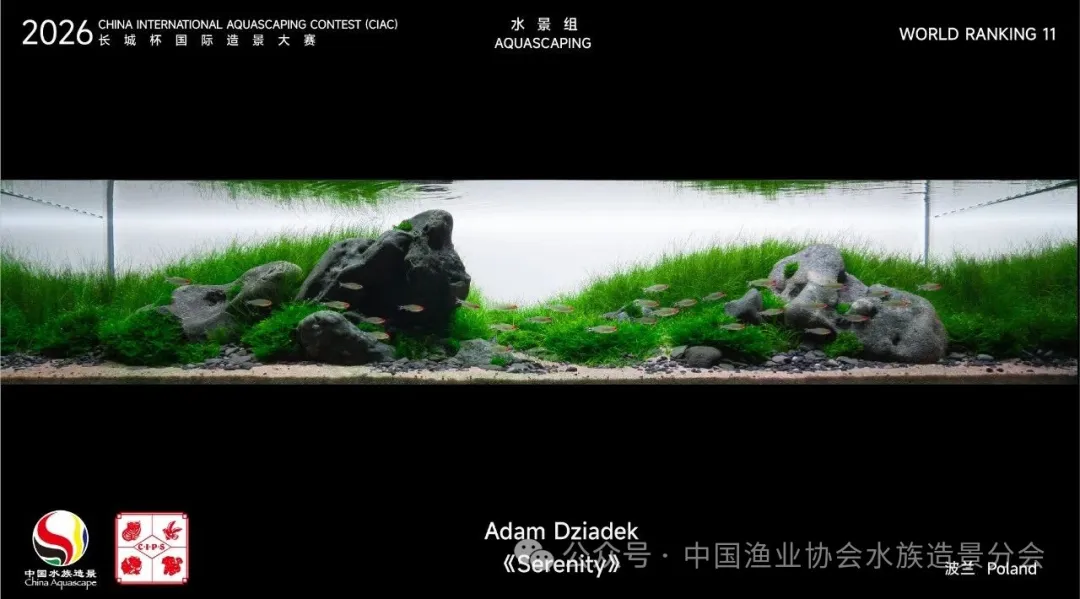
  • Serenity · Adam Dziadek · CIAC 2026

    When Minimalism Is Harder: What 2026 Iwagumi Entries Reveal About Competition-Ready Design

    Iwagumi looks simple because it removes visual clutter. In practice, that restraint makes every stone angle, substrate line, plant mass and patch of empty water easier to judge. This visual case study examines stone-led and Iwagumi-inspired layouts from the supplied 2026 CIAC and AGA catalogue. No IAPLC image was supplied, so the IAPLC comparison is limited to general design principles rather than named works or results.
  • Why CIAC 2026 Puts Plant Condition Ahead of Aquascape Drama

    Why CIAC 2026 Puts Plant Condition Ahead of Aquascape Drama

    The published scoring structure for the CIPS International Aquascaping Contest makes one priority clear: a dramatic layout is not enough if the plants are weak, faded, or poorly maintained. Aquatic plant condition is worth 60 points, compared with 30 for maintenance skills and 10 for photography. That balance gives contestants a practical preparation plan—grow a healthy aquarium first, then present it clearly.
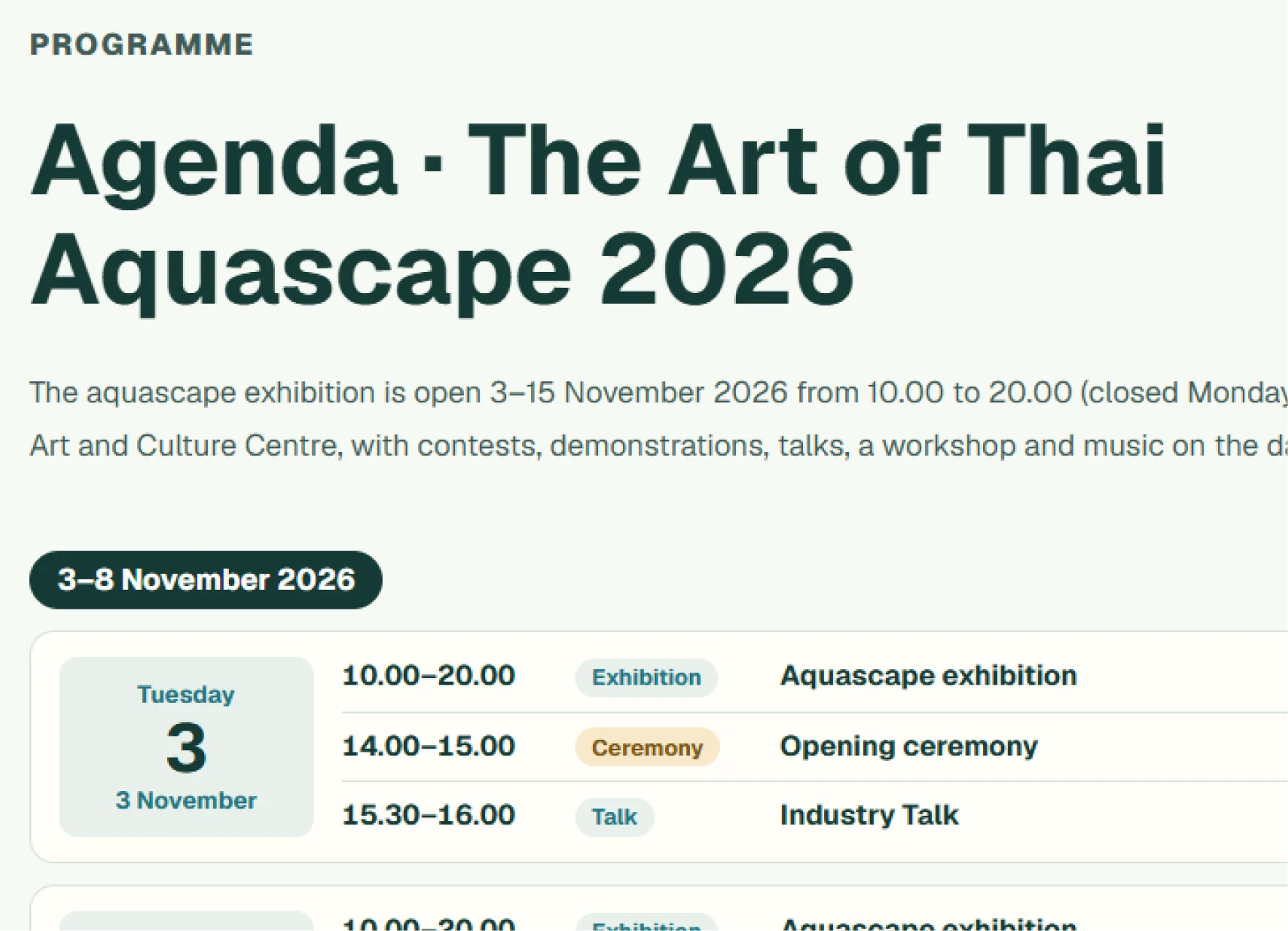
  • The Art of Thai Aquascape 2026: What a Public Aquascaping Festival Can Teach Tank Builders

    The Art of Thai Aquascape 2026: What a Public Aquascaping Festival Can Teach Tank Builders

    The Art of Thai Aquascape 2026 will turn the Bangkok Art and Culture Centre into a public showcase from November 3 to 15, 2026. Its programme combines an exhibition with professional and newcomer contests, demonstrations, talks, a photography workshop and performances. For hobbyists, that mix offers more than a reason to visit: it provides a useful framework for building, refining and presenting a planted aquarium.
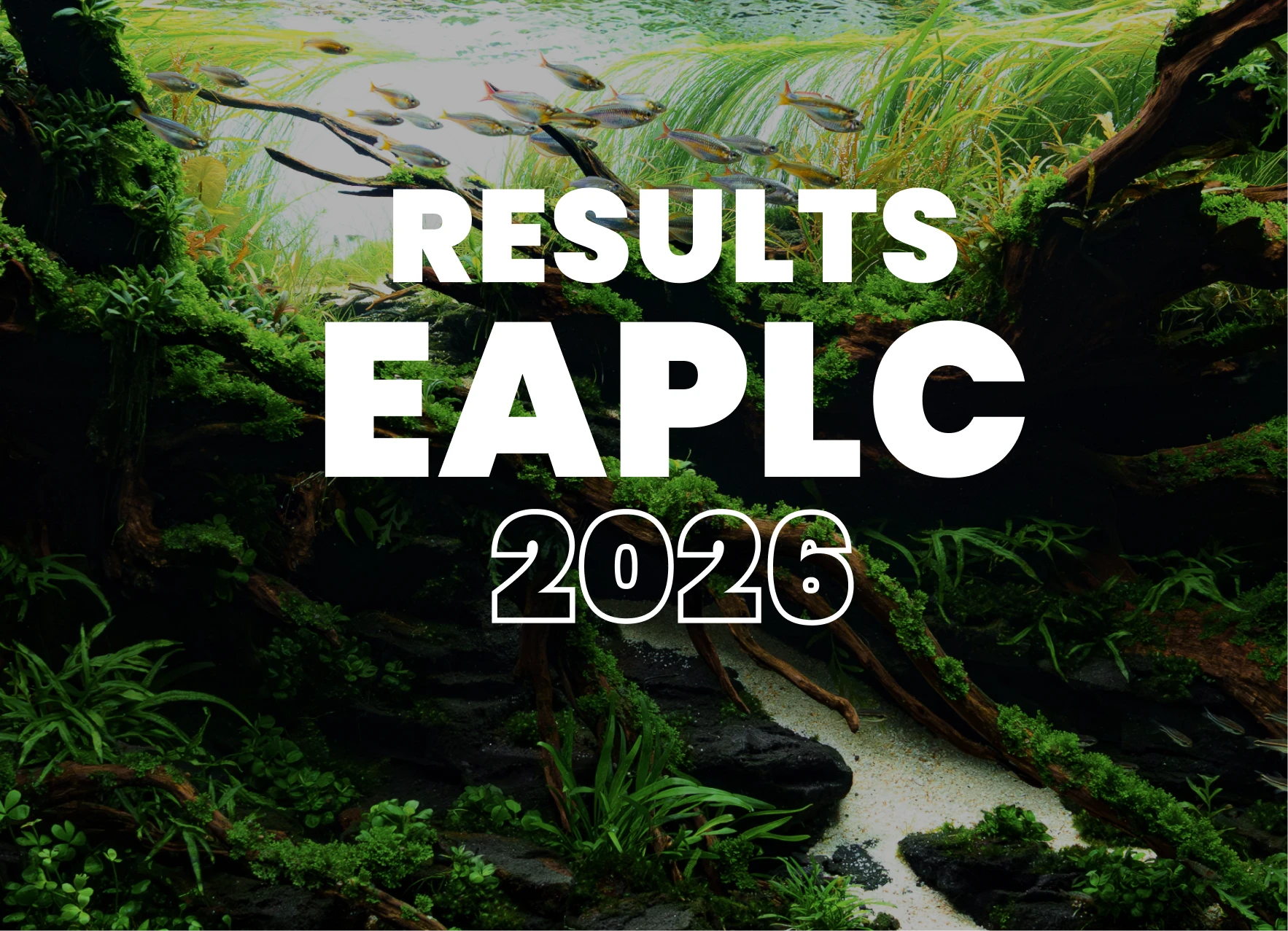
  • EAPLC 2026 Aquascape Lessons by Tank Size: From Nano Focal Points to Large-Scale Perspective

    EAPLC 2026 Aquascape Lessons by Tank Size: From Nano Focal Points to Large-Scale Perspective

    The official EAPLC 2026 results offer more than a list of category winners. They provide useful case studies in how composition, planting, hardscape, and livestock work together at different scales. These observations are not fixed rules or mandatory formulas, but practical ideas aquascapers can adapt to their own tanks.
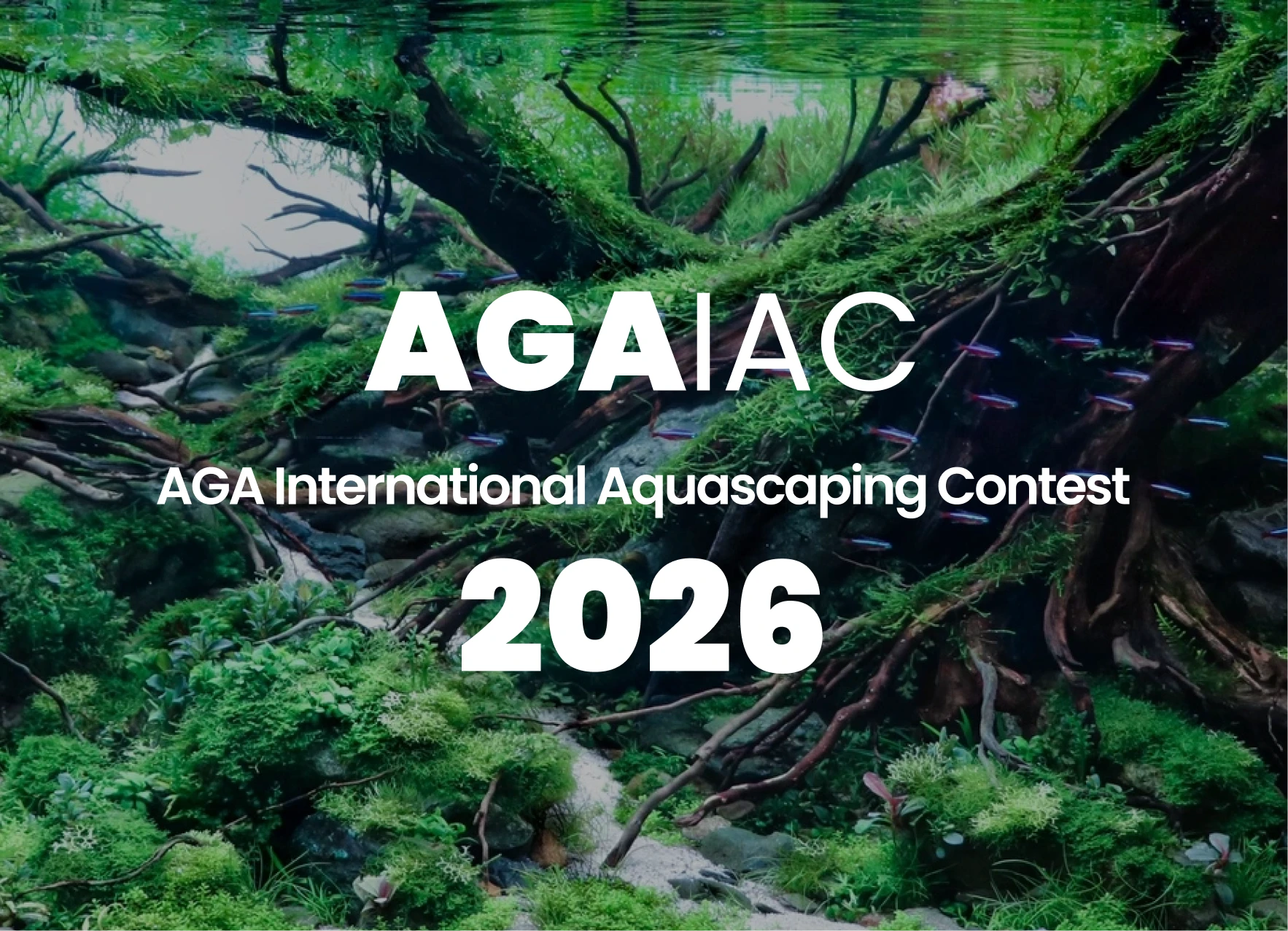
  • AGA 2026 Results: Chuanwei Yu Wins Best of Show

    AGA 2026 Results: Chuanwei Yu Wins Best of Show

    Chuanwei Yu (余传威) of China has won Best of Show at the 2026 AGA International Aquascaping Contest with All Begins to Nature (万物自然). The Aquatic Garden 220L+ winner also took first place in the combined Aquatic Garden standings. Announced on November 7, the official AGA 2026 results cover 422 entries from 343 contestants across 54 countries.
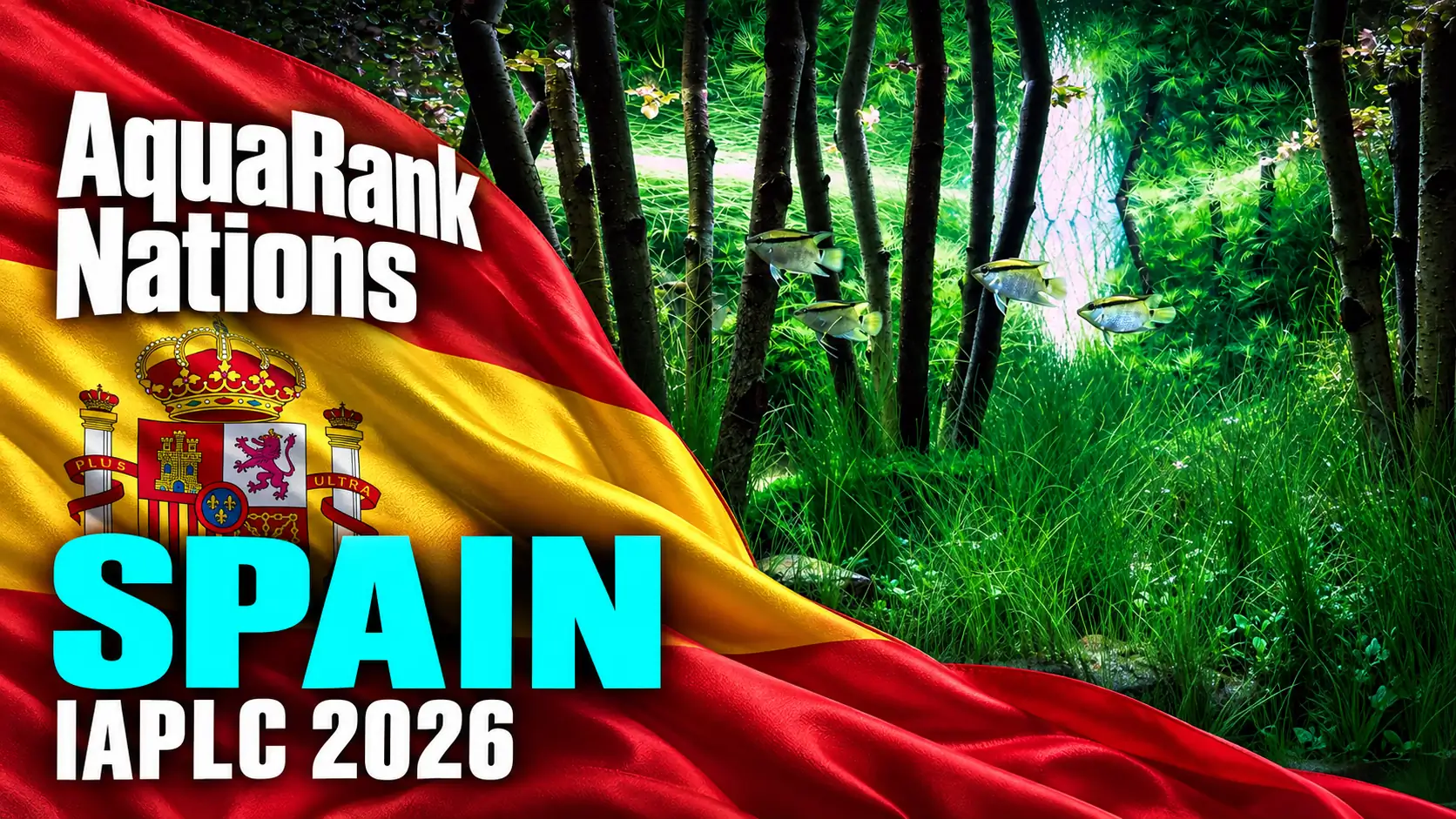
  • Analyse Spain aquascapes at IAPLC 2026, then explore the country’s results, contributing creators and competition history on AquaRank Nations.

    Spain at IAPLC 2026: Roberto Buenadicha’s Forest and the Space Between Trunks

    Roberto Buenadicha’s aquarium is the only Spanish work in the published ranks 1–300. Its slender dark trunks, fine green planting and conspicuous pale fish make it a rewarding individual study. This instalment returns to the older Spain introduction through one photograph, keeping the scope small enough for the evidence available.
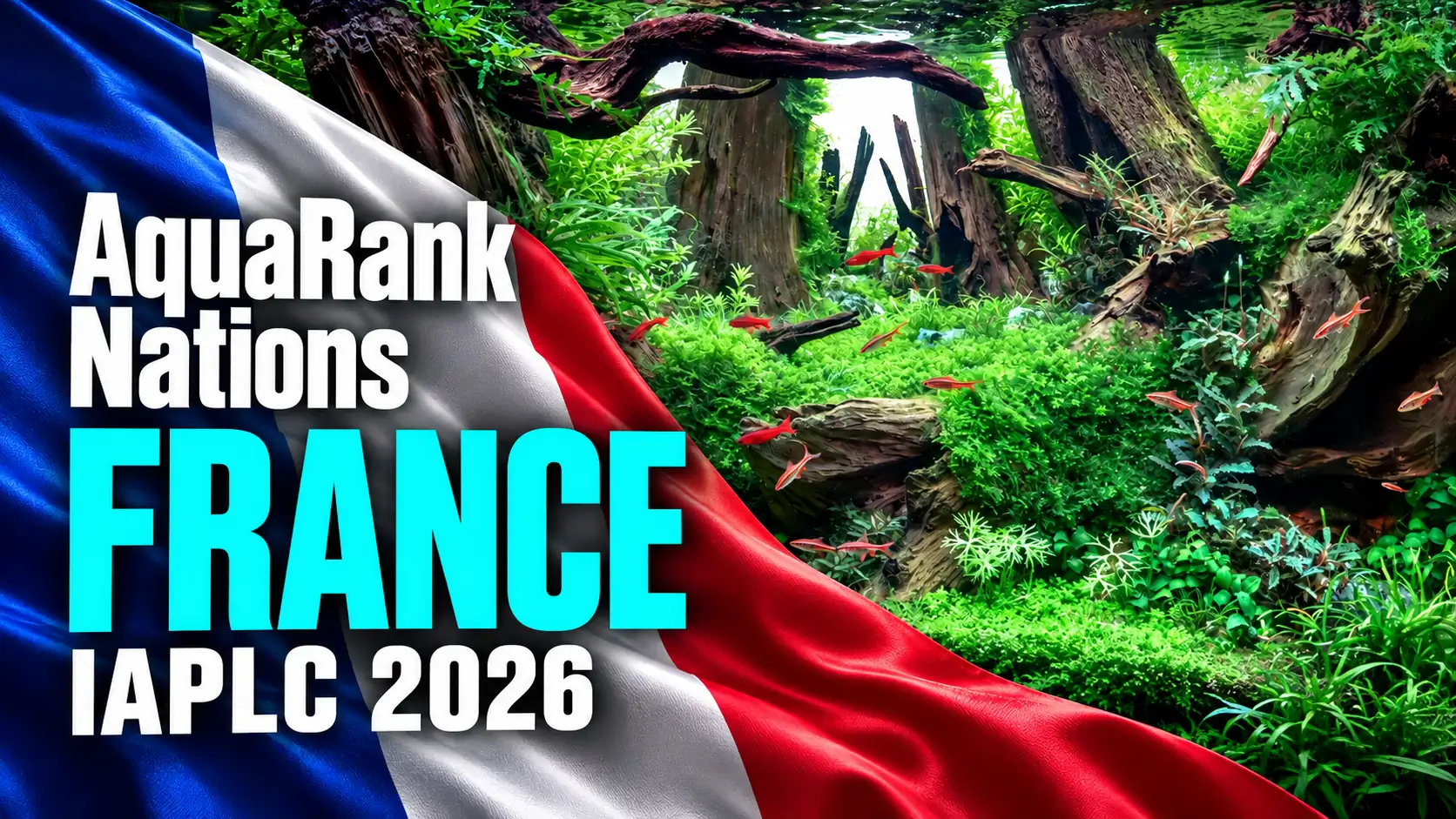
  • Analyse France aquascapes at IAPLC 2026, then explore the country’s results, contributing creators and competition history on AquaRank Nations.

    France at IAPLC 2026: A Close Reading of Jean Christophe Grosset’s Woodland

    Only one French work appears in the published ranks 1–300. That gives this instalment a different task: a close reading of Jean Christophe Grosset’s aquarium, with the older country introduction as context. The photograph deserves attention for its own wood, planting and fish relationships, rather than being made to represent every French aquascaper.
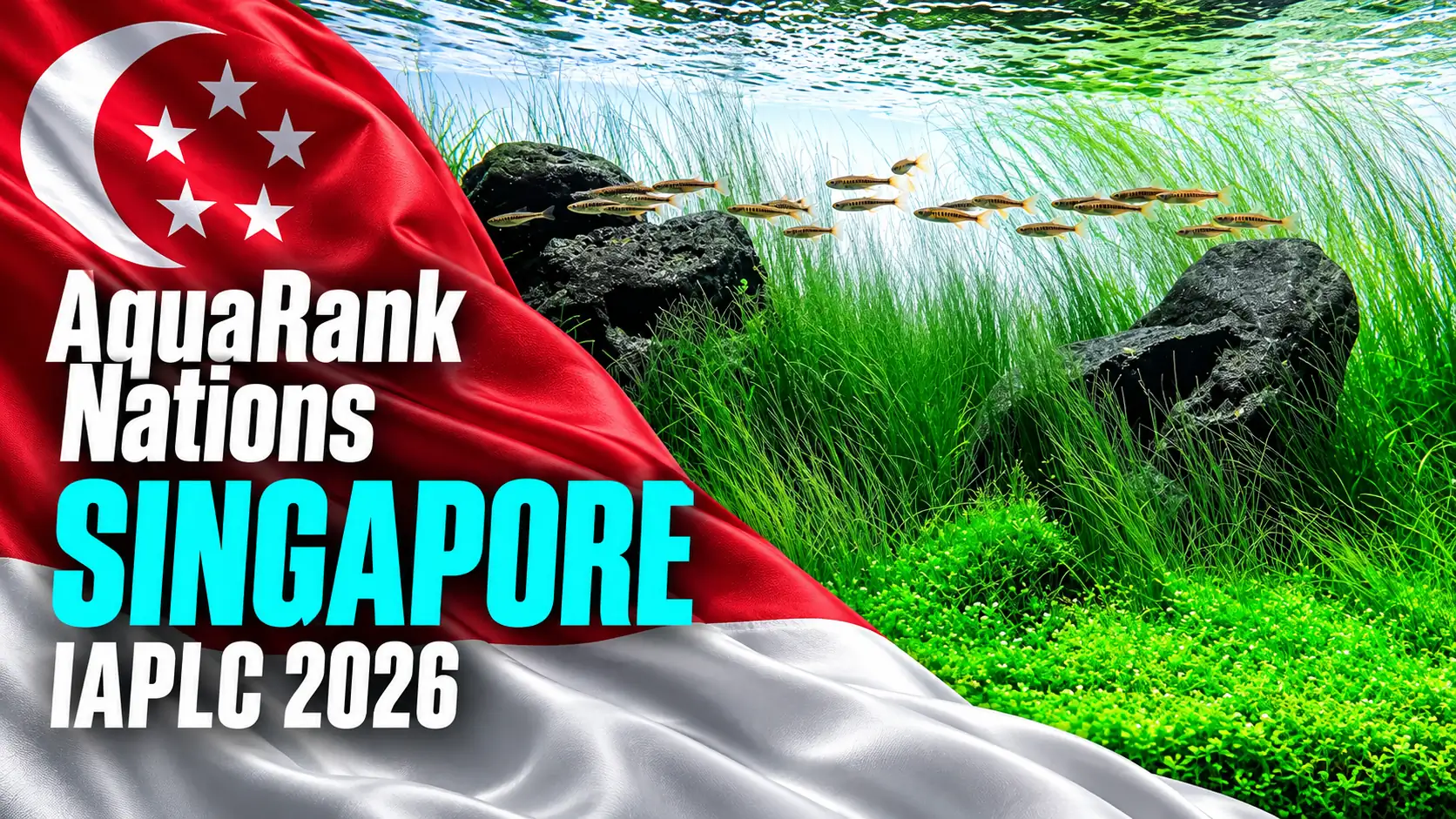
  • Analyse Singapore aquascapes at IAPLC 2026, then explore the country’s results, contributing creators and competition history on AquaRank Nations.

    Singapore at IAPLC 2026: Open Stone and an Enclosed Planted Passage

    Two Singaporean works appear in the published ranks 1–300, and they offer an unusually clear contrast. One makes open water and two main stones central; the other encloses a small rear opening within dense planting and roots. The pair is useful precisely because it does not support one simple visual label.
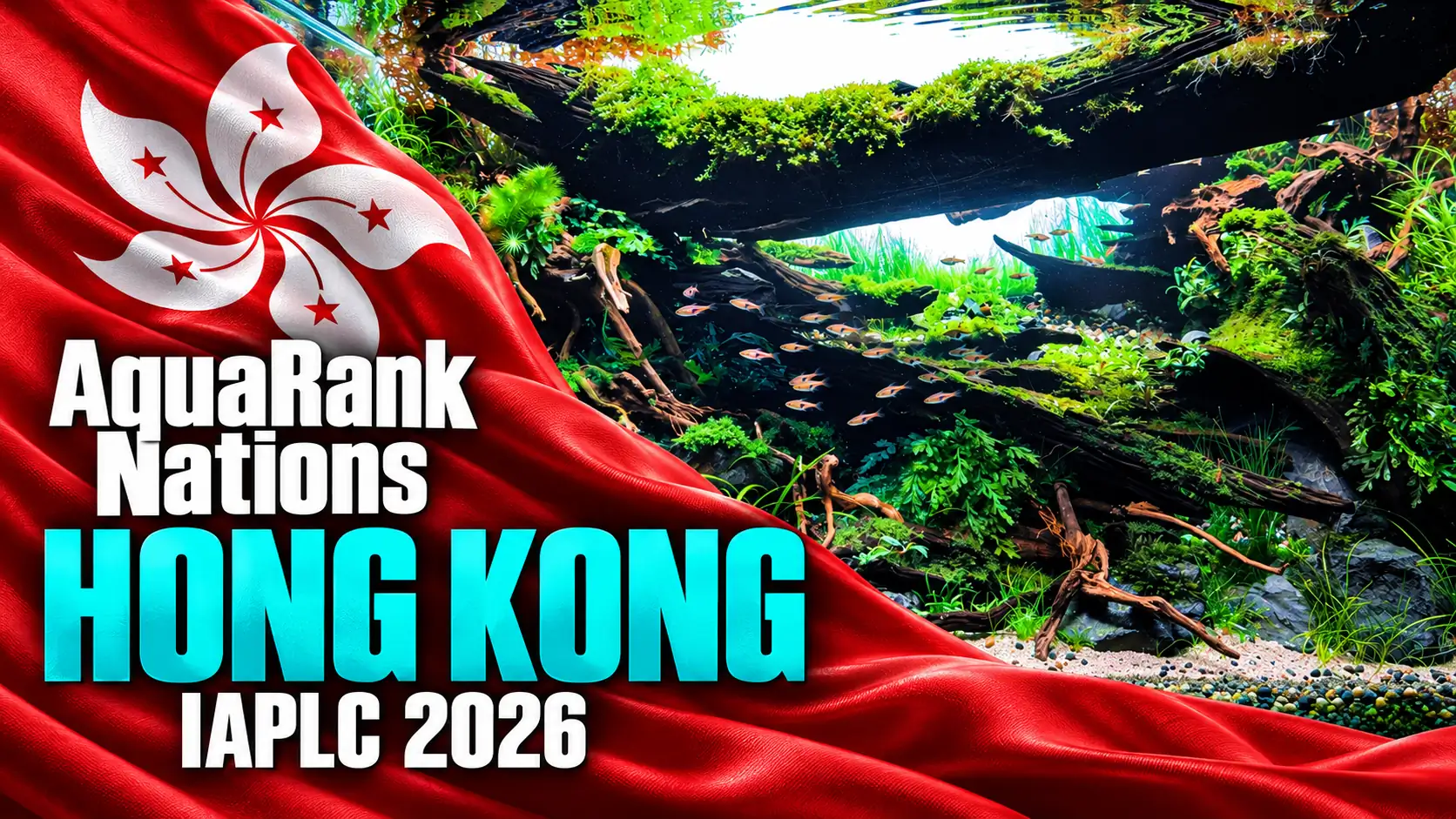
  • Analyse Hong Kong aquascapes at IAPLC 2026, then explore the country’s results, contributing creators and competition history on AquaRank Nations.

    Hong Kong at IAPLC 2026: Three Studies in Light, Layers and Visual Impact

    A low timber ceiling, blue-toned terraces and converging planted diagonals create three visibly different aquariums. Hong Kong’s represented works at ranks 1–300 offer a compact study of visual impact beyond the season’s leading awards. Looking at them closely is more informative than treating the cutoff count as a verdict on an entire aquascaping community.
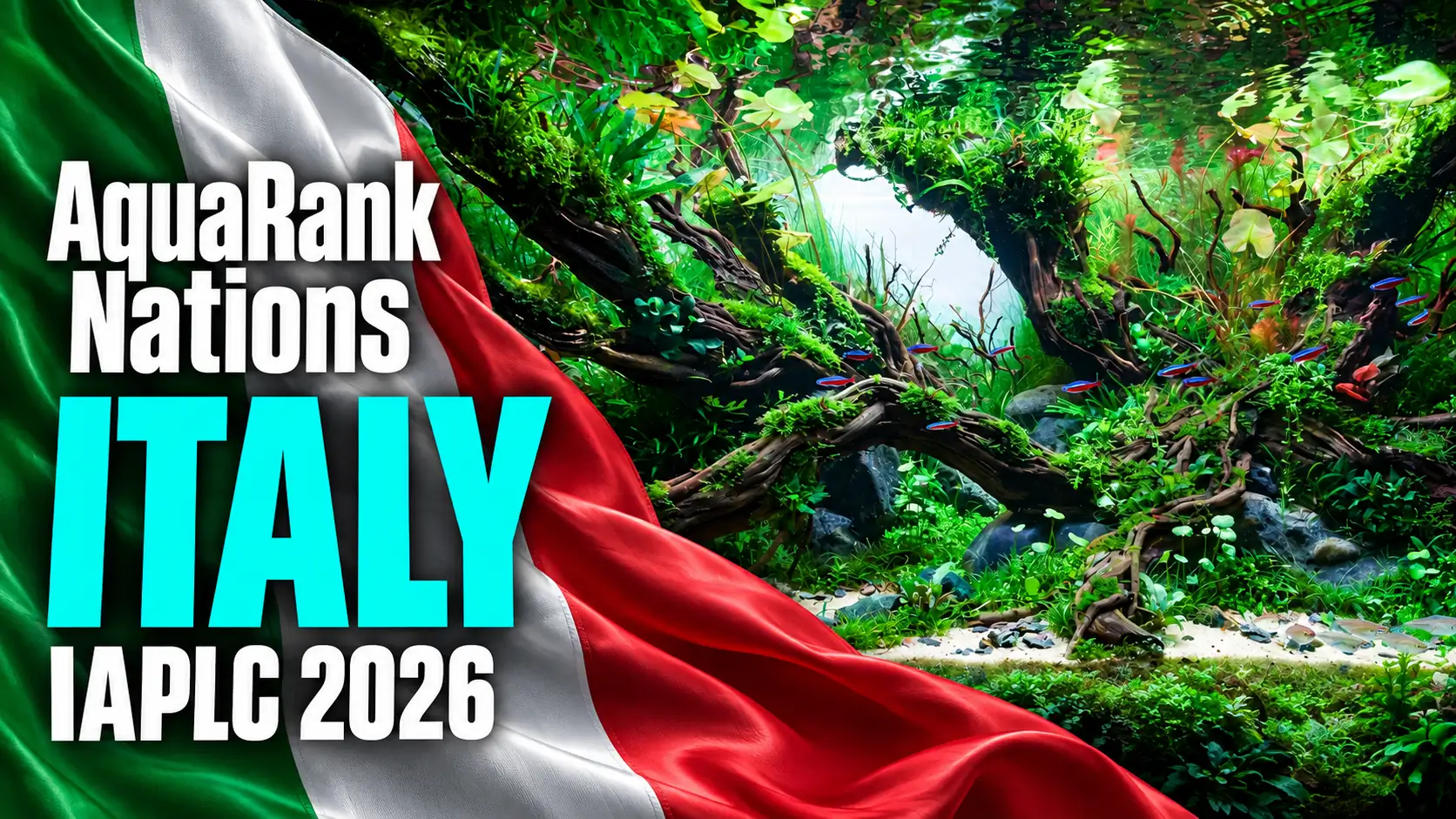
  • Analyse Italy aquascapes at IAPLC 2026, then explore the country’s results, contributing creators and competition history on AquaRank Nations.

    Italy at IAPLC 2026: Calm Routes and More Dramatic Planted Frames

    A clear route through planted banks can feel quiet; a coloured ridge beneath a dark frame can feel theatrical. The four Italian photographs selected for this study offer both experiences. Together, they make a useful contemporary comparison with an archive that once placed particular emphasis on calm, enduring-looking compositions.
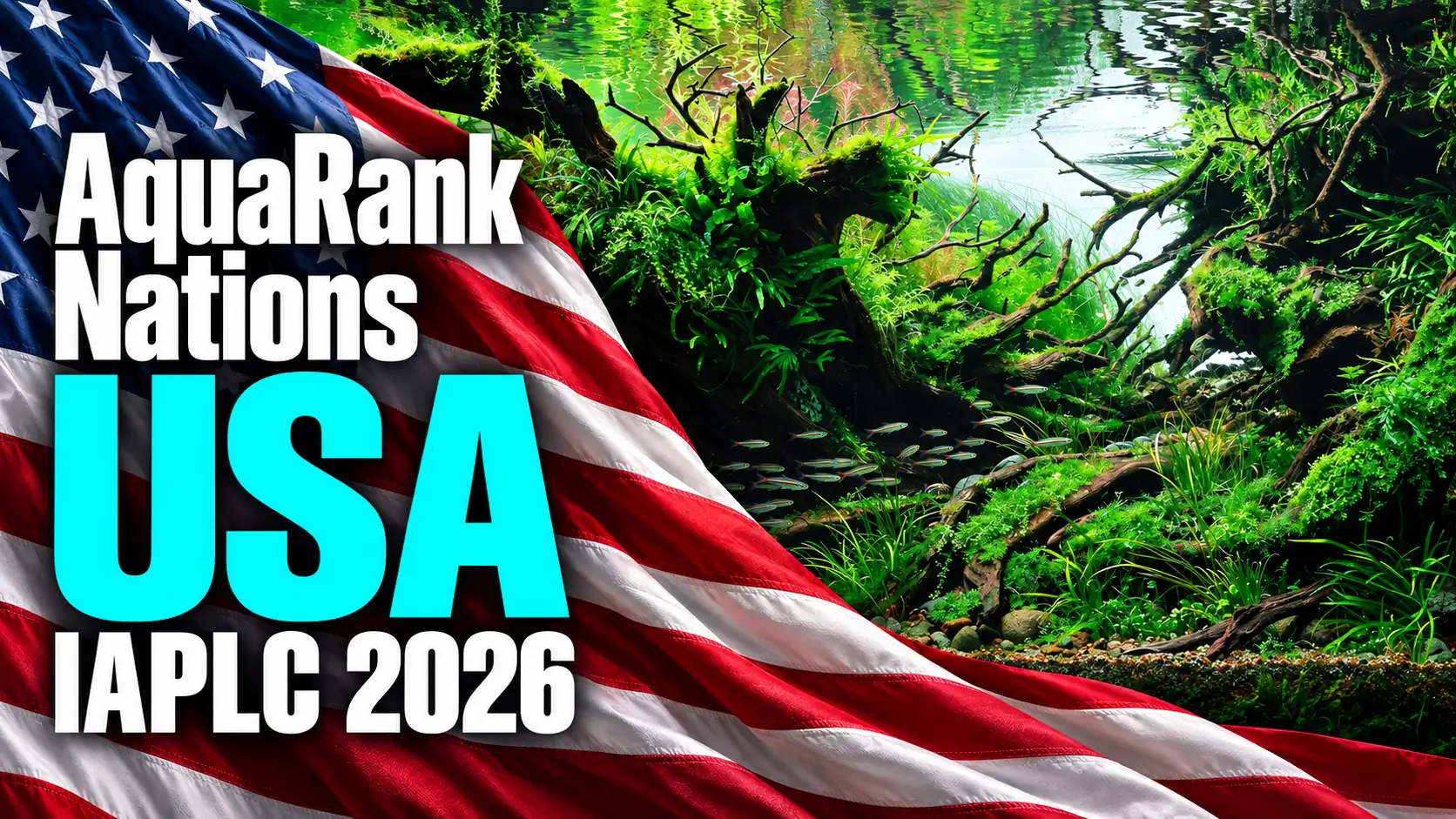
  •  Analyse United States aquascapes at IAPLC 2026, then explore the country’s results, contributing creators and competition history on AquaRank Nations.

    United States at IAPLC 2026: Four Distinct Readings of a Wooded Aquarium

    The four American photographs selected here all contain important wood structures, yet they do not produce one uniform wooded scene. A broad canopy, a low diagonal, a fine-leaved light window and an exposed timber subject organise attention differently. That variation lets us discuss design diversity through specific decisions rather than a broad national label.
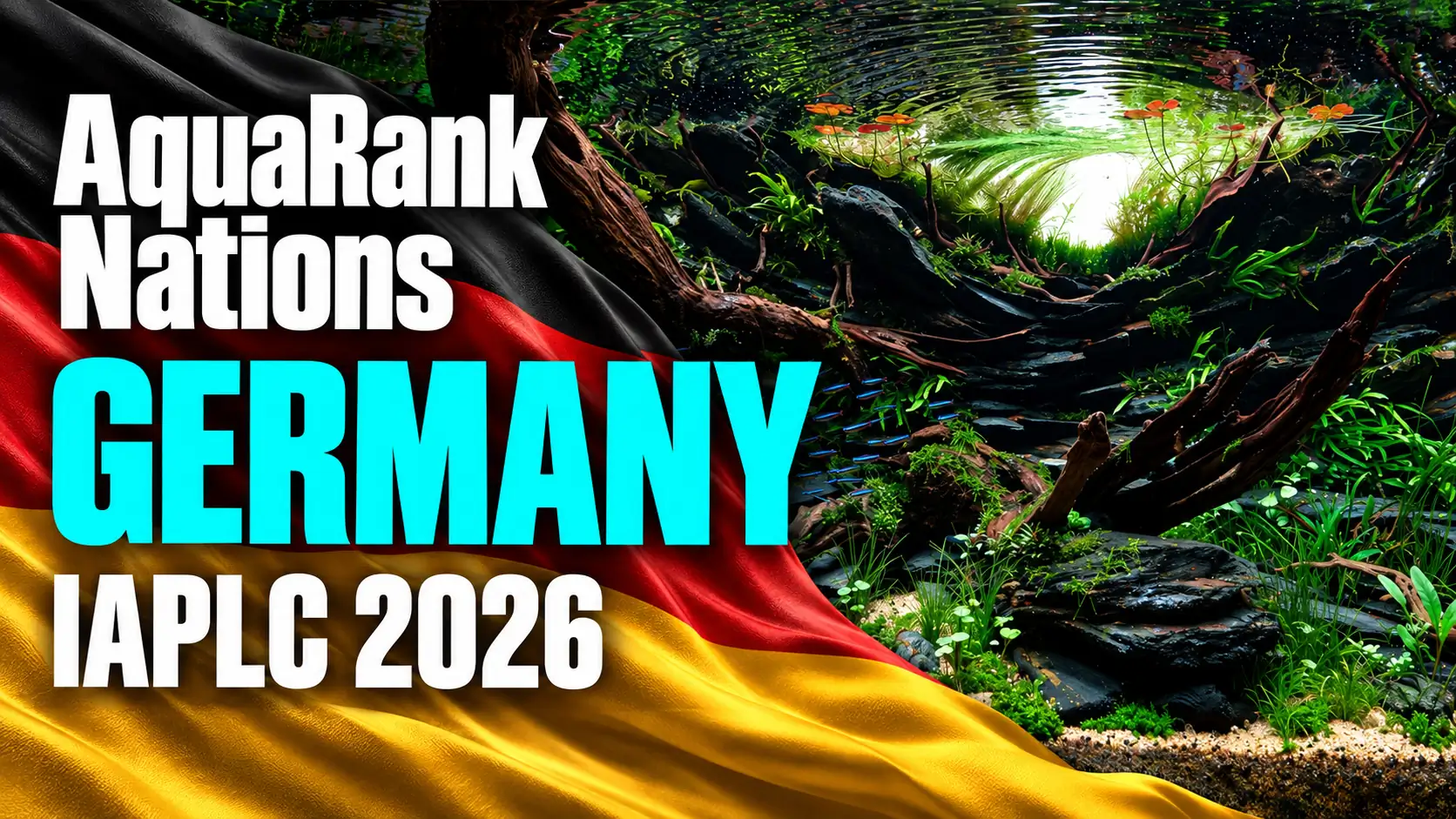
  • Analyse Germany aquascapes at IAPLC 2026, then explore the country’s results, contributing creators and competition history on AquaRank Nations.

    Germany at IAPLC 2026: Four Ways to Balance Hardscape and Open Water

    A dark wooded frame, a rocky valley, a brighter mixed scene and green-covered root contours make this German selection particularly useful for comparison. The photographs share an interest in separating materials from the water around them, but achieve it through different outlines and lighting relationships.
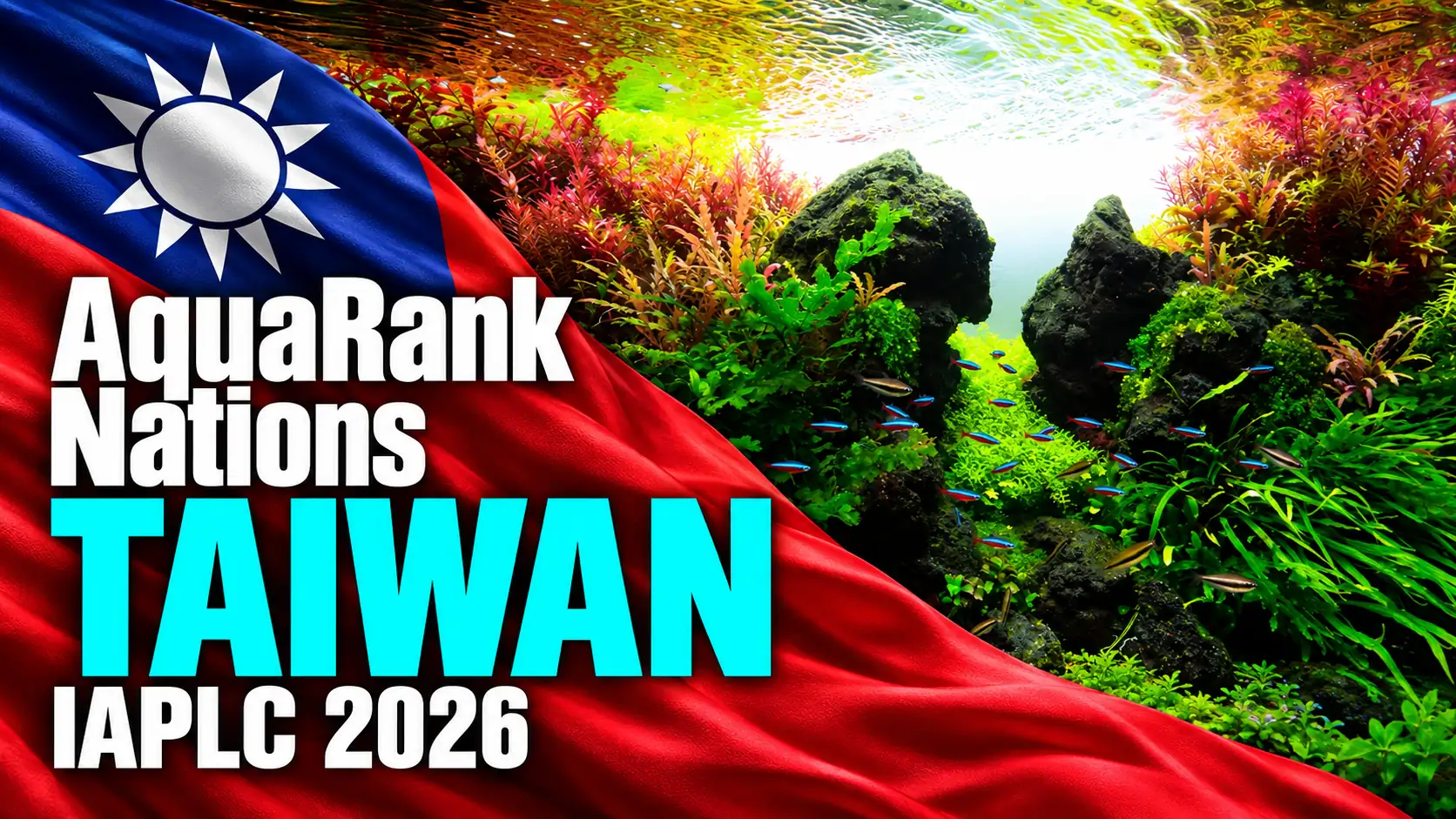
  • Analyse Taiwan aquascapes at IAPLC 2026, then explore the country’s results, contributing creators and competition history on AquaRank Nations.

    Taiwan at IAPLC 2026: Planted Contours and Changing Routes into Depth

    Dense foliage, planted wood ridges and a low central route create different senses of distance in this four-work selection. The photographs are particularly rewarding when viewed through changes in leaf shape and planting height. They offer a present-season comparison with an archive that once described both graceful composition and more contemporary experimentation.
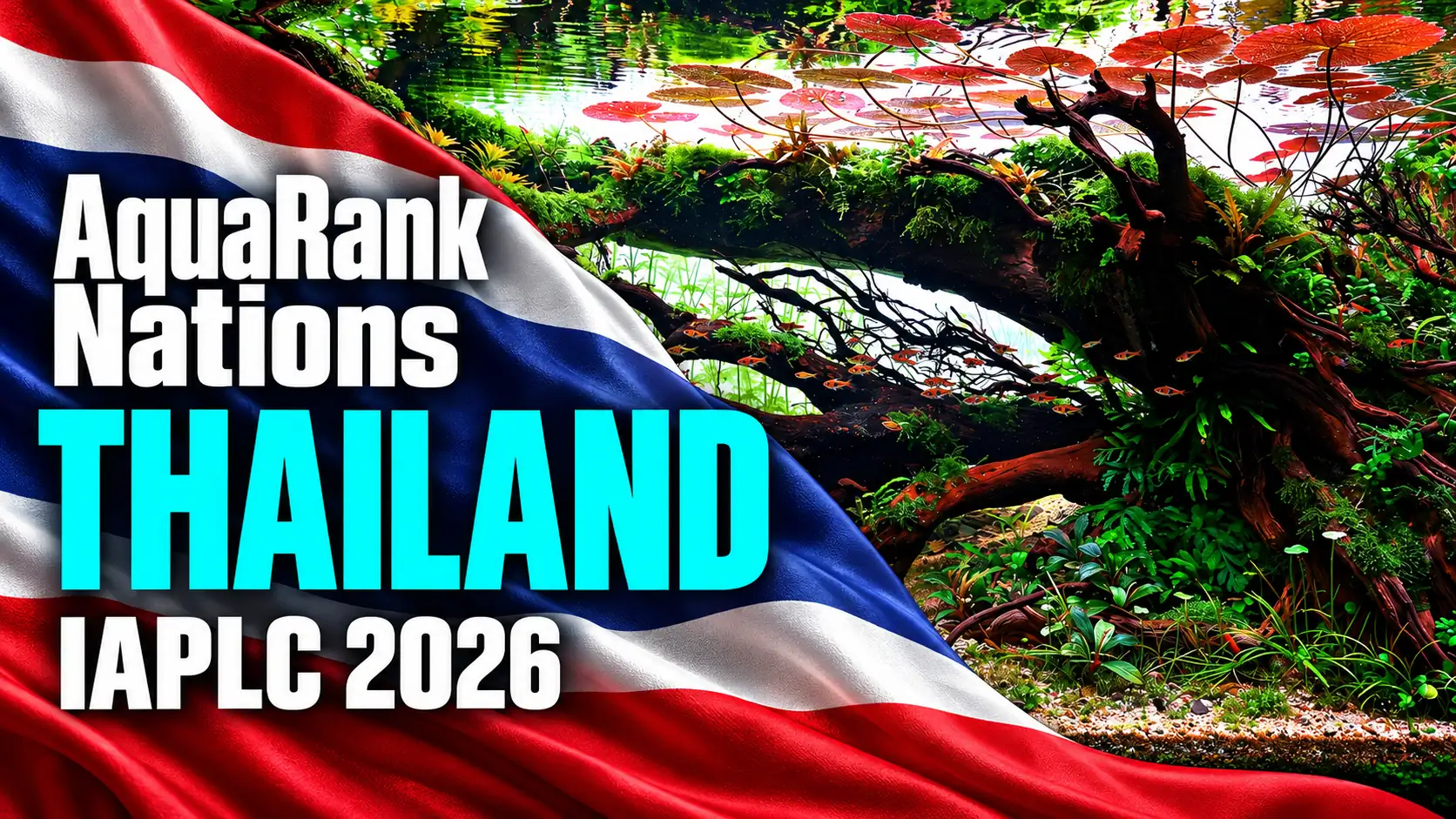
  •  Analyse Thailand aquascapes at IAPLC 2026, then explore the country’s results, contributing creators and competition history on AquaRank Nations.

    Thailand at IAPLC 2026: Surface Colour, Green Arches and Open Rockwork

    Three Thai aquariums in the published Top 300 present contrasting visual priorities. MAGIC LEAVES makes the water surface a signature; another work carries a route beneath planted arches; a third exposes rock peaks against rounded greenery. This small group gives a useful reason to look beyond the first shared award photograph.
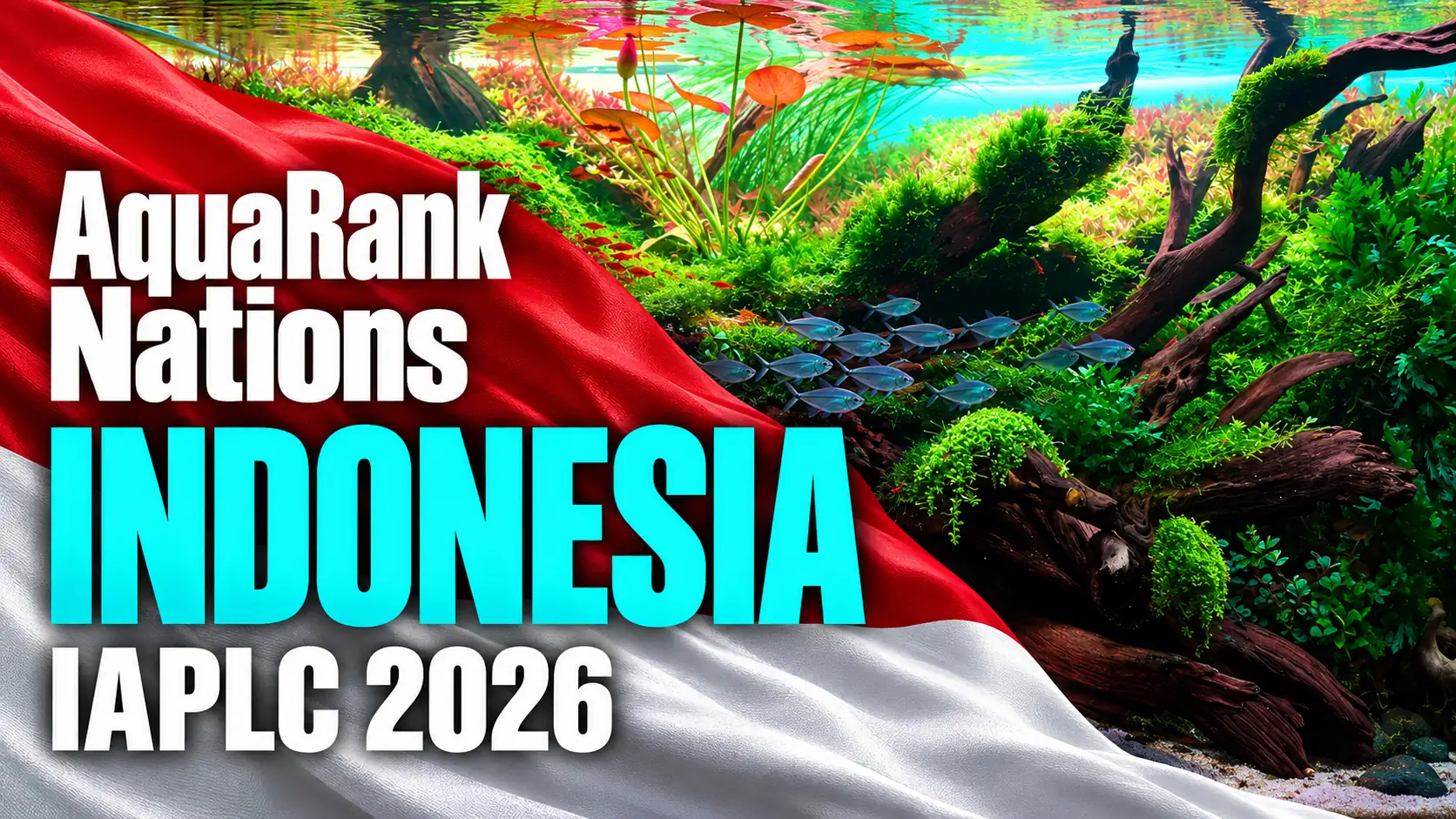
  • Analyse Indonesia aquascapes at IAPLC 2026, then explore the country’s results, contributing creators and competition history on AquaRank Nations.

    Indonesia at IAPLC 2026: Forest Craft Through Four Different Frames

    The four Indonesian works published at ranks 1–300 offer a compact comparison. A coloured surface canopy, a dominant trunk, a dense grove and a wood-and-rock opening all reward close attention. The small group makes it possible to examine every represented work in this range, while keeping the conclusions specific to this season and cutoff.
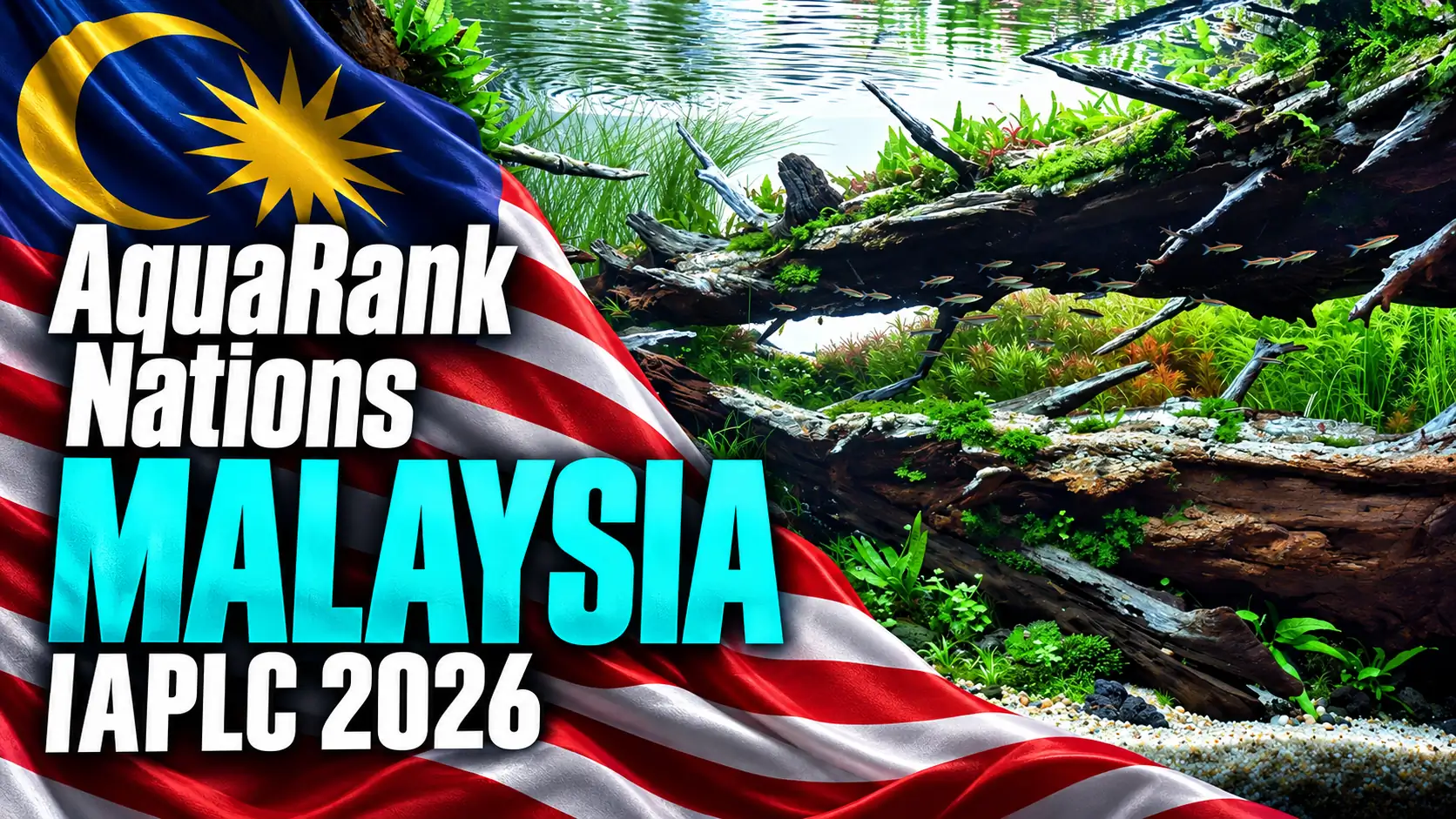
  • Analyse Malaysia aquascapes at IAPLC 2026, then explore the country’s results, contributing creators and competition history on AquaRank Nations.

    Malaysia at IAPLC 2026: Wood, Plant Texture and the Visual Role of Fish

    A bright gap between broad wood layers, a fine-leaved canopy and a conspicuous individual fish offer three different entrances to this Malaysian selection. The photographs invite attention to the space inhabited by fish as well as the hardscape around it. They also show why a creator’s reputation and a new aquarium’s visual decisions should be discussed separately.