Judge's scorecard
Judging basis: IAPLC Secondary Screening Judging Criteria. The score is an editorial assessment from the submitted image, not an official contest result.
Recreation of natural habitat for fish
Judge's assessment
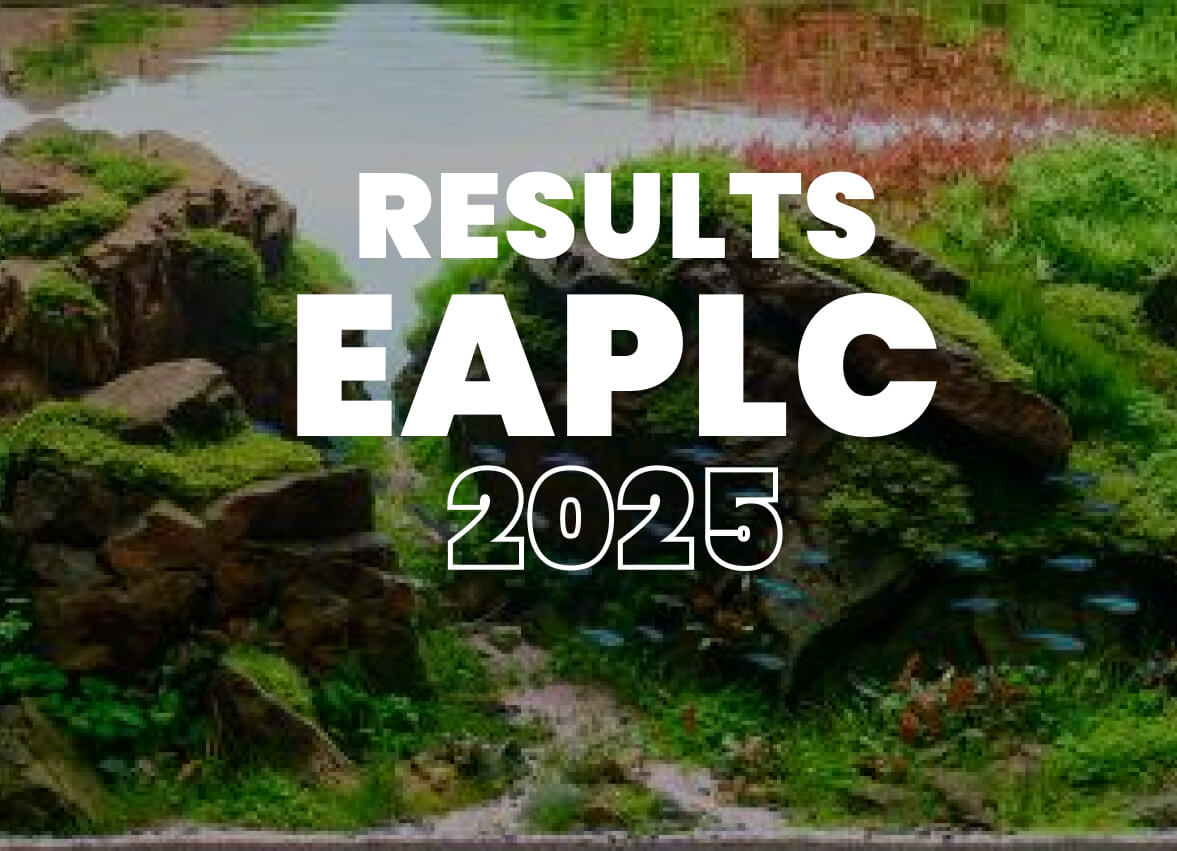
The image convincingly presents a sheltered rocky aquatic passage with overhangs, crevices, mature green growth and a visible school of small fish. Fish-to-layout scale appears appropriate. Exact species, ecological origin and compatibility cannot be verified from the image, so the score remains below the maximum.
Strengths: Strong refuge-like rock structure and underwater depth.; Fish are visibly integrated into the central passage.; Planting and hardscape combine into a plausible stream-like environment.
Limitations: Species-level compatibility cannot be assessed.; Water movement and other habitat conditions are not visible.; Very dark edges obscure some environmental detail.
Long-term maintenance of the layout
Judge's assessment
The mature planting appears cohesive and intentionally controlled in the submitted view, but a photograph cannot verify stability, algae management, trimming history or continued access to the densely planted crevices.
Strengths: Growth appears established rather than newly placed.; Rock surfaces remain visually integrated with the planting.; The main opening and fish passage are still preserved.
Limitations: Dense growth would likely require demanding ongoing control.; Long-term stability and maintenance history are unknown.; No evidence beyond the single presentation image is available.
Creator's technical skills
Judge's assessment
The layered rock construction, repeated ledges, curved passage and planting that follows the hardscape demonstrate highly developed control of depth and visual direction. Some details are lost in darkness, preventing a perfect score.
Strengths: Sophisticated overlapping hardscape creates depth.; Planting is closely fitted to rock contours.; The bright opening is preserved as a deliberate depth cue.
Limitations: Shadowed areas make some joins and planting boundaries difficult to inspect.; The dense growth can obscure the precision of the underlying construction.
Originality and impression of the layout
Judge's assessment
The cavernous ravine, bright exit and animated school create an immediate and memorable impression. The interpretation is distinctive, although its dramatic darkness and saturation give it a strongly stylized presentation.
Strengths: Clear and recognizable visual concept.; Strong contrast between dark stone, green growth and pale opening.; Fish movement adds scale and narrative.
Limitations: The intense treatment can feel more theatrical than observational.; Peripheral density limits the visibility of secondary details.
Presentation of natural atmosphere
Judge's assessment
The layout communicates age, shade, shelter and continuous water-shaped structure through its mossed rocks and enclosed route. The atmosphere is persuasive, though the high contrast and vivid color slightly emphasize spectacle over subtle natural observation.
Strengths: Convincing sense of a shaded, mature aquatic environment.; Irregular growth and rock layering avoid a sterile appearance.; The fish reinforce the living quality of the scene.
Limitations: Lighting and contrast are unusually dramatic.; The exact natural reference environment cannot be identified from the image.
Overall composition and planting balance
Judge's assessment
Visual hierarchy is strong, with the fish-filled corridor leading toward the bright opening and heavy side masses framing the route. Planting unifies the hardscape, but the extreme density reduces negative space and obscures some peripheral structure.
Strengths: Clear directional flow toward the opening.; Effective framing and depth through layered rock masses.; Green growth is distributed consistently across the composition.
Limitations: Side and lower areas are visually congested.; Additional open space or clearer tonal separation could improve rock readability.
Judge's overall verdict
This is a highly accomplished and visually distinctive rocky ravine layout. Its strongest qualities are the controlled hardscape depth, mature green integration, convincing shelter-like habitat and powerful central route. The principal deductions reflect limits of the submitted image rather than obvious failure: exact ecology and long-term maintenance cannot be verified, while dense darkness and saturation conceal some detail and reduce negative space. A conservative editorial estimate is 86/100, not an official contest result.
Assessment limits: Assessment is based only on the supplied single image. Plant and fish species, tank dimensions, maintenance history, construction methods, water movement, lighting conditions and any information not visibly demonstrated have not been inferred.
Visual Structure and First Impression
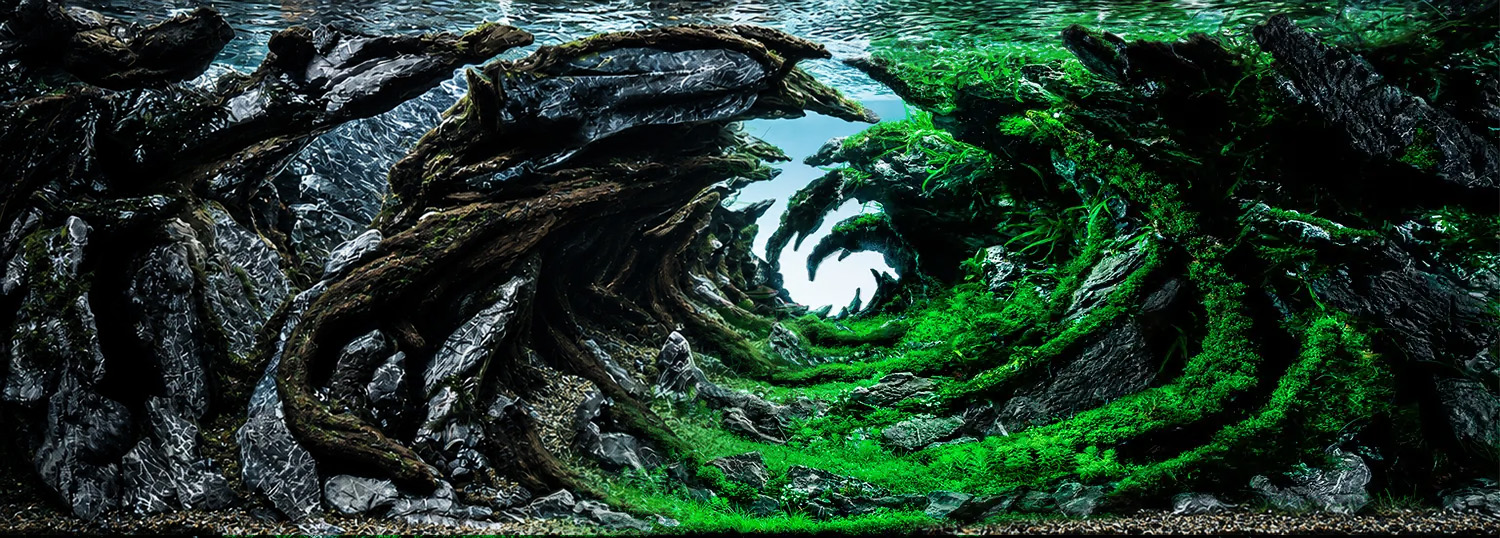
The composition is organized around a tunnel-like ravine that curves toward a pale opening near the upper center-right. Dark rocks occupy almost the entire frame, while bright green growth traces their shelves, crevices and descending contours. This creates immediate contrast between enclosed foreground space and apparent distance beyond it. The school of small fish reinforces the route through the layout: their horizontal bodies and repeated red accents provide a readable moving layer against the green and black surroundings. The first impression is dramatic and immersive. At the same time, the density is so high in the side and lower regions that individual rock relationships can merge together, reducing clarity in several peripheral areas.
Recreation of a Fish Habitat
The image successfully suggests a sheltered rocky stream environment rather than a flat ornamental garden. Layered stone, irregular overhangs, moss-like growth and a central passage create numerous visual refuges for the fish. The schooling behavior visible in the photograph also supports the impression of a functioning aquatic space, and the fish appear proportionate to the hardscape rather than oversized within it. No exact fish or plant species can be identified reliably from this image, so ecological compatibility cannot be judged at species level. The habitat score is therefore based on visible form and presentation. A higher score would require clearer evidence that the selected fish, planting and water movement correspond to one specific natural setting.
Technical Execution
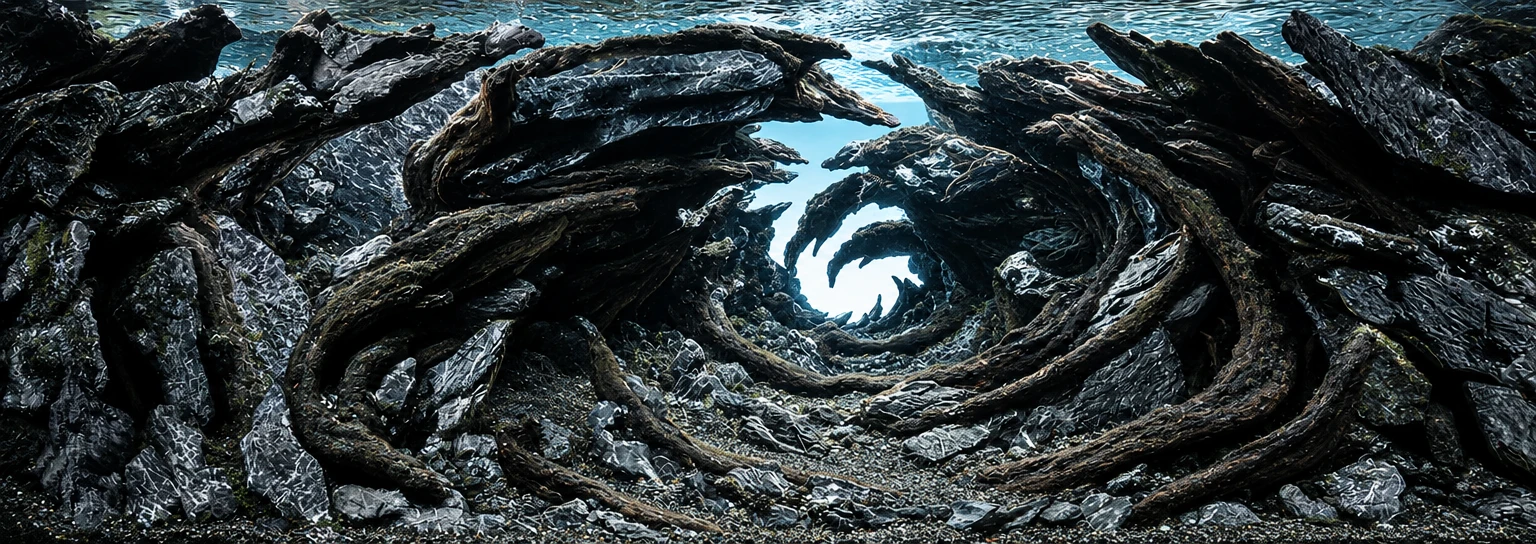
The hardscape shows considerable control. Rock faces are layered in opposing masses, with ledges and pointed projections directing the eye inward instead of forming a simple wall. Green growth has been established across many surfaces and follows the stone structure closely, helping unify the separate pieces. The central opening remains sufficiently visible to preserve depth despite the heavy planting. The fish are also positioned where they can be read without completely obscuring the composition. The main technical limitation is photographic legibility: deep shadows conceal some transitions, and the saturated greenery makes it difficult to distinguish deliberate planting boundaries from general overgrowth. Even so, the visible construction and depth management indicate advanced execution.
Maintenance and Long-Term Plausibility
A single contest image cannot establish trimming schedules, algae control, plant health over time, or whether the hardscape remains stable. The growth appears intentionally mature and gives the scene its convincing aged character, but dense moss and fine foliage also create a demanding maintenance burden. Several narrow rock gaps and overhanging areas would likely require careful access if growth needed correction, although that practical issue cannot be confirmed from the photograph. The layout earns a moderate-to-strong score because the presentation looks cohesive rather than visibly neglected. To support a higher assessment, the work would need evidence of consistently controlled growth, clean rock boundaries and stable negative spaces through a longer maintenance period.
Originality and Natural Atmosphere
The work’s strongest expressive choice is its enclosed, cavernous interpretation of a rocky aquatic passage. Instead of relying on a conventional open valley or single focal stone, it builds a sequence of overlapping shelters around a bright visual exit. The contrast between nearly black stone and luminous green growth gives the scene a distinctive character, while the school of fish adds scale and animation. The atmosphere feels old, shaded and continuously shaped by water. The dramatic treatment occasionally approaches theatrical intensity: the darkness and vivid color are more emphatic than a plainly observed natural scene might be. A subtler tonal range could make the ecological reference feel less stylized without sacrificing its strong identity.
Composition, Planting Balance and Improvements
The principal visual hierarchy is clear: the eye enters through the fish-filled central corridor, follows the curved greenery and arrives at the bright opening. The surrounding masses provide effective framing, and the low green foreground stabilizes the composition. Planting is distributed across the rocks rather than isolated into disconnected clumps, which helps the hardscape read as one environment. However, the extreme density at the left, right and lower edges reduces breathing room and hides some of the negative space that would clarify the ravine’s geometry. A judge seeking improvement would want slightly more separation between selected rock planes, more readable shadow detail and carefully preserved open water around the main route.







Leave your comments