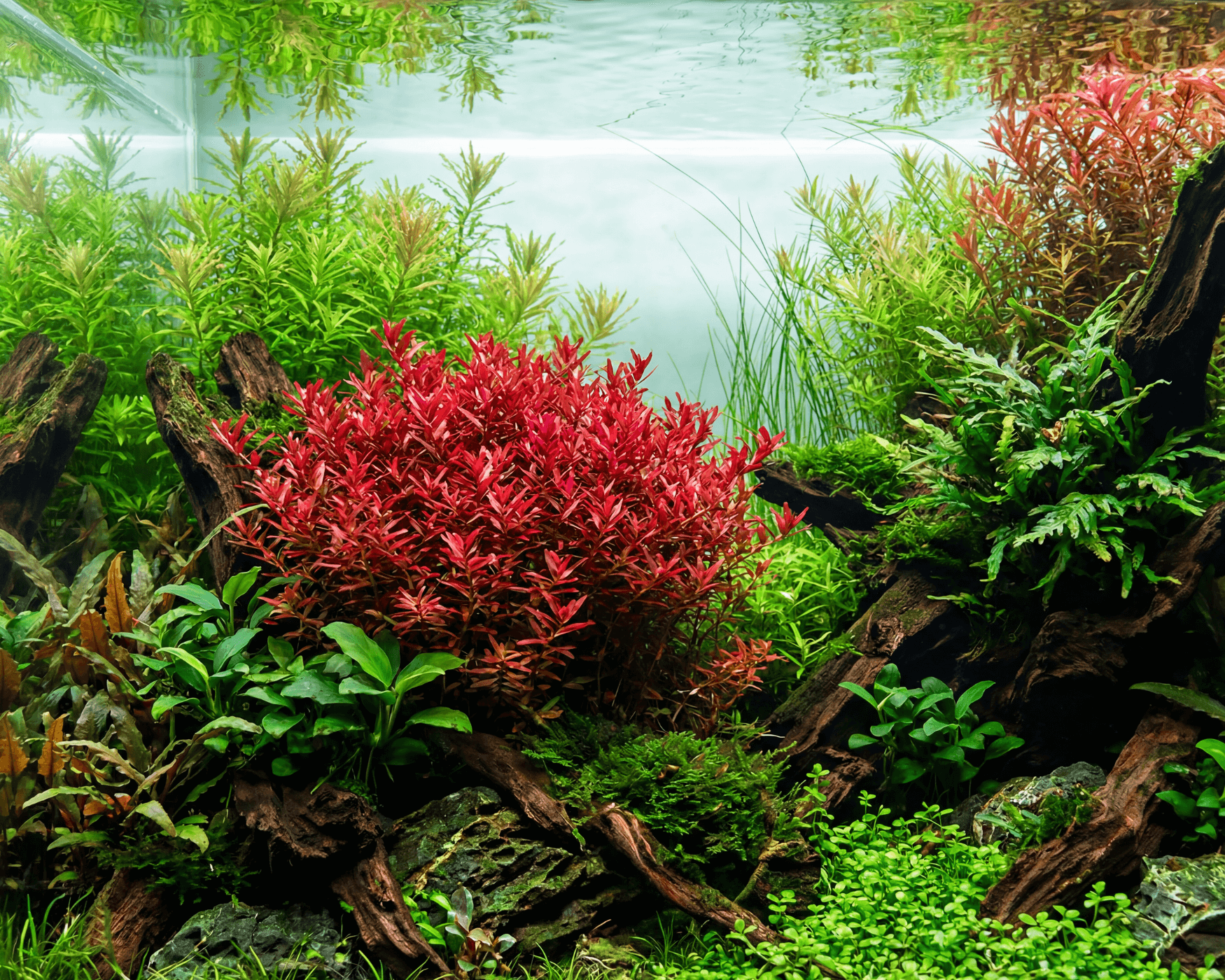
Start with the plant’s growth point, not its height
Before making a cut, identify where new growth comes from. Stem plants extend from nodes along a vertical stem, so they can usually be topped and replanted. Rhizome plants such as Anubias grow from a thick horizontal stem and should not be buried or chopped casually. Rosette plants send leaves from a central crown, while runners produce connected daughter plants. Mosses spread across a surface, and floating plants multiply at the waterline. This simple classification prevents the most common pruning mistake: treating every plant like a stem. It also helps you decide whether the goal is shaping, propagation, thinning, or removing damaged growth.
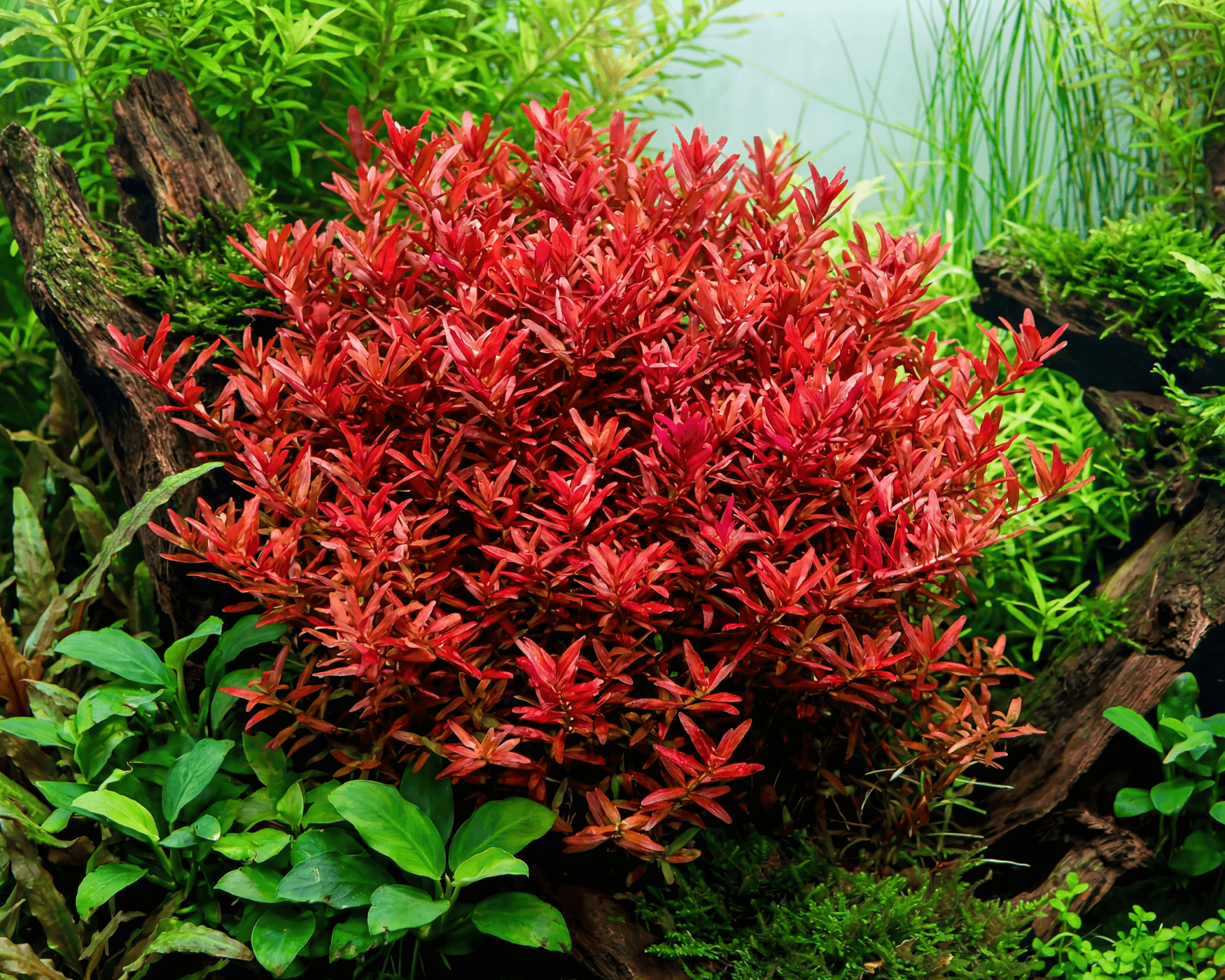
Turn side shoots into cover without creating a thicket
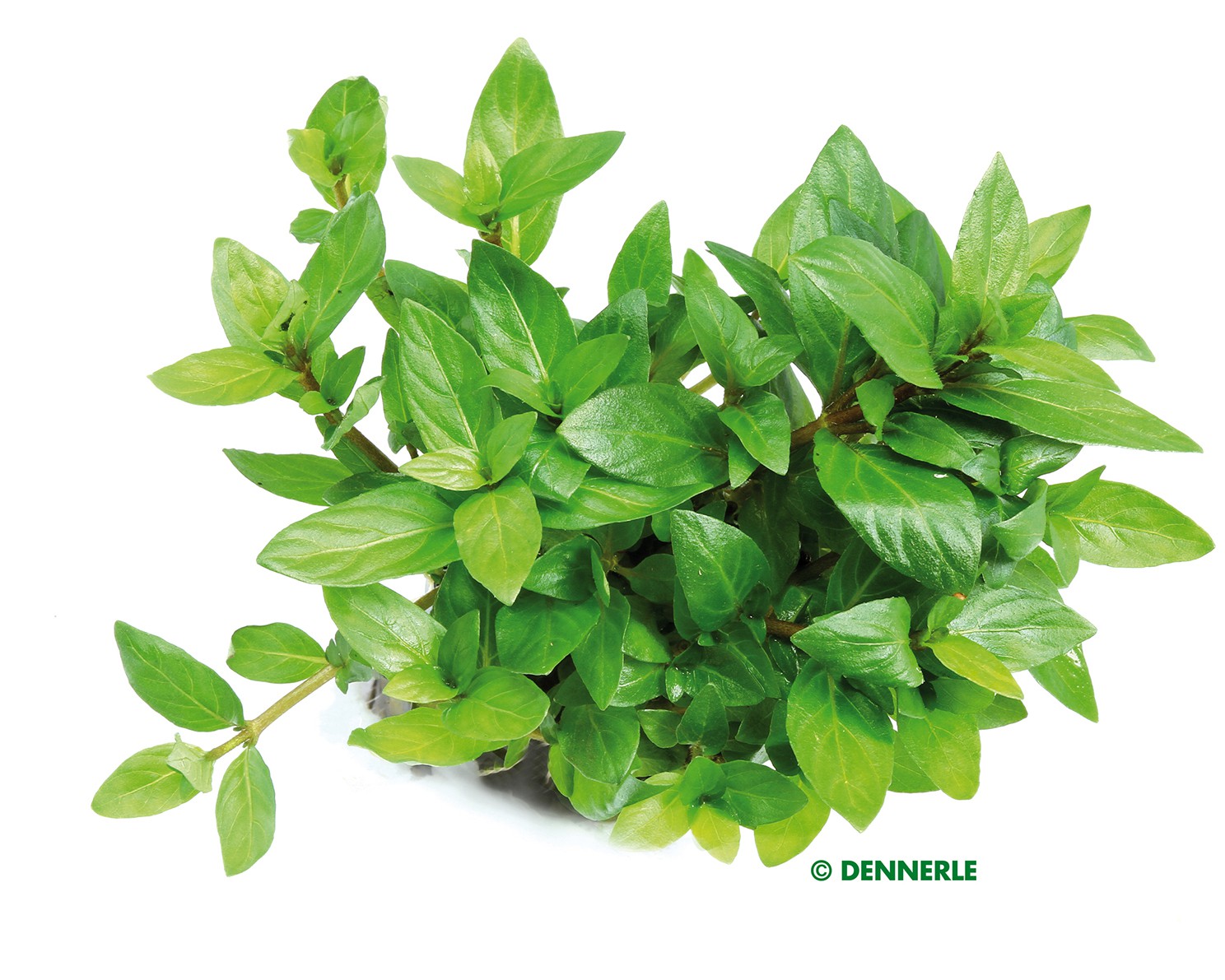
Some plants produce side shoots that quickly change the shape of a small aquarium. Hygrophila difformis can provide excellent shelter for shrimp and young fish, but an unchecked clump may block light and consume swimming space. Thin from the outside first, removing weak, crowded, or damaged stems before healthy ones. Replant only the strongest cuttings in open areas, and discard loose fragments that could decay in the substrate. Keep a clear lane near the front glass and around equipment. This creates layered cover rather than a solid wall, giving livestock places to retreat while preserving circulation and visibility.
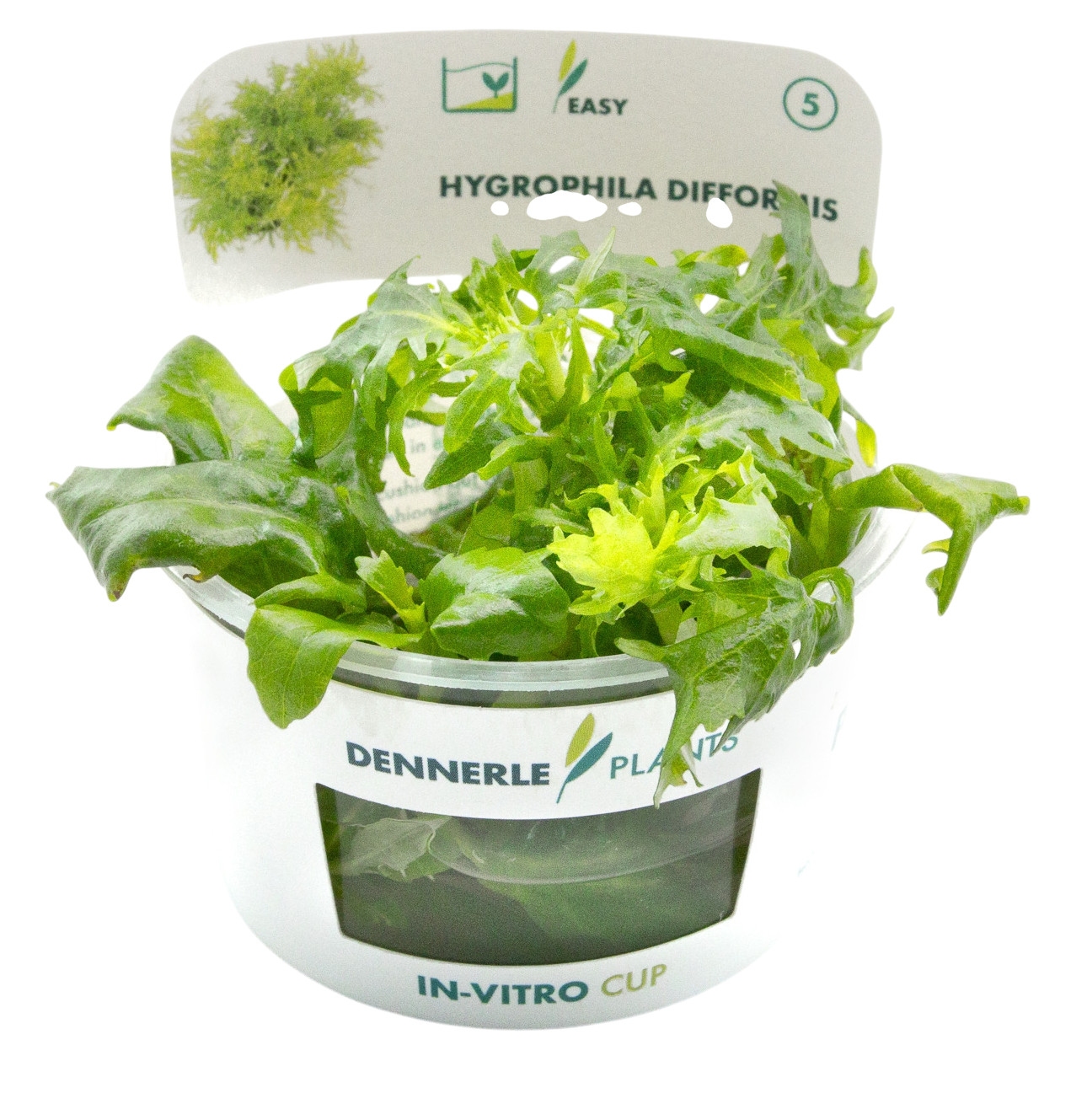
Leave rhizome plants alone more often than you cut them
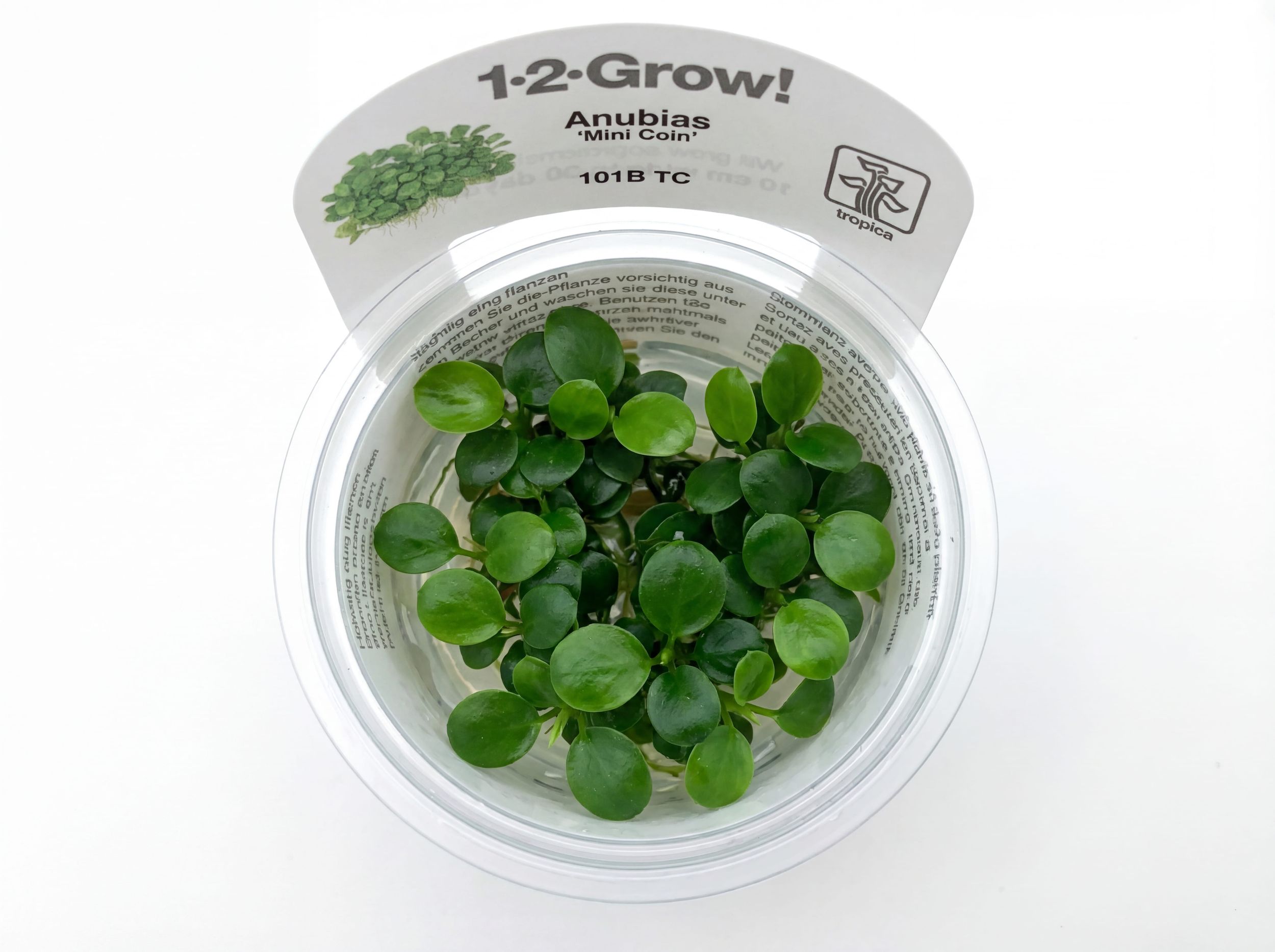
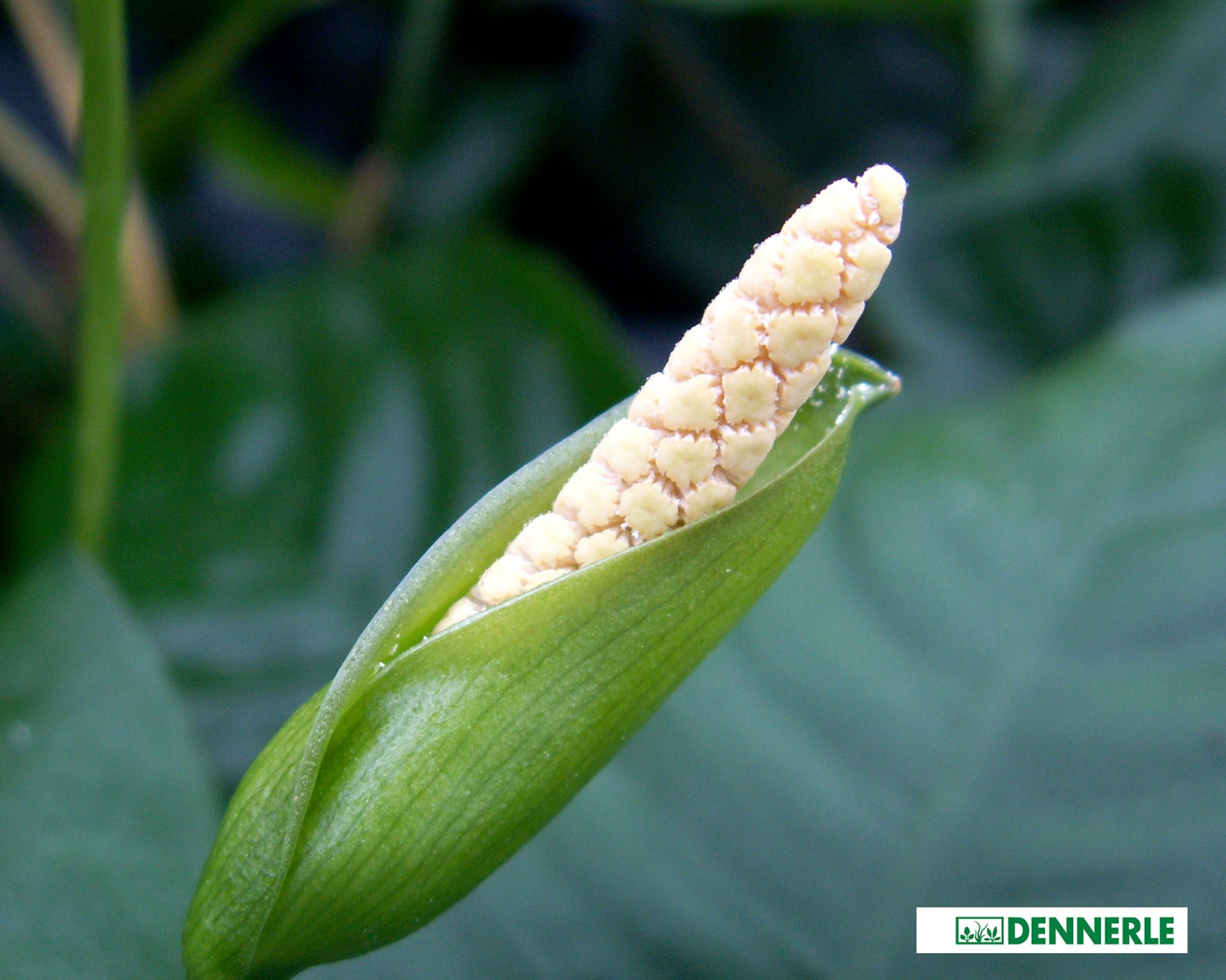
Anubias is usually a shaping plant, not a frequent propagation plant. Its thick rhizome should remain exposed above the substrate, attached to wood or rock with thread, glue made for aquarium use, or careful placement. Remove yellowing leaves close to the rhizome with clean scissors, but avoid burying the rhizome while replanting. If the plant has become too large, divide the rhizome only when each section retains healthy leaves and roots. Small Anubias varieties are useful in nano tanks because they grow slowly and create shelter without demanding constant trimming. Their slow pace is a maintenance advantage, not a sign that they need aggressive intervention.
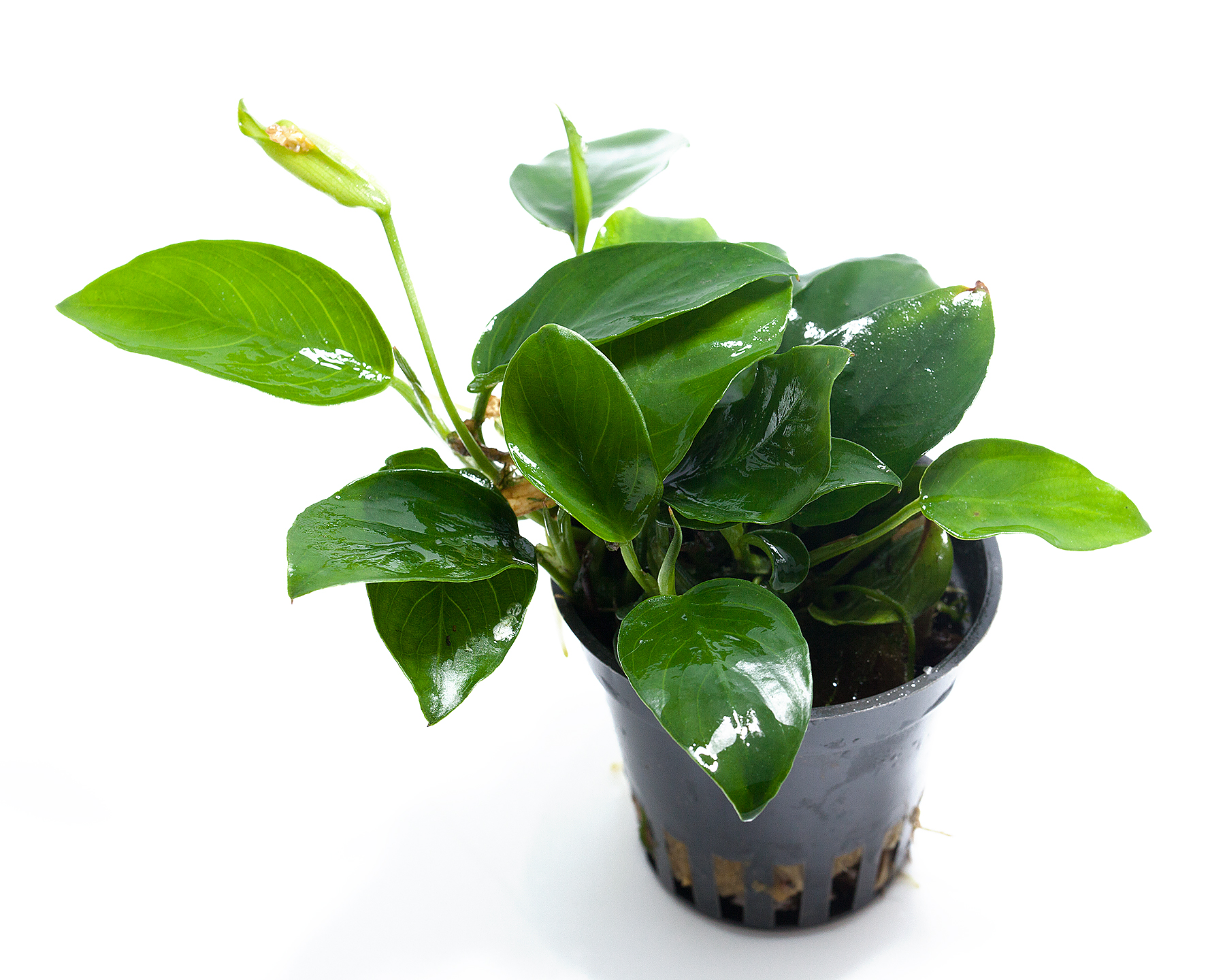
Control moss by thinning its surface, not just its edges
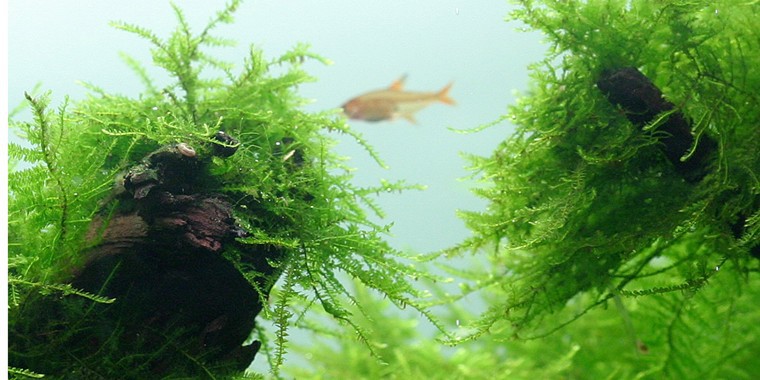
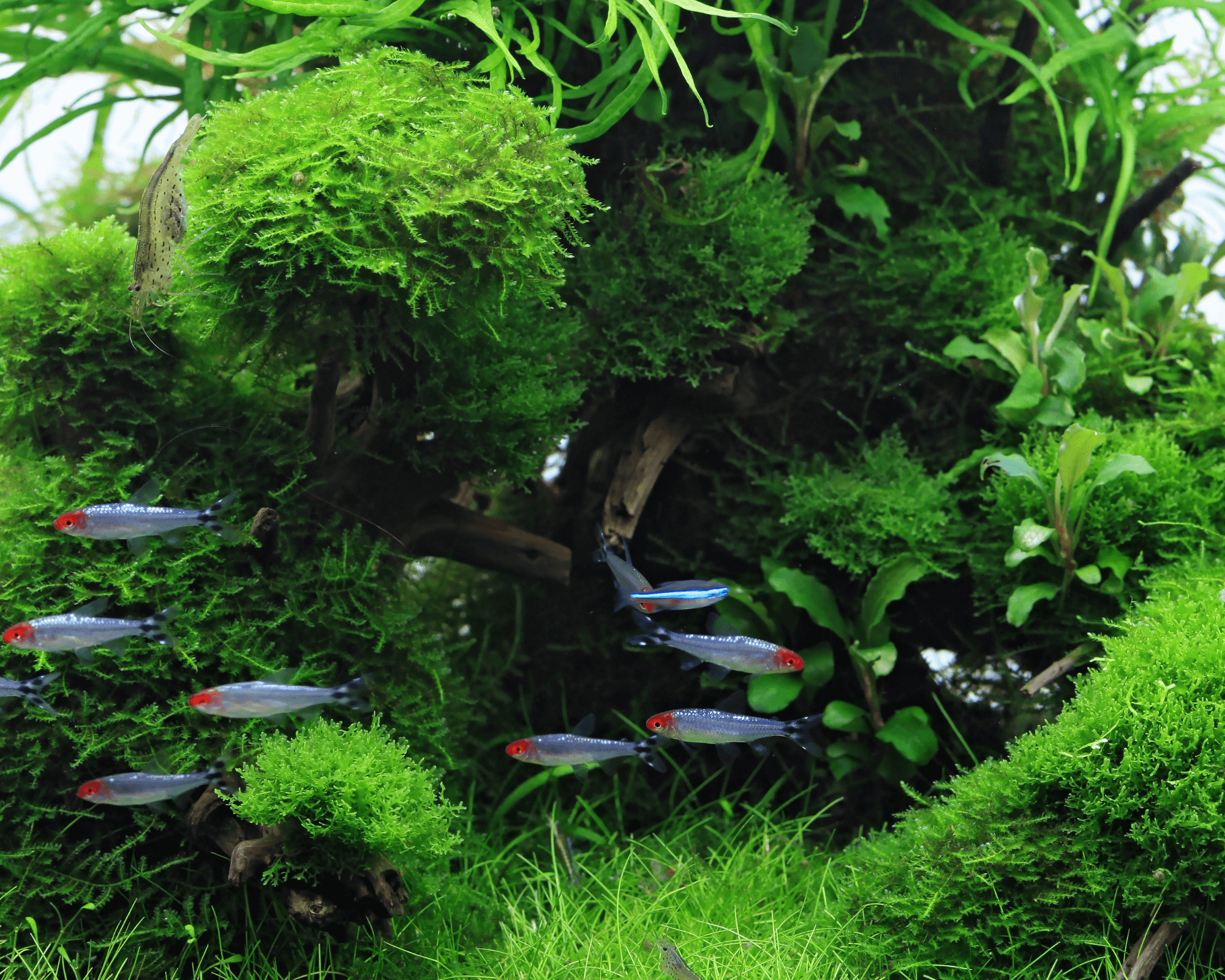
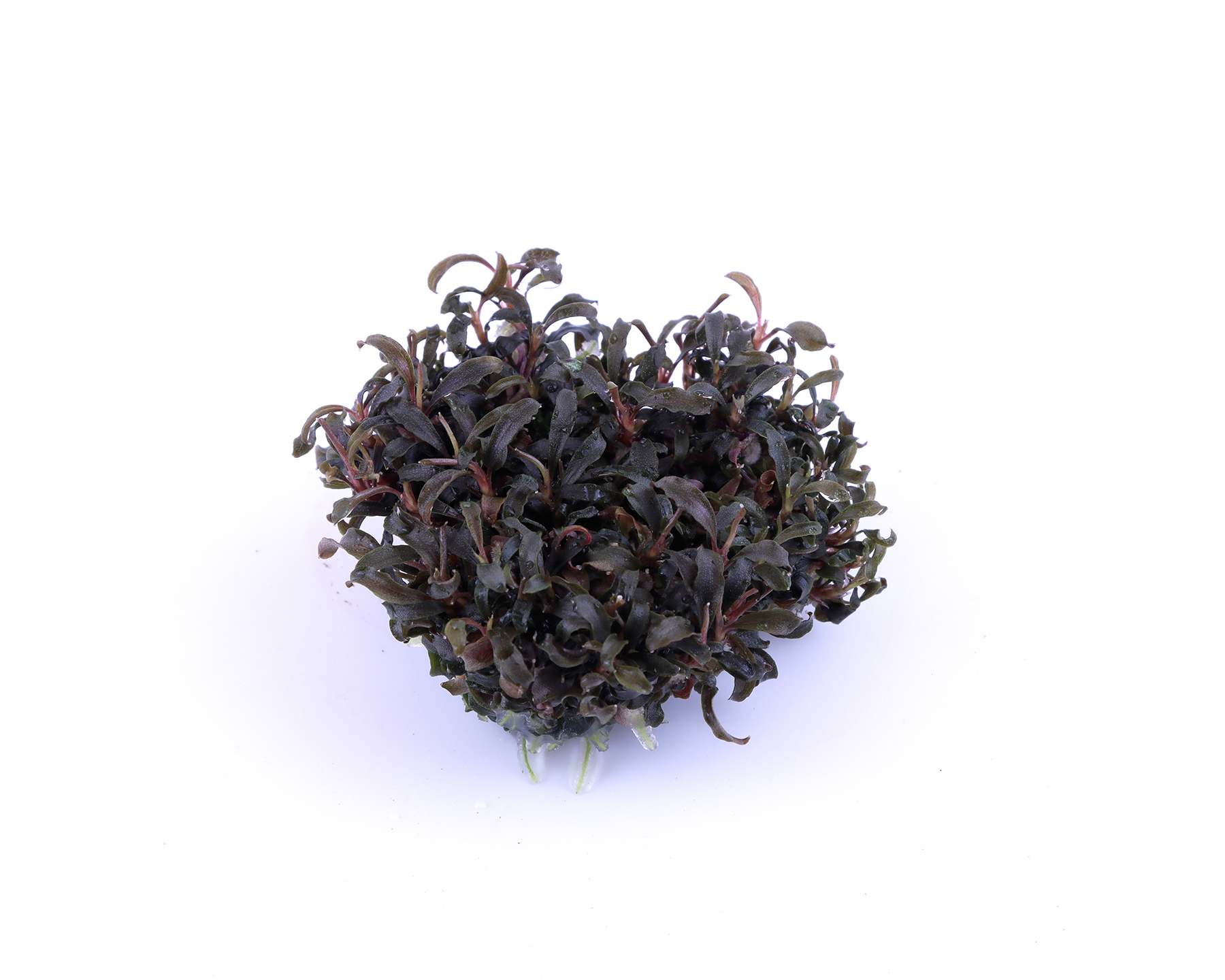
Moss can quietly become one of the densest parts of a planted aquarium. A thick clump may collect food, mulm, and shed leaves, reducing the grazing surface available to shrimp. Trim moss in small sections with sharp scissors, then remove the loose pieces with a net or siphon. If the clump is attached to wood or mesh, keep the attachment intact and shape the outer layer rather than tearing out the whole mat. In a nano tank, a thin, open moss pad often provides better shrimp habitat than a heavy ball of growth. Inspect beneath the surface after trimming for trapped debris.
Separate runners before they conquer the foreground
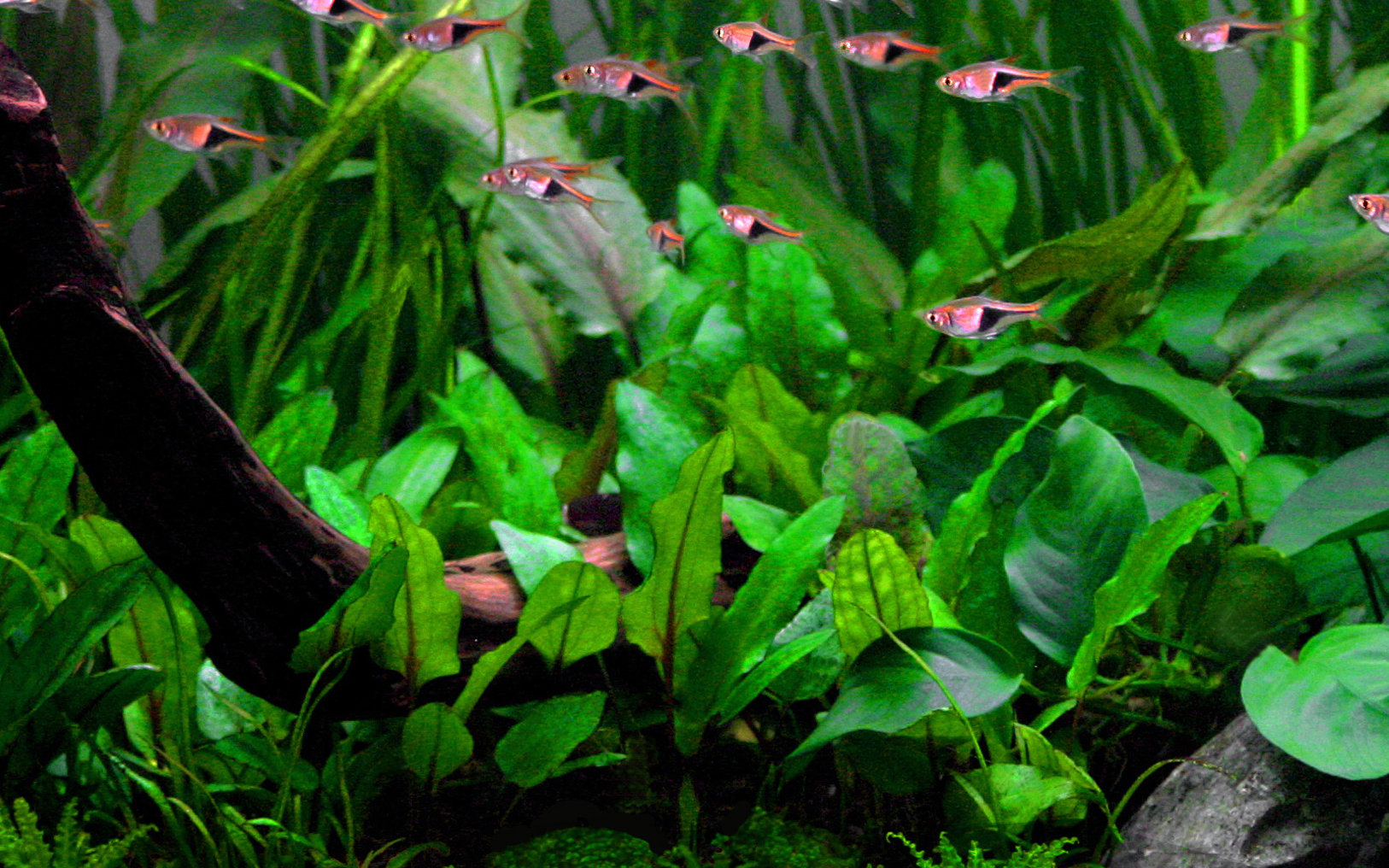
Rosette plants and carpeting species may spread by runners or by forming connected daughter plants. This is useful propagation, but it can also erase the intended boundary between foreground, midground, and open sand. Wait until a daughter plant has several leaves and visible roots, then cut the connecting runner and replant it in a prepared gap. If you want to keep a compact group, remove unwanted runners early rather than pulling mature plants from the substrate later. Handle Cryptocoryne gently because disturbance can cause temporary leaf loss. New leaves are a better measure of recovery than the appearance of older foliage.
Replant carpet trimmings only when they are clean and rooted
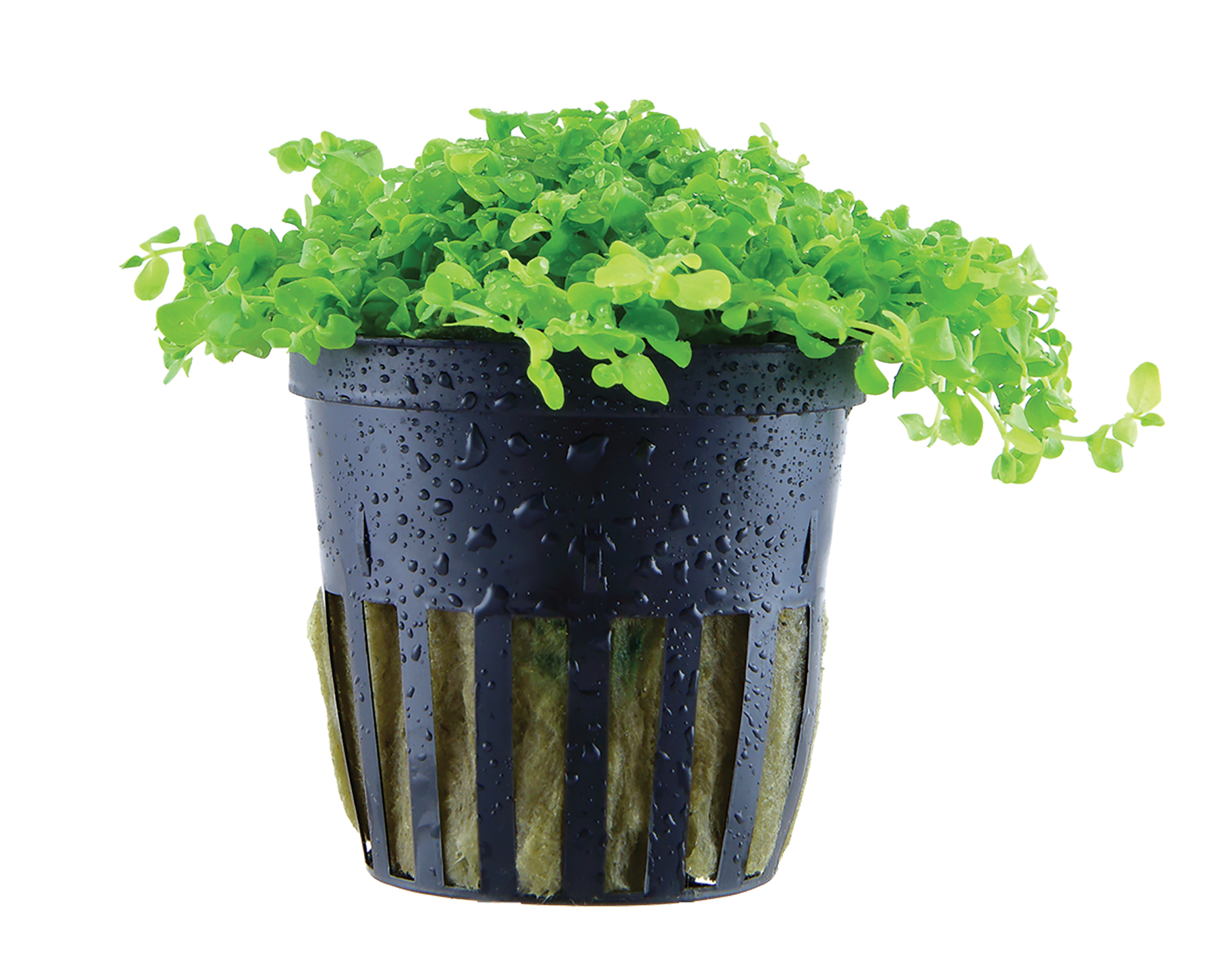
A carpet such as Micranthemum tweediei can be propagated by dividing a healthy mat into small plugs, but loose fragments are not automatically useful cuttings. Remove algae-covered or decaying pieces, separate the clean growth, and press each plug lightly into the substrate without burying all of its leaves. Trim before the carpet becomes a thick, floating layer that traps debris underneath. Keep the newly divided sections stable while they root, especially if bottom-feeding fish or large snails disturb the foreground. For shrimp tanks, an open carpet with visible substrate gaps is easier to clean than an overgrown mat.
Use floating plants as a light-control tool
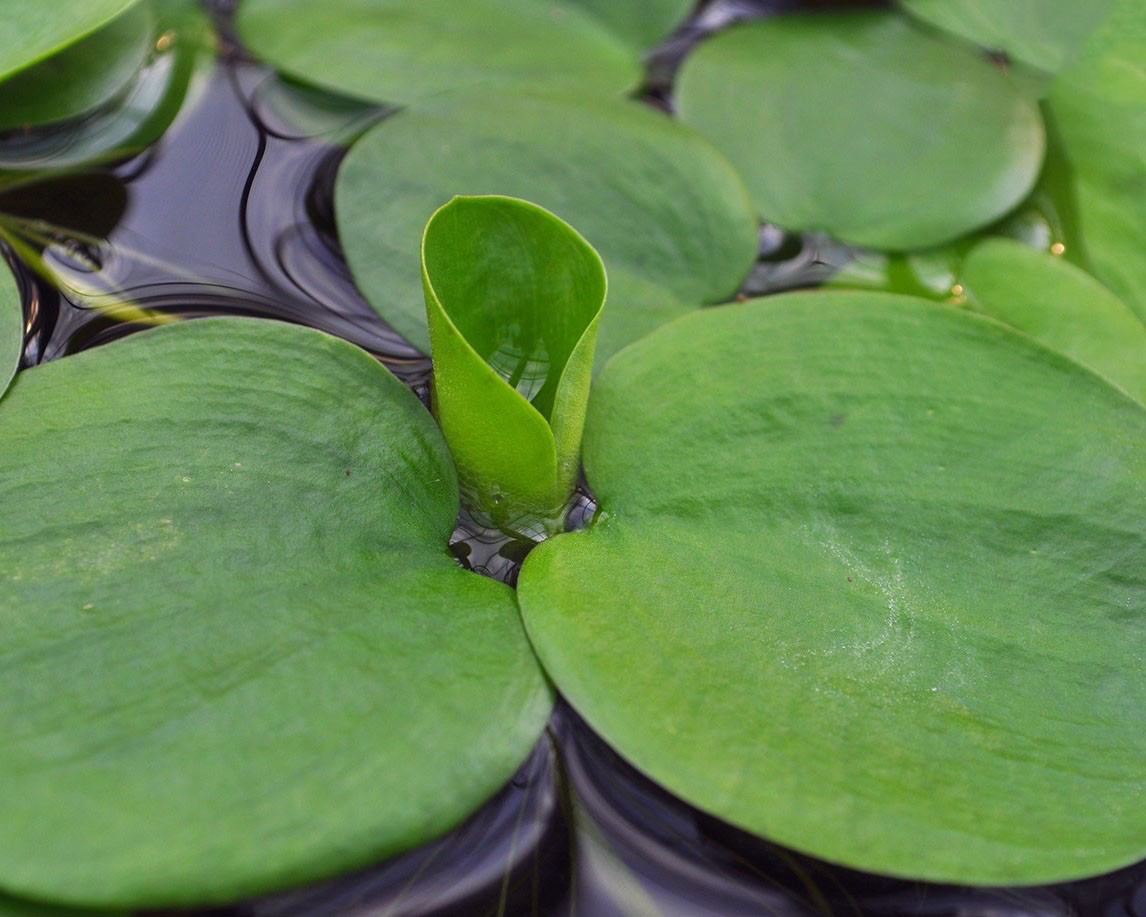
Floating plants can protect shrimp and reduce glare, but they mature quickly and may cover the entire surface. Instead of removing everything when the tank becomes dark, establish a floating-free zone above the main plant group or filter outlet. Scoop out excess plants during routine maintenance, checking that roots are not trapping food or blocking surface movement. Keep enough cover for shy livestock, particularly in a bright nano aquarium, but leave open water for gas exchange and feeding. If the plant is multiplying faster than you can use it, never release it outdoors. Bag unwanted material and dispose of it responsibly.
Shape slow plants by removing leaves, not chasing height
Small foreground and midground plants often need selective leaf removal rather than repeated topping. Staurogyne repens can be pinched or cut back to encourage branching, but a severe cut may leave an open patch while it regrows. Remove leaves that are yellow, algae-covered, or shading healthier growth, and preserve compact stems with strong new shoots. Use tweezers to replant healthy pieces in bare spaces, keeping the crown above the substrate. This approach works well in mixed nano communities because it preserves low cover for shrimp while preventing the plant from covering caves, feeding areas, or the front viewing pane.
Treat long runners and surface leaves as design decisions
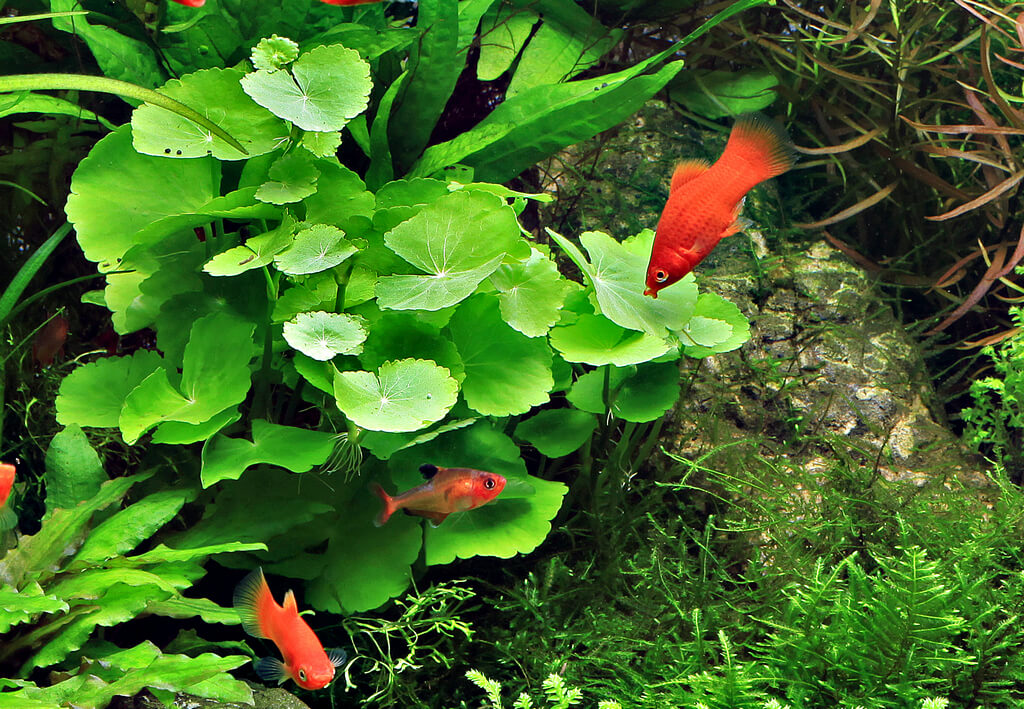
Brazilian pennywort can be rooted, floated, or trained along hardscape, so pruning is really a choice about how much open water you want. Cut long stems back to a node and replant the healthy sections, or remove them when they begin shading slower plants. Floating leaves can offer shrimp and small fish a sense of security, but dense surface growth may reduce light below and complicate feeding. In a community aquarium, keep a visible feeding zone and enough open surface for observation. In a nano tank, one controlled strand can be attractive; several unchecked strands can quickly dominate the layout.
Frequently Asked Questions
How often should aquarium plants be pruned?
Prune when growth begins to shade lower leaves, block equipment, cross a planned boundary, or reduce useful swimming and feeding space. Small, regular trims are usually less disruptive than an occasional severe cut.
Can I replant every aquarium plant cutting?
No. Healthy stem tops and some runners replant readily, while loose moss fragments, damaged leaves, and rhizome pieces without healthy growth may fail. Identify the plant’s propagation method before replanting.
Should I prune plants before adding shrimp?
Do major shaping before introducing shrimp when possible. After shrimp are established, use smaller trims so you preserve grazing surfaces, hiding places, and biofilm-covered structure.
What should I do with aquarium plant trimmings?
Replant clean, healthy cuttings, share them, or compost suitable plant material away from waterways. Remove decaying fragments from the aquarium so they do not collect debris or add unnecessary organic waste.
Why did my plant melt after pruning or replanting?
Some plants respond to disturbance by losing older leaves while producing new submerged growth. Keep the crown or rhizome positioned correctly, maintain stable conditions, remove decomposing leaves, and judge recovery by new growth rather than old foliage.
Leave your comments