Myth: Snails clean the aquarium for you
Snails remove some material from the system, but they do not make waste disappear. When a ramshorn, bladder snail, or other scavenger eats leftover food or a dying leaf, that material is converted into more snail waste. The nitrogen cycle and regular maintenance still determine whether the aquarium remains healthy. Snails can reduce visible scraps and help process organic debris, but they cannot correct overfeeding, poor circulation, excessive light, or an overstocked tank. Treat them as part of an ecosystem rather than a replacement for gravel cleaning, filter care, algae removal, and water changes.
What algae-eating snails can and cannot remove
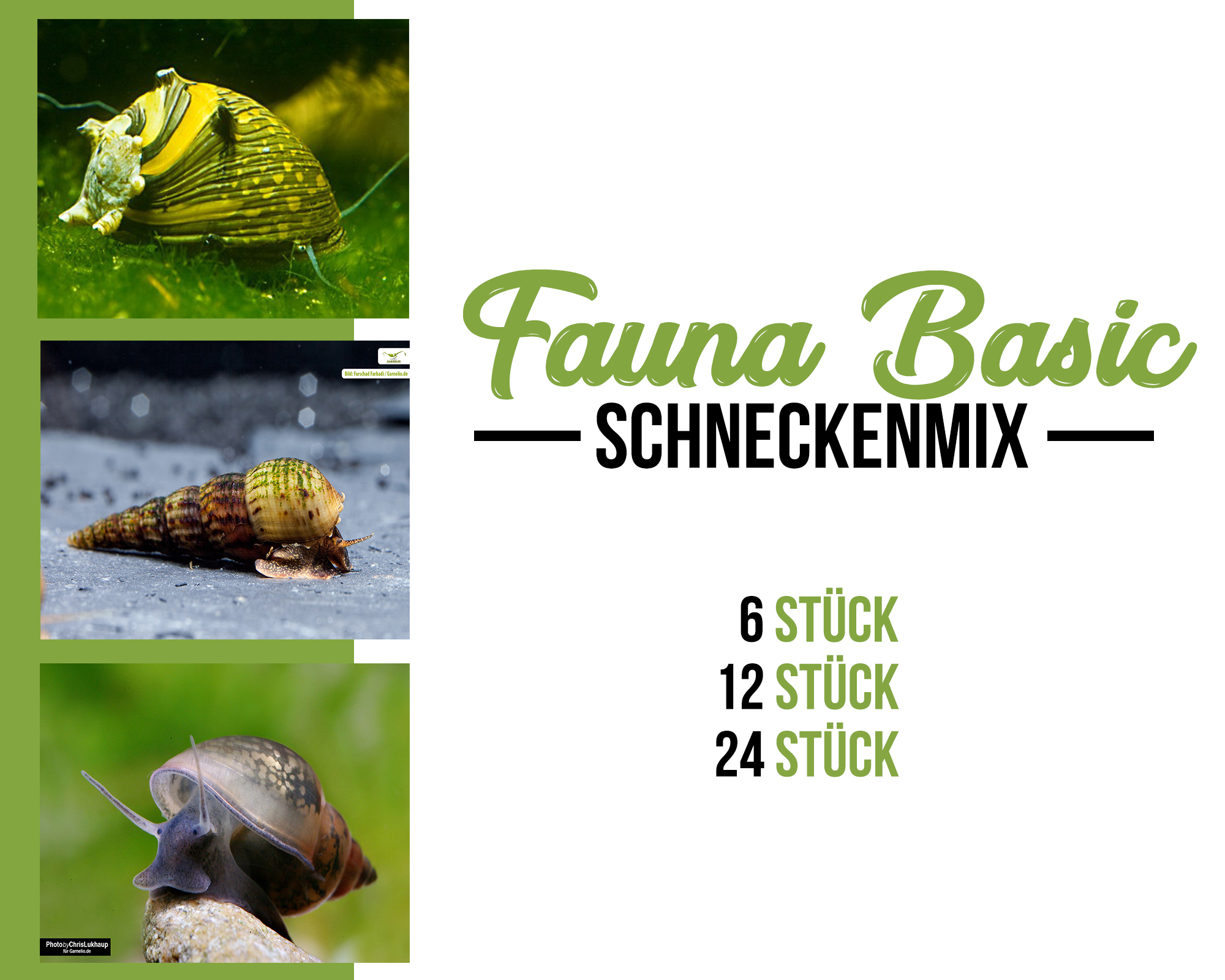
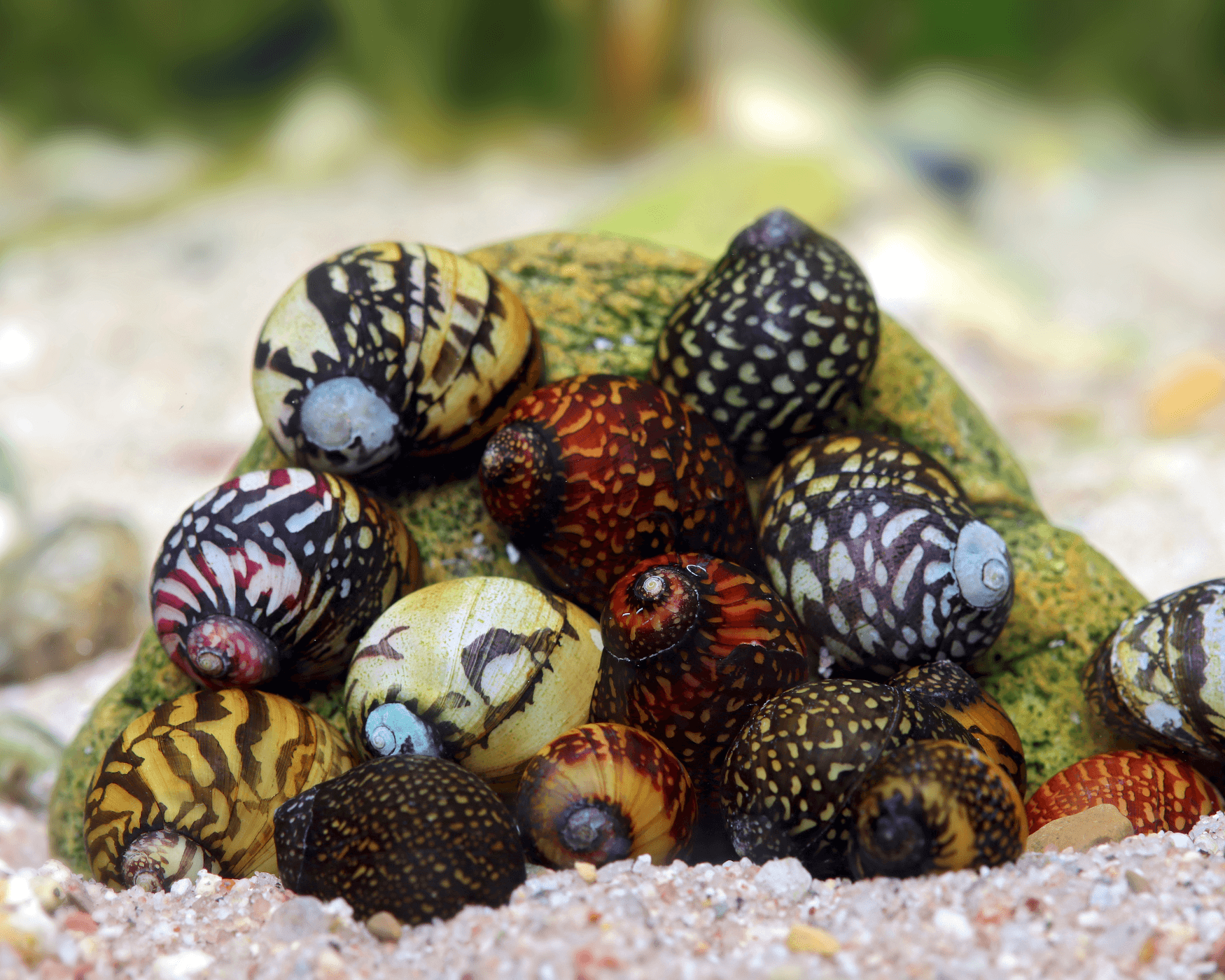
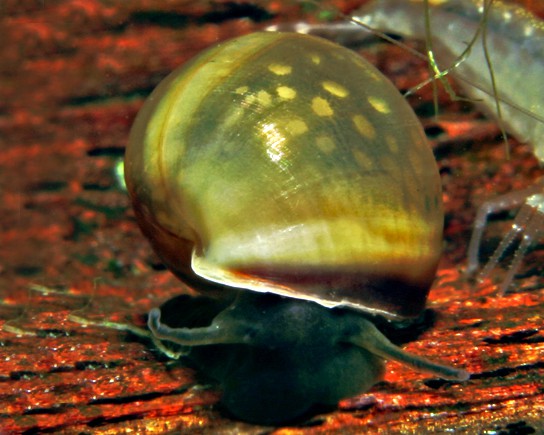
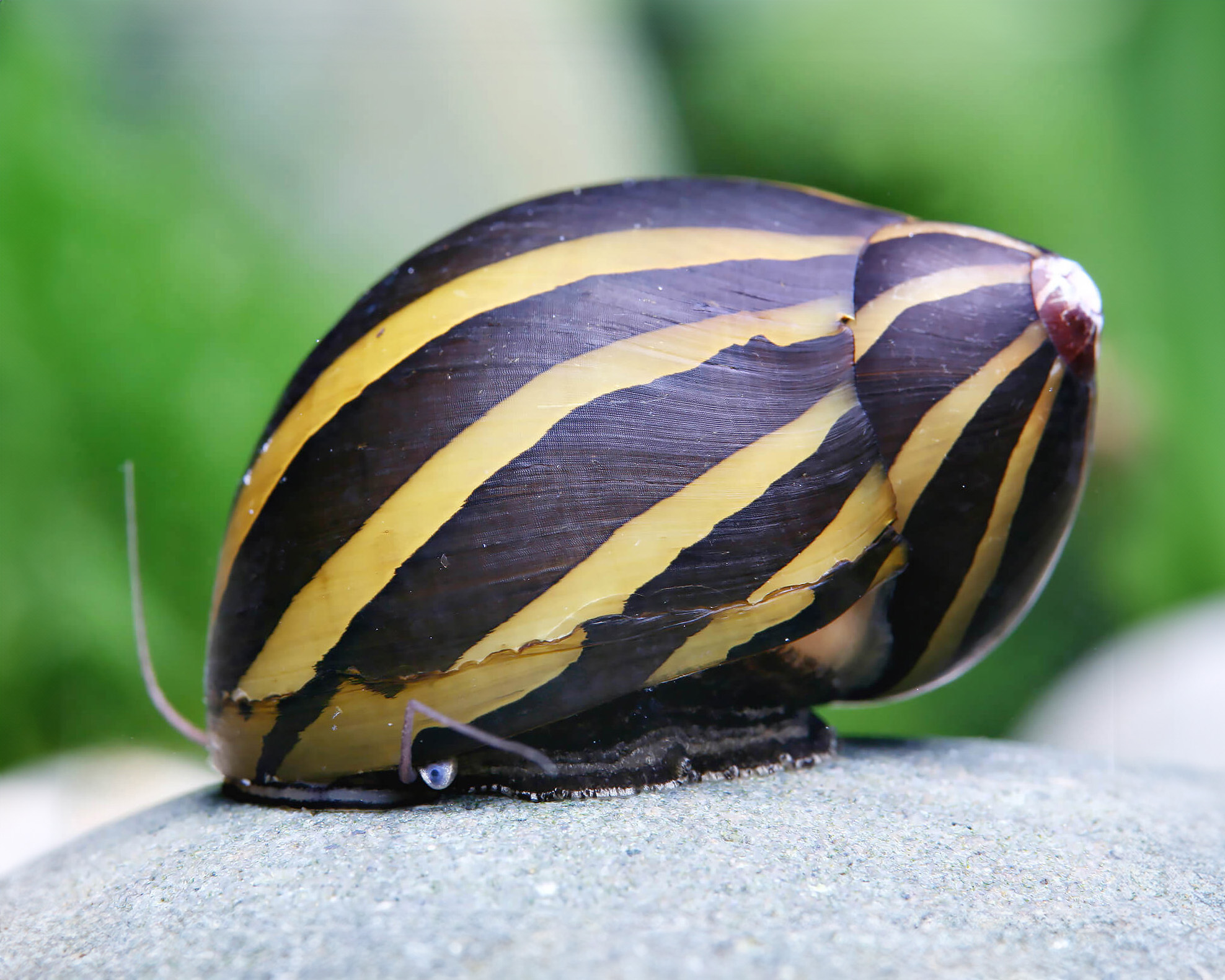
The small algae-eating snails represented by this Clithon and Neritina group are best viewed as surface grazers. They may help with soft film algae, light diatoms, and growth on glass, rocks, and hardscape. They are not reliable tools for every form of hair algae, black beard algae, cyanobacteria, or algae deeply attached to delicate leaves. A snail also cannot reverse the cause of an algae outbreak. Before adding one, inspect lighting duration, nutrient accumulation, water movement, plant growth, and feeding. Manual removal and a correction to the tank’s routine usually matter more than adding more animals.
Nerite and racing snails: low reproduction does not mean zero care
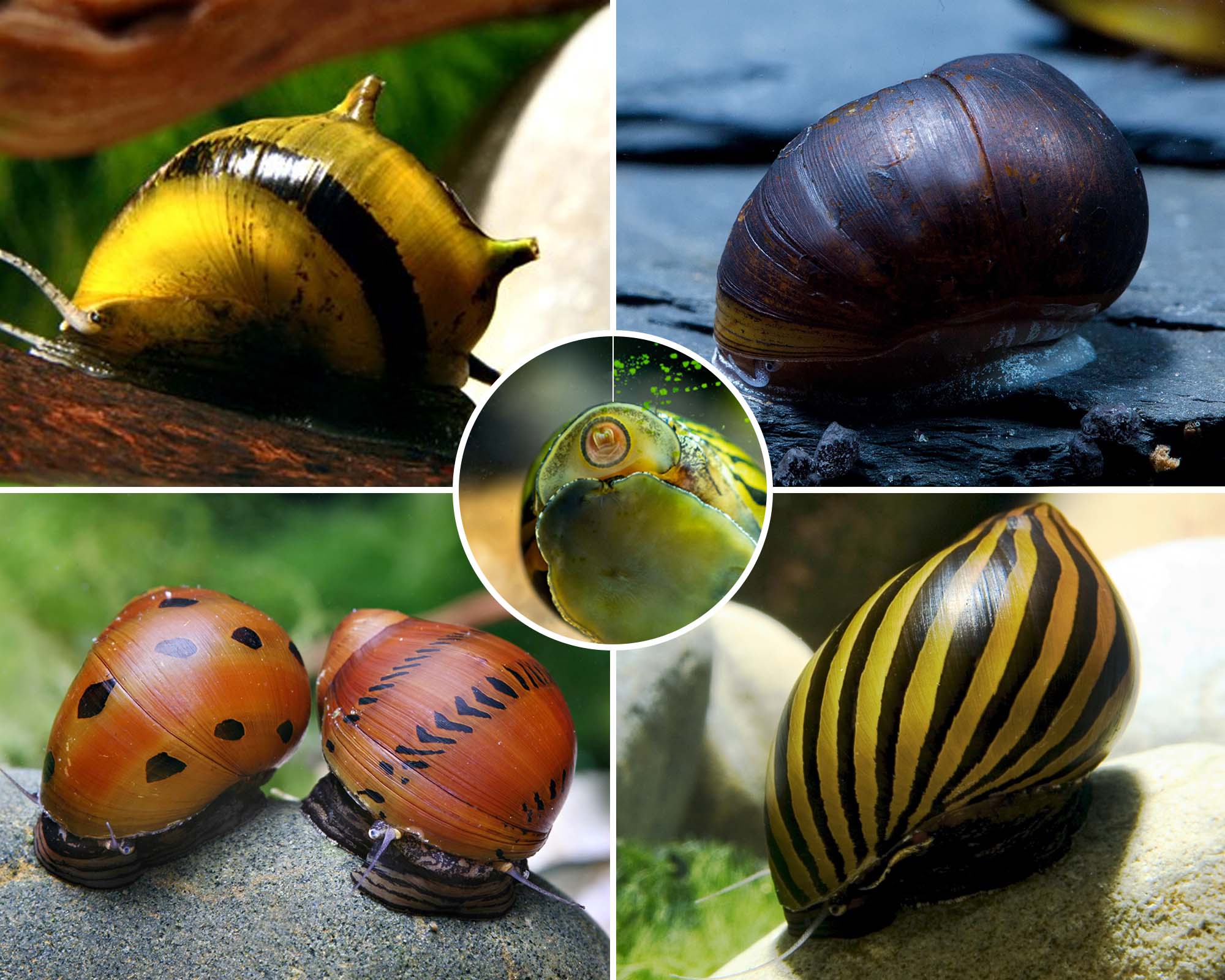
Nerite-style racing snails are attractive choices when you want algae grazing without a rapidly expanding freshwater population. Females may still leave small, pale eggs on wood, rocks, or glass, and those marks can be difficult to remove. The larger concern is food availability: a new or very clean tank may not grow enough algae and biofilm to support them. Supplemental algae foods can help, but feeding must be balanced against the needs of fish and shrimp. Use a secure lid because some individuals explore above the waterline, especially after changes in water level or conditions.

Myth: a snail boom means the snails are attacking healthy plants
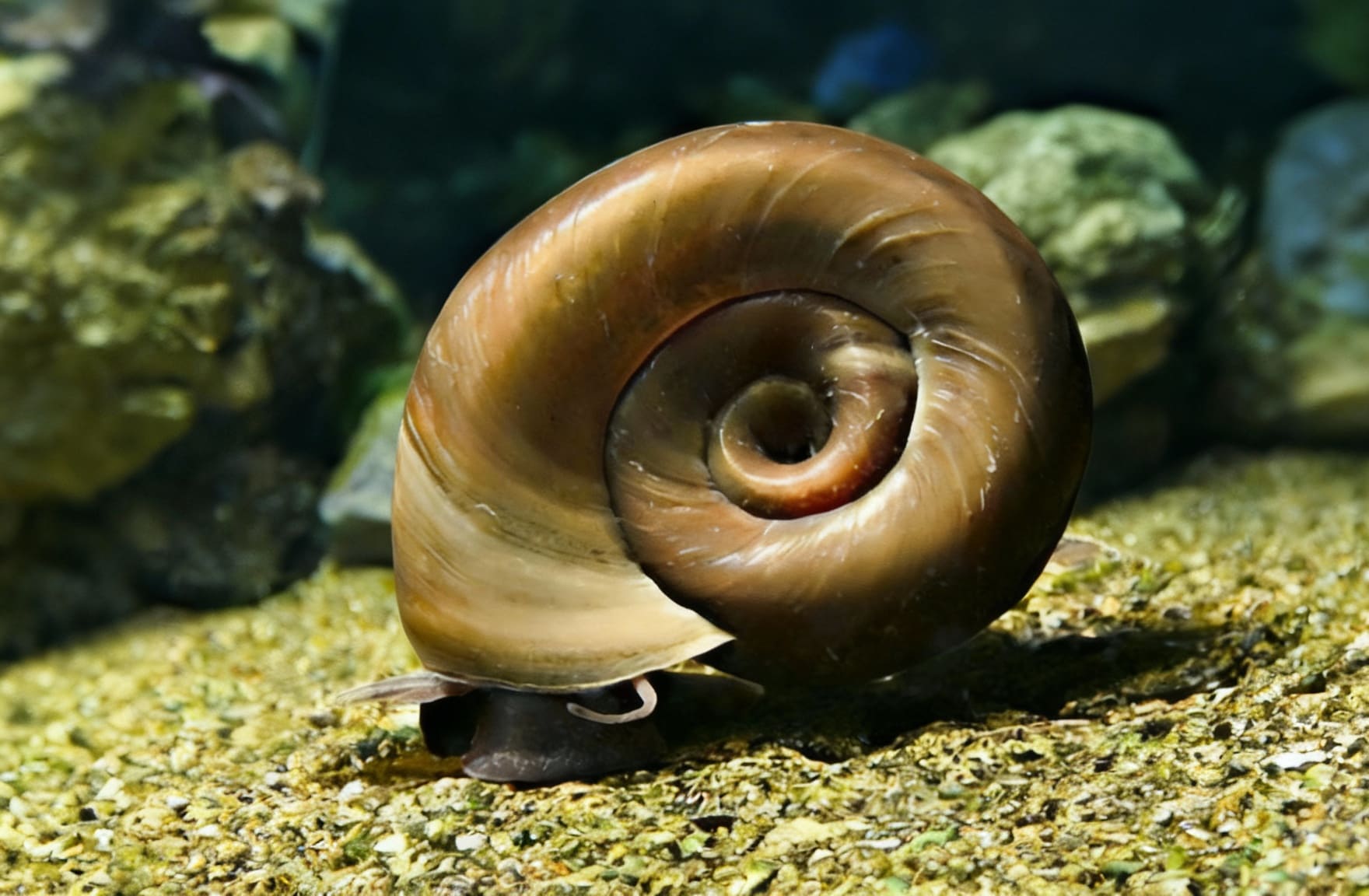
Ramshorn snails are often blamed when leaves develop holes, but a sudden population increase more commonly means the aquarium contains abundant food. They typically graze soft algae, biofilm, dead tissue, and uneaten food rather than healthy, undamaged leaves. A boom can follow overfeeding, a fish death, decaying foliage, or a period of heavy maintenance neglect. Remove deteriorating leaves, siphon excess debris, and reduce feeding gradually instead of trying to eliminate every snail. If you want selected colors, purchase known stock rather than relying on unpredictable hitchhikers from plants.
Bladder snails are a population signal, not an automatic infestation
Bladder snails can arrive unnoticed on plants and may reproduce quickly when food is plentiful. That makes them useful indicators of what the tank is offering, but their presence does not automatically mean the aquarium is unhealthy. A small, stable population can consume scraps and soft growth. If numbers rise sharply, check feeding portions, hidden dead livestock, melting plants, and trapped detritus. Hand-picking, baiting, and removing egg clusters can reduce numbers without harsh treatments. Copper-based products are especially risky in aquariums that contain shrimp or other sensitive invertebrates.
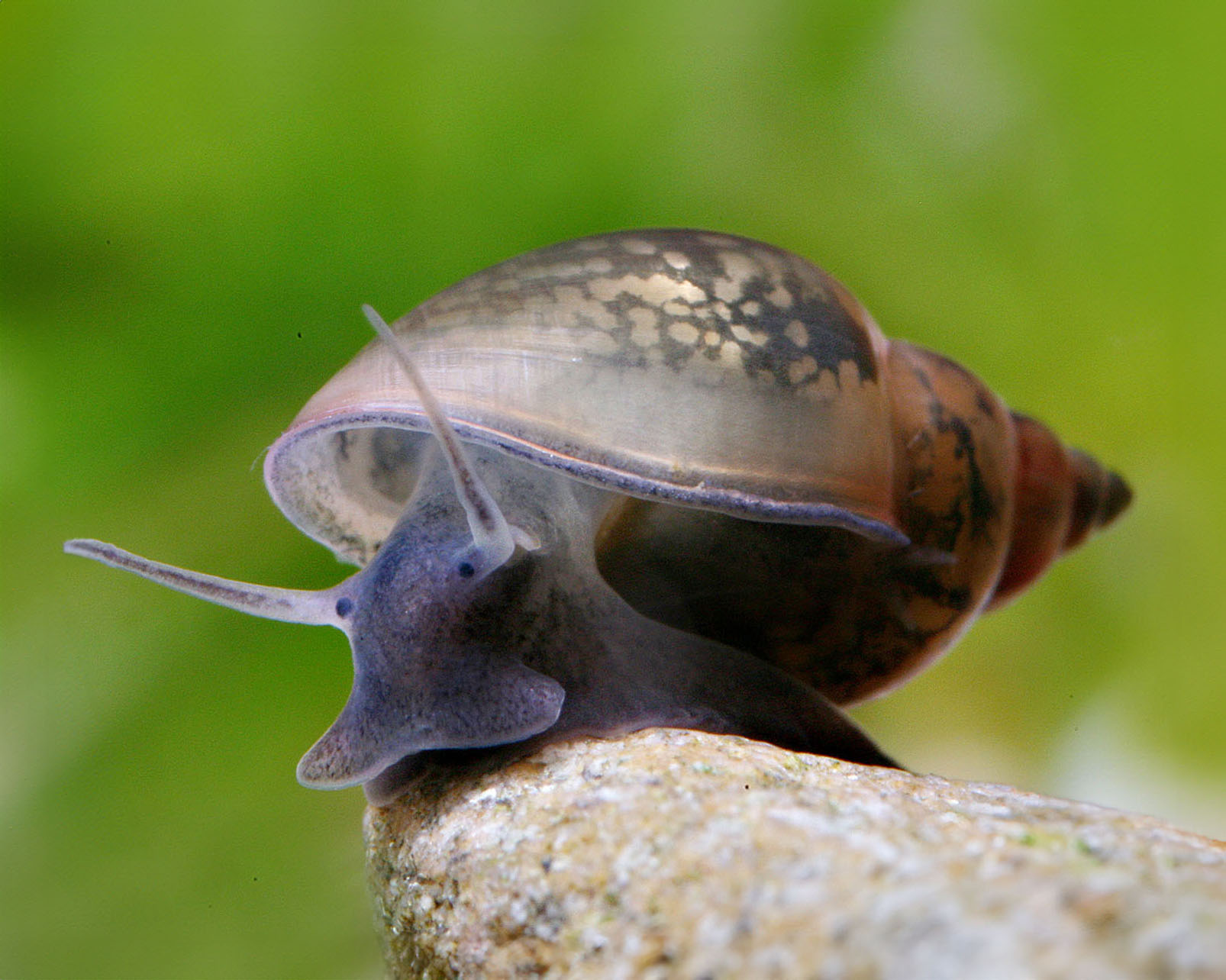
Malaysian trumpet snails work below the surface—with trade-offs
Trumpet snails spend much of their time in the substrate, where they consume organic debris and move through the upper layers. This behavior can be useful in some planted aquariums, particularly where compacted areas collect waste. It is not a guarantee that the substrate is clean or oxygenated, and it may be a poor fit for carefully layered aquascapes with a decorative sand cap. They can also reproduce rapidly when food is abundant. Choose them for their behavior, not because they are marketed as soil maintenance equipment, and monitor whether their activity disturbs shallow-rooted plants.
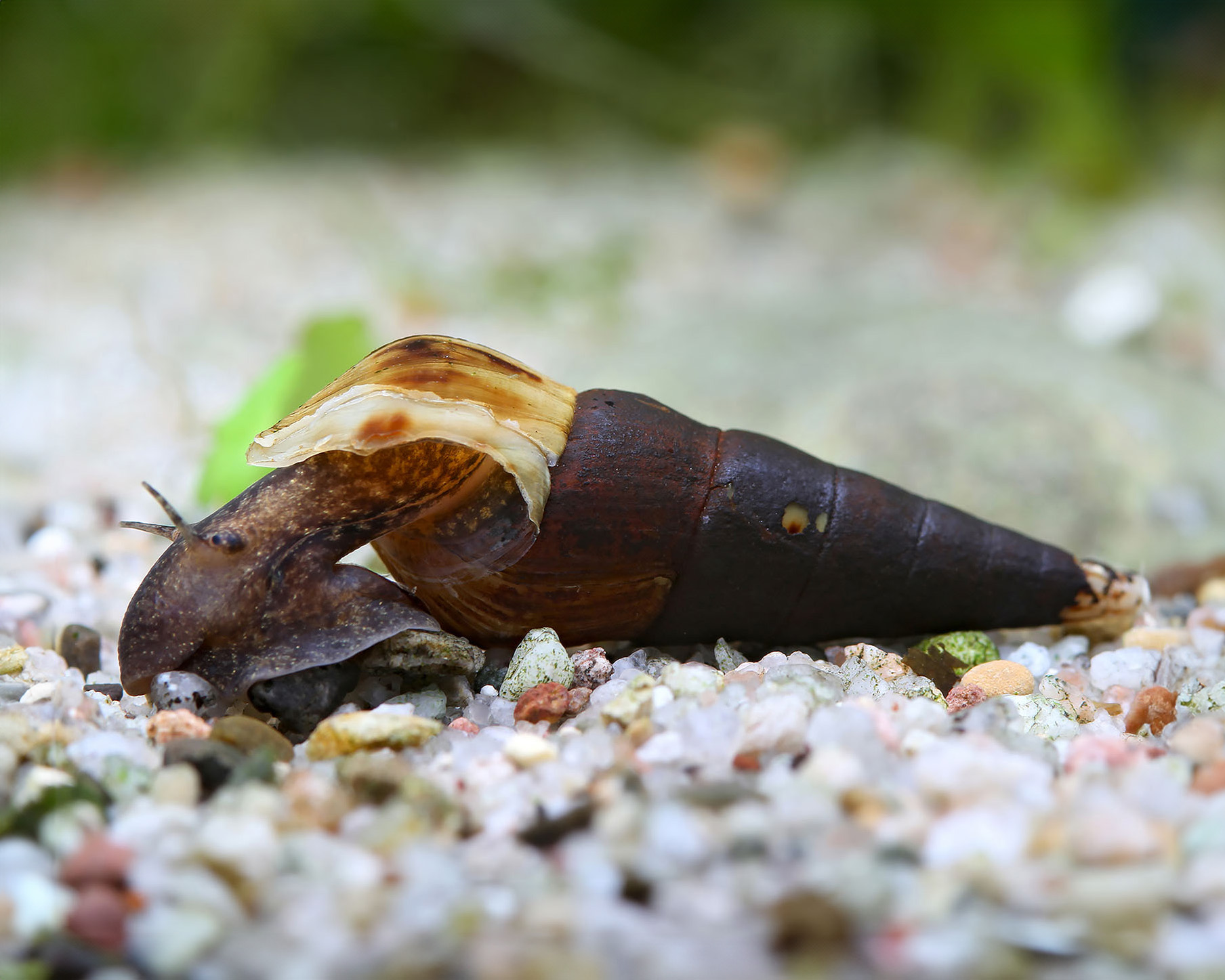
Assassin snails solve a different problem
Assassin snails are predators, not general-purpose algae cleaners. They may help reduce unwanted ramshorn, bladder, or trumpet snails, but they introduce a new management question: what will they eat after the target population declines? They can also make a mixed snail display less predictable and are unsuitable when you want to preserve every ornamental snail. Use them only after identifying the problem and confirming that predation fits your stocking plan. Removing excess food and improving maintenance is usually the safer first response to a snail population spike.
%20-%201.webp)
Large ornamental snails can add more waste than they remove
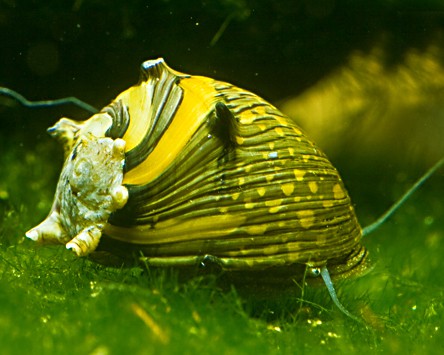
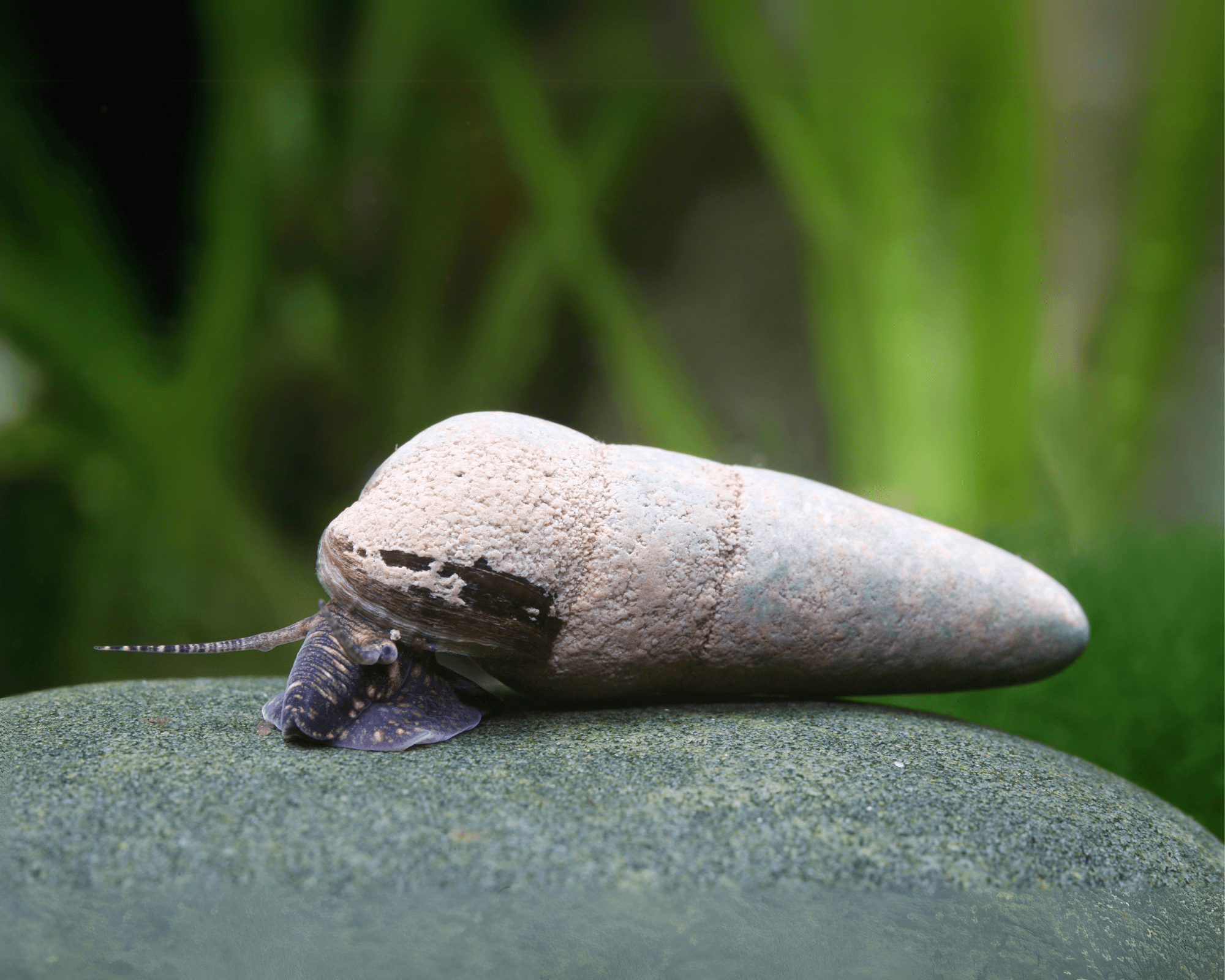
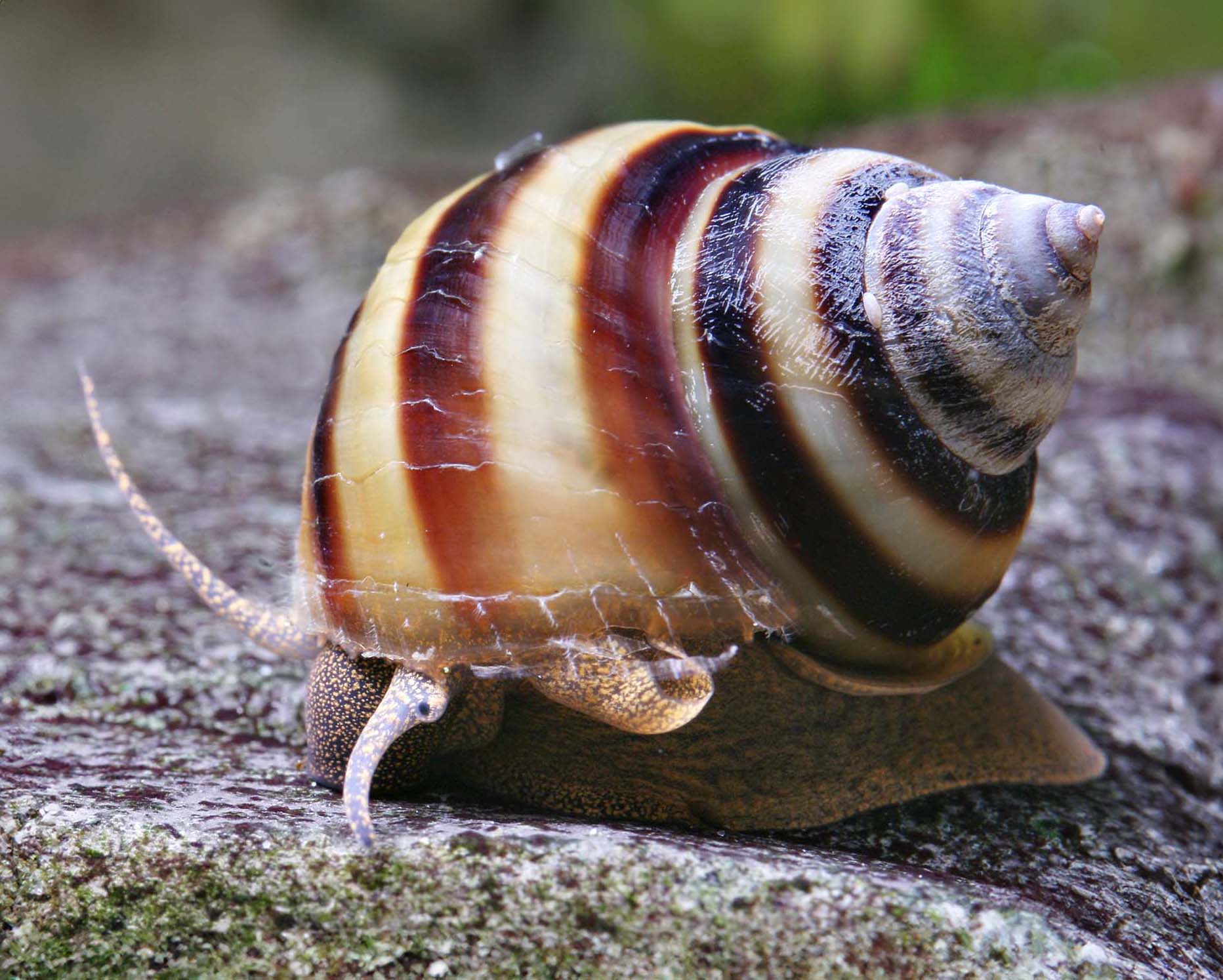
Large-bodied snails such as Tylomelania are appealing because they add movement, shape, and personality to a planted display. Their size also means greater food requirements and a larger contribution to bioload than a few small grazers. They should not be selected solely as algae control, especially in a nano aquarium or a tank with limited natural food. Provide stable water quality, adequate minerals for shell growth, and food appropriate for the species. Avoid assuming that a larger snail performs the same job as a small nerite or ramshorn.
Build a snail-compatible planted tank before adding livestock
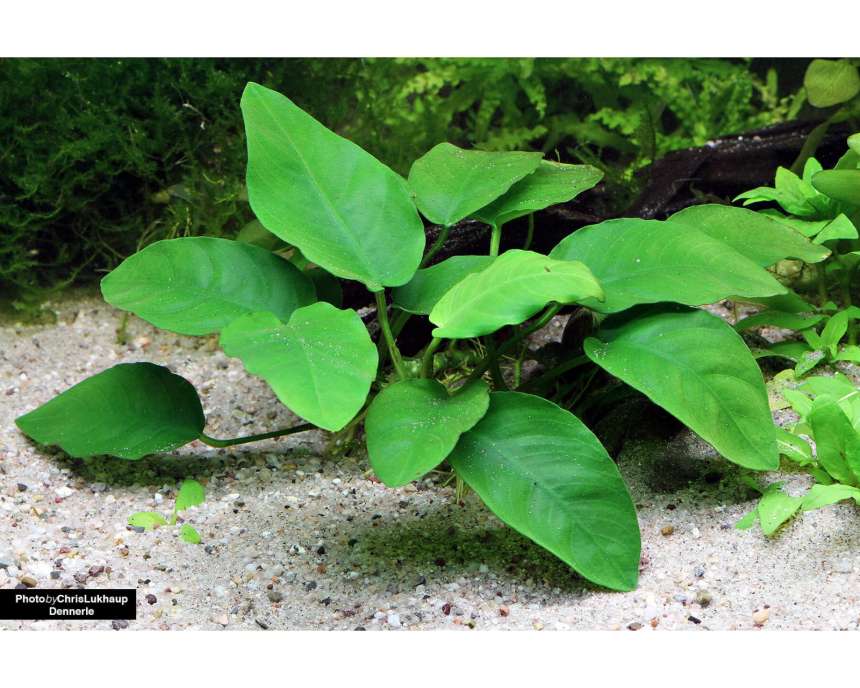
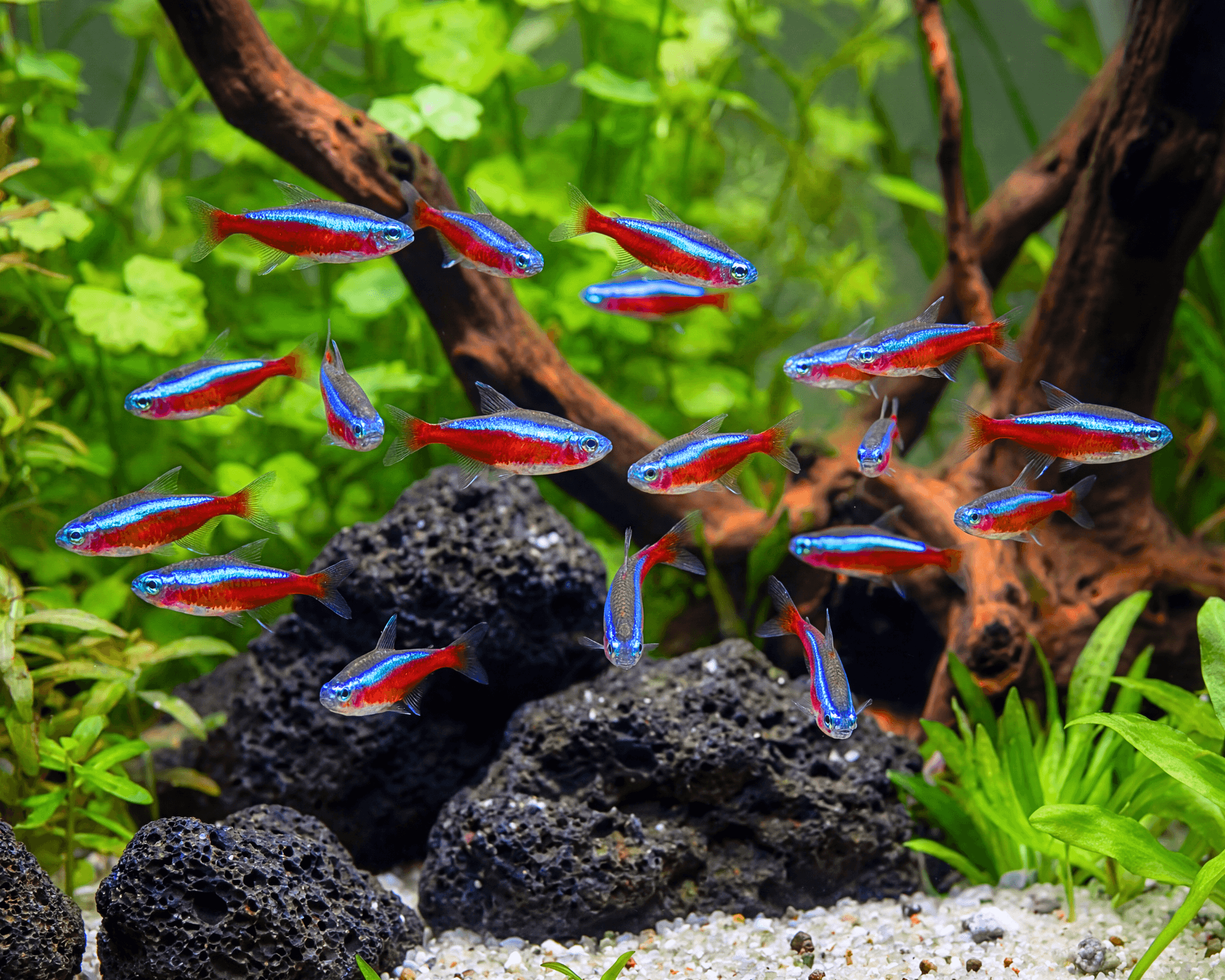
A snail-friendly aquarium starts with stable, mature conditions rather than a spotless new setup. Establish the nitrogen cycle, confirm that ammonia and nitrite remain undetectable, and provide surfaces where biofilm can develop. Plants should be attached or rooted securely before adding species that climb, burrow, or push through the substrate. Keep a lid or check escape routes, especially for active racing snails. In a nano tank, account for snail waste when planning fish and shrimp because water volume offers less room for feeding mistakes and sudden changes.
A practical decision framework for choosing your snail
Choose the snail by the job you actually need. For hard-surface grazing, consider a nerite or racing type if the tank can grow enough food. For scavenging and visual variety, ramshorns or bladder snails can work when you accept population changes. For substrate activity, trumpet snails may fit a naturalistic setup but can conflict with layered aquascapes. For population reduction, assassin snails are a targeted predator rather than a cleaner. After stocking, observe appetite, shell condition, activity, and population trends. If the tank stays dirty, correct the cause instead of adding another animal.
Frequently Asked Questions
Do aquarium snails eat fish poop?
They may consume waste particles indirectly while grazing through detritus, but they do not remove the nutrients from the aquarium. Their own waste still enters the system, so filtration and water changes remain necessary.
Will aquarium snails eat healthy live plants?
Many common planted-tank snails mainly eat algae, biofilm, leftovers, and decaying plant tissue. However, species differ, and hungry or larger snails may damage soft plants. Research the exact species before purchase.
Why are there suddenly so many snails in my planted tank?
A population increase usually means more food is available. Check feeding amounts, decaying leaves, dead livestock, and trapped debris before treating the snails as the primary problem.
Are nerite snails safe with freshwater shrimp?
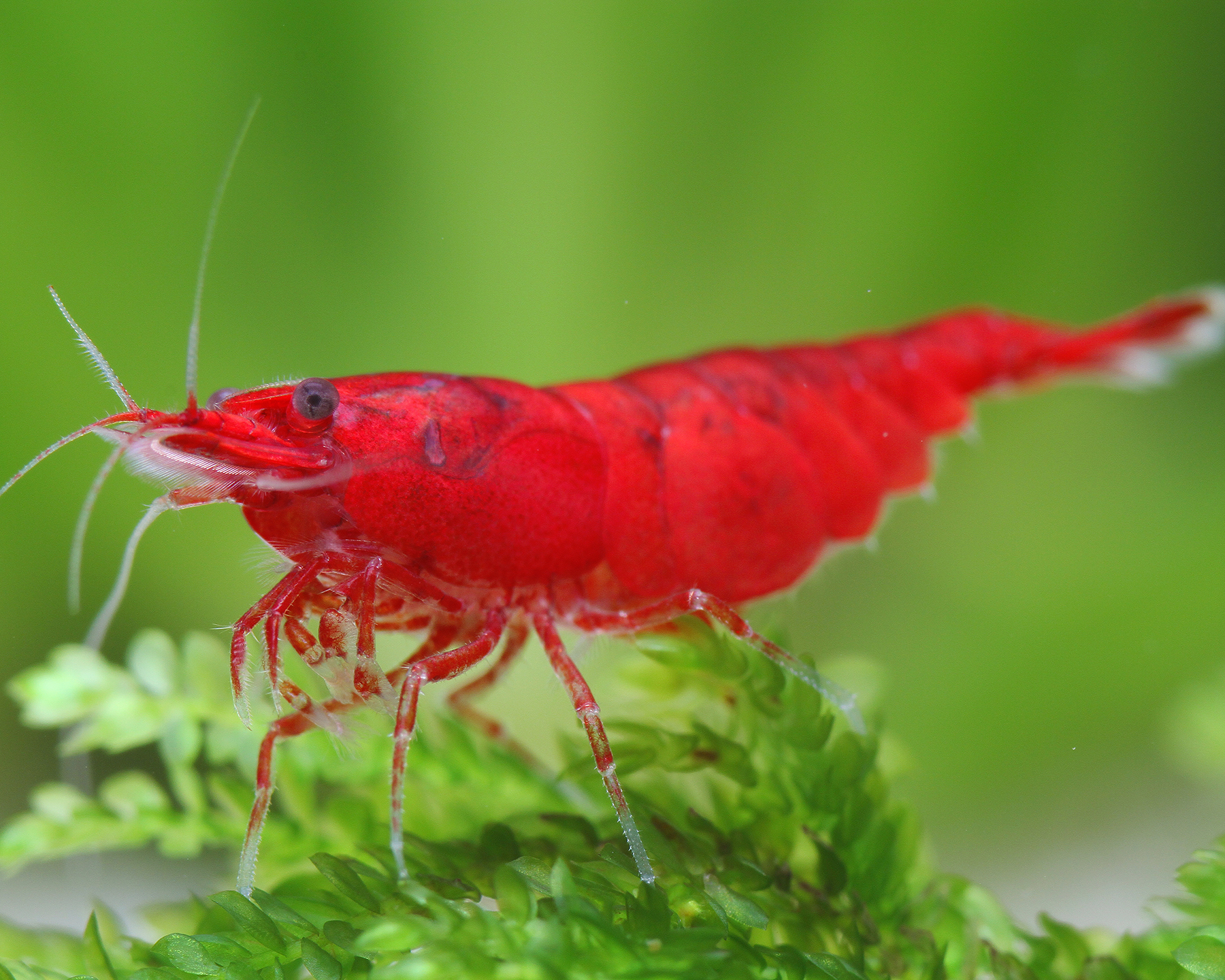
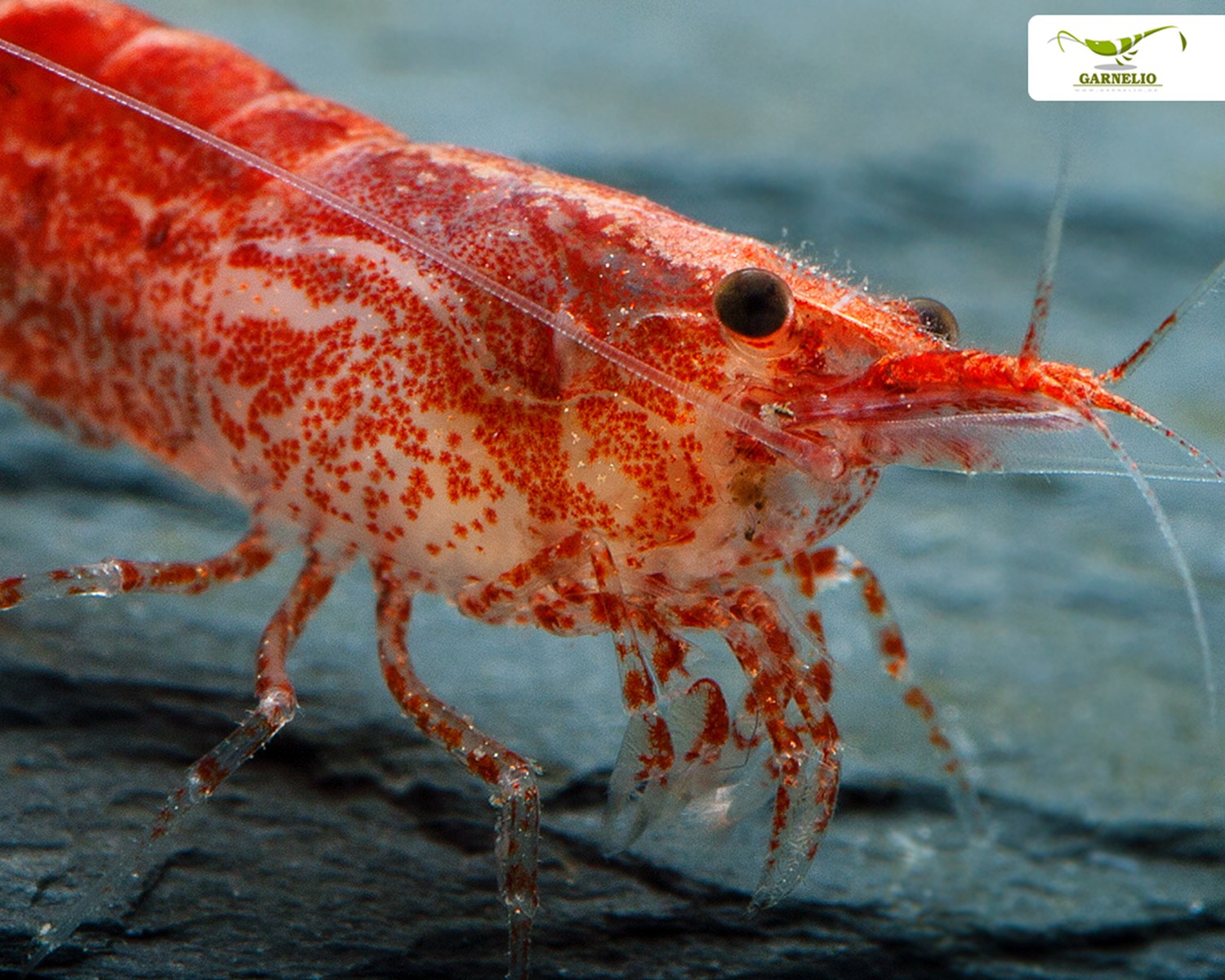
Nerite-type snails are generally peaceful with adult dwarf shrimp and do not hunt them. Provide enough grazing area and avoid adding them to a tank that is too clean to support their food needs.
Can aquarium snails replace algae maintenance?
No. Snails can reduce certain types of soft algae, but they cannot fix excessive light, unstable nutrients, poor flow, or overfeeding. Use them as helpers within a maintenance plan, not as a substitute for one.
 - 2.webp)
Leave your comments