AquaLibs presents AquaRank Discover the world’s leading aquascapers

Explore transparent rankings built from published results across the world’s leading aquascaping contests.

Why Freshwater Shrimp Die in a Planted Tank—and How to Prevent the Next Crash

Start with the timeline, not the species name

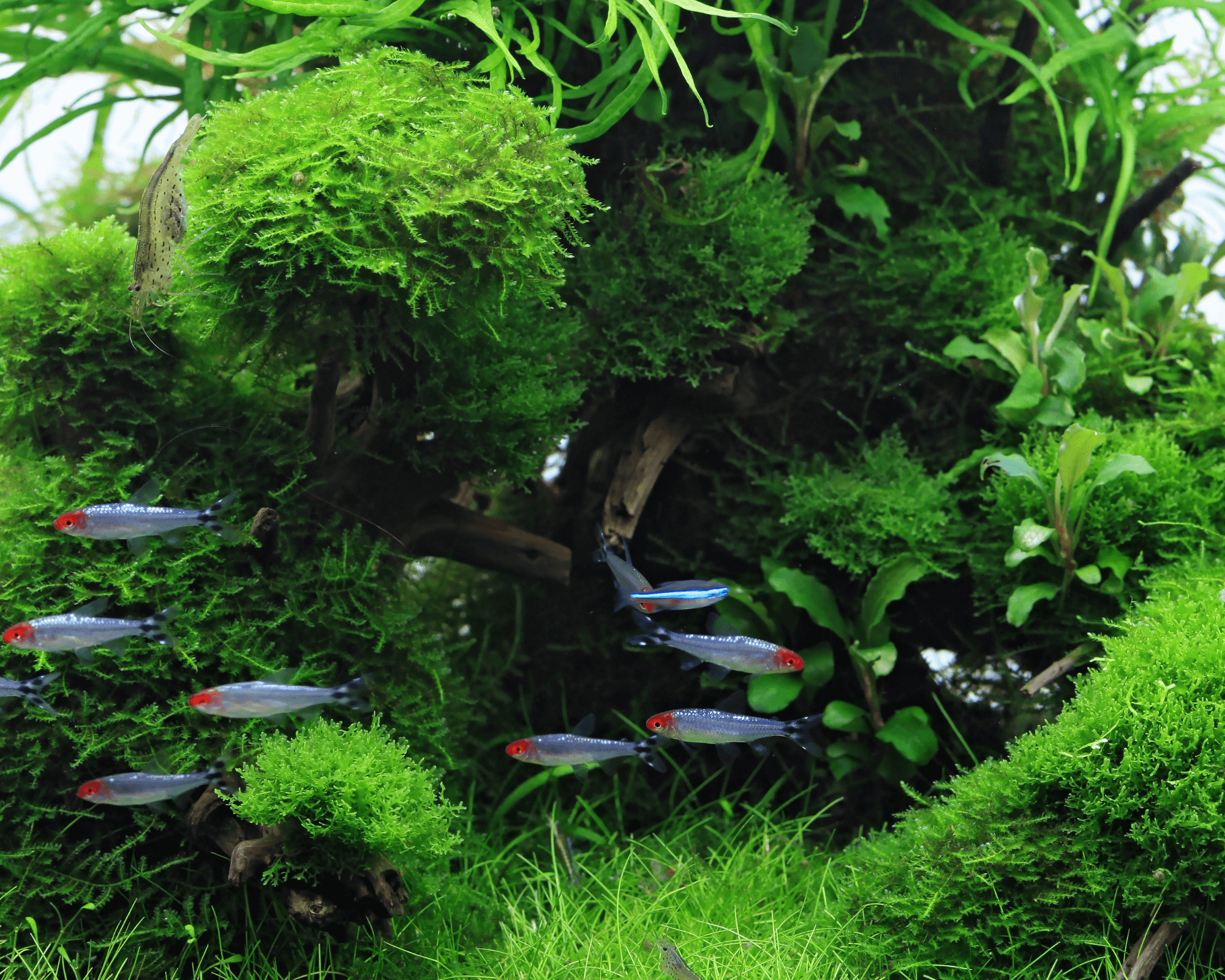
When shrimp begin dying, write down the timing of every loss and every recent change. Deaths within hours of a water change suggest temperature, dechlorination, contamination, or a major chemistry difference. Losses appearing over several days may point to ammonia, nitrite, copper exposure, transport stress, or a new medication. Shrimp disappearing while fish remain healthy often indicates predation rather than poisoning. A single dead shrimp is not automatically a colony crash, but repeated deaths demand investigation. Photograph the tank, save product labels, and test before making several changes at once. Otherwise, the attempted cure can hide the original cause.
Start with the timeline, not the species name

Rule out the emergency causes first

Test ammonia and nitrite immediately, then check temperature, pH, and nitrate with reliable liquid tests. Ammonia and nitrite should be undetectable in an established shrimp aquarium. If either is present, pause feeding, remove decaying matter, increase gentle aeration, and address the biological-filter problem with measured, dechlorinated water changes. Do not respond by adding multiple bottled products blindly. Also review recent plant fertilizers, medications, ornaments, and tap-water treatments for copper or other invertebrate warnings. If the entire colony is suddenly motionless, treat the situation as contamination or an oxygen problem until testing and observation suggest otherwise.

Rule out the emergency causes first

Water changes fail when replacement water is a surprise

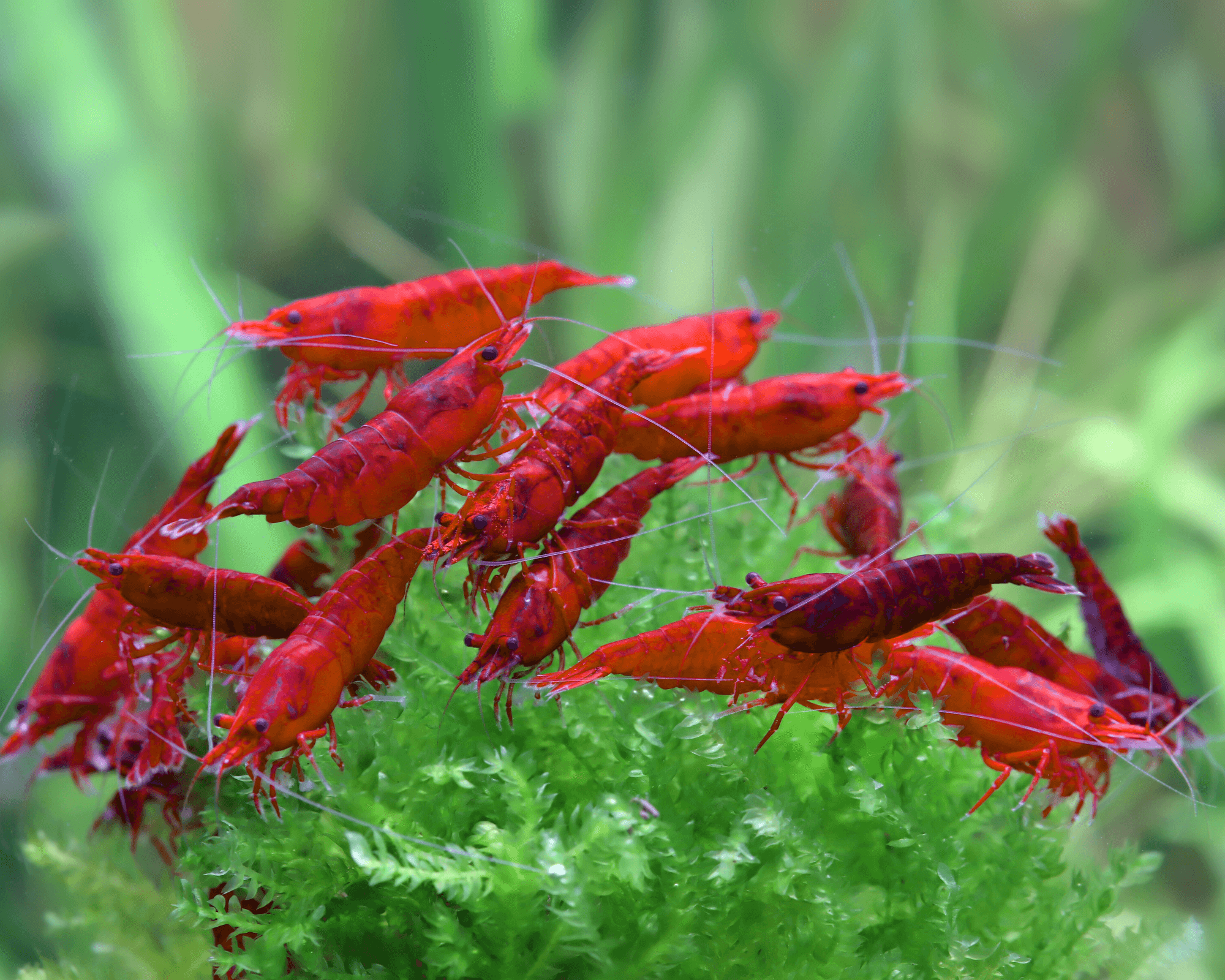
A water change is helpful only when the replacement water is safe and reasonably close to the tank’s conditions. Sudden differences in temperature, pH, hardness, or total dissolved solids can stress shrimp, especially during or shortly after molting. Prepare replacement water in a clean container, use a trusted conditioner, and match its temperature before adding it slowly. Test source water periodically rather than assuming it stays identical throughout the year. With Neocaridina, stable conditioned tap water may be simpler than constantly rebuilding purified water. Caridina bee shrimp often require more deliberate control of hardness and mineral content. Choose one water strategy and repeat it consistently.
Water changes fail when replacement water is a surprise

A failed molt is a symptom, not a diagnosis

A shrimp found dead after molting does not prove that a mysterious “white ring” caused the failure. Molting problems can follow unstable hardness, inadequate minerals, chronic stress, poor nutrition, or sudden parameter changes. Look for a pattern: several deaths near molts, inactive shrimp, failed breeding, or shells that appear unusually soft or incomplete. Avoid correcting hardness by making a dramatic one-time adjustment. Instead, measure the water, confirm that the chosen species suits it, and make gradual changes during routine maintenance. Provide mature biofilm, hiding places, and a calm period after molting, when shrimp are especially vulnerable to fish and other tank mates.
A failed molt is a symptom, not a diagnosis

Separate Neocaridina convenience from Caridina precision

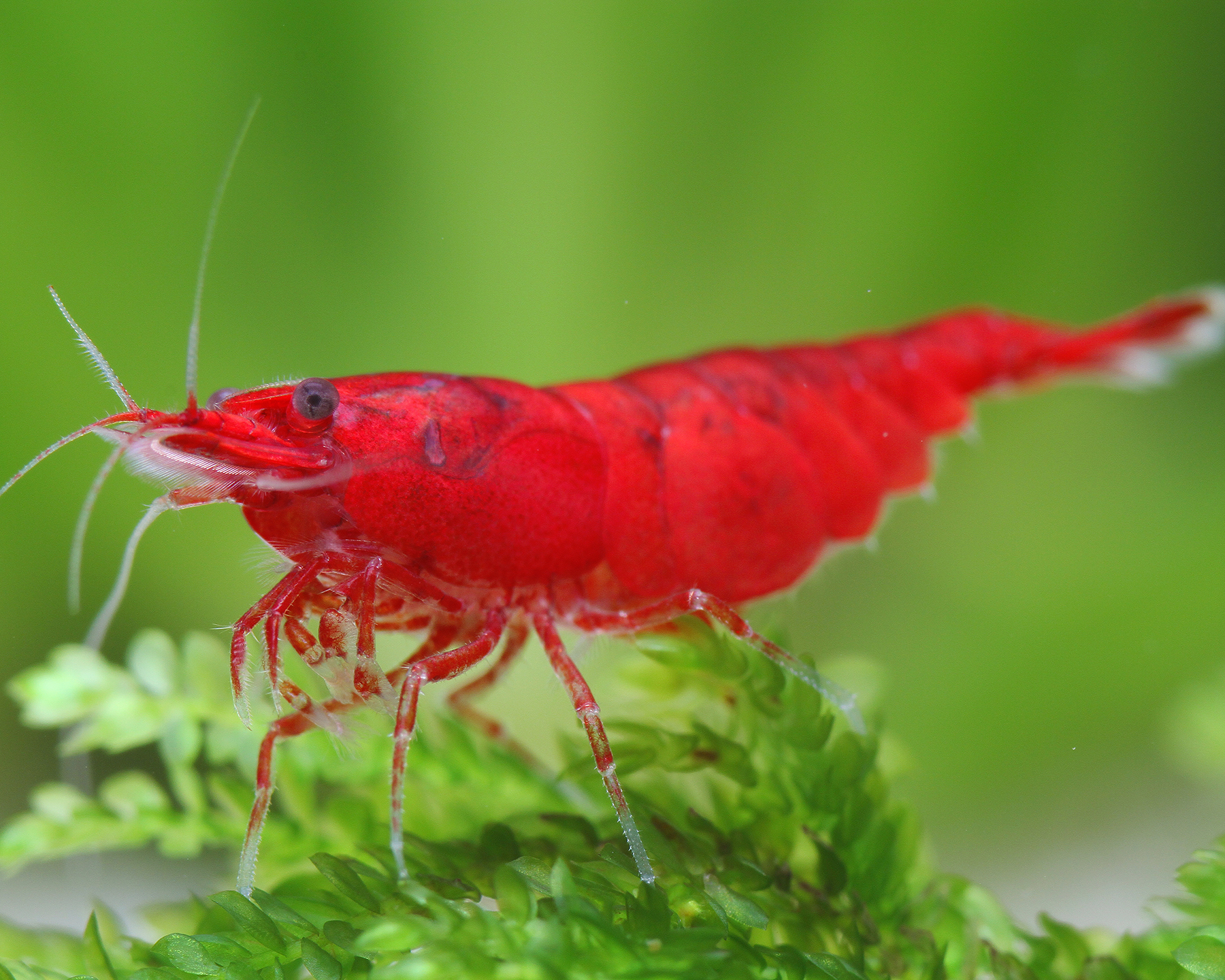
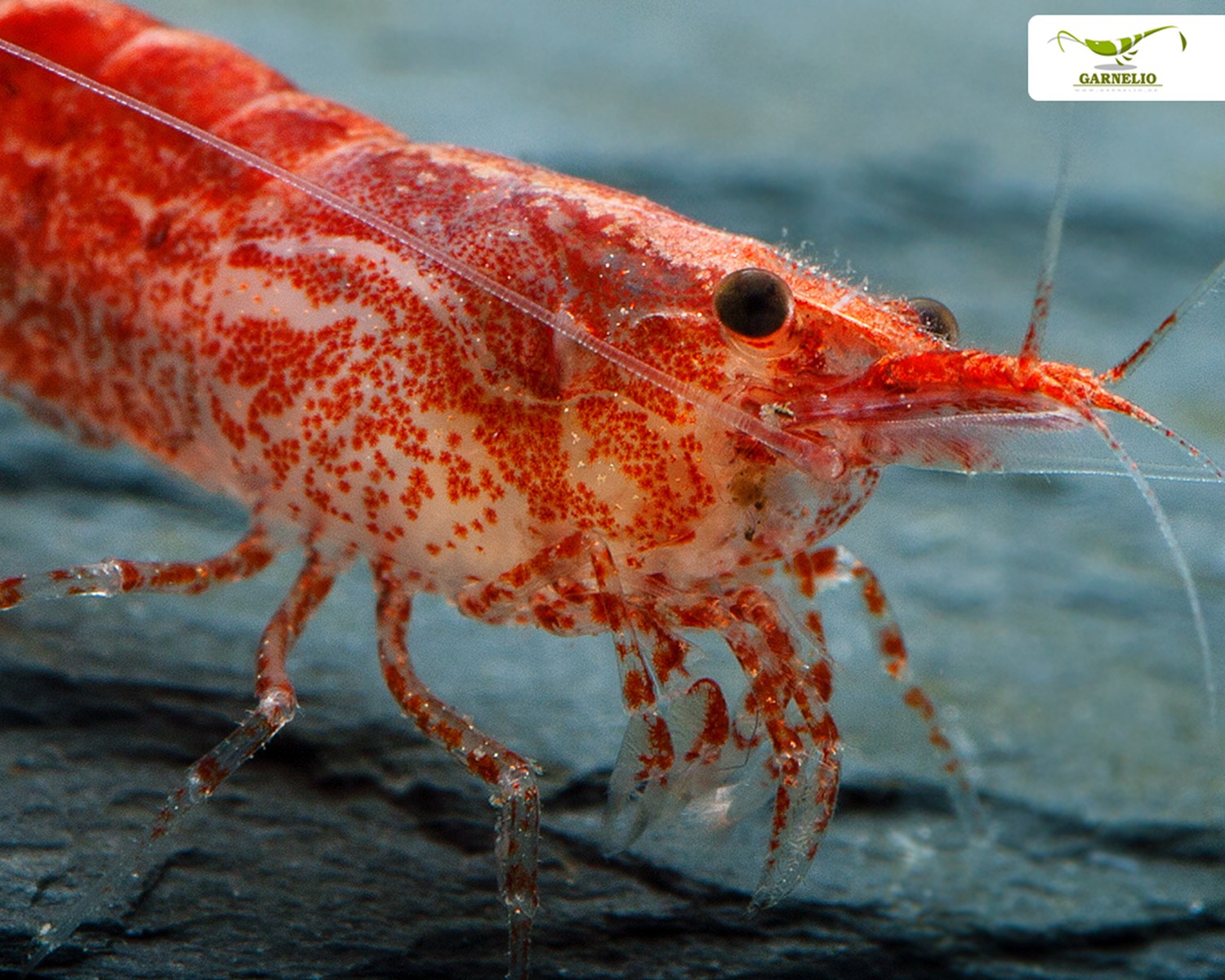
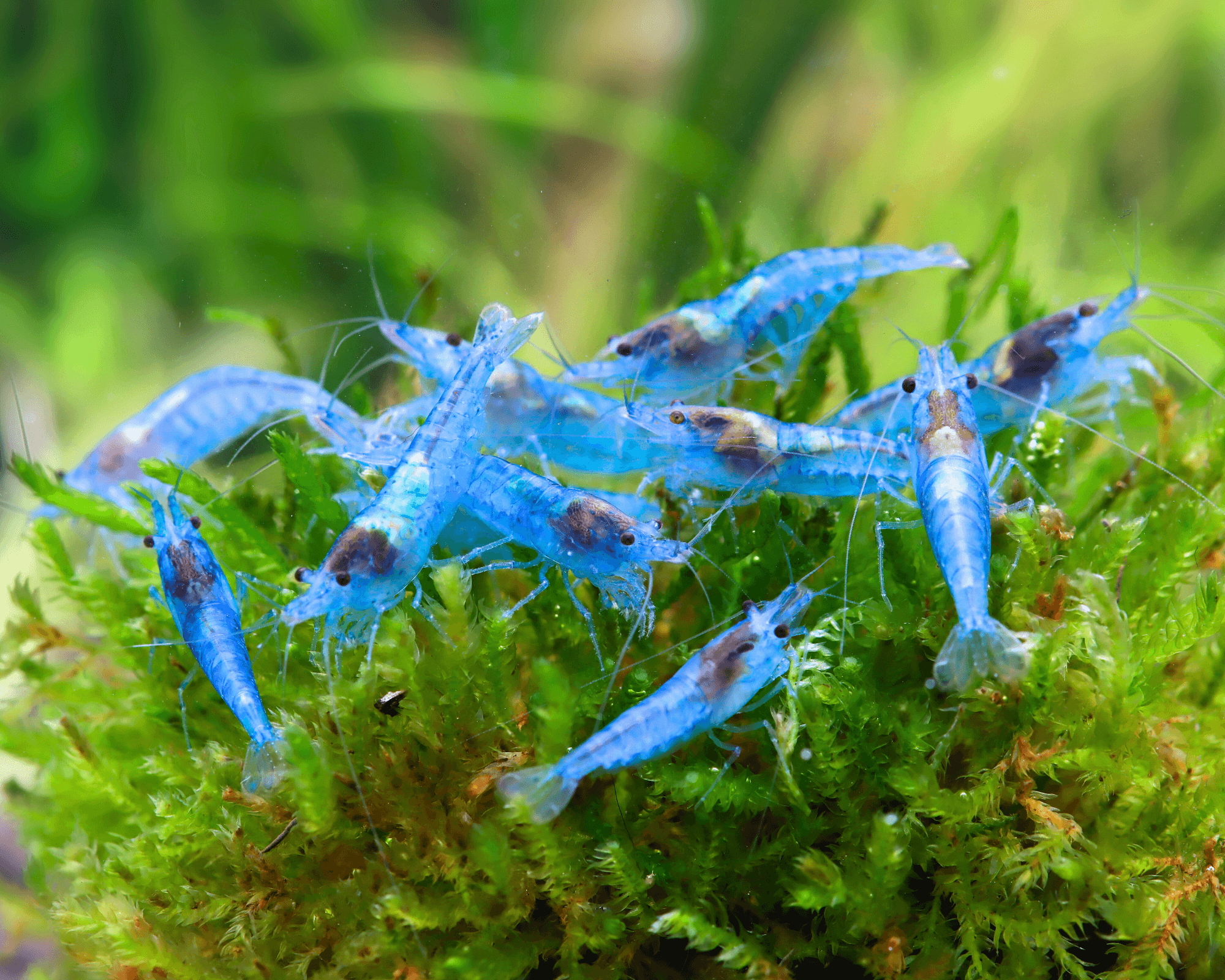
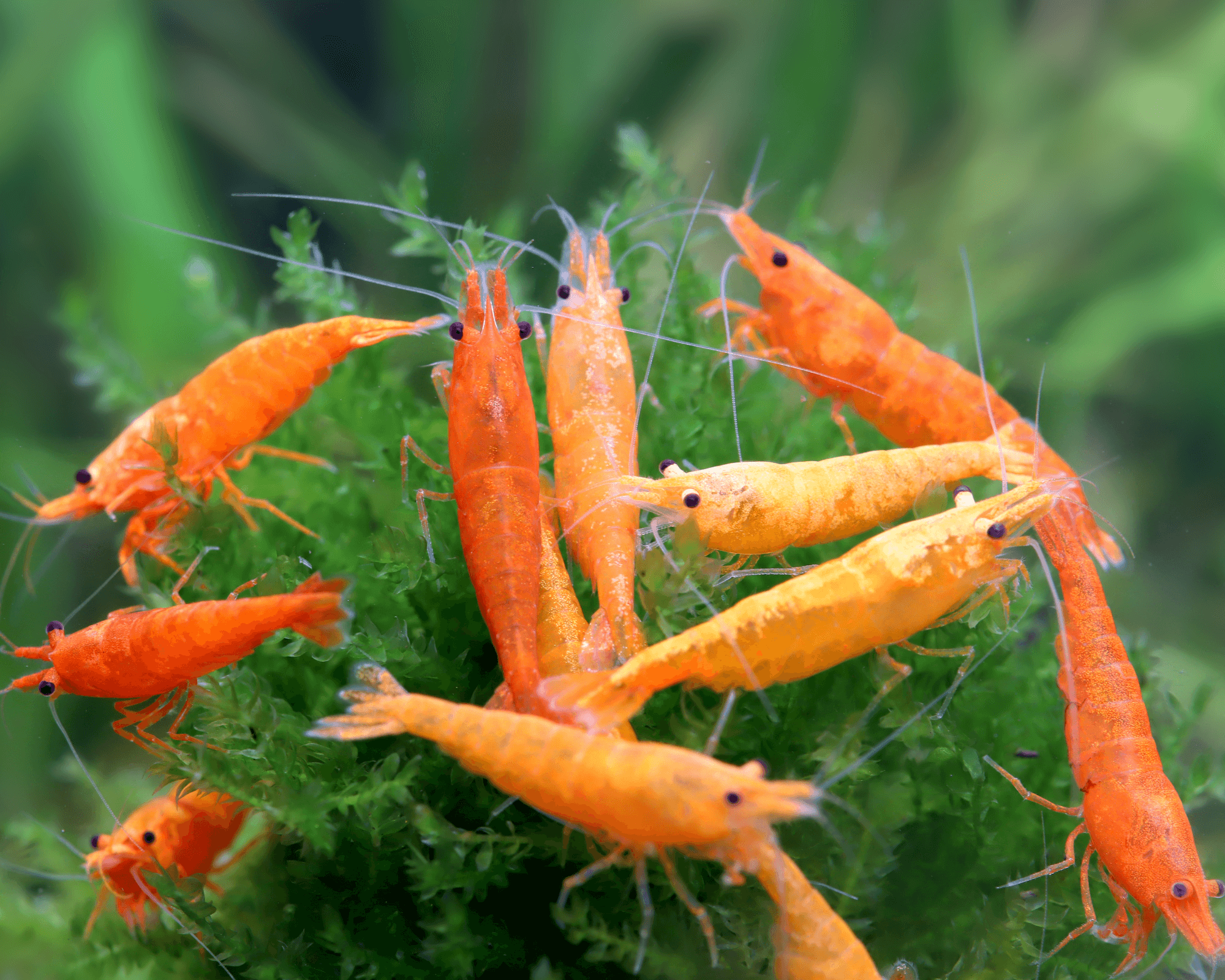
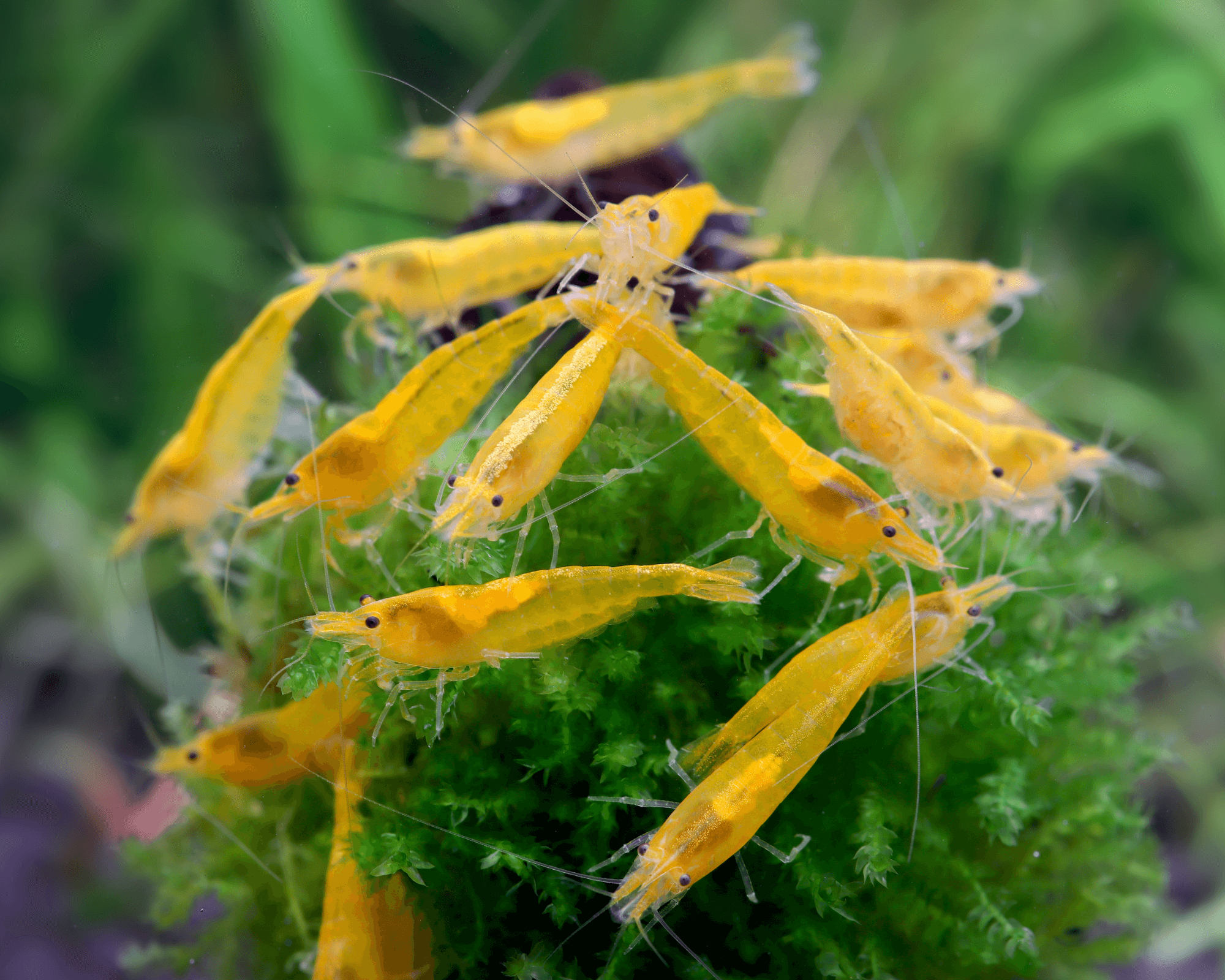
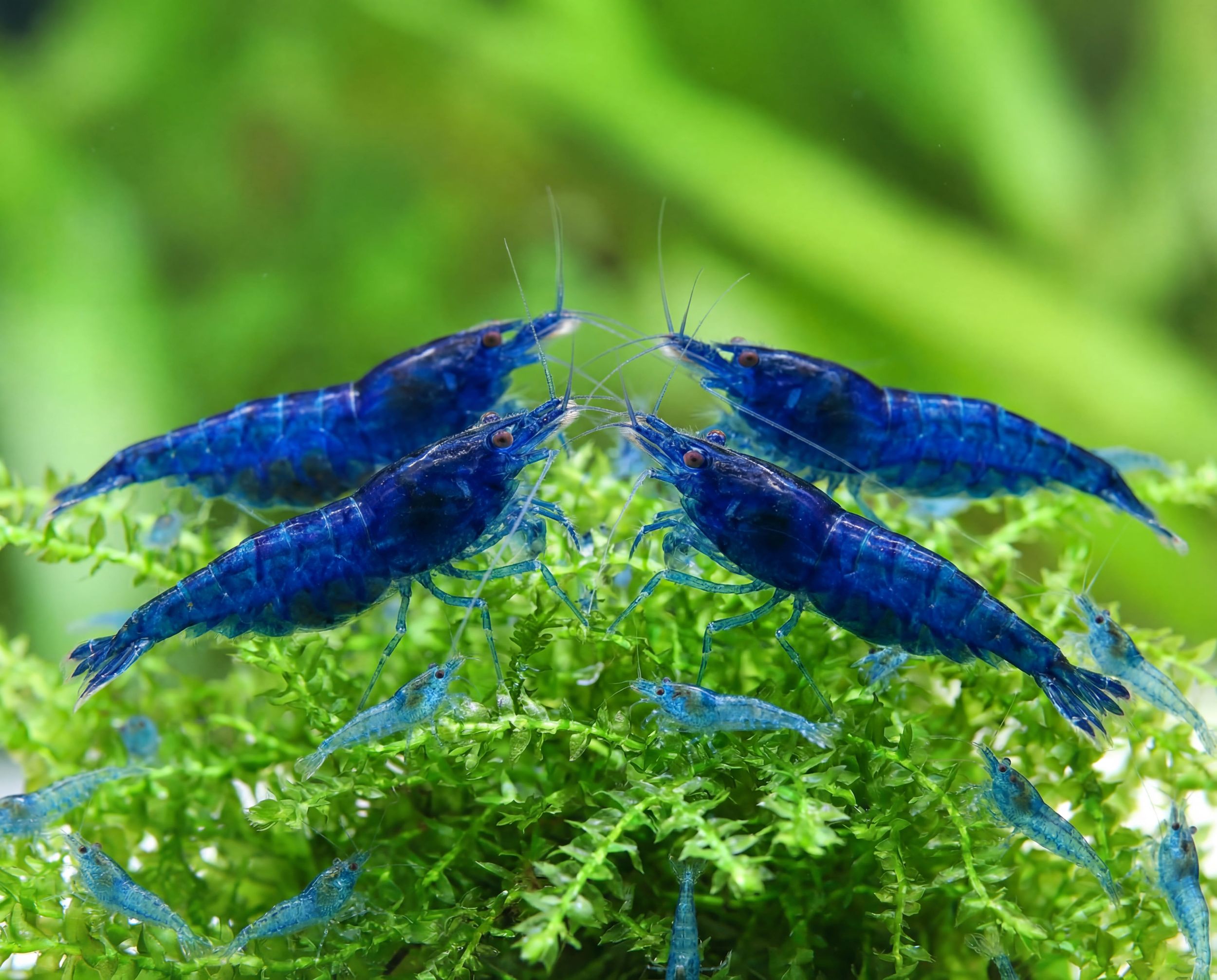
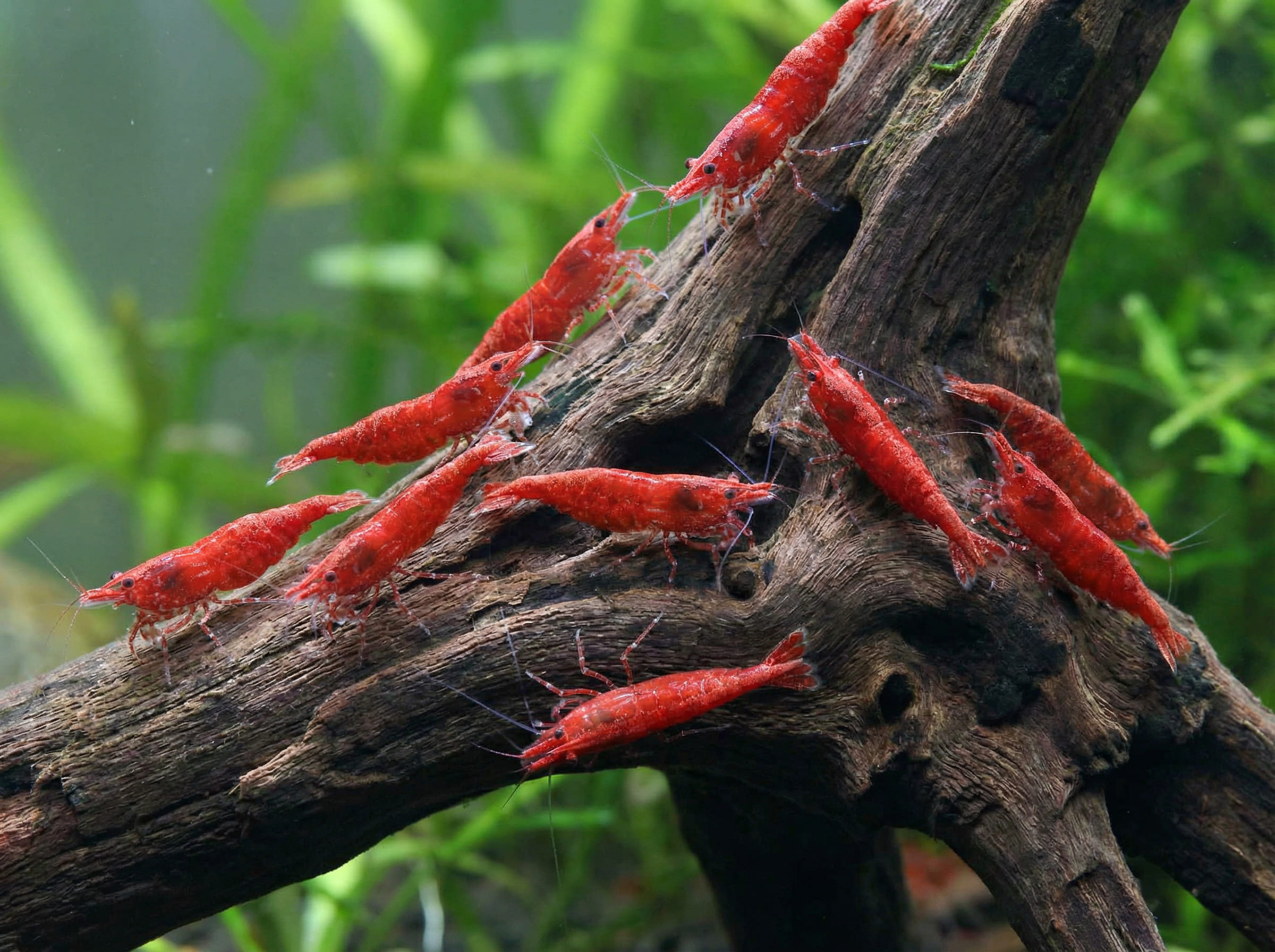
Color should not be the only selection criterion. Neocaridina varieties such as Bloody Mary, Blue Dream, Orange Fire, and Yellow Fire are commonly chosen for planted community and nano aquariums because they can adapt to a wider range of stable conditions. Caridina bee types, including Red Bee and Crystal lines, are usually a poorer match for casual tap-water setups because their mineral and chemistry needs can be narrower. Neither group is maintenance-free. Before buying, test your source water and select shrimp that fit it, or commit to a controlled remineralized-water routine. The cheapest shrimp becomes expensive when the entire setup must be rebuilt.
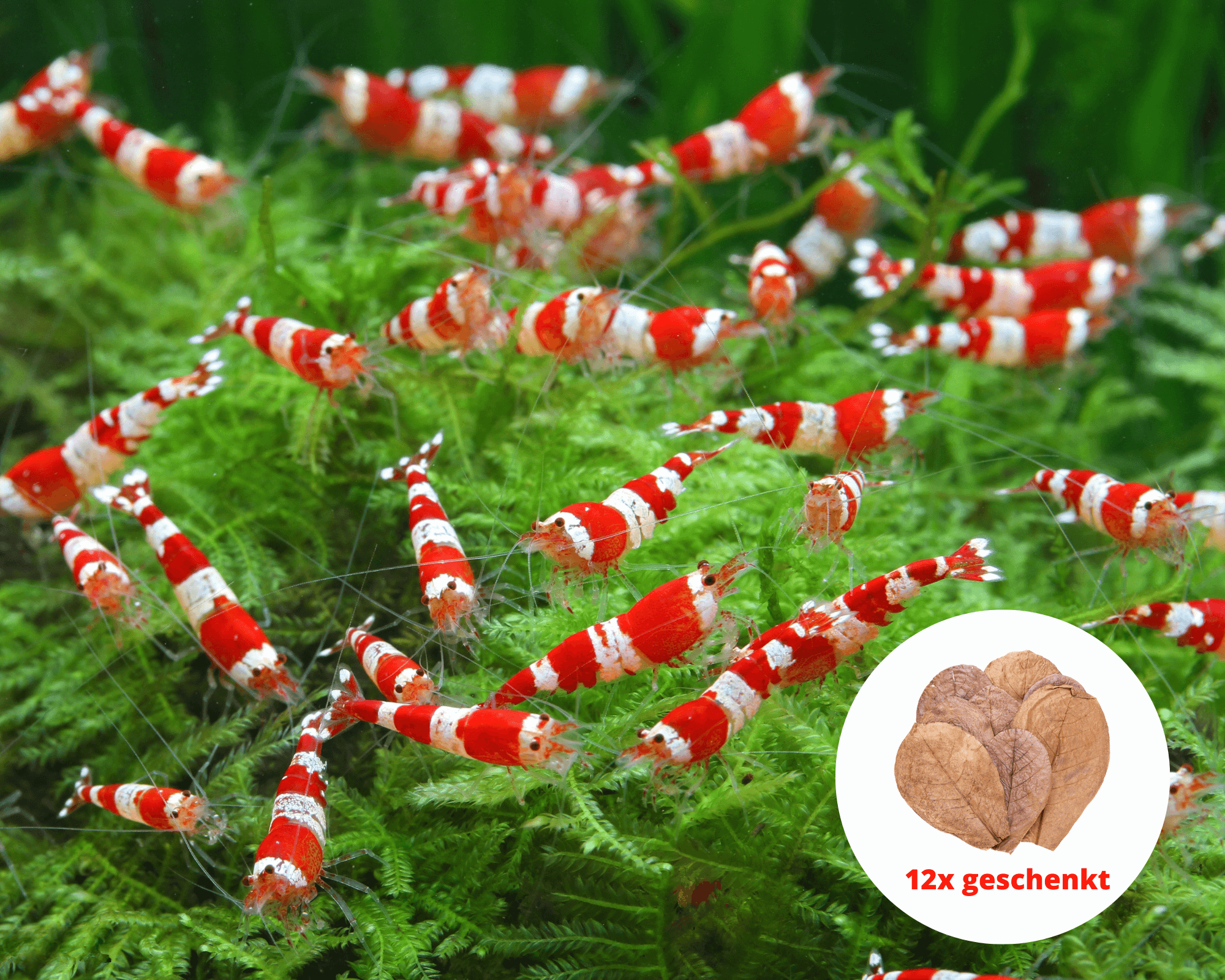
Separate Neocaridina convenience from Caridina precision

Use plants as shelter and grazing infrastructure

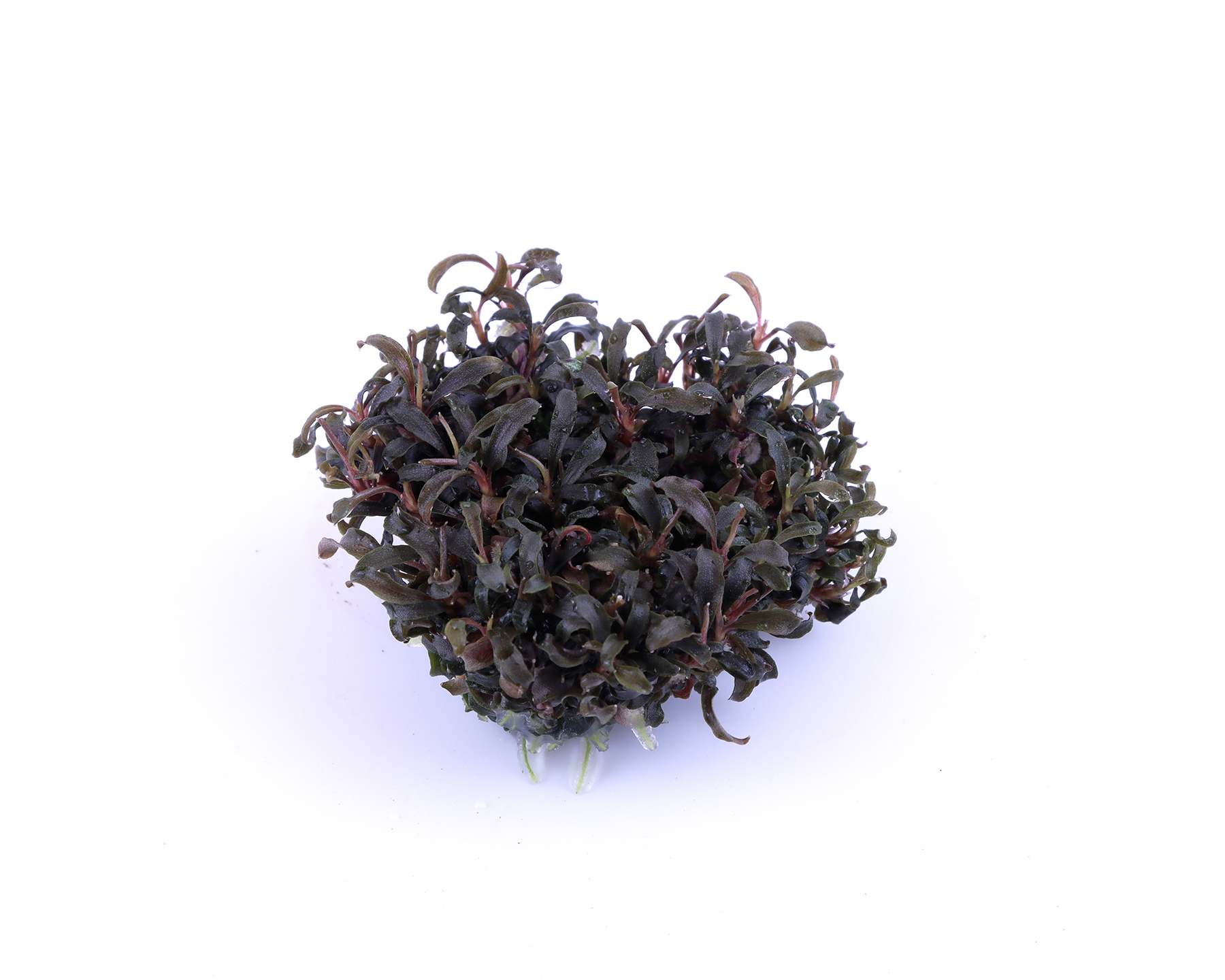
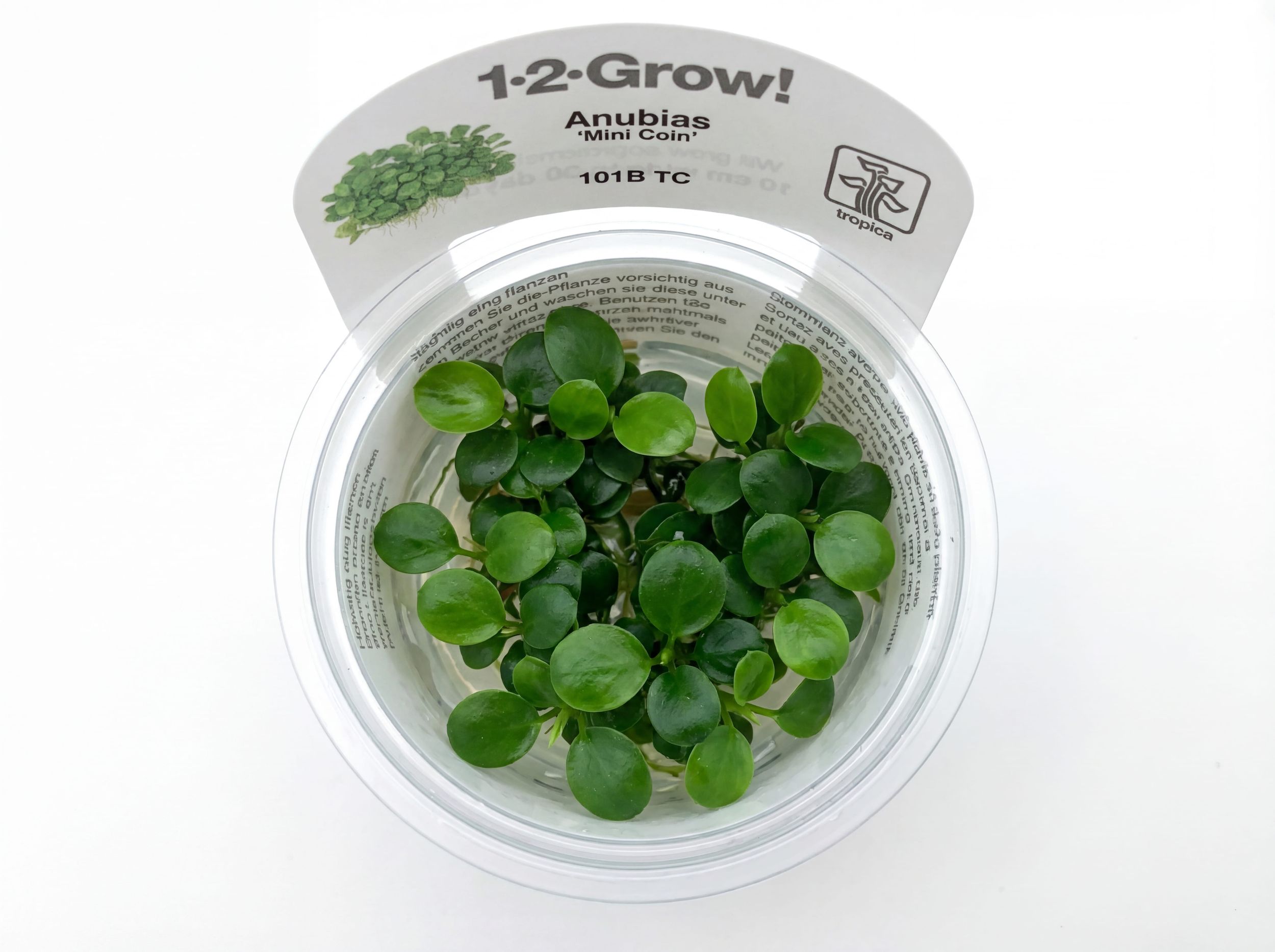
Plants help shrimp most when they create surfaces, not merely decoration. Christmas moss, Java moss, Anubias, Java fern, and other low-demand plants can collect biofilm and give juvenile shrimp places to hide. Dense growth also reduces direct contact with curious fish. Inspect every new plant for hitchhikers, pest treatments, and fertilizer residue before it enters the aquarium. Rinse and quarantine when the source is uncertain, but do not assume rinsing removes every chemical. Avoid stripping a mature tank bare during cleaning: removing all algae, moss, wood film, and leaf litter at once can erase much of the food and shelter your shrimp depend on.
Use plants as shelter and grazing infrastructure

Compatibility means survival, not peaceful behavior

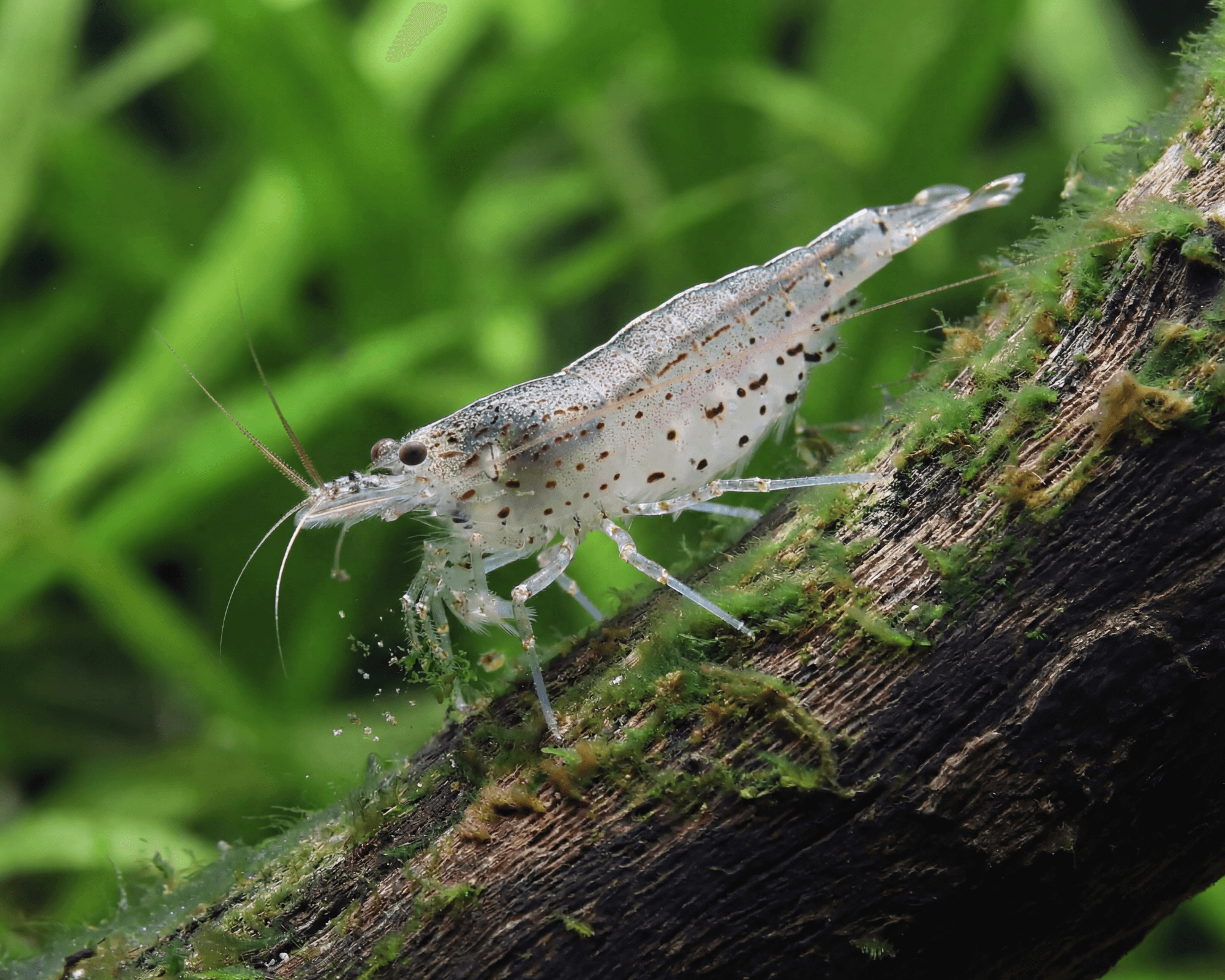
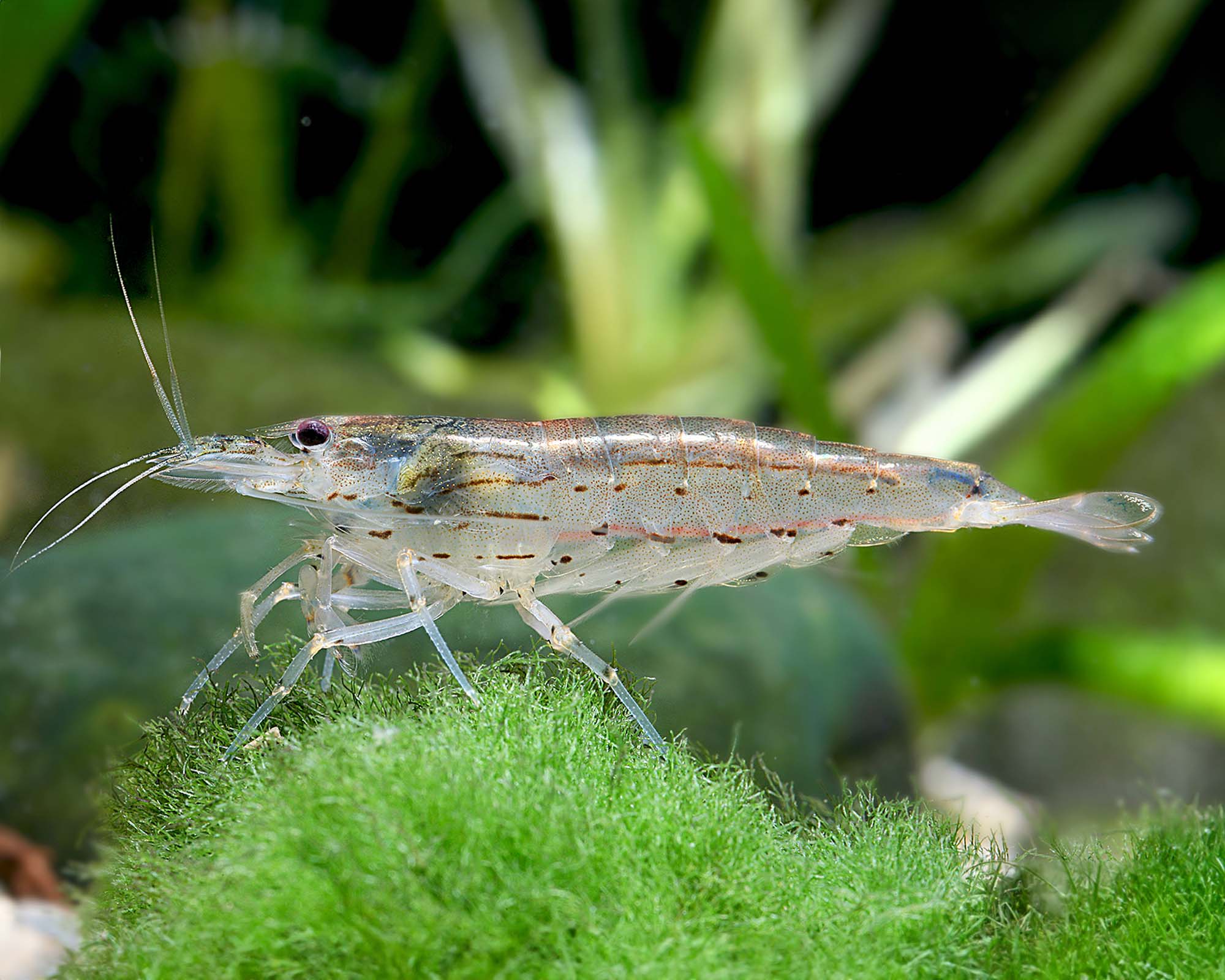
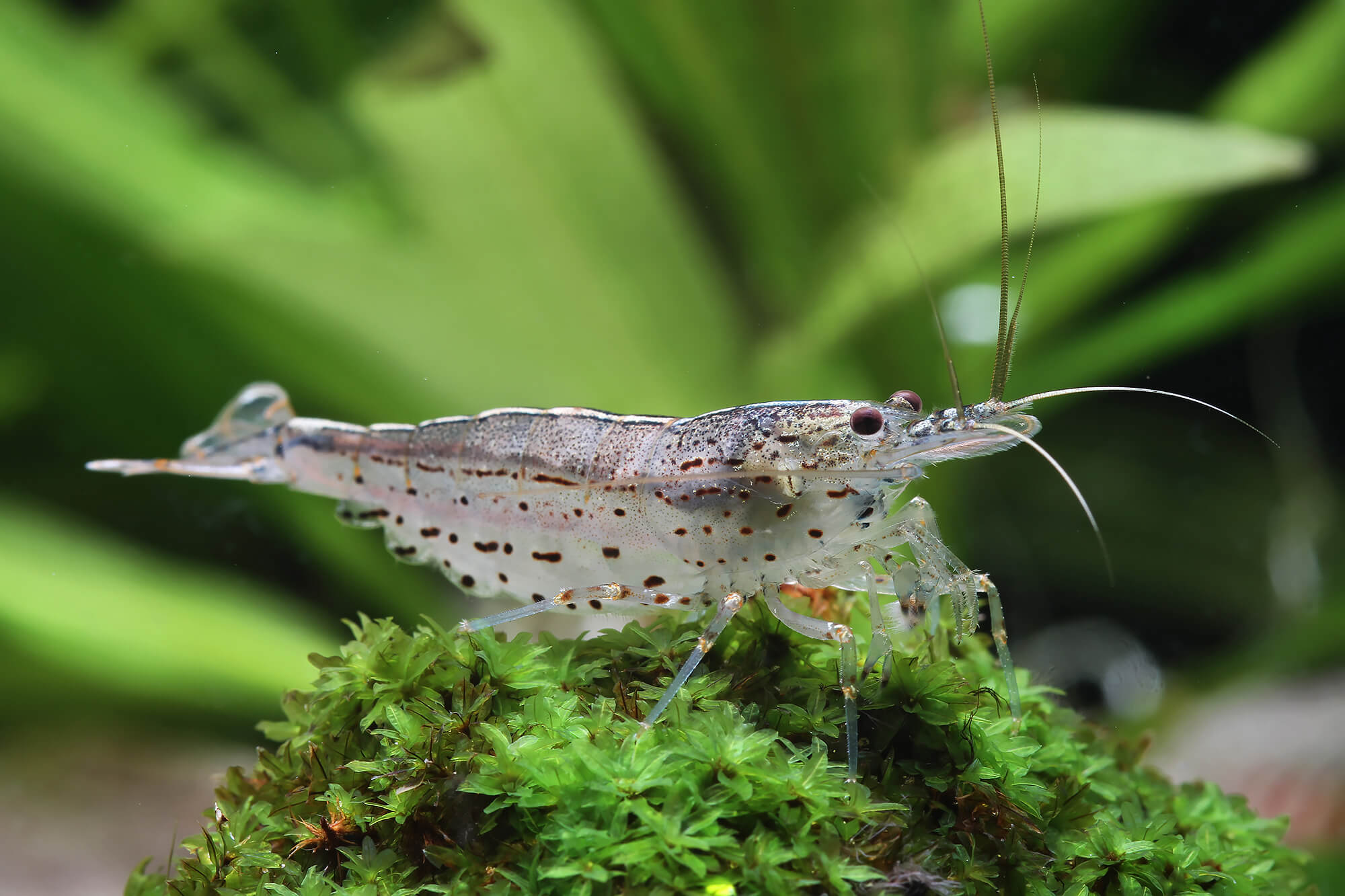
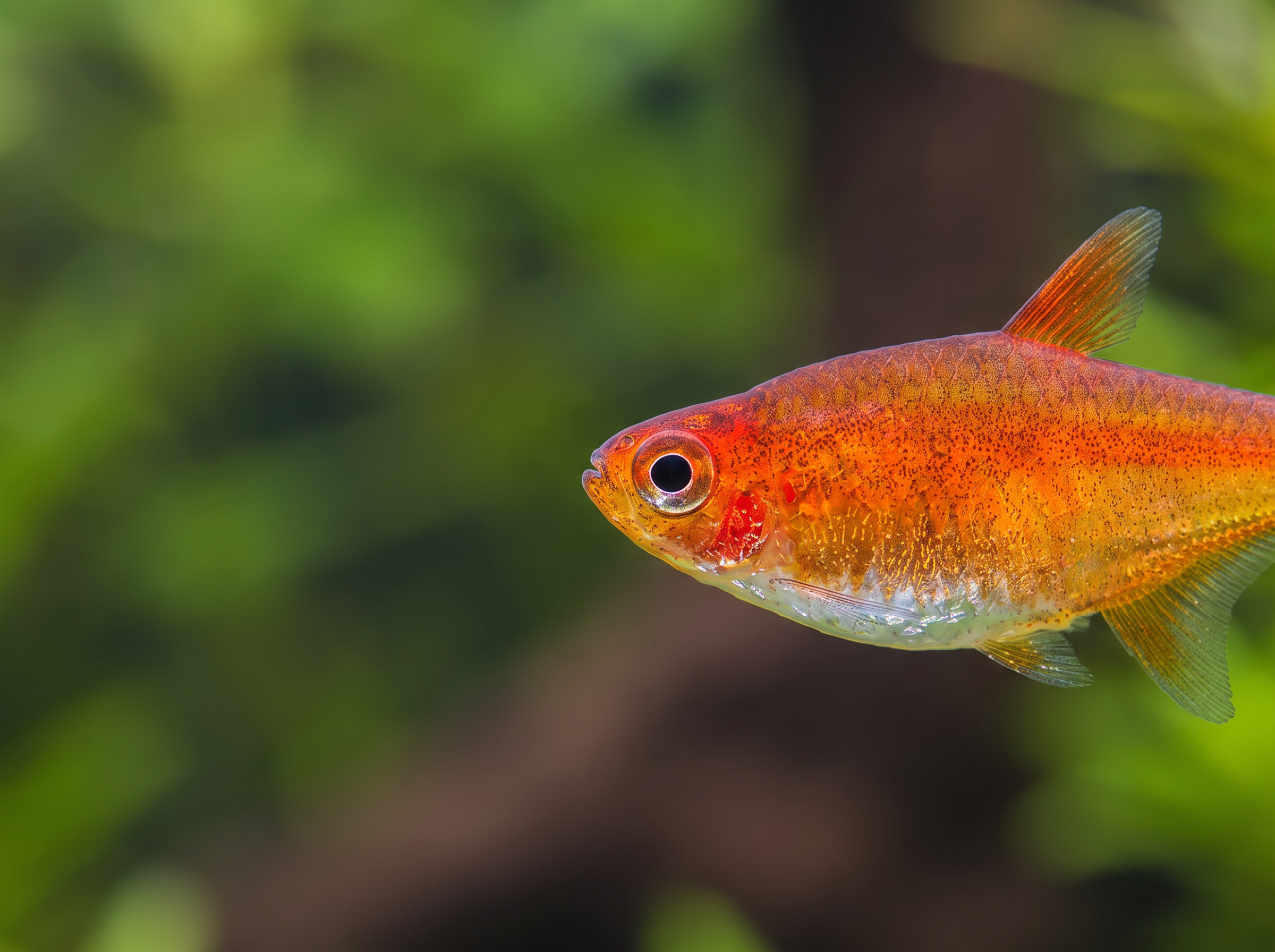
A fish may ignore adult shrimp and still eat shrimplets, newly molted adults, or eggs. Amano shrimp are larger and less likely to be swallowed than many dwarf shrimp, but they still need secure cover and suitable water. Small, gentle fish can work in a heavily planted aquarium, yet no fish community is a guaranteed breeding environment for Neocaridina. Avoid fin-nippers, persistent hunters, and species with mouths large enough to consume shrimp. If colony growth matters more than display variety, choose a shrimp-only tank or separate breeding area. A peaceful label describes temperament; it does not guarantee shrimp safety.
Compatibility means survival, not peaceful behavior

Feeding mistakes create delayed failures

Shrimp grazing on biofilm do not need constant feeding. Excess food decomposes, raises organic waste, encourages bacterial problems, and can destabilize a small aquarium. Offer a very small portion of shrimp food only when natural grazing appears insufficient, and remove uneaten food rather than letting it dissolve. A mature planted tank can support a light routine based on observation instead of a fixed heavy schedule. During a suspected water-quality problem, reduce feeding while testing and improving filtration. Do not use food to lure shrimp into the open if fish are competing aggressively; that can increase stress and make predation easier.
Feeding mistakes create delayed failures

Quarantine new shrimp, plants, and treatments separately

Many recurring crashes begin with an addition that was never tested in isolation. New shrimp may arrive stressed, carry different water chemistry, or need a slow acclimation. New plants can introduce residues, snails, planarians, or medications. New fish may look compatible until the first night. Quarantine whenever practical, and acclimate livestock gradually rather than pouring shipping water into the display. Keep a written record of the product, dose, date, and observed response. If shrimp die after a new addition, stop adding anything else and compare the timeline. A simple quarantine habit prevents one uncertain variable from becoming a whole-tank mystery.
Quarantine new shrimp, plants, and treatments separately

Build a repeatable maintenance decision tree

Use the same sequence every time a problem appears: observe behavior, test ammonia and nitrite, review recent changes, inspect equipment, and only then adjust the tank. If tests are normal but deaths continue, check hardness, source-water consistency, copper risk, oxygenation, and compatibility. If the aquarium is stable, make one change at a time and wait long enough to judge it. Keep a maintenance log with water-change percentage, conditioner, fertilizer, feeding, temperature, and shrimp behavior. The goal is not to create a complicated laboratory routine. It is to make failures traceable, so the next loss teaches you something instead of repeating the same mistake.
Build a repeatable maintenance decision tree

Frequently Asked Questions

Why are my freshwater shrimp dying one at a time?

A staggered die-off commonly follows chronic stress rather than one dramatic event. Check ammonia, nitrite, temperature, hardness, recent water changes, copper exposure, failed molts, and fish behavior. Review what changed during the week before the first death and avoid making several corrections simultaneously.

Can a planted nano aquarium be safe for shrimp?

Yes, if it is fully cycled, mature enough to provide biofilm, filtered with an intake guard, and maintained consistently. Small tanks can change quickly, so evaporation, overfeeding, temperature swings, and large water changes deserve extra attention. A shrimp-only nano tank is usually easier to manage than a mixed community.

Are Neocaridina or Caridina shrimp easier for beginners?

Neocaridina varieties are often the more forgiving choice when your source water is stable and suitable. Many Caridina bee shrimp need tighter control of mineral content and chemistry. The better choice is the group that matches your tested water and maintenance method, not simply the shrimp with the most attractive color.

How can I prevent shrimp deaths after a water change?

Condition the replacement water, match its temperature, compare its chemistry with the aquarium, and add it gradually. Avoid sudden changes in hardness or total dissolved solids. Use a clean container, test unfamiliar source water, and do not combine a major water change with medication, heavy substrate cleaning, or multiple new products.

Do aquarium plants protect shrimp from fish?

Dense plants and moss improve cover and provide grazing surfaces, but they do not make predatory or opportunistic fish safe. Adult shrimp may survive while eggs and juveniles disappear. If breeding is important, use a shrimp-only aquarium or choose tank mates only after accepting that some offspring may be eaten.
Leave your comments
Latest on Aquarium Base
  • Which Aquarium Plant Fits Your Tank? A Light, Flow, Substrate, and Time-Matching Guide

    Which Aquarium Plant Fits Your Tank? A Light, Flow, Substrate, and Time-Matching Guide

    The easiest aquarium plant is not automatically the best plant for your aquarium. A slow-growing Anubias may suit a shaded shrimp tank, while a fast stem plant may be better for someone who wants quick nutrient uptake and does not mind weekly trimming. Light, water movement, planting method, substrate and available maintenance time all change the decision. This guide uses those constraints to match plants with colorful freshwater fish, shrimp, snails and nano aquariums without pretending that every species belongs in the same setup. Start with the conditions you can provide, then choose plants that will grow comfortably within them.
  • How to Design a Planted Aquarium Around Color, Movement, and Scale

    How to Design a Planted Aquarium Around Color, Movement, and Scale

    A planted aquarium becomes easier to plan when livestock is treated as part of the aquascape rather than added after it. Color determines where the eye lands, movement creates rhythm, and adult scale controls whether the layout feels spacious or crowded. This design approach is especially useful in nano aquariums, where one active fish or oversized centerpiece can dominate the entire view. Start with the visual effect you want, then match it to compatible behavior, water conditions, tank dimensions and plant cover. The result may be a colorful community of small schooling fish, a shrimp-and-snail display, or a single feature fish surrounded by quiet movement.
  • How to Prevent Snail Shell Erosion in a Planted Aquarium

    How to Prevent Snail Shell Erosion in a Planted Aquarium

    Aquarium snails can look healthy while their shells slowly weaken. Pale patches, pits, rough edges and widening holes are often blamed on a lack of calcium, but shell health depends on a larger system: dissolved minerals, carbonate buffering, acidity, diet, water changes and the snail species itself. This guide helps you choose snails that suit your planted aquarium, identify chemistry problems before they become severe and add minerals without destabilizing shrimp, fish or plants. The goal is not to chase a perfect number. It is to build stable water chemistry that supports shell growth over months and years.
  • How Many Freshwater Shrimp Should You Keep in a Planted Aquarium?

    How Many Freshwater Shrimp Should You Keep in a Planted Aquarium?

    A planted aquarium can turn a small group of freshwater shrimp into a self-sustaining colony, but that success creates a new management question: how many shrimp can the tank support? The answer depends less on a fixed number than on species, plant density, feeding, filtration, tank size, and whether fish share the aquarium. This guide compares practical colony-starting choices, explains why some shrimp reproduce easily while others do not, and shows how to prevent a planted tank from becoming overcrowded without disrupting its natural balance.
  • Can a No-CO2 Nano Aquarium Still Look Lush? A Practical Plant-and-Livestock Plan

    Can a No-CO2 Nano Aquarium Still Look Lush? A Practical Plant-and-Livestock Plan

    A low-tech planted aquarium can be attractive, stable, and full of movement without injected CO2—but it will not behave like a high-light aquascape. Growth is usually slower, carpeting plants may stay patchy, and dramatic red color can depend on light, nutrients, and plant maturity. The most reliable approach is to design around modest expectations: use dependable plants for structure, add moss and cover for shrimp, choose livestock by adult size and behavior, and keep lighting restrained. This guide helps you decide what belongs in a no-CO2 nano aquarium before you buy plants, fish, shrimp, or snails.
  • How to Build a Peaceful Planted Community Tank Without Sacrificing Your Shrimp

    How to Build a Peaceful Planted Community Tank Without Sacrificing Your Shrimp

    A peaceful community aquarium is not created by choosing only small or attractive animals. It depends on matching adult size, swimming level, temperament, water preferences, group needs and hunting behavior. The most important decision is whether your priority is a display of active fish, a growing shrimp colony or a low-maintenance planted habitat with snails. This guide uses a compatibility-first approach for nano and community aquariums, showing where colorful freshwater fish fit, which beginner plants provide useful cover and when a shrimp-and-snail setup is safer than a mixed tank.
  • Do Aquarium Snails Really Clean a Planted Tank? A Myth-Busting Care Guide

    Do Aquarium Snails Really Clean a Planted Tank? A Myth-Busting Care Guide

    Aquarium snails can be useful in planted tanks, but they are not a substitute for testing, water changes, algae control, or sensible feeding. The phrase “cleanup crew” makes them sound like a maintenance service, when each snail has a narrower job: grazing soft algae, scavenging leftovers, processing decaying plant material, or disturbing the substrate. This guide separates popular claims from practical care so you can choose snails based on your tank’s actual needs. It also explains why a sudden snail population boom is usually information about feeding and available food, not proof that the snails themselves are causing the problem.
  • Should You Feed Shrimp in a Planted Tank? A Low-Waste Algae-Control Plan

    Should You Feed Shrimp in a Planted Tank? A Low-Waste Algae-Control Plan

    Freshwater shrimp can help manage algae in a planted aquarium, but feeding them too generously can undermine the balance you are trying to create. The practical goal is not to keep shrimp constantly full. It is to provide enough natural grazing, occasional supplemental food, and stable water conditions without leaving decomposing leftovers behind. This guide explains how to choose shrimp for the job, how to tell whether they need extra food, and how to adjust lighting, planting, stocking, and maintenance when algae becomes excessive. It also separates the needs of Amano shrimp, Neocaridina varieties, and more sensitive Caridina types so your cleanup plan does not create a new water-quality problem.
  • Why Aquarium Plants Fail After Planting—and How to Recover Without Starting Over

    Why Aquarium Plants Fail After Planting—and How to Recover Without Starting Over

    A planted aquarium rarely fails because every plant is unsuitable. More often, a good plant is placed incorrectly, exposed to an abrupt change, or paired with livestock before the layout has stabilized. The useful question is not “Which replacement plant should I buy?” but “What changed, and what can I correct without disturbing everything again?” This recovery guide follows that decision from the first planting choice through lighting, algae, substrate, and nano-livestock compatibility. Use the images as visual checkpoints: identify the plant’s growth type, correct the specific mistake, then give the tank time to respond before making another major change.
  • Before You Buy: A Feeding and Bioload Plan for a Planted Freshwater Aquarium

    Before You Buy: A Feeding and Bioload Plan for a Planted Freshwater Aquarium

    A planted aquarium can look self-sustaining, but fish, shrimp and snails still turn food into waste. The most reliable way to choose compatible freshwater livestock is to plan the feeding routine and maintenance burden before choosing the animals. A small group of tiny fish may need specialized foods and frequent observation, while livebearers can create more waste through unexpected fry. Easy plants can help stabilize a tank, but they do not cancel overfeeding or poor stocking decisions. This guide compares practical community options and shows how to build a colorful planted aquarium around the work you can realistically maintain.
  • When Aquarium Snails Multiply: A Planted-Tank Population Control Plan

    When Aquarium Snails Multiply: A Planted-Tank Population Control Plan

    A sudden wave of tiny snails can make a planted aquarium feel out of control, but the population is usually responding to available food rather than attacking the tank. The useful question is not how to eliminate every snail. It is which species reproduce quickly, what is feeding them, and whether their numbers fit your livestock plan. This guide compares common hitchhikers, non-breeding freshwater algae grazers, slower live-bearing snails, and predators so you can choose a control method without damaging plants, shrimp, fish, or beneficial microorganisms.
  • Will Your Freshwater Shrimp Survive the Next Molt? A Water-Quality Decision Guide

    Will Your Freshwater Shrimp Survive the Next Molt? A Water-Quality Decision Guide

    Freshwater shrimp rarely fail because an aquarium is not attractive enough. They fail when the water changes faster than their bodies can adapt, especially during molting. The right shrimp for a planted nano aquarium is therefore not simply the one with the most appealing color. It is the one whose mineral needs match your source water, substrate and maintenance routine. This guide compares practical choices from Neocaridina, Caridina, Amano and Sulawesi groups, then connects each choice to the details that determine survival: GH, KH, TDS, temperature, mature biofilm, safe tank mates and controlled water changes.
  • 12 Beginner-Friendly Aquarium Plants and Invertebrates for Nano Setups

    12 Beginner-Friendly Aquarium Plants and Invertebrates for Nano Setups

    Starting a nano aquarium is an incredibly rewarding hobby, but choosing the right inhabitants and flora is crucial for long-term success. For beginners, the key is selecting hardy, low-maintenance aquatic plants that provide essential oxygen and shelter, paired with peaceful, colorful invertebrates that help keep the tank clean. This guide explores 12 easy-to-care-for aquarium plants and their perfect companions, ensuring your setup remains vibrant and healthy with minimal effort. Whether you are aiming for a lush green carpet or a dense jungle aesthetic, these selections offer the perfect foundation for a thriving community aquarium.
  • 12 Vibrant Freshwater Fish and Invertebrates for a Balanced Planted Nano Tank

    12 Vibrant Freshwater Fish and Invertebrates for a Balanced Planted Nano Tank

    Creating a thriving planted nano aquarium requires a delicate balance of livestock choices. When selecting inhabitants for a smaller system, it is vital to prioritize species that stay small, exhibit peaceful temperaments, and appreciate the lush environments that live plants provide. From shimmering schooling fish to industrious cleaners, the right combination can transform your tank into a mesmerizing underwater ecosystem. This guide explores twelve compatible, colorful, and hardy species that thrive in planted setups, ensuring your nano aquarium remains both beautiful and easy to manage for beginners.
  • 12 Beneficial Aquarium Snails for a Pristine Planted Tank

    12 Beneficial Aquarium Snails for a Pristine Planted Tank

    Adding snails to your planted aquarium is one of the most effective ways to maintain a balanced ecosystem. Beyond their unique aesthetic appeal, these invertebrates serve as nature's cleanup crew, grazing on unwanted algae, consuming decaying plant matter, and aerating the substrate to prevent anaerobic pockets. Whether you are managing a nano tank or a large aquascape, selecting the right snail species ensures your plants stay clean and your water parameters remain stable. This guide explores twelve distinct snail species that are both functional and decorative for your thriving freshwater setup.
  • 12 Vibrant Freshwater Shrimp for Your Planted Nano Tank

    12 Vibrant Freshwater Shrimp for Your Planted Nano Tank

    Adding freshwater shrimp to a planted nano tank is one of the most rewarding ways to enhance your aquascape. These small, industrious invertebrates act as natural cleaners, grazing on algae and biofilm while adding a splash of personality and color to your underwater world. Whether you are a beginner looking for hardy species or an experienced hobbyist interested in specific color morphs, there is a shrimp variety suited for your setup. This guide explores 12 of the best options for planted aquariums, focusing on their unique characteristics, compatibility with nano fish, and their role in a balanced ecosystem.