AquaLibs presents AquaRank Discover the world’s leading aquascapers

Explore transparent rankings built from published results across the world’s leading aquascaping contests.

Which Plant Shapes Make a Nano Community Aquarium Feel Larger?

Start with three visual layers, not a shopping list

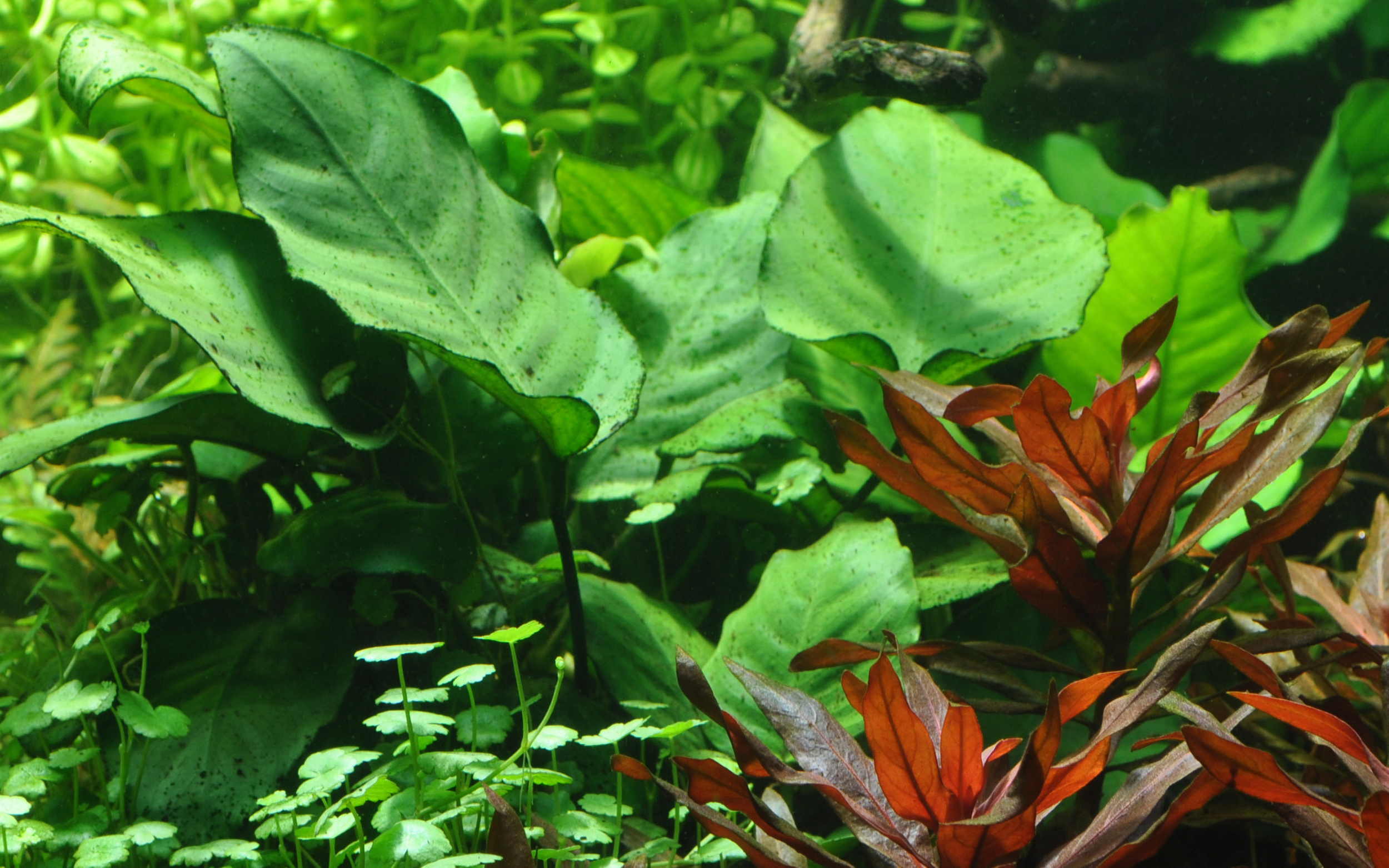
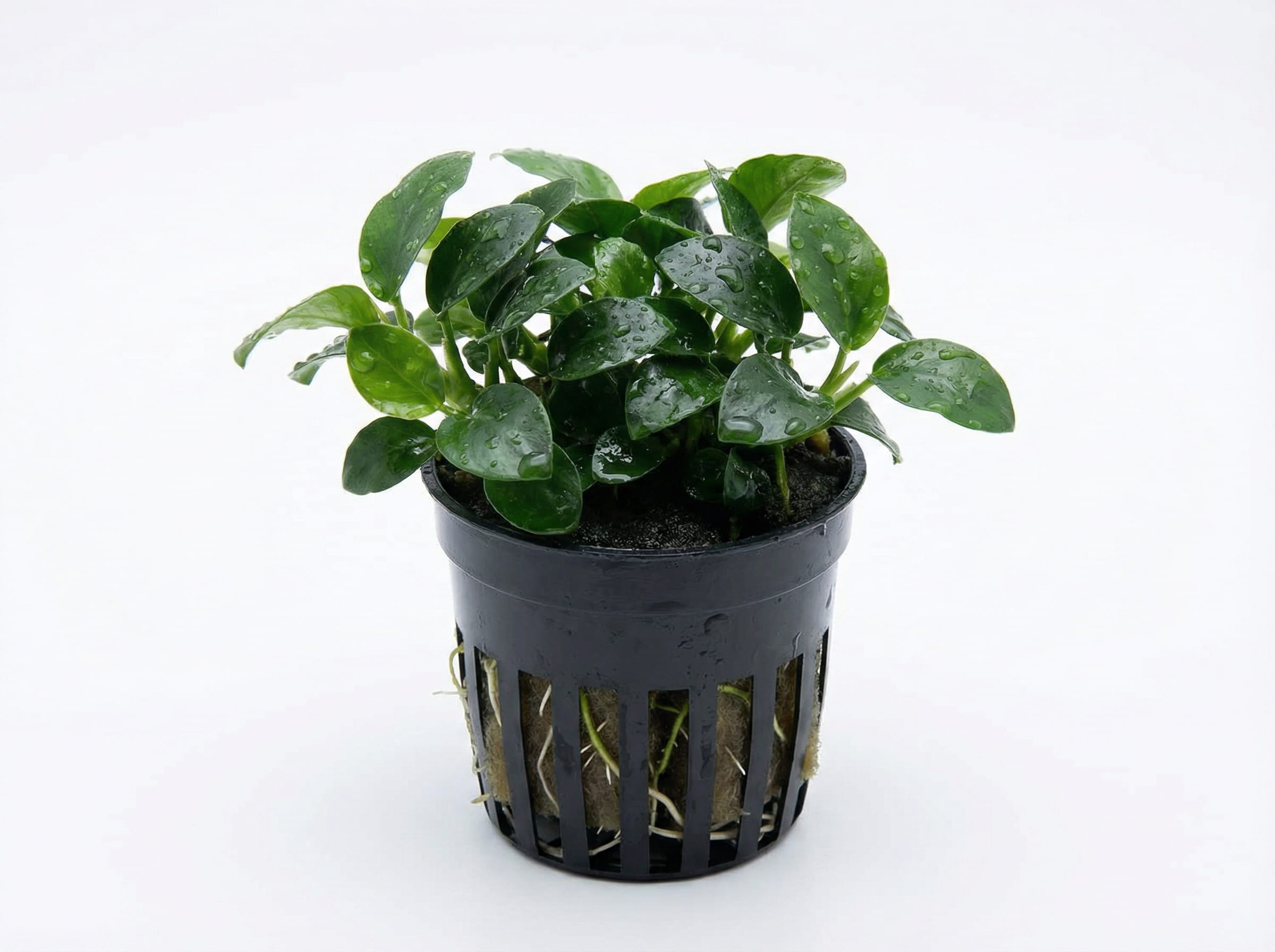
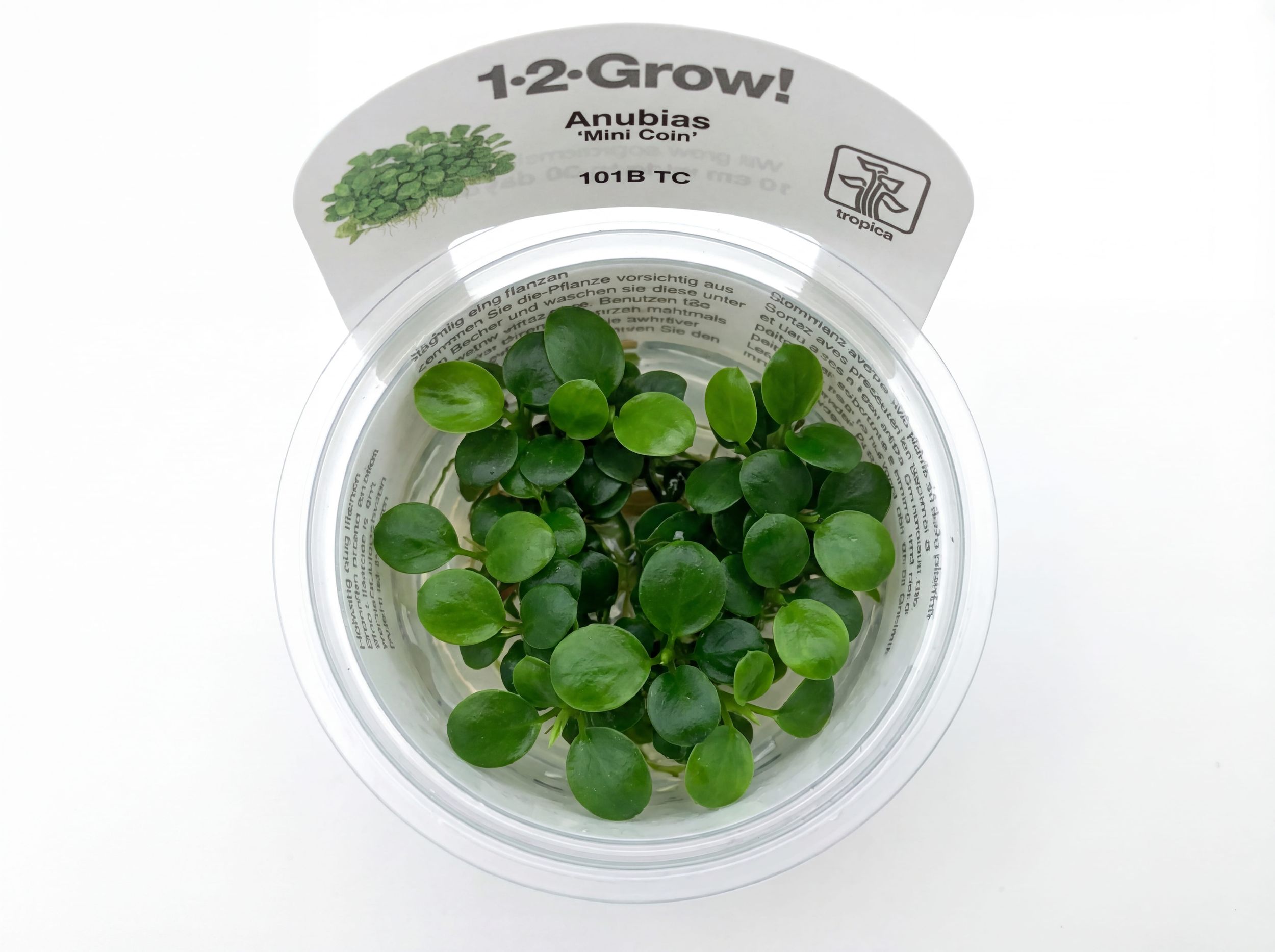
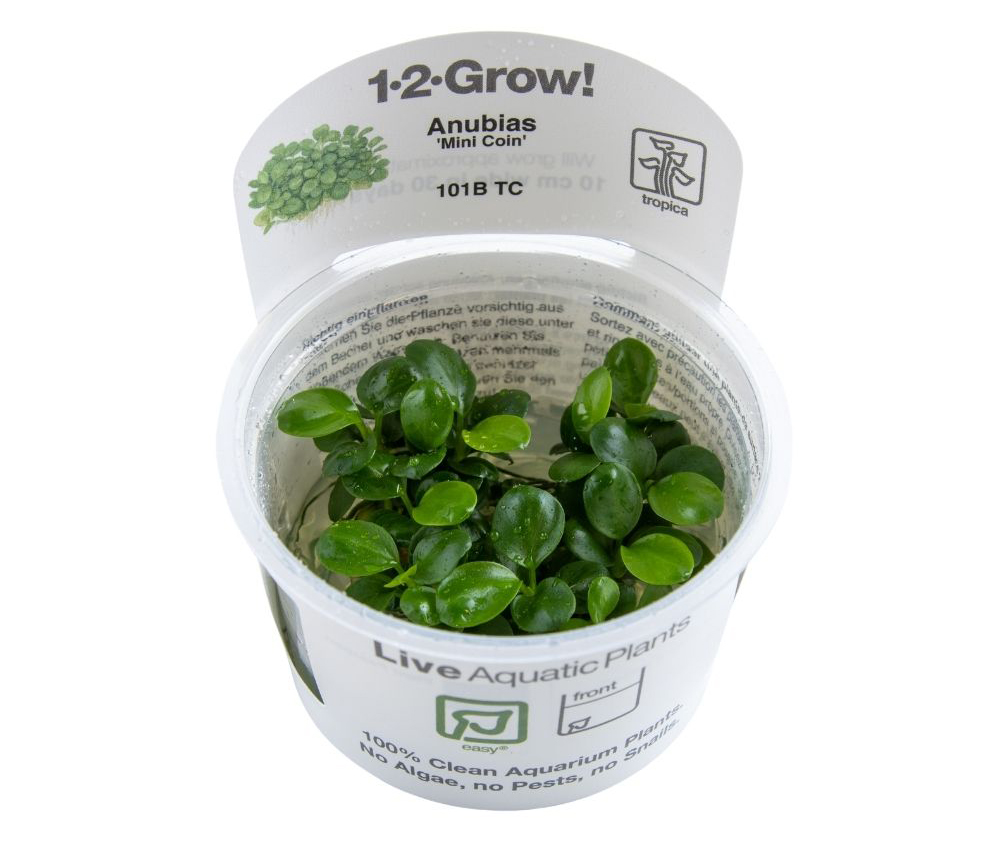
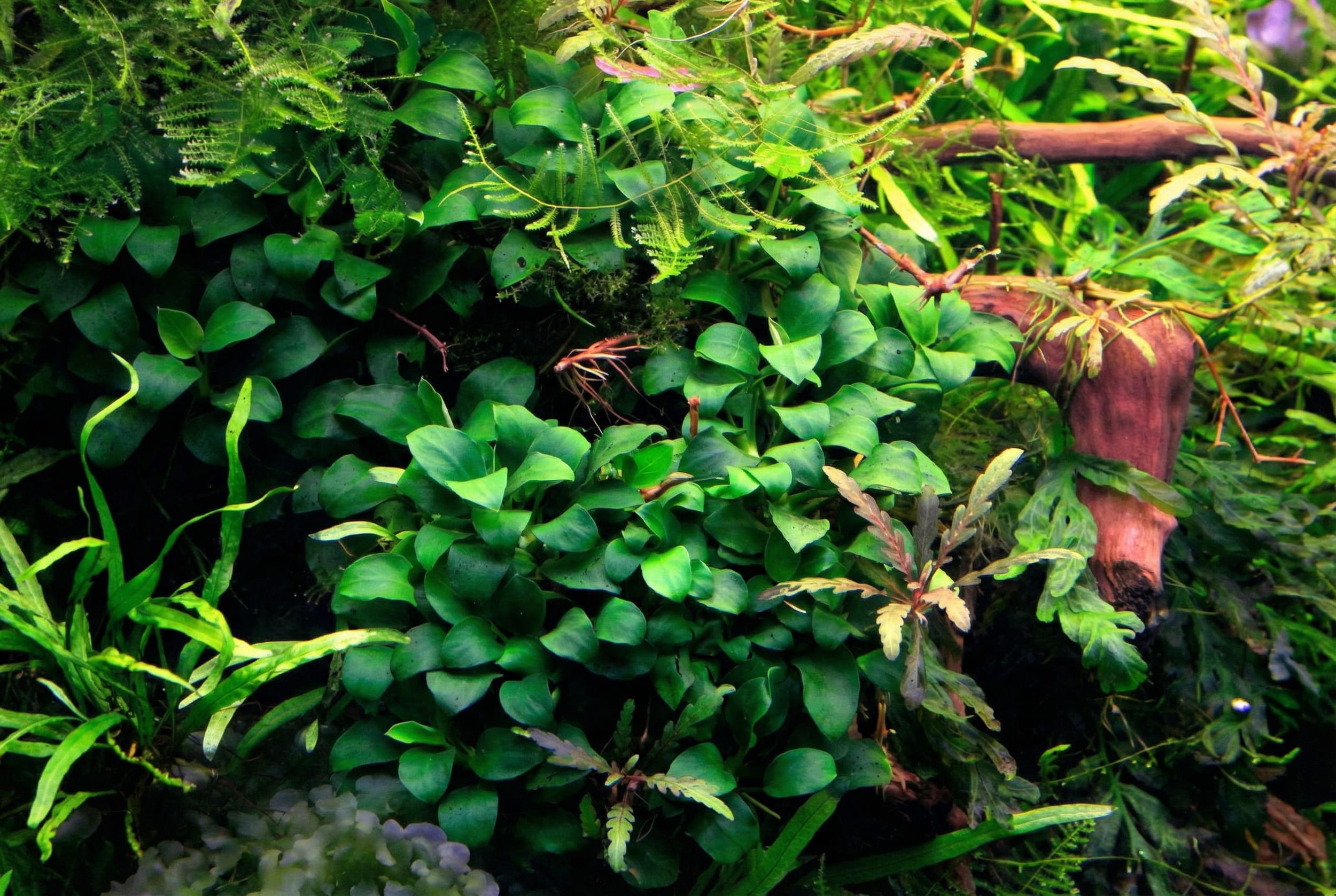
Before choosing livestock or plants, divide the aquarium into foreground, middle, and background jobs. The foreground should use small or fine-leaved forms that leave a visible strip of substrate. The middle needs a denser shape, such as a compact rosette or broad-leaved clump, to create a visual step upward. The background can carry height and movement, but it should not cover the entire rear glass. Anubias Mini Coin is useful in the middle or on hardscape because its rounded leaves create a strong size contrast against grass-like plants and stems. In a nano tank, repeat one shape sparingly rather than filling every gap with a different species.
Start with three visual layers, not a shopping list

Use fine foreground texture to make the substrate recede

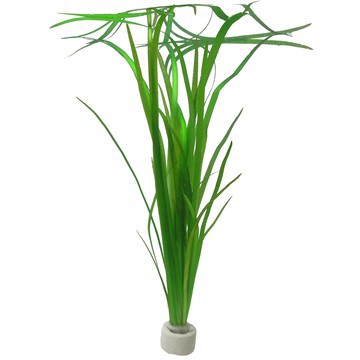
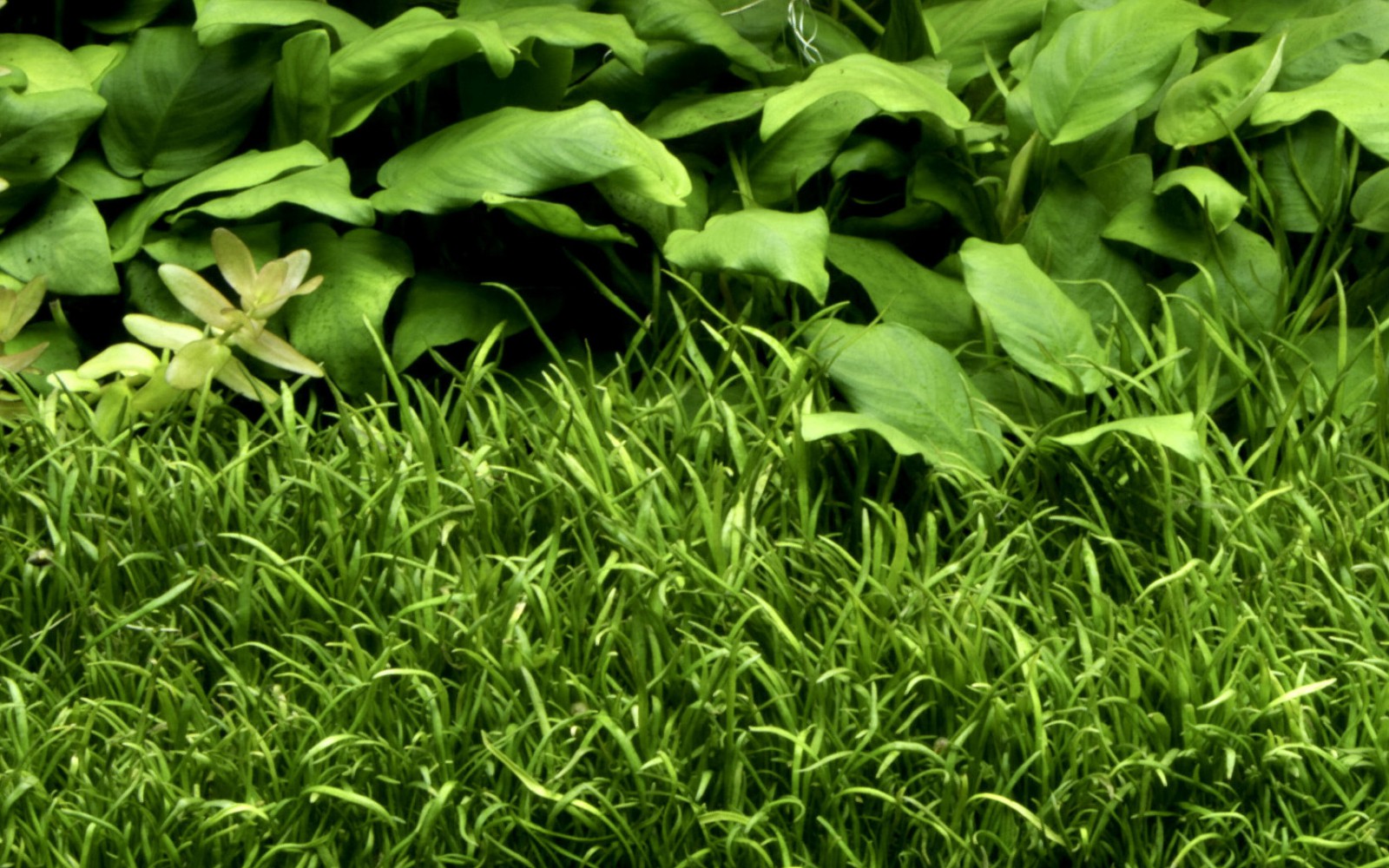
A foreground plant should not simply form a carpet; it should help the eye travel toward the back. Lilaeopsis brasiliensis offers narrow blades that read differently from broad Anubias or Cryptocoryne leaves. Plant it in separated plugs with small gaps between groups instead of making one solid mat immediately. This creates scale: the fine blades appear farther away while larger leaves feel closer. It is a better beginner strategy than forcing a demanding carpet into a low-tech aquarium. Keep some open sand or gravel near the front for snails to cross and for bottom-oriented shrimp to forage. If the grass grows taller than expected, trim or thin it rather than allowing it to hide the entire floor.
Use fine foreground texture to make the substrate recede

Give the middle ground a textured anchor

A midground plant should provide visual weight without becoming a solid curtain. Cryptocoryne undulatus Red can serve as a warm-toned anchor among green plants, but its value is not just the color. Its crinkled leaves create a rougher texture that contrasts with smooth, rounded foliage and soft moss. Place a small group beside rock or wood, leaving the front edge irregular rather than perfectly straight. Cryptocorynes may shed older leaves after planting or relocation, so avoid judging the design during the adjustment period. Once established, let the group occupy its own space. A single textured cluster often creates more depth than several unrelated red plants scattered throughout the aquarium.

Give the middle ground a textured anchor

Reserve tall stems for framing, not filling

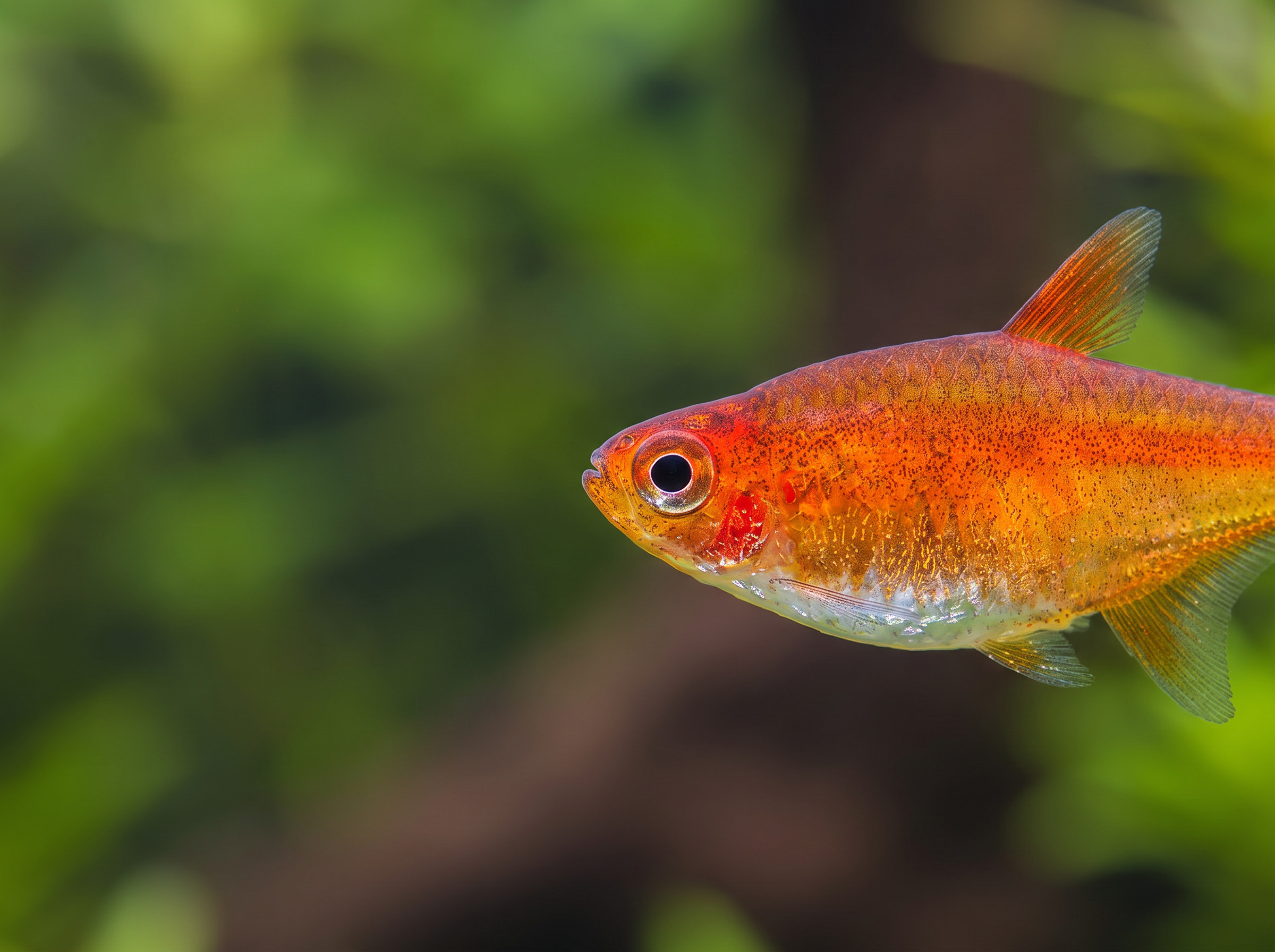
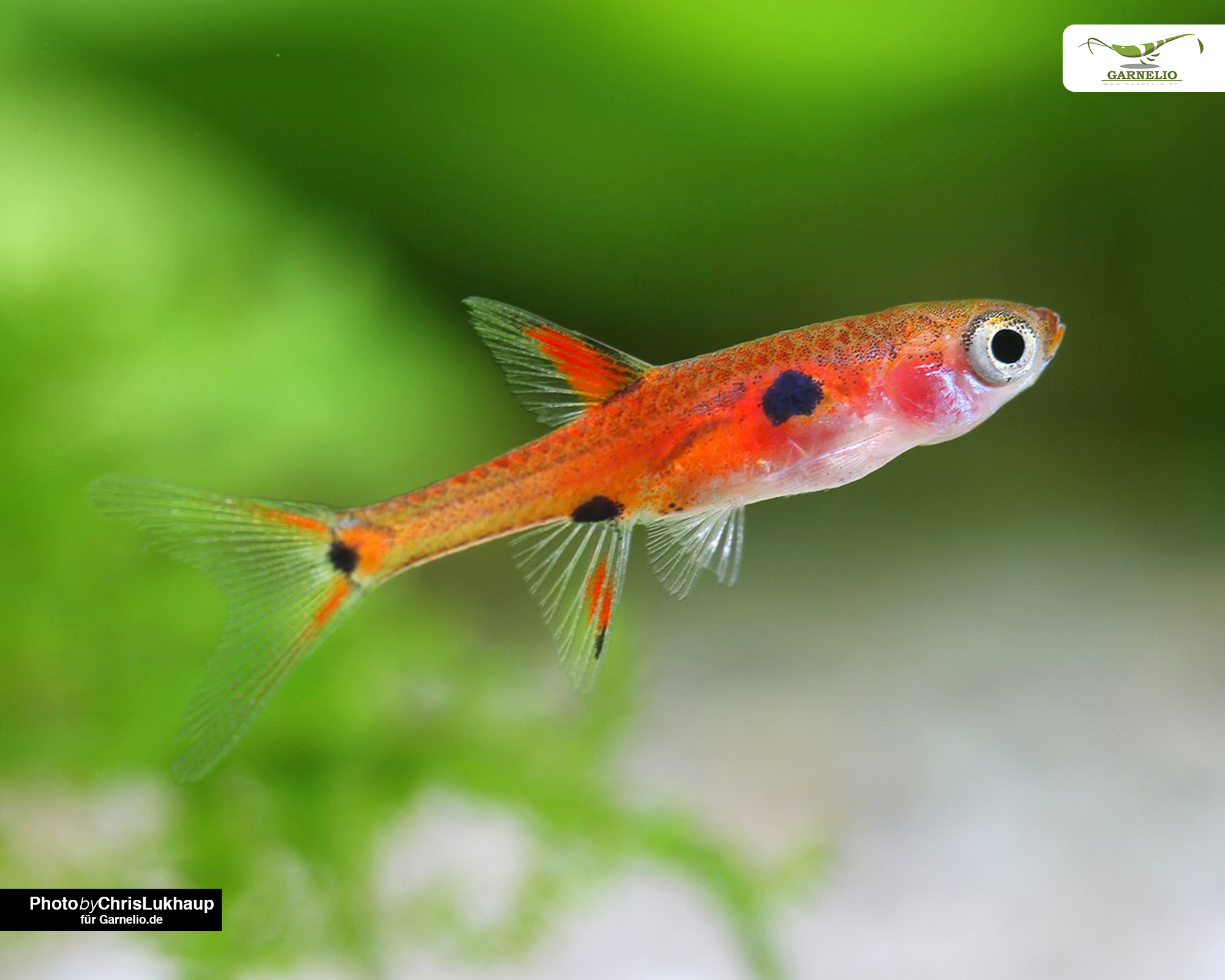
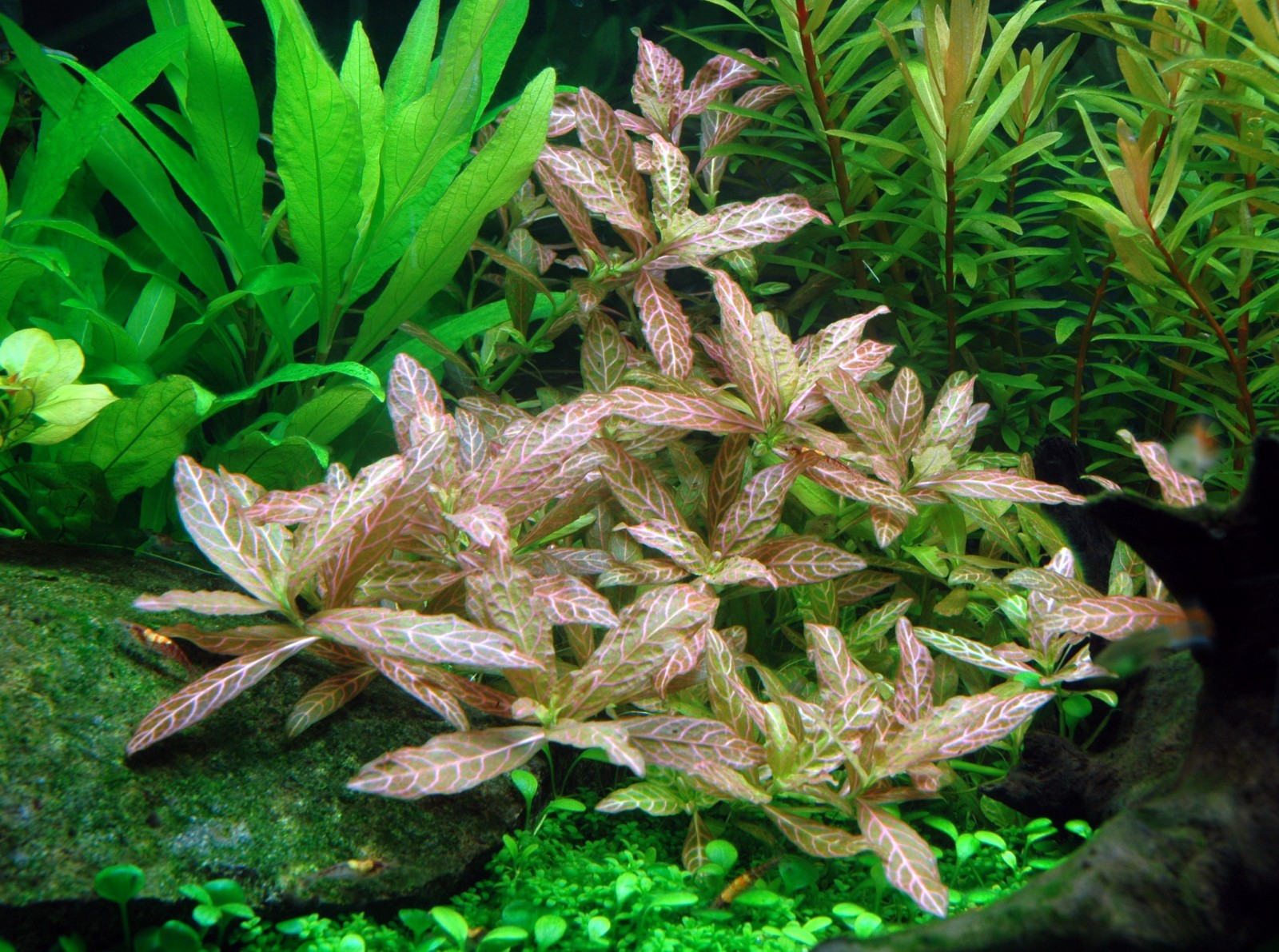
Tall background stems can make a small tank appear deeper when they form a tapered frame around open water. Hygrophila polysperma ‘Sunset’ can provide warm color and vertical movement, but fast-growing stems require regular trimming. Plant a few stems toward one rear corner or along the sides, then keep the center lower so fish have a clear swimming lane. This arrangement suits colorful nano fish such as ember tetras, chili rasboras, or green kubotai rasboras when the aquarium is appropriately sized and their temperature and water requirements overlap. Do not choose a stem solely because it is red or orange. In a low-tech setup, stronger color may depend on light, nutrients, and growth conditions.
Reserve tall stems for framing, not filling

Add shrimp cover with a different kind of texture

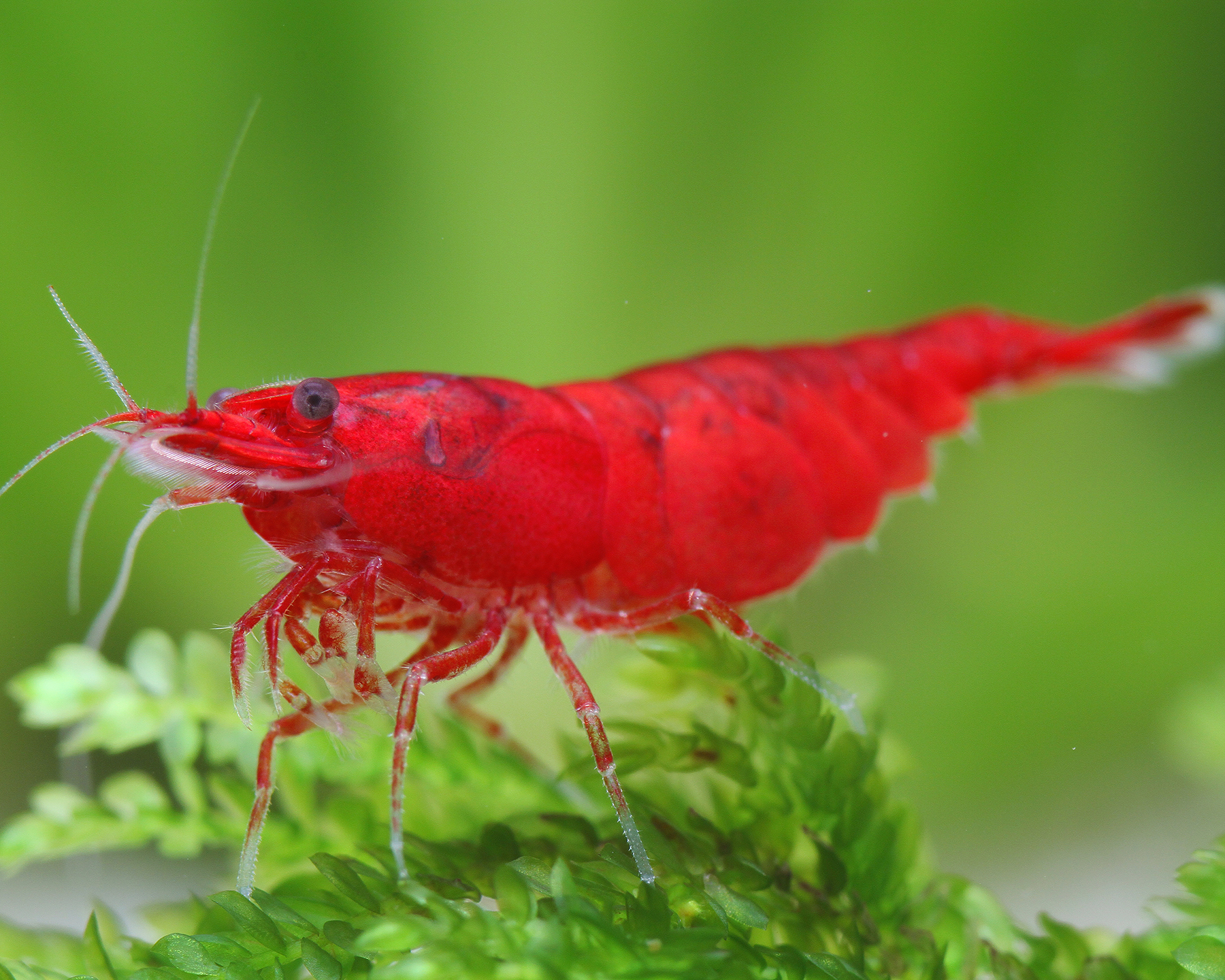
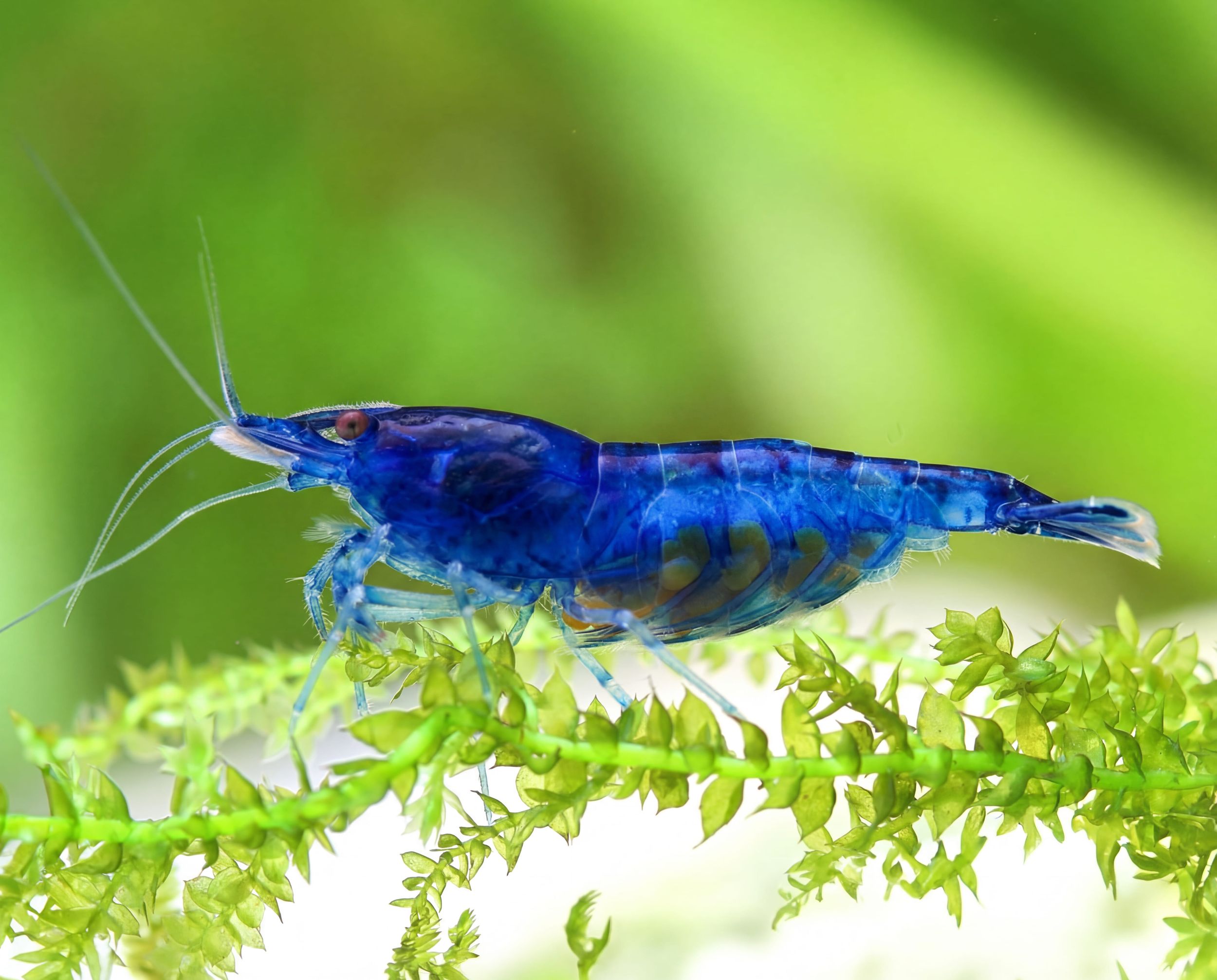
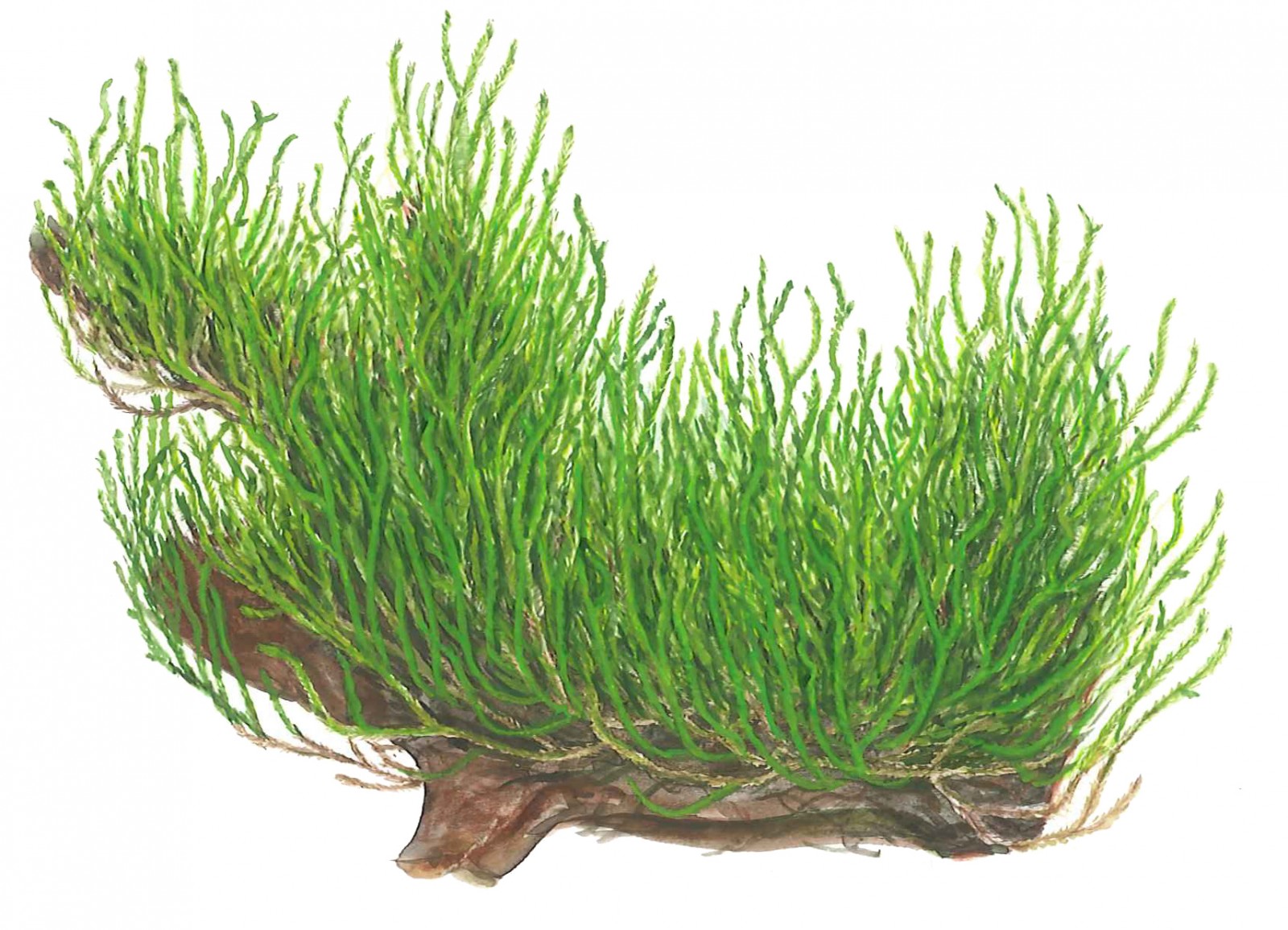
Freshwater shrimp need surfaces to graze and places to retreat after molting. Flame moss supplies a fine, upright texture that differs from rooted plants and can soften hardscape without blocking the whole tank. Attach a modest amount to wood or rock rather than allowing it to spread across every surface. Neocaridina shrimp often use moss as a feeding and shelter zone, but small fish may still eat shrimplets if they can reach them. If colony growth matters, combine moss with dense hardscape gaps and avoid large, constantly hunting tank mates. Moss also collects debris, so gently thin or rinse it during maintenance instead of treating it as a self-cleaning filter.
Add shrimp cover with a different kind of texture

Use leaf shape to separate the focal point from the background

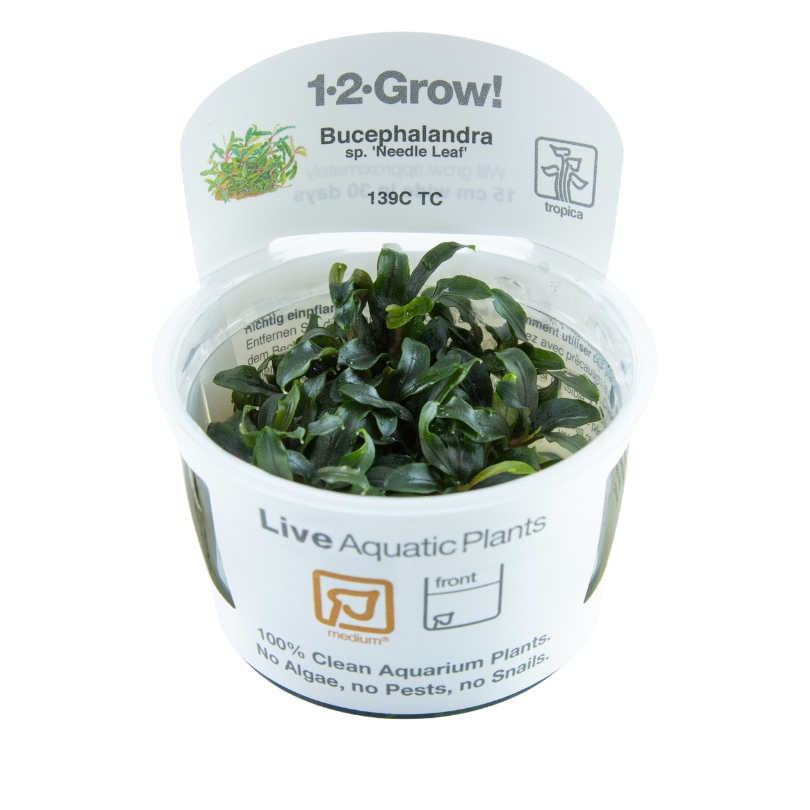
A focal plant works best when its silhouette is easy to recognize from a distance. Bucephalandra Needle Leaf offers narrow, detailed foliage that can sit on wood or stone without consuming much floor space. Its compact scale makes it suitable for nano aquariums, especially when paired with one broader plant and one fine-textured plant. Keep the focal clump off-center and leave a quiet area beside it. This gives schooling fish somewhere to pass and prevents shrimp from disappearing behind a dense central mass. Bucephalandra is slow-growing, so algae can become noticeable under excessive light. Moderate lighting, stable care, and occasional leaf cleaning are usually more useful than simply increasing brightness.
Use leaf shape to separate the focal point from the background

Match livestock behavior to the open spaces in the design

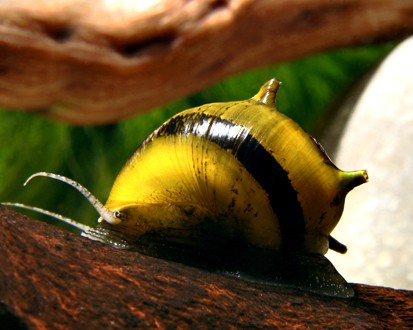
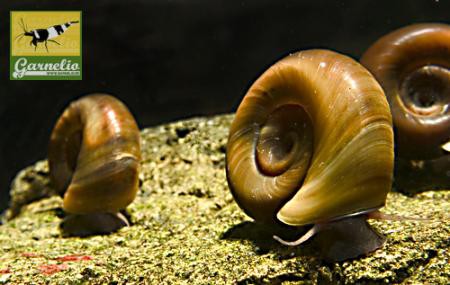
A visually deep aquascape still needs practical swimming and feeding zones. Small schooling fish generally look most natural in open midwater, while shrimp spend more time on plants, hardscape, and substrate. Nerite snails can graze exposed glass and hard surfaces, whereas Malaysian trumpet snails spend more time in the substrate and may be less visible. Ramshorn snails are active scavengers but can multiply when excess food is available. Build the layout around these behaviors: leave a clear lane for fish, textured surfaces for shrimp, and accessible grazing areas for snails. Avoid combining species simply because they are small. Temperature, water chemistry, adult size, feeding behavior, and shrimp reproduction all matter.
Match livestock behavior to the open spaces in the design

Create a shrimp-first shelter zone without losing depth

Java moss can form a useful transition between hardscape and open substrate because its branching texture creates many small surfaces. Use it in one protected pocket rather than spreading it evenly across the aquarium. That pocket can support grazing, provide cover for young shrimp, and make a visual foreground-to-middle transition. Keep the opposite side more open for fish movement or a snail grazing route. Peaceful nano fish may coexist with adult Neocaridina shrimp, but no community fish should be assumed safe for shrimplets. Amano shrimp are larger and do not establish colonies in the same way as Neocaridina. Stocking decisions should follow the desired outcome: display adults, grow a colony, or balance both.

Create a shrimp-first shelter zone without losing depth

Control color by trimming shape before adding more plants

Color is most effective when it marks a depth change or focal point. Rotala rotundifolia ‘H’ra’ can provide a warm accent in the background, but a bright stem group becomes distracting if it grows into a shapeless hedge. Trim above a healthy node, replant selected tops, and remove weak lower sections when the group becomes too dense. Preserve a visible transition from fine foreground texture to broader midground leaves and then to taller stems. If the aquarium looks flat, first restore differences in height and leaf shape before buying another colorful plant. In a beginner tank, fewer plant types with clear roles are often easier to maintain than a mixed collection that grows at conflicting speeds.

Control color by trimming shape before adding more plants

Use a repeatable planting recipe for a balanced nano display

A simple recipe can make the design easier to shop for and easier to maintain. Start with one fine foreground texture, one broad or crinkled midground group, one epiphyte on hardscape, and one taller background stem. Staurogyne repens can bridge the foreground and middle when kept compact, giving the layout a low, bushy transition instead of a sudden wall of tall plants. Add livestock only after the aquarium is cycled and the plants show stable growth. Choose one peaceful nano school if the tank has adequate swimming length, then decide whether shrimp survival or fish display is the priority. Add snails according to the actual maintenance job, not the hope that they will remove every type of algae.

Use a repeatable planting recipe for a balanced nano display

Frequently Asked Questions

Can colorful fish, shrimp, and snails live together in a planted nano aquarium?

Sometimes, but compatibility depends on adult fish size, temperament, temperature, water chemistry, and whether you want young shrimp to survive. Peaceful small fish may leave adult Neocaridina alone while still eating shrimplets. Nerite, ramshorn, and Malaysian trumpet snails have different feeding and breeding patterns, so choose the snail for the job your tank actually needs.

Which aquarium plants are easiest for a beginner trying to create depth?

Anubias, Bucephalandra, Java moss, Cryptocoryne, Staurogyne repens, and Hygrophila are useful starting points, although each has different light, planting, and growth requirements. Epiphytes such as Anubias and Bucephalandra should not have their rhizomes buried, while rooted plants need appropriate planting depth and space.

How do I make a small aquarium look deeper without using many colors?

Create contrast through leaf size, texture, and height. Place fine leaves or low plants in front, larger textured leaves in the middle, and taller stems toward the rear or corners. Leave open water and substrate visible so the eye can read the spaces between layers.

Will moss make a planted aquarium look messy?

Moss can become untidy if it spreads without trimming, but a small attached patch can provide valuable shrimp cover and visual texture. Keep it in a defined zone, thin it when it traps debris, and prevent it from shading slower plants or blocking fish movement.

Should I choose red aquarium plants for contrast?

Use red, bronze, or orange plants as accents rather than distributing them everywhere. Their appearance depends on plant health and growing conditions, including light and nutrients. If a tank lacks depth, correct the arrangement of heights and textures before increasing color intensity.

Leave your comments
Latest on Aquarium Base
  • Will Your Colorful Planted Aquarium Stay Manageable? Count Food, Waste, and Work First

    Will Your Colorful Planted Aquarium Stay Manageable? Count Food, Waste, and Work First

    A planted aquarium can make a mixed community look effortless, but plants do not erase the consequences of feeding livestock. Every fish meal becomes waste, every growing population adds pressure, and every algae-eating animal still needs suitable food when the glass is clean. Before buying colorful fish, shrimp, or snails, decide how much feeding, testing, pruning, and water changing you can sustain. The most attractive stocking plan is not always the easiest one. This guide compares practical combinations for planted aquariums, explains where compatibility breaks down, and shows how easy plants can reduce work without turning the tank into a maintenance-free system.
  • The Planted-Tank Mineral Budget: Choose Aquarium Snails That Can Keep Their Shells

    The Planted-Tank Mineral Budget: Choose Aquarium Snails That Can Keep Their Shells

    A planted aquarium can look mature, stable, and biologically active while still being a poor long-term home for some snails. Shell health depends on more than algae: dissolved minerals, carbonate buffering, acidity, diet, source-water consistency, and the chemistry created by plants, wood, aquasoil, and water changes all matter. The practical question is not simply which snail cleans best. It is whether your tank can supply minerals and maintain stable conditions without undermining your plants, shrimp, or fish. This guide compares several common freshwater snail groups and builds a maintenance plan around shell growth, erosion prevention, feeding, and long-term water-quality control.
  • The Mouth-Size Test: Choosing Planted-Aquarium Companions Around Shrimplet Survival

    The Mouth-Size Test: Choosing Planted-Aquarium Companions Around Shrimplet Survival

    A planted aquarium can look peaceful while still being dangerous to newborn shrimp. Adult Neocaridina may graze openly beside small fish, yet their newly hatched young can disappear within hours. The key question is not simply whether a tank mate is peaceful or small. It is whether the smallest shrimp can avoid its feeding path, fit through its mouth, and find enough biofilm-rich cover to grow. This guide uses a practical risk test for freshwater shrimp tank mates, from fish and snails to larger shrimp, while keeping water chemistry and stocking goals in view.
  • A Layered Look for Planted Aquariums: Match Texture, Scale, and Color to Your Livestock

    A Layered Look for Planted Aquariums: Match Texture, Scale, and Color to Your Livestock

    A planted aquarium can contain plenty of color and still look shallow. The usual problem is not a lack of red leaves or bright livestock; it is that every plant has the same visual weight. Fine stems, broad leaves, low carpets, moss, open water, and dark gaps all create different layers for the eye to read. This approach also helps livestock look more intentional. Small schooling fish need clear swimming lanes, shrimp need textured cover, and snails need surfaces where food actually collects. Use the plant groups below as a design framework for building depth without turning a nano aquarium into an overcrowded thicket.
  • The Fish You Choose Sets the Chore List: Feeding and Bioload in a Planted Aquarium

    The Fish You Choose Sets the Chore List: Feeding and Bioload in a Planted Aquarium

    A planted aquarium can look like a self-cleaning ecosystem, but every fish still turns food into waste, and every feeding decision affects water quality. The most useful question is not which species looks best beside your plants. It is which livestock plan fits the time, food, filtration, and maintenance you can provide every week. A small school may need carefully sized meals, a livebearer group may produce unexpected fry, and a bottom-feeding community can require extra food that is easy to overprovide. Use the fish profiles below as planning lanes, then add shrimp, snails, and plants only after the primary feeding and bioload plan makes sense.
  • A Snail Census for Planted Tanks: Match Reproduction to Food, Space, and Tank Mates

    A Snail Census for Planted Tanks: Match Reproduction to Food, Space, and Tank Mates

    A few aquarium snails can be useful residents, but a sudden wave of juveniles changes the maintenance needs of a planted aquarium. The solution is not always removing every snail. First determine what is driving reproduction: excess food, decaying plant matter, heavy mulm, or a species that naturally breeds readily in freshwater. Then match the response to your livestock. A shrimp-first nano tank may need feeding adjustments and manual removal, while a larger planted display may accommodate burrowing snails or a carefully selected predator. This visual guide helps you build a population-control plan without sacrificing healthy plants, peaceful tank mates, or useful cleanup behavior.
  • Read the Shell, Not the Color: A Mineral and Water-Change Guide to Freshwater Shrimp Survival

    Read the Shell, Not the Color: A Mineral and Water-Change Guide to Freshwater Shrimp Survival

    A freshwater shrimp can look healthy, graze actively, and still fail during its next molt. The danger is often hidden in the water: insufficient hardness, unstable pH, sudden TDS changes, depleted minerals, or a tank mate that finds a freshly molted shrimp before its shell hardens. This guide turns molting into a practical aquarium decision. You will learn how to match shrimp types to water chemistry, read the warning signs around a failed molt, plan safer water changes, and build a planted tank where adults, juveniles, snails, and easy plants can coexist without competing for stability.
  • The Planting Map for a Planted Aquarium: Give Every Cluster a Visual Job

    The Planting Map for a Planted Aquarium: Give Every Cluster a Visual Job

    A planted aquarium can contain good plants and still look disorganized if every cluster is asked to do the same job. The more useful question is not simply “Which plant should I buy?” but “What should this plant do from the front glass?” Assign some plants to create a low visual floor, others to frame the focal point, soften equipment, or provide cover for shrimp and snails. This approach works especially well in nano and beginner aquariums, where a single fast-growing stem or oversized rosette can dominate the entire view. Use the planting map below to connect plant height, texture, color, swimming space, and livestock behavior before you start digging in the substrate.
  • Which Nano School Should Lead Your Planted Aquarium? A Side-by-Side Fish Selection Guide

    Which Nano School Should Lead Your Planted Aquarium? A Side-by-Side Fish Selection Guide

    Choosing between small schooling fish is harder than comparing colors at the store. Ember tetras, kubotai rasboras, neon tetras, dwarf rasboras, and other nano species may all look suitable for a planted aquarium, yet they create very different displays. Some are calm and warm-toned, some flash across open water, and some are so tiny that larger tank mates become a serious risk. This practical comparison focuses on the decision that matters: which school best fits your aquarium’s size, planting style, water conditions, and invertebrate plans? Use the guide to choose one strong centerpiece school instead of mixing several undersized groups.
  • A Planted Tank’s Snail Shift: Compare Grazers, Burrowers, Scavengers, and Predators

    A Planted Tank’s Snail Shift: Compare Grazers, Burrowers, Scavengers, and Predators

    Aquarium snails do not all perform the same cleanup job. One type may polish hardscape and glass, another may disappear into the substrate, while a third can reduce a population of unwanted snails. The useful question is not simply which snail eats algae. It is what kind of work you want done, how visible you want the animal to be, and whether you can manage its breeding or feeding demands. This guide compares common freshwater snail behaviors for planted aquariums, with special attention to nano tanks, shrimp compatibility, plant safety, shell care, and the trade-offs that are easy to miss at the store.
  • Design the Scape Around the Shrimp: A Color-Contrast Guide for Planted Aquariums

    Design the Scape Around the Shrimp: A Color-Contrast Guide for Planted Aquariums

    A shrimp can look brilliant in a store photograph and nearly disappear in your aquarium. The difference is often not the animal but the visual field around it: substrate tone, background, plant color, rock texture, driftwood, and open viewing space. Designing around shrimp color does not mean sacrificing water quality or plant health. It means choosing a compatible shrimp group first, then building contrast that makes its markings readable. This guide compares practical color-line choices and shows how hardscape can either frame a colony or camouflage it. Use the visual recommendations as a design tool, while treating water chemistry, stability, cover, and tank mates as non-negotiable care requirements.
  • Why Your Planted Aquarium Looks Flat—and How to Rebuild Its Depth

    Why Your Planted Aquarium Looks Flat—and How to Rebuild Its Depth

    A planted aquarium can contain plenty of color and still look surprisingly flat. The missing ingredient is usually visual layering: fine leaves need a broad counterpoint, small plants need a larger form behind them, and bright livestock need calmer areas that let them stand out. This approach helps you choose easy aquarium plants, colorful freshwater fish, shrimp, and snails as parts of one readable composition rather than as unrelated purchases. The goal is not to fill every gap. It is to create a foreground, middle distance, background, and open-water route that remain attractive as plants grow and livestock move through the layout.
  • Which Livestock Plan Leaves Room to Swim? A Nano-to-Medium Planted Aquarium Guide

    Which Livestock Plan Leaves Room to Swim? A Nano-to-Medium Planted Aquarium Guide

    A planted aquarium can look spacious while offering less usable room than its glass dimensions suggest. Substrate, driftwood, rocks, dense stems, floating plants, and territories all reduce the space livestock can actually use. The safest approach is not to count colorful animals one by one, but to choose a movement pattern and leave capacity for adult size, social needs, feeding, and maintenance. This guide compares practical stocking directions for nano and medium planted tanks, including small shoals, centerpiece fish, bottom dwellers, shrimp, and snails. Use the image-led choices below to decide what your aquarium should do before you decide what to buy.
  • What Will This Snail Eat When the Algae Is Gone? A Planted-Tank Compatibility Guide

    What Will This Snail Eat When the Algae Is Gone? A Planted-Tank Compatibility Guide

    Aquarium snails are often sold as cleanup animals, but that description hides the decisions that matter most in a planted tank. A snail can be plant-safe yet starve in a spotless aquarium, coexist with adult shrimp yet compete with them for sinking food, or remain peaceful while multiplying because the tank is overfed. The better question is not which snail cleans best. It is what the snail will eat, whether your plants are healthy enough to withstand grazing, and whether its behavior fits your fish, shrimp, substrate, and maintenance routine. Use this guide to choose a snail by food chain and compatibility rather than by appearance alone.
  • Build the Water Before You Buy the Shrimp: A Planted Aquarium Readiness Guide

    Build the Water Before You Buy the Shrimp: A Planted Aquarium Readiness Guide

    A planted aquarium can look ready for shrimp long before it is biologically ready. Clear water, healthy plants, and a working filter are useful signs, but they do not prove that ammonia and nitrite are controlled, minerals support molting, or the tank has developed enough biofilm for grazing. The safest approach is to build the environment first and choose shrimp that fit the water you can maintain consistently. This guide separates beginner-friendly Neocaridina from more demanding Caridina and larger Amano shrimp, then turns the decision into a practical setup sequence for a stable, colorful planted tank.
  • How to Make a Low-Tech Nano Community Tank Look Intentional, Not Overgrown

    How to Make a Low-Tech Nano Community Tank Look Intentional, Not Overgrown

    A small planted aquarium can contain many attractive plants and still look visually confused. The solution is not always more trimming or a larger shopping list. Start with a specific tank style, then choose a limited plant palette that repeats the same colors, leaf shapes, and growth habits. This guide uses a low-tech nano community aquarium as its design brief: easy plants, modest equipment, open swimming space, hiding places for freshwater shrimp, and enough structure for a peaceful snail. The goal is a tank that feels planned from the first month, not a collection of unrelated specimens competing for attention.