
AquaLibs presents AquaRank Discover the world’s leading aquascapers

Explore transparent rankings built from published results across the world’s leading aquascaping contests.

Where Should Each Aquarium Plant Go? A Placement Plan for Fish, Shrimp, and Snails

Where Should Each Aquarium Plant Go? A Placement Plan for Fish, Shrimp, and Snails

Aquarium plants do more than fill empty space. Their height, texture, color, and attachment point determine where fish swim, where shrimp graze, how easily snails move, and whether a small tank looks spacious or crowded. Instead of choosing plants on...
Malaysia at IAPLC 2026: Wood, Plant Texture and the Visual Role of Fish

Malaysia at IAPLC 2026: Wood, Plant Texture and the Visual Role of Fish

A bright gap between broad wood layers, a fine-leaved canopy and a conspicuous individual fish offer three different entrances to this Malaysian selection. The photographs invite attention to the space inhabited by fish as well as the hardscape aroun...
Brazil at IAPLC 2026: Rock Landscapes and Wood Beyond the Familiar Label

Brazil at IAPLC 2026: Rock Landscapes and Wood Beyond the Familiar Label

Enchanted Hills offers an immediately recognisable rock valley, with coloured planting and fish in bright water. Three other selected Brazilian photographs build their scenes around substantial wood. Seeing them together is a useful way to revisit a ...
Ember Tetra or Green Kubotai Rasbora? Choose the School That Fits Your Planted Aquarium

Ember Tetra or Green Kubotai Rasbora? Choose the School That Fits Your Planted Aquarium

Small schooling fish can look deceptively interchangeable at the aquarium store. In a planted aquarium, however, the right choice depends on more than color. Swimming style, confidence, adult size, feeding speed, water preferences, and the amount of ...
Fresh from the rankings

Latest works from the AquaRank Top 300

A rotating selection from the newest locally archived contest works created by the world’s Top 300 aquascapers.

Aquarium Library

  • All
  • Plant
  • Fish
  • Shrimp
  • Snail

Malaysia at IAPLC 2026: Wood, Plant Texture and the Visual Role of Fish

A bright gap between broad wood layers, a fine-leaved canopy and a conspicuous individual fish offer...

Brazil at IAPLC 2026: Rock Landscapes and Wood Beyond the Familiar Label

Enchanted Hills offers an immediately recognisable rock valley, with coloured planting and fish in b...

Japan at IAPLC 2026: Nature Aquarium and Many Contemporary Visions

A pale path through hanging roots and a bright interval between exposed rocks can both make an aquar...

China at IAPLC 2026: How Layered Wood Creates Convincing Depth

The Grand Prize photograph gives this study an obvious first stop, but the comparison becomes richer...

Vietnam at IAPLC 2026: Wood, Stone and a Broader Design Identity

Vietnam’s two leading 2026 awards both invite us into wooded environments. That is an interesting st...

CIAC 2026 Official Results Update: Rankings Extend to 119

The CIAC 2026 Aquascaping Category results have received an official update. A results sheet distrib...
Top 300 spotlight

AquaRank Top 300

Explore AquaRank
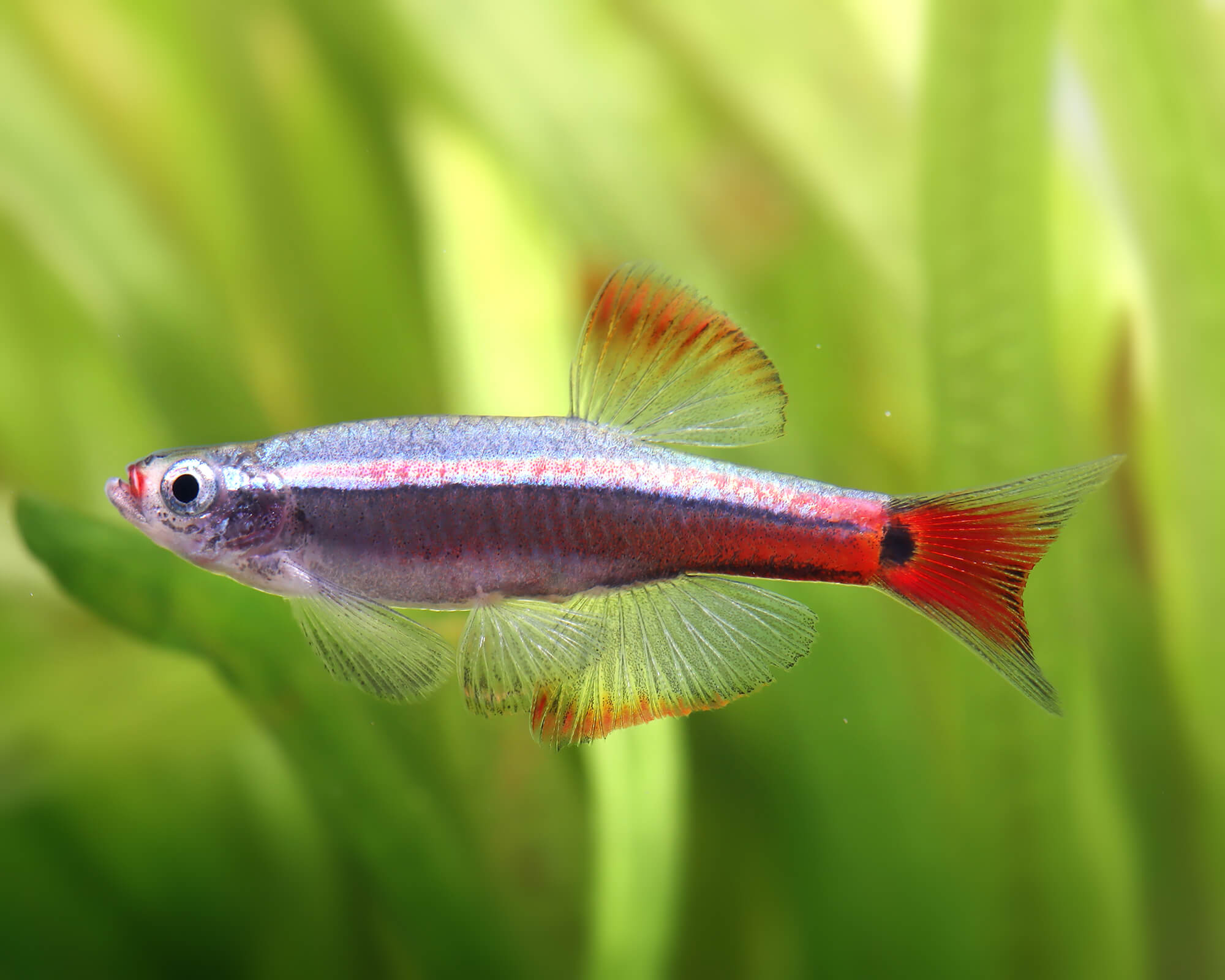
Tanichthys albonubes (Long-fin White Cloud Mountain Minnow)

Overview

The Long-fin White Cloud Mountain Minnow, sometimes referred to as the Meteor Minnow, is a spectacular captive-bred variant of the standard White Cloud Mountain Minnow. It possesses all the hardy, adaptable traits of its wild-type counterpart but is distinguished by its magnificent, flowing fins. Because it thrives in cooler water, it is an ideal candidate for unheated aquariums and heavily planted nano tanks.

Image of cardinalfish veil tanichthys albonubes long fin

Distribution and Habitat

While the standard Tanichthys albonubes originates from the clear, slow-moving streams of the White Cloud Mountain area in Guangdong, China, the long-fin variety is exclusively a product of selective breeding in the aquarium trade. In the wild, their natural habitats are heavily vegetated, sub-tropical waterways with cooler temperatures than typical tropical environments.

Description of Long-fin White Cloud Mountain Minnow

This species is a true gem in the aquarium, combining subtle iridescence with striking finnage.

Body shape:

They possess a slender, streamlined, and torpedo-like body typical of many small cyprinids.

Color:

The body exhibits a bronze to brownish-silver base, highlighted by a prominent iridescent horizontal stripe running from the eye to the caudal peduncle, often shimmering in pink, blue, or silver.

Barbels:

Like other White Cloud Mountain Minnows, they completely lack barbels.

Snout:

The snout is slightly pointed, featuring an upturned, terminal mouth adapted for capturing small insects and zooplankton from the water column.

Eyes:

Their eyes are relatively large, often displaying a faint silvery or reddish rim along the top.

Fins:

This is the defining feature of the long-fin variety. The dorsal, anal, and pelvic fins are significantly elongated and veil-like, often edged with striking bands of white, yellow, and red.

The Tail:

The caudal fin is deeply forked and extended, featuring a distinct, bright red spot at its base that fades into translucent or reddish trailing edges.

Image of cardinalfish veil tanichthys albonubes long fin

Temper

They are exceptionally peaceful and completely harmless to other tank mates, making them a perfect addition to a community setup.

Sociality

Highly gregarious, these minnows are schooling fish that must be kept in groups of at least six, though ten or more is highly recommended to encourage natural behaviors and reduce stress.

Activity

They are very active, constantly darting around the middle and upper levels of the water column. Males frequently engage in harmless, beautiful sparring displays, flaring their long fins to establish dominance and impress females.

Keeping and Caring for Long-fin White Cloud Mountain Minnow

This fish is incredibly hardy and forgiving, making it an excellent choice for beginners, provided their preference for cooler water is respected.

Image of cardinalfish veil tanichthys albonubes long fin

Tank size:

A minimum tank size of 10 gallons is suitable for a small school, though larger tanks offer more swimming space for their active nature.

Water Parameters:

They are adaptable to a wide range of conditions but prefer clean, well-oxygenated water.

Temperature

They thrive in sub-tropical temperatures between 14-22°C (57-72°F). Keeping them in unheated tanks often extends their lifespan and enhances their colors.

pH

A pH range of 6.0 to 8.0 is perfectly acceptable.

Hardness

They tolerate a wide range of water hardness, generally between 5 and 19 dGH.

Ammonia, Nitrite, Nitrate

Ammonia and Nitrite must always be at 0 ppm. Nitrates should be kept below 20 ppm through regular water changes.

Lighting

Moderate lighting is ideal to highlight their iridescent stripes and colorful fin tips, especially when filtered through floating plants.

Water flow

A gentle to moderate water flow mimics their natural stream habitat and encourages their active swimming behavior.

Decorations and Plants

A heavily planted aquarium with a dark substrate, driftwood, and rocks provides the best environment. Floating plants can help dim the light and make them feel secure.

Diet

They are omnivorous micro-predators. In the aquarium, they readily accept high-quality crushed flakes, micro-pellets, and freeze-dried foods. Supplementing their diet with live or frozen foods like daphnia, baby brine shrimp, and bloodworms will keep them in peak condition.

Image of cardinalfish veil tanichthys albonubes long fin

Some Feeding Tips

Feed them small amounts once or twice a day, ensuring they consume everything within a few minutes to prevent water fouling.

Breeding

Breeding is straightforward, as they are continuous egg-scatterers. To maximize fry survival, set up a separate breeding tank with a sponge filter, dim lighting, and plenty of spawning mops or dense moss (like Java Moss). Condition the adults with live foods, and once eggs are scattered, remove the parents to prevent them from eating the eggs and fry.

Conclusion

The Long-fin White Cloud Mountain Minnow is a visually stunning, undemanding, and lively addition to the cold-water aquarium. Their elegant finnage and active schooling dynamics provide endless entertainment, making them a highly rewarding species for aquarists of all skill levels.
Fish info

  • Care level: Easy
  • Temperament: Peaceful
  • Adult size: 4 cm
  • Life expectancy: 3-5 years
  • Fish type: Cyprinid
  • Temperature : 14-22°C
  • pH: 6.0-8.0
  • Color Form: Brown, Red, Silver, White
Leave your comments
Latest on Fishs
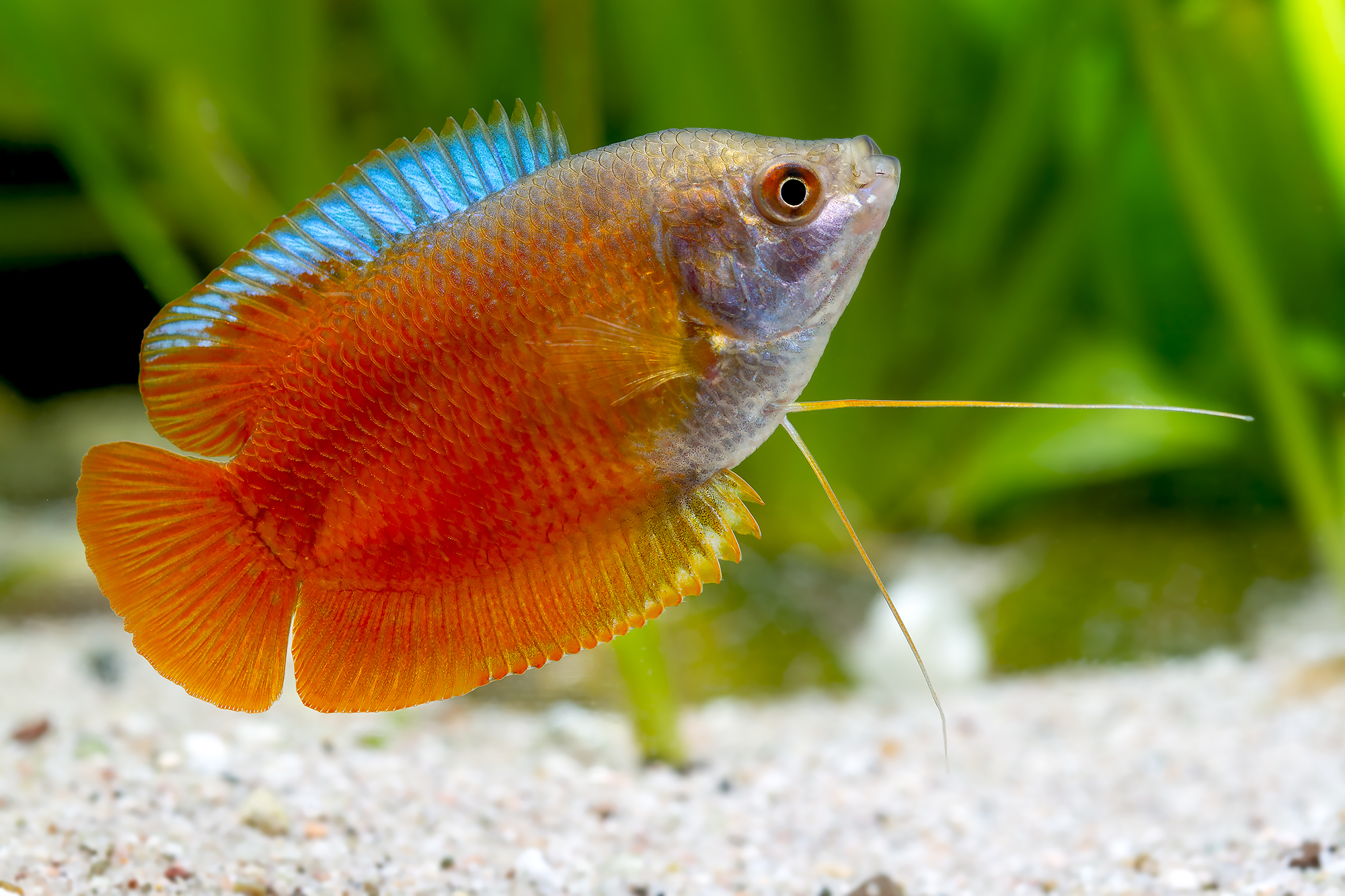
  • Dwarf Gourami Red (Trichogaster lalius)

    Dwarf Gourami Red (Trichogaster lalius)

    Easy - Moderate
    Asian labyrinth fish
    The red dwarf gourami is a selectively bred color form of the dwarf gourami, a small labyrinth fish formerly widely known as Colisa lalia. It is suited to mature, planted community aquariums with gentle water movement and calm tank mates. Males can be territorial, especially when kept with females in confined conditions, so cover, visual barriers, and careful observation are important for a pair.
  • Cockatoo Cichlid Red (Apistogramma cacatuoides)

    Cockatoo Cichlid Red (Apistogramma cacatuoides)

    Moderate
    South American dwarf cichlid
    The Cockatoo Cichlid is a small South American dwarf cichlid valued for its personality, breeding behavior and colorful finnage. Apistogramma cacatuoides is generally adaptable when provided with clean, stable water, cover and a soft substrate. Males are larger and more vividly marked than females, while pairs become territorial around spawning sites. The supplied “red” designation most likely refers to a selectively bred color form; exact strain and sex confirmation cannot be established from the listing alone.
  • Discus (Symphysodon aequifasciatus) Care Guide

    Discus (Symphysodon aequifasciatus) Care Guide

    Difficult
    South American freshwater cichlid
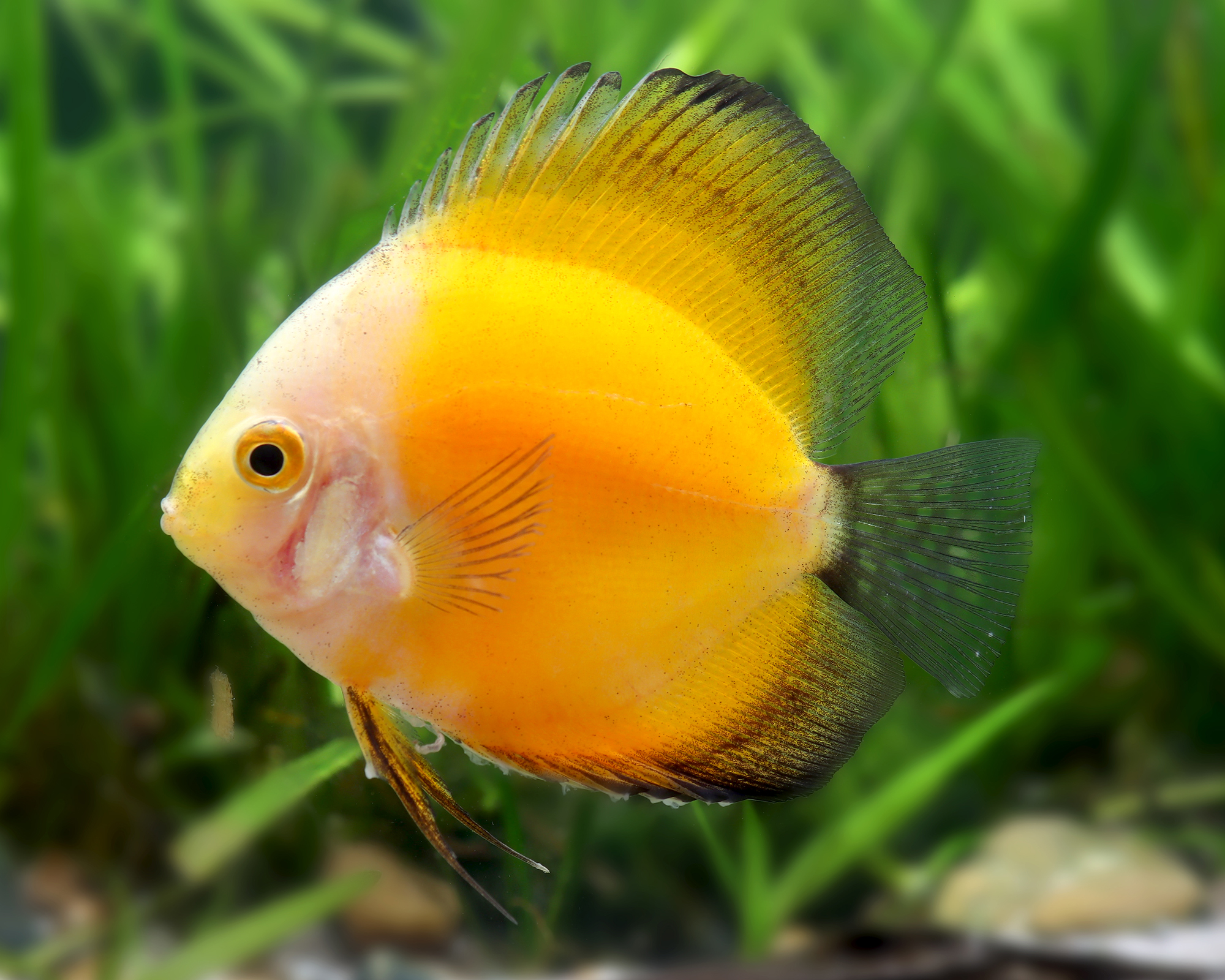
    Symphysodon aequifasciatus is a large, laterally compressed cichlid from the Amazon Basin, valued for its calm behavior and striking disc-shaped body. It requires warm, clean, stable water and careful feeding, making it better suited to experienced aquarists. The supplied images show yellow, orange, red, white and dark color forms; cultivated strains can vary considerably, so exact variety identification from images alone is uncertain. Discus are social fish and generally thrive in groups rather than as isolated specimens.
  • Cape Lopez Killifish (Aphyosemion australe)

    Cape Lopez Killifish (Aphyosemion australe)

    Moderate
    West African non-annual killifish
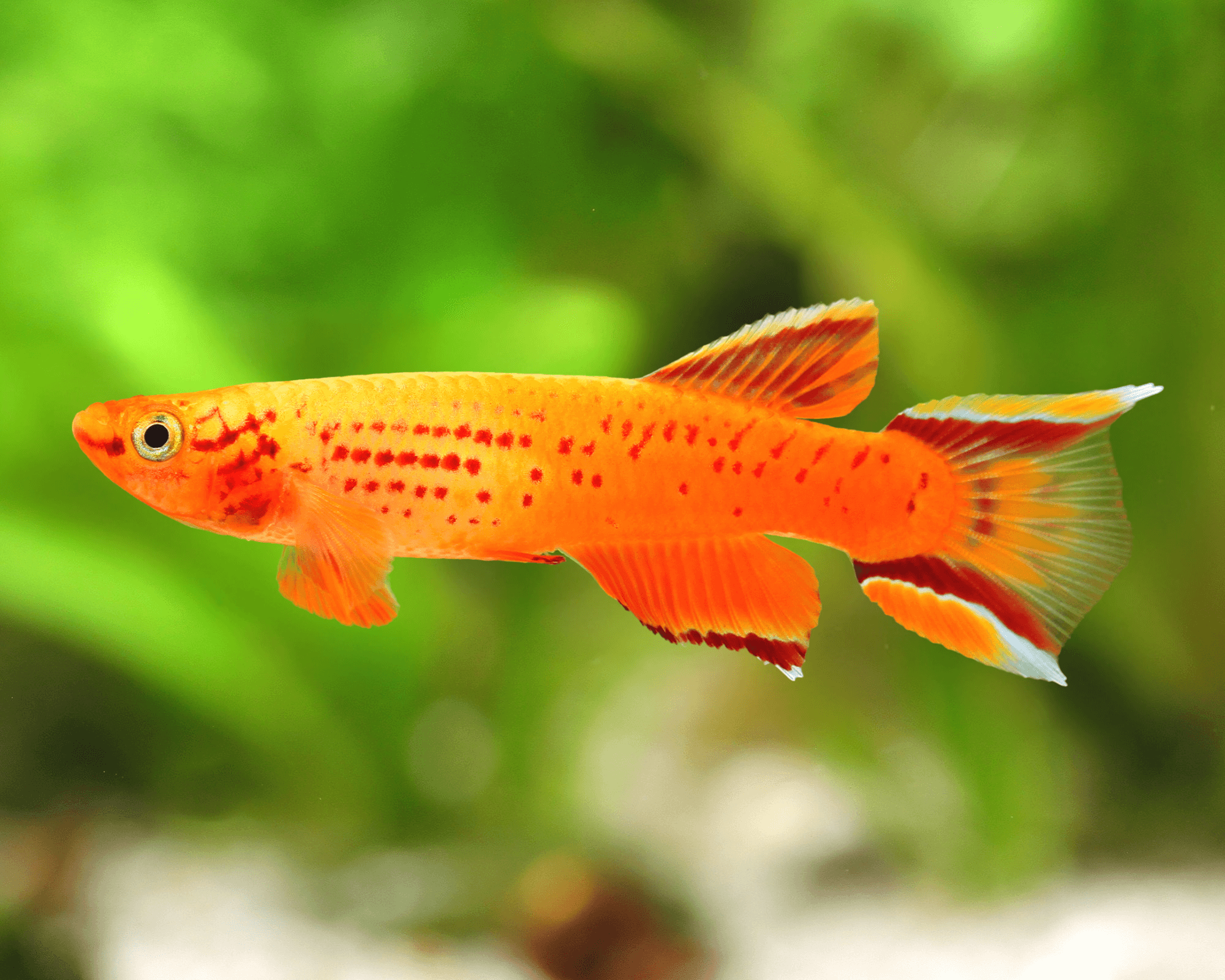
    The Cape Lopez killifish is a small, peaceful West African freshwater fish prized for its patterned body, flowing fins and manageable size. It inhabits slow-moving and temporary waters around coastal Gabon, including the Cape Lopez region. The supplied trade description identifies a pair as “Cape Lopez splendid carpets,” but this wording may describe a commercial strain rather than a formally recognized taxon. The image appears to show an orange form, so exact strain identification should be confirmed with the breeder or supplier.
  • Burton’s Mouthbrooder (Astatotilapia burtoni)

    Burton’s Mouthbrooder (Astatotilapia burtoni)

    Moderate
    East African haplochromine cichlid
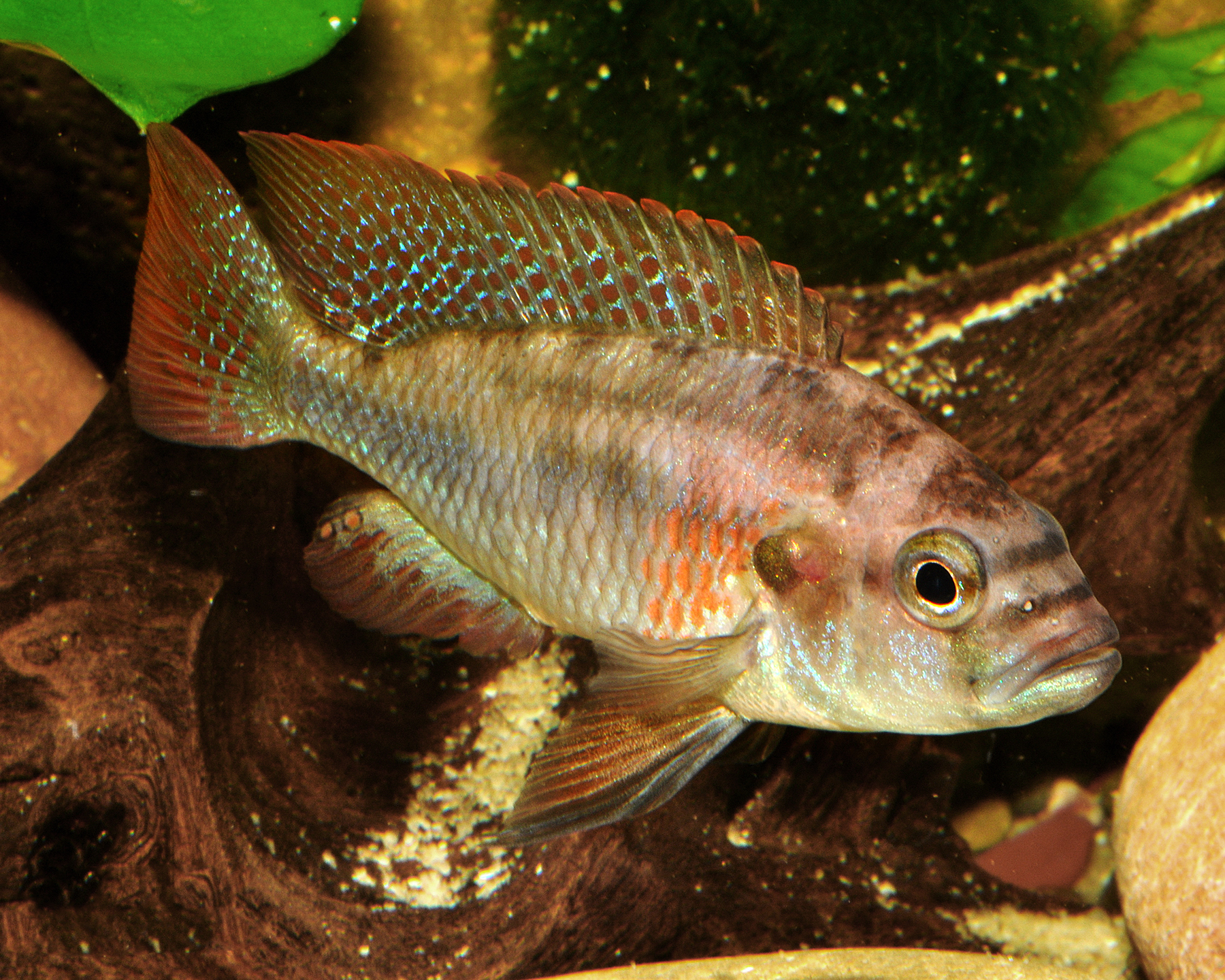
    Burton’s mouthbrooder, Astatotilapia burtoni, is a moderately aggressive East African haplochromine cichlid known for strong social hierarchies and maternal mouthbrooding. Males become more vividly patterned and defend territories, while females are generally less colorful and carry eggs and fry in the mouth. A pair requires a spacious, well-filtered aquarium with rocky cover, alkaline water and carefully selected tank mates. The supplied identification is consistent with Astatotilapia burtoni, although sex and locality form cannot be confirmed from the photographs alone.
  • Cyrtocara moorii (Blue Dolphin Cichlid) Care Guide

    Cyrtocara moorii (Blue Dolphin Cichlid) Care Guide

    Moderate
    Lake Malawi haplochromine cichlid
    Cyrtocara moorii is a large, distinctive haplochromine cichlid from Lake Malawi, recognised for its blue adult coloration and rounded forehead, which becomes more pronounced with age. It is a maternal mouthbrooder and is generally less aggressive than many Malawi mbuna, but its size and territorial breeding behaviour require a spacious aquarium. The supplied images appear consistent with blue C. moorii, although photographs cannot confirm sex, locality, or whether the fish form a true bonded pair.
  • Blue Dwarf Gourami Pair (Trichogaster lalius)

    Blue Dwarf Gourami Pair (Trichogaster lalius)

    Easy - Moderate
    Peaceful labyrinth fish
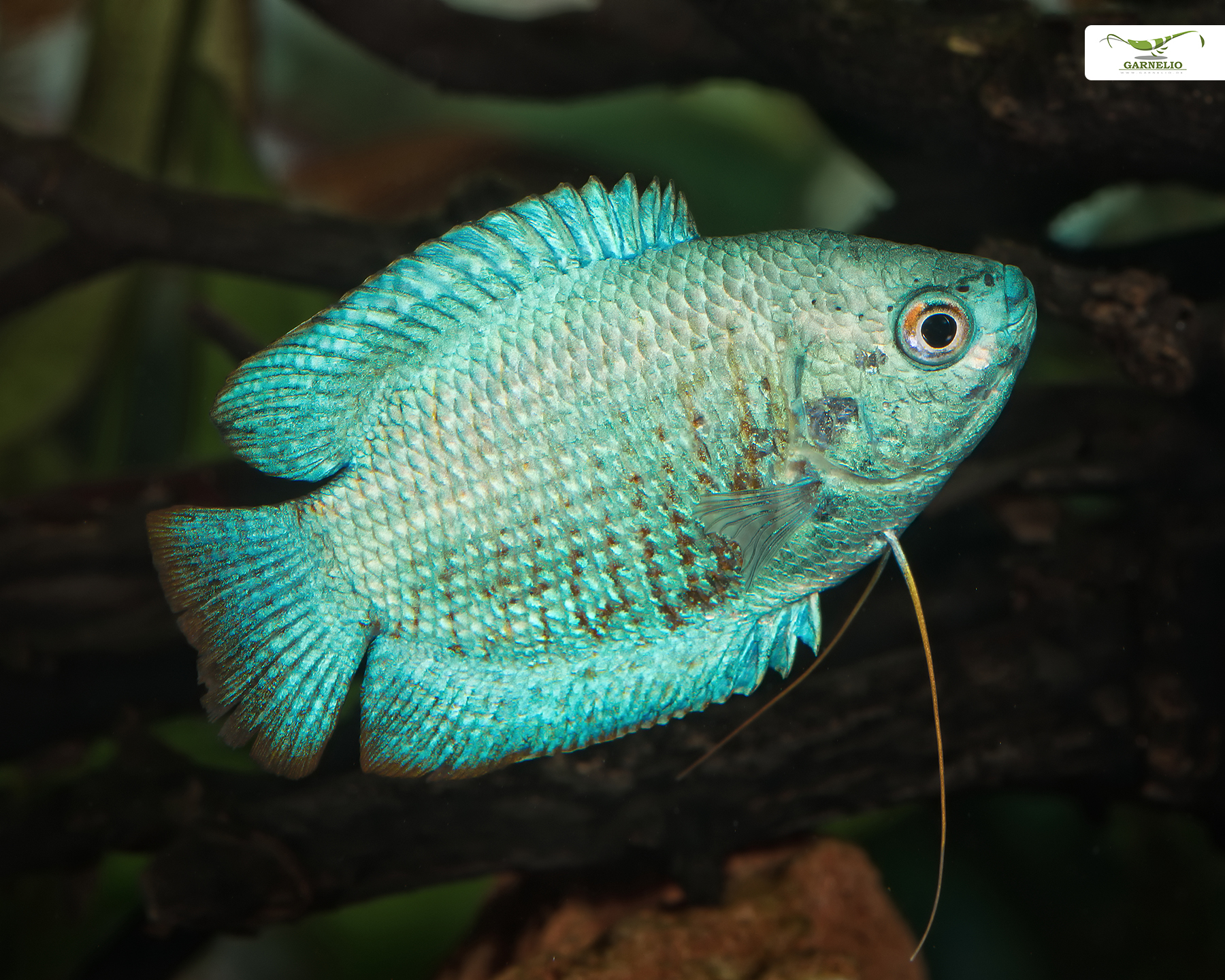
    The blue dwarf gourami is a selectively colored form of a small labyrinth fish native to the Indian subcontinent. It spends much of its time in the upper and middle aquarium, using its specialized labyrinth organ to breathe atmospheric air. Males can become territorial, especially when nesting, so a planted aquarium with calm tank mates, gentle flow, and surface cover is important. The supplied name uses Trichopodus lalius; Trichogaster lalius is the commonly used current combination.
  • Blue Acara (Aequidens pulcher)

    Blue Acara (Aequidens pulcher)

    Moderate
    South American freshwater cichlid
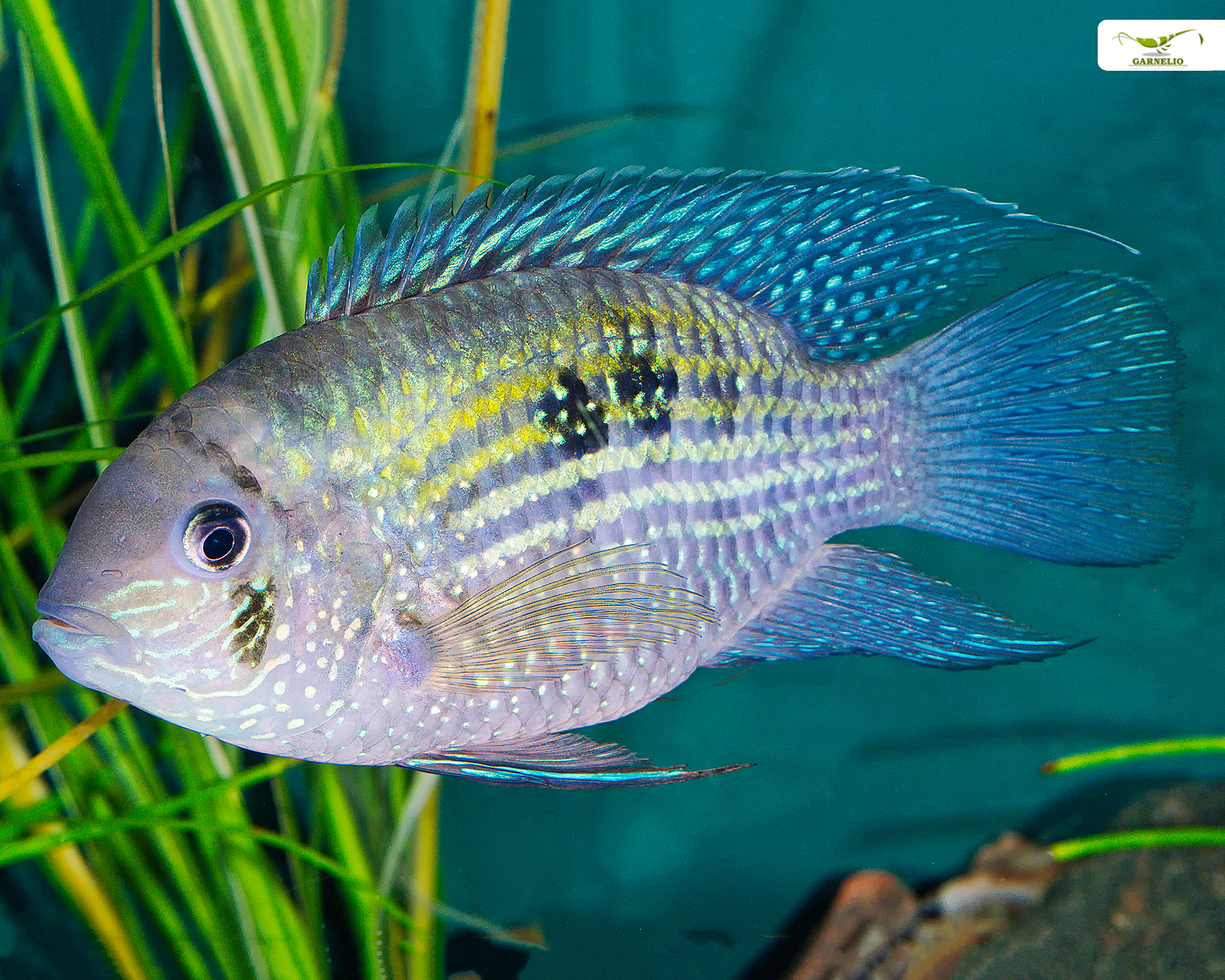
    The supplied label identifies these fish as Blue Acara, Aequidens pulcher, a South American freshwater cichlid often placed in the genus Andinoacara in current aquarium literature. The photograph is consistent with a blue acara, although a definitive identification cannot be confirmed from one image alone. This pair requires a spacious aquarium, stable water quality, hiding places and careful observation during breeding, when territorial behavior becomes stronger.
  • Julidochromis transcriptus: Black-and-White Slender Cichlid

    Julidochromis transcriptus: Black-and-White Slender Cichlid

    Moderate
    Lake Tanganyika rock-dwelling cichlid
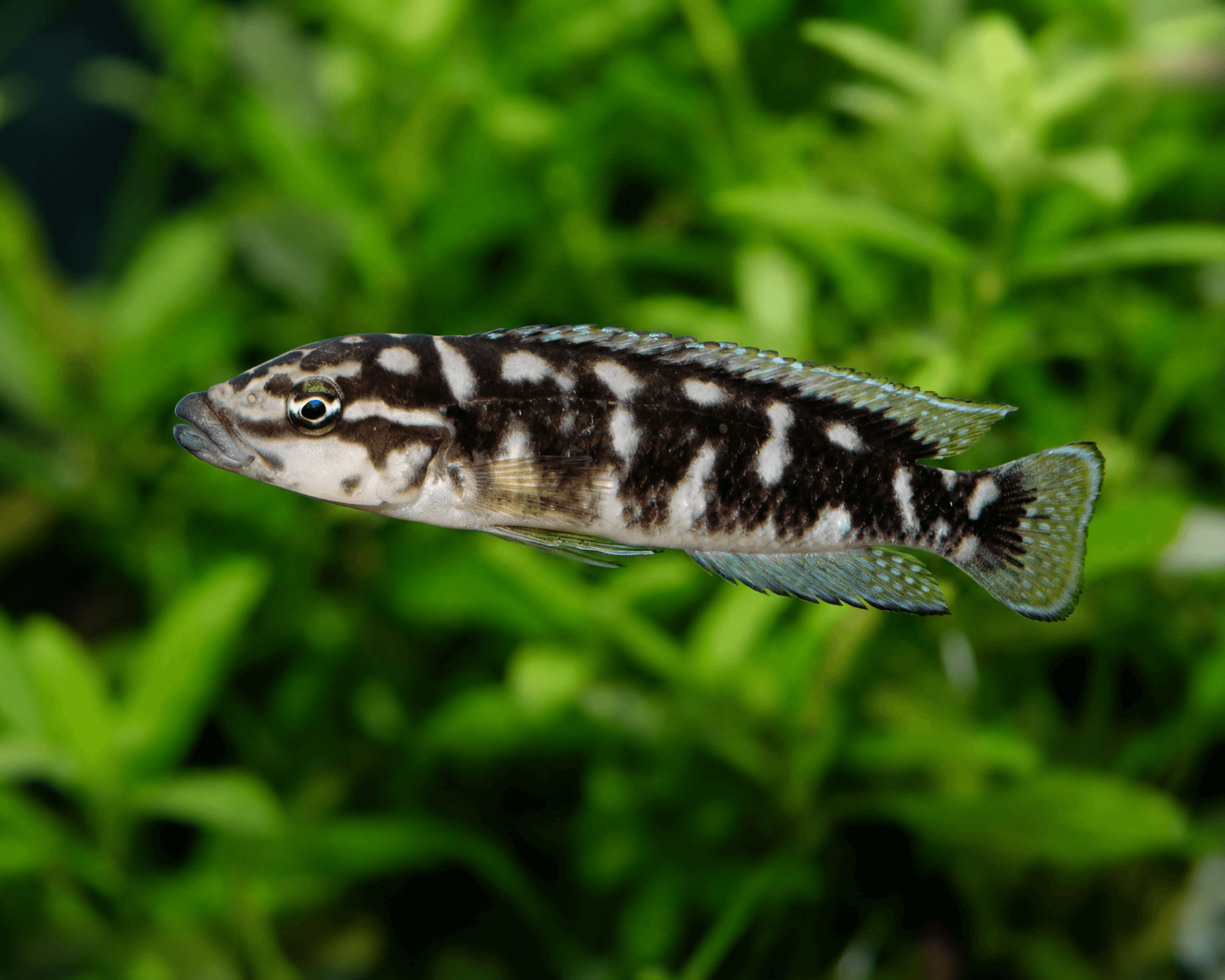
    Julidochromis transcriptus is a small rock-dwelling cichlid from Lake Tanganyika, recognized by its compact, elongated body and irregular black-and-white pattern. It is a territorial cave dweller that is best kept as an established pair in a carefully structured aquarium. The supplied fish are identified as a DNZ pair, although sex, collection locality, and precise geographic form cannot be verified from the supplied material alone.
  • Azur Cichlid (Sciaenochromis fryeri) Care Guide

    Azur Cichlid (Sciaenochromis fryeri) Care Guide

    Moderate
    Lake Malawi haplochromine cichlid
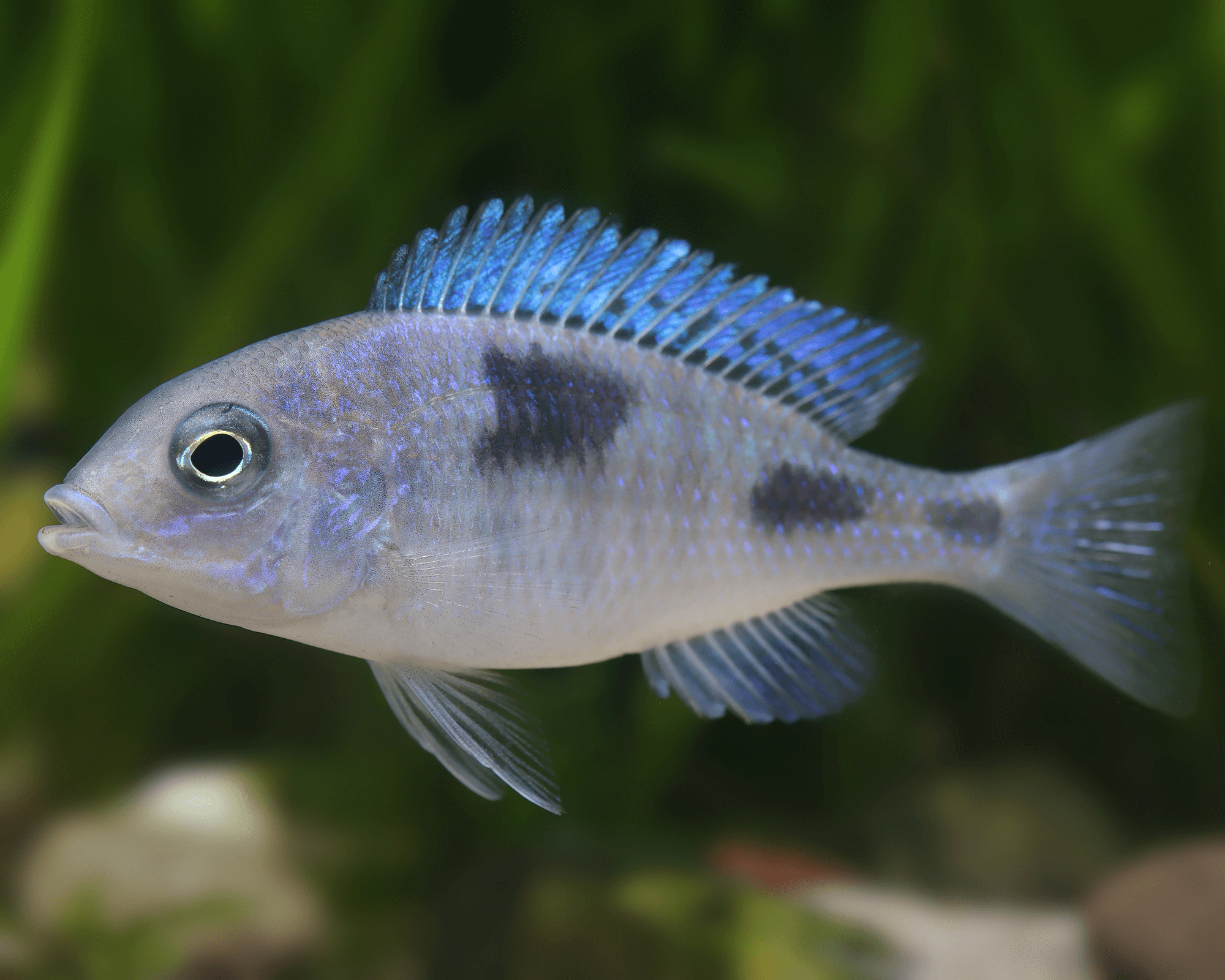
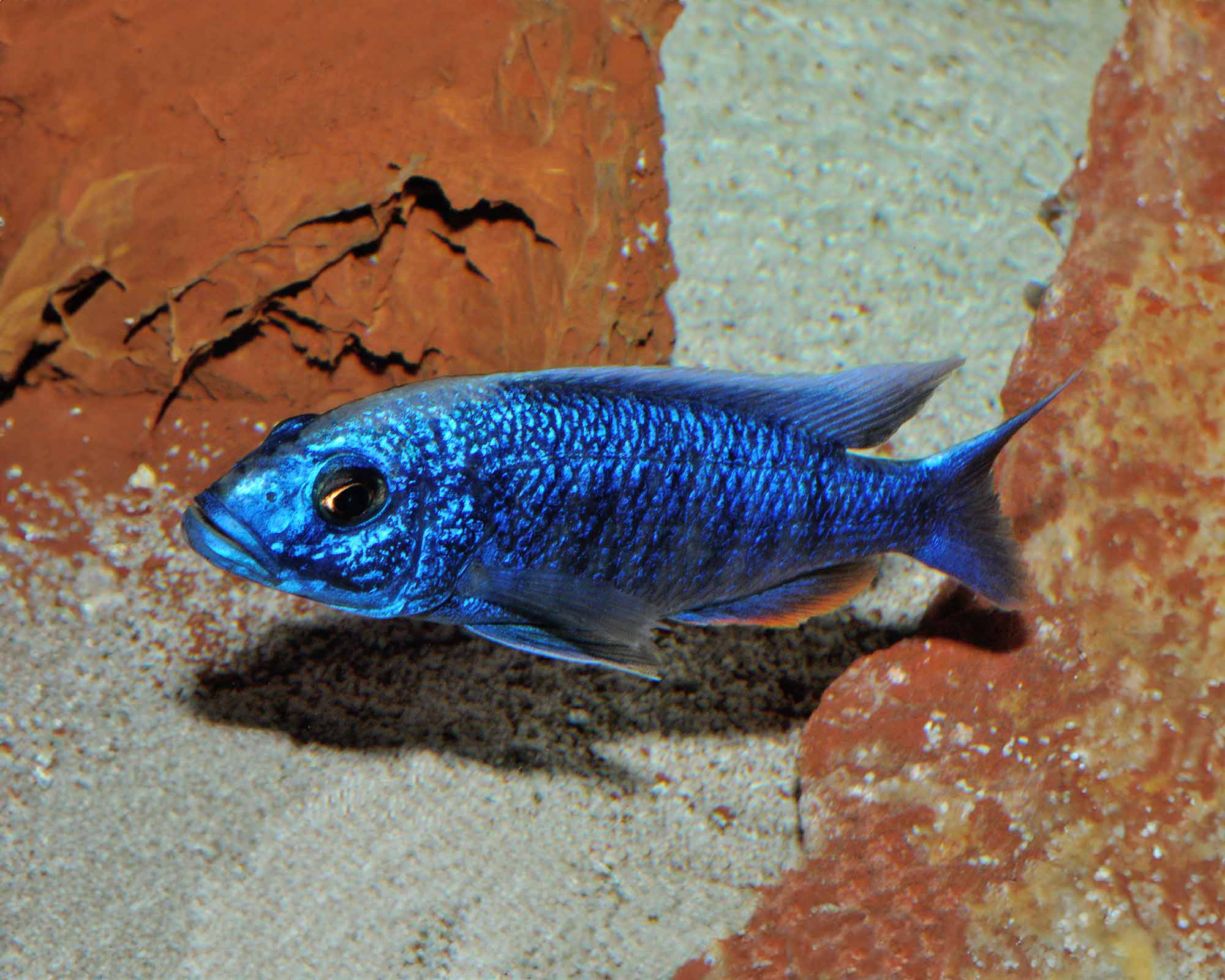
    The Azur cichlid is commonly sold as Sciaenochromis fryeri, a predatory haplochromine cichlid from Lake Malawi. Mature males develop vivid electric-blue coloration, while females and juveniles are generally less intensely colored. This fish is moderately aggressive and needs a spacious aquarium with rocky structure, alkaline, mineral-rich water, and carefully selected tank mates. The supplied source describes a DNZ pair, but sex and exact locality cannot be confirmed from the images alone. Identification confidence is therefore good but not absolute.
  • Marble Angelfish (Pterophyllum scalare)

    Marble Angelfish (Pterophyllum scalare)

    Moderate
    South American freshwater cichlid
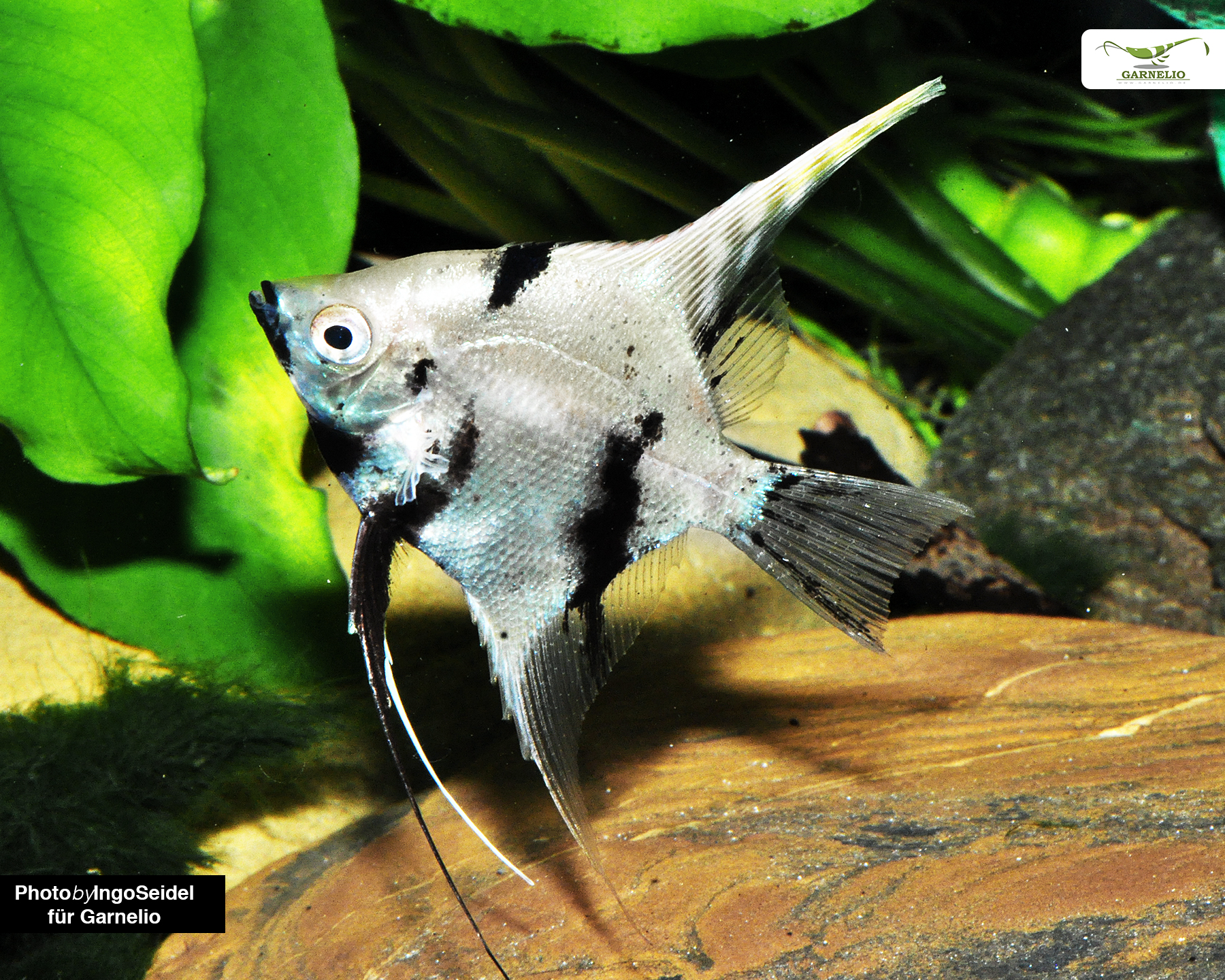
    The marble angelfish is a captive-bred color form of Pterophyllum scalare, a tall-bodied South American cichlid valued for its elegant fins and distinctive irregular black patterning. It needs a mature, spacious aquarium with excellent water quality, warm water and suitable tank mates. Although generally manageable, adults establish territories and may become assertive when pairing or spawning. The supplied source identifies two marble angelfish; exact lineage and strain details cannot be confirmed from the available information.
  • Gold Angelfish, Pterophyllum scalare

    Gold Angelfish, Pterophyllum scalare

    Moderate
    Freshwater South American cichlid
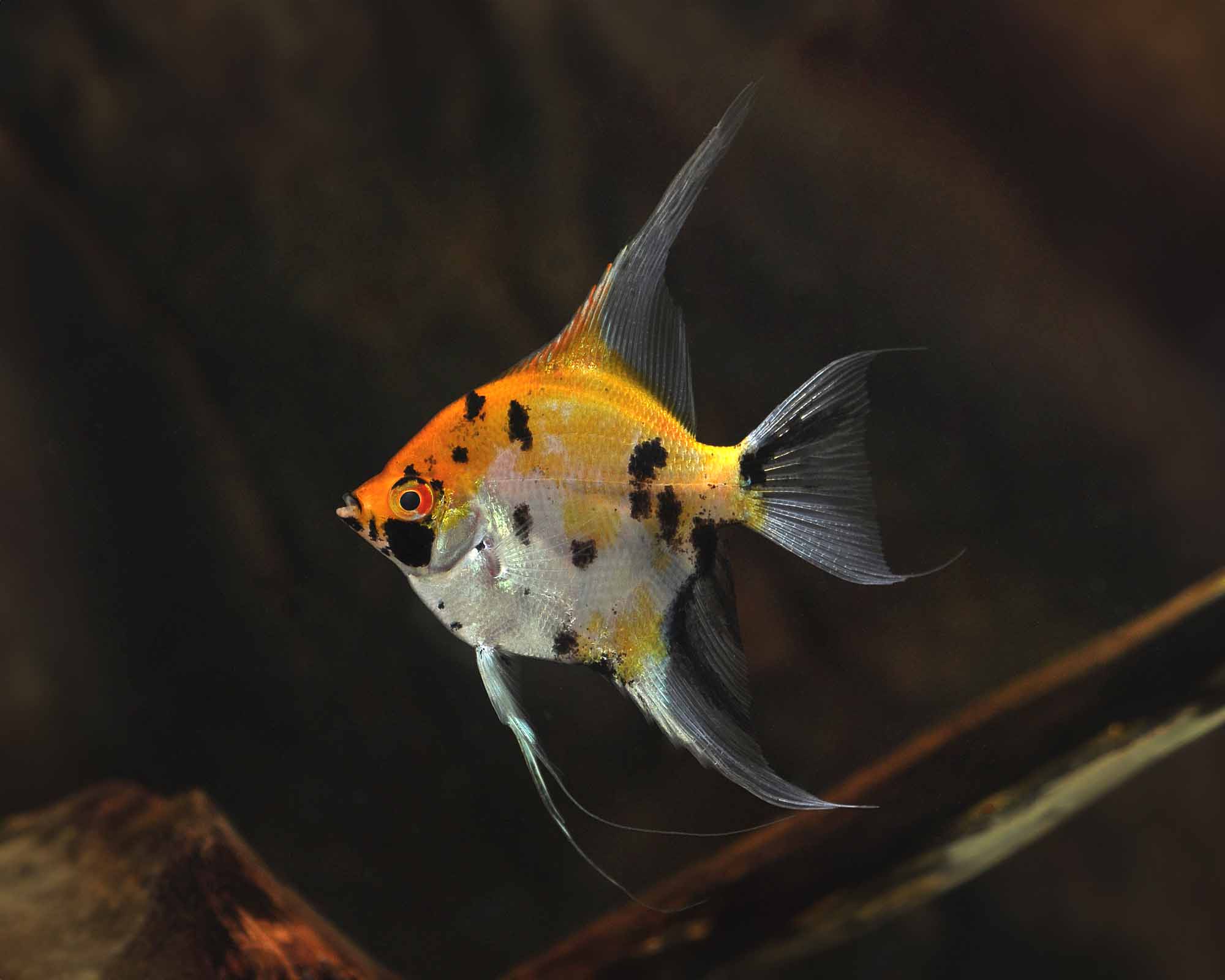
    The Gold Angelfish is an ornamental colour form of Pterophyllum scalare, a tall-bodied South American cichlid valued for its graceful movement and parental care. It needs a mature, spacious aquarium with substantial vertical clearance, stable warm water and carefully chosen tank mates. The supplied source identifies two fish as Gold Angelfish, although the accompanying images show several angelfish colour and fin forms, so the exact appearance of the supplied specimens cannot be confirmed from the images alone.
  • Zebra Angelfish (Pterophyllum scalare)

    Zebra Angelfish (Pterophyllum scalare)

    Moderate
    South American freshwater cichlid
    The Zebra Angelfish is a selectively bred form of Pterophyllum scalare, recognised by a silvery body with several dark vertical bars and the tall, laterally compressed shape typical of freshwater angelfish. The supplied images also show other angelfish colour forms, so the exact appearance of the listed pair cannot be confirmed from the image set alone. This South American cichlid is generally manageable for experienced community keepers, but its size, territorial breeding behaviour and need for a tall aquarium should be planned for carefully.
  • Black Angelfish (Pterophyllum scalare)

    Black Angelfish (Pterophyllum scalare)

    Moderate
    South American freshwater cichlid
    The supplied record identifies two black angelfish, most likely a domestic color form of Pterophyllum scalare. The photographs show several angelfish color patterns, so they should not be treated as proof that every pictured fish is black or that all belong to the same strain. Black angelfish retain the tall, laterally compressed body and extended fins typical of freshwater angelfish. They need a tall, mature aquarium, stable warm water, a varied diet, and carefully selected tank mates.
  • White Marble Angelfish (Pterophyllum scalare)

    White Marble Angelfish (Pterophyllum scalare)

    Moderate
    Freshwater cichlid
    The white marble angelfish is a selectively bred aquarium color form of Pterophyllum scalare, a tall-bodied South American cichlid valued for its elegant fins and distinctive irregular dark marbling. It is generally peaceful when young but can become territorial, especially when paired for spawning. Successful care depends on a tall aquarium, excellent water quality, suitable tank mates, and a varied carnivorous-omnivorous diet. The exact genetic strain shown cannot be confirmed from photographs alone.
  • Freshwater Angelfish Mix (Pterophyllum scalare)

    Freshwater Angelfish Mix (Pterophyllum scalare)

    Moderate
    Freshwater cichlid
    Freshwater angelfish are tall-bodied South American cichlids valued for their graceful movement and wide range of captive color forms. The supplied source identifies a mixed group as Pterophyllum scalare; the photographs show several forms, including striped, black, orange, white, silver and blue-toned fish. They are manageable for experienced beginners, but their adult height, territorial breeding behavior and tendency to eat small tank mates require thoughtful aquarium planning.