
AquaLibs presents AquaRank Discover the world’s leading aquascapers

Explore transparent rankings built from published results across the world’s leading aquascaping contests.

The Mouth-Size Test: Choosing Planted-Aquarium Companions Around Shrimplet Survival

The Mouth-Size Test: Choosing Planted-Aquarium Companions Around Shrimplet Survival

A planted aquarium can look peaceful while still being dangerous to newborn shrimp. Adult Neocaridina may graze openly beside small fish, yet their newly hatched young can disappear within hours. The key question is not simply whether a tank mate is ...
A Layered Look for Planted Aquariums: Match Texture, Scale, and Color to Your Livestock

A Layered Look for Planted Aquariums: Match Texture, Scale, and Color to Your Livestock

A planted aquarium can contain plenty of color and still look shallow. The usual problem is not a lack of red leaves or bright livestock; it is that every plant has the same visual weight. Fine stems, broad leaves, low carpets, moss, open water, and ...
The Fish You Choose Sets the Chore List: Feeding and Bioload in a Planted Aquarium

The Fish You Choose Sets the Chore List: Feeding and Bioload in a Planted Aquarium

A planted aquarium can look like a self-cleaning ecosystem, but every fish still turns food into waste, and every feeding decision affects water quality. The most useful question is not which species looks best beside your plants. It is which livesto...
A Snail Census for Planted Tanks: Match Reproduction to Food, Space, and Tank Mates

A Snail Census for Planted Tanks: Match Reproduction to Food, Space, and Tank Mates

A few aquarium snails can be useful residents, but a sudden wave of juveniles changes the maintenance needs of a planted aquarium. The solution is not always removing every snail. First determine what is driving reproduction: excess food, decaying pl...
Fresh from the rankings

Latest works from the AquaRank Top 300

A rotating selection from the newest locally archived contest works created by the world’s Top 300 aquascapers.

Aquarium Library

  • All
  • Plant
  • Fish
  • Shrimp
  • Snail

When Minimalism Is Harder: What 2026 Iwagumi Entries Reveal About Competition-Ready Design

Iwagumi looks simple because it removes visual clutter. In practice, that restraint makes every ston...

Why CIAC 2026 Puts Plant Condition Ahead of Aquascape Drama

The published scoring structure for the CIPS International Aquascaping Contest makes one priority cl...

The Art of Thai Aquascape 2026: What a Public Aquascaping Festival Can Teach Tank Builders

The Art of Thai Aquascape 2026 will turn the Bangkok Art and Culture Centre into a public showcase f...

EAPLC 2026 Aquascape Lessons by Tank Size: From Nano Focal Points to Large-Scale Perspective

The official EAPLC 2026 results offer more than a list of category winners. They provide useful case...

AGA 2026 Results: Chuanwei Yu Wins Best of Show

Chuanwei Yu (余传威) of China has won Best of Show at the 2026 AGA International Aquascaping Contest wi...

Spain at IAPLC 2026: Roberto Buenadicha’s Forest and the Space Between Trunks

Roberto Buenadicha’s aquarium is the only Spanish work in the published ranks 1–300. Its slender dar...
Top 300 spotlight

AquaRank Top 300

Explore AquaRank
Taxiphyllum sp. 'Flame' (Flame Moss)

Introduction to Flame Moss

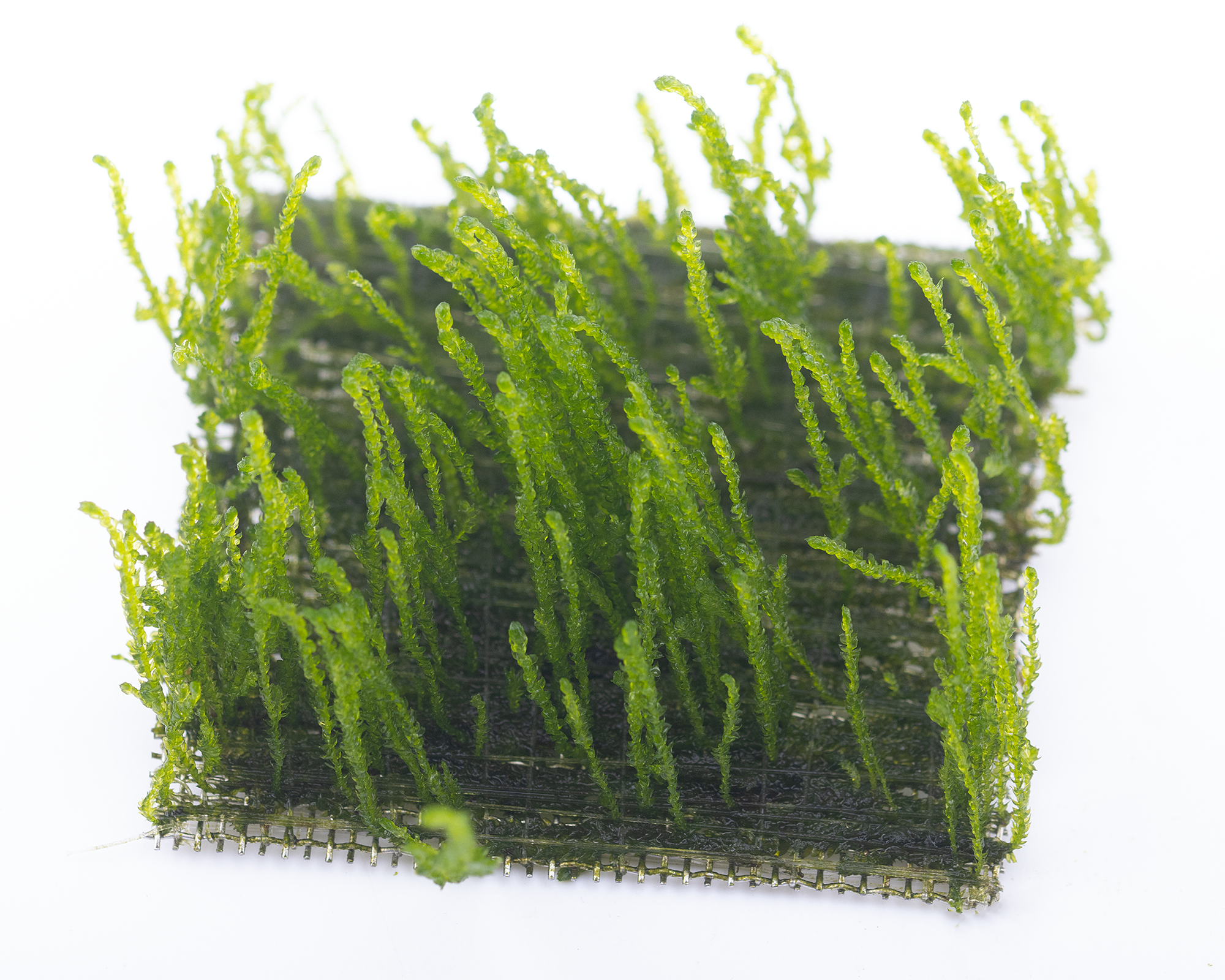
Taxiphyllum sp. 'Flame', widely recognized as Flame Moss, is a distinct and highly sought-after moss in the aquarium hobby. Unlike other mosses that grow outwards or downwards, Flame Moss grows strictly upwards in twisting, spiraling shoots that perfectly mimic the appearance of a vibrant green fire.
Image of Taxiphyllum sp Flame Moss

Aquascaping Application

Because of its unique vertical growth pattern, Flame Moss is best utilized by attaching it to hardscape elements such as driftwood branches or stones. When tied down or glued, it will slowly form dense, upright tufts. It is an excellent choice for creating the illusion of miniature forests or adding textured accents to the aquascape.

Care and Maintenance

This moss is incredibly undemanding, making it suitable for beginners. It thrives in low to medium light and does not require injected CO2, though supplementation will encourage denser and faster growth. Regular pruning by simply trimming the tops will help maintain its shape and promote thicker, bushier growth at the base.
Plant info

  • Colors: Green, Dark green
  • Difficulty: Easy
  • Origin: Asia
  • Usage: On rock or root
  • Type: Moss
  • Growth rate: Slow
  • Height: 3 - 10 cm
  • Light demand: Low
  • CO2: Low
Leave your comments
Latest on Plants
  • Hemianthus micranthemoides (Pearl weed)

    Hemianthus micranthemoides (Pearl weed)

    Medium
    Middleground
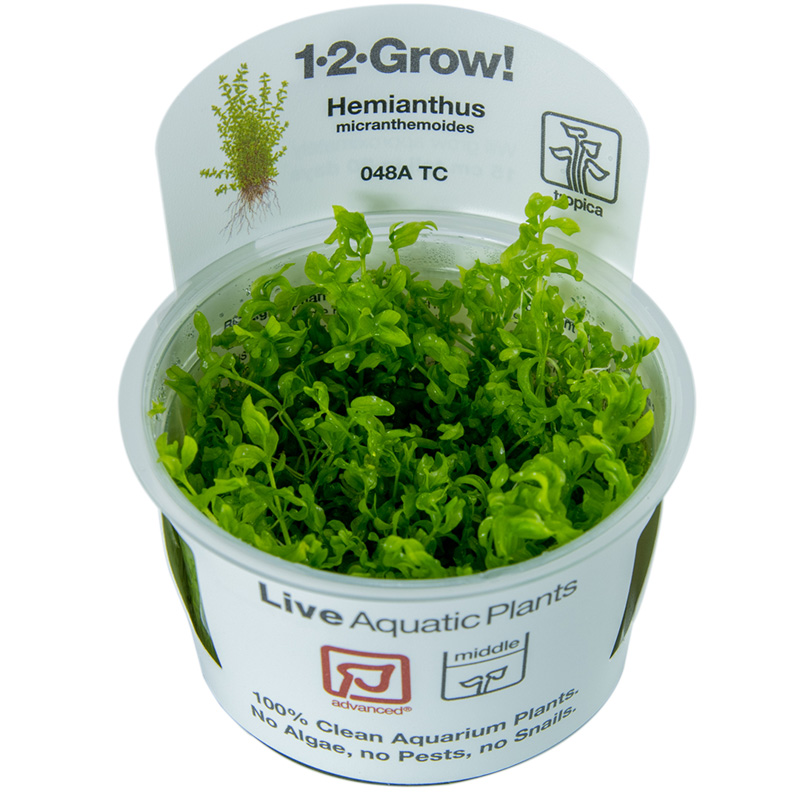
    Hemianthus micranthemoides is a small, fast-growing stem plant used for dense midground groups or a trimmed foreground. Its narrow, bright green leaves form compact cushions under strong light and adequate carbon dioxide, while lower light encourages more open, upward growth. The trade name and identification should be treated cautiously because this plant has been confused with closely related Micranthemum species in the aquarium trade.
  • Monosolenium tenerum (Zartes Lebermoos)

    Monosolenium tenerum (Zartes Lebermoos)

    Medium
    On rock or root
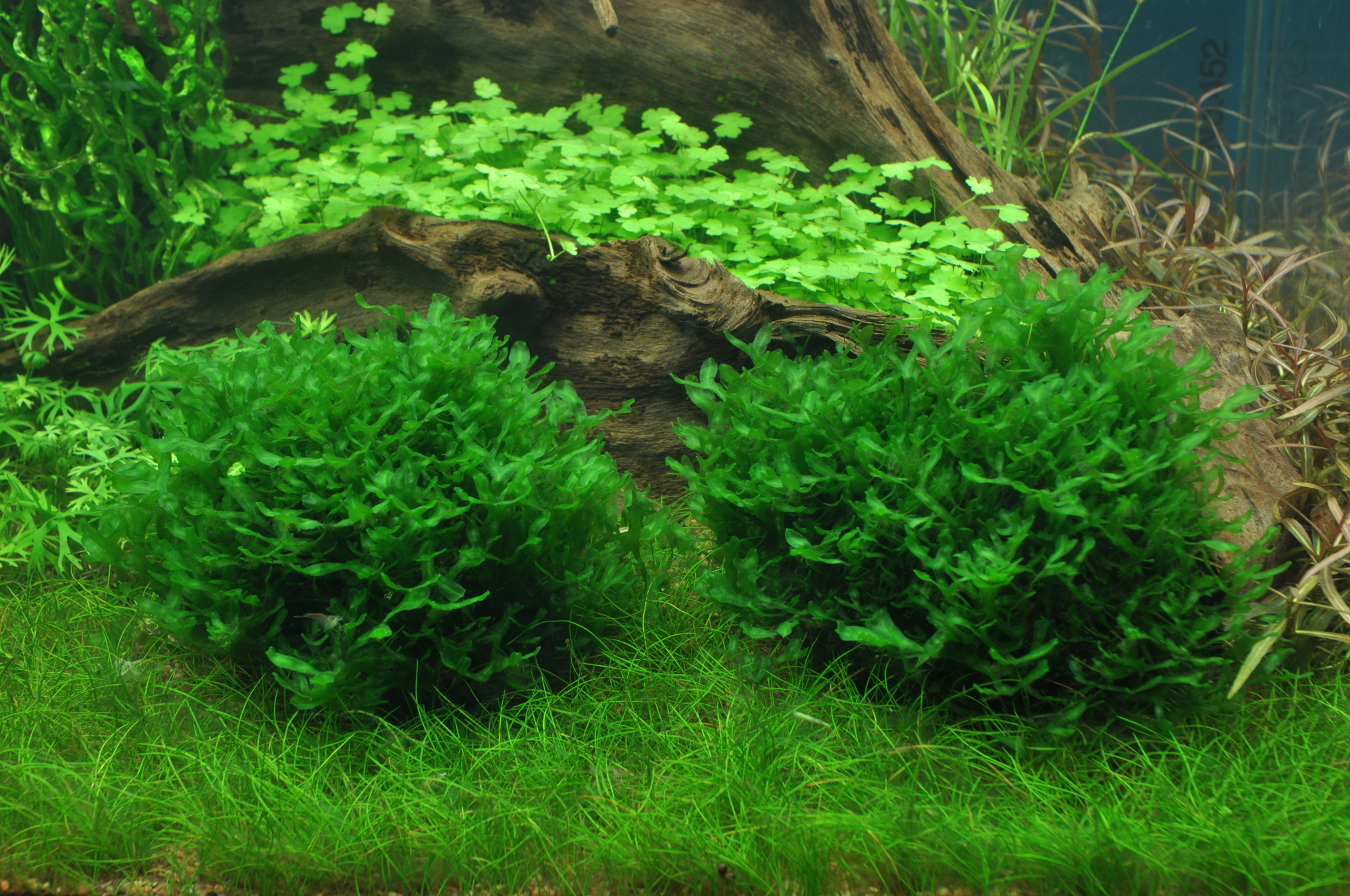
    Monosolenium tenerum is a delicate aquatic liverwort with broad, repeatedly branched green thalli. It forms loose to dense cushions and is most effective when attached to porous rock or aquarium wood rather than buried in substrate. The supplied product label supports this identification, although liverworts can be difficult to distinguish from one another from photographs alone. Stable water conditions, moderate light and a steady carbon supply help maintain compact, healthy growth.
  • Eriocaulon cinereum (Wool stem)

    Eriocaulon cinereum (Wool stem)

    Advanced
    Foreground
    Eriocaulon cinereum is a small rosette-forming aquatic plant with narrow green leaves and distinctive slender flower stalks. It is a demanding species that generally performs best in soft, slightly acidic water, nutrient-rich substrate, strong light and reliable carbon dioxide supplementation. The supplied label supports the identification, although cultivated Eriocaulon plants can be difficult to distinguish without flowers or specialist examination.
  • Hygrophila polysperma 'White' (White water wisteria)

    Hygrophila polysperma 'White' (White water wisteria)

    Easy
    Background
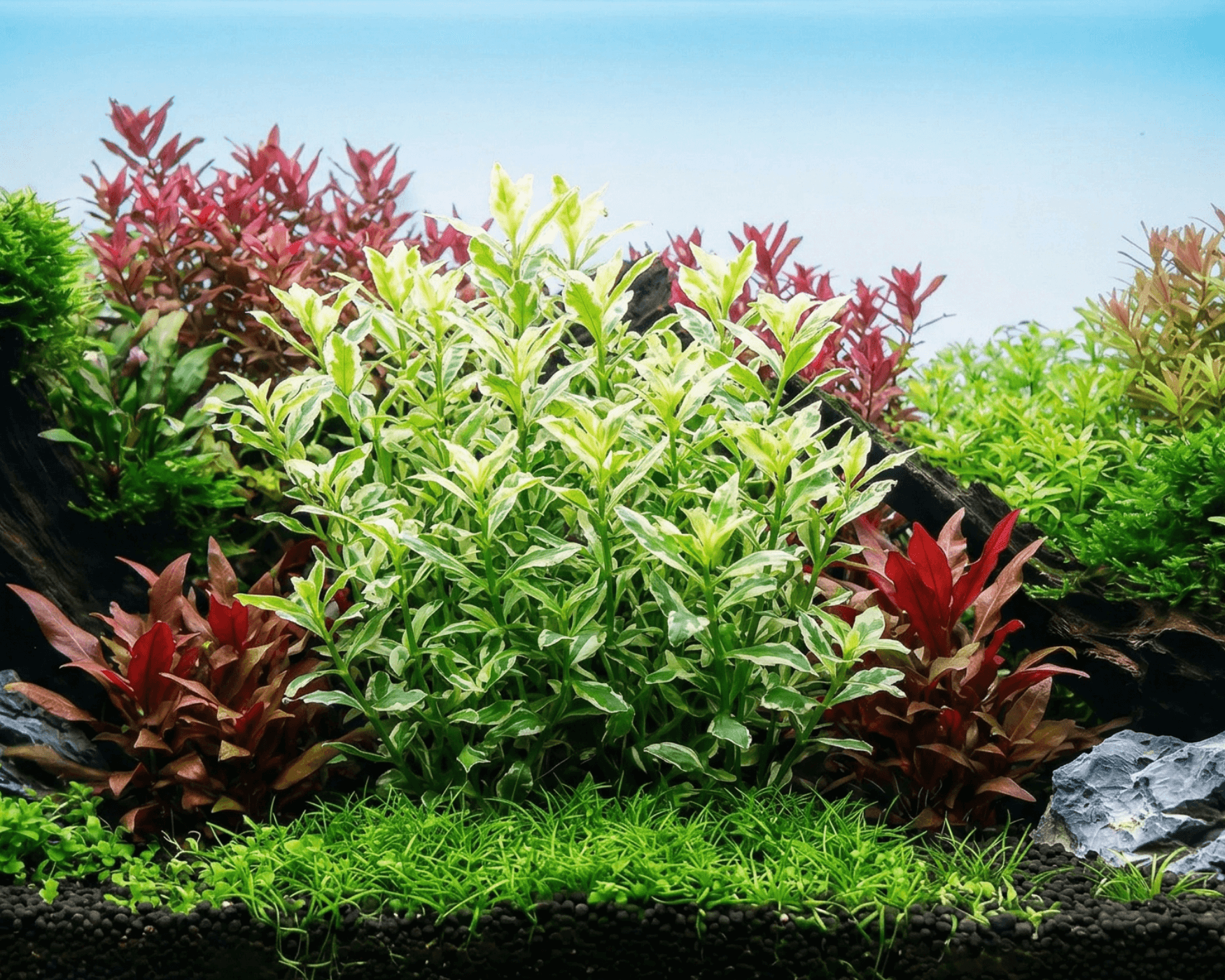
    Hygrophila polysperma 'White' is a variegated aquarium stem plant sold under this cultivar name. Its narrow leaves show irregular pale green to white areas, while new growth may appear more yellow-green. The supplied label supports identification as Hygrophila polysperma 'White', although cultivar names and appearance can vary between growers. It grows quickly under suitable conditions and is best maintained by regular trimming and replanting of healthy stem cuttings.
  • Vesicularia ferriei 'Weeping' (Weeping Moss)

    Vesicularia ferriei 'Weeping' (Weeping Moss)

    Easy
    On rock or root
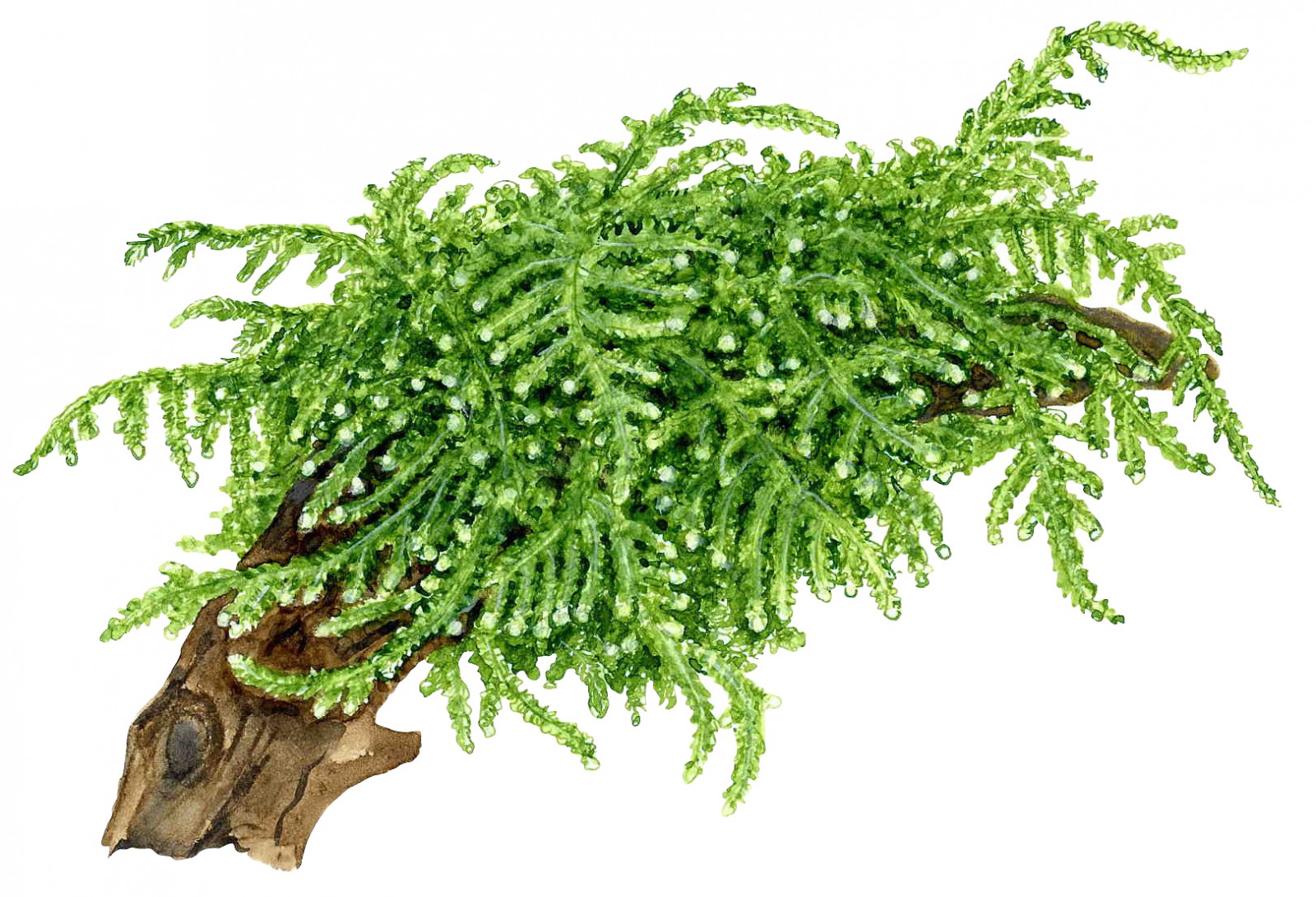
    Weeping Moss is a cultivated aquarium moss sold under the name Vesicularia ferriei 'Weeping'. Its pendant, branching shoots form a soft, trailing cover over wood and rock rather than a flat carpet. It is generally undemanding, but clean water, moderate circulation and regular trimming help maintain an attractive shape. The exact distinction between this commercial form and other similar Vesicularia mosses can be difficult from photographs alone, so the identification here follows the supplied product label.
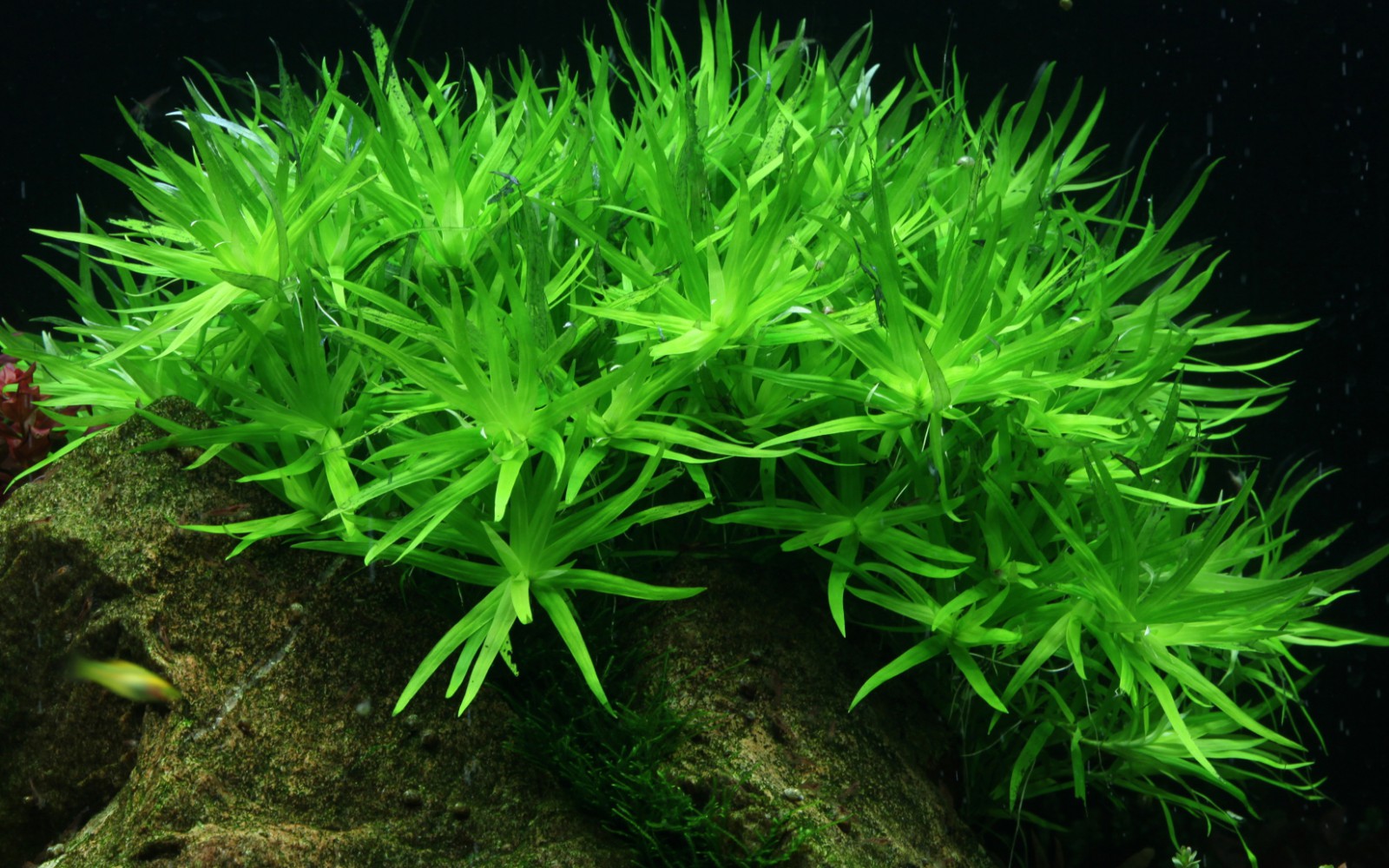
  • Heteranthera zosterifolia (Stargrass)

    Heteranthera zosterifolia (Stargrass)

    Easy
    Middleground
    Heteranthera zosterifolia is a fast-growing South American stem plant commonly known as stargrass. It forms dense, bright green shoots with narrow leaves arranged around the stems, making it useful for filling the middle or background of a planted aquarium. The supplied label identifies this plant as Heteranthera zosterifolia, and the pictured morphology is consistent with that identification, although confirmation from flowers or a verified specimen is not available.
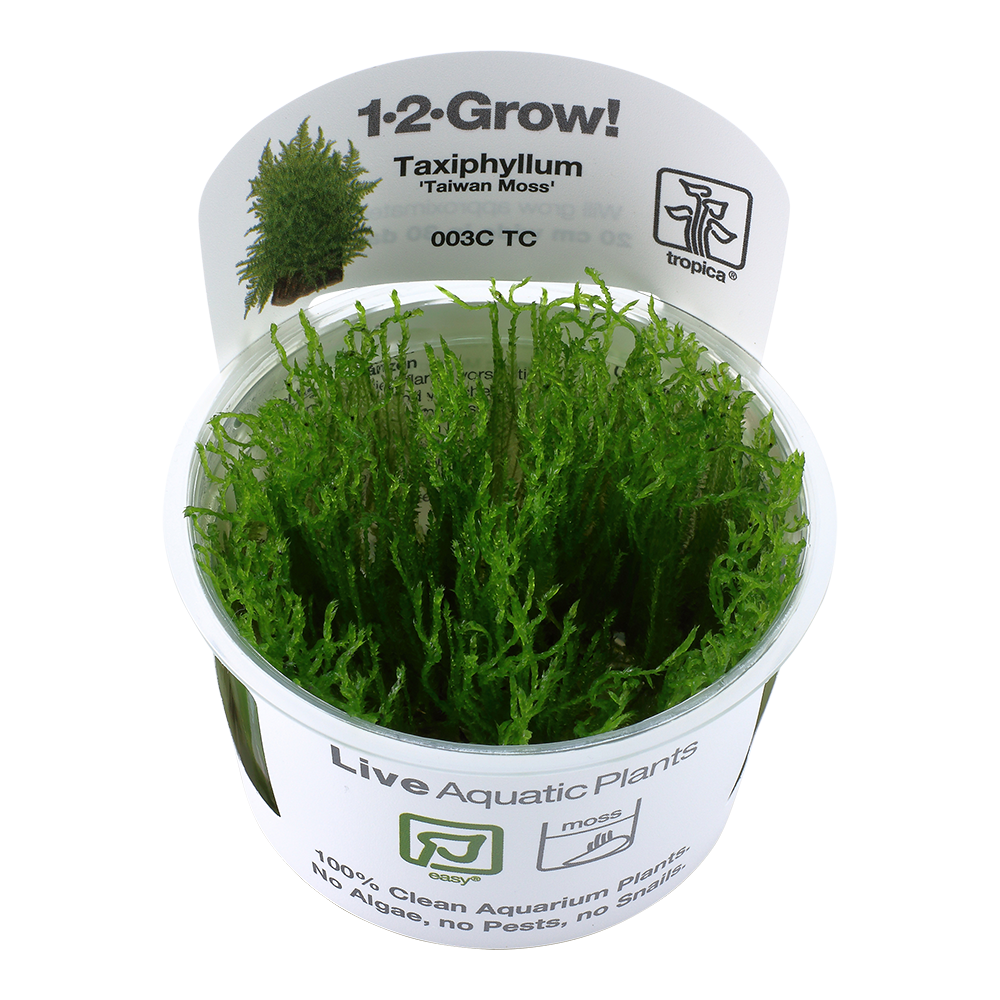
  • Taxiphyllum alternans (Taiwan Moss)

    Taxiphyllum alternans (Taiwan Moss)

    Easy
    On rock or root
    Taiwan Moss is a finely branched aquatic moss commonly traded as Taxiphyllum alternans. It forms bright to medium green, upright and somewhat feathery growth that can create texture on hardscape. The commercial name is well established, but moss identification from appearance alone can be difficult, so this listing should be treated as a conservative identification rather than a definitive specimen-level determination.
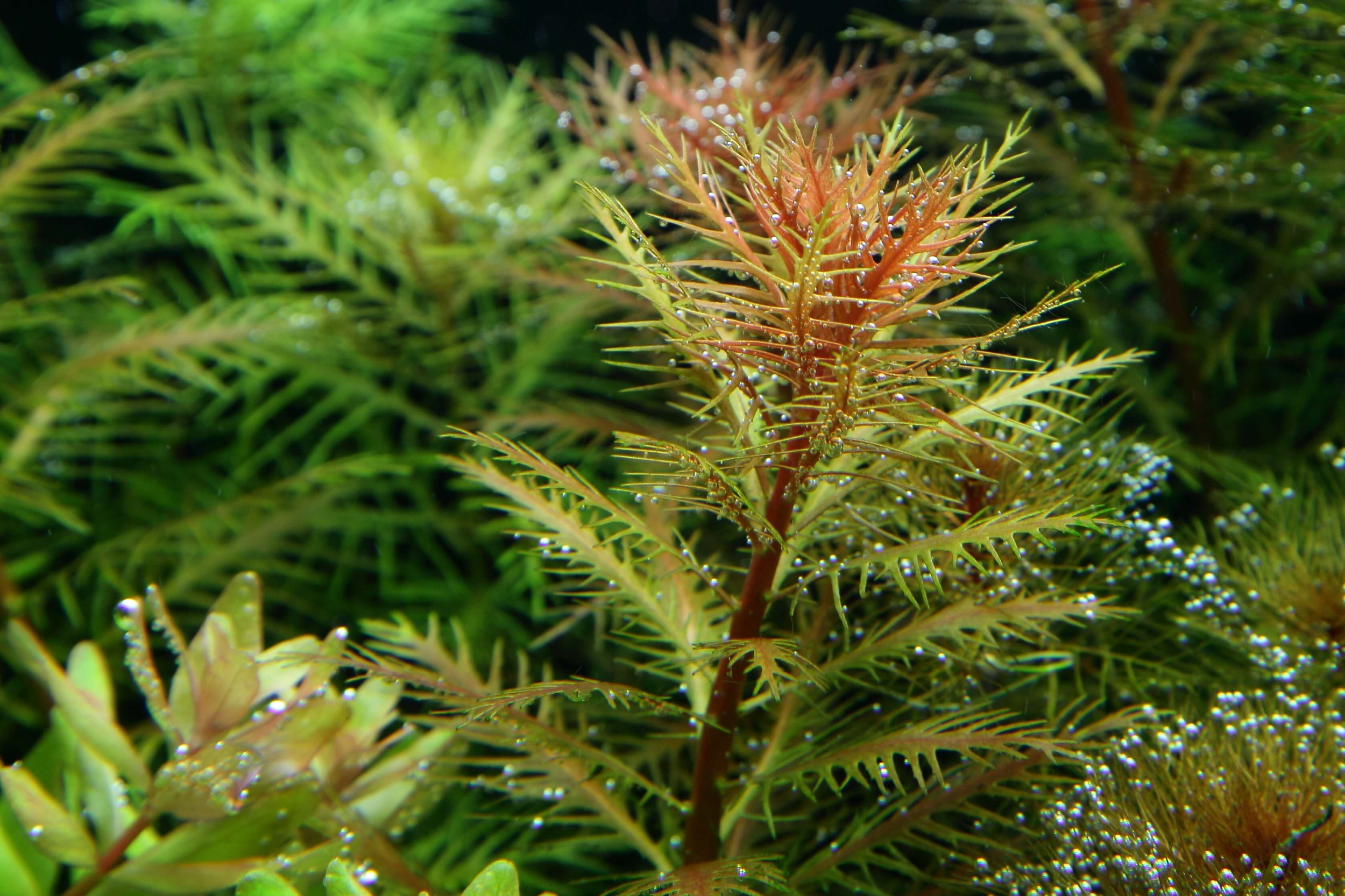
  • Proserpinaca palustris 'Cuba' (Mermaid Weed)

    Proserpinaca palustris 'Cuba' (Mermaid Weed)

    Advanced
    Middleground
    Proserpinaca palustris 'Cuba', often sold as Cuban mermaid weed, is a distinctive stem plant with finely divided leaves that can develop orange to red tones under strong light. The supplied trade name supports identification as the Cuba form, although appearance can vary with submerged or emersed growth and cultivation conditions. It is best suited to planted aquariums where stable carbon dioxide, adequate fertilisation and regular trimming can be provided.
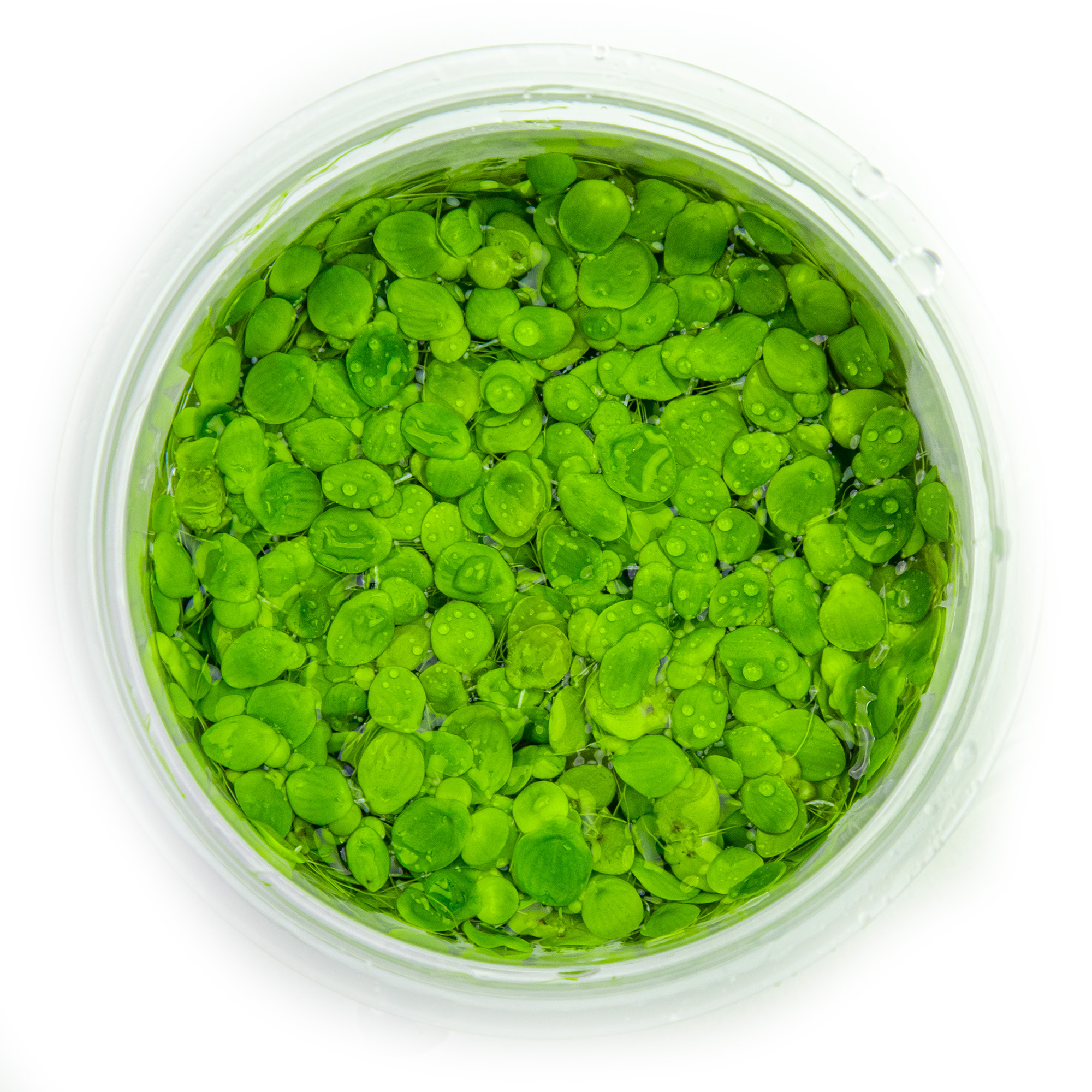
  • Spirodela polyrrhiza (Giant Duckweed)

    Spirodela polyrrhiza (Giant Duckweed)

    Easy
    Supporting plants
    Spirodela polyrrhiza is a small floating aquatic plant commonly known as giant duckweed. It forms clusters of green, rounded to oval fronds on the water surface, with fine roots hanging below. The supplied plant is consistent with this identification, although definitive separation from similar duckweeds may require close examination of frond structure and root characters. It grows rapidly in suitable aquariums and is best used where surface cover is wanted.
  • Staurogyne repens (Creeping Staurogyne)

    Staurogyne repens (Creeping Staurogyne)

    Easy
    Foreground
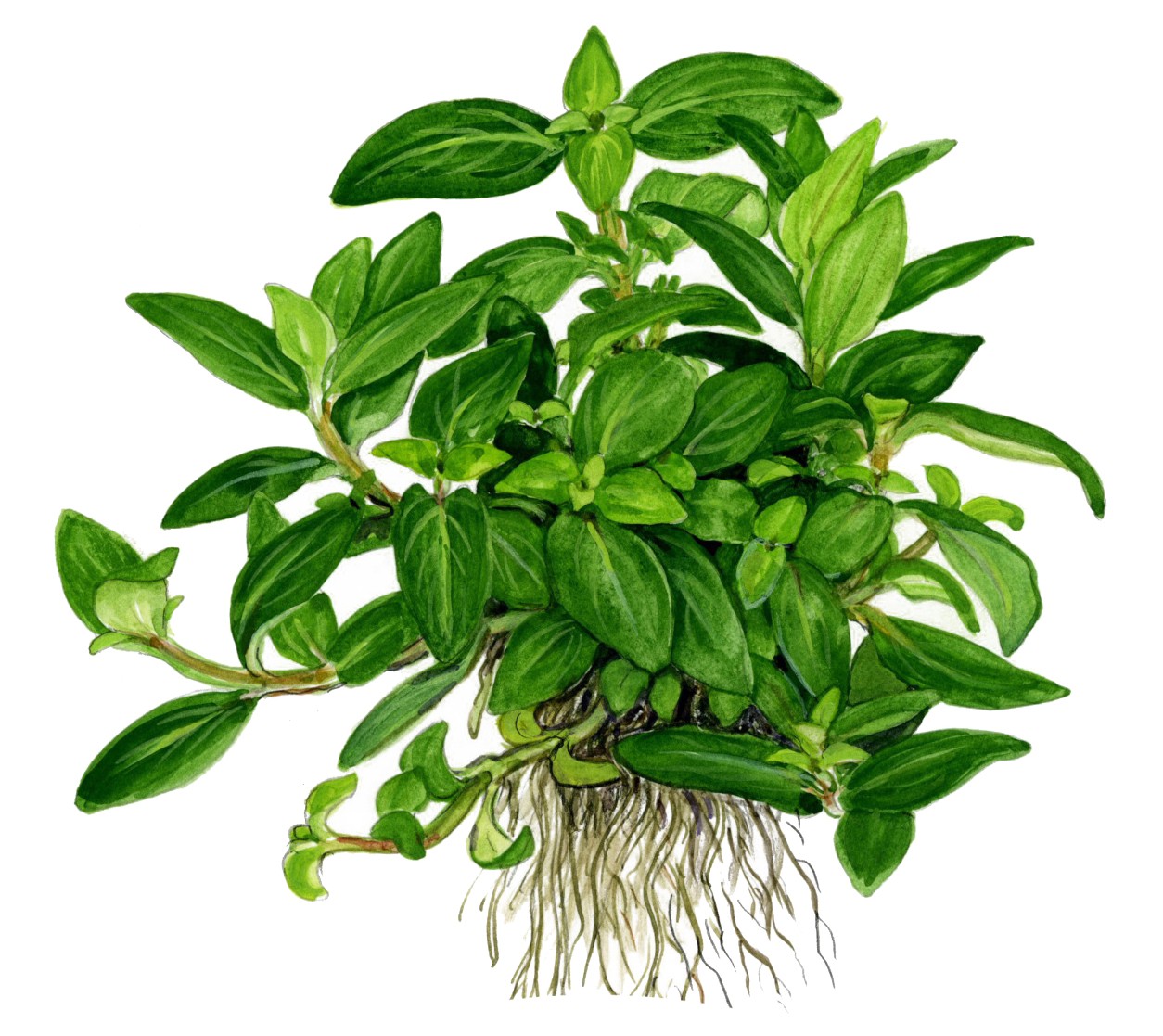
    Staurogyne repens is a compact South American stem plant valued for forming a low, leafy foreground or midground planting. Its creeping habit develops best when stems are planted individually and trimmed regularly. It tolerates a range of aquarium conditions, but stronger light, reliable nutrition and carbon availability generally produce denser growth. The supplied material is consistent with this species, although cultivar or trade-form variation cannot be excluded from images alone.
  • Salvinia natans (Small tussock fern)

    Salvinia natans (Small tussock fern)

    Easy
    Supporting plants
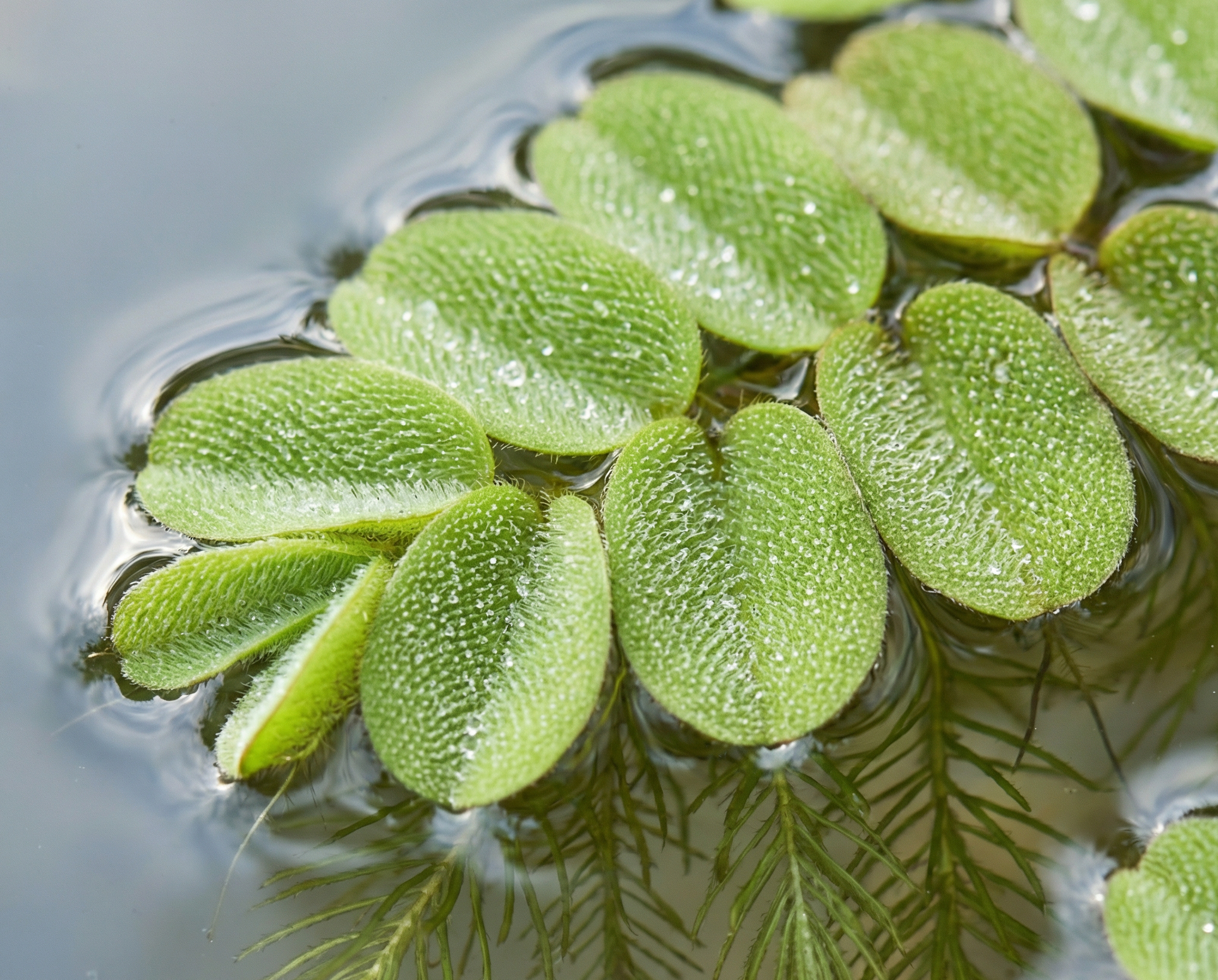
    Salvinia natans is a small floating fern with paired, oval green leaves and a finely divided submerged frond that resembles roots. It forms a useful surface cover and provides shelter for small aquatic animals, but can quickly shade submerged plants when conditions are favorable. Identification is based on the supplied source label and visible form; closely related Salvinia species can look similar, so confirmation from a specialist may be needed for specimens lacking diagnostic features.
  • Taxiphyllum 'Spiky' (Spiky moss)

    Taxiphyllum 'Spiky' (Spiky moss)

    Easy
    On rock or root
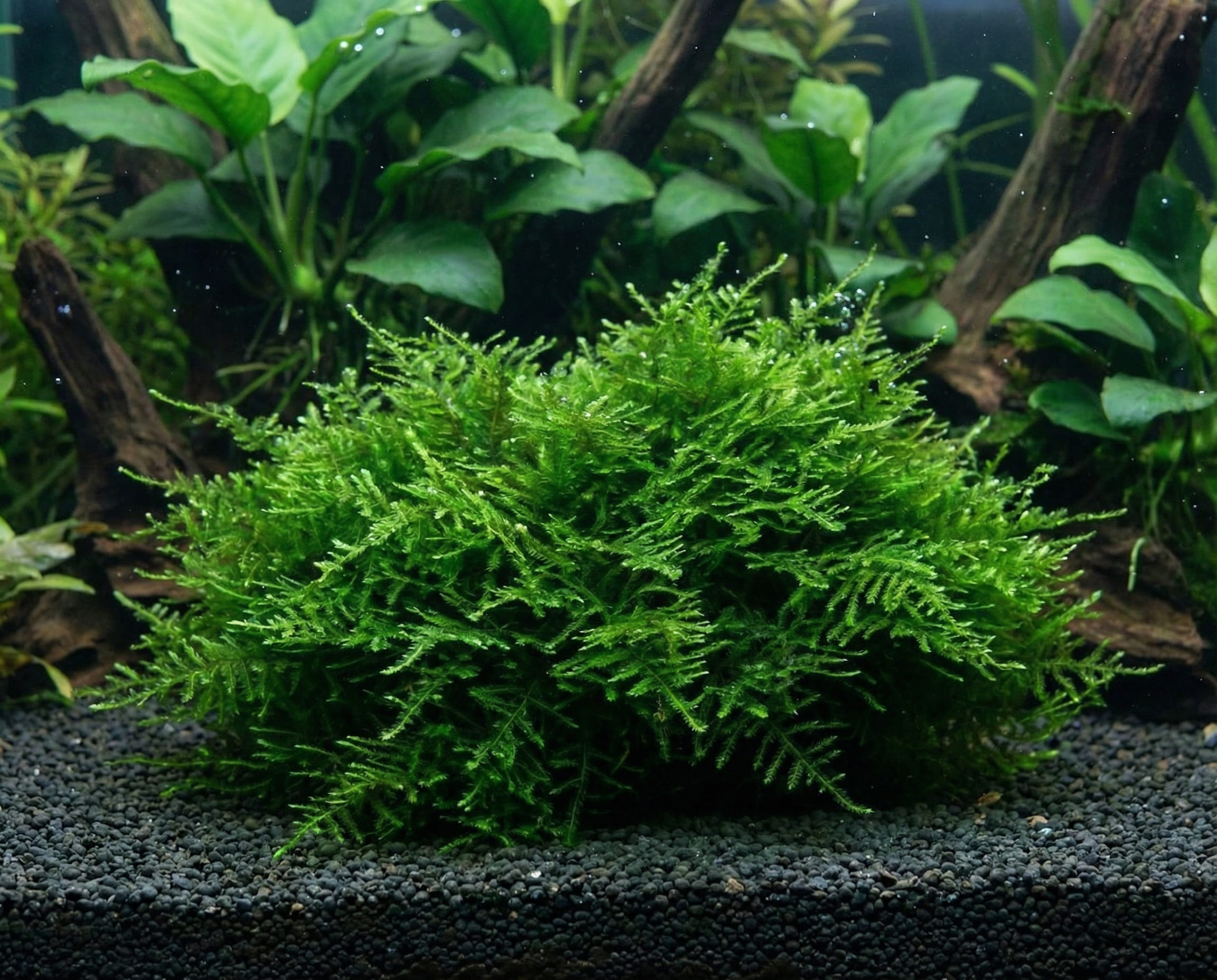
    Spiky moss is an aquarium moss sold under the trade name Taxiphyllum 'Spiky'. Its strongly branched, three-dimensional shoots form dense green cushions or trailing growth on hardscape. The name is commonly used for a cultivated form, but it does not by itself establish a formally described species, so identification should remain conservative. It is generally adaptable and suitable for beginners when attached to wood or rock, provided circulation and regular trimming prevent debris from accumulating within the mat.
  • Solenostoma tetragonum (Pearl Moss)

    Solenostoma tetragonum (Pearl Moss)

    Medium
    On rock or root
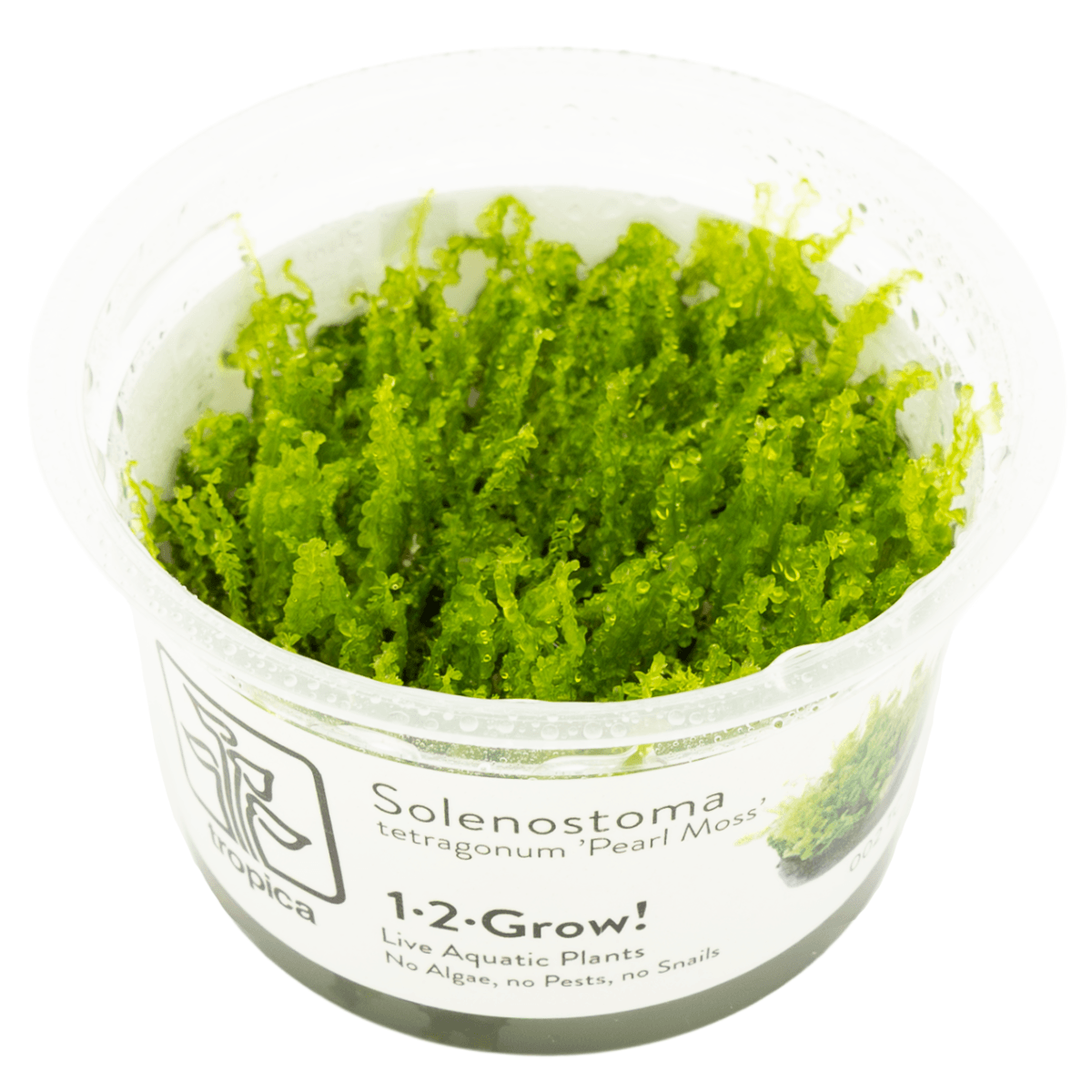
    Solenostoma tetragonum is a small aquatic liverwort sold in the aquarium trade as Pearl Moss. The supplied product identification is consistent with the finely branched, bright green growth shown, although a definitive species determination cannot be made from product images alone. It is best used as an attached epiphyte on wood or stone, where its delicate texture provides detail without dominating the layout.
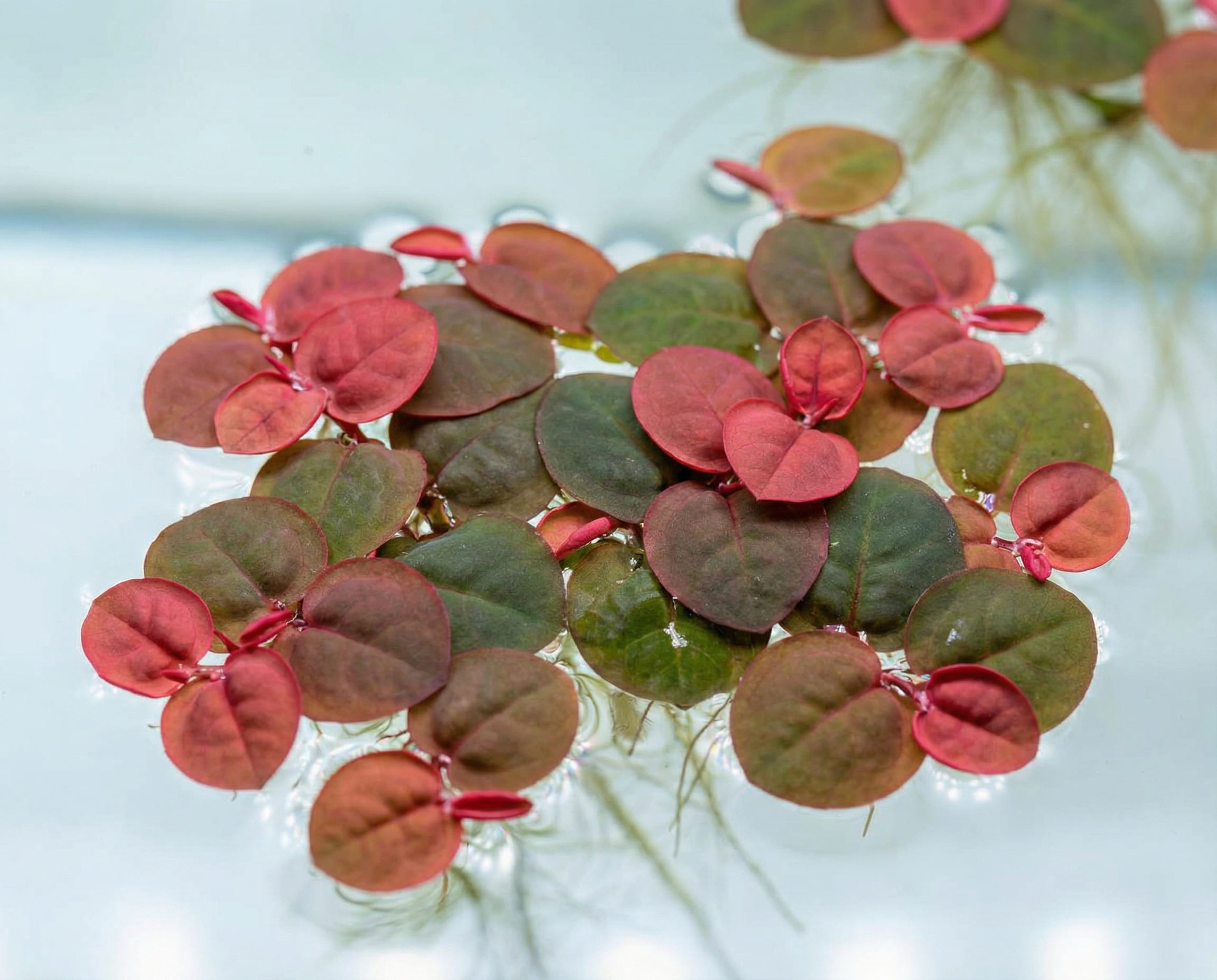
  • Phyllanthus fluitans (Red Root Floater)

    Phyllanthus fluitans (Red Root Floater)

    Easy
    Supporting plants
    Phyllanthus fluitans is a free-floating South American aquatic plant with rounded, slightly swollen leaves and fine hanging roots. Under strong light, mature leaves may develop red or pink tones, while lower light generally produces greener growth. It is useful for absorbing nutrients, providing shade and offering cover near the surface. The supplied images show characteristic features, but coloration varies with light and growing conditions.
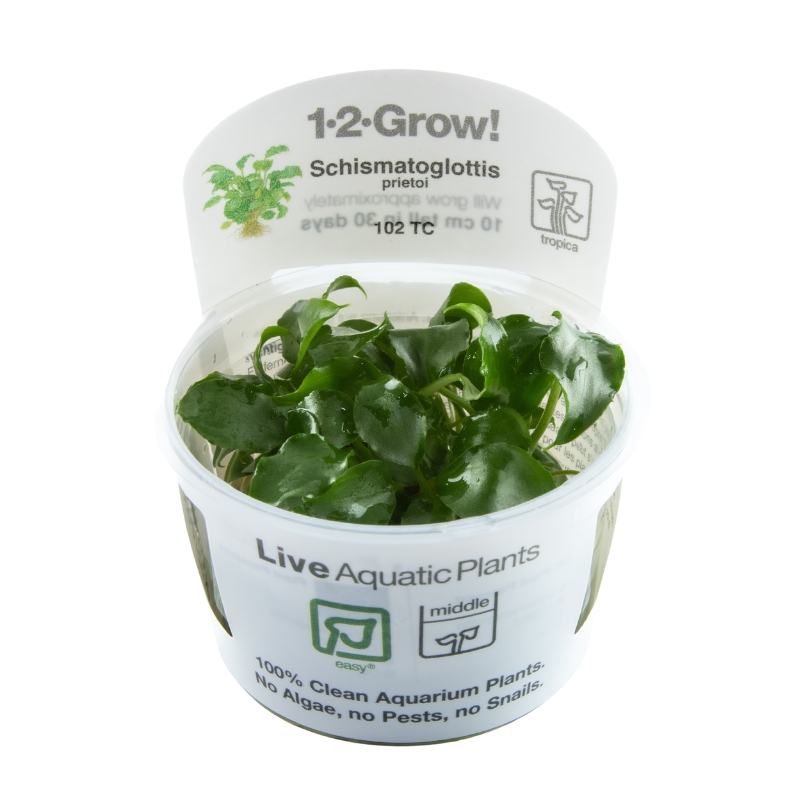
  • Schismatoglottis prietoi

    Schismatoglottis prietoi

    Easy
    Middleground
    Schismatoglottis prietoi is a compact, green aroid with thick, gently wavy leaves and a clumping growth habit. It is suitable for the middle area of smaller or medium-sized aquariums, where its textured foliage provides contrast without dominating the layout. The supplied material supports identification as S. prietoi, although aquarium-trade plants can sometimes be confused with related Schismatoglottis species.
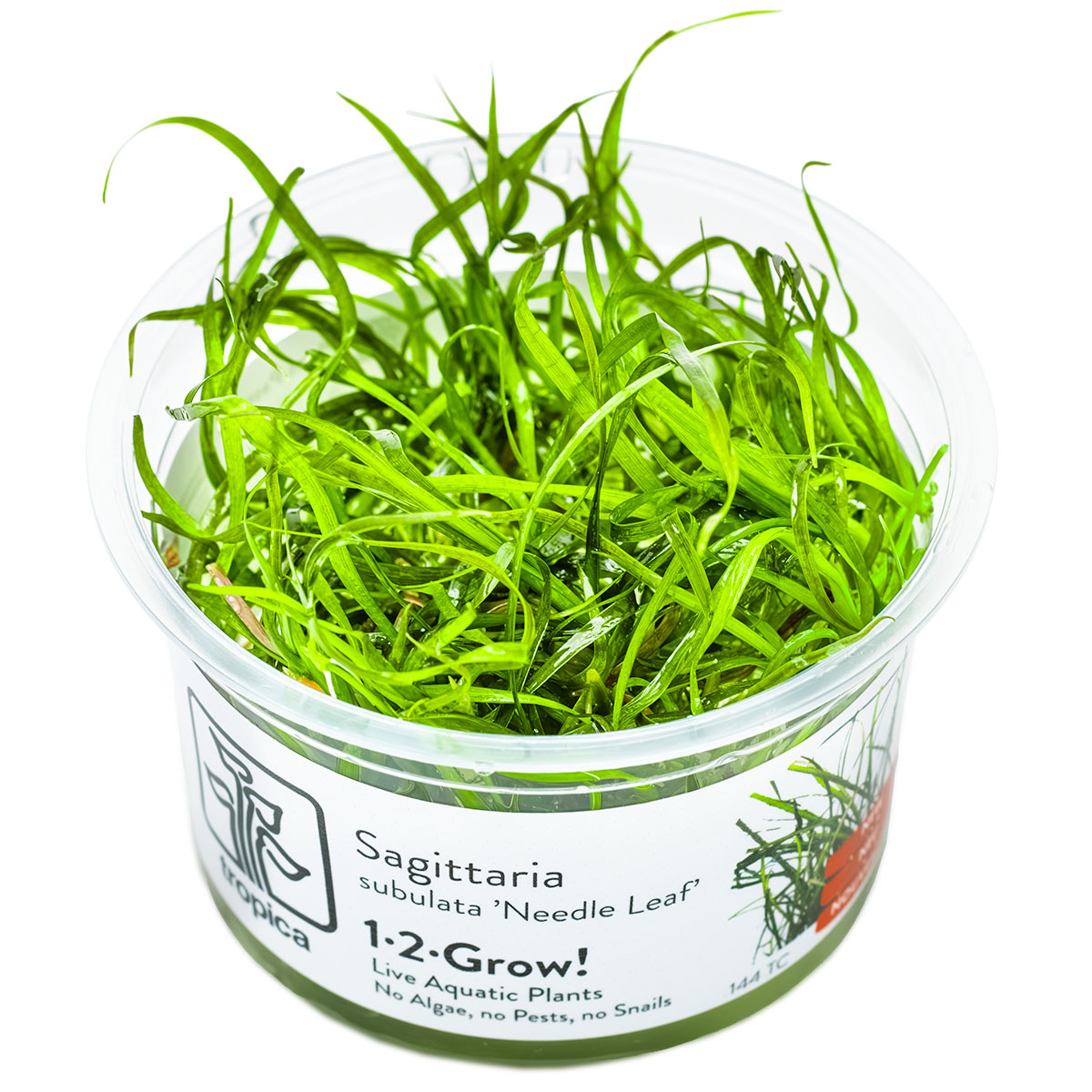
  • Sagittaria subulata (Needle Leaf)

    Sagittaria subulata (Needle Leaf)

    Easy
    Foreground
    Sagittaria subulata is a grass-like, rosette-forming aquarium plant sold as Needle Leaf or Dwarf Sagittaria. Its narrow leaves arise from a basal crown and it spreads by runners, forming a low to medium-height patch when grown submerged. The exact form can vary considerably: some specimens remain compact, while others produce taller leaves under aquarium conditions. Identification is reasonably clear from the supplied label and plant appearance, but cultivar or commercial-form distinctions cannot be confirmed from images alone.