
AquaLibs presents AquaRank Discover the world’s leading aquascapers

Explore transparent rankings built from published results across the world’s leading aquascaping contests.

Brazil at IAPLC 2026: Rock Landscapes and Wood Beyond the Familiar Label

Brazil at IAPLC 2026: Rock Landscapes and Wood Beyond the Familiar Label

Enchanted Hills offers an immediately recognisable rock valley, with coloured planting and fish in bright water. Three other selected Brazilian photographs build their scenes around substantial wood. Seeing them together is a useful way to revisit a ...
Ember Tetra or Green Kubotai Rasbora? Choose the School That Fits Your Planted Aquarium

Ember Tetra or Green Kubotai Rasbora? Choose the School That Fits Your Planted Aquarium

Small schooling fish can look deceptively interchangeable at the aquarium store. In a planted aquarium, however, the right choice depends on more than color. Swimming style, confidence, adult size, feeding speed, water preferences, and the amount of ...
Japan at IAPLC 2026: Nature Aquarium and Many Contemporary Visions

Japan at IAPLC 2026: Nature Aquarium and Many Contemporary Visions

A pale path through hanging roots and a bright interval between exposed rocks can both make an aquarium feel spacious. Japan’s 2026 selection is rewarding because it places these different approaches beside richly planted foregrounds and coloured slo...
China at IAPLC 2026: How Layered Wood Creates Convincing Depth

China at IAPLC 2026: How Layered Wood Creates Convincing Depth

The Grand Prize photograph gives this study an obvious first stop, but the comparison becomes richer when it reaches beyond the winner. Six selected aquariums show different ways of framing light with wood: unequal trunks, fine leaf curtains, success...
Fresh from the rankings

Latest works from the AquaRank Top 300

A rotating selection from the newest locally archived contest works created by the world’s Top 300 aquascapers.

Aquarium Library

  • All
  • Plant
  • Fish
  • Shrimp
  • Snail

Brazil at IAPLC 2026: Rock Landscapes and Wood Beyond the Familiar Label

Enchanted Hills offers an immediately recognisable rock valley, with coloured planting and fish in b...

Japan at IAPLC 2026: Nature Aquarium and Many Contemporary Visions

A pale path through hanging roots and a bright interval between exposed rocks can both make an aquar...

China at IAPLC 2026: How Layered Wood Creates Convincing Depth

The Grand Prize photograph gives this study an obvious first stop, but the comparison becomes richer...

Vietnam at IAPLC 2026: Wood, Stone and a Broader Design Identity

Vietnam’s two leading 2026 awards both invite us into wooded environments. That is an interesting st...

CIAC 2026 Official Results Update: Rankings Extend to 119

The CIAC 2026 Aquascaping Category results have received an official update. A results sheet distrib...

CIAC 2026 Results: Beyond the Top 30, Ranks 31–70

The CIAC 2026 story continues beyond the Top 30. This AquaLibs report brings together the contest im...
Top 300 spotlight

AquaRank Top 300

Explore AquaRank
Epalzeorhynchos frenatum (Albino Rainbow Shark)

Overview

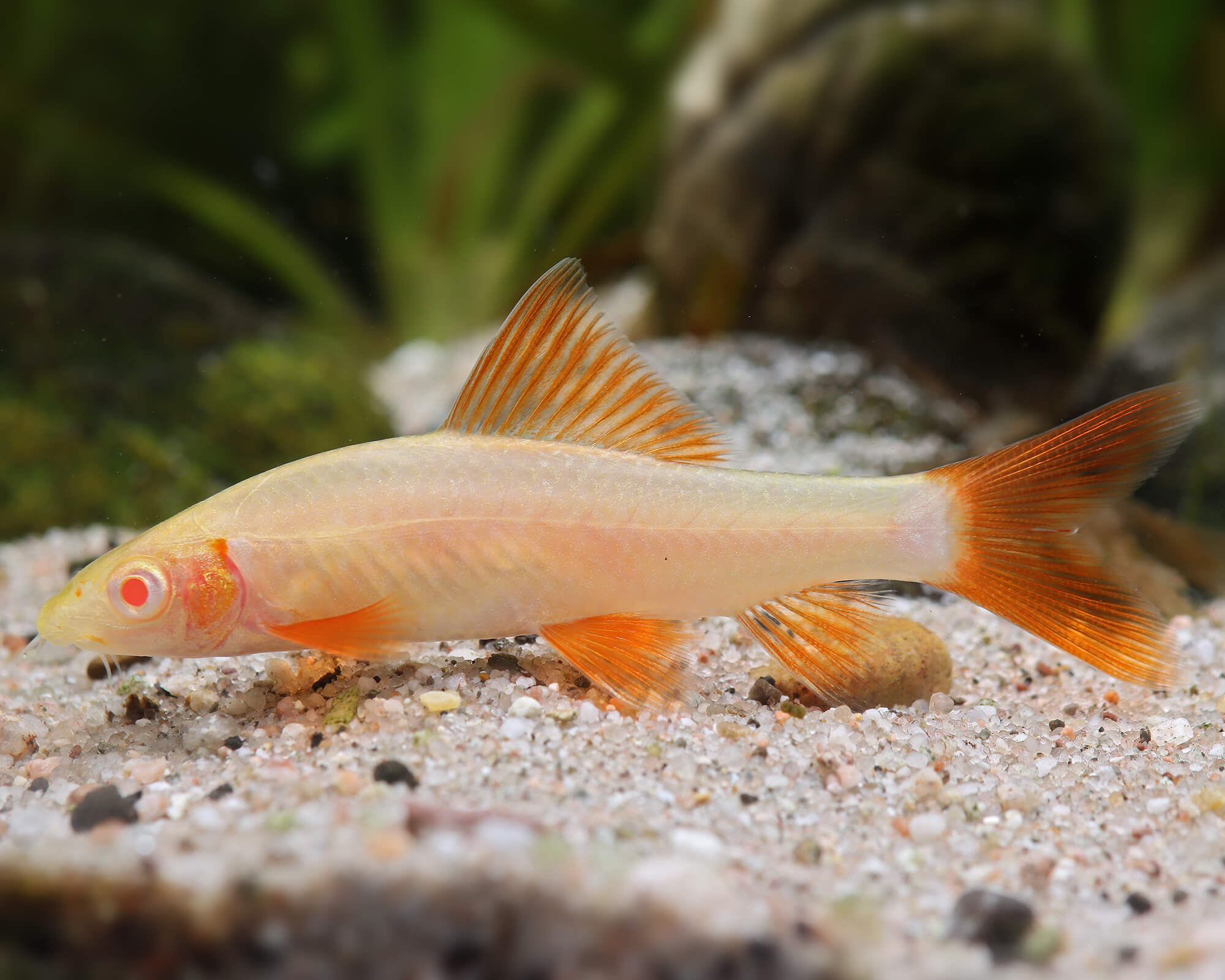
Despite its common name, the Albino Rainbow Shark (Epalzeorhynchos frenatum) is not a true shark, but rather a member of the Cyprinidae family. This albino variant of the standard Rainbow Shark is highly sought after for its striking contrast of a pale body and bright red or orange fins. They are active, intelligent, and can be quite territorial, making them an engaging species for the intermediate aquarist who understands their specific behavioral needs.

Image of golden fringed lark epalzeorhynchos frenatum

Distribution and Habitat

The wild, non-albino counterparts are native to the basins of the Mekong, Chao Phraya, and Mae Klong rivers in Southeast Asia, primarily in Thailand, Laos, and Cambodia. They inhabit sandy and rocky river bottoms where they graze on algae and biofilm. The albino variant seen in the hobby is almost exclusively captive-bred for the aquarium trade.

Description of Albino Rainbow Shark

The Albino Rainbow Shark boasts a sleek, streamlined profile that closely resembles a marine shark, which is where its common name originates.

Body shape:

They have an elongated, torpedo-like body with a slightly flattened ventral side, perfectly adapted for a benthic (bottom-dwelling) lifestyle.

Color:

The body is typically a pale white, cream, or pinkish hue, lacking the dark pigmentation of the wild type.

Barbels:

They possess small pairs of sensory barbels near their downward-facing mouth, aiding in locating food in the substrate.

Snout:

The snout is pointed and slightly protruding, extending past the mouth.

Eyes:

As true albinos, their eyes are a distinct pink or red color.

Fins:

All fins, including the prominent, upright dorsal fin, are a vibrant orange or red, providing a stunning visual contrast to the pale body.

Image of golden fringed lark epalzeorhynchos frenatum

The Tail:

The caudal (tail) fin is deeply forked and shares the same bright red-orange coloration as the rest of the fins.

Temper

This species is considered semi-aggressive. While they generally ignore fish that swim in the middle and upper levels of the tank, they can be highly territorial toward other bottom-dwellers, especially those with a similar body shape or color.

Sociality

It is highly recommended to keep only one Albino Rainbow Shark per aquarium. They are solitary by nature and will aggressively defend their chosen territory against their own kind or other shark-like fish (such as Red Tail Sharks or Flying Foxes). They do best with fast-moving, mid-to-top dwelling tank mates like robust tetras, barbs, or danios.

Activity

They are very active and spend the majority of their time patrolling the bottom of the tank, darting in and out of caves, and grazing on surfaces for algae and microscopic organisms.

Keeping and Caring for Albino Rainbow Shark

Providing a proper environment is key to minimizing aggression and ensuring the health of your Albino Rainbow Shark.

Image of golden fringed lark epalzeorhynchos frenatum

Tank size:

A minimum of 50 gallons (approx. 200 liters) is required. They need plenty of horizontal swimming space and room to establish a territory.

Water Parameters:

They thrive in clean, well-oxygenated water that mimics their native riverine habitats.

Temperature

Keep the water temperature between 22-28°C (72-82°F).

pH

A slightly acidic to neutral pH of 6.5-7.5 is ideal.

Hardness

Water hardness should be maintained between 5-15 dGH.

Ammonia, Nitrite, Nitrate

Ammonia and Nitrite must be strictly 0 ppm. Nitrates should be kept below 20 ppm through regular water changes.

Lighting

Moderate lighting is preferred. If the tank is too bright, they may become skittish unless ample shade is provided.

Water flow

They enjoy a moderate to strong water current, which replicates the flowing rivers of their natural habitat.

Decorations and Plants

Provide a soft sandy substrate to protect their sensitive barbels. The tank should be heavily decorated with driftwood, rock caves, and robust live plants (like Anubias or Java Fern) to break up lines of sight and offer secure hiding spots.

Diet

They are omnivorous scavengers. In the aquarium, they will readily accept high-quality sinking pellets, algae wafers, and vegetable matter. They also relish meaty foods such as frozen or live bloodworms, brine shrimp, and daphnia.

Some Feeding Tips

Supplement their diet with blanched vegetables like zucchini, cucumber, or spinach. Feeding them just before the lights go out can ensure they get their share without competition from mid-water fish.

Breeding

Breeding the Albino Rainbow Shark in a home aquarium is extremely difficult and rarely achieved. They are highly intolerant of one another, making pairing nearly impossible. Commercial breeding is typically done on fish farms using hormone injections.

Conclusion

The Albino Rainbow Shark is a visually stunning and dynamic fish that makes a fantastic centerpiece for a large community aquarium. As long as their territorial nature is respected and they are provided with ample space and hiding spots, they will thrive and provide years of enjoyment for the dedicated aquarist.
Fish info

  • Care level: Moderate
  • Temperament: Semi-aggressive
  • Adult size: 15 cm
  • Life expectancy: 5-8 years
  • Fish type: Cyprinid
  • Temperature : 22-28°C
  • pH: 6.5-7.5
  • Color Form: Cream, Orange, Pink, Red, White
Leave your comments
Latest on Fishs
  • Dwarf Gourami Red (Trichogaster lalius)

    Dwarf Gourami Red (Trichogaster lalius)

    Easy - Moderate
    Asian labyrinth fish
    The red dwarf gourami is a selectively bred color form of the dwarf gourami, a small labyrinth fish formerly widely known as Colisa lalia. It is suited to mature, planted community aquariums with gentle water movement and calm tank mates. Males can be territorial, especially when kept with females in confined conditions, so cover, visual barriers, and careful observation are important for a pair.
  • Cockatoo Cichlid Red (Apistogramma cacatuoides)

    Cockatoo Cichlid Red (Apistogramma cacatuoides)

    Moderate
    South American dwarf cichlid
    The Cockatoo Cichlid is a small South American dwarf cichlid valued for its personality, breeding behavior and colorful finnage. Apistogramma cacatuoides is generally adaptable when provided with clean, stable water, cover and a soft substrate. Males are larger and more vividly marked than females, while pairs become territorial around spawning sites. The supplied “red” designation most likely refers to a selectively bred color form; exact strain and sex confirmation cannot be established from the listing alone.
  • Discus (Symphysodon aequifasciatus) Care Guide

    Discus (Symphysodon aequifasciatus) Care Guide

    Difficult
    South American freshwater cichlid
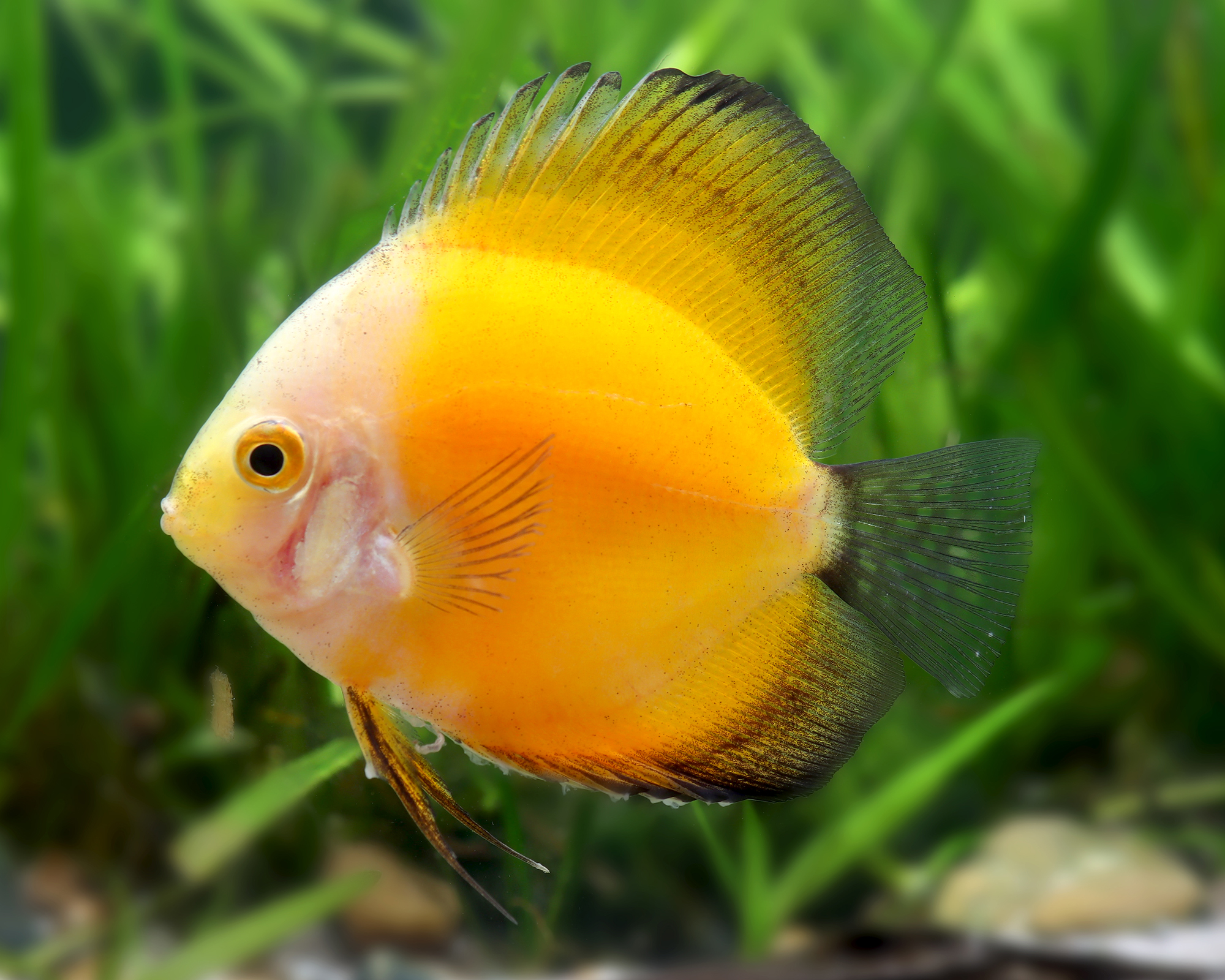
    Symphysodon aequifasciatus is a large, laterally compressed cichlid from the Amazon Basin, valued for its calm behavior and striking disc-shaped body. It requires warm, clean, stable water and careful feeding, making it better suited to experienced aquarists. The supplied images show yellow, orange, red, white and dark color forms; cultivated strains can vary considerably, so exact variety identification from images alone is uncertain. Discus are social fish and generally thrive in groups rather than as isolated specimens.
  • Cape Lopez Killifish (Aphyosemion australe)

    Cape Lopez Killifish (Aphyosemion australe)

    Moderate
    West African non-annual killifish
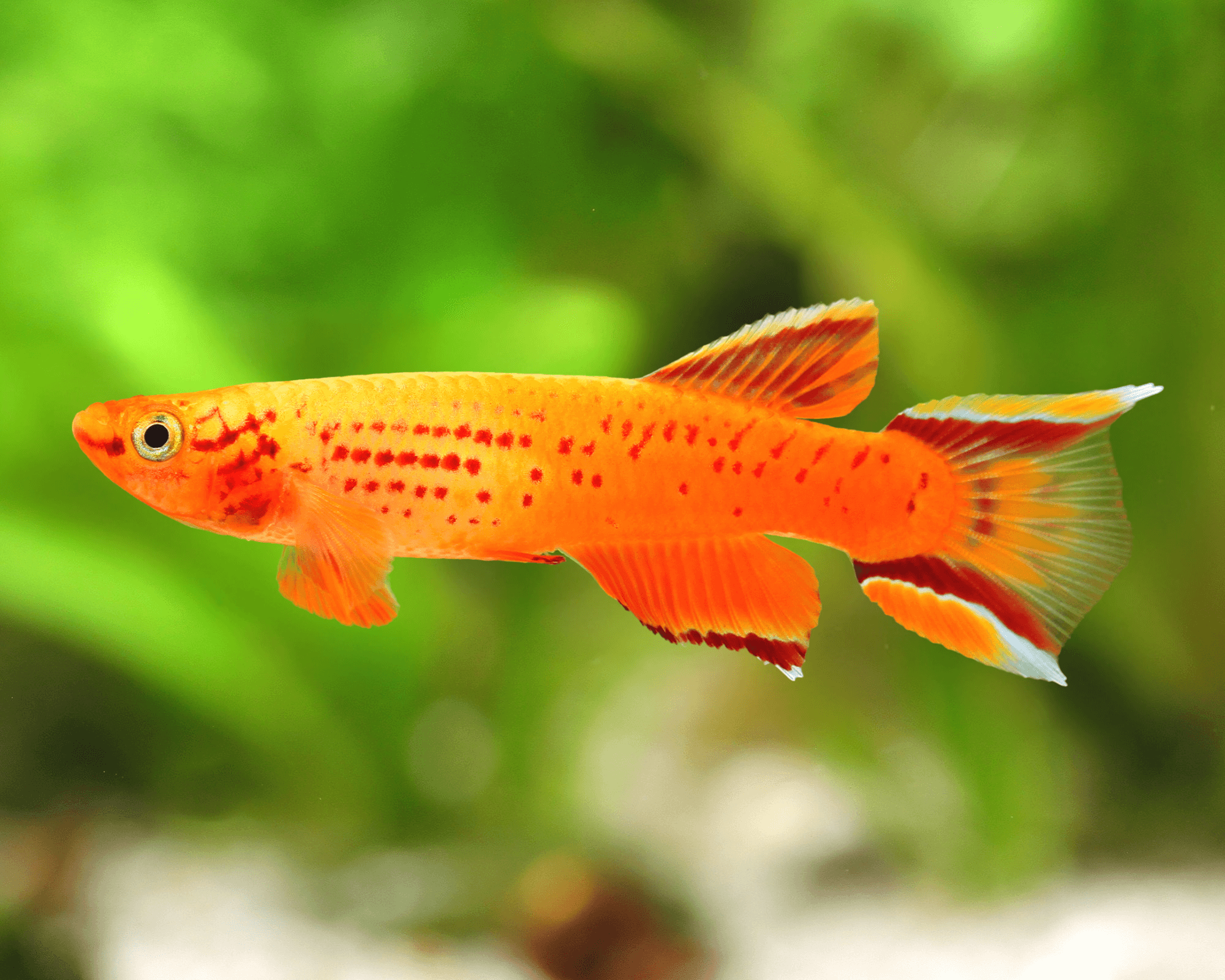
    The Cape Lopez killifish is a small, peaceful West African freshwater fish prized for its patterned body, flowing fins and manageable size. It inhabits slow-moving and temporary waters around coastal Gabon, including the Cape Lopez region. The supplied trade description identifies a pair as “Cape Lopez splendid carpets,” but this wording may describe a commercial strain rather than a formally recognized taxon. The image appears to show an orange form, so exact strain identification should be confirmed with the breeder or supplier.
  • Burton’s Mouthbrooder (Astatotilapia burtoni)

    Burton’s Mouthbrooder (Astatotilapia burtoni)

    Moderate
    East African haplochromine cichlid
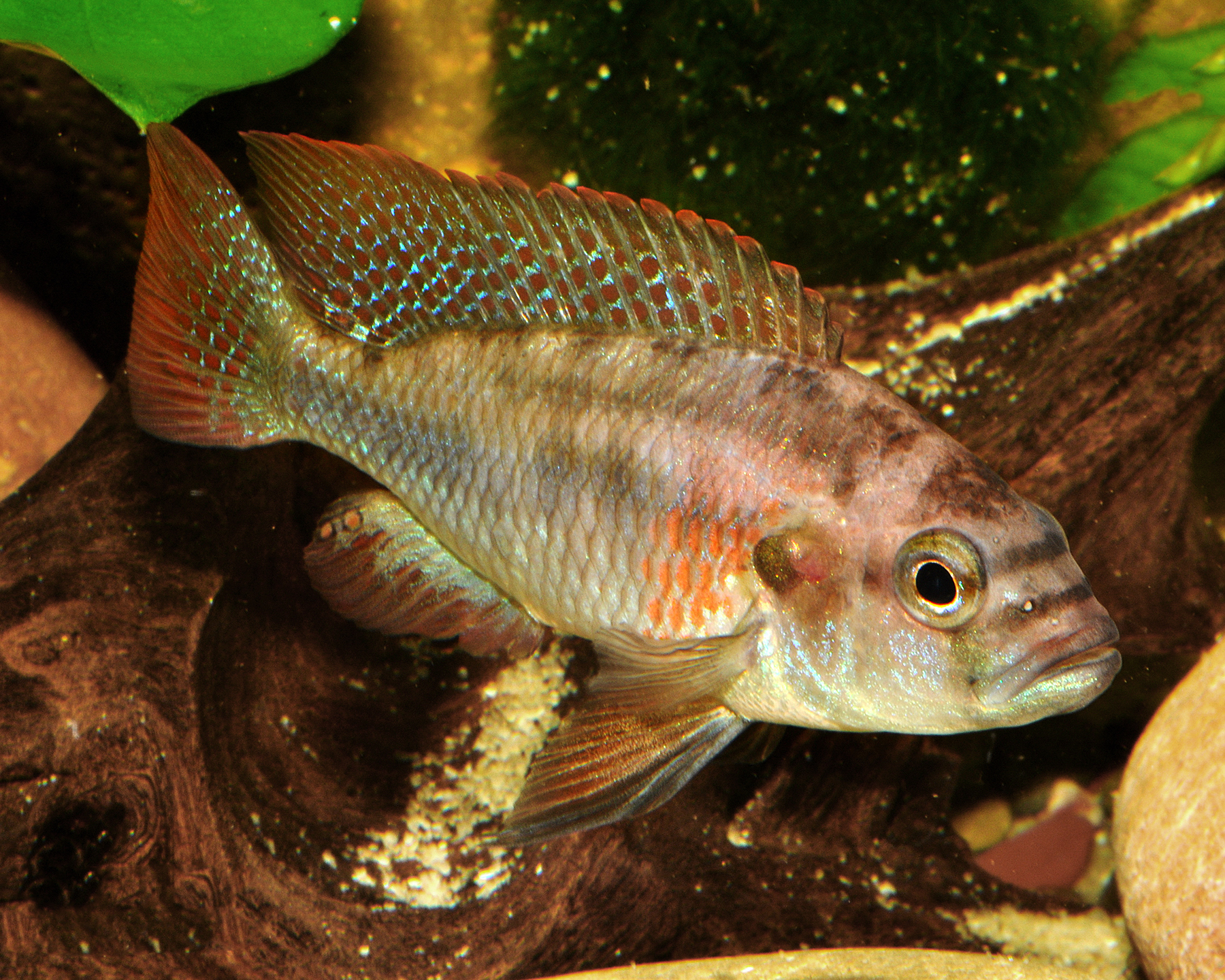
    Burton’s mouthbrooder, Astatotilapia burtoni, is a moderately aggressive East African haplochromine cichlid known for strong social hierarchies and maternal mouthbrooding. Males become more vividly patterned and defend territories, while females are generally less colorful and carry eggs and fry in the mouth. A pair requires a spacious, well-filtered aquarium with rocky cover, alkaline water and carefully selected tank mates. The supplied identification is consistent with Astatotilapia burtoni, although sex and locality form cannot be confirmed from the photographs alone.
  • Cyrtocara moorii (Blue Dolphin Cichlid) Care Guide

    Cyrtocara moorii (Blue Dolphin Cichlid) Care Guide

    Moderate
    Lake Malawi haplochromine cichlid
    Cyrtocara moorii is a large, distinctive haplochromine cichlid from Lake Malawi, recognised for its blue adult coloration and rounded forehead, which becomes more pronounced with age. It is a maternal mouthbrooder and is generally less aggressive than many Malawi mbuna, but its size and territorial breeding behaviour require a spacious aquarium. The supplied images appear consistent with blue C. moorii, although photographs cannot confirm sex, locality, or whether the fish form a true bonded pair.
  • Blue Dwarf Gourami Pair (Trichogaster lalius)

    Blue Dwarf Gourami Pair (Trichogaster lalius)

    Easy - Moderate
    Peaceful labyrinth fish
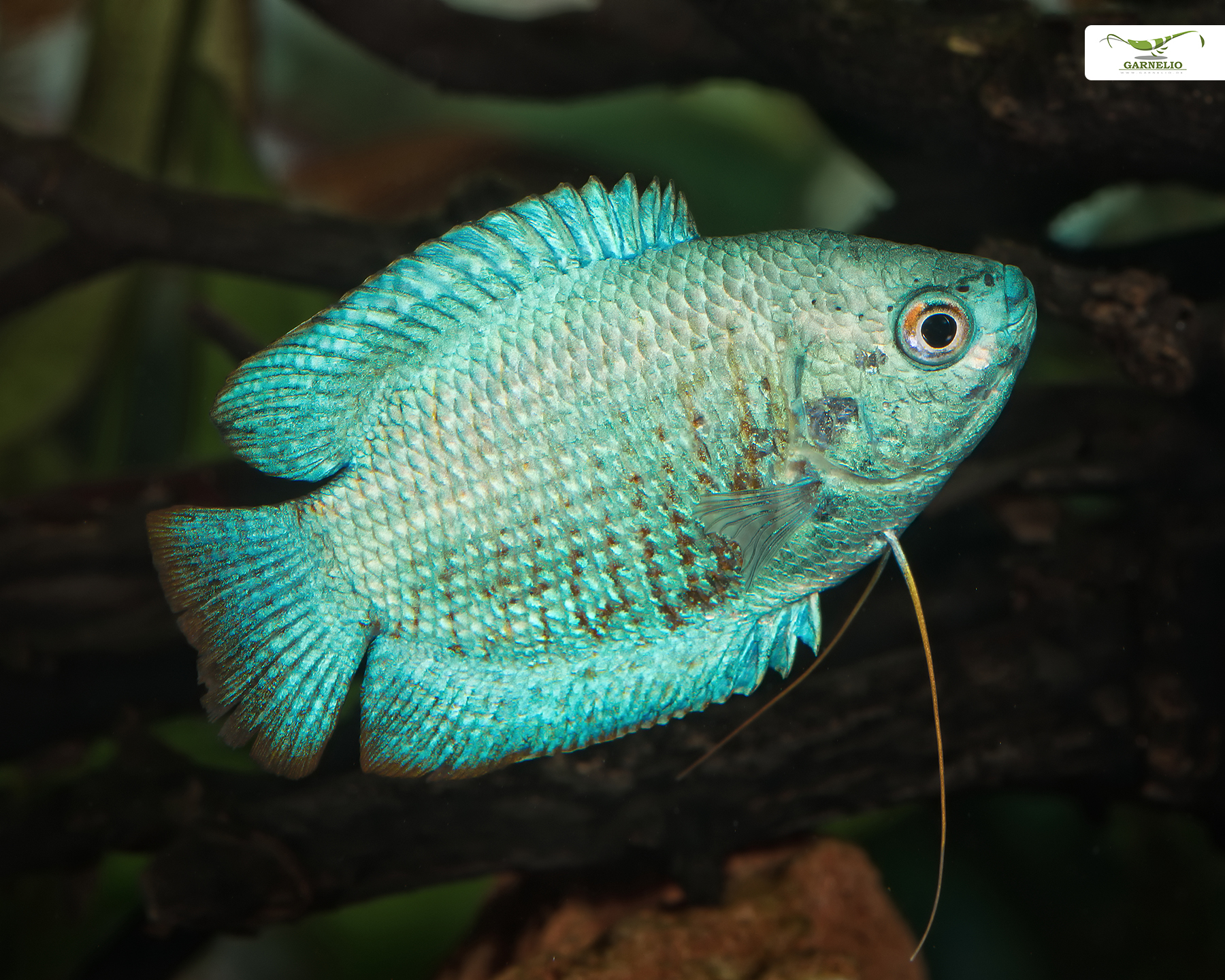
    The blue dwarf gourami is a selectively colored form of a small labyrinth fish native to the Indian subcontinent. It spends much of its time in the upper and middle aquarium, using its specialized labyrinth organ to breathe atmospheric air. Males can become territorial, especially when nesting, so a planted aquarium with calm tank mates, gentle flow, and surface cover is important. The supplied name uses Trichopodus lalius; Trichogaster lalius is the commonly used current combination.
  • Blue Acara (Aequidens pulcher)

    Blue Acara (Aequidens pulcher)

    Moderate
    South American freshwater cichlid
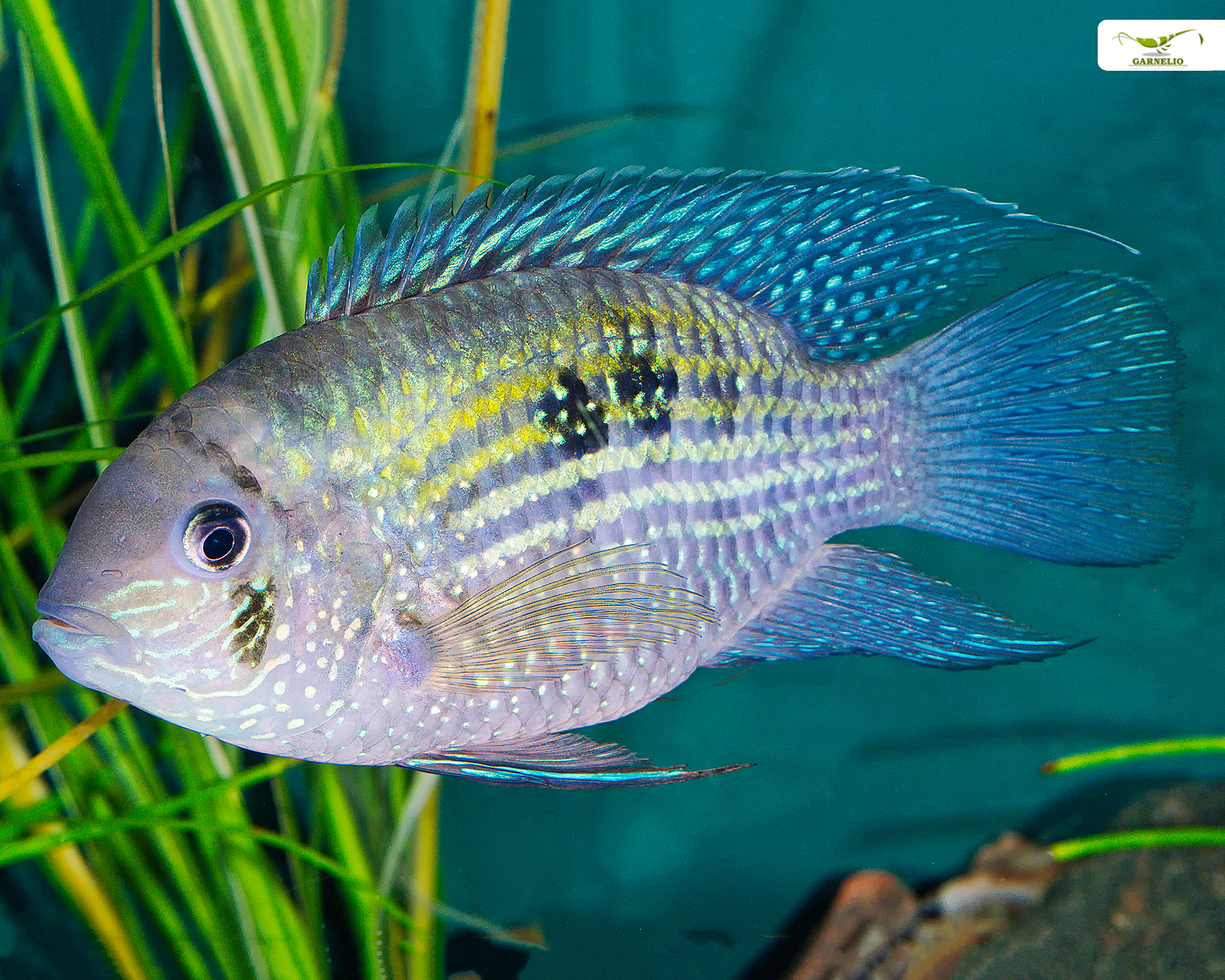
    The supplied label identifies these fish as Blue Acara, Aequidens pulcher, a South American freshwater cichlid often placed in the genus Andinoacara in current aquarium literature. The photograph is consistent with a blue acara, although a definitive identification cannot be confirmed from one image alone. This pair requires a spacious aquarium, stable water quality, hiding places and careful observation during breeding, when territorial behavior becomes stronger.
  • Julidochromis transcriptus: Black-and-White Slender Cichlid

    Julidochromis transcriptus: Black-and-White Slender Cichlid

    Moderate
    Lake Tanganyika rock-dwelling cichlid
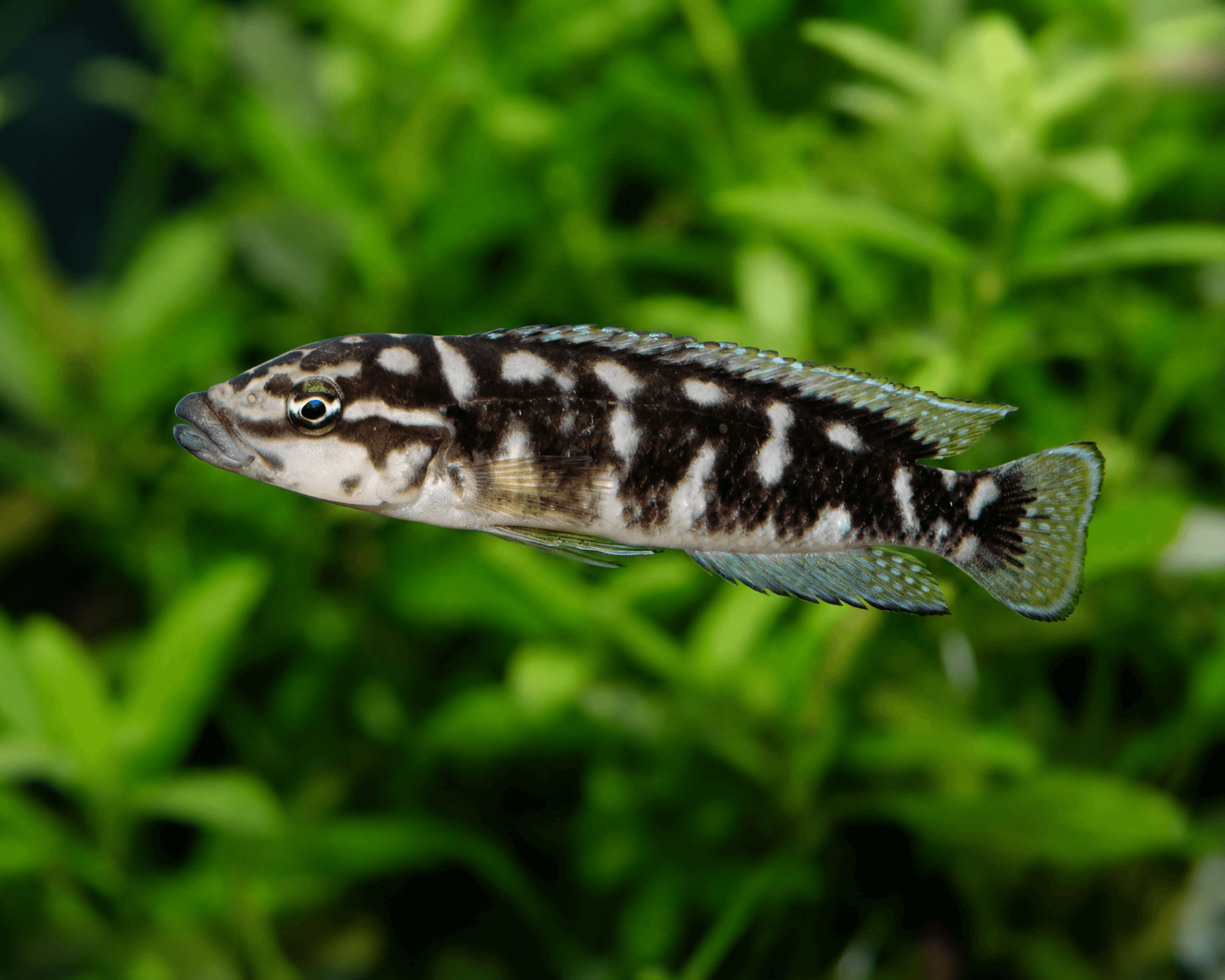
    Julidochromis transcriptus is a small rock-dwelling cichlid from Lake Tanganyika, recognized by its compact, elongated body and irregular black-and-white pattern. It is a territorial cave dweller that is best kept as an established pair in a carefully structured aquarium. The supplied fish are identified as a DNZ pair, although sex, collection locality, and precise geographic form cannot be verified from the supplied material alone.
  • Azur Cichlid (Sciaenochromis fryeri) Care Guide

    Azur Cichlid (Sciaenochromis fryeri) Care Guide

    Moderate
    Lake Malawi haplochromine cichlid
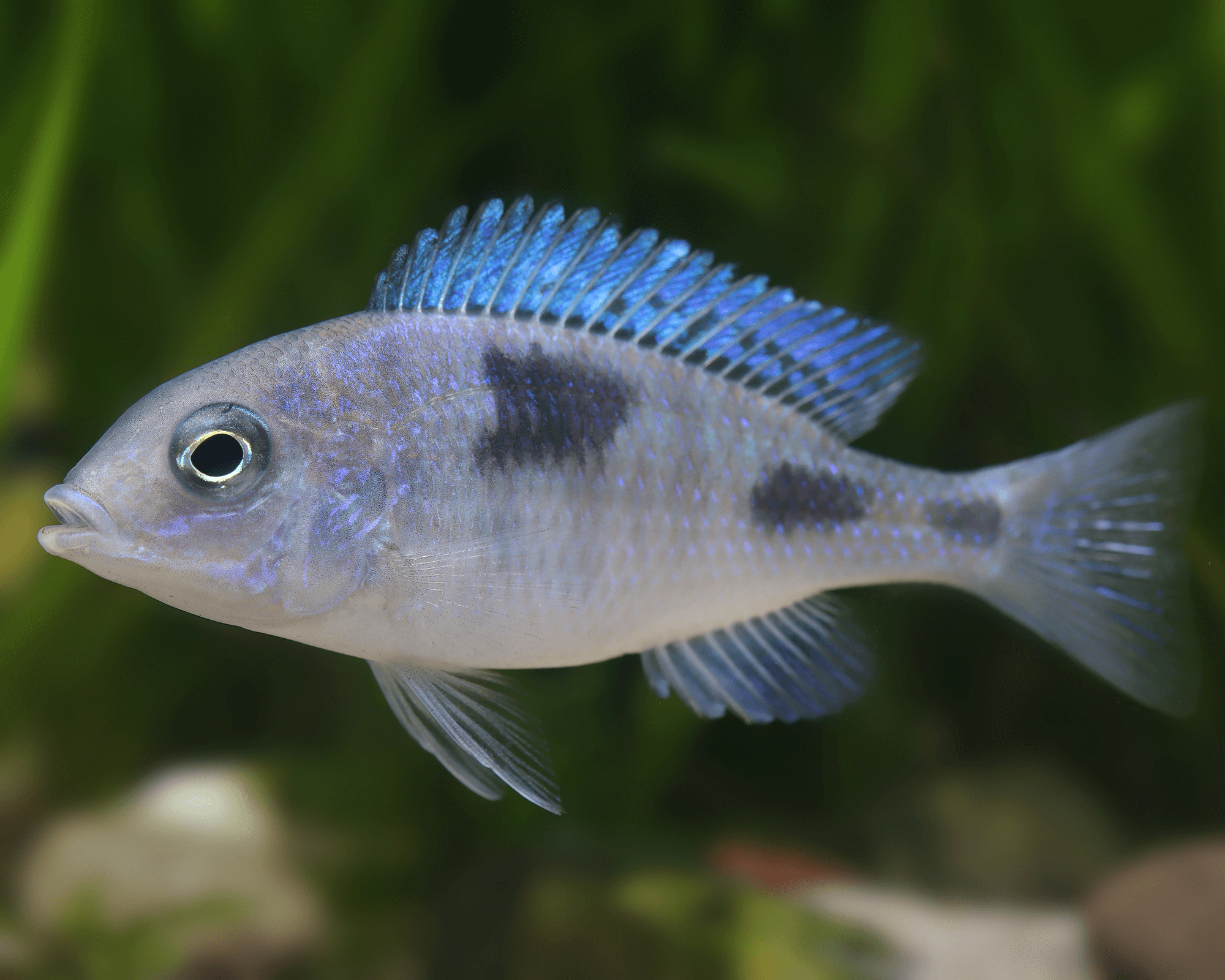
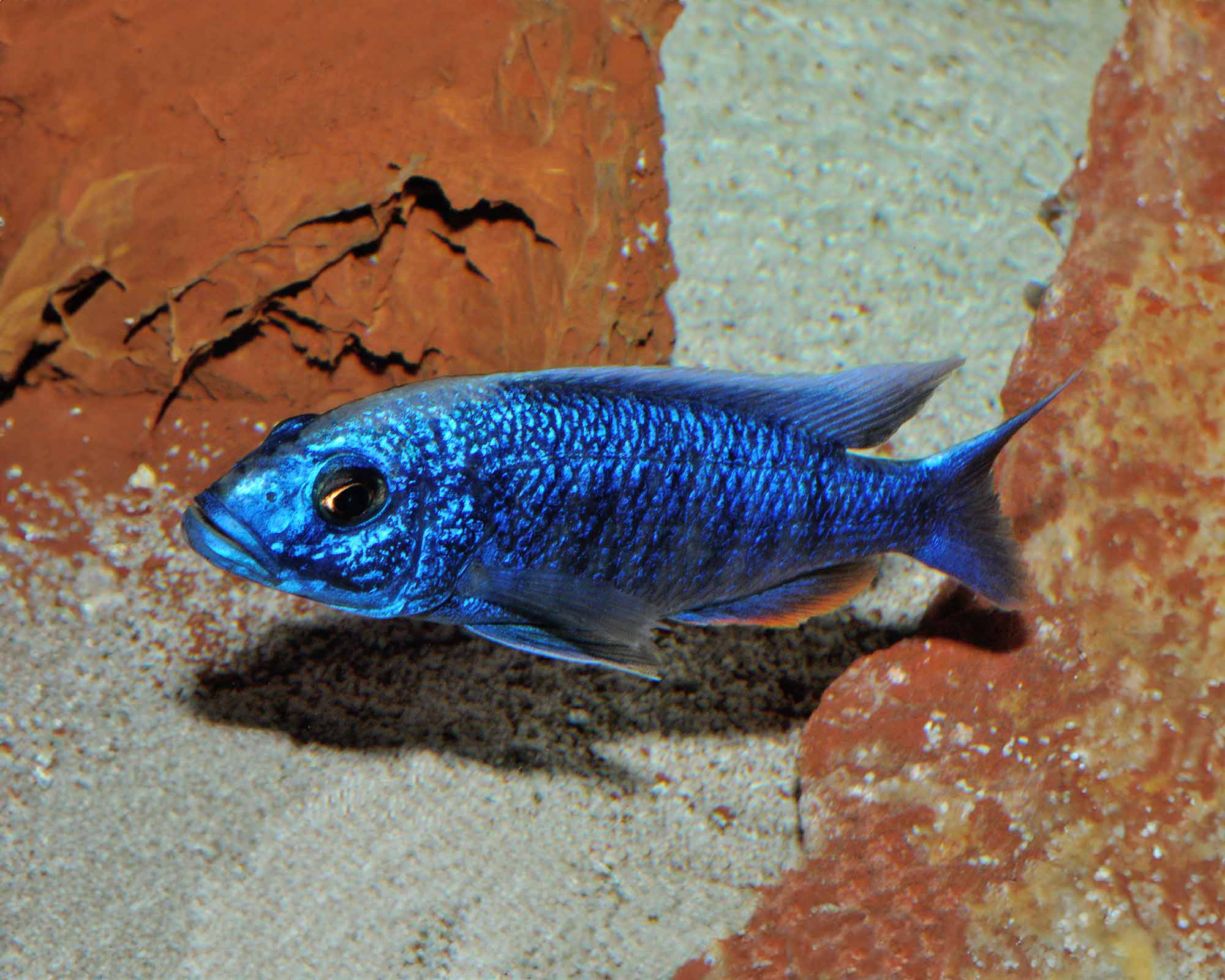
    The Azur cichlid is commonly sold as Sciaenochromis fryeri, a predatory haplochromine cichlid from Lake Malawi. Mature males develop vivid electric-blue coloration, while females and juveniles are generally less intensely colored. This fish is moderately aggressive and needs a spacious aquarium with rocky structure, alkaline, mineral-rich water, and carefully selected tank mates. The supplied source describes a DNZ pair, but sex and exact locality cannot be confirmed from the images alone. Identification confidence is therefore good but not absolute.
  • Marble Angelfish (Pterophyllum scalare)

    Marble Angelfish (Pterophyllum scalare)

    Moderate
    South American freshwater cichlid
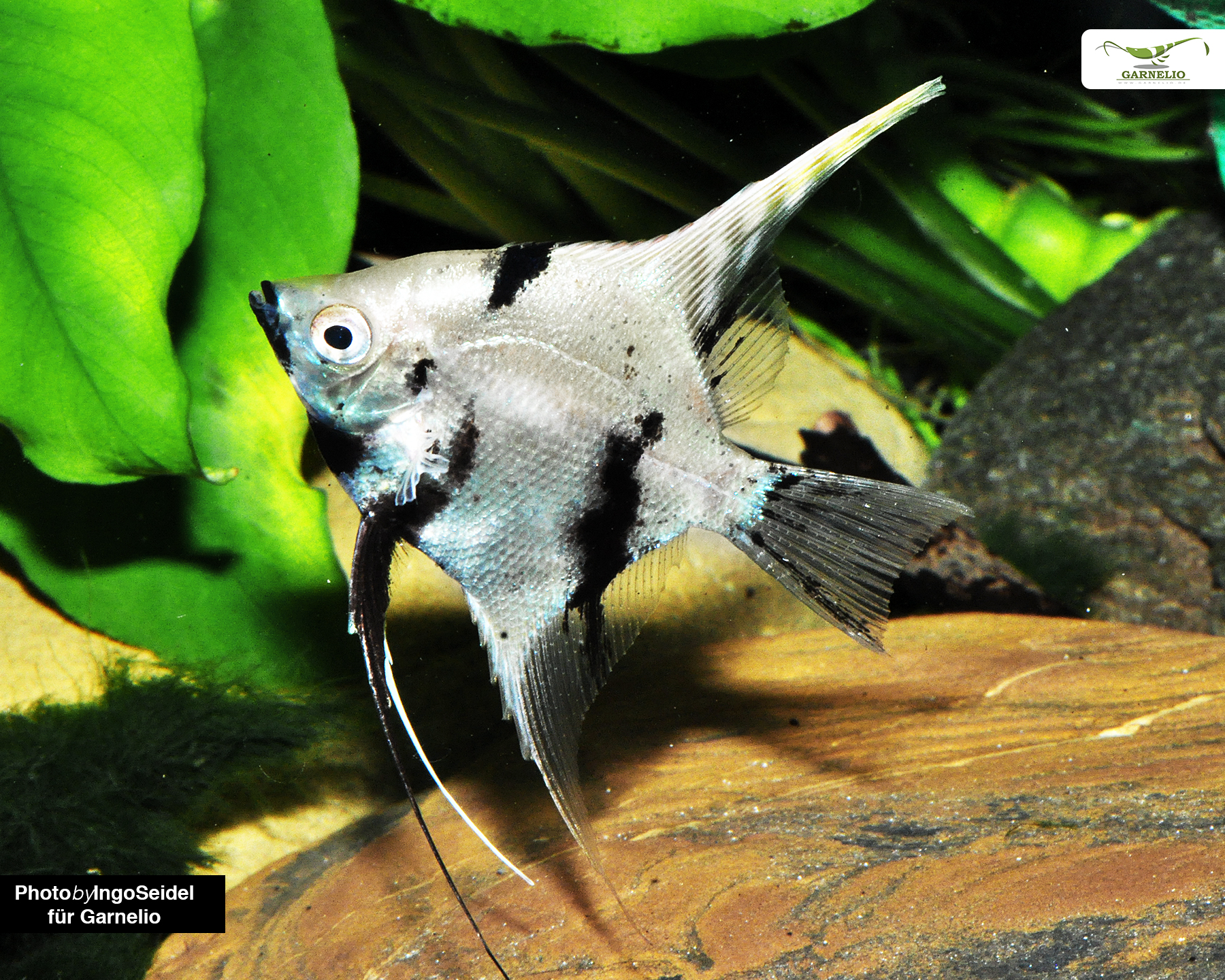
    The marble angelfish is a captive-bred color form of Pterophyllum scalare, a tall-bodied South American cichlid valued for its elegant fins and distinctive irregular black patterning. It needs a mature, spacious aquarium with excellent water quality, warm water and suitable tank mates. Although generally manageable, adults establish territories and may become assertive when pairing or spawning. The supplied source identifies two marble angelfish; exact lineage and strain details cannot be confirmed from the available information.
  • Gold Angelfish, Pterophyllum scalare

    Gold Angelfish, Pterophyllum scalare

    Moderate
    Freshwater South American cichlid
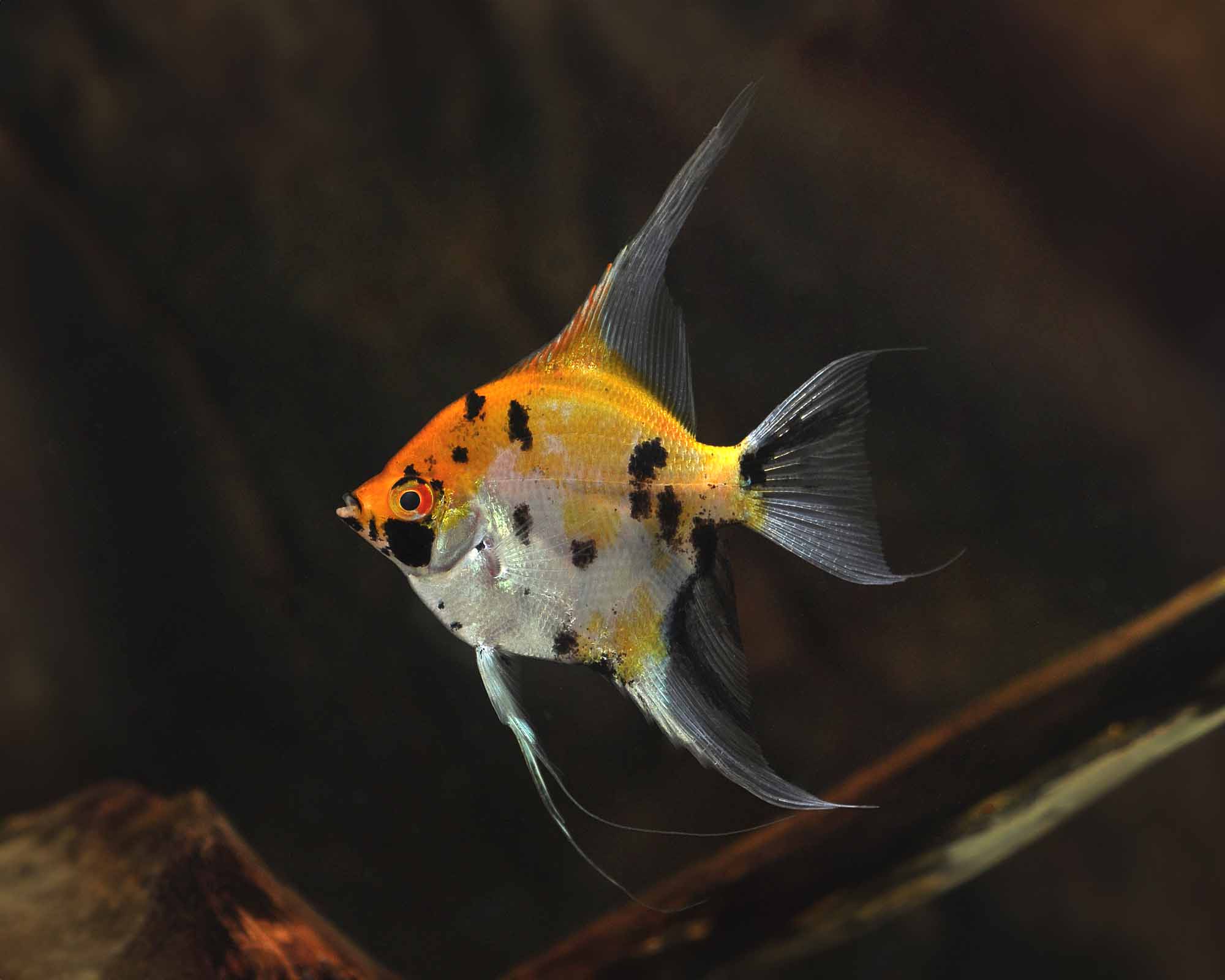
    The Gold Angelfish is an ornamental colour form of Pterophyllum scalare, a tall-bodied South American cichlid valued for its graceful movement and parental care. It needs a mature, spacious aquarium with substantial vertical clearance, stable warm water and carefully chosen tank mates. The supplied source identifies two fish as Gold Angelfish, although the accompanying images show several angelfish colour and fin forms, so the exact appearance of the supplied specimens cannot be confirmed from the images alone.
  • Zebra Angelfish (Pterophyllum scalare)

    Zebra Angelfish (Pterophyllum scalare)

    Moderate
    South American freshwater cichlid
    The Zebra Angelfish is a selectively bred form of Pterophyllum scalare, recognised by a silvery body with several dark vertical bars and the tall, laterally compressed shape typical of freshwater angelfish. The supplied images also show other angelfish colour forms, so the exact appearance of the listed pair cannot be confirmed from the image set alone. This South American cichlid is generally manageable for experienced community keepers, but its size, territorial breeding behaviour and need for a tall aquarium should be planned for carefully.
  • Black Angelfish (Pterophyllum scalare)

    Black Angelfish (Pterophyllum scalare)

    Moderate
    South American freshwater cichlid
    The supplied record identifies two black angelfish, most likely a domestic color form of Pterophyllum scalare. The photographs show several angelfish color patterns, so they should not be treated as proof that every pictured fish is black or that all belong to the same strain. Black angelfish retain the tall, laterally compressed body and extended fins typical of freshwater angelfish. They need a tall, mature aquarium, stable warm water, a varied diet, and carefully selected tank mates.
  • White Marble Angelfish (Pterophyllum scalare)

    White Marble Angelfish (Pterophyllum scalare)

    Moderate
    Freshwater cichlid
    The white marble angelfish is a selectively bred aquarium color form of Pterophyllum scalare, a tall-bodied South American cichlid valued for its elegant fins and distinctive irregular dark marbling. It is generally peaceful when young but can become territorial, especially when paired for spawning. Successful care depends on a tall aquarium, excellent water quality, suitable tank mates, and a varied carnivorous-omnivorous diet. The exact genetic strain shown cannot be confirmed from photographs alone.
  • Freshwater Angelfish Mix (Pterophyllum scalare)

    Freshwater Angelfish Mix (Pterophyllum scalare)

    Moderate
    Freshwater cichlid
    Freshwater angelfish are tall-bodied South American cichlids valued for their graceful movement and wide range of captive color forms. The supplied source identifies a mixed group as Pterophyllum scalare; the photographs show several forms, including striped, black, orange, white, silver and blue-toned fish. They are manageable for experienced beginners, but their adult height, territorial breeding behavior and tendency to eat small tank mates require thoughtful aquarium planning.