Taxonomy and identification
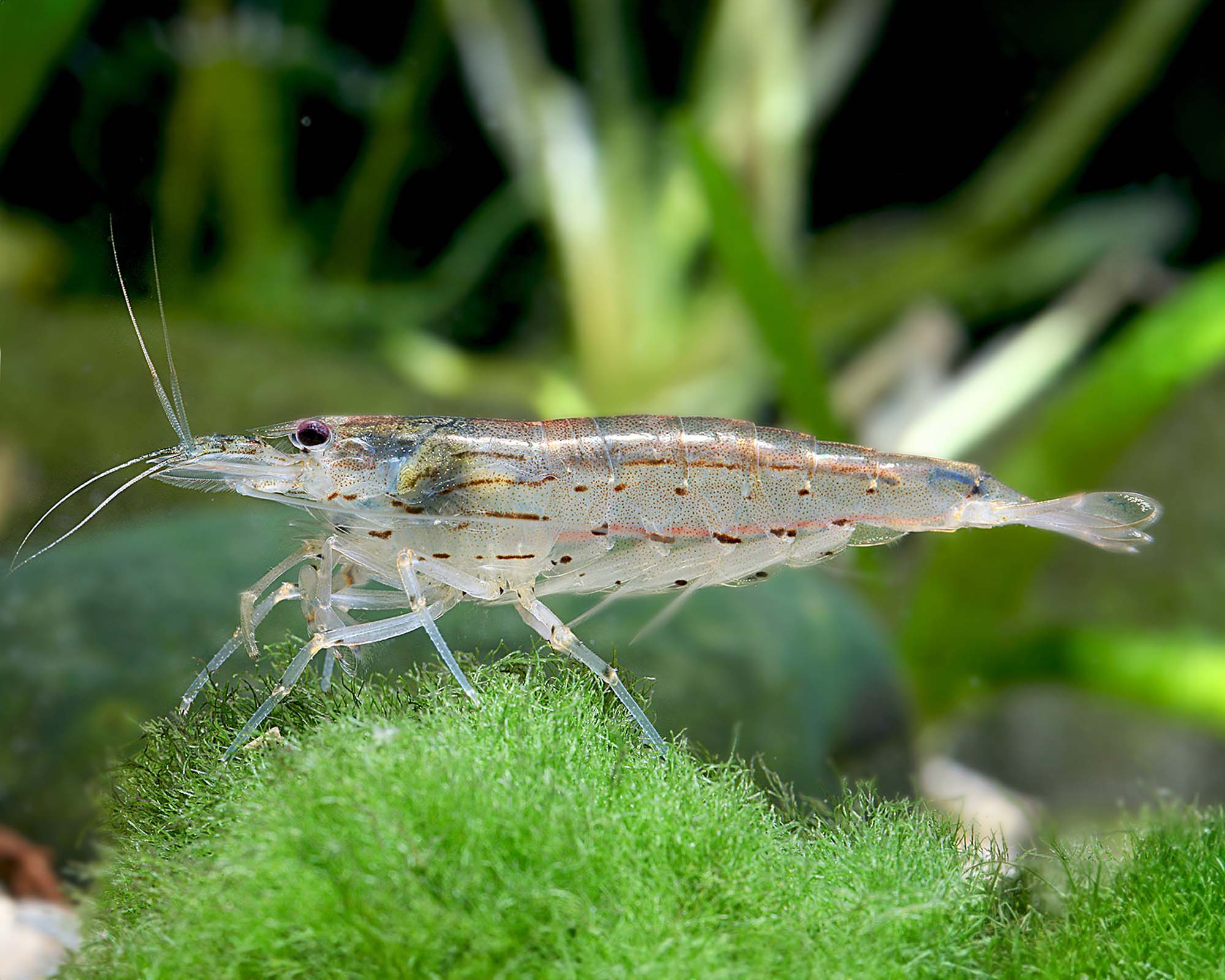
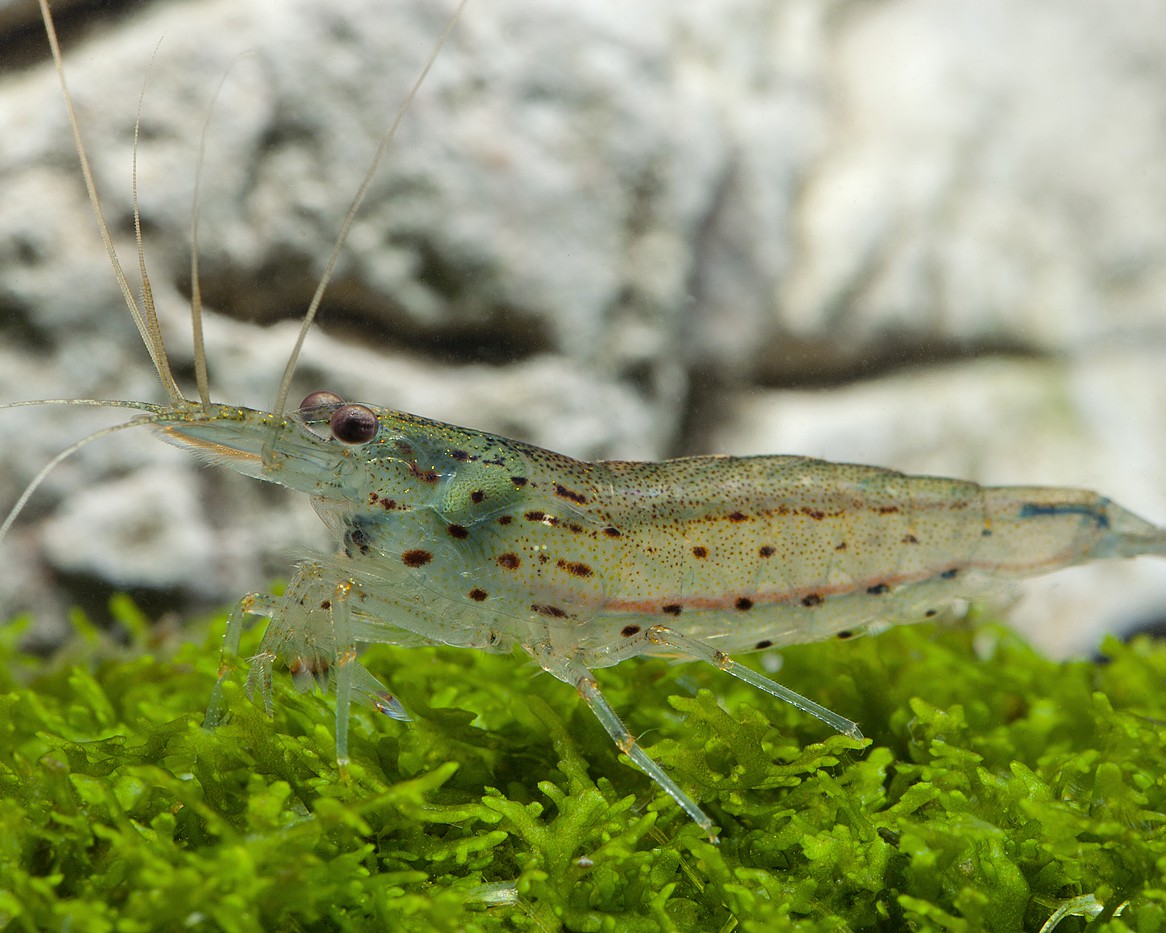
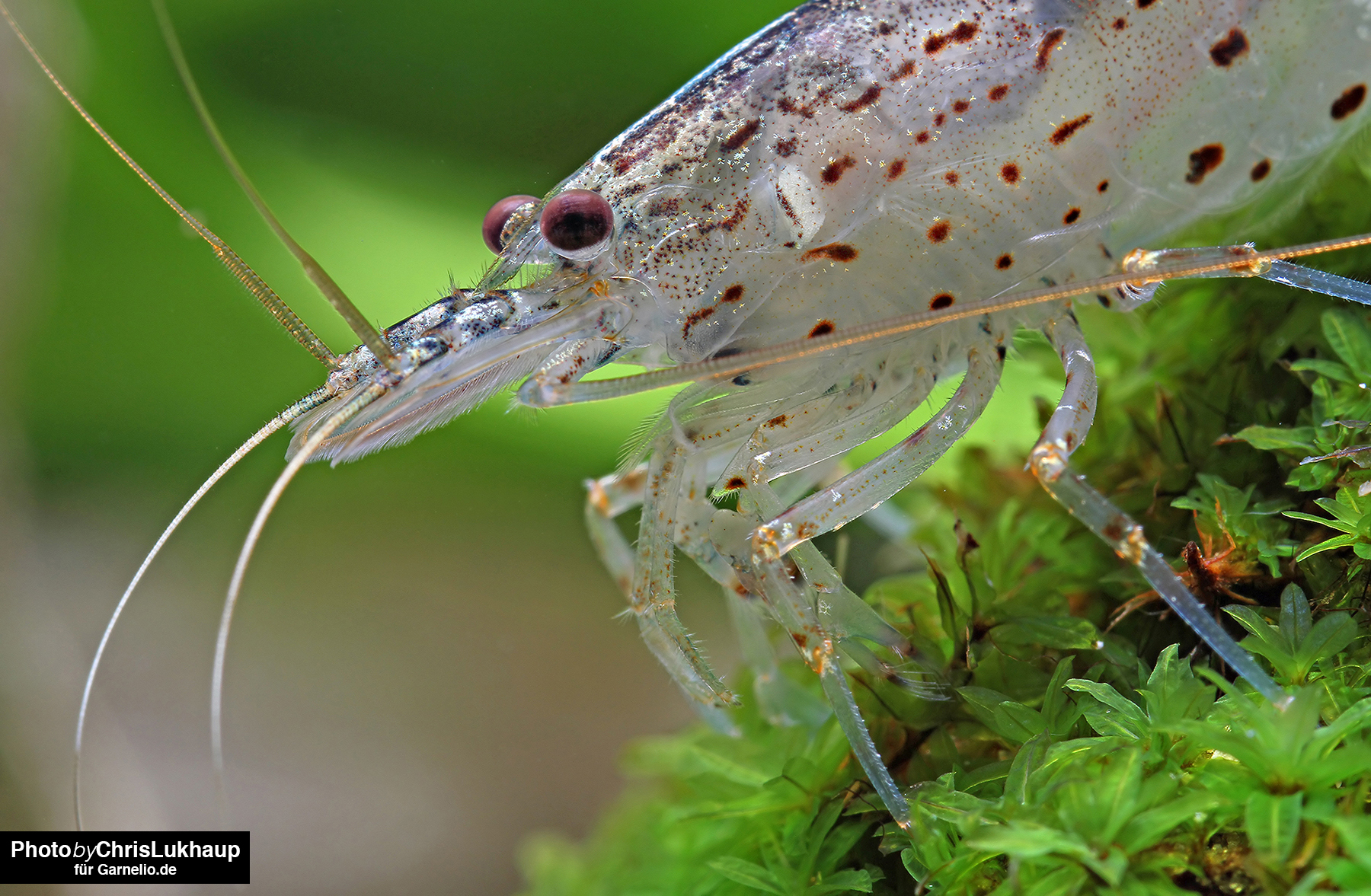
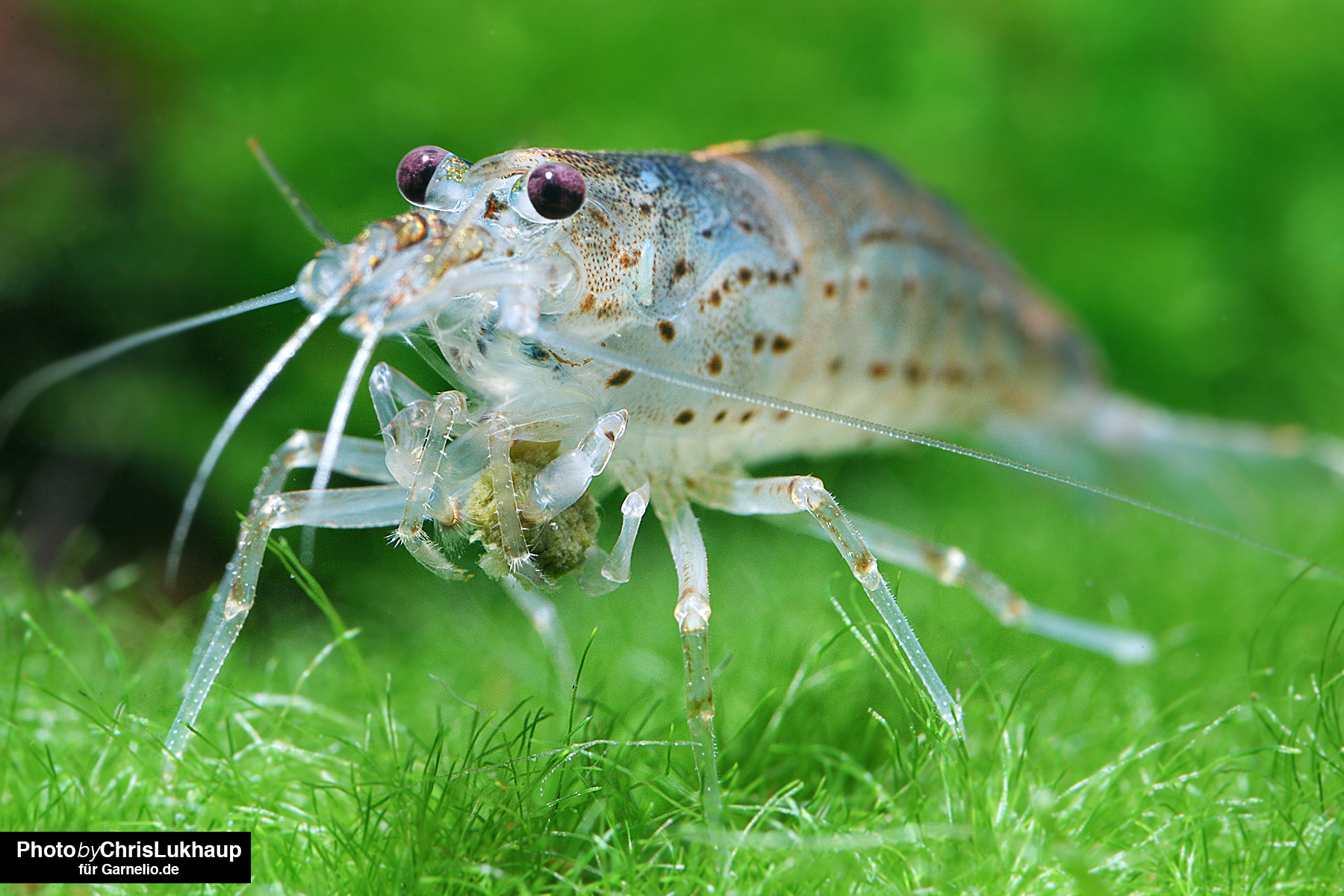
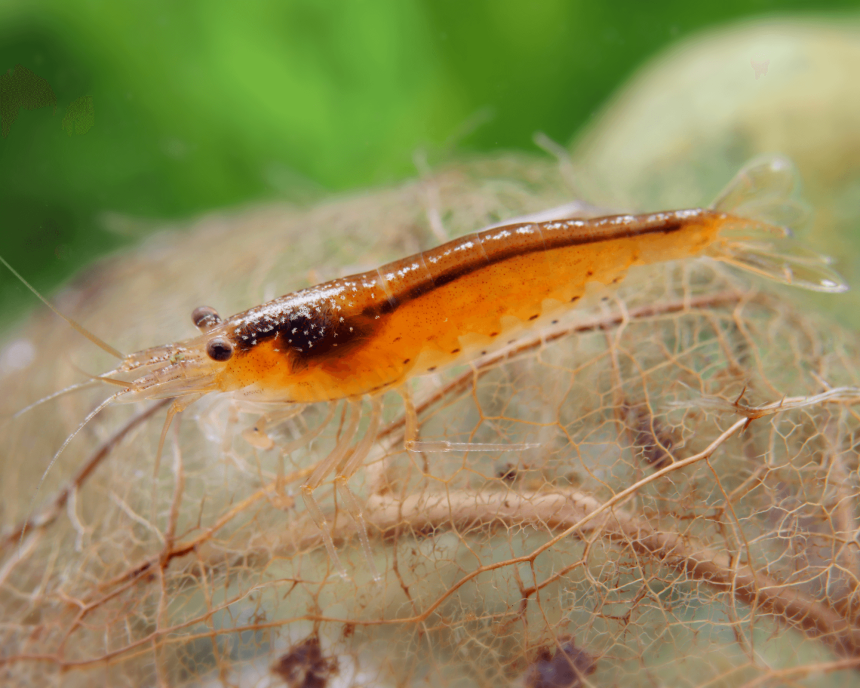
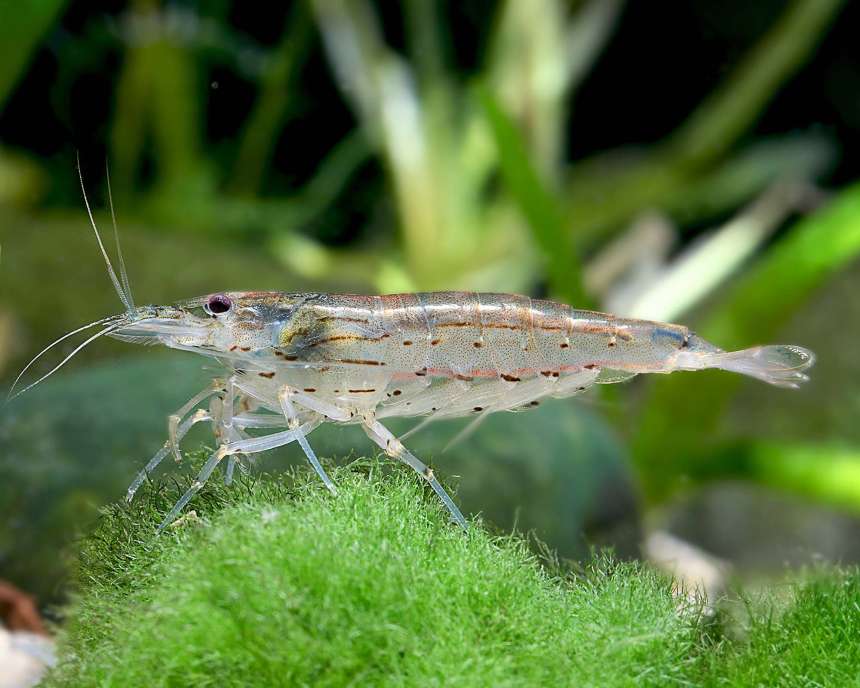
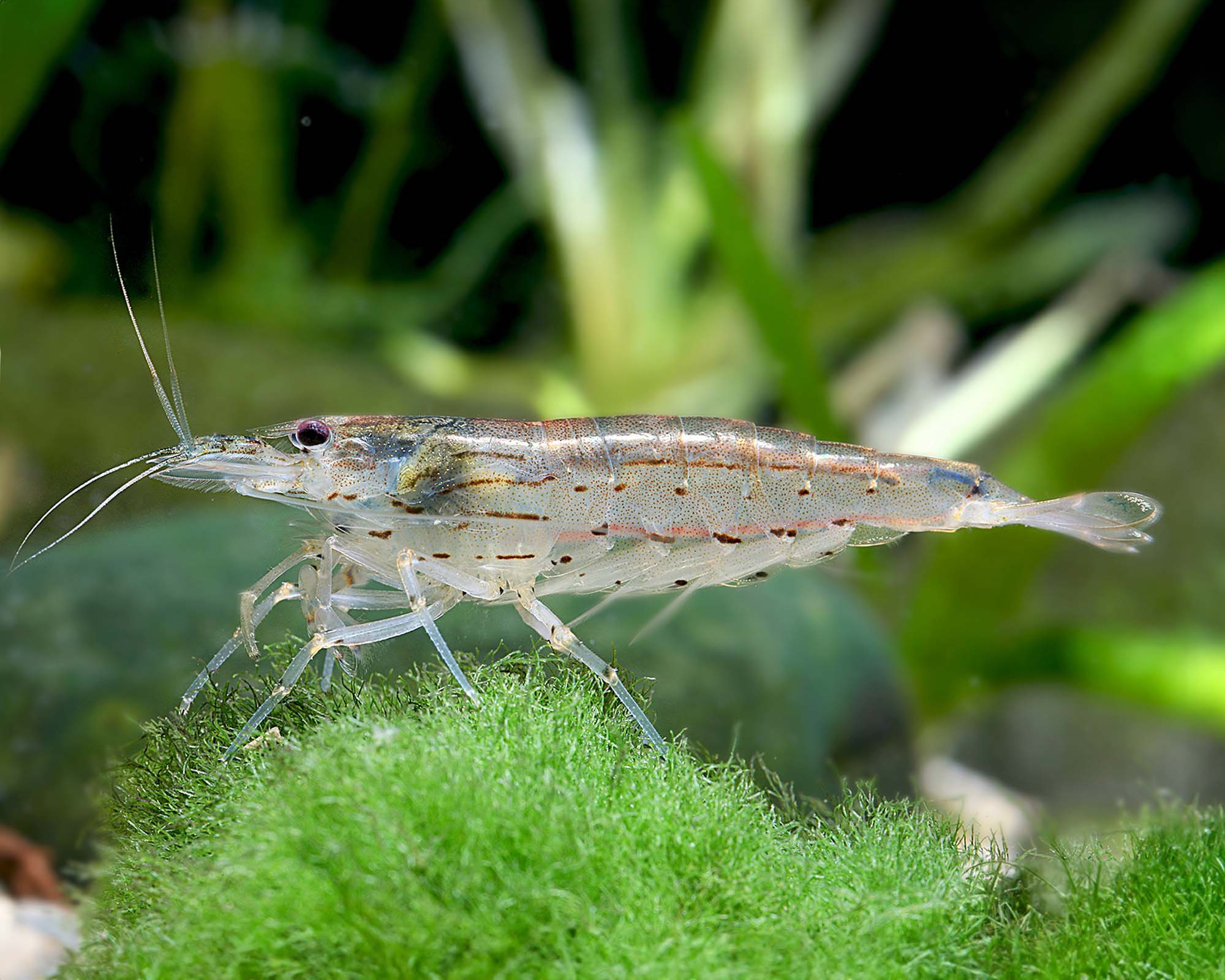
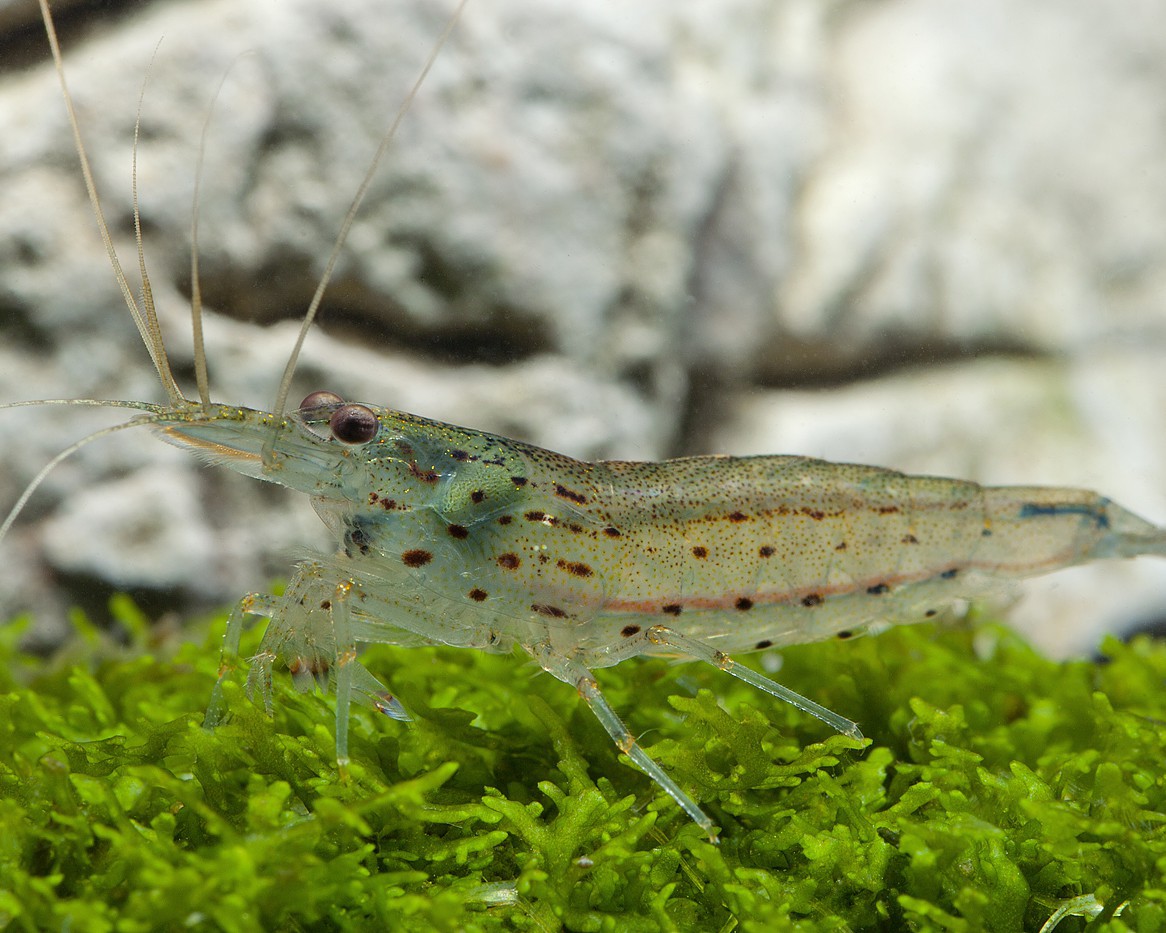
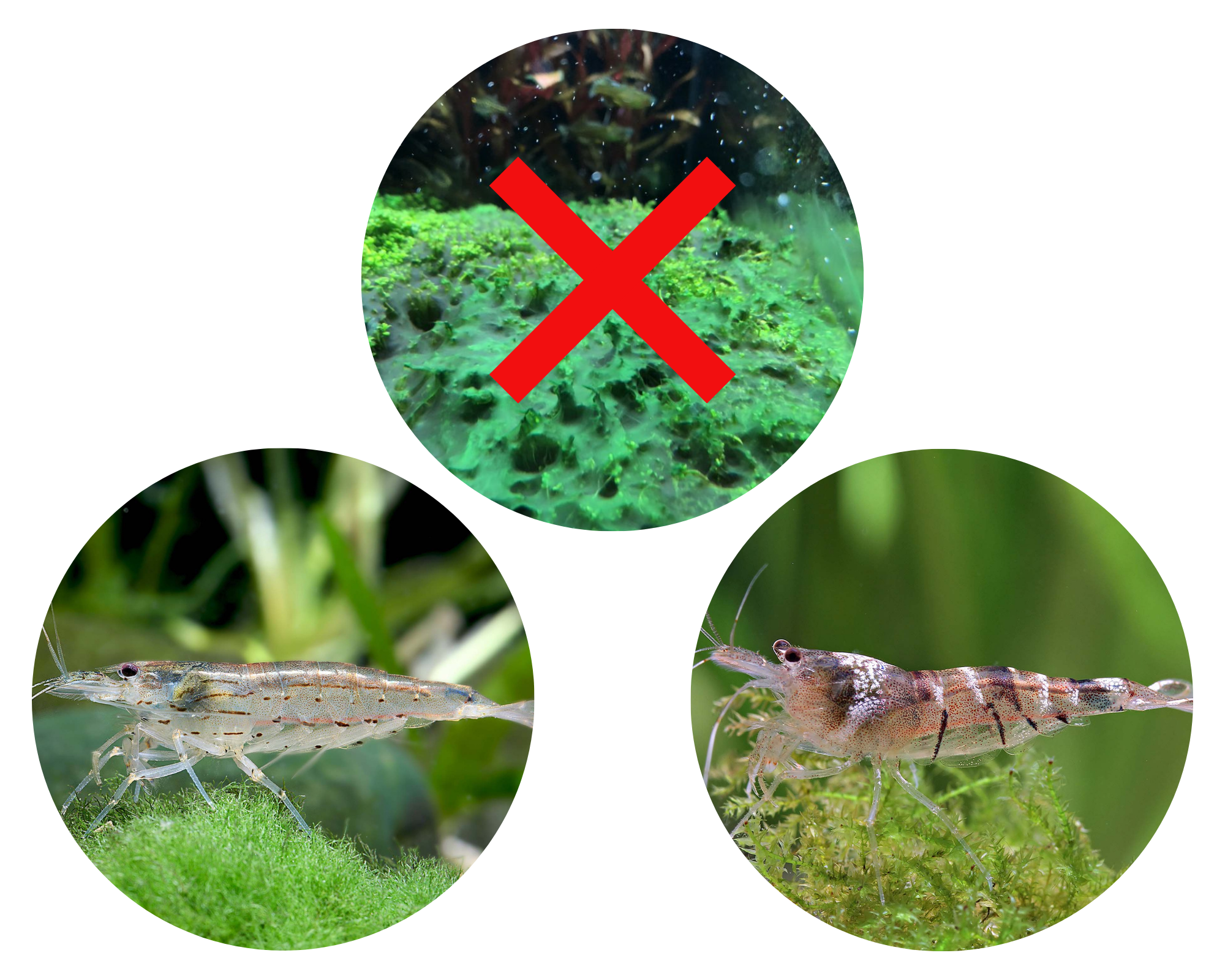
Amano Shrimp is the established aquarium name for Caridina multidentata, a decapod crustacean in the family Atyidae. The body is mostly translucent or grayish, often marked with brown to reddish-brown spots, dashes or a dorsal line. Females are usually larger and deeper-bodied than males. Color intensity can change with background, diet, stress and individual variation.
Natural habitat
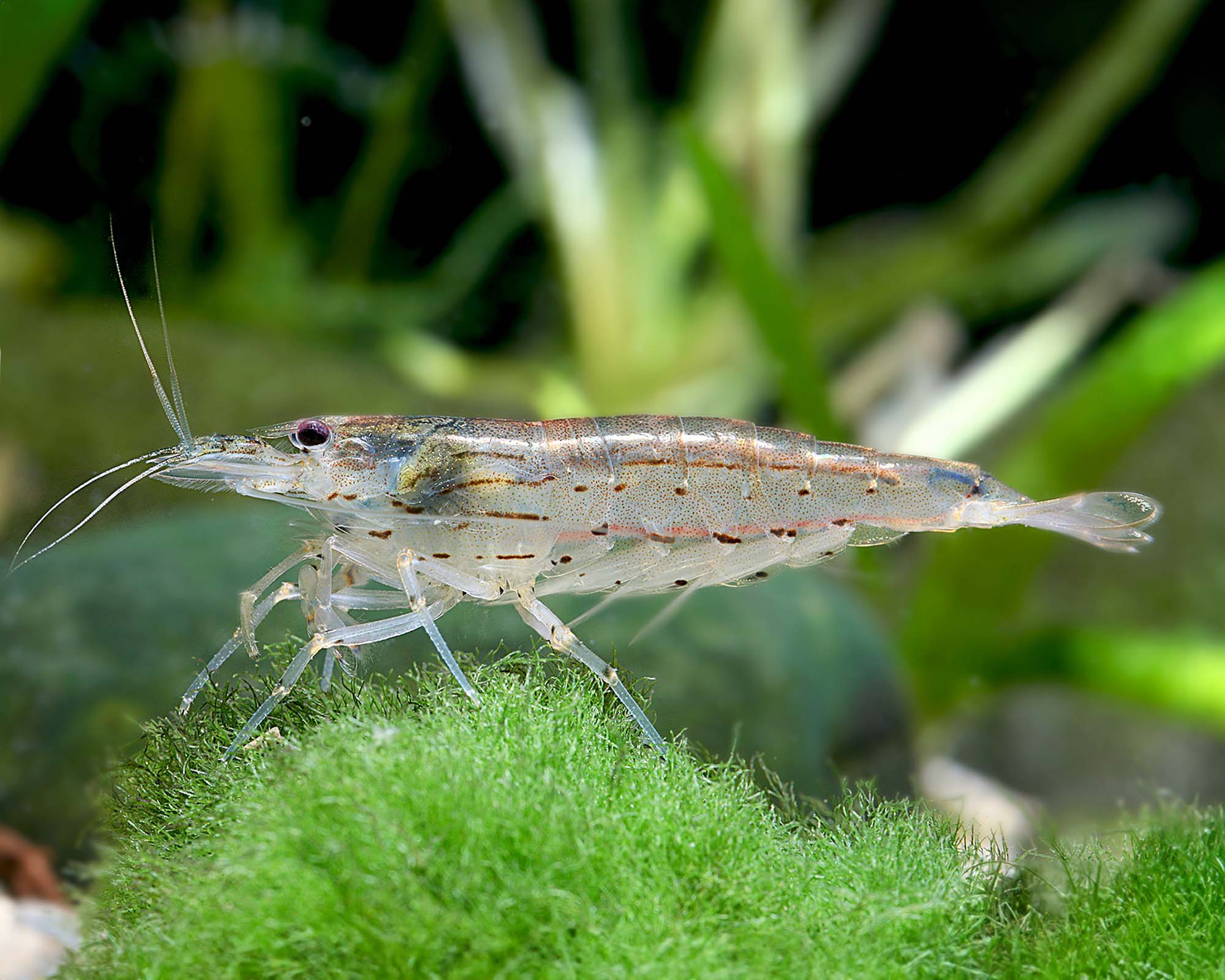
Caridina multidentata is associated with clear, oxygenated freshwater streams and rivers in Japan and nearby parts of East Asia. Adults graze on algae, aufwuchs and organic particles on rocks, wood and vegetation. In nature, newly hatched larvae are carried downstream toward brackish or marine-influenced water before later developing into juvenile shrimp that return to freshwater.
Aquarium setup and water parameters
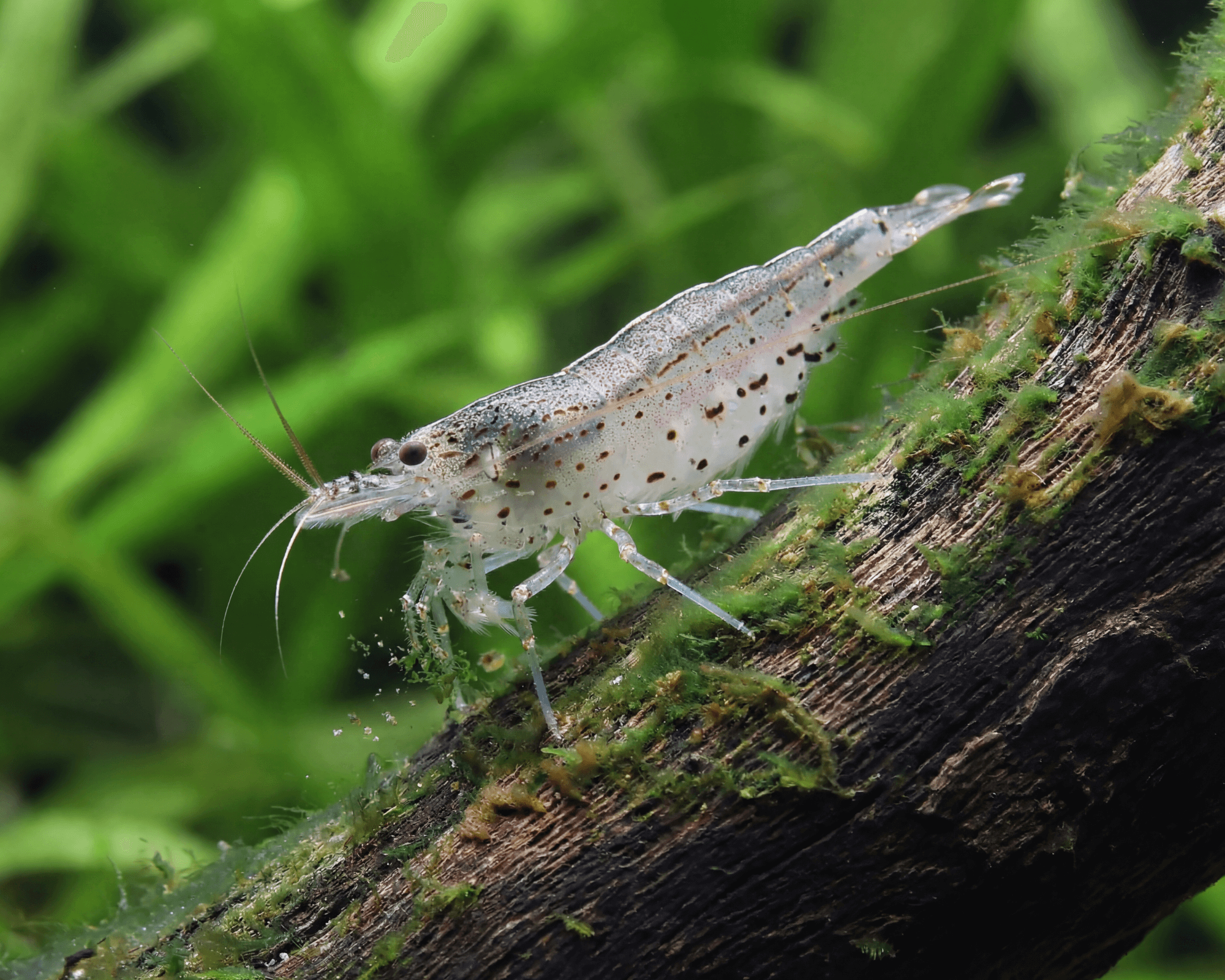
Use a mature, fully cycled aquarium with gentle to moderate circulation, good oxygenation and plenty of surfaces for grazing. Plants, moss, wood and smooth rock provide cover and biofilm. A lid or covered filter intake helps prevent escapes. Aim for 18-28 °C and pH 6.5-7.5, with stable hardness and mineral content sufficient for normal shell formation. Avoid ammonia and nitrite, and keep nitrate low through regular maintenance. Acclimate slowly, especially after transport.
Feeding
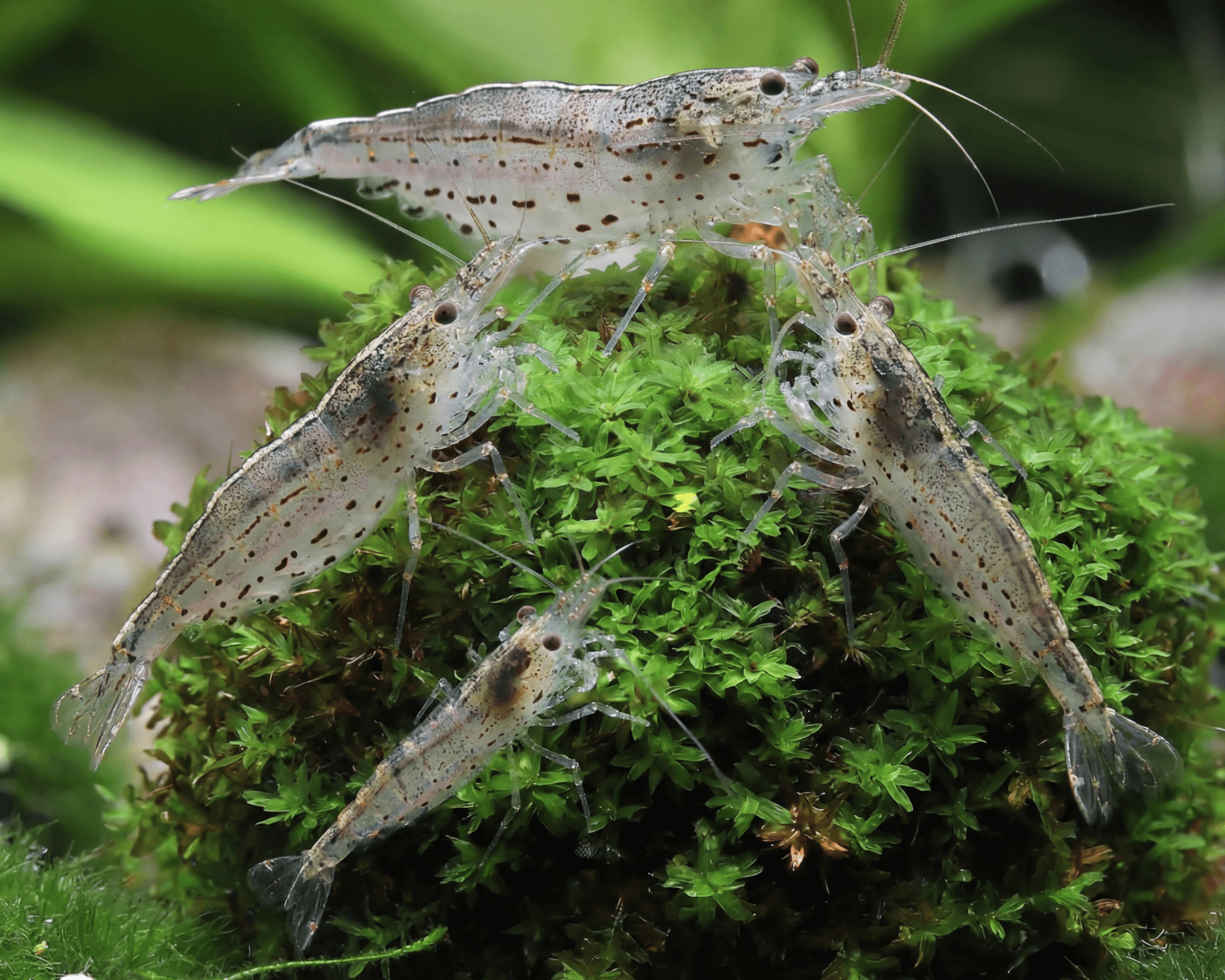
Amano Shrimp should obtain much of its diet from naturally growing biofilm, soft algae and fine organic matter. Supplement with small portions of quality shrimp foods, algae wafers or blanched vegetables such as zucchini or spinach. Remove uneaten food promptly. They are useful grazers, but they are not a substitute for balanced feeding, water quality or manual control of persistent algae.
Temperament and tank mates
Adults are peaceful and can be kept in groups. Suitable companions include other peaceful, similarly sized community fish and nonaggressive freshwater invertebrates. Avoid large, predatory, highly boisterous or fin-nipping fish, which may eat or continually harass them. Newly hatched larvae and small juveniles are especially vulnerable, so a dedicated species aquarium gives the best survival odds.
Molting and mineral needs
Growth occurs through periodic molting. A shrimp may become less visible before shedding, and the discarded transparent exoskeleton is often mistaken for a dead animal. Provide stable water chemistry, hiding places and adequate dietary minerals rather than making sudden mineral or pH corrections. Shrimp are soft and vulnerable immediately after a molt, so cover and calm tank mates are important. Remove a carcass only after checking carefully for movement.
Breeding and larval development
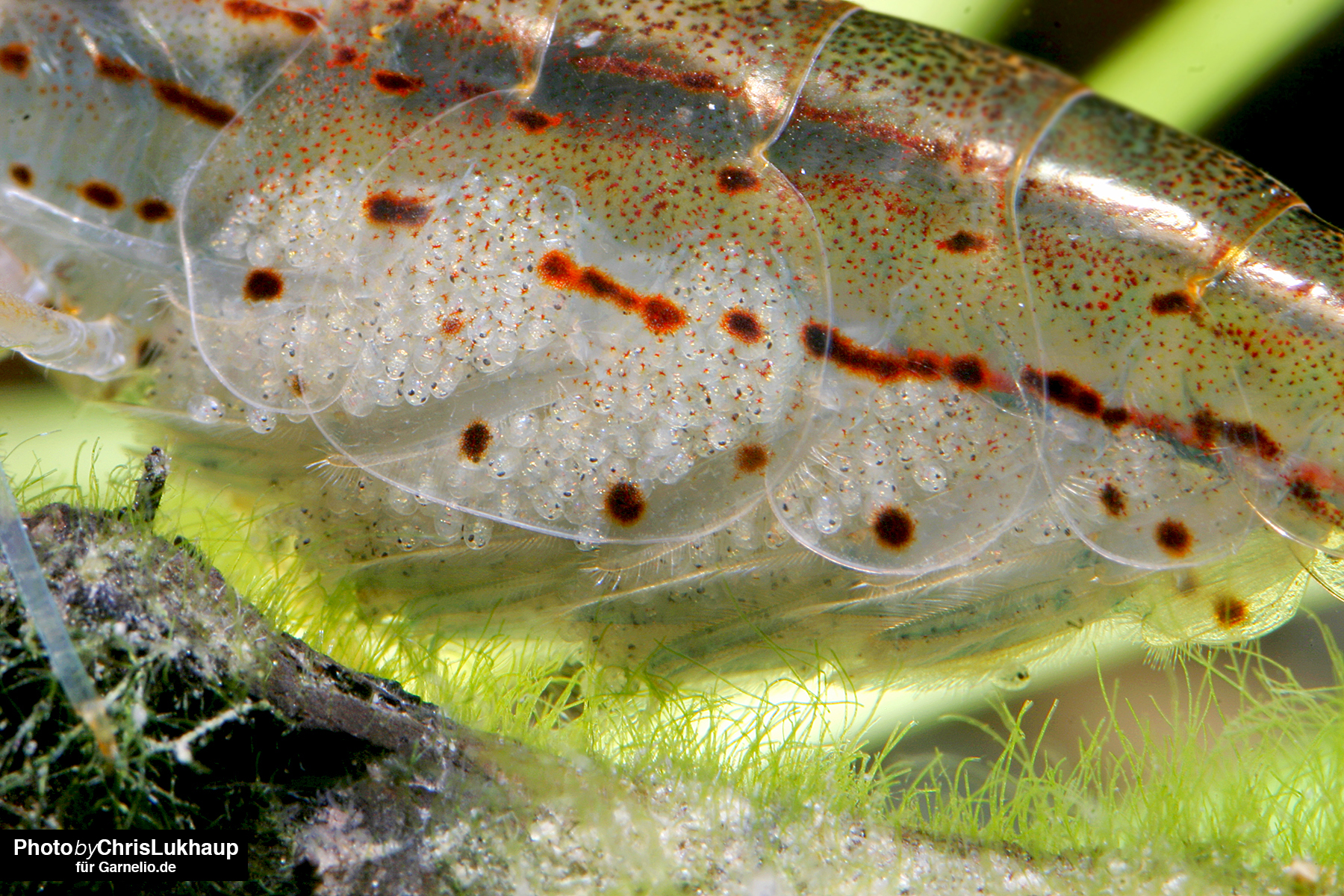
A female carries numerous eggs beneath her abdomen and fans them until hatching. The released larvae cannot normally complete development in ordinary freshwater. Successful breeding requires collecting larvae and raising them in carefully controlled brackish or marine water with suitable food, aeration and gradual transitions; the exact salinity and procedure depend on the culture method. After metamorphosis, juveniles can be acclimated back to freshwater. Consequently, adults may breed in a community aquarium while few or no young survive.


Leave your comments