Taxonomy and identification
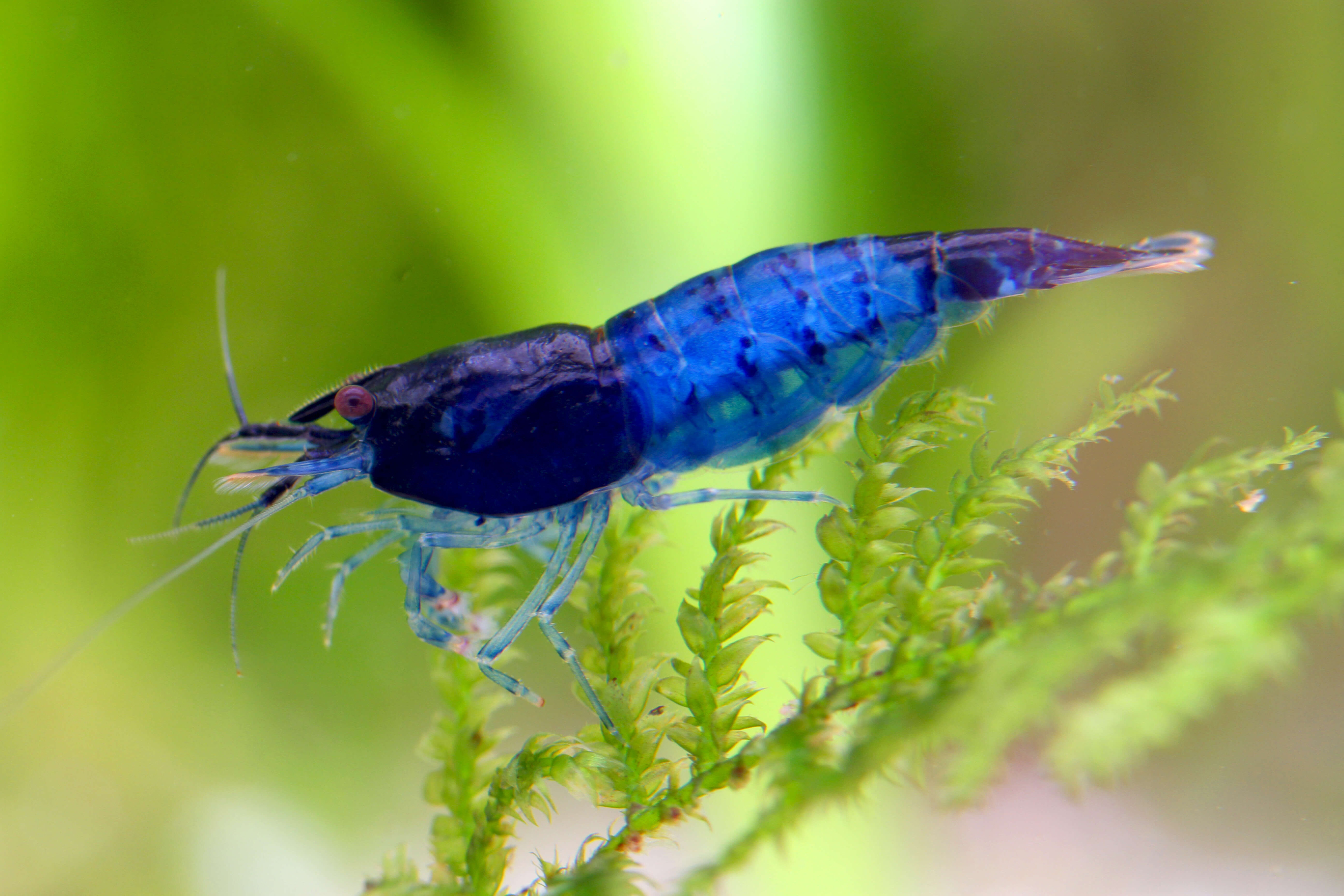
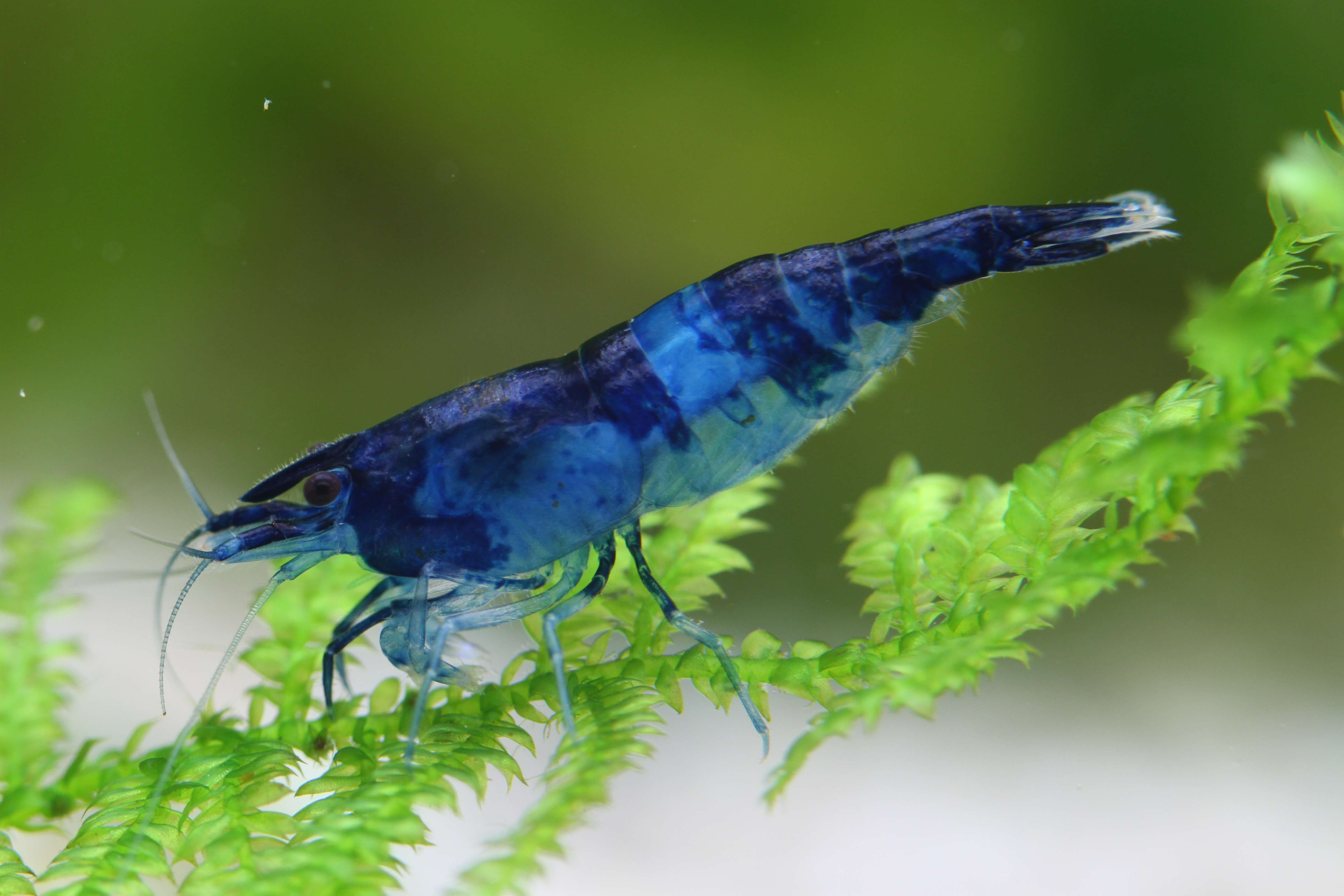
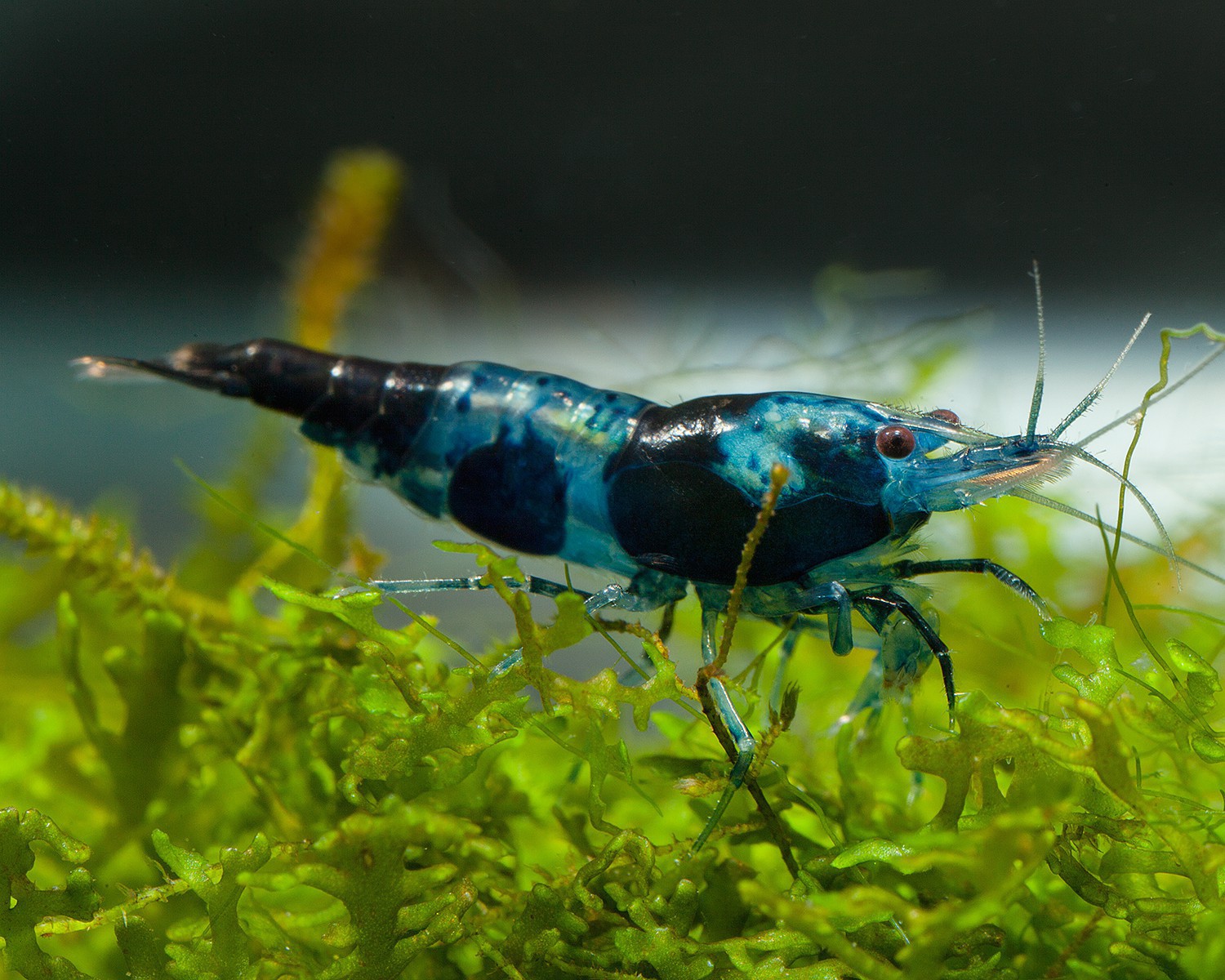
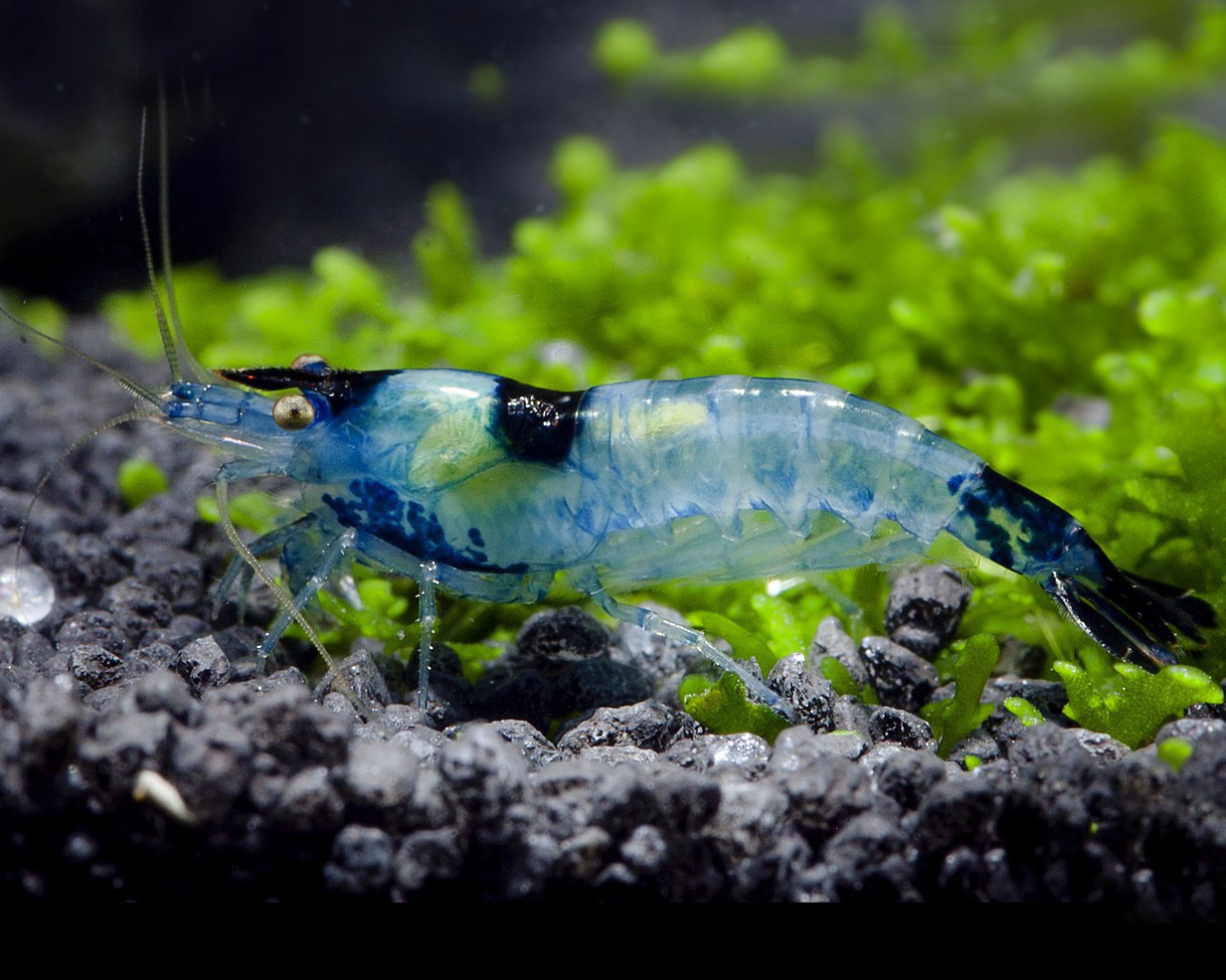
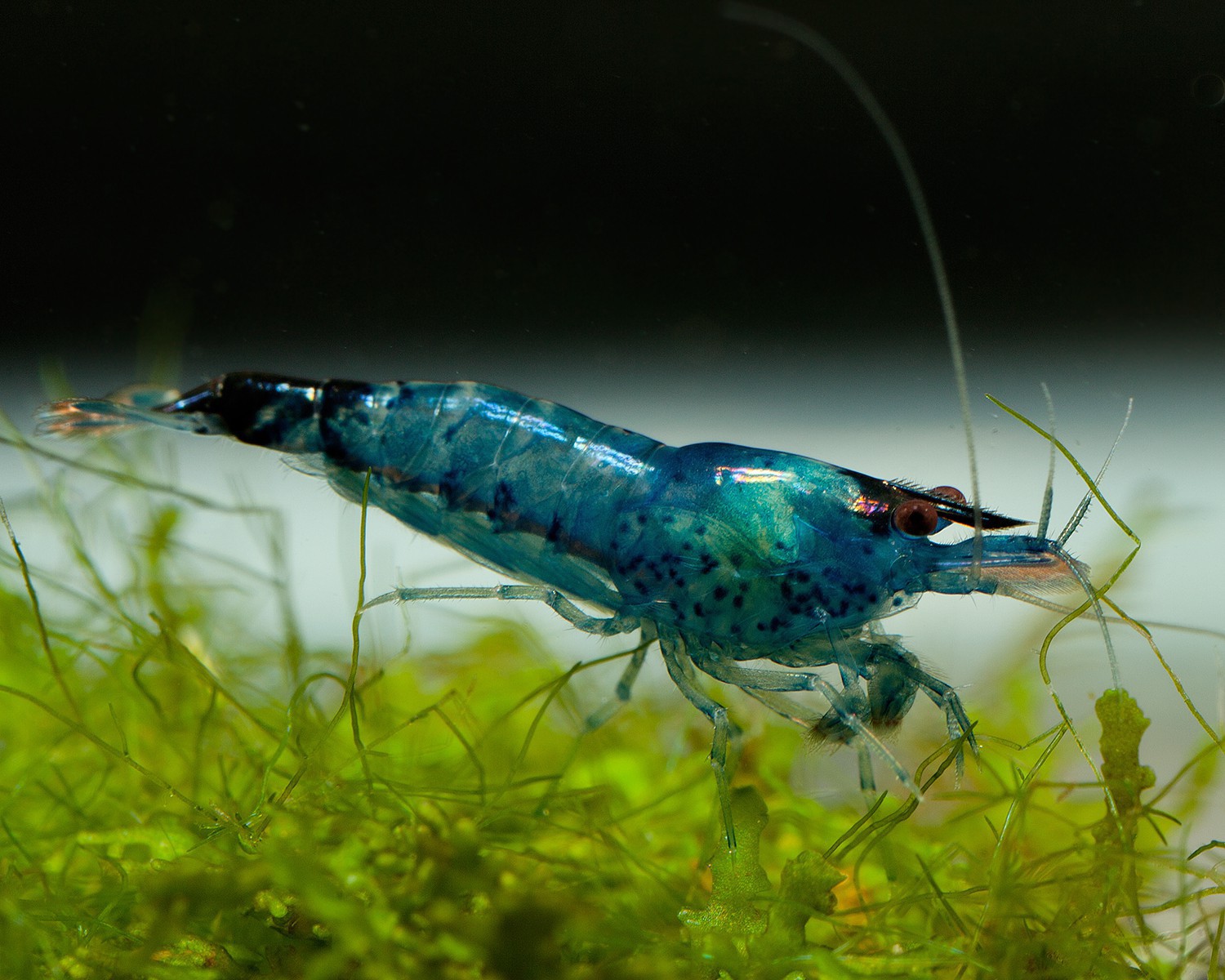
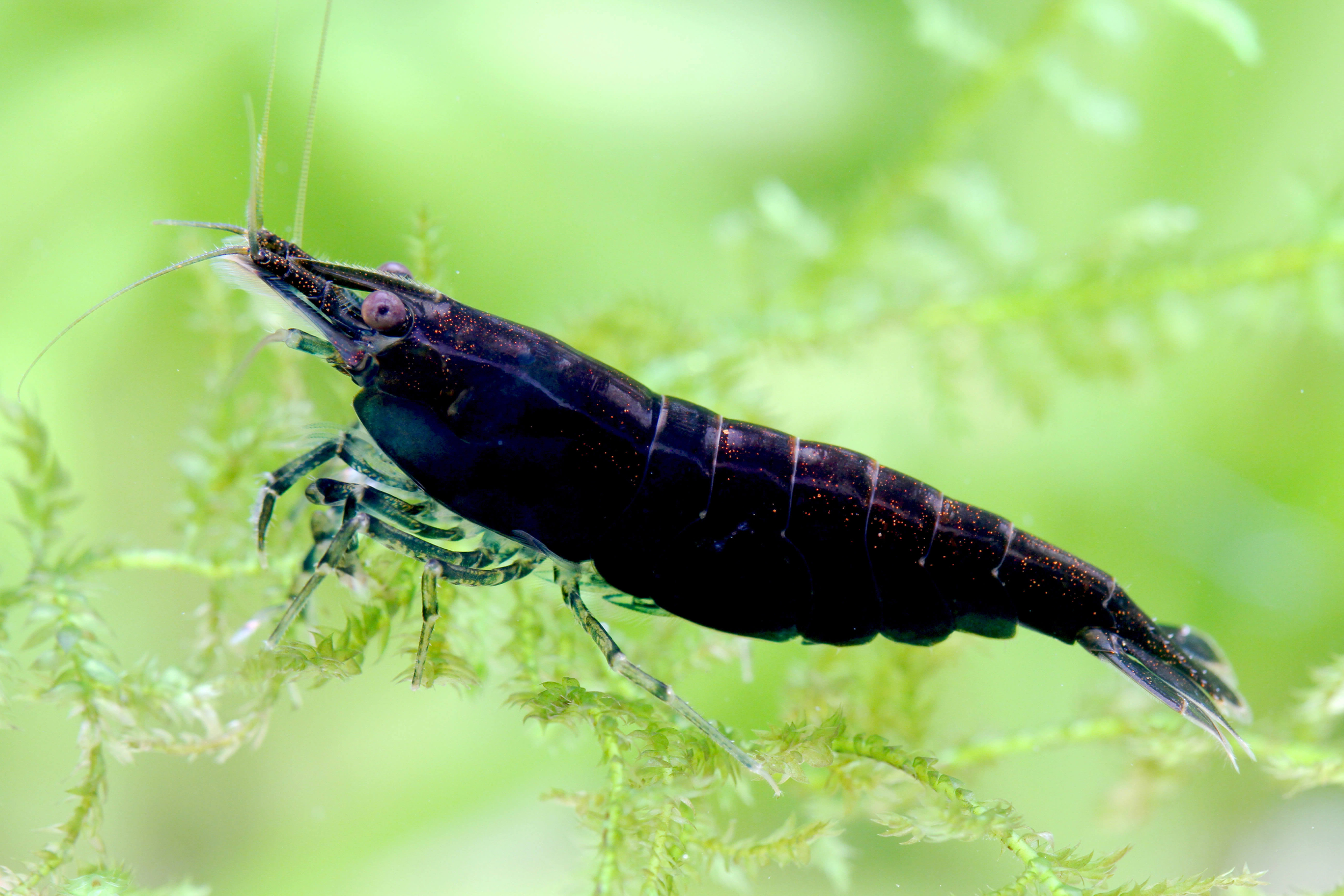
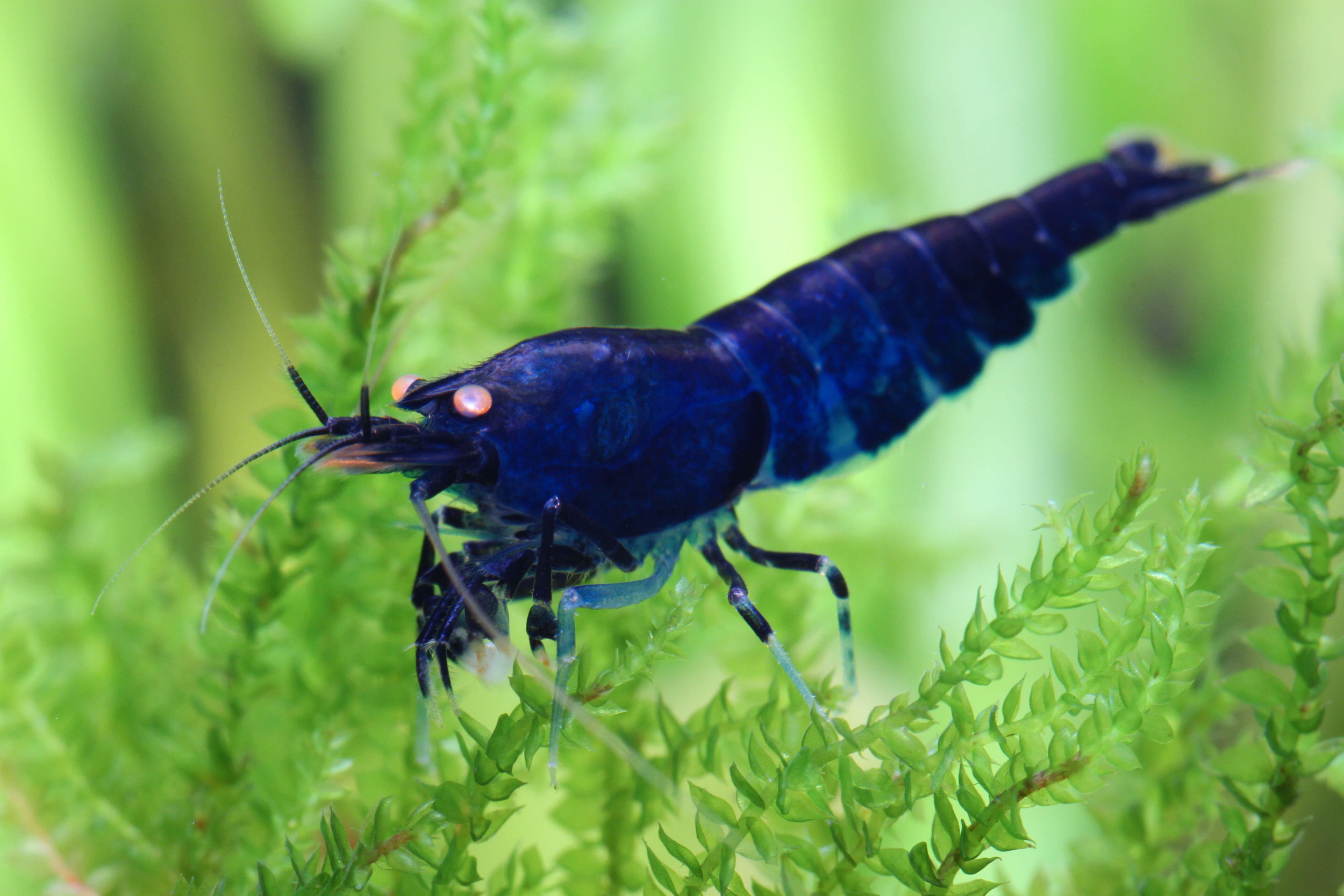
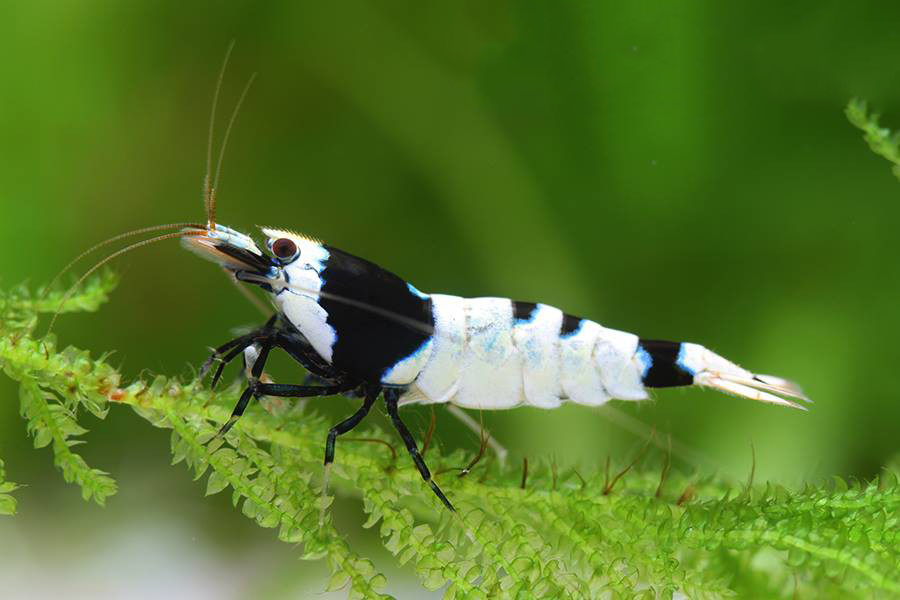
The shrimp sold as Blue Black Rili is generally treated as a selectively bred color form of Neocaridina davidi, a freshwater shrimp in the family Atyidae. Rili describes a broken or partly transparent body pattern rather than a separate species. Selective-breeding lines are not always standardized, and individuals may show different proportions of blue, black, and clear coloration. The trade name and supplied images support this identification, but they do not prove a particular breeder line or genetic purity.

Natural background and habitat
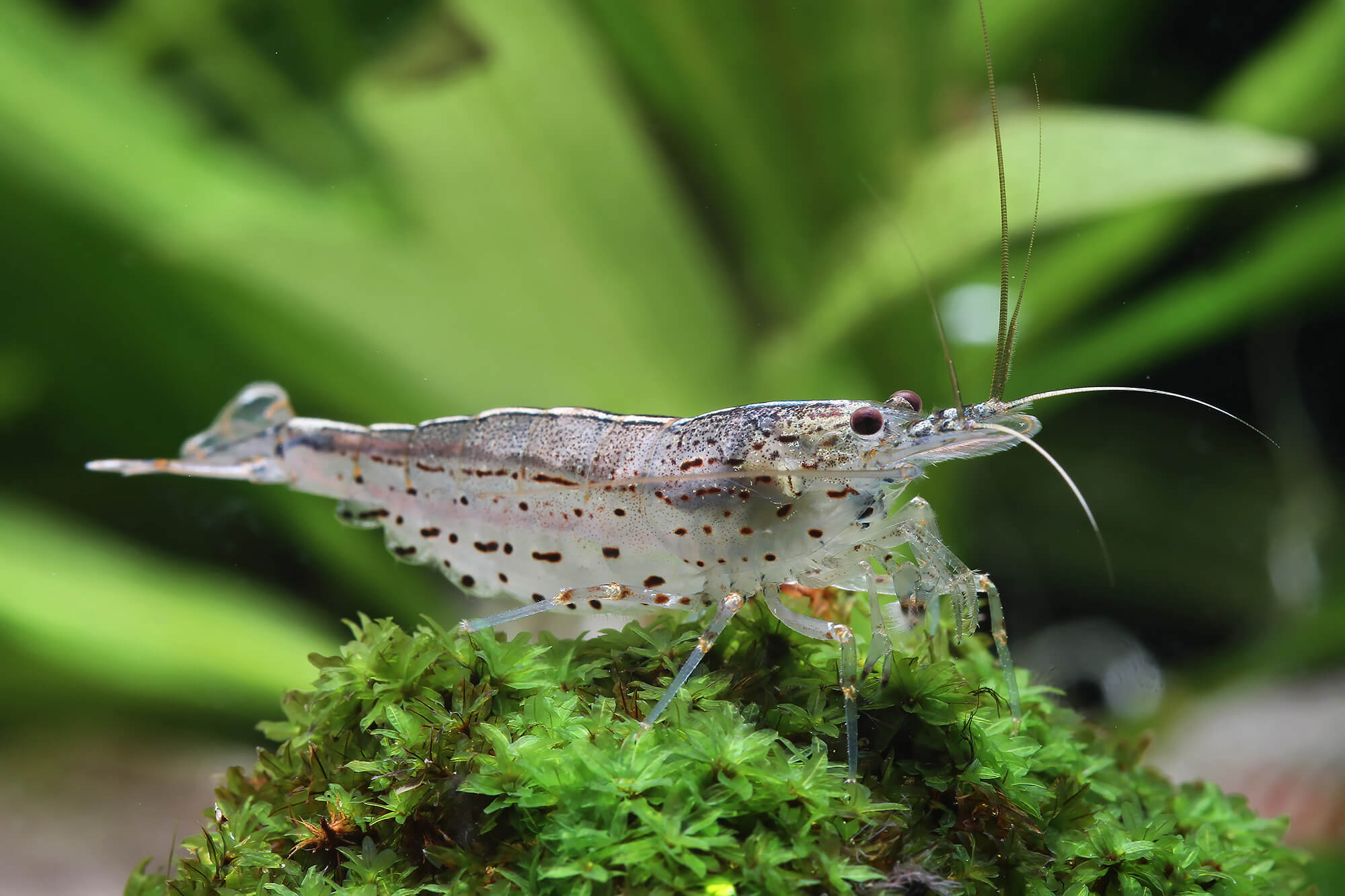
Neocaridina davidi is associated with freshwater streams, ponds, ditches, and other slow to moderately moving waters in its native East Asian range. In aquaria, it benefits from stable, oxygenated water, plant cover, biofilm-producing surfaces, and gentle circulation. Moss, fine-leaved plants, wood, and smooth hardscape provide grazing area and refuge, especially for juveniles and recently molted adults.
Aquarium and water parameters
Use a fully cycled aquarium with ammonia and nitrite at zero and low, controlled nitrate. A small colony can be maintained in a planted aquarium of about 20 litres or larger, although more volume provides greater stability. Keep the temperature around 18-26 °C and pH around 6.5-8.0, avoiding abrupt changes. Moderate general hardness and carbonate hardness are useful because the shrimp require dissolved calcium and magnesium to form a new exoskeleton. Use dechlorinated water and make water changes gradually.
Feeding
These shrimp graze continuously on algae, microorganisms, and biofilm growing on plants and surfaces. Offer small amounts of a quality shrimp food or other sinking invertebrate food several times per week, adjusting portions so food is consumed promptly. Blanched vegetables can be occasional supplements. Dried botanicals such as Indian almond leaves may provide additional grazing surfaces as they soften. Remove uneaten food to protect water quality, and avoid copper-containing medications or unnecessary treatments.

Tank mates
The safest companions are other peaceful Neocaridina, snails, and very small, non-predatory fish. Small species such as some rasboras or otocinclus may coexist with adults, but fish can eat newly hatched shrimplets. Avoid large, boisterous, predatory, or strongly inquisitive fish, crayfish, and most larger shrimp. Keep different Neocaridina color forms separate if maintaining a predictable line, because they can interbreed and produce less predictable offspring coloration.
Molting and maintenance
Growth occurs through periodic shedding of the exoskeleton. A shrimp may become less active and seek cover before molting, then remain vulnerable while its new shell hardens. Provide dense plants, moss, and hiding places, and do not remove a normal shed unless it decays or traps debris; the colony commonly consumes it as a mineral source. Stable mineral levels, adequate food, and gradual maintenance are more important than trying to force a particular molt schedule.

Breeding
This is a freshwater-breeding shrimp, so there is no larval marine stage. After a female molts, mating may occur, and fertilized eggs are carried beneath her abdomen and fanned until they hatch as miniature shrimp. A mature, stable, planted aquarium with biofilm and gentle filtration can support breeding without special equipment. Use a sponge prefilter or covered intake to protect young shrimp. Juveniles may show weaker or different patterning, and selective culling is needed to maintain a consistent Blue Black Rili appearance.






Leave your comments