Identification and taxonomy
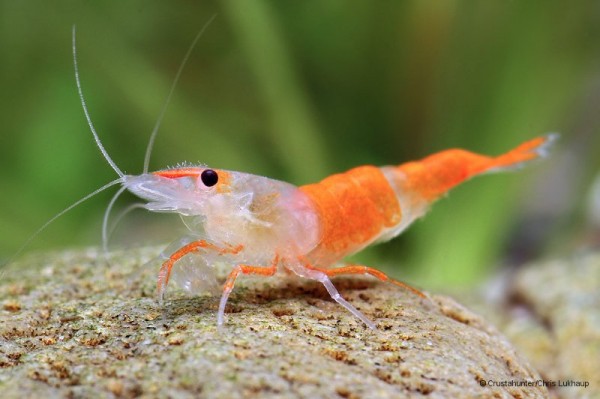
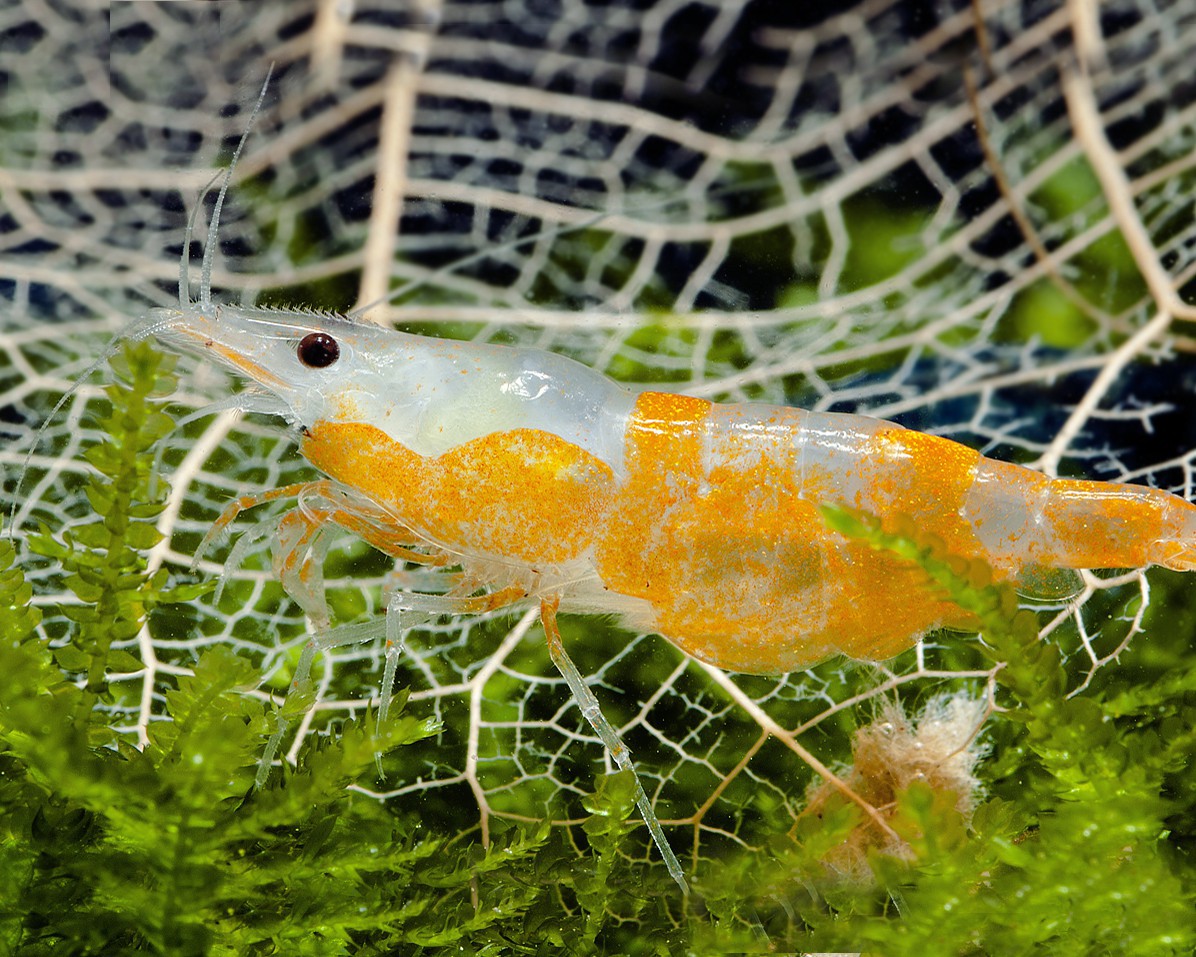
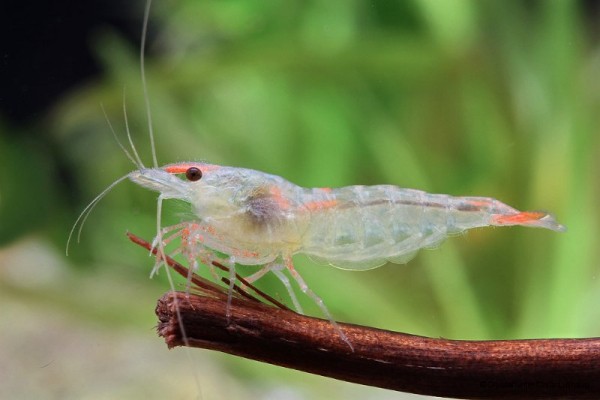
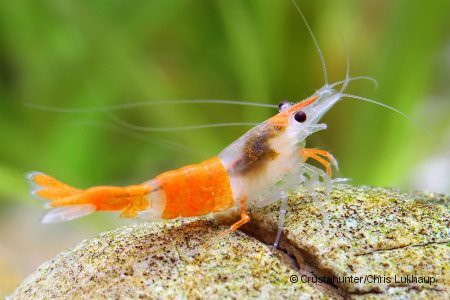
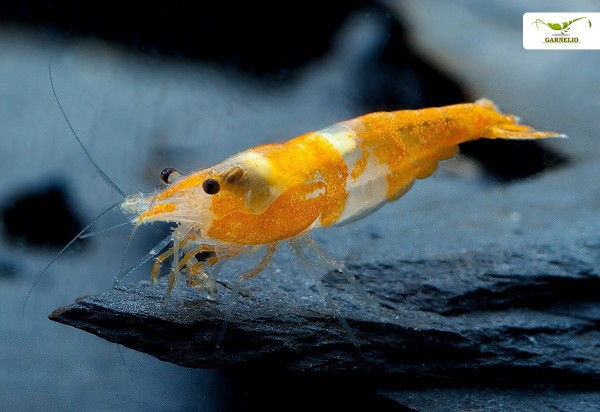
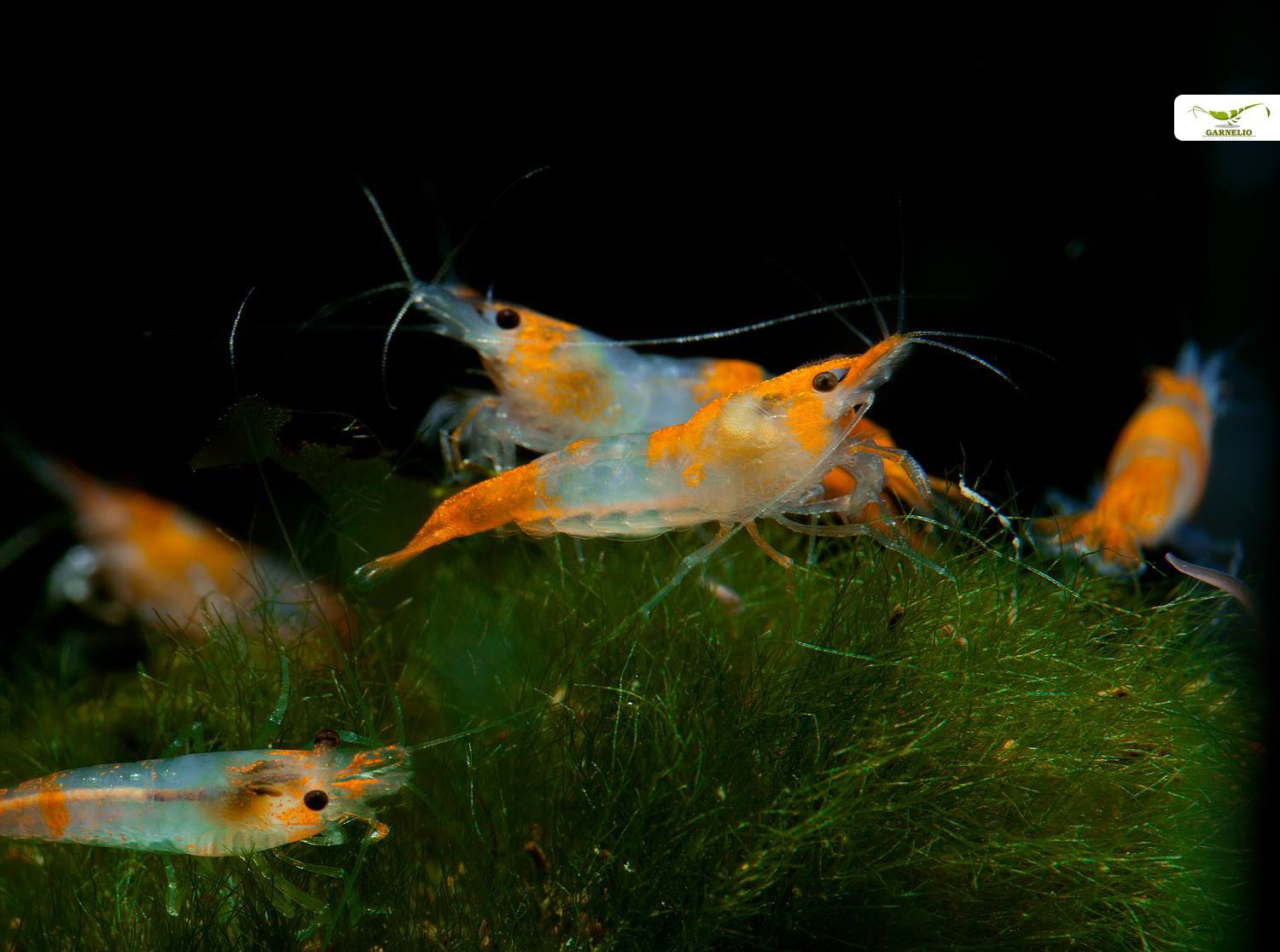
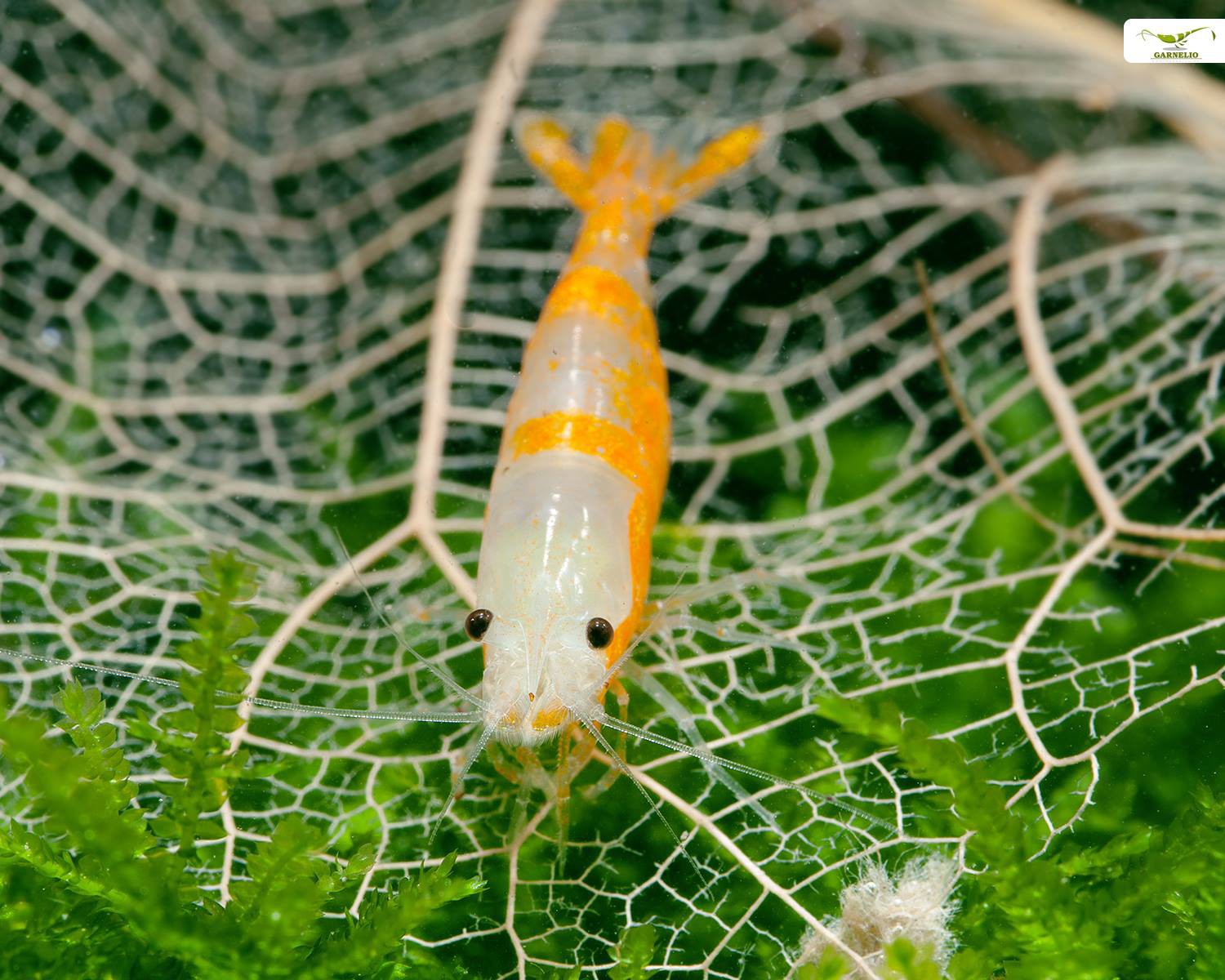
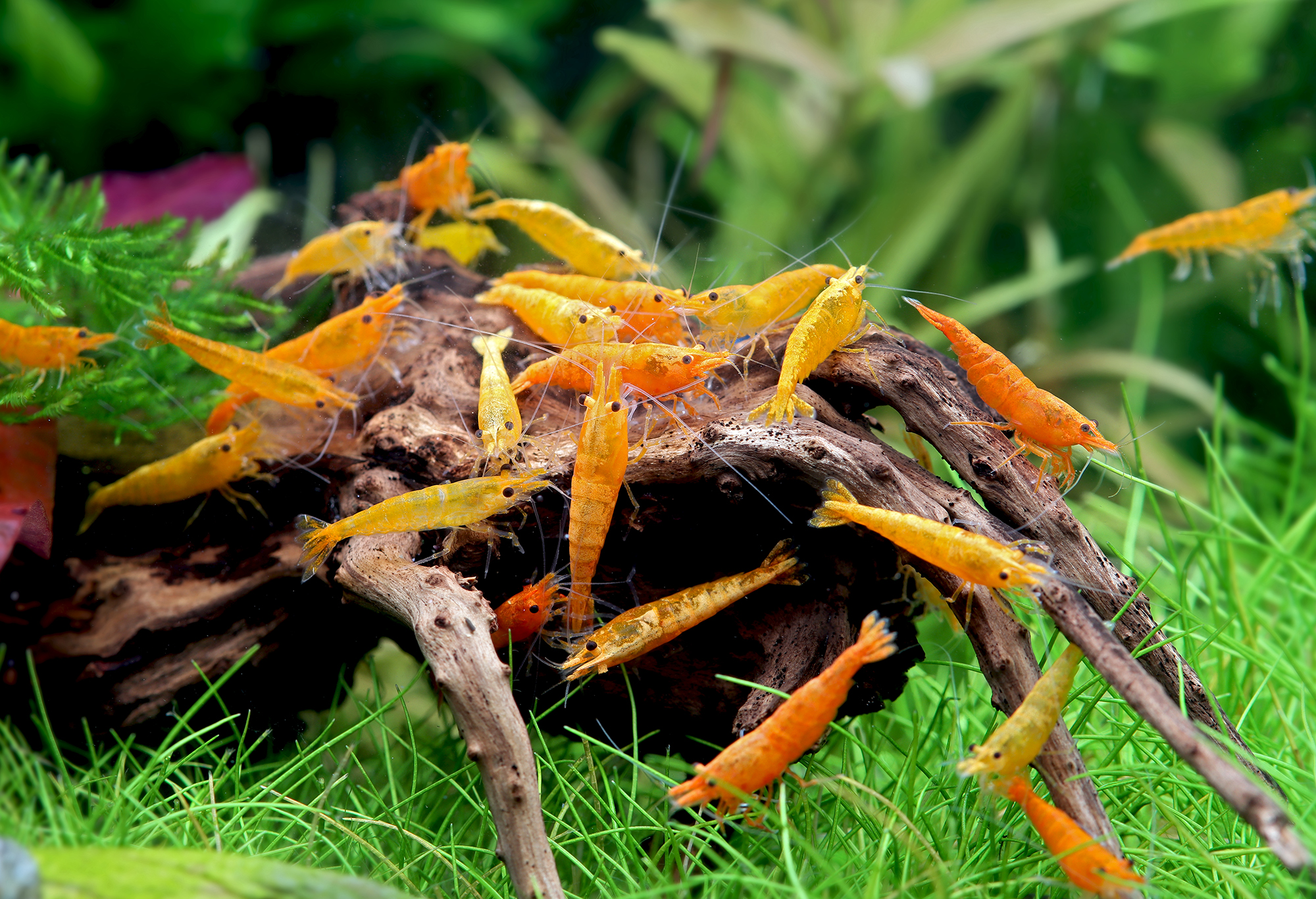
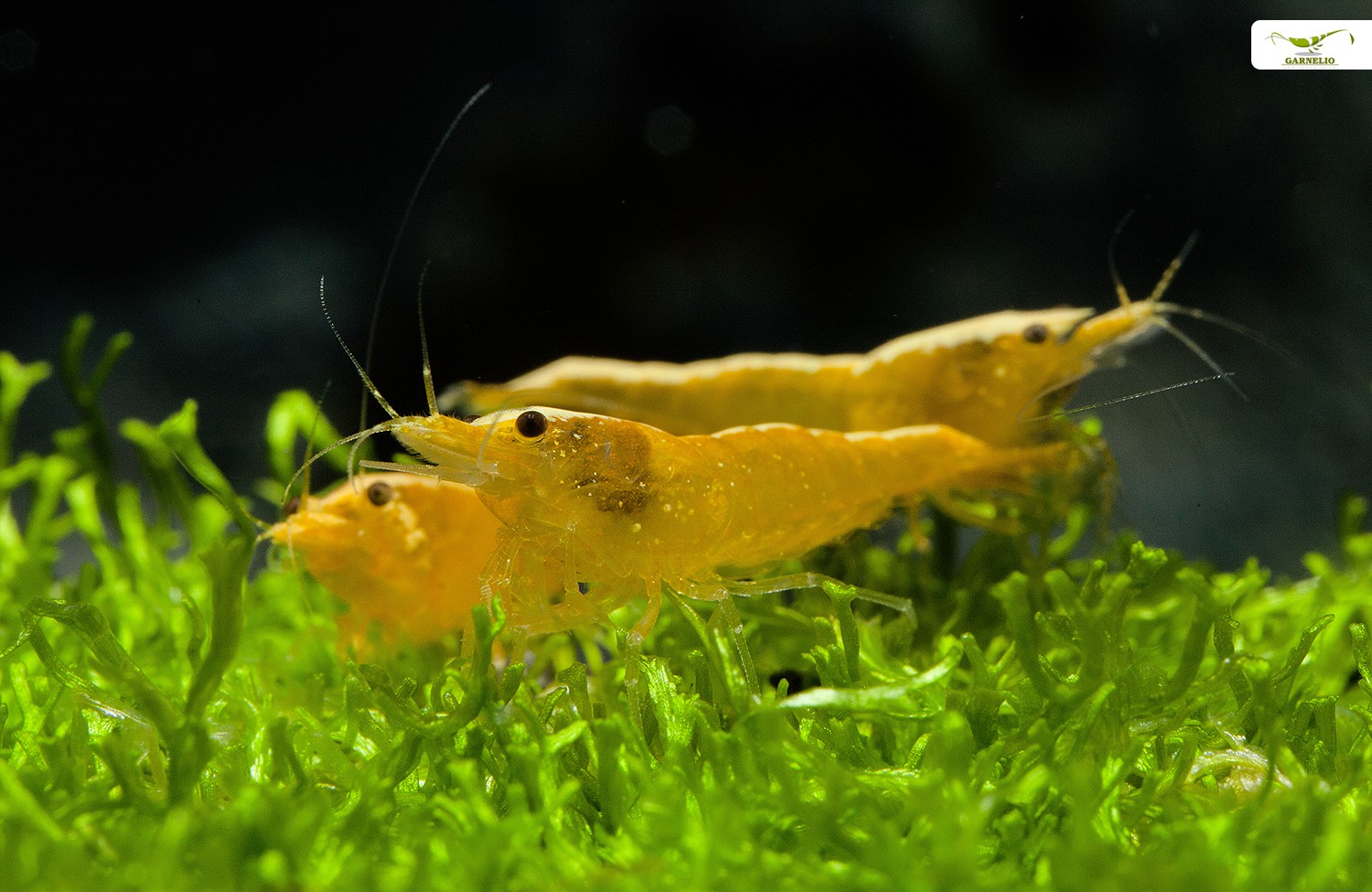
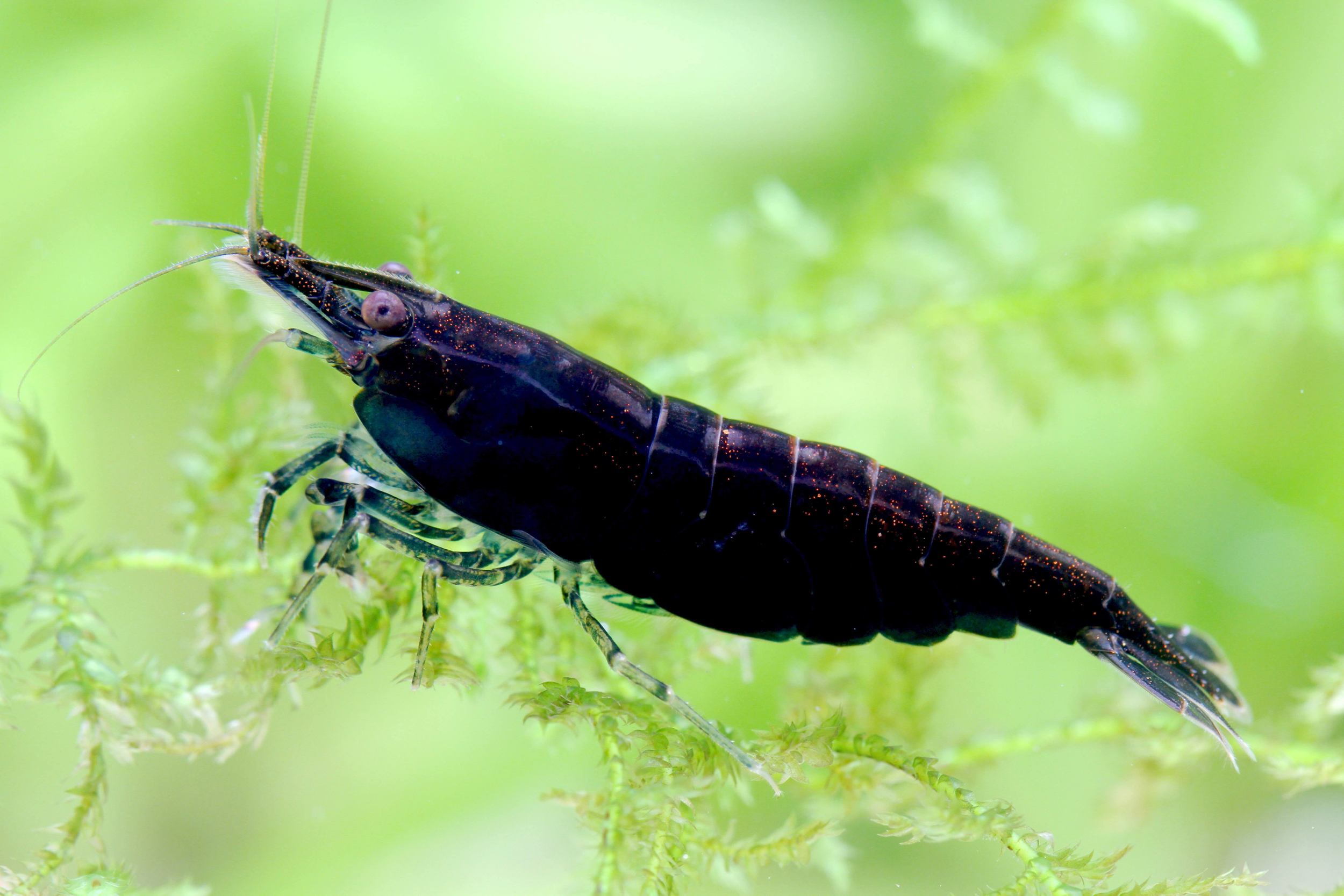
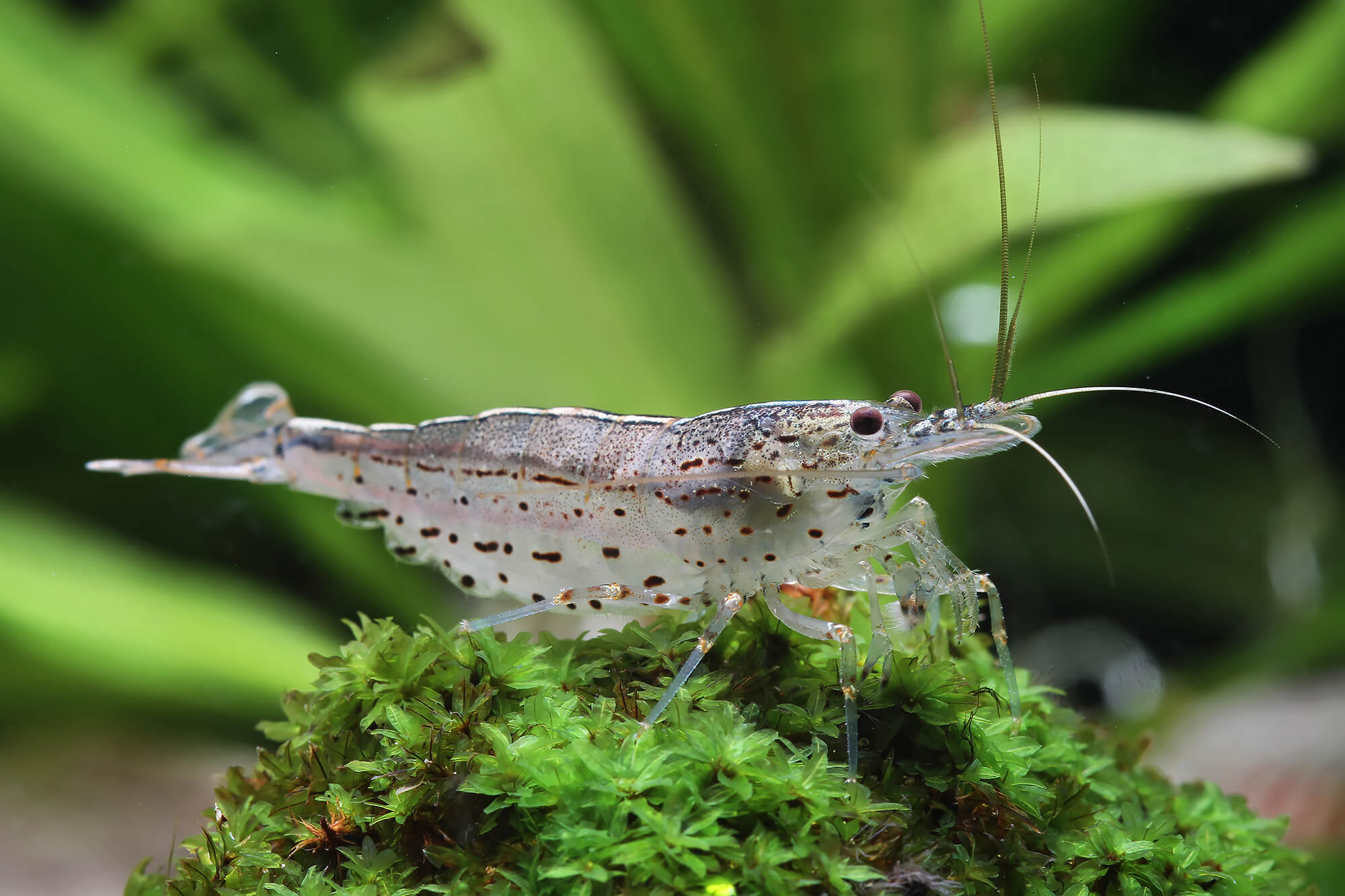
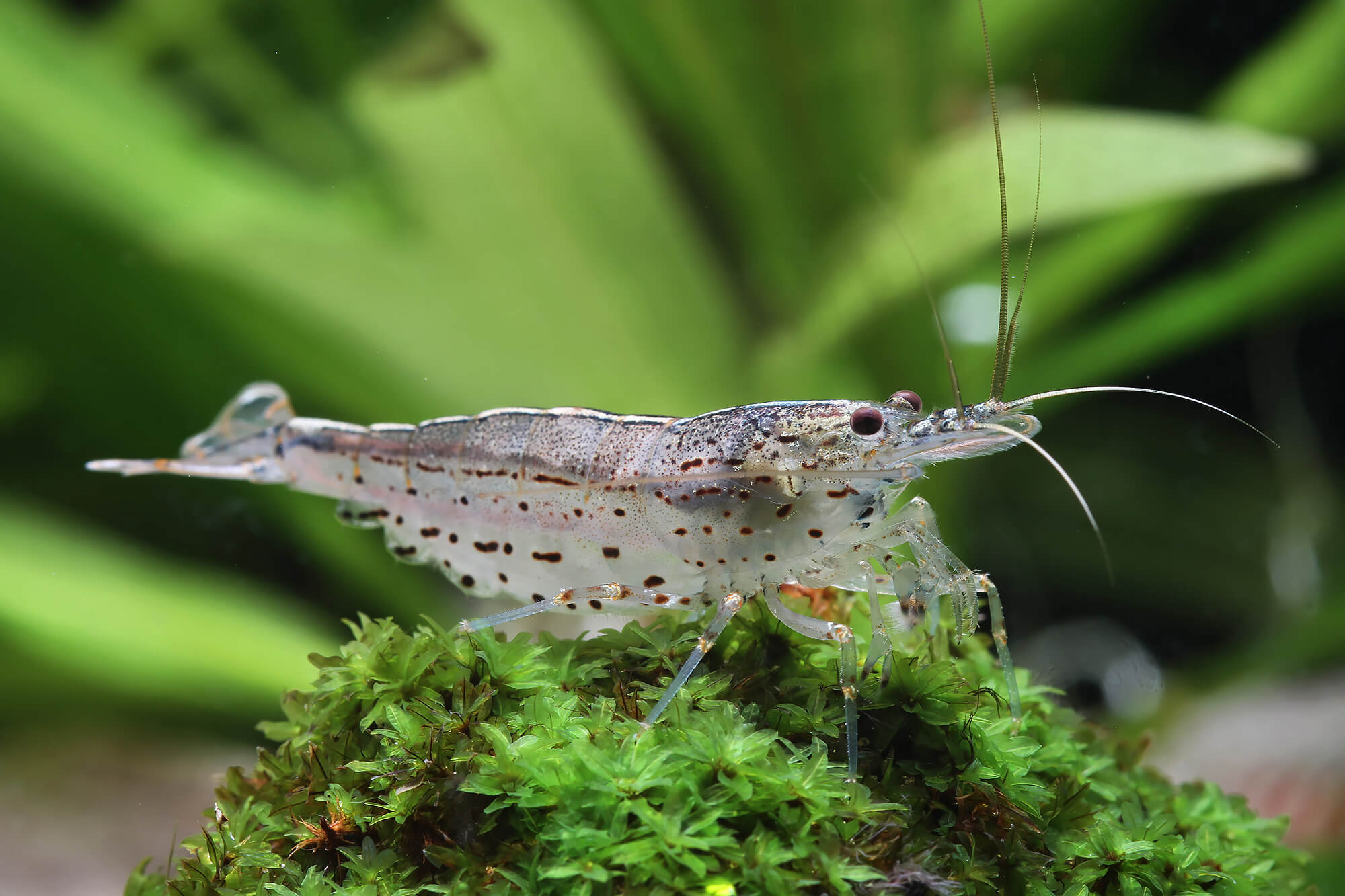
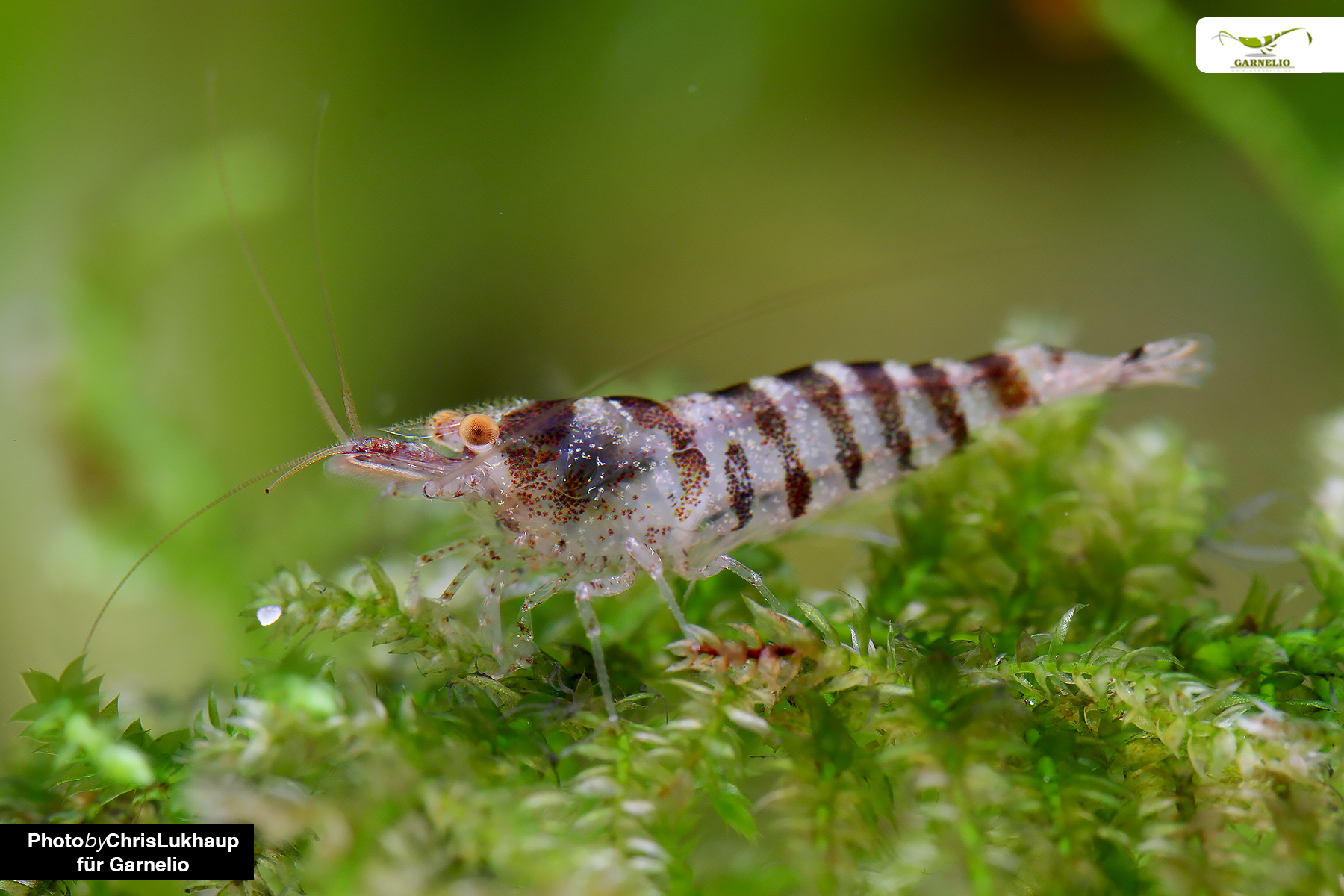
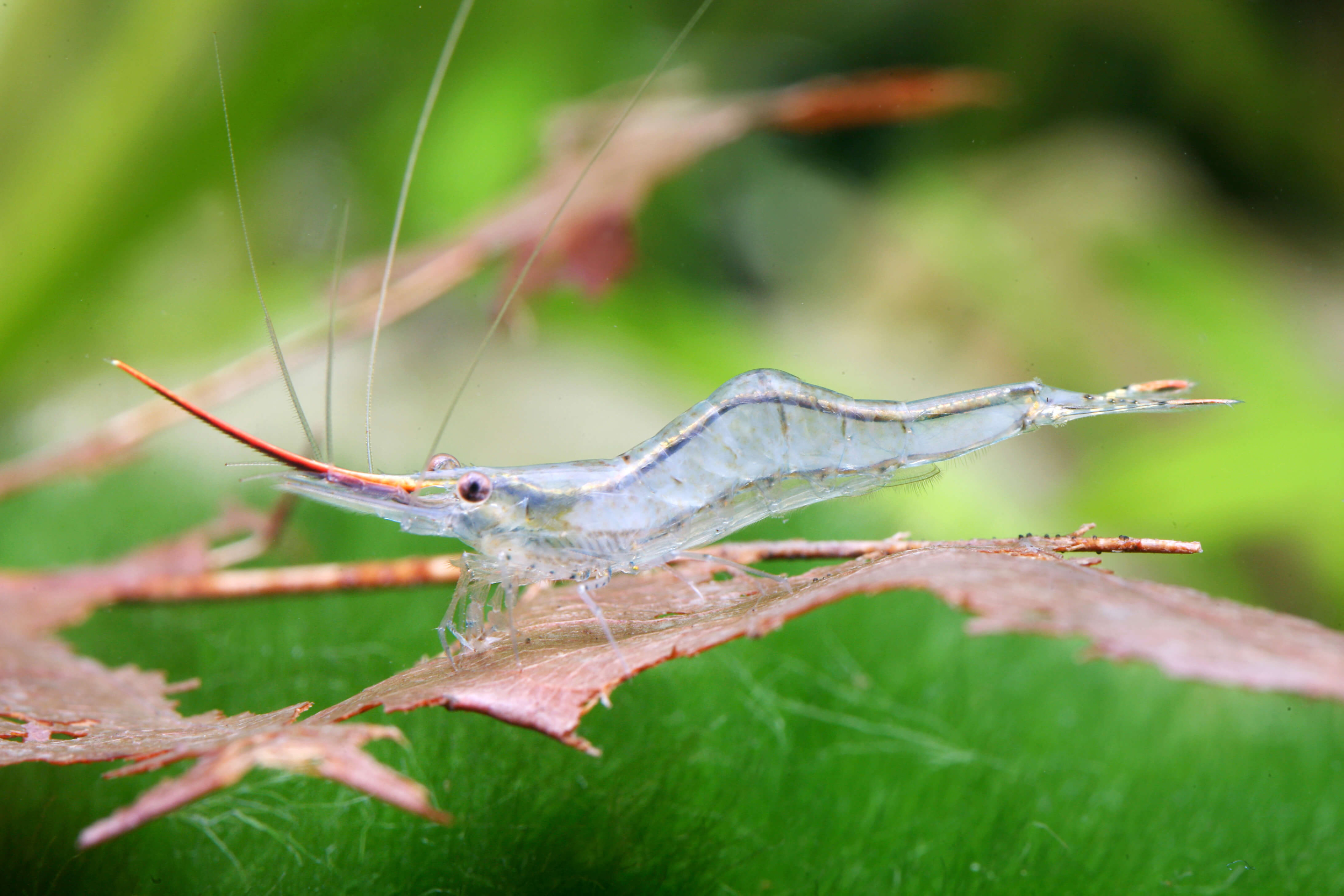
The shrimp shown are consistent with Orange Rili Shrimp, a selectively bred ornamental form of Neocaridina davidi, family Atyidae, order Decapoda. The Orange Rili name describes a pattern rather than a separate species: orange areas are separated by translucent or clear sections. Commercial strains can vary in pattern coverage, intensity, and genetic stability, so exact grade or breeding line cannot be confirmed from the supplied material alone.
Natural habitat
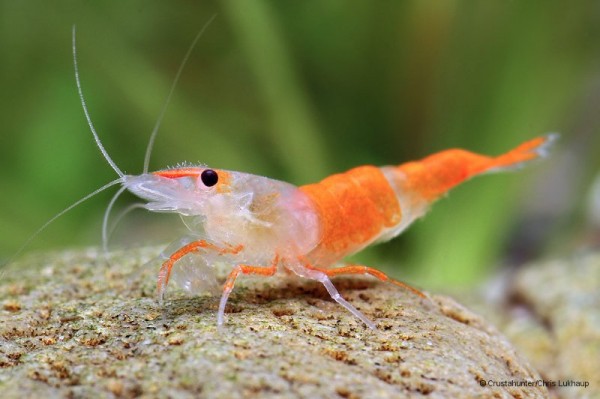
Neocaridina davidi is a freshwater shrimp associated with shallow, well-oxygenated habitats such as streams, margins, and pools, where it grazes on algae, biofilm, and organic particles. Aquarium-bred Orange Rili Shrimp do not require a biotope, but they benefit from stable water, gentle circulation, plants, moss, wood, and other surfaces that support biofilm.
Aquarium conditions
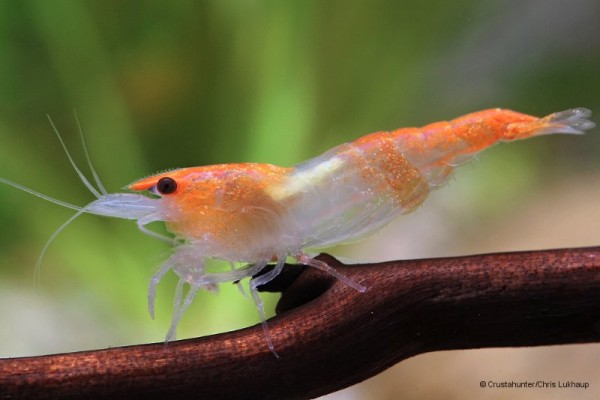
Use a fully cycled aquarium with stable temperature and chemistry. A sponge filter or a protected intake is preferable because it provides gentle filtration and helps prevent shrimplets from being drawn into the filter. Moderate mineral content is useful for shell formation. Avoid rapid changes in temperature, pH, hardness, or total dissolved solids, and use dechlorinated water for every water change. Mature aquariums with algae and biofilm generally support better survival than newly established tanks.
Feeding
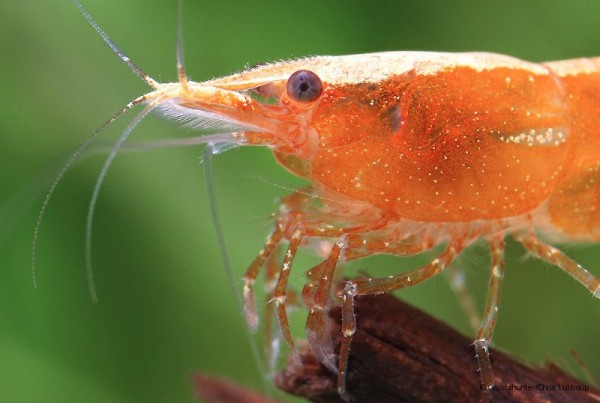
Biofilm and naturally occurring microorganisms should form the foundation of the diet. Supplement with small portions of a quality shrimp food, algae-based wafer, or blanched vegetables such as spinach or zucchini. Offer only what the colony can consume promptly and remove leftovers to protect water quality. Leaf litter from shrimp-safe, pesticide-free leaves can provide grazing area and slowly available food.
Tank mates
The safest companions are other peaceful dwarf shrimp and small, non-predatory snails. Many fish will eat shrimplets, and even peaceful fish may reduce a colony by hunting young shrimp. If fish are included, choose small, calm species only after considering their mouth size and feeding behavior, and provide dense moss, plants, and other cover. Do not mix them with aggressive invertebrates or large crayfish.
Molting and health
Shrimp periodically shed the old exoskeleton as they grow. A freshly molted shrimp is soft and vulnerable, so cover and undisturbed hiding places are important. Do not remove a normal shed exoskeleton immediately; the colony often consumes it and recycles its minerals. Persistent deaths around molting, failed molts, or a shrimp trapped in its old shell can indicate unsuitable mineral balance, poor nutrition, pollution, or abrupt changes. Test water and correct problems gradually.
Breeding
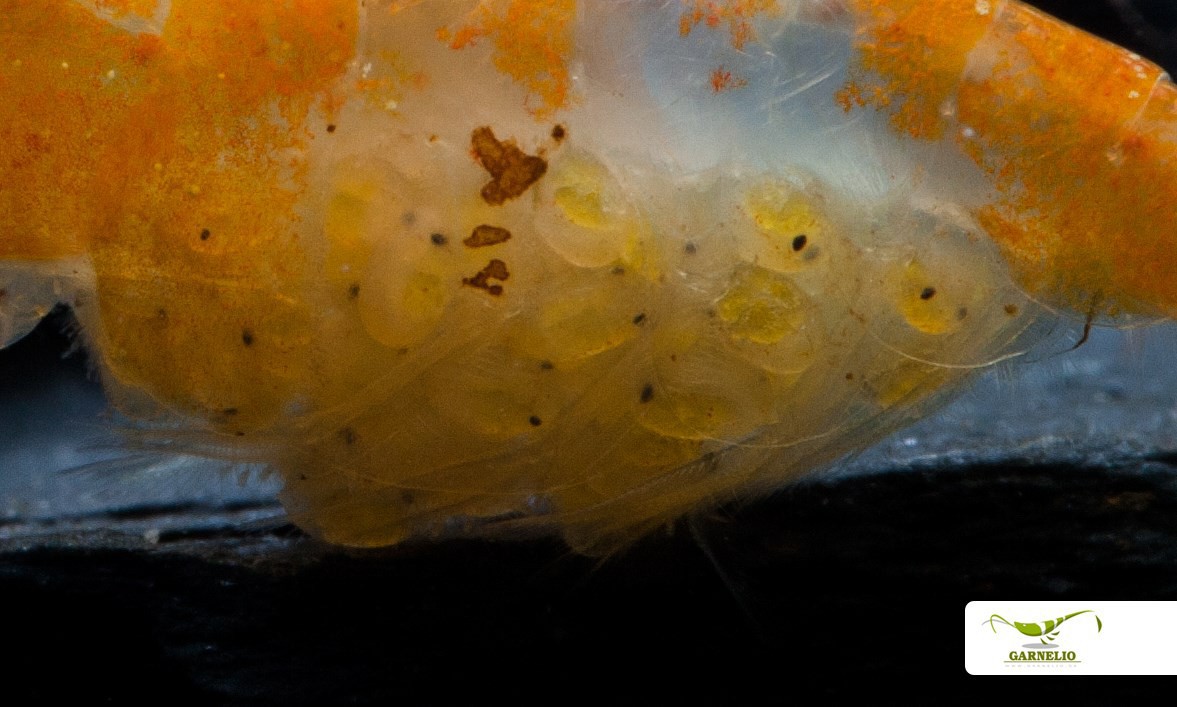
Orange Rili Shrimp are usually straightforward to breed in a stable, mature aquarium. After mating, the female carries fertilized eggs beneath her abdomen and regularly fans them until they hatch. The young hatch as miniature, fully formed shrimp and need no brackish or marine larval stage. Dense moss, fine-leaved plants, leaf litter, and a sponge filter improve juvenile survival. Selective breeding can help retain orange coverage, while uncontrolled colony breeding may produce variable patterns and clearer or less strongly marked offspring.





Leave your comments