AquaLibs presents AquaRank Discover the world’s leading aquascapers

Explore transparent rankings built from published results across the world’s leading aquascaping contests.

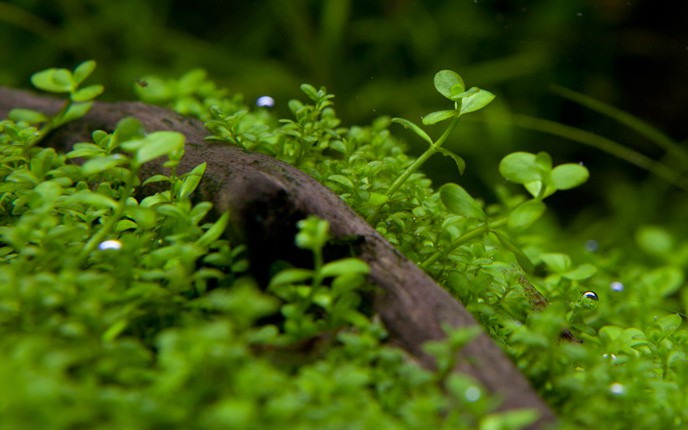
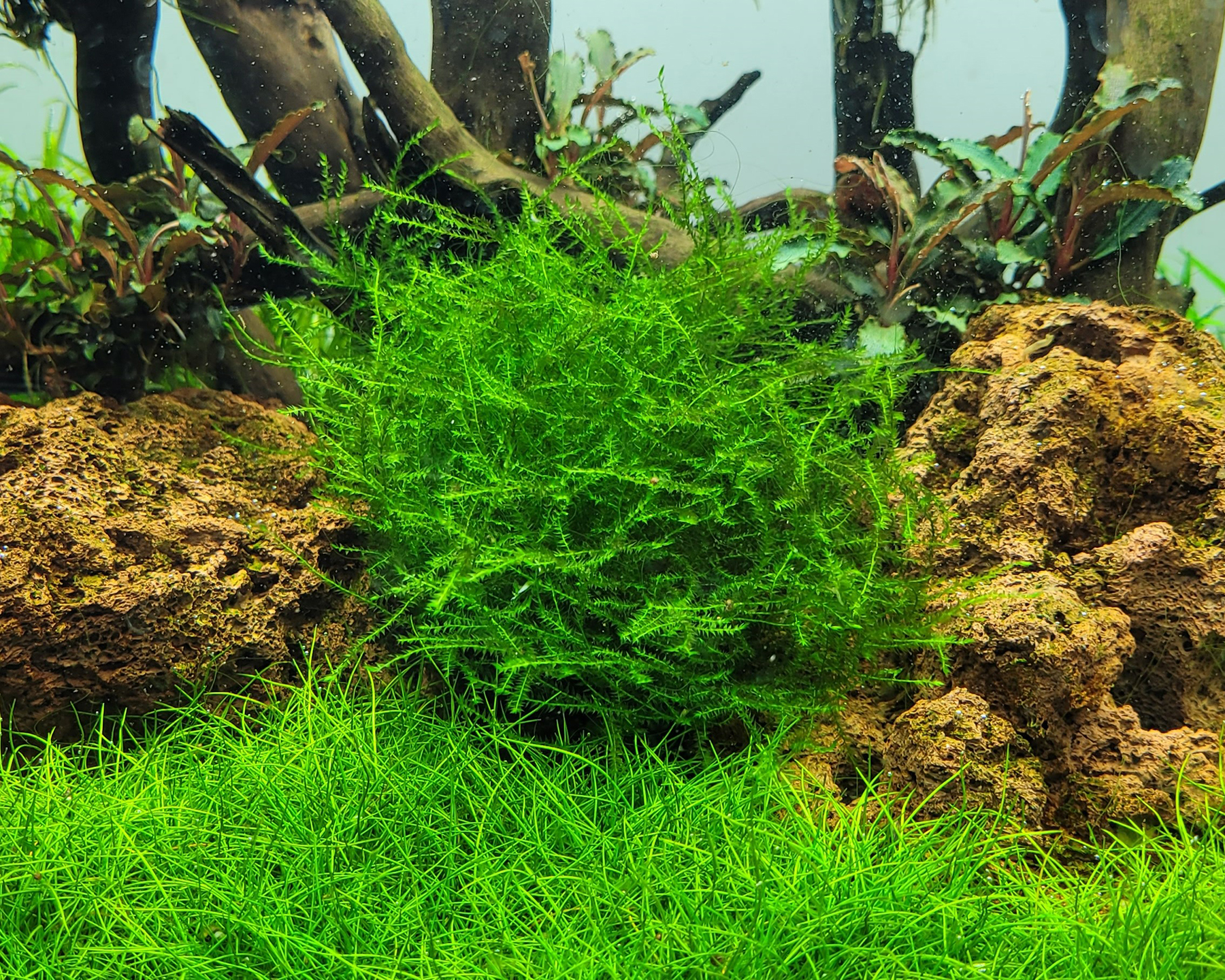
Leptodictyum riparium (Willow moss)

Identification

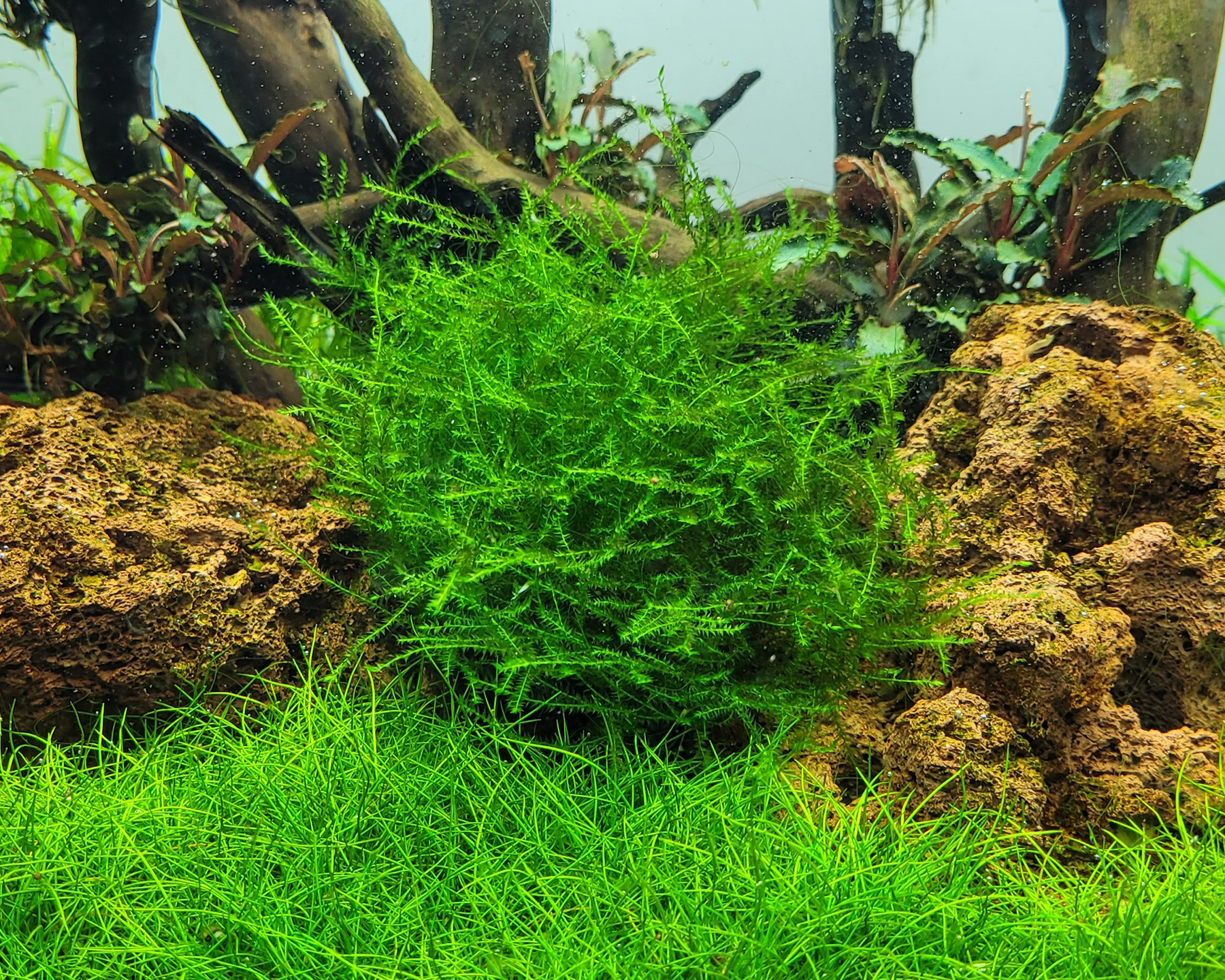
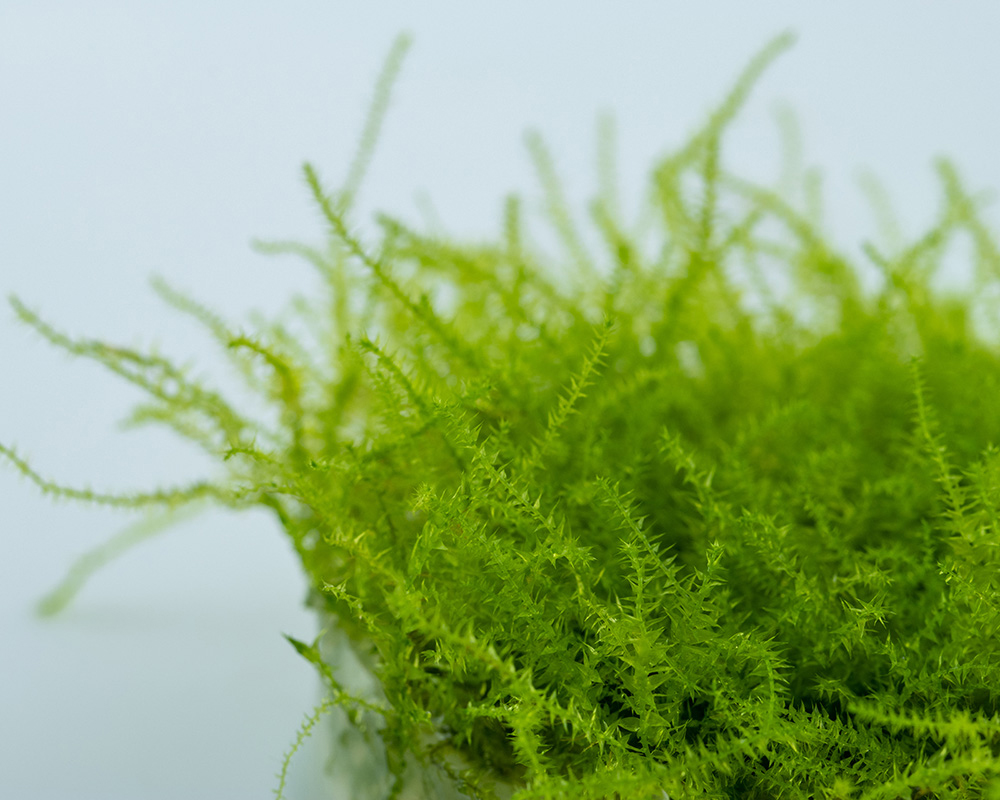
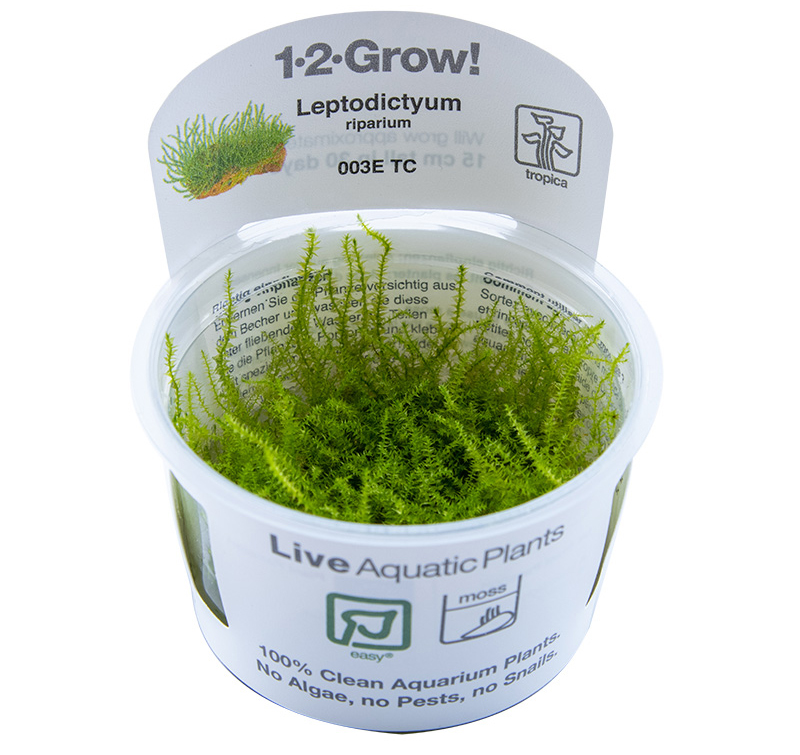
The supplied product label identifies the plant as Leptodictyum riparium. Its fine, irregularly branching shoots are consistent with this species and with the aquarium trade name willow moss. Moss identification from photographs alone can be difficult, so a definitive distinction from similar branching aquatic mosses should not be made without microscopic or specialist examination.
Identification

Placement and attachment

Use willow moss as an epiphyte on driftwood, roots, or rock. Divide the culture into small portions and secure them loosely with thread, fine mesh, or suitable plant-safe adhesive. Do not bury the moss in substrate, because covered portions may decay. Remove the securing material once the moss has attached.
Placement and attachment

Light and carbon

Low to moderate aquarium lighting is usually sufficient. Higher light can produce denser growth but also increases the risk of algae, especially where water circulation is weak. Supplemental carbon dioxide is not essential, although a stable supply can improve growth and branching. Avoid abrupt changes in lighting or carbon availability.
Light and carbon

Maintenance

Trim long or untidy shoots with clean scissors and remove the cuttings so they do not spread through the aquarium. Thin dense cushions occasionally to improve circulation and reduce trapped debris. Keep the moss away from heavy sediment deposits and gently siphon or shake it during maintenance. Balanced fertilisation and stable water quality support continued growth.

Propagation

Propagation is normally by division. Cut or pull apart healthy portions and attach them to new hardscape. Small fragments can establish if they are held firmly in place, but loose fragments may collect in filter intakes or grow where they are not wanted.
Plant info

  • Colors: Green, Light green
  • Difficulty: Easy
  • Origin: Cosmopolitan
  • Usage: On rock or root
  • Type: Aquatic moss
  • Growth rate: Medium
  • Height: 5–15 cm
  • Light demand: Low
  • CO2: Low
Leave your comments
Latest on Plants
  • Rotala rotundifolia 'Blood Red' (Blood Red Rotala)

    Rotala rotundifolia 'Blood Red' (Blood Red Rotala)

    Medium
    Background
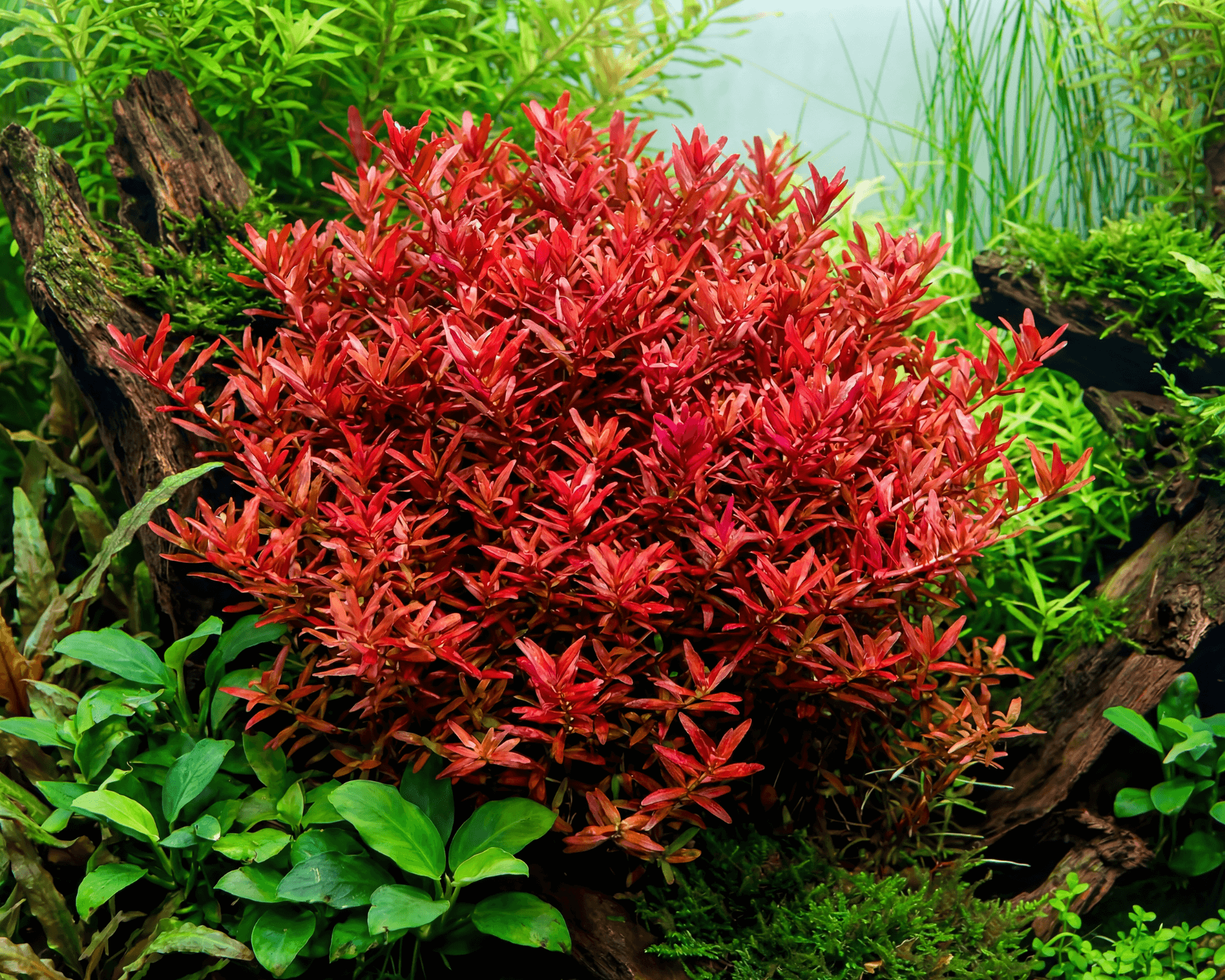
    Rotala rotundifolia 'Blood Red' is a red stem-plant selection of the highly variable Rotala rotundifolia complex. It forms dense, upright shoots with narrow leaves and can become intensely red under strong light, adequate carbon dioxide, and balanced fertilisation. The trade name identifies the aquarium form, but appearance can vary between cultivated lines, so exact clonal identity cannot be confirmed from images alone.
  • Sagittaria subulata (Dwarf Sagittaria)

    Sagittaria subulata (Dwarf Sagittaria)

    Easy
    Foreground
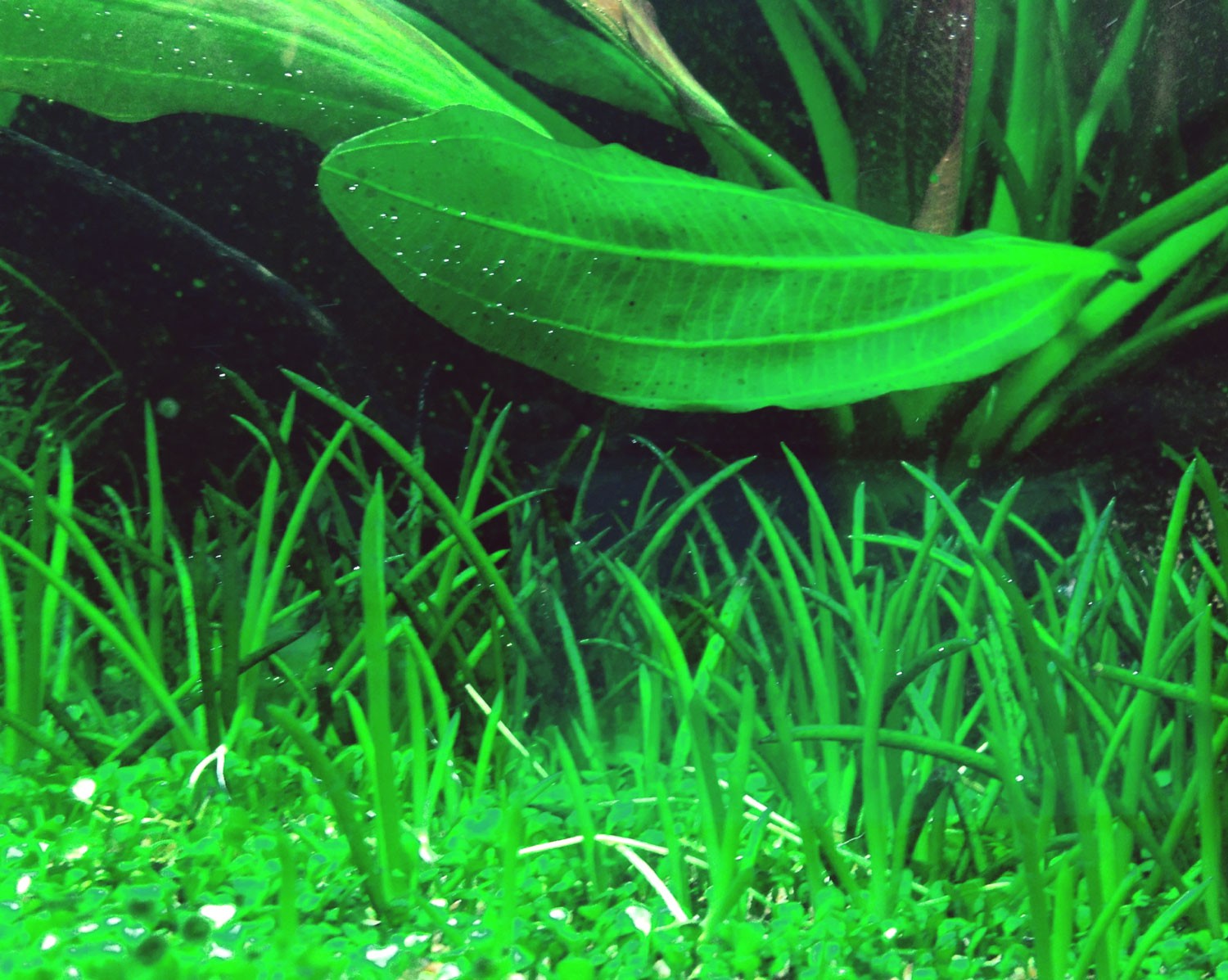
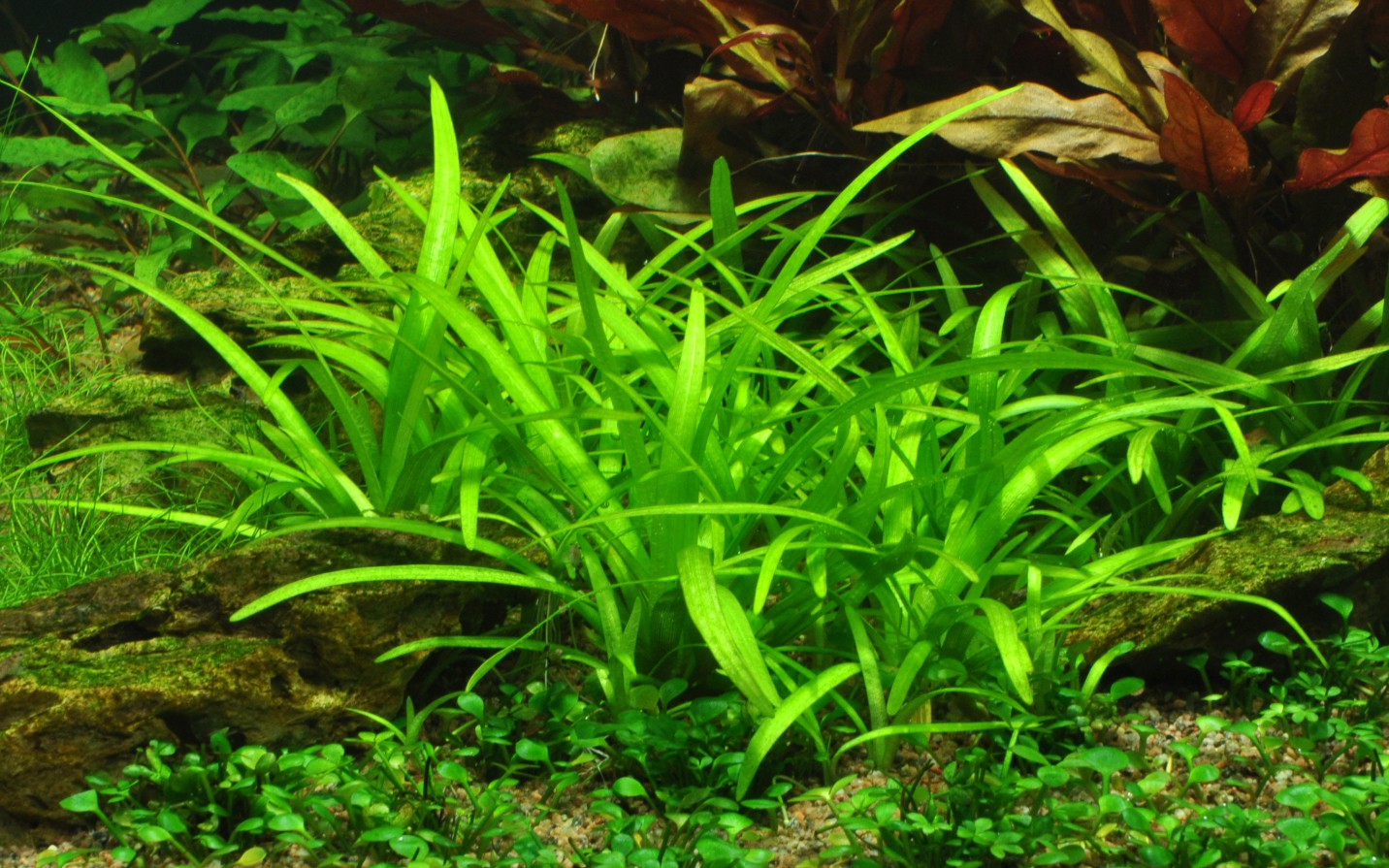
    Sagittaria subulata is a grass-like, stolon-forming rosette plant commonly used to create a low, natural-looking foreground or transition. Its narrow leaves vary in height according to conditions and may become taller in deeper water or weaker light. It is generally adaptable and suitable for planted community aquariums. The supplied images are consistent with this identification, although aquarium-grown forms can vary in size and appearance.
  • Rotala rotundifolia 'H'ra' (H'ra Rotala)

    Rotala rotundifolia 'H'ra' (H'ra Rotala)

    Advanced
    Background
    Rotala rotundifolia 'H'ra' is a colorful stem-plant cultivar grown for its narrow leaves and warm orange, pink, or reddish tones under strong aquarium lighting. It is generally sold as a cultivated form of Rotala rotundifolia, although the exact lineage and selection history are not established here. With adequate carbon dioxide, nutrients, and regular trimming, it can form a dense background group. Color intensity varies with light, nutrient availability, and general aquarium conditions.
  • Riccardia chamedryfolia (Coral Moss)

    Riccardia chamedryfolia (Coral Moss)

    Advanced
    On rock or root
    Riccardia chamedryfolia is a compact, branching liverwort commonly sold in aquascaping as coral moss or mini pellia. It forms dense, cushion-like green growth with a finely divided, coral-like texture. This identification follows the supplied source label, although commercial liverwort names can sometimes be applied inconsistently. It is best used attached to hardscape rather than planted deeply in substrate, where good water movement and stable conditions help maintain healthy growth.
  • Riccia fluitans (Pond liverwort)

    Riccia fluitans (Pond liverwort)

    Medium
    Supporting plants
    Riccia fluitans is a small, floating thalloid liverwort that can also be cultivated underwater as a bright green cushion. It has no true leaves, stems, or roots, and spreads by branching and fragmentation. Aquarium specimens need to be secured because they naturally rise to the surface. The supplied images appear to show several different moss-like plants, so identification is based primarily on the stated source name.
  • Ranunculus inundatus (River Buttercup)

    Ranunculus inundatus (River Buttercup)

    Medium
    Foreground
    Ranunculus inundatus is an Australian amphibious buttercup valued in aquariums for its distinctive, deeply divided leaves. Underwater, it forms a low to medium-height planting from creeping stems and can produce a spreading group when conditions are suitable. It is generally suitable for the foreground or lower middle ground, although strong light and regular trimming may be needed to keep growth compact. Identification is reasonably secure from the supplied source name, but cultivated forms can vary in leaf size and habit.
  • Pogostemon helferi (Small water star)

    Pogostemon helferi (Small water star)

    Medium
    Foreground
    Pogostemon helferi is a compact aquatic plant with bright green, strongly crinkled leaves arranged in dense rosettes. It is widely used as a foreground plant because it remains relatively short and can form groups over time. The species is associated with Southeast Asia, but exact locality information for aquarium-grown material may vary. Stable conditions, adequate light, nutrients, and carbon availability support compact growth and healthy new leaves.
  • Micranthemum tweediei (Monte Carlo Pearlwort)

    Micranthemum tweediei (Monte Carlo Pearlwort)

    Medium
    Foreground
    Micranthemum tweediei is a small, creeping South American stem plant widely used to form a foreground carpet in freshwater aquariums. Its rounded, light-green leaves are larger than those of dwarf baby tears, making it comparatively forgiving while still benefiting from strong light, reliable carbon dioxide and adequate nutrition. Plant small portions separately in moist substrate so they can root and spread without lifting.
  • Alternanthera reineckii 'Mini' (Mini parrot leaf)

    Alternanthera reineckii 'Mini' (Mini parrot leaf)

    Medium
    Foreground
    Alternanthera reineckii 'Mini' is a compact cultivated form of the South American stem plant Alternanthera reineckii. It develops short, densely packed shoots with red, burgundy, and pink leaves when grown submerged. The supplied identification is consistent with this cultivar, although cultivar names are commercial rather than formal botanical ranks. It is well suited to the foreground or lower middle of a planted aquarium.
  • Microsorum pteropus 'Narrow' (Narrow Java Fern)

    Microsorum pteropus 'Narrow' (Narrow Java Fern)

    Easy
    On rock or root
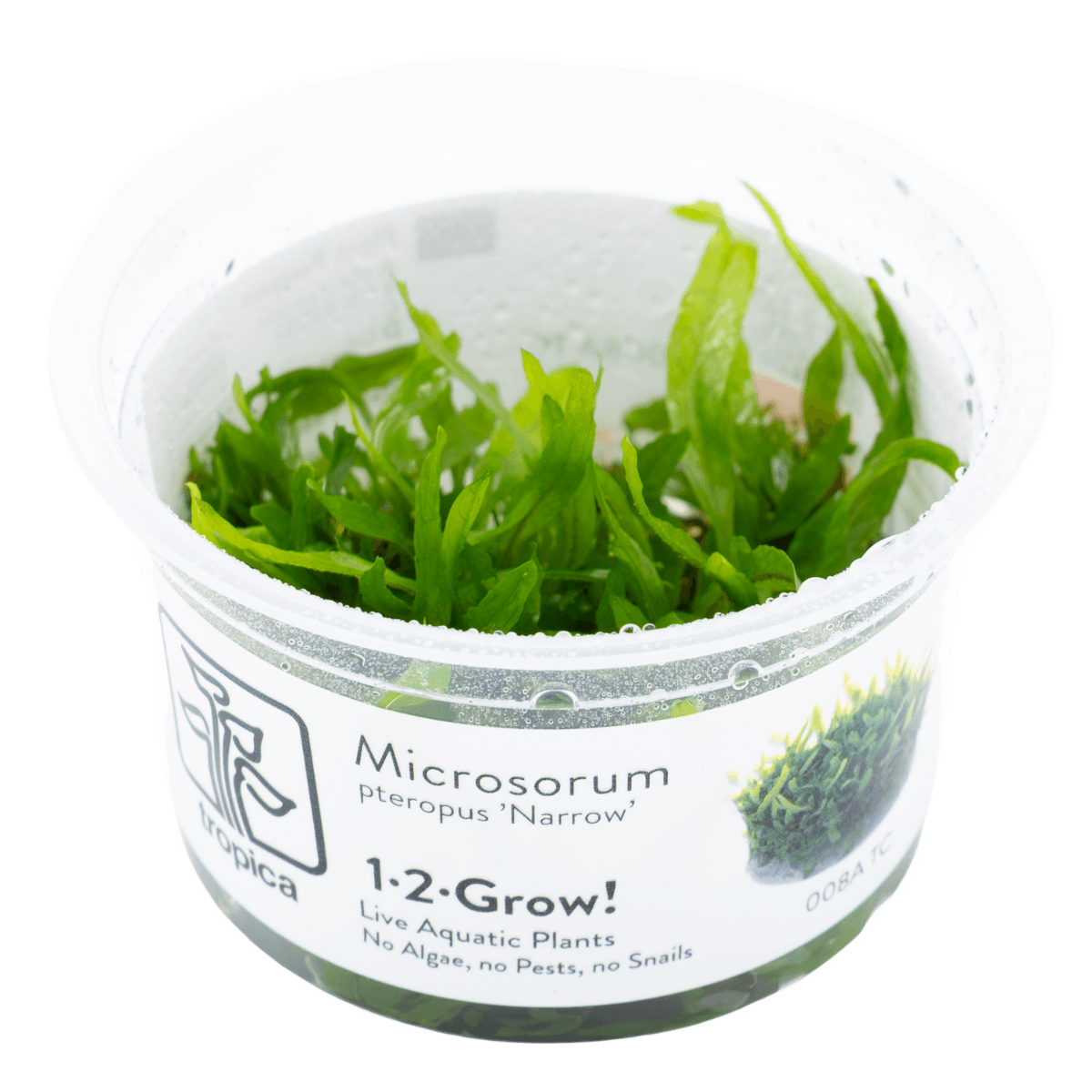
    Microsorum pteropus 'Narrow' is a narrow-leaved aquarium form of Java fern, supplied here as a Tropica InVitro plant. It forms tough green fronds from a creeping rhizome and is well suited to attachment on wood or rock. The trade name supports identification, but the precise cultivar lineage cannot be independently verified from the supplied material. It is a slow-growing, undemanding fern that tolerates modest lighting and does not require carbon dioxide supplementation.
  • Microsorum pteropus 'Windeløv' (Windeløv Java fern)

    Microsorum pteropus 'Windeløv' (Windeløv Java fern)

    Easy
    On rock or root
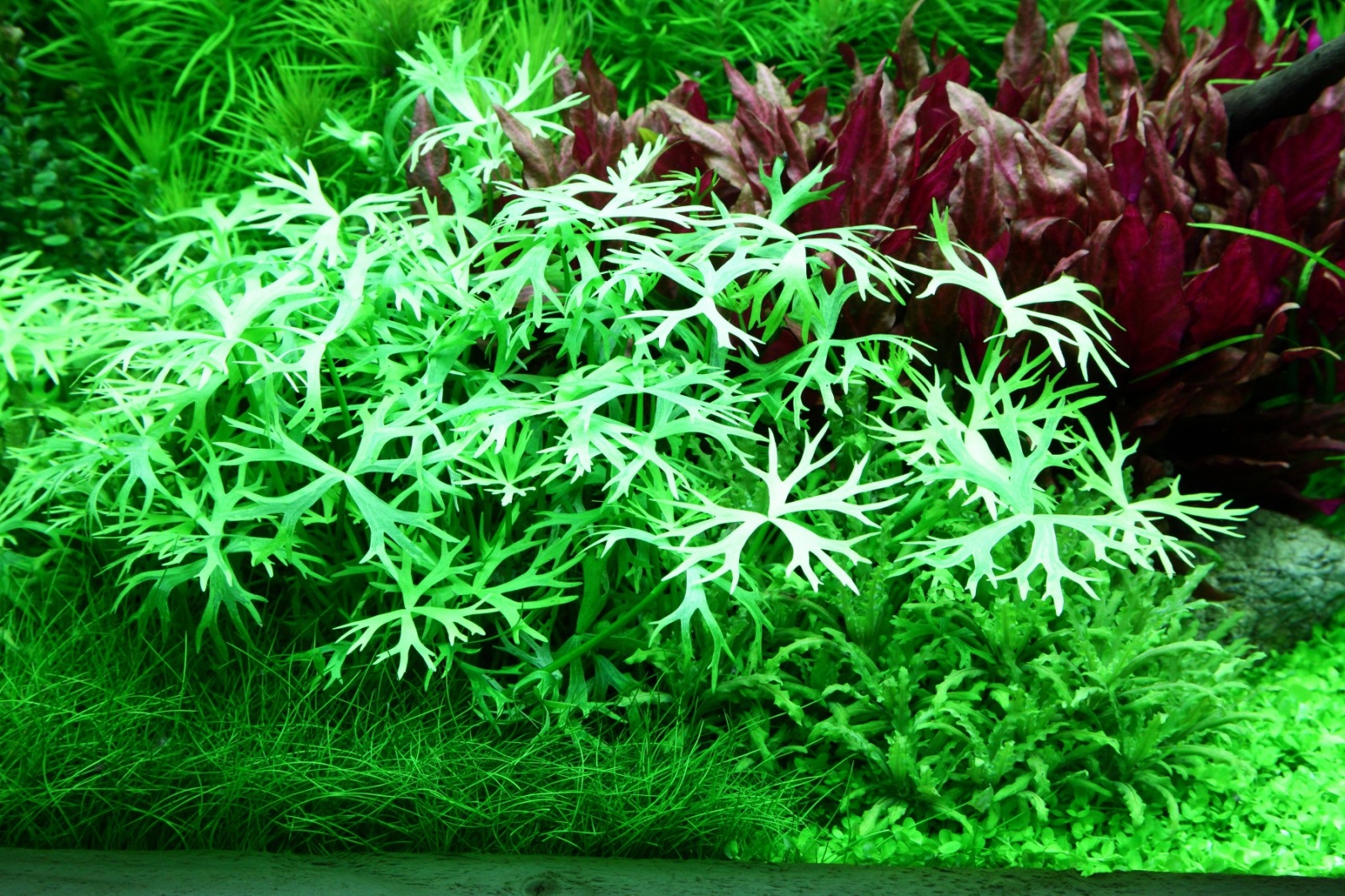
    Microsorum pteropus 'Windeløv' is a cultivated Java fern form recognized by its finely branched leaf tips. It is a hardy rhizome plant suited to low-tech aquariums and is commonly attached to wood or rock rather than planted deeply in substrate. The supplied label and images support identification as this cultivar, although individual leaves can vary with growing conditions. It grows slowly and tolerates a broad range of aquarium conditions when kept stable.
  • Myriophyllum mattogrossense (Matto Grosso Water Milfoil)

    Myriophyllum mattogrossense (Matto Grosso Water Milfoil)

    Medium
    Background
    Myriophyllum mattogrossense is a fast-growing South American stem plant with finely divided, feathery leaves arranged around upright shoots. It is commonly used to create dense background growth and provides cover for small aquarium inhabitants. The supplied product label identifies this plant as M. mattogrossense; cultivated specimens can vary in leaf density and color, so visual identification alone should be treated cautiously.
  • Lobelia cardinalis 'Mini' (Cardinal plant)

    Lobelia cardinalis 'Mini' (Cardinal plant)

    Easy
    Foreground
    Lobelia cardinalis 'Mini' is a compact aquarium cultivar of the cardinal plant, selected for its smaller stature and dense growth. Underwater, it forms bright green, rounded to oval leaves on short stems and is useful in the foreground or lower middle of a planted aquarium. The cultivar name is accepted here from the supplied product label; exact differences from other compact Lobelia cardinalis forms can be difficult to verify from photographs alone.
  • Littorella uniflora (Shoreweed)

    Littorella uniflora (Shoreweed)

    Advanced
    Foreground
    Littorella uniflora is a small rosette plant suited to the foreground of cool or temperate aquariums. Its narrow, firm green leaves form compact tufts and can spread by runners when established. It is a relatively slow grower that benefits from strong lighting, nutrient-rich substrate and reliable carbon availability. Identification from cultivated material can vary, so this profile is presented conservatively.
  • Limnophila aquatica (Giant Ambulia)

    Limnophila aquatica (Giant Ambulia)

    Medium
    Background
    Limnophila aquatica is a fast-growing aquatic stem plant with soft, finely divided foliage and a bright green appearance. It is best suited to the background of a planted aquarium, where regular trimming can produce dense groups. The supplied material is consistent with this species, although precise identification from commercial tissue-culture photographs alone should be treated as provisional.
  • Blyxa japonica (Small Blyxa)

    Blyxa japonica (Small Blyxa)

    Medium
    Middleground
    Blyxa japonica is a compact Asian aquatic plant with narrow, grass-like leaves arranged around a short stem, creating a dense rosette appearance. Its fresh green foliage provides texture between low foreground plants and taller background groups. It adapts to submerged aquarium growth but performs best with adequate light, a nutrient-containing substrate, stable conditions, and a dependable carbon supply.