AquaLibs presents AquaRank Discover the world’s leading aquascapers

Explore transparent rankings built from published results across the world’s leading aquascaping contests.

Congo Tetra: Fish Species Profile

With the right aquarium that provides enough space to swim and interact with each other, these fish can make great pets. Learn more about keeping Congo tetras as pets in your home aquarium.


Origin and Distribution

These African characin fish are found in the Congo River Basin. They populate streams, tributaries, pools, and marshes, preferring murky, slightly acidic water. The Congo tetra generally congregates in areas with tall vegetation, few trees, and substrates made up of sand, silt, and mud. Swimming in large schools, the Tetras feed on worms, crustacea, insects, plant matter, and algae.

The Congo tetra (Phenacogrammus interruptus) was not discovered until 1949 and was not imported as a common aquarium fish until the 1960s. During the 1970s, Florida fish farmers perfected a breeding line, and most specimens found in pet stores descend from this line. They will breed true, having all of the color and beautifully trailing tails of the native African fish.

Colors and Markings

The fish in nature approaches 3 1/2 inches. However, farm-raised varieties, though full finned and rich with color, will generally not grow beyond 3 inches. They have long, flat bodies with large scales.

This fish shows amazing rainbow luminescence along the whole body from back to front. They are generally blue on top, red and gold in the middle, and blue on the belly. Males also have long, flowing fins that are violet with white edging; the male's tail fin has an elongated middle section.

Tankmates

Congo tetras are schooling fish that can get anxious if they are not part of a group of at least six of the same species. If kept with other fish of the same size or smaller, Congo tetras are generally peaceful.

Ideal tankmates include:
Other tetras, such as Neon and Cardinal tetras
Rainbowfish
Corydoras catfish
Mollies
Guppies
Platies
Harlequin rasbora
Swordtails
Celestial pearl danio
Dwarf cichlids

Avoid aggressive species, as they will bully your Congo tetras. Do not keep Congo tetras with any fin-nipping fish, like tiger barbs, as the spectacular fins of the males will be destroyed.

Congo Tetra Habitat and Care

Since they need to be kept in schools, a 30-gallon aquarium is the minimum size needed for six to eight Congo tetras. For large schools, or if mixed with other fish species, consider using a 55-gallon aquarium. To help your fish maintain good health, you'll need to provide them with plenty of space and carefully filtered water. If the quality of the water drops, Congo tetras may lose some of their colorations or wind up with damaged fins.

Congo tetras are fairly hardy, but only if kept in habitats that are maintained correctly. They prefer still, dark, soft, peat-filtered water with low light levels. This can be achieved with dim aquarium lights and floating plants. They like darker substrates and enjoy nibbling on bottom-growing plants.

Congo Tetra Diet and Feeding

Congo tetras are omnivores; in the wild, they eat insects, worms, plant matter, and algae. As pets, they are easy to feed. They enjoy live, fresh, and flake foods, as well as brine shrimp and blood worms.

These fish should be fed small amounts several times a day. Don't worry if you don't observe your Congo tetras coming to the food, as they can be shy about partaking while being watched.

If your fish are not getting enough food, try a behavioral feeding ring. This floats on the surface and holds the food together where they can easily find it.

Gender Differences

Males are much more colorful than females. They are also considerably larger and have more elaborate fin structure, with a centrally extended caudal fin and a large and pronounced dorsal fin. The females are mostly golden with shades of silver and green. Females do not have such fanciful fins.

Breeding the Congo Tetra

You will need a larger breeding tank than for most tetras because of the size of the breeders and because they will produce 300 or more eggs (all are most likely to hatch). The school of fry will grow rapidly to a size larger than full-grown neon tetras in four or five weeks.

Use a 15- or 20-gallon long tank for your breeding project—10-gallon tanks are not recommended. Boil enough peat moss to cover the bottom of the tank with 1 inch of loosely packed moss substrate (about 1/2 cubic foot for a 20-gallon long tank). Add it to a tank already filled with reverse osmosis, distilled, or rainwater if in a rural area, and let it sit for a few days until the peat moss has completely settled. This will provide an environment with soft, acidic water.

Place several thickets of Java moss on top of the peat moss substrate in several locations. Provide additional nylon breeding mops or several clumps of fine-leaved plants. The water temperature should be a steady 77 F. There should be no aeration or filtration since this would disturb the peat moss and cloud the water.

Place a well-conditioned pair of Congo tetras that has been kept in separate tanks for a short time to prepare for breeding into the breeding tank shortly before lights out or shortly before sunset. Most pairs will spawn the following morning, or when the lights are turned back on. Darkness should be maintained for at least eight hours to stimulate spawning.

Spawning fish proceed to dive into the Java moss or spawning mops. During these dives, they release eggs and milt side by side. Some of the eggs remain in the plant or mop, but most fall into the peat moss substrate. Remove the breeders after spawning, although most eggs will not be eaten since they are well-hidden under the peat moss substrate.

Usually, 300 to 500 or more eggs are laid, and hatching occurs from five to eight days after spawning. This differs sharply from their South American relatives, whose eggs hatch much quicker, but whose fry hang on plants for several days, being smaller and more helpless at first. When Congo tetra fry appear from the peat substrate, they are fully free-swimming and hungry.

Congo tetra fry can be fed infusoria for a day or two before they will take baby brine shrimp. They will grow quickly and take powdered dry food within two weeks, soon reaching almost 1 inch in length. Within three months of frequent feedings of live and commercial growth foods, they will reach 2 inches and show signs of color. At this point, it is possible to determine gender, but they will be 6 months old and 3 inches long before they are able to breed. With this quick growth, the need for a larger tank is obvious.

It is very important not to remove the peat from the fry rearing tank. The fish need it for water quality, and if you put them straight into freshwater, they are liable to succumb to fungus. The adult fish also prefer peat moss in the filter or substrate to keep the water slightly acidic.

FAQ

Are Congo tetras aggressive?
Congo tetras are generally peaceful fish, especially when their tankmates are also peaceful. Avoid housing these fish with species that are aggressive and might attack them, as they’ll become stressed and try to hide. Also, avoid overcrowding your tank with too many fish, as this can cause your Congo tetras to become stressed.

How many Congo tetras should you keep in a 55-gallon tank?
A 30-gallon tank is the minimum for six of these schooling fish. If you have a 55-gallon tank, you might be able to keep up to 12 Congo tetras in it, provided they have enough space. Always consider how many other fish of other species are in the same tank, and how much space is taken up by plants, when determining if a tank is large enough.
Fish info

  • Care level: Moderate
  • Temperament: Peaceful
  • Adult size: 2.5 to 3.5 inches
  • Life expectancy: 3 to 5 years
  • Fish type: Alestidae
  • Temperature : 73.0 to 82.0 F (22.8 to 27.8 C)
  • pH: 6.0 to 7.5
  • Color Form: Black, Blue, Gold, Orange, Red, Yellow
Leave your comments
Latest on Fishs
  • Pelvicachromis pulcher Purple Tilapia Pair Care Guide

    Pelvicachromis pulcher Purple Tilapia Pair Care Guide

    Easy - Moderate
    Small West African freshwater cichlid
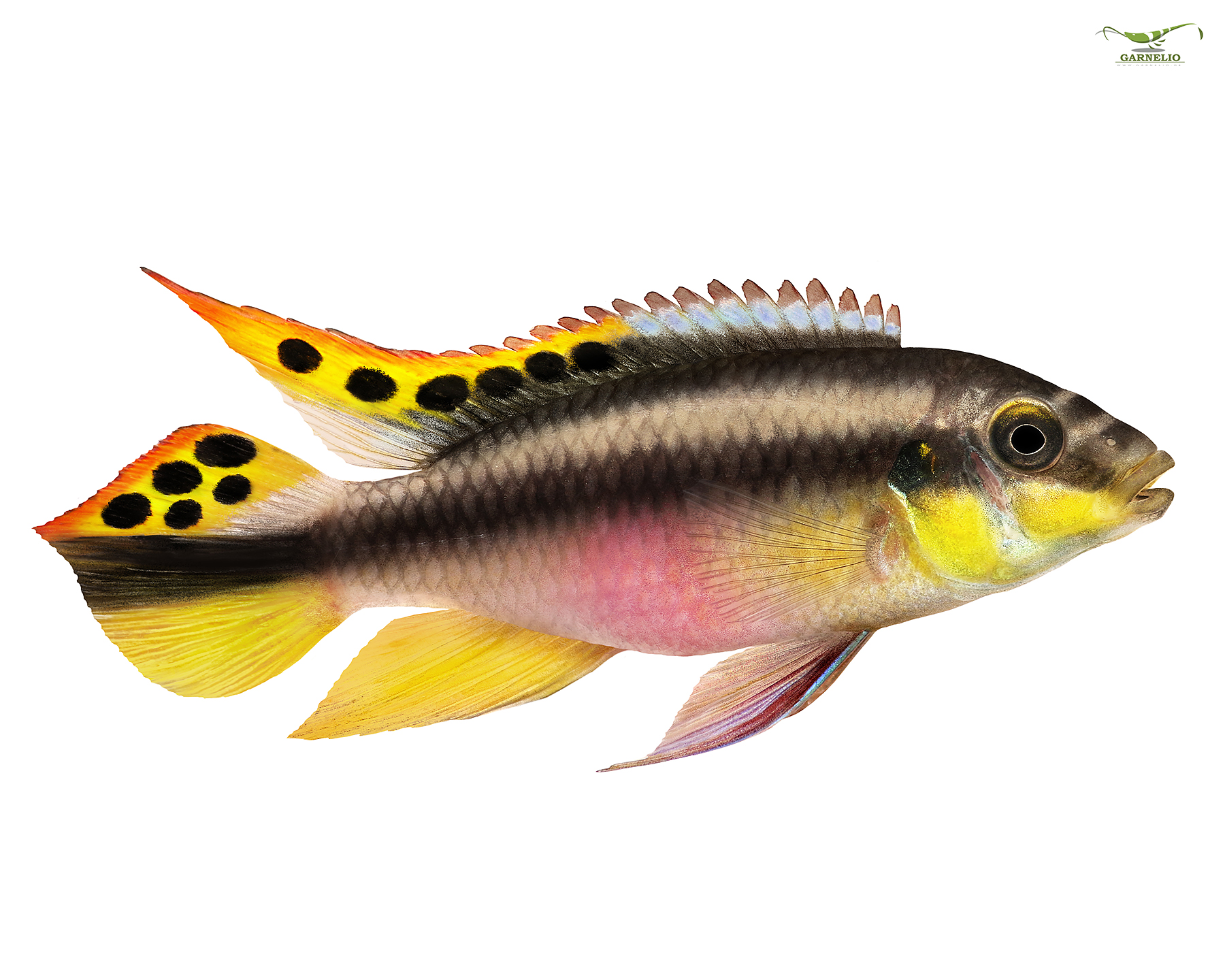
    Pelvicachromis pulcher, commonly called the kribensis or purple cichlid, is a small West African cave-spawning cichlid valued for its manageable size, attractive breeding colors and attentive parental behavior. A bonded pair can live in a community aquarium when provided with suitable cover and carefully chosen tank mates. The supplied listing identifies the fish as Pelvicachromis pulcher, although photographs alone cannot confirm the exact locality or color form.
  • Red Lined Dwarf Cichlid (Apistogramma hongsloi)

    Red Lined Dwarf Cichlid (Apistogramma hongsloi)

    Moderate
    Dwarf Cichlid
    The Red Lined Dwarf Cichlid, Apistogramma hongsloi, is a small, colorful South American cichlid highly regarded by hobbyists. Native to the Orinoco River basin, this species displays striking red markings and elegant finnage. Known for their interesting social behaviors and relatively peaceful nature, they make excellent subjects for planted community aquariums that provide appropriate hiding spots and soft, acidic water conditions.
  • Apistogramma panduro

    Apistogramma panduro

    Moderate
    Dwarf Cichlid
    The Panduro dwarf cichlid, Apistogramma panduro, is a striking South American species highly prized for its vibrant coloration and manageable size. Native to the Amazon basin, this species exhibits distinct sexual dimorphism. They are best kept in pairs or small groups within well-structured aquariums, making them a fascinating choice for dedicated hobbyists interested in cichlid behavior and breeding dynamics.
  • Opal Apistogramma (Apistogramma borellii)

    Opal Apistogramma (Apistogramma borellii)

    The Opal Apistogramma is a stunning, selectively bred color variant of the popular Apistogramma borellii. Native to South American river basins, these dwarf cichlids are prized for their vibrant blue coloration and striking red facial markings. They are excellent candidates for planted community aquariums, provided their specific water quality and territorial requirements are carefully maintained by the aquarist.
  • Macropodus opercularis (Paradise Fish)

    Macropodus opercularis (Paradise Fish)

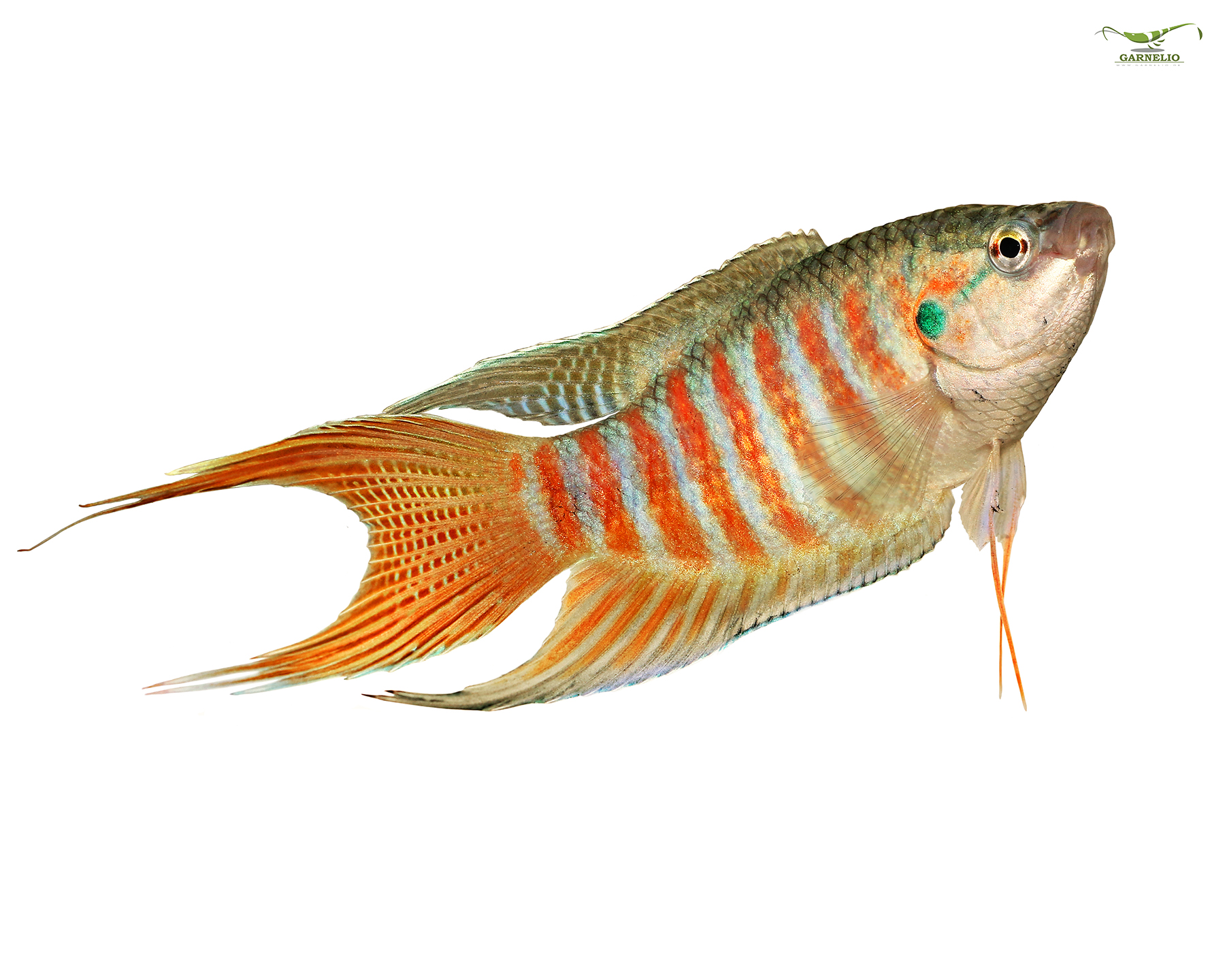
    The Paradise Fish, Macropodus opercularis, is a classic labyrinth fish native to East Asia. Known for its striking striped coloration and complex behavior, this species was one of the first exotic fish introduced to the aquarium trade. While beautiful, they are known for their territorial nature, requiring careful tank mate selection and sufficient space to thrive in captivity.
  • Altolamprologus calvus (Black)

    Altolamprologus calvus (Black)

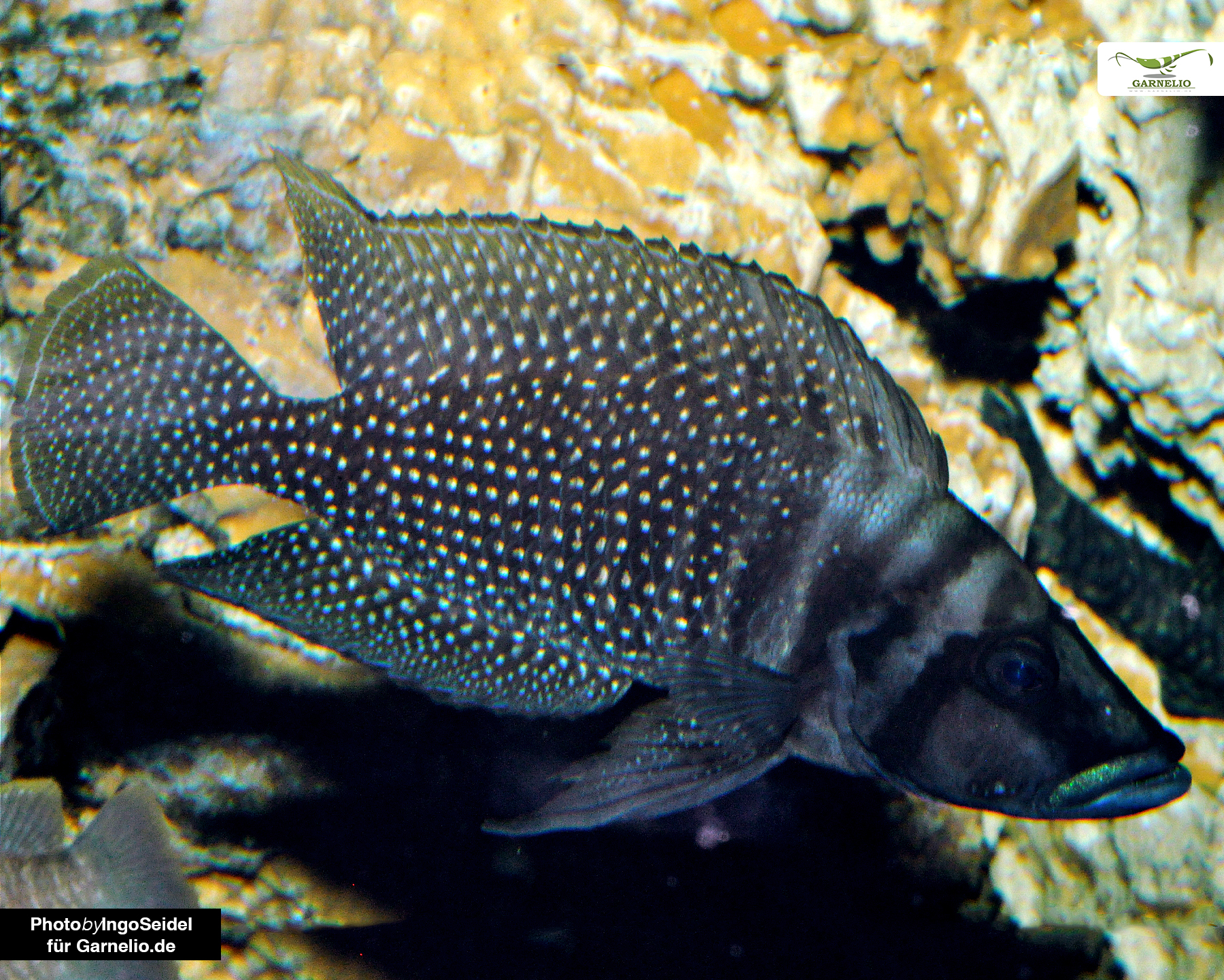
    The Altolamprologus calvus, commonly known as the Black Calvus or Guinea Fowl Cichlid, is a distinct cichlid species endemic to Lake Tanganyika in Africa. Renowned for its laterally compressed body and unique, predatory hunting behavior, it is a fascinating choice for experienced aquarists. These fish are slow-growing and demand specific environmental conditions to thrive in a captive setting.
  • Mesonauta festivus (Flag Cichlid)

    Mesonauta festivus (Flag Cichlid)

    The Flag Cichlid, Mesonauta festivus, is a popular South American cichlid known for its distinct diagonal stripe and calm demeanor. Often found in the Amazon basin, this species is highly appreciated by aquarists for its unique appearance and relatively peaceful social structure. It thrives in well-maintained planted tanks, provided they have sufficient swimming space and appropriate water conditions for their long-term health.
  • Growling Gourami (Trichopsis vittata)

    Growling Gourami (Trichopsis vittata)

    The Growling Gourami, Trichopsis vittata, is a fascinating labyrinth fish native to Southeast Asia. Known for its unique ability to produce audible croaking sounds, this small species is prized for its intricate patterns and relatively peaceful demeanor. It thrives in well-planted, calm aquarium environments, making it a popular choice for hobbyists interested in observing interesting social and vocal behaviors in a home setup.
  • Dicrossus filamentosus (Checkerboard Cichlid)

    Dicrossus filamentosus (Checkerboard Cichlid)

    The Checkerboard Cichlid, Dicrossus filamentosus, is a captivating dwarf cichlid native to the blackwater regions of the Amazon and Orinoco river basins. Renowned for its distinctive checkerboard-like body markings and elegant fin extensions, this species requires specific water conditions to thrive. It is a peaceful, albeit sensitive, fish that makes a rewarding addition for dedicated aquarists.
  • Firemouth Cichlid (Thorichthys meeki)

    Firemouth Cichlid (Thorichthys meeki)

    The Firemouth Cichlid is a popular and visually striking freshwater fish native to Central America. Known for its intense red coloration in the throat region, especially when displaying, this cichlid is a favorite among hobbyists. While generally manageable, they require appropriate tank conditions and space to thrive, reflecting their natural territorial behaviors during breeding cycles.
  • Fairy Cichlid (Neolamprologus brichardi)

    Fairy Cichlid (Neolamprologus brichardi)

    The Fairy Cichlid, Neolamprologus brichardi, is a popular and elegant species endemic to Lake Tanganyika. Known for its distinct lyre-shaped tail and complex social behavior, this cichlid is a fascinating inhabitant for dedicated aquarists. They are renowned for their unique cooperative breeding strategy, where older offspring assist their parents in protecting and raising subsequent broods within the established family territory.
  • Butterfly Cichlid (Microgeophagus ramirezi)

    Butterfly Cichlid (Microgeophagus ramirezi)

    The Butterfly Cichlid, scientifically known as Microgeophagus ramirezi, is a popular dwarf cichlid native to the Orinoco River basin in South America. These vibrant, peaceful fish are highly sought after by aquarists for their striking coloration and engaging personality. They thrive in well-maintained, planted aquariums that mimic their natural, slow-moving tropical river habitats.
  • Lemon Gold Butterfly Cichlid (Microgeophagus ramirezi)

    Lemon Gold Butterfly Cichlid (Microgeophagus ramirezi)

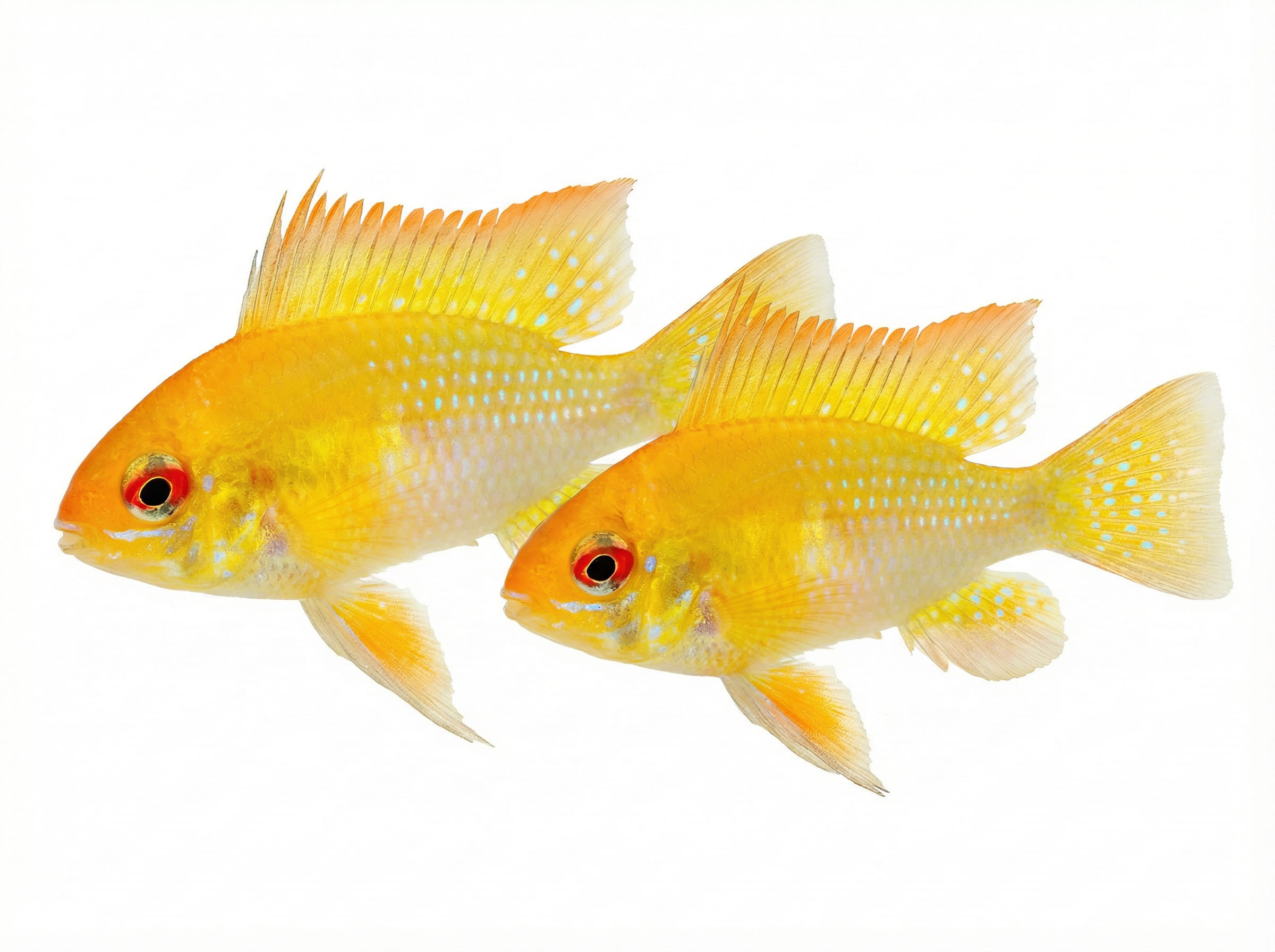
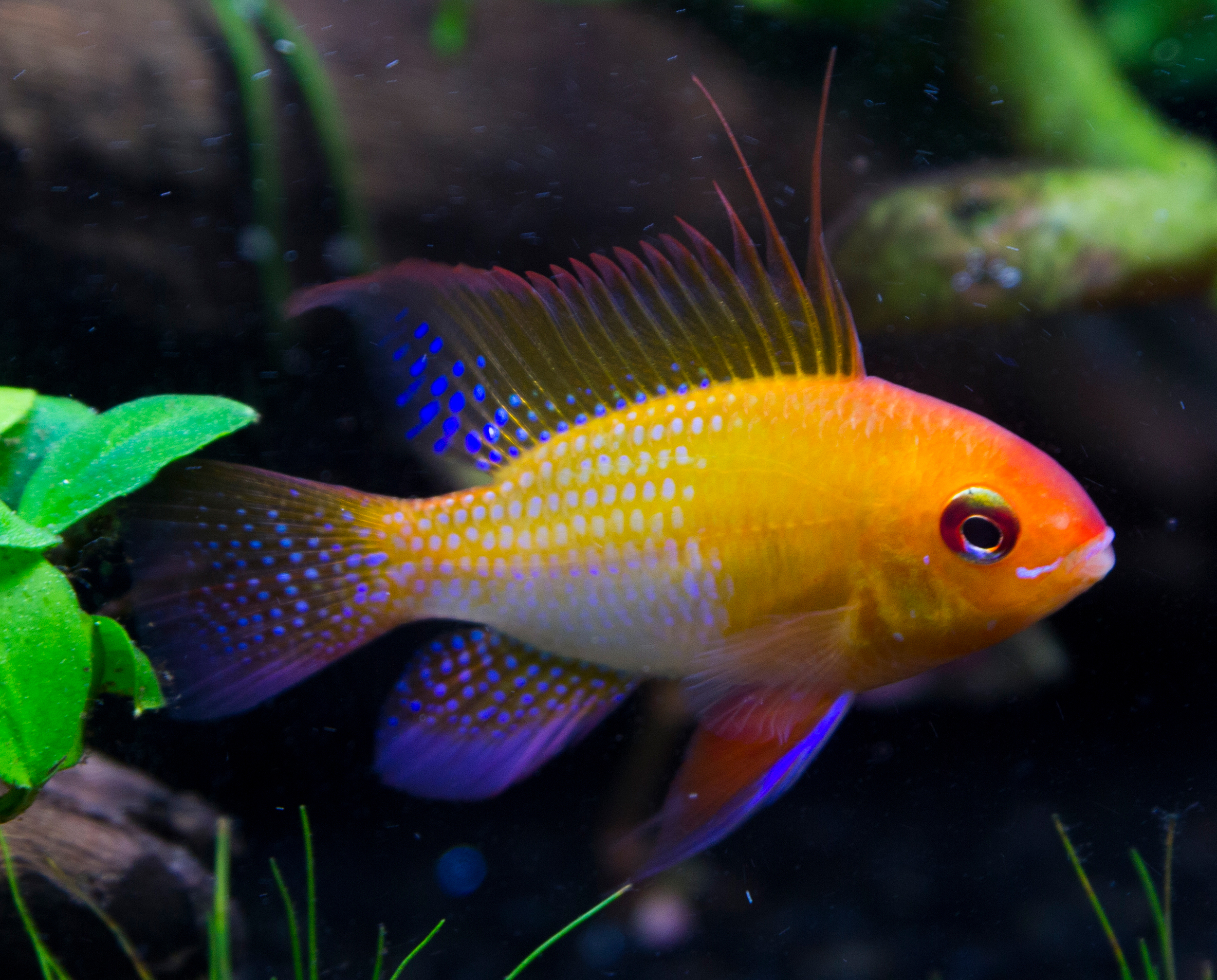
    The Lemon Gold Butterfly Cichlid is a stunning, selectively bred color variant of the popular Microgeophagus ramirezi. Known for its vibrant yellow-gold pigmentation and striking red eyes, this dwarf cichlid retains the peaceful, inquisitive personality of its wild ancestors. It is a highly sought-after aquarium inhabitant that adds a brilliant splash of color to community tanks with appropriate water conditions.
  • Microgeophagus ramirezi Gold (Butterfly Cichlid)

    Microgeophagus ramirezi Gold (Butterfly Cichlid)

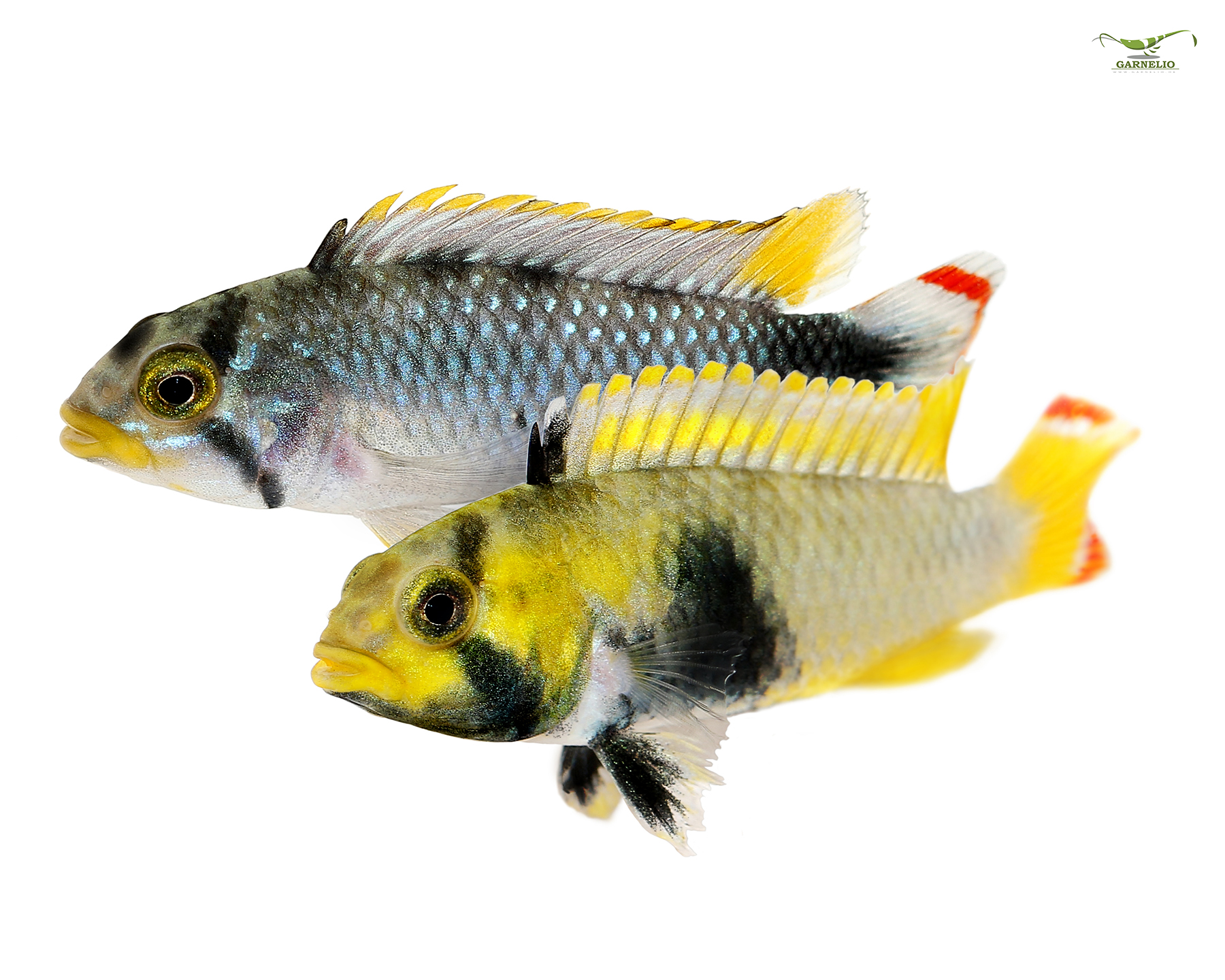
    The Gold Butterfly Cichlid is a stunning, selectively bred color morph of the popular Microgeophagus ramirezi. Known for its vibrant, warm golden-yellow coloration and peaceful demeanor, this dwarf cichlid is a favorite among aquarists. Requiring stable, high-quality water conditions and a well-planted environment, it thrives in pairs and adds significant beauty to established freshwater community aquariums.
  • Electric Blue Butterfly Cichlid (Mikrogeophagus ramirezi)

    Electric Blue Butterfly Cichlid (Mikrogeophagus ramirezi)

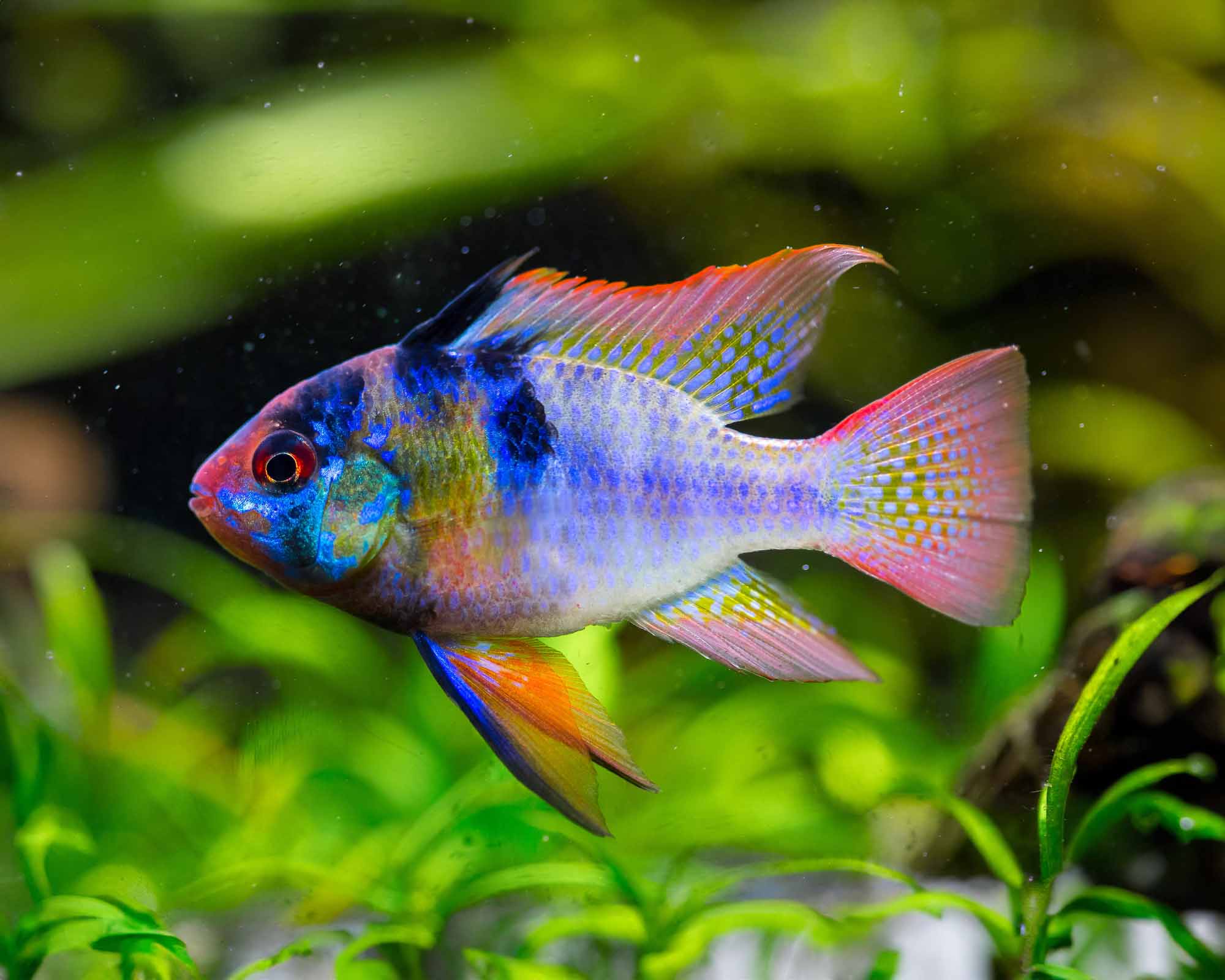
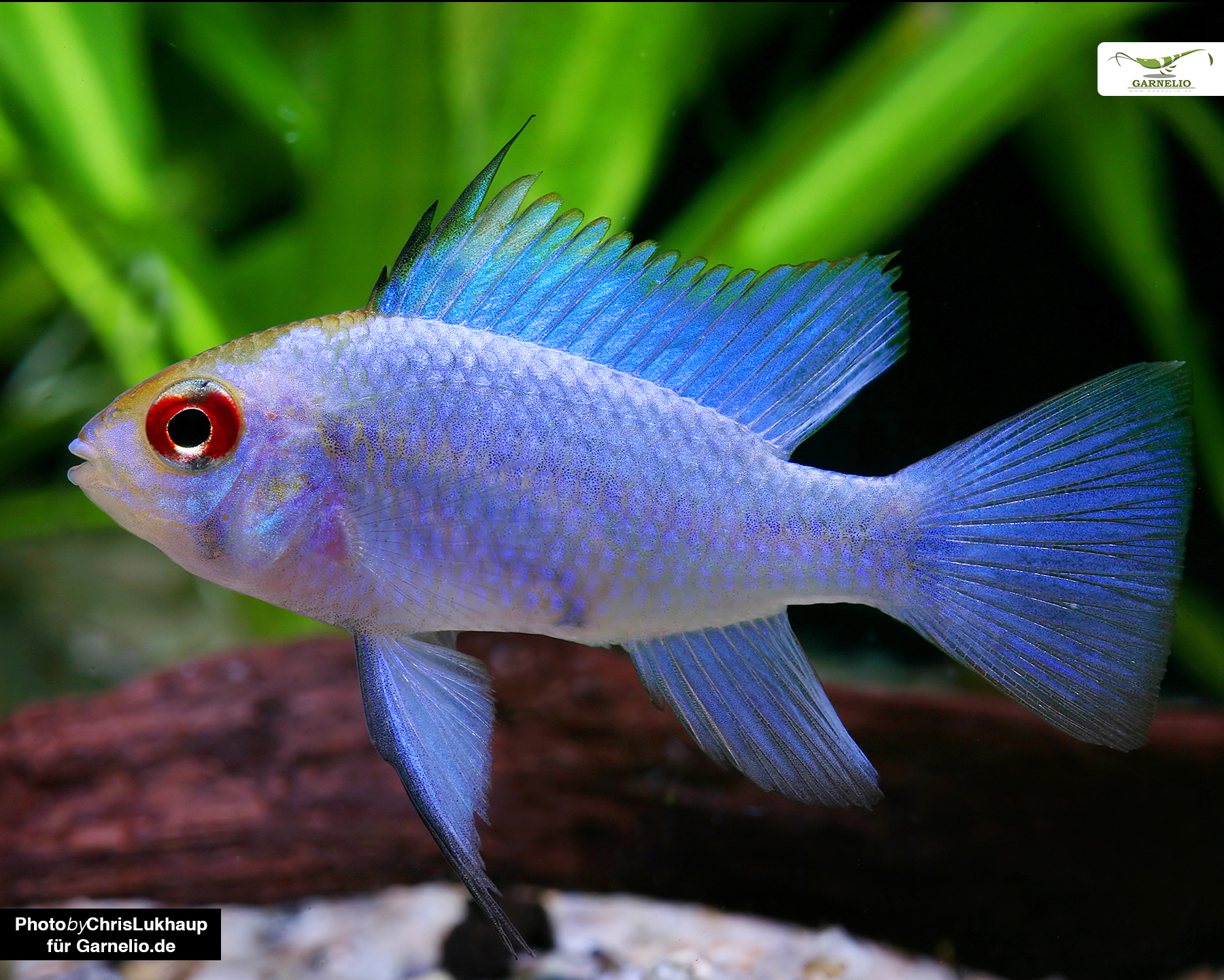
    The Electric Blue Butterfly Cichlid is a stunning, selectively bred color morph of the popular Mikrogeophagus ramirezi. Known for its intense, iridescent blue coloration covering almost the entire body, this dwarf cichlid is a centerpiece for many community tanks. While beautiful, it requires stable water conditions and careful maintenance to ensure it thrives in an aquarium environment.
  • Blue Punk Butterfly Cichlid (Microgeophagus ramirezi)

    Blue Punk Butterfly Cichlid (Microgeophagus ramirezi)

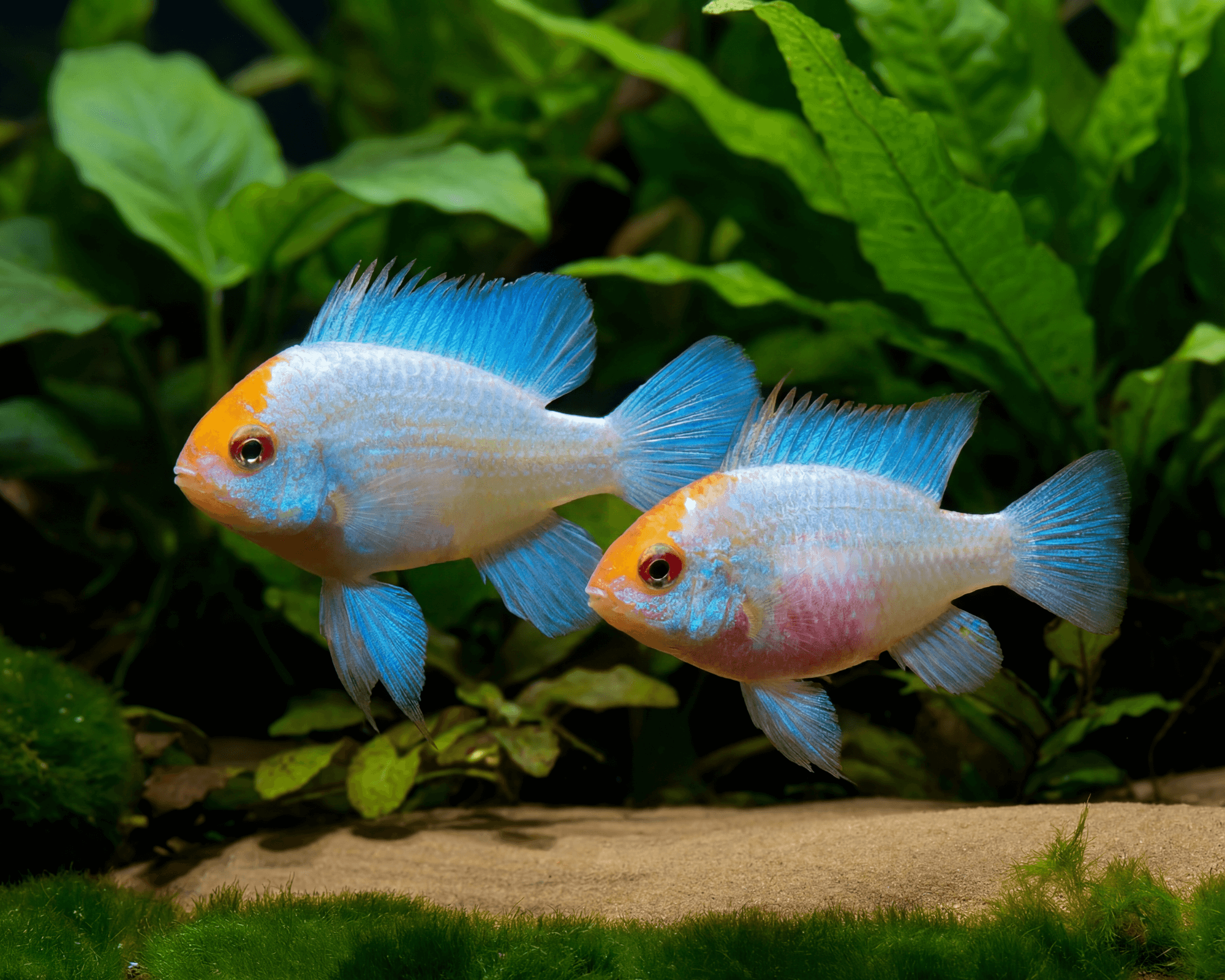
    The Blue Punk Butterfly Cichlid is a striking, selectively bred color morph of the popular Microgeophagus ramirezi. Known for its intense, metallic blue coloration and unique head patterning, this dwarf cichlid is a prized addition to planted aquariums. While beautiful, it requires stable water conditions and careful maintenance to ensure its long-term health and vibrant appearance in a home setting.