It’s time to help contribute for biggest aquarium gallery online

SUBMIT HEREVIEW GALLERY

Channa bangkanensis (Bangka Snakehead)

Overview

The Bangka Snakehead (Channa bangkanensis) is a fascinating and formidable predatory fish belonging to the family Channidae. Like other snakeheads, it possesses a labyrinth organ, allowing it to breathe atmospheric air, an adaptation for surviving in oxygen-depleted waters. Due to its highly specialized blackwater requirements and aggressive nature, it is a species best reserved for dedicated and experienced aquarists.

Image of bangka snakehead fish channa bangkanesis

Distribution and Habitat

This species is native to Southeast Asia, specifically found in the blackwater peat swamps and forest streams of Indonesia (Sumatra, Kalimantan, and the island of Bangka, from which it gets its name) and parts of Malaysia. These habitats are characterized by incredibly soft, highly acidic water stained dark brown by decaying organic matter like leaves and wood.

Description of Bangka Snakehead

Body shape:

They possess an elongated, torpedo-like, cylindrical body that is typical of the snakehead family, designed for sudden, explosive bursts of speed when ambushing prey.

Color:

The base coloration is typically a striking reddish-brown or orange. They feature a series of dark, irregular blotches along their flanks that can sometimes form a broken lateral stripe, complemented by beautiful white and black speckling across the head and body.

Image of bangka snakehead fish channa bangkanesis

Barbels:

Like all snakeheads, the Bangka Snakehead does not possess barbels.

Snout:

The snout is somewhat pointed and snake-like, featuring a large, wide-opening mouth lined with sharp teeth designed for gripping prey.

Eyes:

They have relatively large, alert eyes positioned high on the head, often featuring a reddish or orange iris, which helps them spot prey from below.

Fins:

The dorsal and anal fins are very long, running along the majority of the top and bottom of the body, providing stability. The pectoral fins are rounded and used for precise maneuvering.

The Tail:

The caudal fin (tail) is rounded and powerful, often displaying dark banding or spotting that matches the body's patterning.

Temper

The Bangka Snakehead is highly aggressive and predatory. They are incredibly territorial and will not tolerate intruders in their space, especially other snakeheads or fish of similar shape and size.

Sociality

This species is decidedly solitary. They should be kept alone in a single-species aquarium. Any tank mates small enough to fit into their mouths will quickly become a meal, and larger tank mates may be severely attacked or killed due to territorial disputes. Keeping them in pairs is only possible if you have a confirmed, bonded male and female.

Activity

They are primarily ambush predators. For much of the day, they will remain relatively inactive, lurking among driftwood or dense vegetation waiting for an opportunity to strike. When they do move to feed or breathe, they are capable of incredibly fast, explosive movements.

Keeping and Caring for Bangka Snakehead

Tank size:

Due to their potential adult size of up to 40 cm (16 inches), a single adult requires a minimum tank size of 150 gallons (approx. 600 liters). A tight-fitting, heavy lid is absolutely mandatory, as snakeheads are notorious and skilled jumpers.

Water Parameters:

Replicating their natural blackwater habitat is crucial for their health and immune system.

Image of bangka snakehead fish channa bangkanesis

Temperature

Maintain the water temperature between 22-28°C (72-82°F).

pH

The water must be acidic, with a pH ranging from 5.0 to 6.5. They do not thrive in alkaline conditions.

Hardness

Water should be very soft, ideally between 1-5 dGH.

Ammonia, Nitrite, Nitrate

Ammonia and Nitrite must always be 0 ppm. Nitrates should be kept below 20 ppm through regular water changes and excellent filtration, as they are messy eaters.

Lighting

Dim or subdued lighting is highly recommended to mimic the shaded canopy of their natural peat swamp habitats.

Water flow

Water flow should be slow to stagnant. They do not appreciate strong currents.

Decorations and Plants

The tank should be heavily decorated with bogwood, driftwood, and a generous layer of leaf litter (such as Indian Almond leaves) to release tannins. Dense plantings and floating surface plants are excellent for providing cover and diffusing light.

Diet

Bangka Snakeheads are obligate carnivores. In the aquarium, they should be fed a varied diet of meaty foods such as earthworms, prawns, mussels, pieces of white fish fillet, and large insects like crickets or dubia roaches.

Some Feeding Tips

Do not overfeed. While juveniles can be fed daily, adults only need to be fed 2 to 3 times a week. Avoid feeding them mammalian or avian meats (like beef heart or chicken), as the lipids in these meats cannot be properly digested and will lead to fatty liver disease.

Breeding

Breeding the Bangka Snakehead in captivity is extremely rare and difficult, primarily because it requires a perfectly compatible pair and exact blackwater conditions. They are pelagic egg-layers that exhibit intense parental care. Once eggs are laid and fertilized, both parents will fiercely guard the nest and the resulting fry against any perceived threats.

Conclusion

The Bangka Snakehead is a magnificent, prehistoric-looking predator that makes a phenomenal centerpiece for a large blackwater biotope. While their aggressive nature and strict water parameter requirements make them unsuitable for beginners, experienced oddball enthusiasts will find keeping Channa bangkanensis to be an incredibly rewarding experience.
Fish info

Care level: Moderate - Difficult
Temperament: Aggressive
Adult size: 40 cm
Life expectancy: 10-15 years
Fish type: Snakehead
Temperature : 22-28°C
pH: 5.0-6.5
Color Form: Black, Brown, Orange, White
Leave your comments
Lastest on Fishs
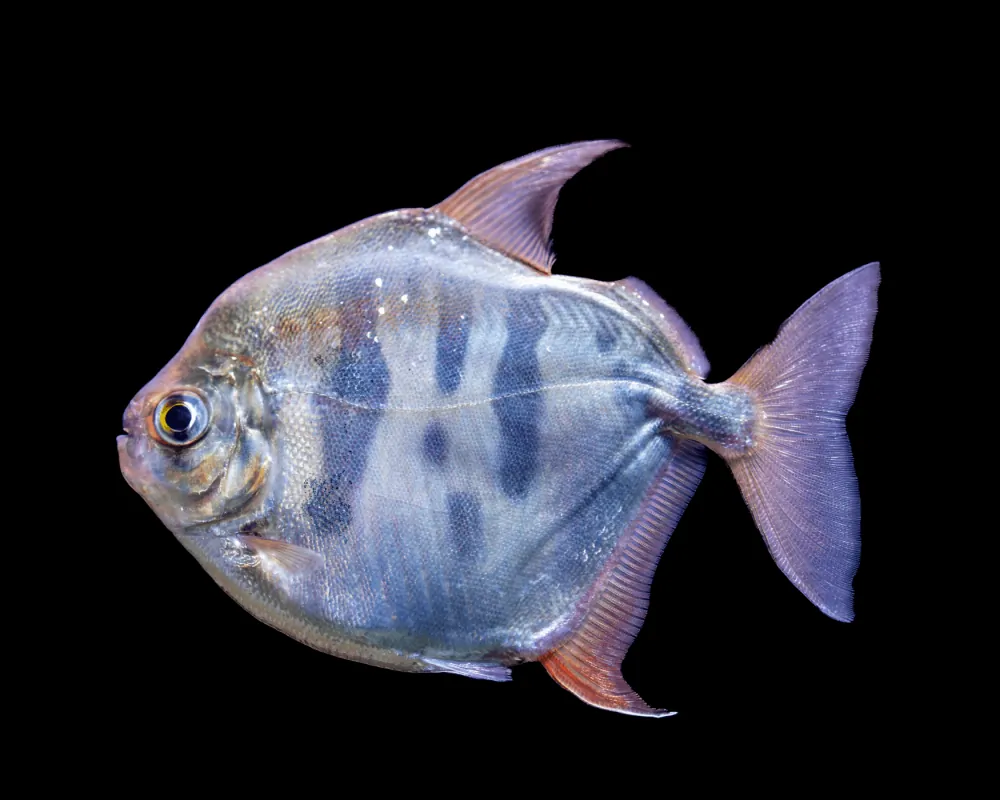
  • Metynnis fasciatus (Striped Silver Dollar)

    Moderate
    Snakehead
    The Striped Silver Dollar (Metynnis fasciatus) is a captivating, rare freshwater fish native to the Amazon basin. Known for its distinct vertical black stripes over a shimmering silver, disc-shaped body, this peaceful schooling fish is highly sought after by aquarists looking to add dynamic movement to large community aquariums.
  • Metynnis maculatus (Spotted Silver Dollar)

    Moderate
    Snakehead
    The Spotted Silver Dollar (Metynnis maculatus) is a captivating, disc-shaped characin native to South America. Known for its striking silver body adorned with dark spots, this peaceful schooling fish adds dynamic movement to large aquariums. Though considered a rarity in the hobby, its hardy nature makes it highly rewarding.
  • Osteoglossum bicirrhosum (Silver Arowana)

    Difficult
    Snakehead
    The Silver Arowana, occasionally referred to as the Gabelbart, is a majestic and ancient fish native to the Amazon Basin. Renowned for its metallic scales and unique surface-hunting behavior, it is highly prized among experienced aquarists who can accommodate its massive size and specialized care requirements.
  • Mormyrus kannume (Freshwater Dolphin / Tapir Trunkfish)

    Moderate - Difficult
    Snakehead
    The Mormyrus kannume, commonly known as the Freshwater Dolphin or Tapir Trunkfish, is a fascinating oddball from the river basins of Africa. Renowned for its unique trunk-like snout and highly intelligent, inquisitive nature, this nocturnal species uses weak electrical impulses to navigate, making it a captivating choice for expert aquarists.
  • Pseudomugil furcatus (Forktail Blue-eye)

    Moderate
    Snakehead
    The Forktail Blue-eye (Pseudomugil furcatus) is a captivating, highly active nano fish native to the rainforest streams of Papua New Guinea. Renowned for their striking neon blue eyes, bright yellow finnage, and peaceful schooling behavior, they have become incredibly popular additions to planted community aquariums among dedicated aquarists.
  • Hemigrammus caudovittatus (Flamingo Tetra)

    Easy
    Snakehead
    The Flamingo Tetra, scientifically known as Hemigrammus caudovittatus, is a robust and lively freshwater fish native to South America. Known for its energetic schooling behavior and hardy nature, it makes an excellent addition to larger community aquariums, though its fin-nipping tendencies require careful selection of tank mates.
  • Rasbora trilineata (Scissortail Rasbora)

    Easy
    Snakehead
    Originating from the fast-flowing streams of Southeast Asia, the Scissortail Rasbora is an active, schooling fish renowned for its striking, scissor-like tail movements. Their peaceful nature, hardy constitution, and sleek, torpedo-shaped bodies make them a highly popular and captivating addition to community freshwater aquariums.
  • Epalzeorhynchos bicolor (Red Tail Shark)

    Moderate
    Snakehead
    The Red Tail Shark, native to Thailand, is a striking and highly popular freshwater fish. Known for its deep velvety black body and vibrant red tail, this semi-aggressive cyprinid adds dynamic movement and a touch of drama to sufficiently large, well-structured community aquariums.
  • Pao baileyi (Hairy Pufferfish)

    Moderate - Difficult
    Snakehead
    The Hairy Pufferfish (Pao baileyi), native to the rocky rapids of the Mekong basin, is a highly unusual and captivating freshwater puffer. Known for its unique epidermal outgrowths resembling hairs, this aggressive ambush predator requires a dedicated, species-only setup but rewards keepers with fascinating, interactive, "water dog" behavior.
  • Badis ferrarisi (Ferrari's Badis)

    Moderate
    Snakehead
    Badis ferrarisi, commonly known as Ferrari's Badis, is a rare and strikingly beautiful micro-predator native to Myanmar. Known for its brilliant red and black striped pattern, this small chameleon fish exhibits fascinating behaviors. Due to its specific dietary requirements and shy nature, it is a rewarding species for dedicated aquarists.
  • Dichotomyctere ocellatus (Figure 8 Pufferfish)

    Moderate
    Snakehead
    The Figure 8 Pufferfish, native to Southeast Asia, is a captivating and highly intelligent species. Known for the distinctive markings on its back resembling the number eight, this slightly brackish water fish boasts an interactive personality, making it a beloved yet moderately challenging pet for dedicated aquarium enthusiasts.
  • Polypterus endlicheri (Endlicher's Bichir)

    Moderate
    Snakehead
    Hailing from the rivers and swamps of Africa, Endlicher's Bichir, or the Saddled Bichir, is a fascinating ancient oddball. Known for its dinosaur-like appearance, prominent dorsal finlets, and striking dark vertical bands, this bottom-dwelling predator is highly prized by aquarists looking for a captivating, prehistoric centerpiece fish.
  • Nematobrycon palmeri (Emperor Tetra)

    Easy - Moderate
    Snakehead
    The Emperor Tetra (Nematobrycon palmeri) is a stunning, peaceful freshwater fish native to the Atrato and San Juan river basins in Colombia. Known for its regal purple and blue iridescence, striking black lateral stripe, and unique trident-shaped tail in males, it is a highly popular choice for planted community aquariums.
  • Gnathonemus petersii (Elephant Trunk Fish)

    Moderate - Difficult
    Snakehead
    Originating from the murky rivers of West and Central Africa, the Elephant Trunk Fish is a fascinating oddball species. Known for its trunk-like appendage used to forage and its unique ability to generate weak electrical fields, it remains a captivating but demanding choice for experienced freshwater aquarists.
  • Oliotius oligolepis (Island Barb)

    Easy
    Snakehead
    The Island Barb, also known as the Checkered Barb, is a peaceful and active schooling fish native to Indonesia. Known for its striking checkerboard pattern and vibrant reddish fins, this hardy cyprinid is incredibly popular among both beginner and experienced aquarists looking to add life to planted community tanks.
  • Eirmotus octozona (Eight-banded Barb)

    Moderate
    Snakehead
    The Eight-banded Barb is a peaceful, shy, and captivating schooling fish native to the blackwater swamps of Southeast Asia. Known for its striking vertical black stripes over a semi-transparent body, it is a highly sought-after species for aquarists looking to build a serene, planted, or biotope aquarium.