It’s time to help contribute for biggest aquarium gallery online

SUBMIT HEREVIEW GALLERY

Gnathonemus petersii (Elephant Trunk Fish)

Overview

The Elephant Trunk Fish (Gnathonemus petersii) is an extraordinary freshwater species beloved by oddball fish enthusiasts. Known for its unique appearance and high intelligence, this fish uses a weak electrical field to navigate, communicate, and find food in murky waters. Its brain-to-body mass ratio is remarkably high, comparable to that of humans.

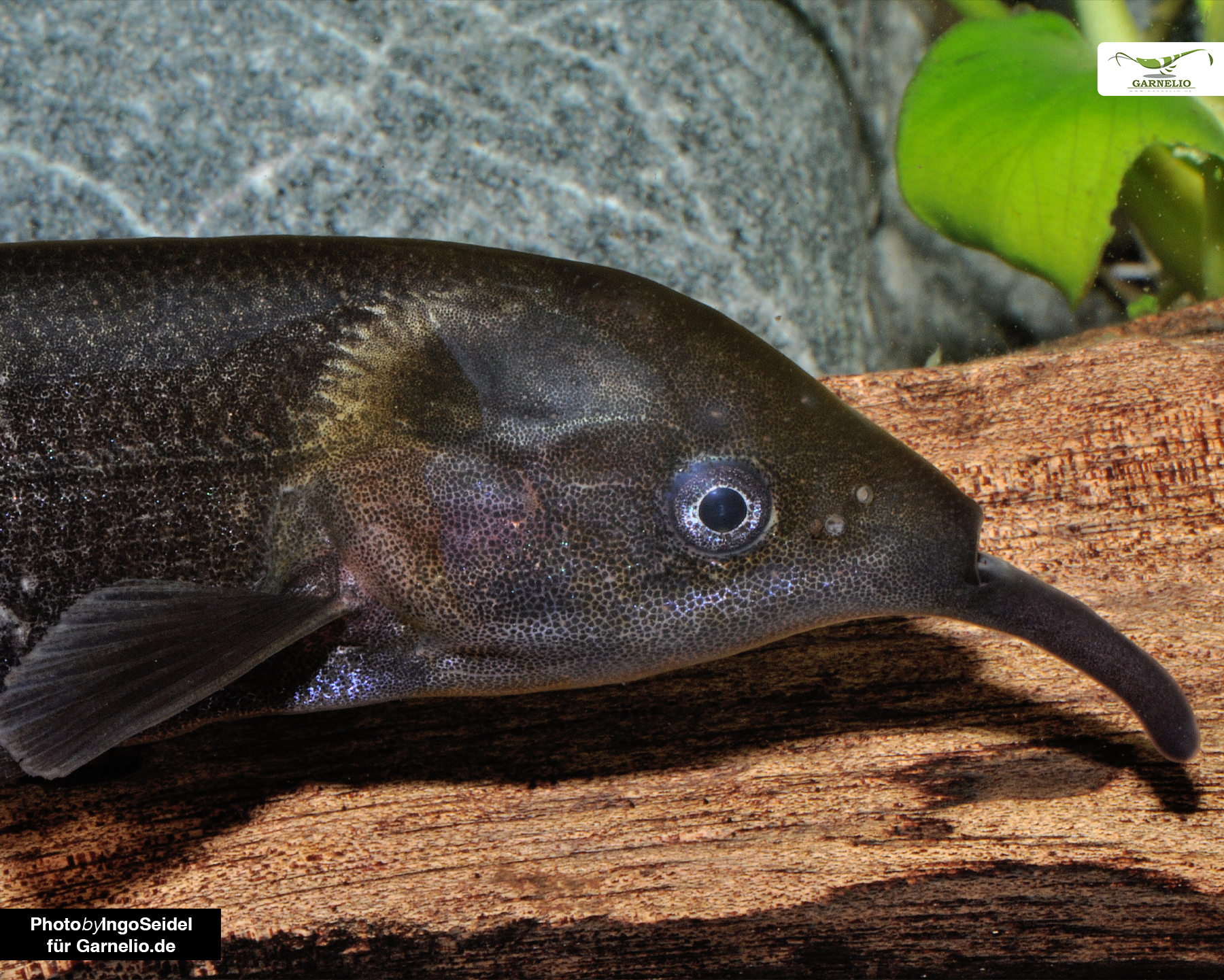
Image of elephant trunk fish gnathonemus petersii

Distribution and Habitat

This species is native to the heavily vegetated, slow-moving rivers and muddy basins of West and Central Africa, primarily found in the Niger and Congo river basins. They inhabit dark, murky waters where visibility is low, relying on their electroreceptors rather than eyesight to survive.

Description of Elephant Trunk Fish

Body shape:

They possess an elongated, laterally compressed body that is somewhat stiff, making them less flexible than many other fish.

Color:

The body is generally dark brown to grey or black, featuring two prominent vertical white or silvery stripes located between the dorsal and anal fins.

Barbels:

They lack traditional barbels; instead, they have their characteristic trunk-like extension.

Snout:

The "trunk" is actually an elongated extension of the lower jaw, known as a Schnauzenorgan. It is highly sensitive, packed with electroreceptors, and used for rooting through the substrate for food.

Eyes:

Their eyes are relatively small and offer poor vision, an adaptation to their dark, turbid natural habitats.

Fins:

The dorsal and anal fins are set far back on the body, positioned almost symmetrically opposite each other, closely preceding the tail.

The Tail:

The caudal peduncle is very narrow, leading to a deeply forked, V-shaped tail fin.

Temper

They are generally peaceful towards other species but can be highly territorial and aggressive toward their own kind or similarly shaped fish. They are best kept singly unless housed in a massive aquarium.

Sociality

While peaceful with different species, they do best in community tanks with quiet, non-aggressive tank mates. Avoid keeping them with aggressive eaters or highly active, boisterous fish that might outcompete them for food or cause stress.

Activity

Elephant Trunk Fish are primarily nocturnal. They will spend most of the day hiding in caves, pipes, or dense vegetation, becoming highly active foragers during the evening and night.

Keeping and Caring for Elephant Trunk Fish

Tank size:

Due to their adult size and active swimming habits, a minimum tank size of 200 liters (about 50 gallons) is required for a single specimen.

Water Parameters:

They are sensitive to water quality and require pristine conditions. Regular water changes are essential.

Temperature

Maintain the water temperature between 23-28°C (73-82°F).

pH

They prefer slightly acidic to neutral water, ideally between 6.5 and 7.2.

Hardness

Soft to moderately hard water is best, ranging from 5 to 15 dGH.

Ammonia, Nitrite, Nitrate

Ammonia and Nitrite must always be at 0 ppm. Nitrates should be kept strictly below 20 ppm, as they are scaleless and highly sensitive to poor water quality and medications.

Lighting

Dim or subdued lighting is strongly recommended to mimic their natural habitat and encourage daytime activity.

Water flow

A gentle to moderate water flow is ideal, avoiding overly turbulent conditions.

Decorations and Plants

A soft, sandy substrate is absolutely mandatory to prevent damage to their delicate trunk. Provide plenty of hiding spots using smooth rocks, driftwood, PVC pipes, and dense live plants.

Diet

They are carnivorous bottom-feeders. In the aquarium, they heavily prefer live or frozen foods such as bloodworms, blackworms, brine shrimp, and daphnia. They rarely accept dry flakes or pellets.

Some Feeding Tips

Since they are nocturnal, it is best to feed them just before turning the aquarium lights off or shortly after. Ensure competitive tank mates do not steal their food before they can find it.

Breeding

Breeding the Elephant Trunk Fish in a home aquarium is considered nearly impossible. They rely on complex environmental cues, including seasonal flooding and specific electrical field interactions, to trigger spawning, which has not been successfully replicated by hobbyists.

Conclusion

The Elephant Trunk Fish is a truly unique and rewarding pet for the experienced aquarist. While they require specific care, a soft substrate, and specialized feeding, their incredible intelligence and fascinating behaviors make them a standout centerpiece for a specialized community tank.
Fish info

Care level: Moderate - Difficult
Temperament: Semi-aggressive
Adult size: 20-25 cm
Life expectancy: 6-10 years
Fish type: Elephantfish
Temperature : 23-28°C
pH: 6.5-7.2
Color Form: Black, Brown, Grey
Leave your comments
Lastest on Fishs
  • Metynnis fasciatus (Striped Silver Dollar)

    Moderate
    Elephantfish
    The Striped Silver Dollar (Metynnis fasciatus) is a captivating, rare freshwater fish native to the Amazon basin. Known for its distinct vertical black stripes over a shimmering silver, disc-shaped body, this peaceful schooling fish is highly sought after by aquarists looking to add dynamic movement to large community aquariums.
  • Metynnis maculatus (Spotted Silver Dollar)

    Moderate
    Elephantfish
    The Spotted Silver Dollar (Metynnis maculatus) is a captivating, disc-shaped characin native to South America. Known for its striking silver body adorned with dark spots, this peaceful schooling fish adds dynamic movement to large aquariums. Though considered a rarity in the hobby, its hardy nature makes it highly rewarding.
  • Osteoglossum bicirrhosum (Silver Arowana)

    Difficult
    Elephantfish
    The Silver Arowana, occasionally referred to as the Gabelbart, is a majestic and ancient fish native to the Amazon Basin. Renowned for its metallic scales and unique surface-hunting behavior, it is highly prized among experienced aquarists who can accommodate its massive size and specialized care requirements.
  • Mormyrus kannume (Freshwater Dolphin / Tapir Trunkfish)

    Moderate - Difficult
    Elephantfish
    The Mormyrus kannume, commonly known as the Freshwater Dolphin or Tapir Trunkfish, is a fascinating oddball from the river basins of Africa. Renowned for its unique trunk-like snout and highly intelligent, inquisitive nature, this nocturnal species uses weak electrical impulses to navigate, making it a captivating choice for expert aquarists.
  • Pseudomugil furcatus (Forktail Blue-eye)

    Moderate
    Elephantfish
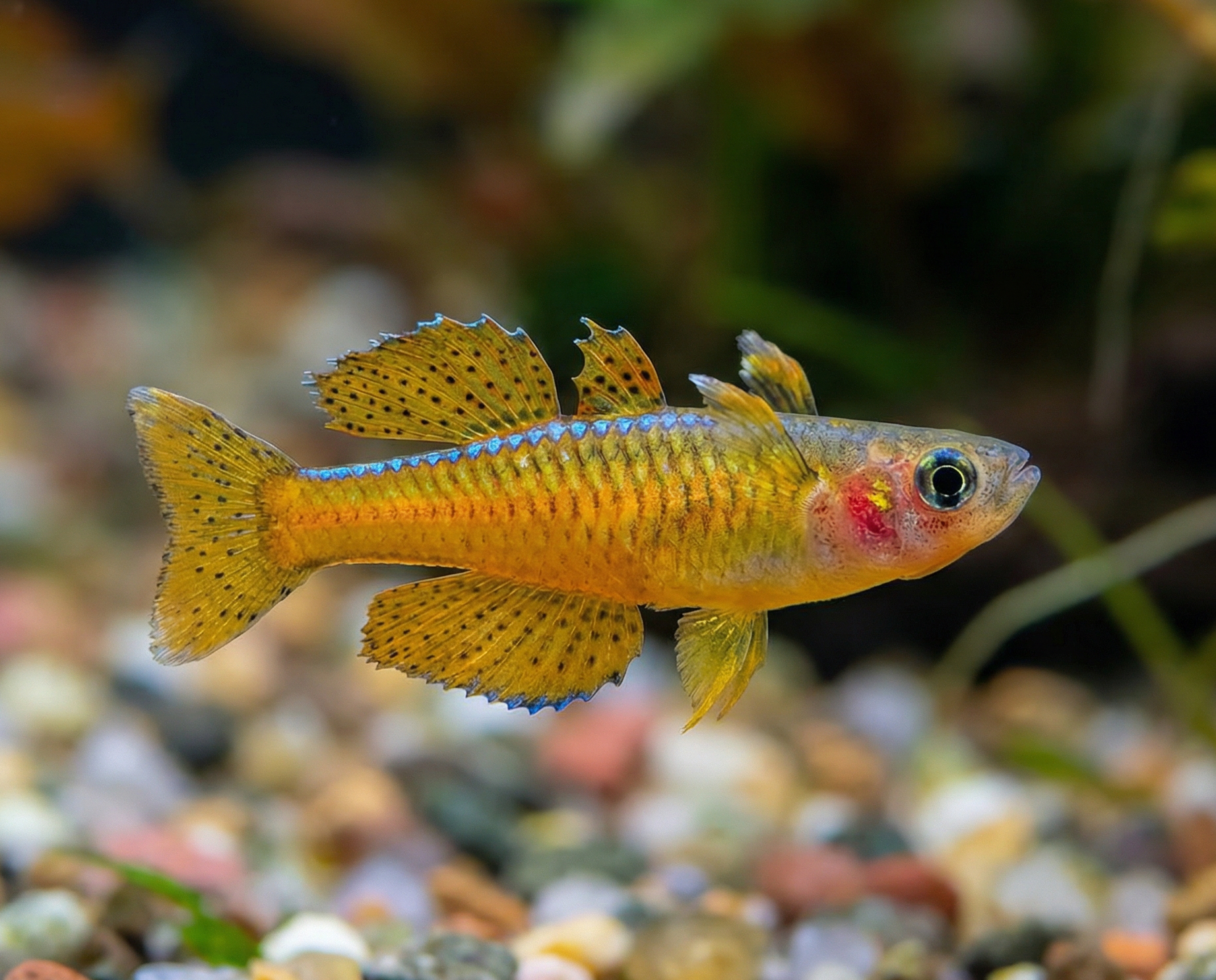
    The Forktail Blue-eye (Pseudomugil furcatus) is a captivating, highly active nano fish native to the rainforest streams of Papua New Guinea. Renowned for their striking neon blue eyes, bright yellow finnage, and peaceful schooling behavior, they have become incredibly popular additions to planted community aquariums among dedicated aquarists.
  • Hemigrammus caudovittatus (Flamingo Tetra)

    Easy
    Elephantfish
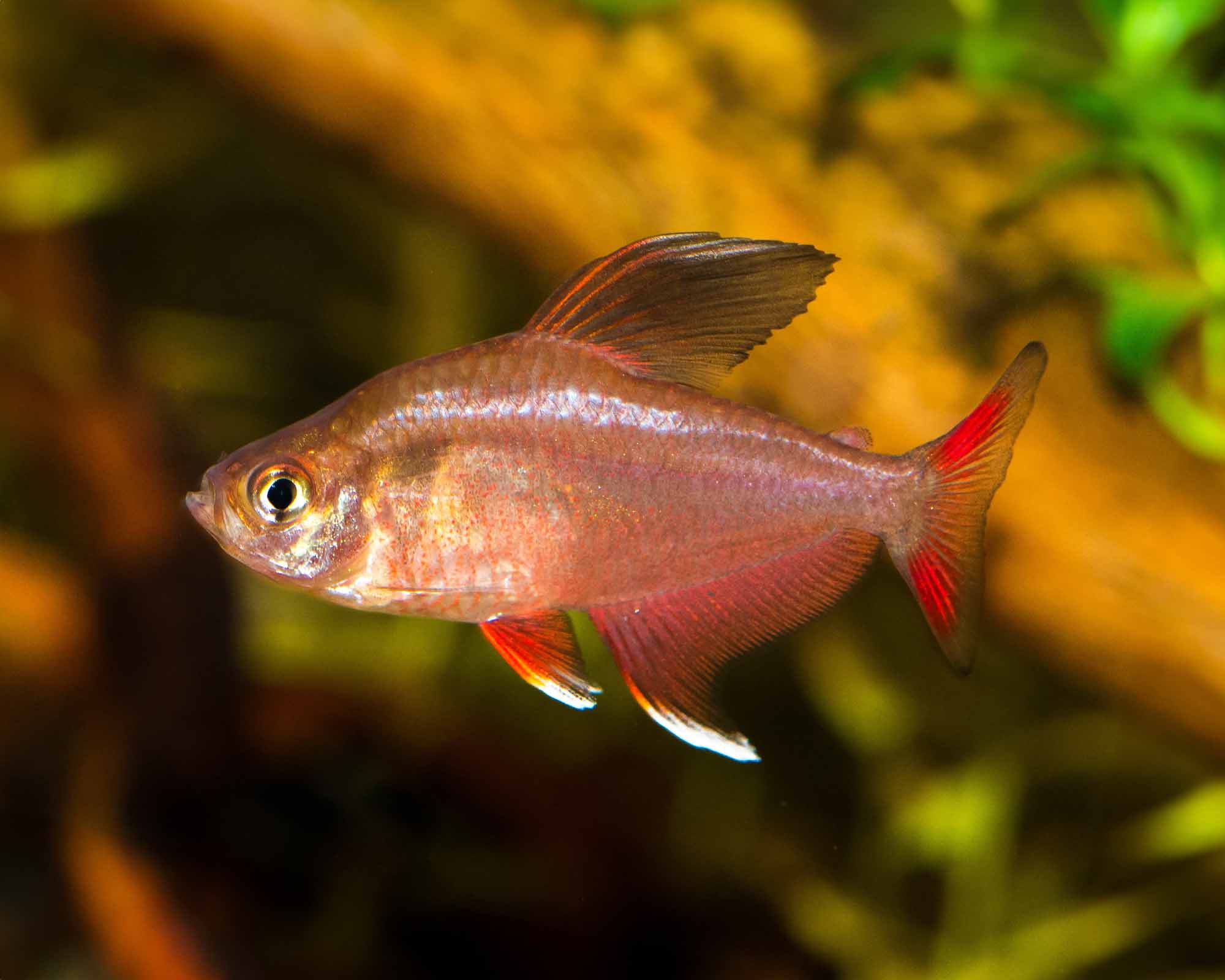
    The Flamingo Tetra, scientifically known as Hemigrammus caudovittatus, is a robust and lively freshwater fish native to South America. Known for its energetic schooling behavior and hardy nature, it makes an excellent addition to larger community aquariums, though its fin-nipping tendencies require careful selection of tank mates.
  • Rasbora trilineata (Scissortail Rasbora)

    Easy
    Elephantfish
    Originating from the fast-flowing streams of Southeast Asia, the Scissortail Rasbora is an active, schooling fish renowned for its striking, scissor-like tail movements. Their peaceful nature, hardy constitution, and sleek, torpedo-shaped bodies make them a highly popular and captivating addition to community freshwater aquariums.
  • Epalzeorhynchos bicolor (Red Tail Shark)

    Moderate
    Elephantfish
    The Red Tail Shark, native to Thailand, is a striking and highly popular freshwater fish. Known for its deep velvety black body and vibrant red tail, this semi-aggressive cyprinid adds dynamic movement and a touch of drama to sufficiently large, well-structured community aquariums.
  • Pao baileyi (Hairy Pufferfish)

    Moderate - Difficult
    Elephantfish
    The Hairy Pufferfish (Pao baileyi), native to the rocky rapids of the Mekong basin, is a highly unusual and captivating freshwater puffer. Known for its unique epidermal outgrowths resembling hairs, this aggressive ambush predator requires a dedicated, species-only setup but rewards keepers with fascinating, interactive, "water dog" behavior.
  • Badis ferrarisi (Ferrari's Badis)

    Moderate
    Elephantfish
    Badis ferrarisi, commonly known as Ferrari's Badis, is a rare and strikingly beautiful micro-predator native to Myanmar. Known for its brilliant red and black striped pattern, this small chameleon fish exhibits fascinating behaviors. Due to its specific dietary requirements and shy nature, it is a rewarding species for dedicated aquarists.
  • Dichotomyctere ocellatus (Figure 8 Pufferfish)

    Moderate
    Elephantfish
    The Figure 8 Pufferfish, native to Southeast Asia, is a captivating and highly intelligent species. Known for the distinctive markings on its back resembling the number eight, this slightly brackish water fish boasts an interactive personality, making it a beloved yet moderately challenging pet for dedicated aquarium enthusiasts.
  • Polypterus endlicheri (Endlicher's Bichir)

    Moderate
    Elephantfish
    Hailing from the rivers and swamps of Africa, Endlicher's Bichir, or the Saddled Bichir, is a fascinating ancient oddball. Known for its dinosaur-like appearance, prominent dorsal finlets, and striking dark vertical bands, this bottom-dwelling predator is highly prized by aquarists looking for a captivating, prehistoric centerpiece fish.
  • Nematobrycon palmeri (Emperor Tetra)

    Easy - Moderate
    Elephantfish
    The Emperor Tetra (Nematobrycon palmeri) is a stunning, peaceful freshwater fish native to the Atrato and San Juan river basins in Colombia. Known for its regal purple and blue iridescence, striking black lateral stripe, and unique trident-shaped tail in males, it is a highly popular choice for planted community aquariums.
  • Oliotius oligolepis (Island Barb)

    Easy
    Elephantfish
    The Island Barb, also known as the Checkered Barb, is a peaceful and active schooling fish native to Indonesia. Known for its striking checkerboard pattern and vibrant reddish fins, this hardy cyprinid is incredibly popular among both beginner and experienced aquarists looking to add life to planted community tanks.
  • Eirmotus octozona (Eight-banded Barb)

    Moderate
    Elephantfish
    The Eight-banded Barb is a peaceful, shy, and captivating schooling fish native to the blackwater swamps of Southeast Asia. Known for its striking vertical black stripes over a semi-transparent body, it is a highly sought-after species for aquarists looking to build a serene, planted, or biotope aquarium.
  • Nannostomus marginatus (Dwarf Pencilfish)

    Easy - Moderate
    Elephantfish
    Native to the slow-moving, tannin-stained waters of South America, the Dwarf Pencilfish is a captivating, peaceful species. Known for its striking horizontal stripes and distinctive hovering behavior, this diminutive fish is highly popular among aquarists seeking a lively yet tranquil addition to their planted nano or community aquariums.