AquaLibs presents AquaRank Discover the world’s leading aquascapers

Explore transparent rankings built from published results across the world’s leading aquascaping contests.

Ambystoma mexicanum (Albino Axolotl)

Overview

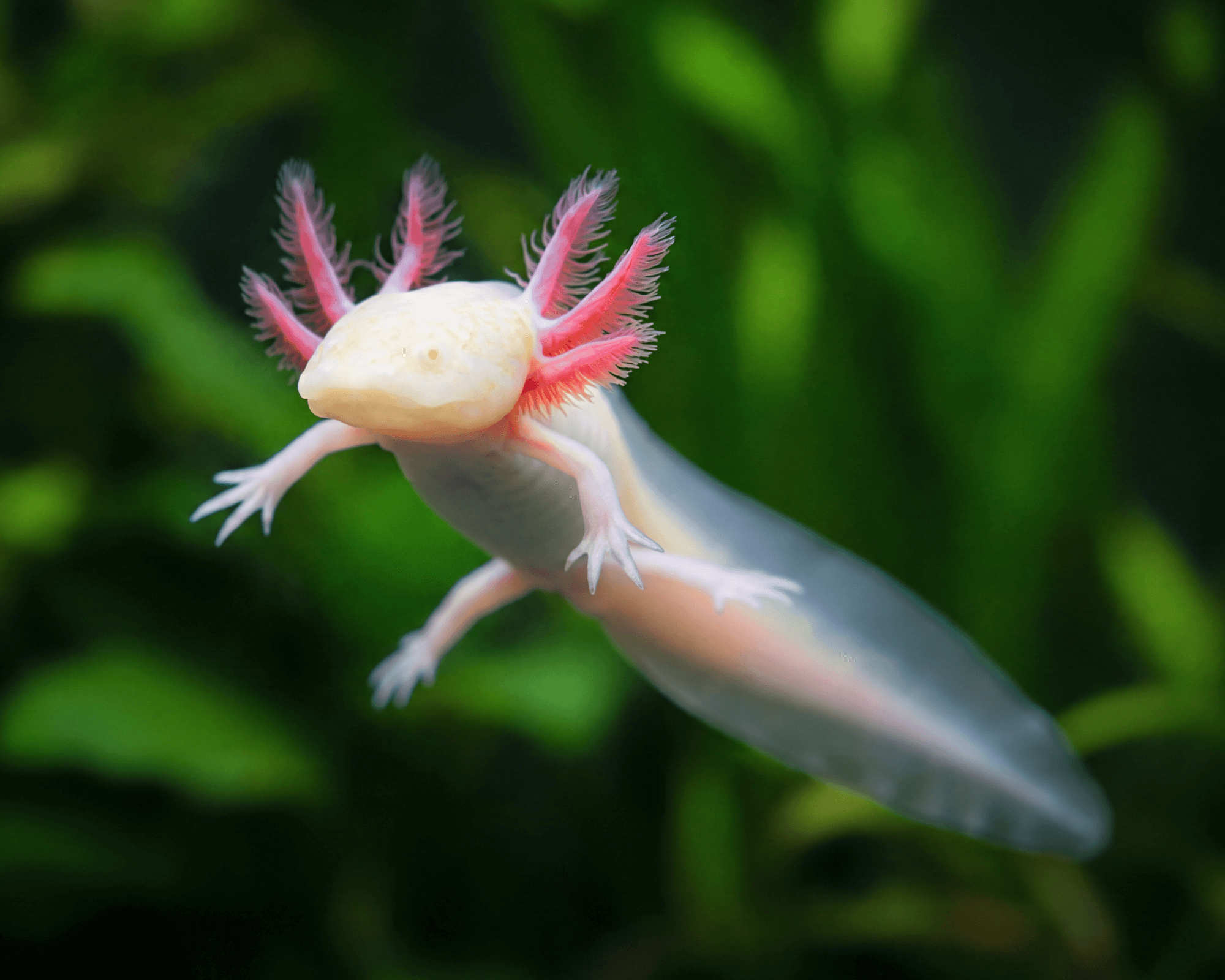
The Albino Axolotl (Ambystoma mexicanum) is a fascinating neotenic salamander, meaning it retains its larval features throughout its entire life. Unlike other amphibians that undergo metamorphosis to move onto land, the Axolotl remains fully aquatic. The albino mutation, which lacks dark pigments (melanin), results in a beautiful white or pinkish body with striking bright red or pink feathery gills. This specific variant is often bred in captivity (DNZ - Nachzucht/captive bred) and has become a beloved pet in the aquarium hobby.

Image of axolotl albino ambystoma mexicanum dnz

Distribution and Habitat

In the wild, Axolotls are exclusively native to the high-altitude lake complex of Xochimilco, near Mexico City. The natural habitat consists of cool, murky waters with abundant vegetation. Unfortunately, due to urbanization, pollution, and the introduction of invasive fish species, wild populations are critically endangered. The vast majority of Axolotls in the hobby today, especially color morphs like the albino, are entirely captive-bred.

Description of Albino Axolotl

Body shape:

They possess a stout, elongated, and somewhat cylindrical body typical of salamanders, with four relatively small, thin legs.

Color:

True albinos have a white to pale pink body. They lack melanin entirely, which makes their external gills appear bright pink or red due to the blood flowing through them.

Barbels:

They do not have barbels. Instead, they feature three pairs of prominent, feathery external gills protruding from the sides of their head.

Snout:

The snout is broad, blunt, and slightly rounded, giving them their famous "smiling" expression.

Eyes:

Because they are true albinos, their eyes lack dark pigment and appear clear, pink, or slightly red. Their vision is relatively poor.

Fins:

They have a continuous fin-like membrane that runs down the center of their back and extends along the tail.

The Tail:

The tail is laterally compressed and highly muscular, serving as their primary means of propulsion through the water.

Temper

Axolotls are generally peaceful but possess a strong feeding response. They will snap at anything that fits in their mouths, including smaller tank mates or the limbs of other axolotls if they are underfed or overcrowded.

Sociality

They are not true social animals and do perfectly well on their own. If housed together, tank mates must be of the same size to prevent cannibalism, and ample space must be provided.

Activity

They are predominantly bottom-dwellers and tend to be more active during the evening or at night. During the day, they often rest quietly among plants or inside hides.

Keeping and Caring for Albino Axolotl

Image of axolotl albino ambystoma mexicanum dnz

Keeping an Axolotl requires specific conditions, primarily centered around maintaining cool water temperatures and pristine water quality. They are sensitive to poor water conditions and high temperatures, which can cause severe stress and illness.

Tank size:

A minimum of 20 gallons (approx. 80 liters) is required for a single adult Axolotl, though a 20-gallon "long" tank is preferred to maximize floor space. Add at least 10 gallons for each additional Axolotl.

Water Parameters:

Temperature

15-20°C (60-68°F). This is critical; temperatures above 22°C (72°F) can lead to heat stress, fungal infections, and death. Aquarium chillers or cooling fans are often necessary.

pH

6.5-8.0. They are adaptable but prefer slightly alkaline water around 7.4 to 7.6.

Hardness

7-14 dGH. They prefer moderately hard water; very soft water can cause temporary anemia and stress.

Ammonia, Nitrite, Nitrate

Ammonia and Nitrite must always be 0 ppm. Nitrates should be kept below 20 ppm through regular water changes, as they produce a significant amount of bioload.

Lighting

Low to moderate lighting. Albinos are particularly sensitive to bright light. Provide plenty of shaded areas and hides.

Water flow

Very low. Axolotls originate from still lakes and get easily stressed by strong currents, which can damage their gills and cause them to stop eating.

Decorations and Plants

Use fine sand or a bare bottom. Never use standard aquarium gravel, as Axolotls will swallow it, leading to fatal impaction. Provide smooth hides (like PVC pipes or terracotta pots) and sturdy or floating plants (like Anubias, Java Fern, or Hornwort).

Diet

Axolotls are strict carnivores. Their staple diet should consist of live or frozen earthworms (nightcrawlers), bloodworms, and high-quality sinking carnivore or axolotl pellets. Avoid feeder fish due to the risk of disease and thiaminase.

Some Feeding Tips

Feed adults 2-3 times a week, while juveniles need daily feeding. Using dull-tipped feeding tongs is highly recommended to ensure they get their food directly and to prevent them from accidentally ingesting substrate.

Breeding

Breeding is relatively straightforward but requires a cooling period to simulate winter, followed by a slight warming to trigger spawning. The male deposits spermatophores on the substrate, which the female takes up. She will then lay hundreds of individual eggs on plant leaves and decorations. Adults must be removed after spawning to prevent them from eating the eggs.

Conclusion

The Albino Axolotl is a truly unique and rewarding pet for aquarists willing to meet its specific cold-water and dietary needs. With their alien-like appearance and interactive feeding behaviors, they make a stunning centerpiece for a specialized species-only aquarium.
Fish info

  • Care level: Moderate
  • Temperament: Peaceful
  • Adult size: 20-30 cm
  • Life expectancy: 10-15 years
  • Fish type: Amphibian
  • Temperature : 15-20°C
  • pH: 6.5-8.0
  • Color Form: Pink, White
Leave your comments
Latest on Fishs
  • Dwarf Gourami Red (Trichogaster lalius)

    Dwarf Gourami Red (Trichogaster lalius)

    Easy - Moderate
    Asian labyrinth fish
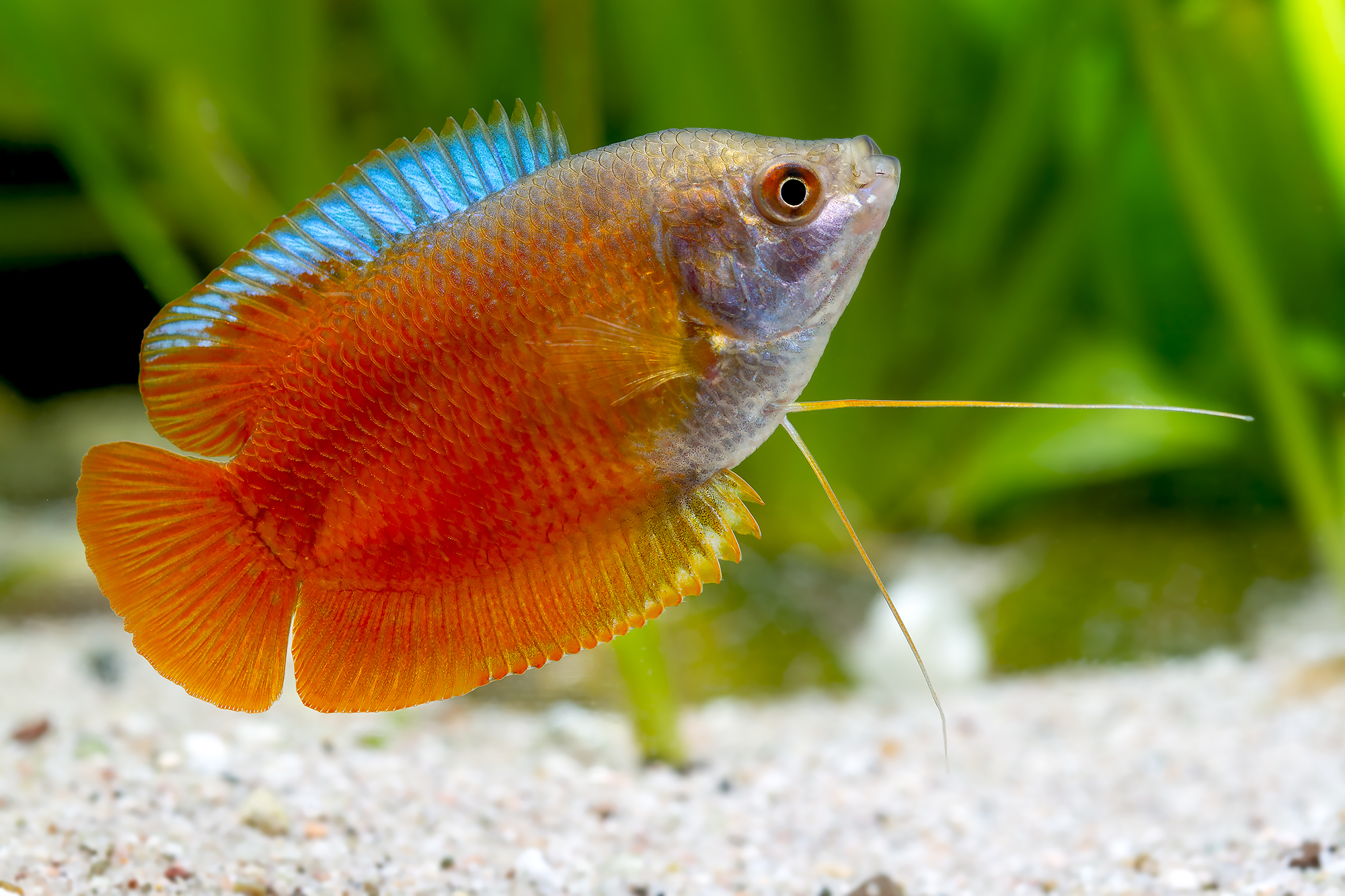
    The red dwarf gourami is a selectively bred color form of the dwarf gourami, a small labyrinth fish formerly widely known as Colisa lalia. It is suited to mature, planted community aquariums with gentle water movement and calm tank mates. Males can be territorial, especially when kept with females in confined conditions, so cover, visual barriers, and careful observation are important for a pair.
  • Cockatoo Cichlid Red (Apistogramma cacatuoides)

    Cockatoo Cichlid Red (Apistogramma cacatuoides)

    Moderate
    South American dwarf cichlid
    The Cockatoo Cichlid is a small South American dwarf cichlid valued for its personality, breeding behavior and colorful finnage. Apistogramma cacatuoides is generally adaptable when provided with clean, stable water, cover and a soft substrate. Males are larger and more vividly marked than females, while pairs become territorial around spawning sites. The supplied “red” designation most likely refers to a selectively bred color form; exact strain and sex confirmation cannot be established from the listing alone.
  • Discus (Symphysodon aequifasciatus) Care Guide

    Discus (Symphysodon aequifasciatus) Care Guide

    Difficult
    South American freshwater cichlid
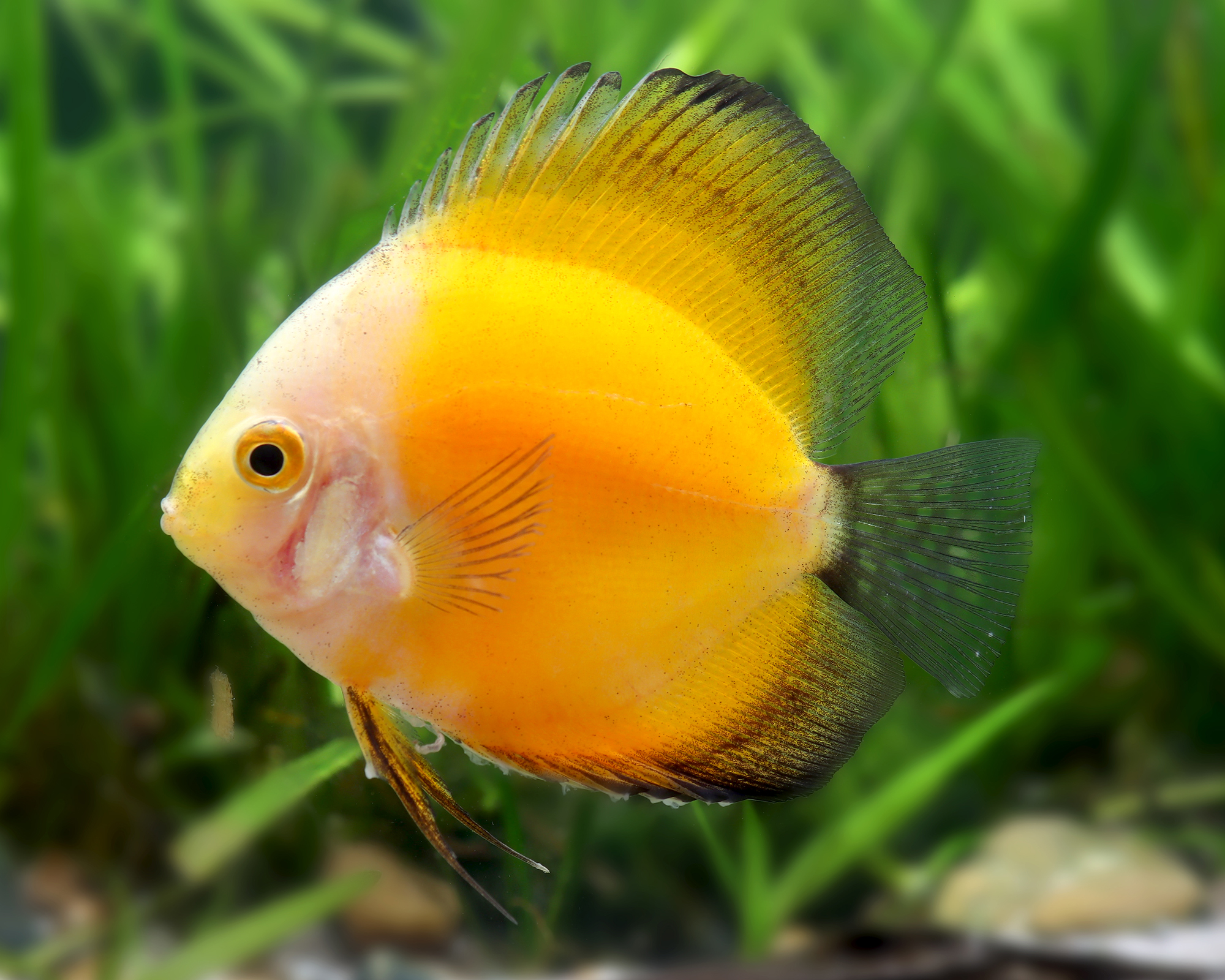
    Symphysodon aequifasciatus is a large, laterally compressed cichlid from the Amazon Basin, valued for its calm behavior and striking disc-shaped body. It requires warm, clean, stable water and careful feeding, making it better suited to experienced aquarists. The supplied images show yellow, orange, red, white and dark color forms; cultivated strains can vary considerably, so exact variety identification from images alone is uncertain. Discus are social fish and generally thrive in groups rather than as isolated specimens.
  • Cape Lopez Killifish (Aphyosemion australe)

    Cape Lopez Killifish (Aphyosemion australe)

    Moderate
    West African non-annual killifish
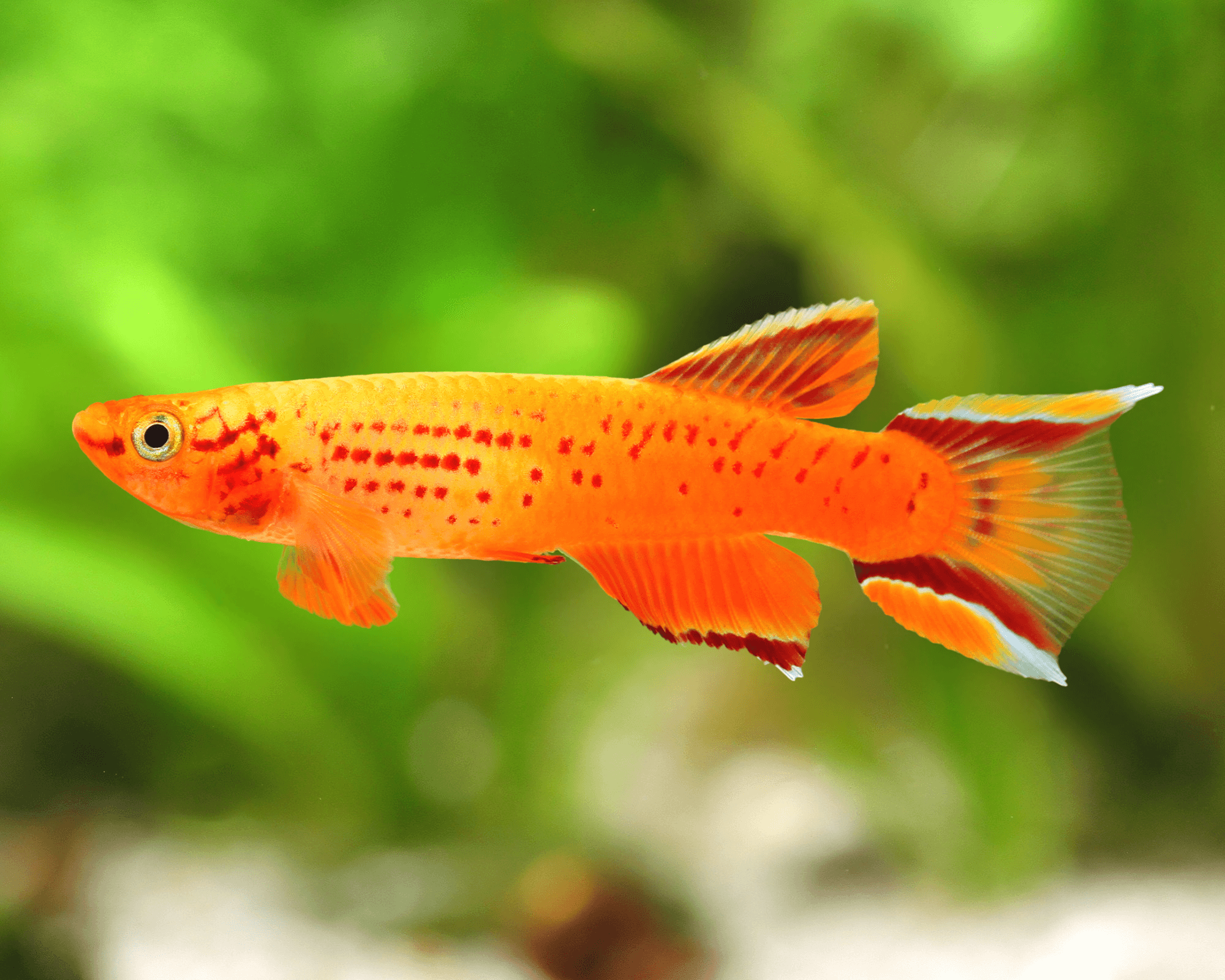
    The Cape Lopez killifish is a small, peaceful West African freshwater fish prized for its patterned body, flowing fins and manageable size. It inhabits slow-moving and temporary waters around coastal Gabon, including the Cape Lopez region. The supplied trade description identifies a pair as “Cape Lopez splendid carpets,” but this wording may describe a commercial strain rather than a formally recognized taxon. The image appears to show an orange form, so exact strain identification should be confirmed with the breeder or supplier.
  • Burton’s Mouthbrooder (Astatotilapia burtoni)

    Burton’s Mouthbrooder (Astatotilapia burtoni)

    Moderate
    East African haplochromine cichlid
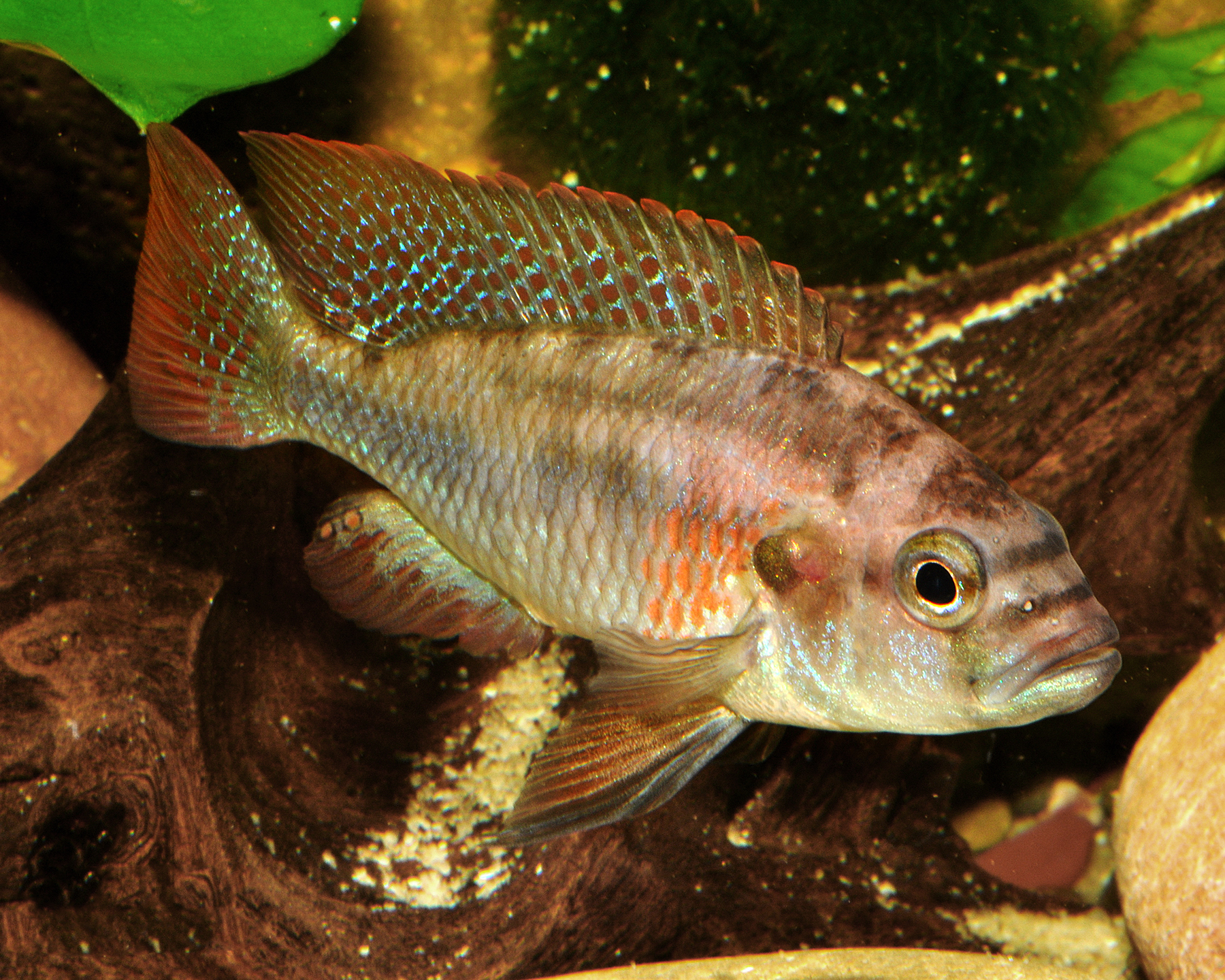
    Burton’s mouthbrooder, Astatotilapia burtoni, is a moderately aggressive East African haplochromine cichlid known for strong social hierarchies and maternal mouthbrooding. Males become more vividly patterned and defend territories, while females are generally less colorful and carry eggs and fry in the mouth. A pair requires a spacious, well-filtered aquarium with rocky cover, alkaline water and carefully selected tank mates. The supplied identification is consistent with Astatotilapia burtoni, although sex and locality form cannot be confirmed from the photographs alone.
  • Cyrtocara moorii (Blue Dolphin Cichlid) Care Guide

    Cyrtocara moorii (Blue Dolphin Cichlid) Care Guide

    Moderate
    Lake Malawi haplochromine cichlid
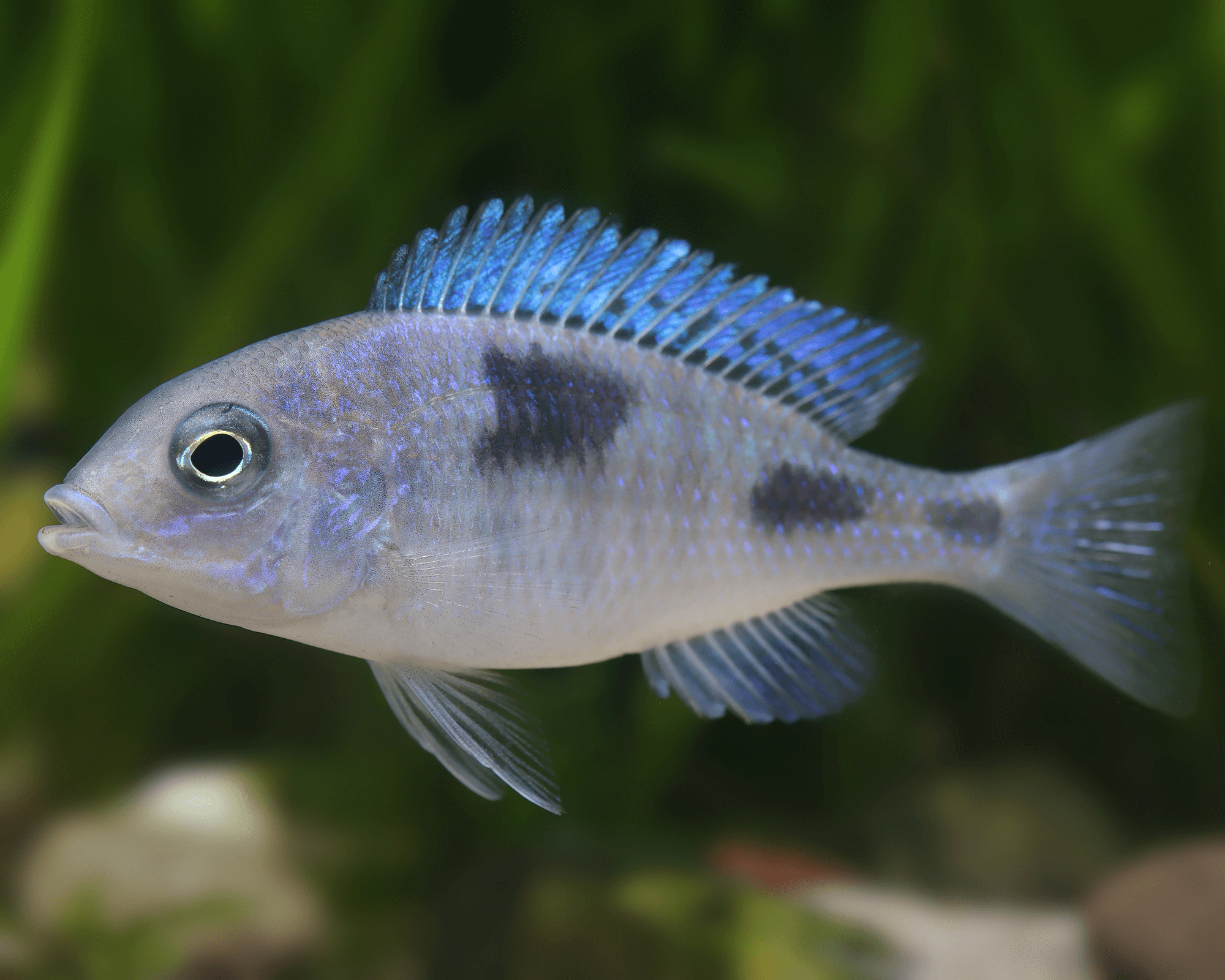
    Cyrtocara moorii is a large, distinctive haplochromine cichlid from Lake Malawi, recognised for its blue adult coloration and rounded forehead, which becomes more pronounced with age. It is a maternal mouthbrooder and is generally less aggressive than many Malawi mbuna, but its size and territorial breeding behaviour require a spacious aquarium. The supplied images appear consistent with blue C. moorii, although photographs cannot confirm sex, locality, or whether the fish form a true bonded pair.
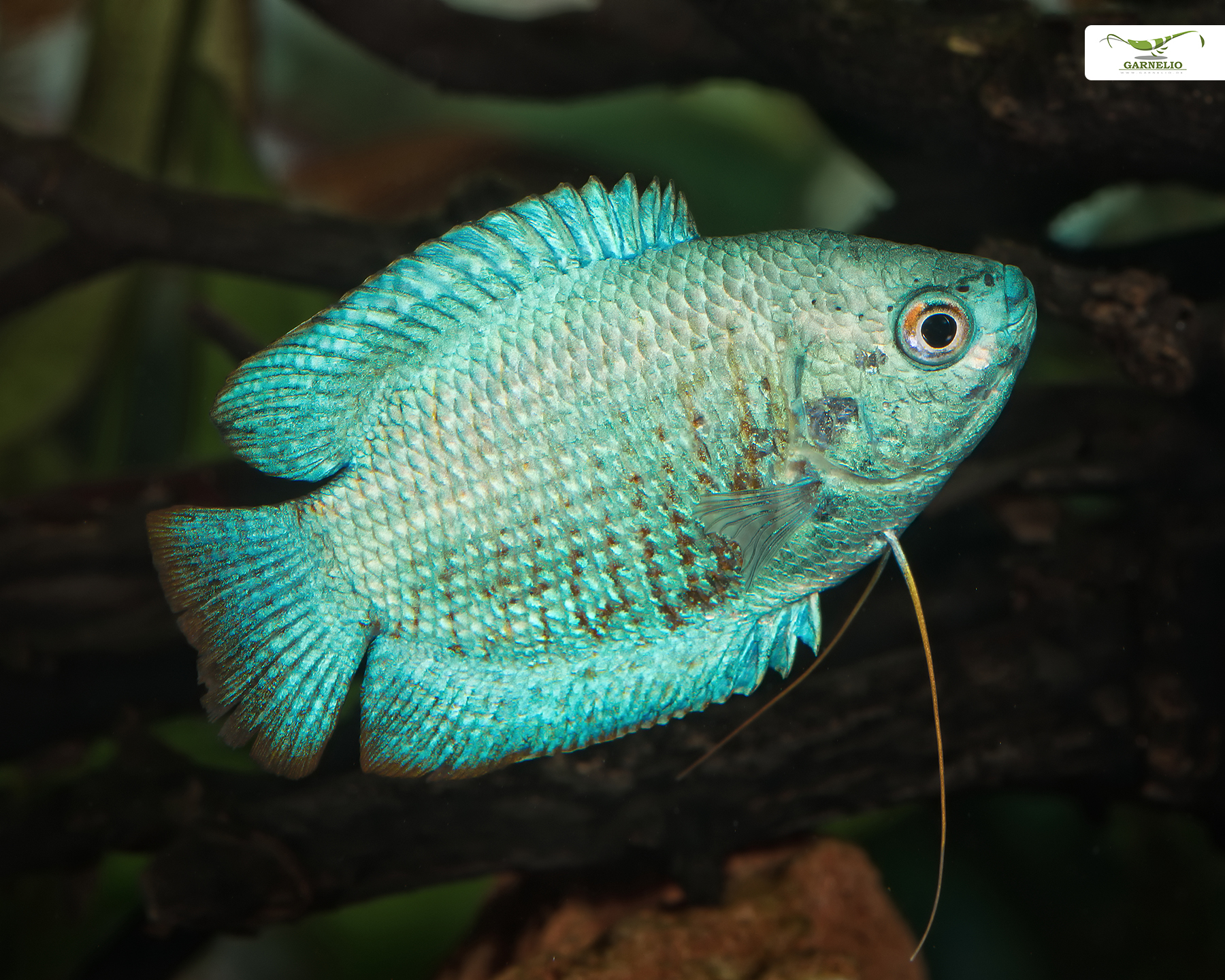
  • Blue Dwarf Gourami Pair (Trichogaster lalius)

    Blue Dwarf Gourami Pair (Trichogaster lalius)

    Easy - Moderate
    Peaceful labyrinth fish
    The blue dwarf gourami is a selectively colored form of a small labyrinth fish native to the Indian subcontinent. It spends much of its time in the upper and middle aquarium, using its specialized labyrinth organ to breathe atmospheric air. Males can become territorial, especially when nesting, so a planted aquarium with calm tank mates, gentle flow, and surface cover is important. The supplied name uses Trichopodus lalius; Trichogaster lalius is the commonly used current combination.
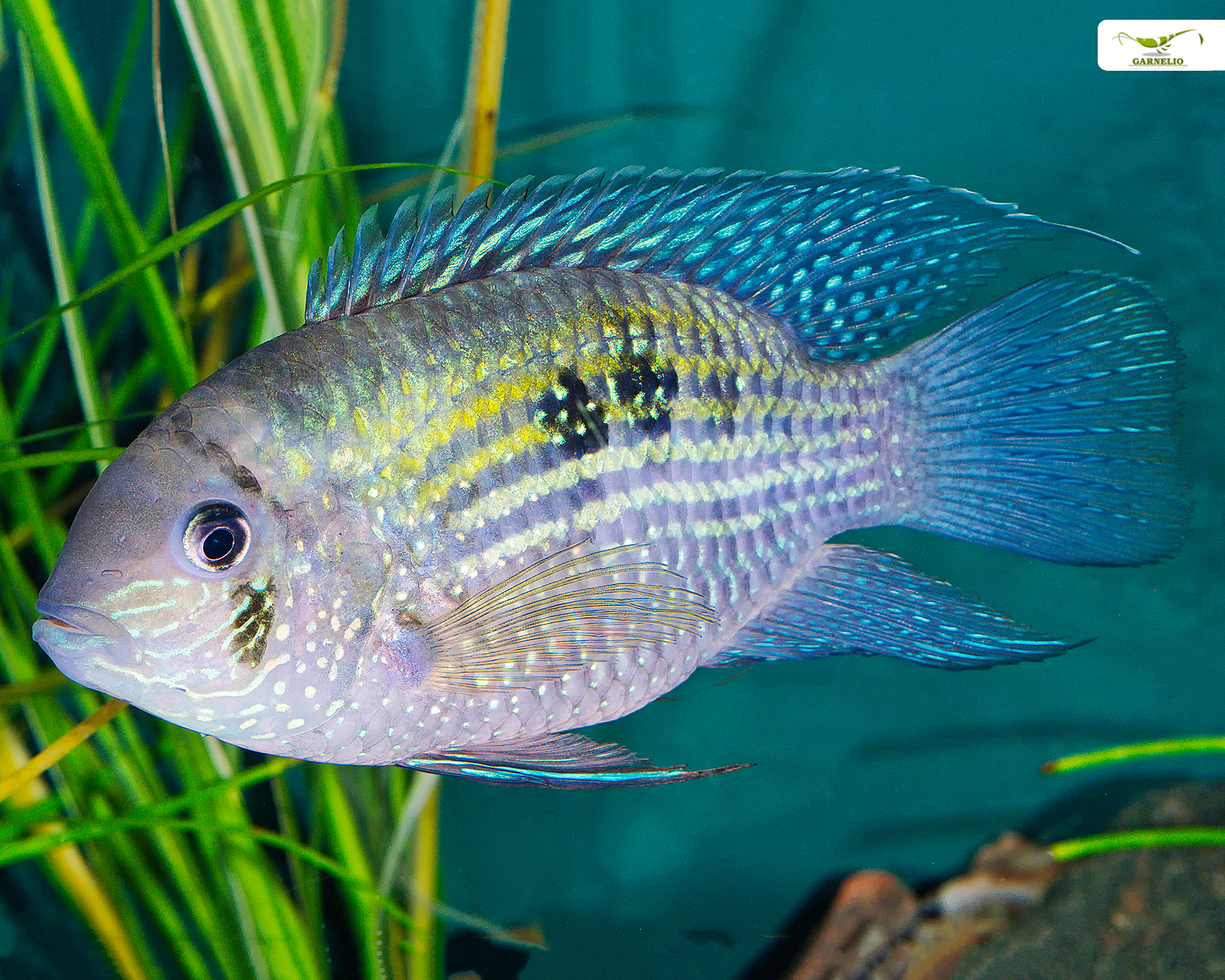
  • Blue Acara (Aequidens pulcher)

    Blue Acara (Aequidens pulcher)

    Moderate
    South American freshwater cichlid
    The supplied label identifies these fish as Blue Acara, Aequidens pulcher, a South American freshwater cichlid often placed in the genus Andinoacara in current aquarium literature. The photograph is consistent with a blue acara, although a definitive identification cannot be confirmed from one image alone. This pair requires a spacious aquarium, stable water quality, hiding places and careful observation during breeding, when territorial behavior becomes stronger.
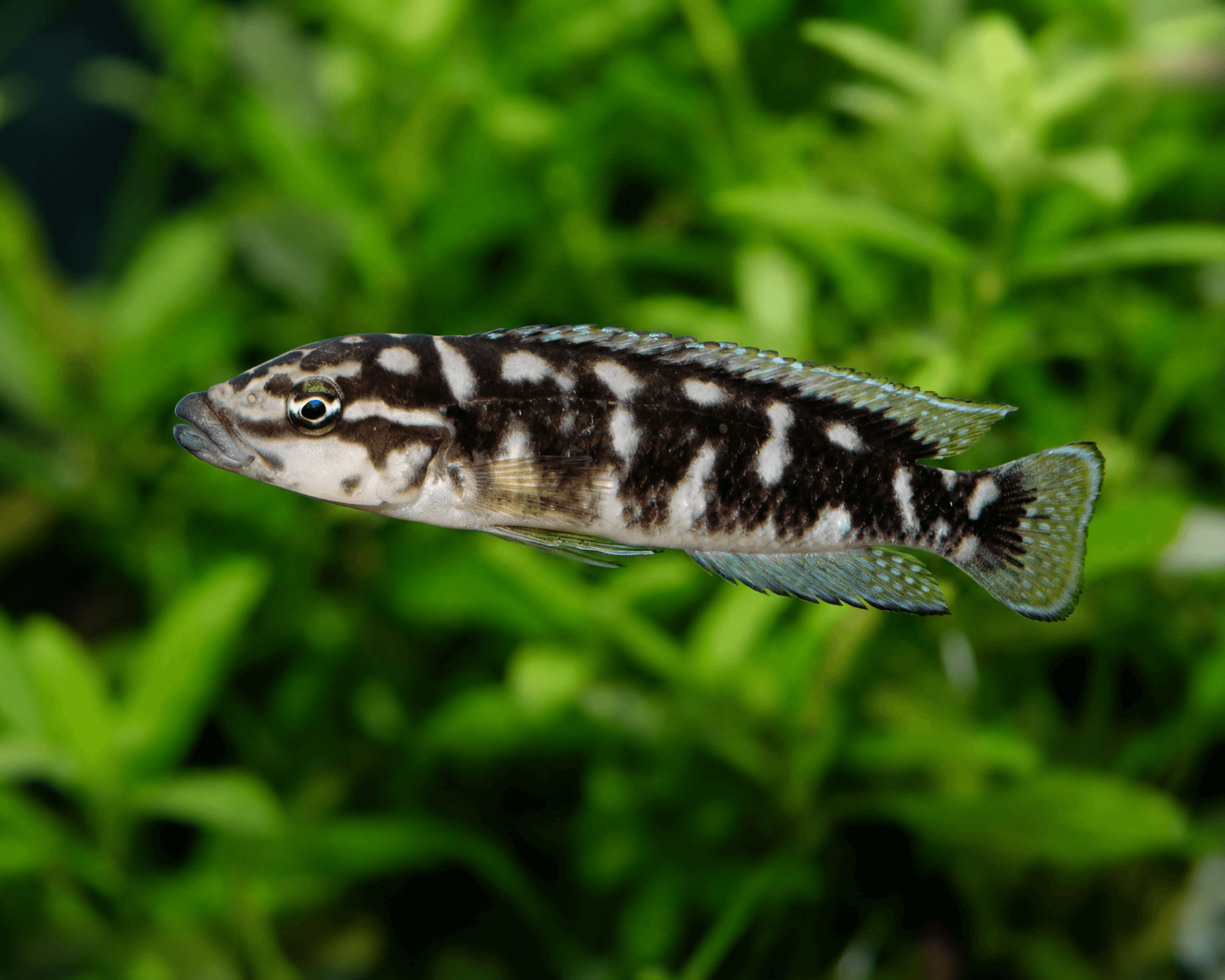
  • Julidochromis transcriptus: Black-and-White Slender Cichlid

    Julidochromis transcriptus: Black-and-White Slender Cichlid

    Moderate
    Lake Tanganyika rock-dwelling cichlid
    Julidochromis transcriptus is a small rock-dwelling cichlid from Lake Tanganyika, recognized by its compact, elongated body and irregular black-and-white pattern. It is a territorial cave dweller that is best kept as an established pair in a carefully structured aquarium. The supplied fish are identified as a DNZ pair, although sex, collection locality, and precise geographic form cannot be verified from the supplied material alone.
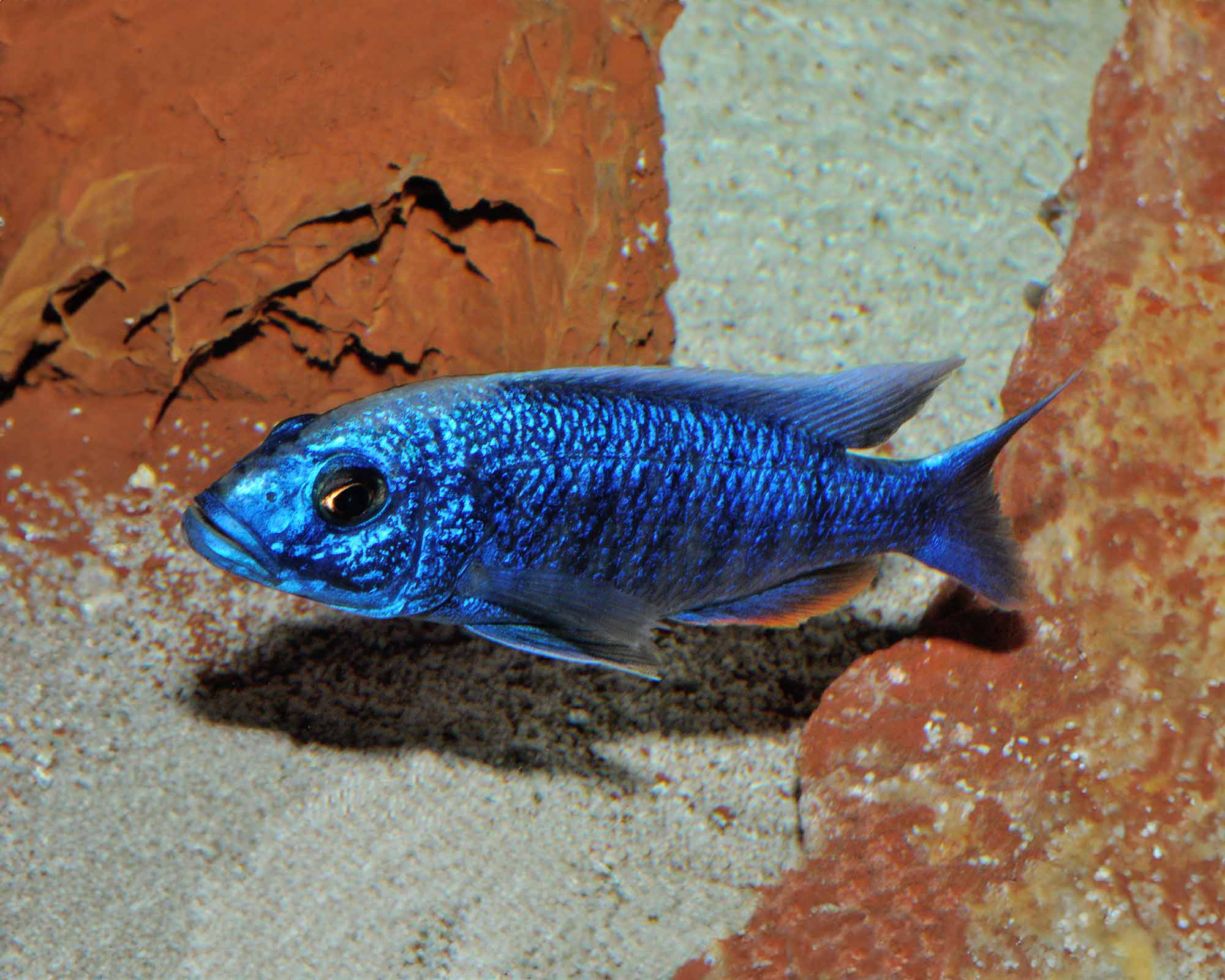
  • Azur Cichlid (Sciaenochromis fryeri) Care Guide

    Azur Cichlid (Sciaenochromis fryeri) Care Guide

    Moderate
    Lake Malawi haplochromine cichlid
    The Azur cichlid is commonly sold as Sciaenochromis fryeri, a predatory haplochromine cichlid from Lake Malawi. Mature males develop vivid electric-blue coloration, while females and juveniles are generally less intensely colored. This fish is moderately aggressive and needs a spacious aquarium with rocky structure, alkaline, mineral-rich water, and carefully selected tank mates. The supplied source describes a DNZ pair, but sex and exact locality cannot be confirmed from the images alone. Identification confidence is therefore good but not absolute.
  • Marble Angelfish (Pterophyllum scalare)

    Marble Angelfish (Pterophyllum scalare)

    Moderate
    South American freshwater cichlid
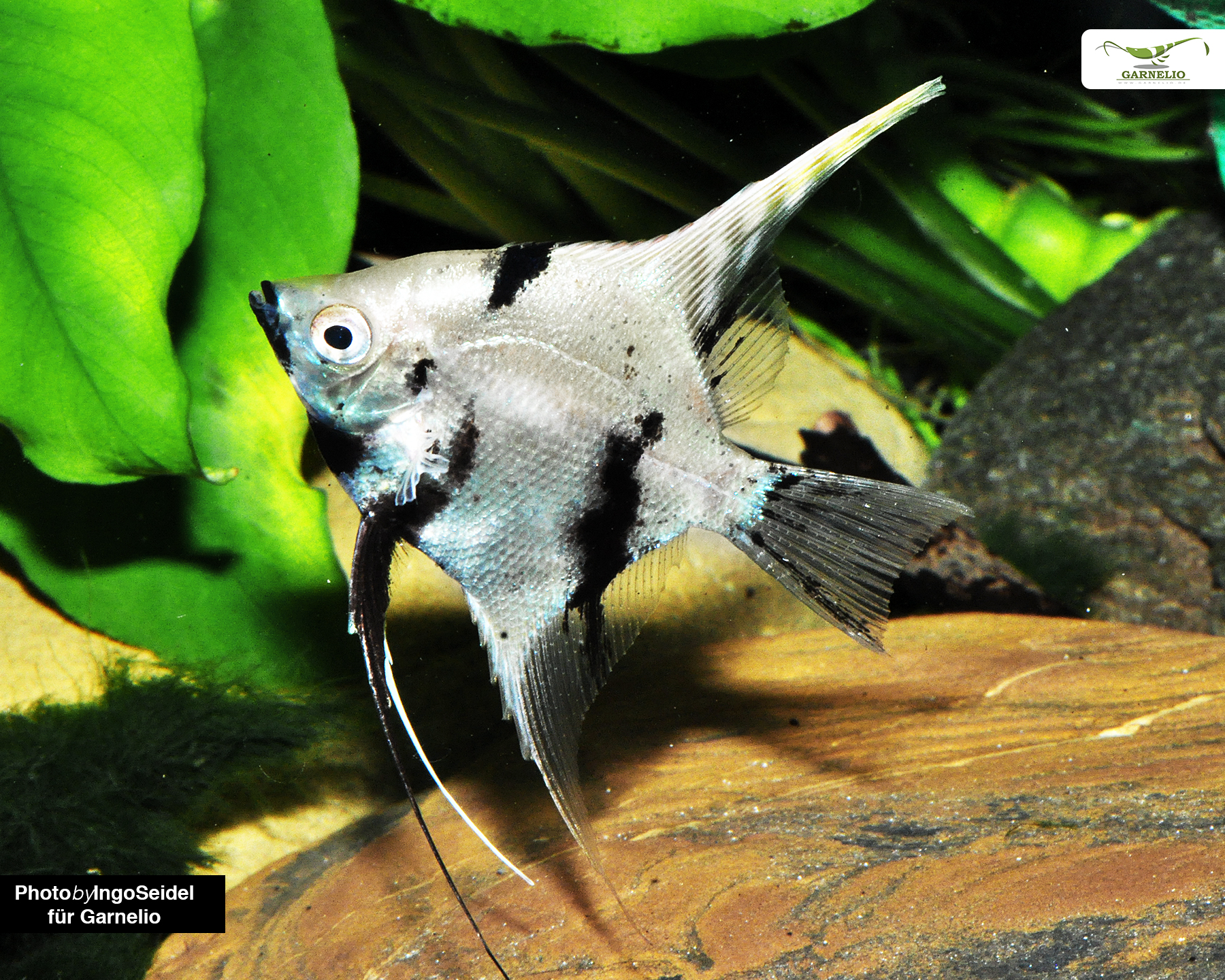
    The marble angelfish is a captive-bred color form of Pterophyllum scalare, a tall-bodied South American cichlid valued for its elegant fins and distinctive irregular black patterning. It needs a mature, spacious aquarium with excellent water quality, warm water and suitable tank mates. Although generally manageable, adults establish territories and may become assertive when pairing or spawning. The supplied source identifies two marble angelfish; exact lineage and strain details cannot be confirmed from the available information.
  • Gold Angelfish, Pterophyllum scalare

    Gold Angelfish, Pterophyllum scalare

    Moderate
    Freshwater South American cichlid
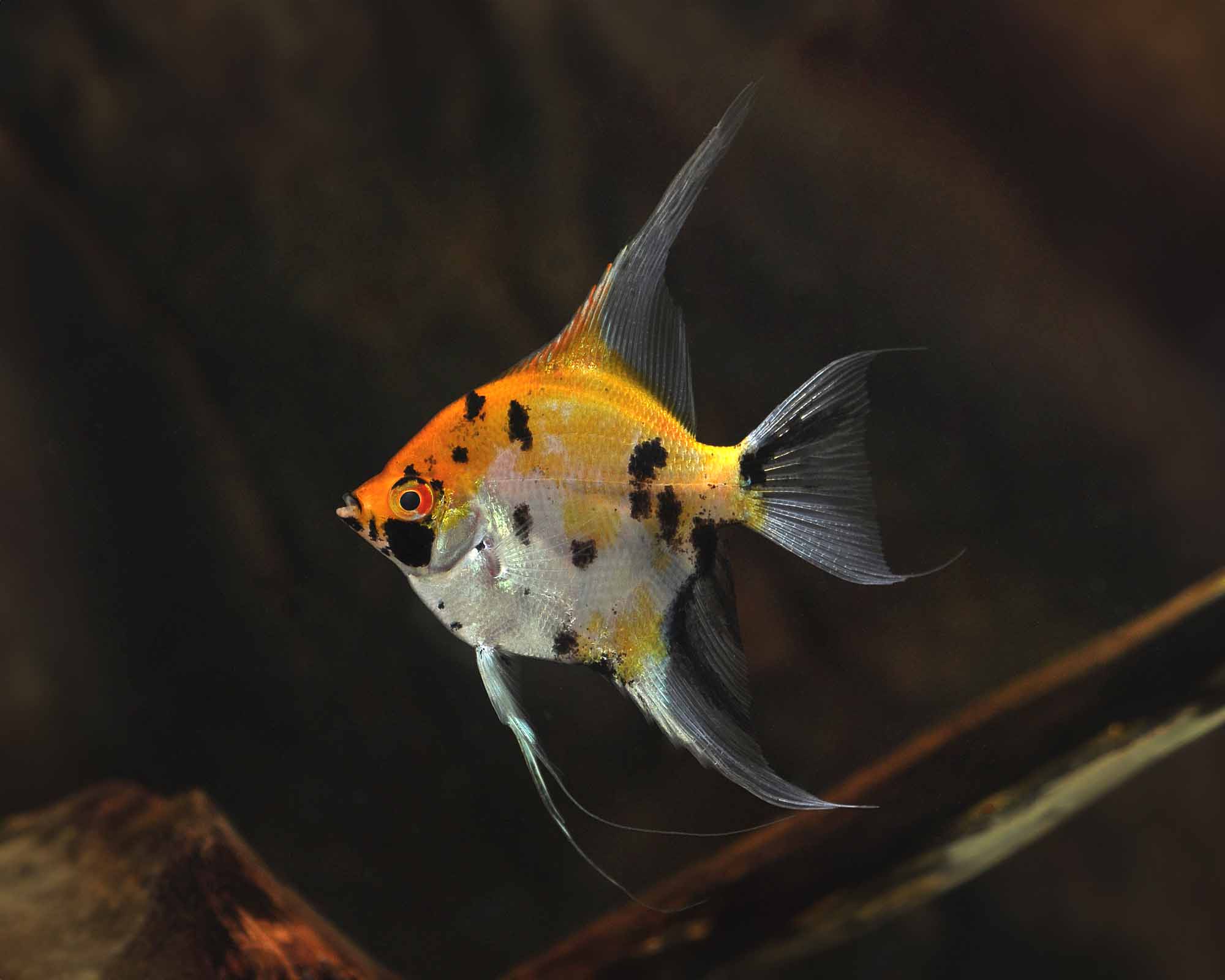
    The Gold Angelfish is an ornamental colour form of Pterophyllum scalare, a tall-bodied South American cichlid valued for its graceful movement and parental care. It needs a mature, spacious aquarium with substantial vertical clearance, stable warm water and carefully chosen tank mates. The supplied source identifies two fish as Gold Angelfish, although the accompanying images show several angelfish colour and fin forms, so the exact appearance of the supplied specimens cannot be confirmed from the images alone.
  • Zebra Angelfish (Pterophyllum scalare)

    Zebra Angelfish (Pterophyllum scalare)

    Moderate
    South American freshwater cichlid
    The Zebra Angelfish is a selectively bred form of Pterophyllum scalare, recognised by a silvery body with several dark vertical bars and the tall, laterally compressed shape typical of freshwater angelfish. The supplied images also show other angelfish colour forms, so the exact appearance of the listed pair cannot be confirmed from the image set alone. This South American cichlid is generally manageable for experienced community keepers, but its size, territorial breeding behaviour and need for a tall aquarium should be planned for carefully.
  • Black Angelfish (Pterophyllum scalare)

    Black Angelfish (Pterophyllum scalare)

    Moderate
    South American freshwater cichlid
    The supplied record identifies two black angelfish, most likely a domestic color form of Pterophyllum scalare. The photographs show several angelfish color patterns, so they should not be treated as proof that every pictured fish is black or that all belong to the same strain. Black angelfish retain the tall, laterally compressed body and extended fins typical of freshwater angelfish. They need a tall, mature aquarium, stable warm water, a varied diet, and carefully selected tank mates.
  • White Marble Angelfish (Pterophyllum scalare)

    White Marble Angelfish (Pterophyllum scalare)

    Moderate
    Freshwater cichlid
    The white marble angelfish is a selectively bred aquarium color form of Pterophyllum scalare, a tall-bodied South American cichlid valued for its elegant fins and distinctive irregular dark marbling. It is generally peaceful when young but can become territorial, especially when paired for spawning. Successful care depends on a tall aquarium, excellent water quality, suitable tank mates, and a varied carnivorous-omnivorous diet. The exact genetic strain shown cannot be confirmed from photographs alone.
  • Freshwater Angelfish Mix (Pterophyllum scalare)

    Freshwater Angelfish Mix (Pterophyllum scalare)

    Moderate
    Freshwater cichlid
    Freshwater angelfish are tall-bodied South American cichlids valued for their graceful movement and wide range of captive color forms. The supplied source identifies a mixed group as Pterophyllum scalare; the photographs show several forms, including striped, black, orange, white, silver and blue-toned fish. They are manageable for experienced beginners, but their adult height, territorial breeding behavior and tendency to eat small tank mates require thoughtful aquarium planning.