
AquaLibs presents AquaRank Discover the world’s leading aquascapers

Explore transparent rankings built from published results across the world’s leading aquascaping contests.

China at IAPLC 2026: How Layered Wood Creates Convincing Depth

China at IAPLC 2026: How Layered Wood Creates Convincing Depth

The Grand Prize photograph gives this study an obvious first stop, but the comparison becomes richer when it reaches beyond the winner. Six selected aquariums show different ways of framing light with wood: unequal trunks, fine leaf curtains, success...
Vietnam at IAPLC 2026: Wood, Stone and a Broader Design Identity

Vietnam at IAPLC 2026: Wood, Stone and a Broader Design Identity

Vietnam’s two leading 2026 awards both invite us into wooded environments. That is an interesting starting point for revisiting an archive which once associated the country strongly with stone. The most useful reading is not that one material has def...
One Snail or a Cleanup Crew? Match Aquarium Snail Behavior to Your Planted Tank

One Snail or a Cleanup Crew? Match Aquarium Snail Behavior to Your Planted Tank

Aquarium snails do not all solve the same problem. One type may scrape algae from glass, another may work through the substrate, while a third mainly processes leftover food and decaying leaves. The trade-off is that useful behavior often comes with ...
CIAC 2026 Official Results Update: Rankings Extend to 119

CIAC 2026 Official Results Update: Rankings Extend to 119

The CIAC 2026 Aquascaping Category results have received an official update. A results sheet distributed by the organising committee on 14 October lists ranks 14–119, extending the ranking information available beyond the image cards previously cover...
Fresh from the rankings

Latest works from the AquaRank Top 300

A rotating selection from the newest locally archived contest works created by the world’s Top 300 aquascapers.

Aquarium Library

  • All
  • Plant
  • Fish
  • Shrimp
  • Snail

China at IAPLC 2026: How Layered Wood Creates Convincing Depth

The Grand Prize photograph gives this study an obvious first stop, but the comparison becomes richer...

Vietnam at IAPLC 2026: Wood, Stone and a Broader Design Identity

Vietnam’s two leading 2026 awards both invite us into wooded environments. That is an interesting st...

CIAC 2026 Official Results Update: Rankings Extend to 119

The CIAC 2026 Aquascaping Category results have received an official update. A results sheet distrib...

CIAC 2026 Results: Beyond the Top 30, Ranks 31–70

The CIAC 2026 story continues beyond the Top 30. This AquaLibs report brings together the contest im...

IAPLC 2026 Top 10: Ten Aquascapes, Ten Underwater Stories

Ten aquariums can draw us underwater in ten different ways. A luminous forest opening, a red surface...

IAPLC 2026 Grand Prize Aquascape: What Makes Chuanwei Yu’s Design Convincing?

Chuanwei Yu’s 万物自然, the IAPLC 2026 Grand Prize aquascape, is immediately recognisable as a woodland ...
Top 300 spotlight

AquaRank Top 300

Explore AquaRank
Theodoxus dalmaticus (Balkan Limpet Nano Snail)

Overview

The Balkan Limpet Nano Snail (Theodoxus dalmaticus) is a highly sought-after freshwater snail in the aquarium hobby, prized for its exceptionally small size and voracious appetite for algae. Belonging to the Neritidae family, these snails share the excellent cleaning abilities of common nerite snails but are perfectly scaled down for nano and micro aquariums. They are entirely peaceful and will not harm live plants, making them an ideal cleanup crew member for aquascapes.

Image of balkan limpet nano theodoxus dalmaticus

Distribution and Habitat

As their common name suggests, these unique snails are native to the Balkan Peninsula, particularly found in the clear, hard-water rivers, streams, and lakes of the Dalmatia region. In the wild, they cling tightly to rocks and smooth stones in flowing water, grazing continuously on the rich layers of biofilm, diatoms, and green algae that grow in these sunlit, mineral-rich environments.

Description of Balkan Limpet Nano Snail

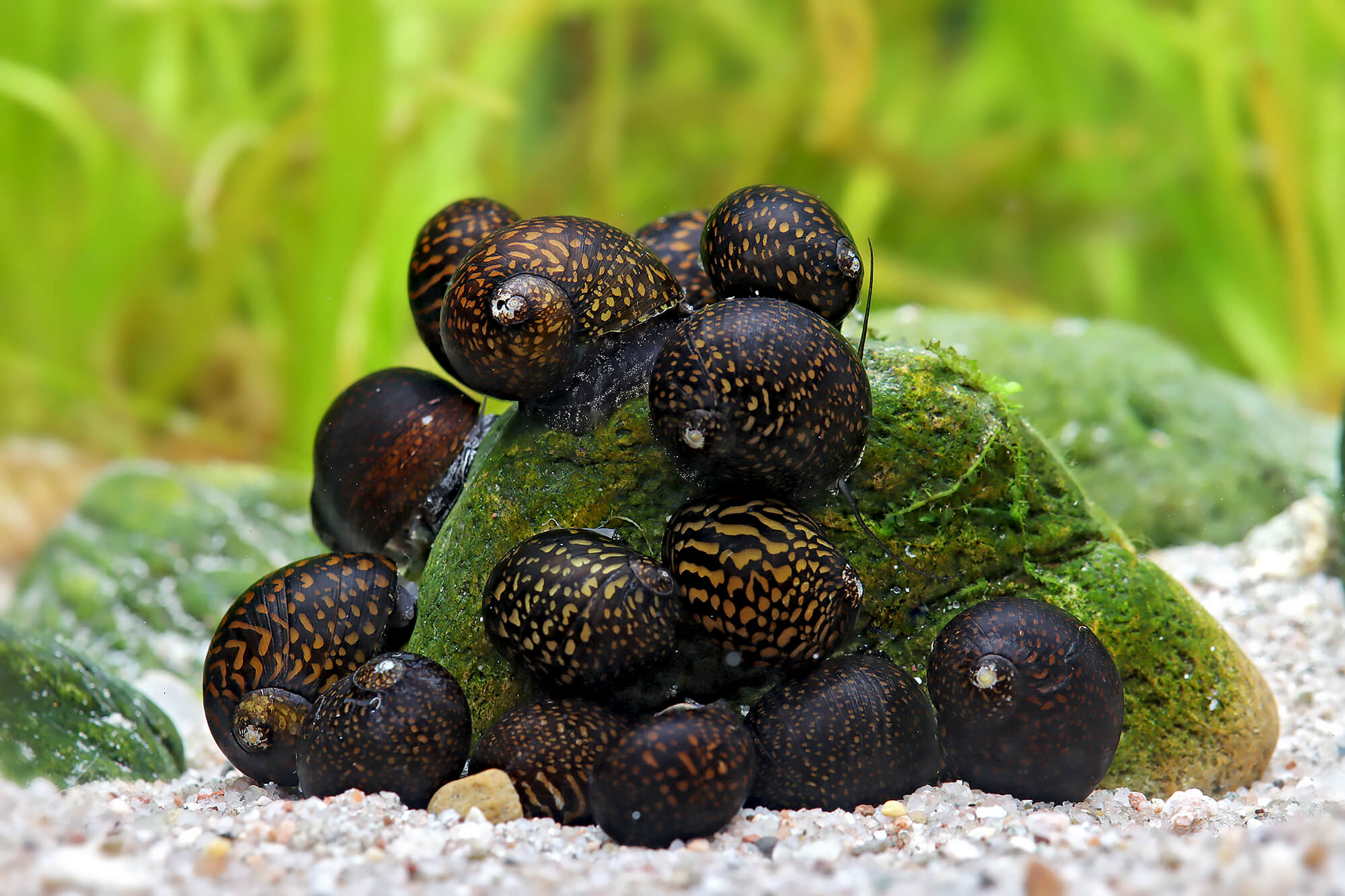
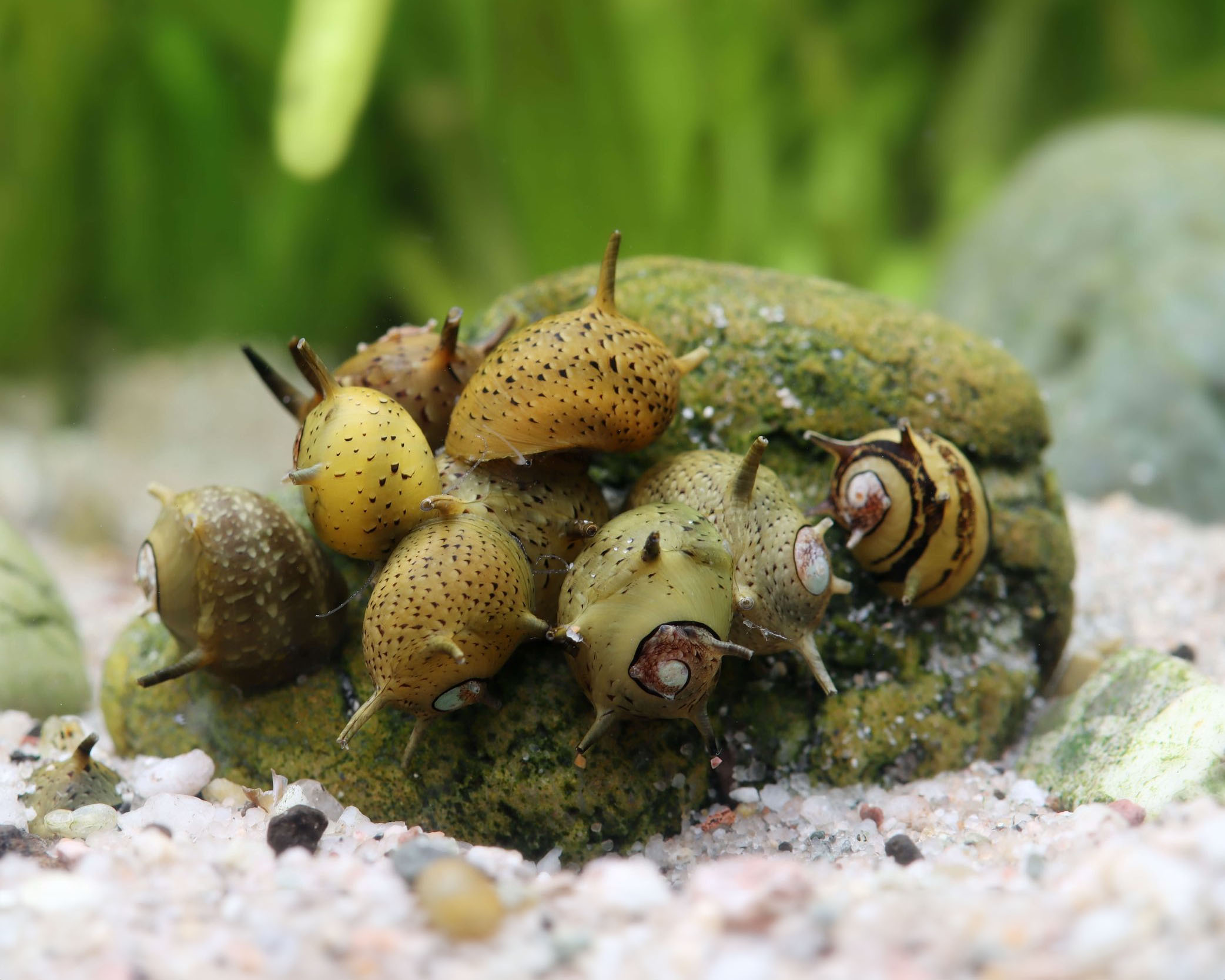
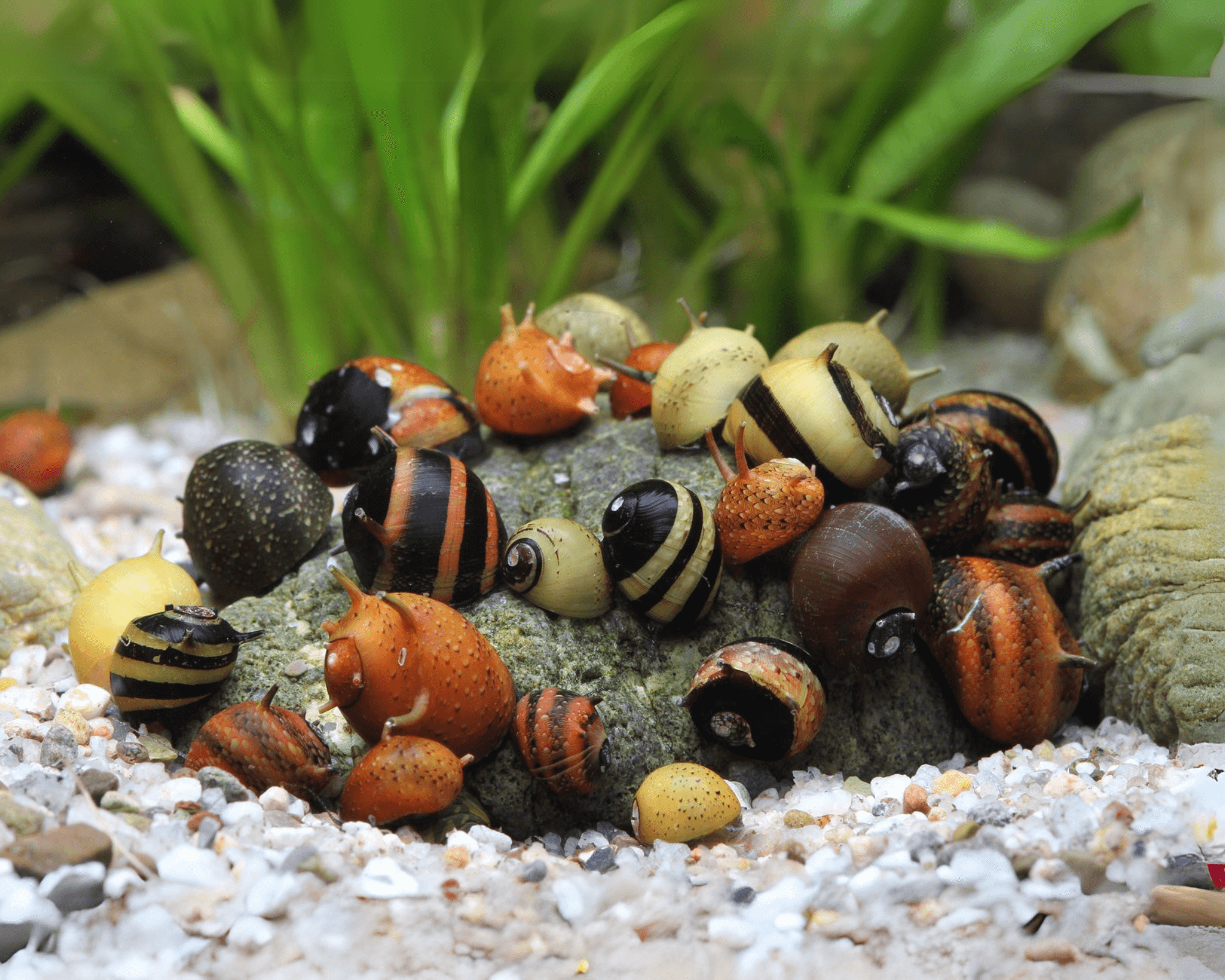
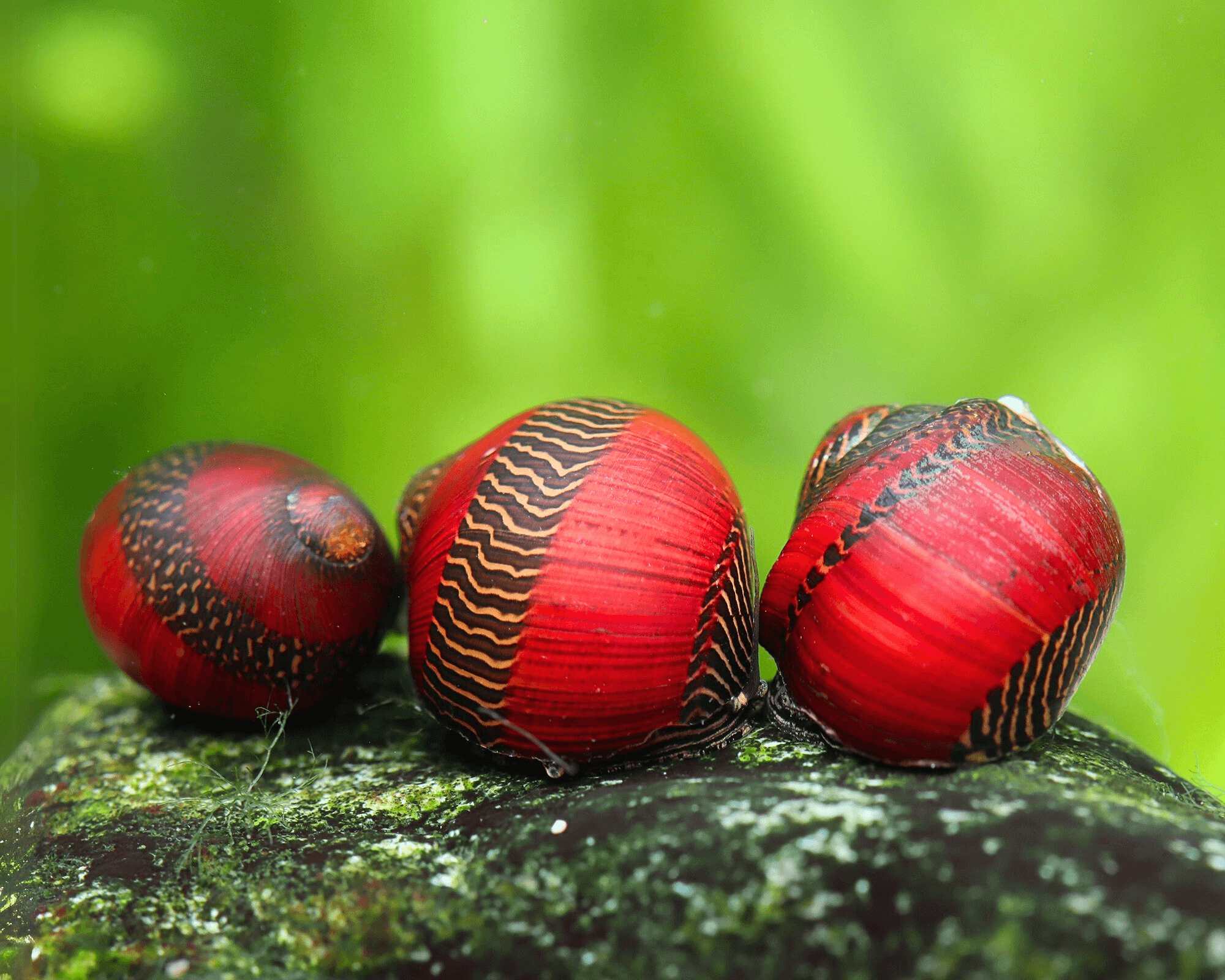
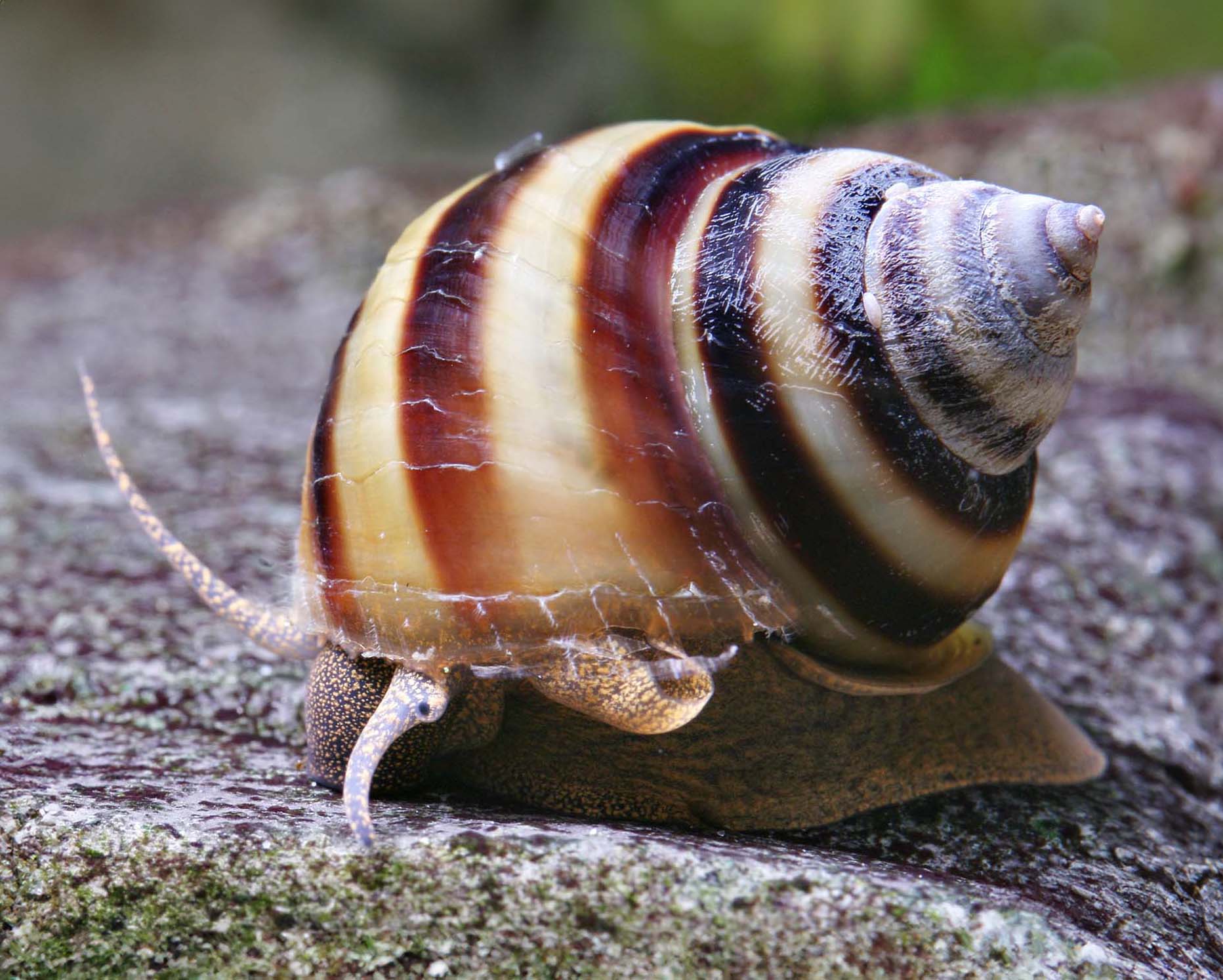
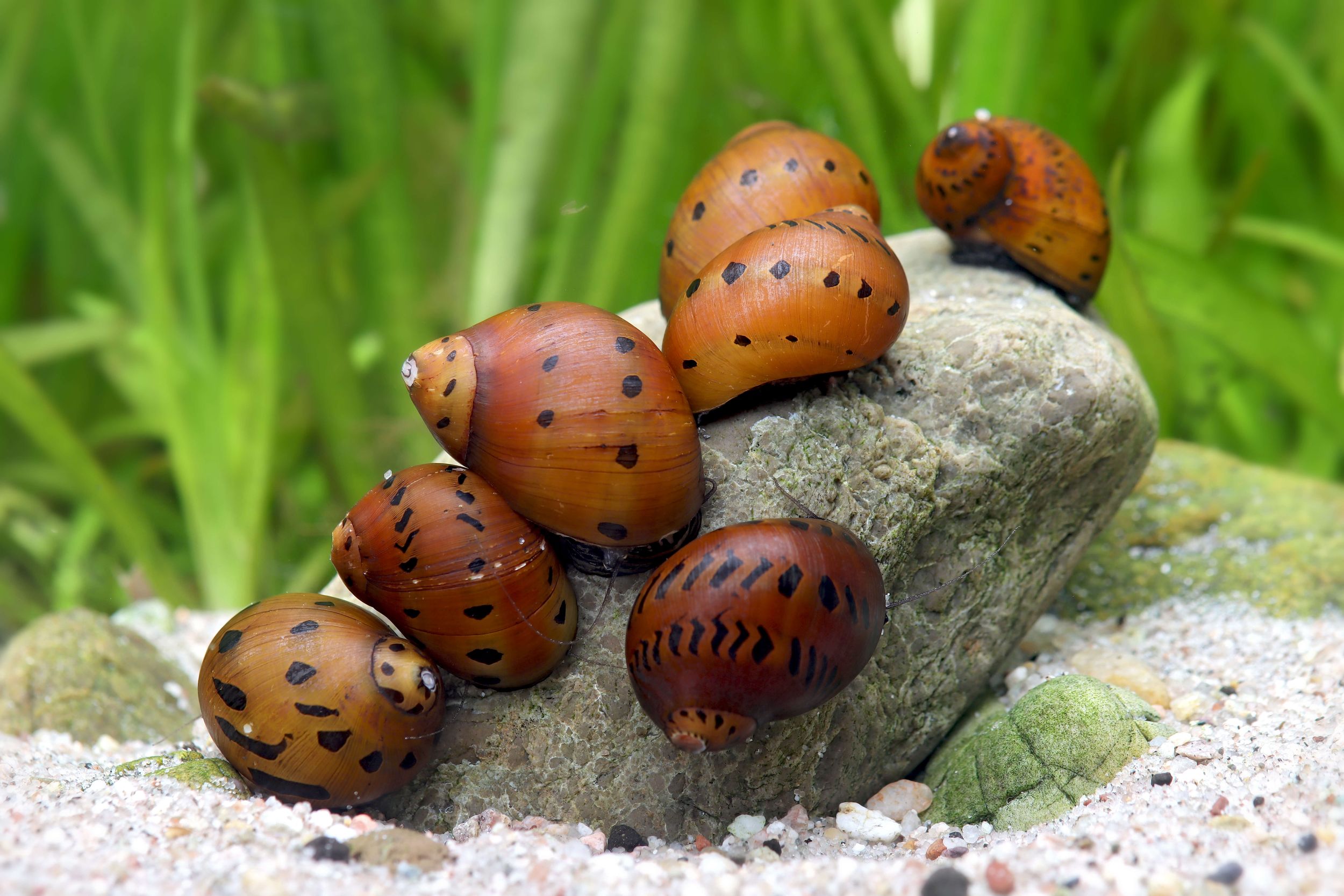
The Balkan Limpet Nano Snail is incredibly small, typically reaching a maximum size of only 0.5 to 1 cm (0.2 to 0.4 inches) in diameter. Despite their tiny stature, they boast some of the most spectacular and highly polymorphic shell patterns in the freshwater snail world. As seen in their diverse populations, shell colors can range from bright orange and yellow to deep purplish-red and stark black-and-white. The patterns are equally varied, featuring intricate zigzags, tiger stripes, and delicate speckles. It is very common for wild-caught Theodoxus specimens to have slightly eroded or white apexes (the tip of the shell) due to natural wear in their native habitats.

Image of balkan limpet nano theodoxus dalmaticus

Keeping and Caring for Balkan Limpet Nano Snail

Caring for Theodoxus dalmaticus requires a mature, well-established aquarium. Because they rely almost exclusively on naturally occurring algae and biofilm, they should never be added to a brand-new or clinically clean tank. They are quite hardy once established but are sensitive to rapid fluctuations in water parameters and require highly oxygenated water.

Tank size:

Due to their nano size, a small group can comfortably live in tanks as small as 5 gallons. However, the tank must have enough surface area (rocks, glass, and wood) to produce sufficient algae to sustain them.

Water Parameters:

These snails originate from mineral-rich waters and absolutely require hard, alkaline water to maintain their shells and overall health.

Temperature

They prefer slightly cooler to moderate tropical temperatures, thriving best between 64°F and 79°F (18°C - 26°C).

pH

A slightly alkaline pH is required to prevent shell erosion. Maintain the pH between 7.0 and 8.5.

Hardness

High water hardness is essential. Aim for a General Hardness (GH) of 8-15+ dGH and a Carbonate Hardness (KH) of 5-10+ dKH.

Ammonia, Nitrite, Nitrate

Ammonia and Nitrite must always be at 0 ppm. Nitrates should be kept low, ideally below 20 ppm, as they are sensitive to poor water quality.

Feeding the Balkan Limpet Nano Snail

Feeding is often the most challenging aspect of keeping the Balkan Limpet Nano Snail. They are strict herbivores and highly specialized grazers that feed almost exclusively on diatoms (brown algae), green spot algae, and biofilm growing on hard surfaces. They rarely accept commercial sinking pellets or algae wafers. To keep them healthy, ensure your tank has a steady growth of natural algae. You can encourage algae growth by leaving the tank lights on slightly longer or by cultivating algae on rocks in a separate container placed in direct sunlight, rotating them into the main tank as needed.

Image of balkan limpet nano theodoxus dalmaticus

Breeding Balkan Limpet Nano Snail

Unlike many popular nerite snails that require brackish water to reproduce, Theodoxus dalmaticus can successfully breed in pure freshwater. They reproduce by laying small, tough, white egg capsules on hard surfaces, such as rocks or even the shells of other snails. After a period of development, a single, fully formed miniature snail will emerge from the capsule. There is no free-swimming larval stage. While they can breed in the home aquarium, their reproduction rate is very slow, so there is no risk of them overpopulating a tank like pest snails.

Image of balkan limpet nano theodoxus dalmaticus

Conclusion

The Balkan Limpet Nano Snail is a fascinating, beautiful, and highly beneficial addition to the planted aquarium. Their striking, highly variable shell patterns make them a joy to observe, while their relentless algae-grazing habits keep hard surfaces pristine. Provided they are housed in a mature tank with hard water and plenty of natural algae, these tiny snails will thrive and provide an excellent, non-invasive cleanup crew for your aquascape.
Snail info

  • Temperature : 64°F - 79°F (18°C - 26°C)
  • pH: 7.0 - 8.5
Leave your comments
Latest on Snails
  • Piano Snail (Taia naticoides)

    Piano Snail (Taia naticoides)

    The piano snail, also sold as the brush algae snail, is a large freshwater operculate snail with a rounded, banded shell. Taia naticoides is associated with Southeast Asian freshwater habitats and is valued for grazing surface growth and consuming organic debris. Aquarium identification can be complicated because common names are applied inconsistently; confirm the species with a reliable supplier. It is generally peaceful, plant-safe and live-bearing, but it needs mineral-rich water and should not be treated as a solution for heavy algae growth.
  • Orange Track Racing Snail (Vittina semiconica)

    Orange Track Racing Snail (Vittina semiconica)

    The Orange Track racing snail, Vittina semiconica, is a freshwater nerite valued for algae grazing and its patterned orange shell. It is generally peaceful, plant-safe and suitable for established community aquariums. Identification from shell pattern alone can be difficult because several Vittina and related nerite species resemble one another, so the supplied trade name should be treated as provisional unless confirmed by a specialist examination.
  • Orange Rock Snail (Orange Tylomelania)

    Orange Rock Snail (Orange Tylomelania)

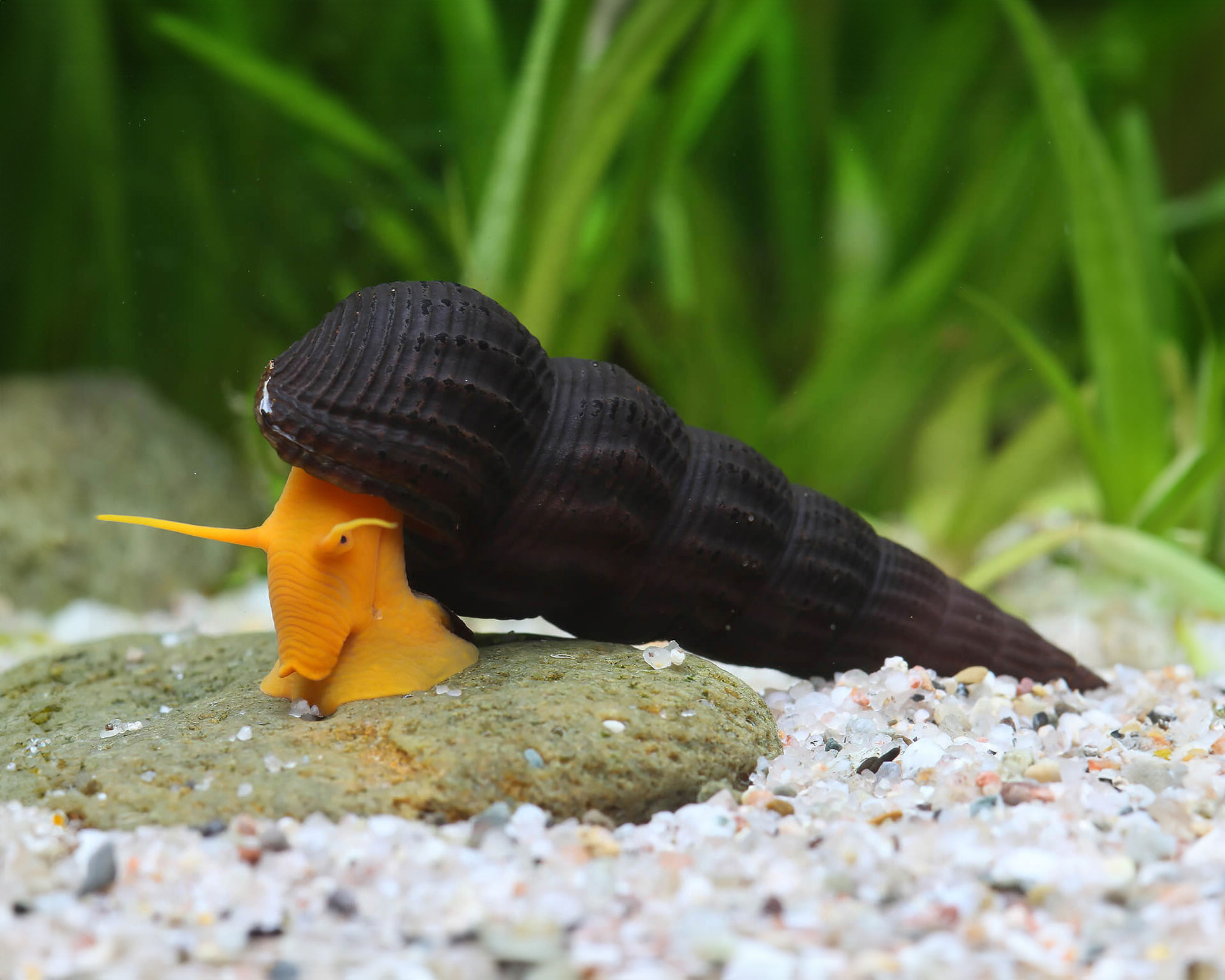
    The Orange Rock Snail is a trade name commonly used for orange-bodied Tylomelania, a group of freshwater snails associated with Sulawesi. Its dark, strongly ridged shell contrasts with the bright orange foot and head. Exact species identification is uncertain from the trade name and photographs alone, so care should follow general Tylomelania requirements. These snails are peaceful, active mainly at night, and best kept in mature, warm, alkaline aquariums with stable mineral content.
  • Orange Red Ramshorn Snail (Planorbella duryi duryi)

    Orange Red Ramshorn Snail (Planorbella duryi duryi)

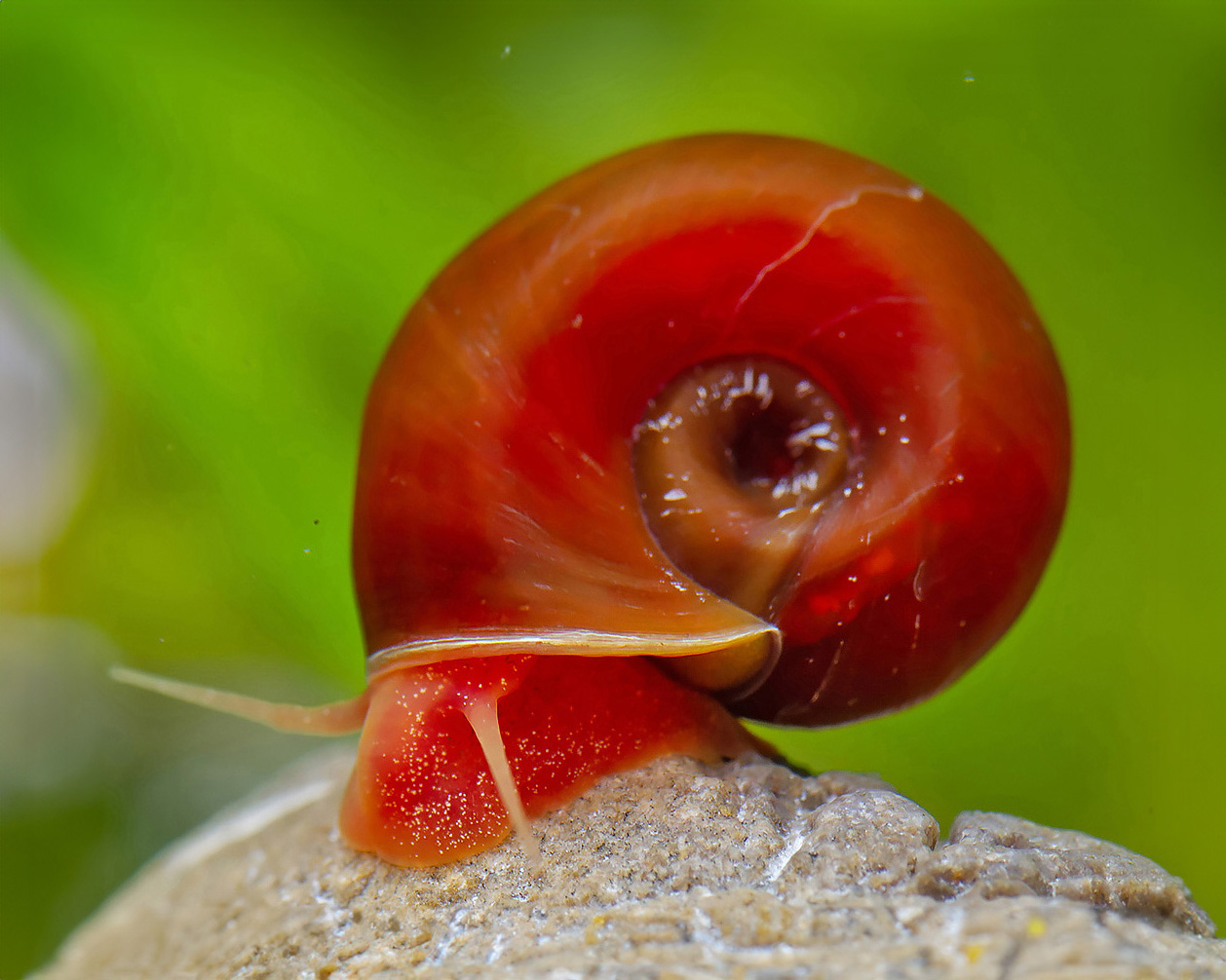
    The orange red ramshorn snail is a freshwater planorbid recognized by its flat, coiled shell and brightly colored body. Planorbella duryi duryi is associated with freshwater habitats in the southeastern United States, especially Florida, although aquarium specimens may be selectively bred and their exact locality is often unknown. It is generally peaceful, useful as a grazer and scavenger, and capable of reproducing quickly when food is abundant.
  • Midnight Lady Snail (Vittina sp.)

    Midnight Lady Snail (Vittina sp.)

    The Midnight Lady Snail is a dark, patterned nerite sold under the aquarium trade name Midnight Lady Schnecke. It is identified here as Vittina sp., because the exact species cannot be confirmed from the supplied name and photograph alone. These snails are generally peaceful algae grazers for mature freshwater aquariums, but successful breeding requires conditions that are not normally present in freshwater tanks.
  • Ivory Predatory Snail: Anentome helena

    Ivory Predatory Snail: Anentome helena

    The ivory predatory snail, commonly sold as Clea helena, is a freshwater assassin snail from Southeast Asia. It has a strongly ribbed, ivory to yellow-brown shell and a mottled gray-brown body. This active carnivore hunts or scavenges other small snails and accepts meaty foods in aquaria. It is generally plant-safe, but its predatory diet and egg-laying reproduction require planning when keeping it with ornamental snails or maintaining a controlled population.
  • Hedgehog Snail (Brotia armata)

    Hedgehog Snail (Brotia armata)

    The hedgehog snail, Brotia armata, is a large freshwater pachychilid recognized by its strongly ridged, spiny shell. It is a grazing and scavenging snail rather than a dedicated algae-control species, and it needs mature aquariums with clean, oxygenated water and adequate mineral content. Identification from photographs can be uncertain because several Brotia species have similar shell forms, so locality information is useful when confirming specimens.
  • Indian Malayan Louver Snail (Melanoides tuberculata)

    Indian Malayan Louver Snail (Melanoides tuberculata)

    Melanoides tuberculata is a small, conical freshwater snail commonly known in aquaria as the Malaysian trumpet snail. It spends much of the day burrowing through substrate and becomes more active after dark. This adaptable species consumes biofilm, algae, detritus and uneaten food, while generally leaving healthy plants alone. Its live-bearing reproduction can produce a large population when food is abundant. The name supplied for this article is retained, although common names vary and aquarium specimens may be confused with related thiarid snails.
  • Green staghorn snail (Clithon corona)

    Green staghorn snail (Clithon corona)

    The green staghorn snail, Clithon corona, is a nerite snail valued for grazing algae and biofilm in freshwater aquariums. It is generally peaceful, plant-safe and unlikely to overpopulate in freshwater because its larvae normally require brackish or marine conditions. Provide mature surfaces for grazing, mineral-rich water and a secure lid. Identification can be difficult because aquarium trade names overlap among Clithon species, so the supplied name should be treated as a probable identification rather than a definitive one.
  • Geweihschnecke Tricolor (Clithon sp.)

    Geweihschnecke Tricolor (Clithon sp.)

    Geweihschnecke Tricolor is a trade name for a colourful horned nerite in the genus Clithon. Exact species identification is uncertain because several closely related Clithon species and colour forms are sold under similar names. These small algae-grazing snails suit mature freshwater aquariums with stable, mineral-rich water. They are generally peaceful, plant-safe and unable to establish a large population in ordinary freshwater, although they may leave small white egg capsules on hard surfaces.
  • Geweihschnecke Red Venom (Clithon sowerbianum)

    Geweihschnecke Red Venom (Clithon sowerbianum)

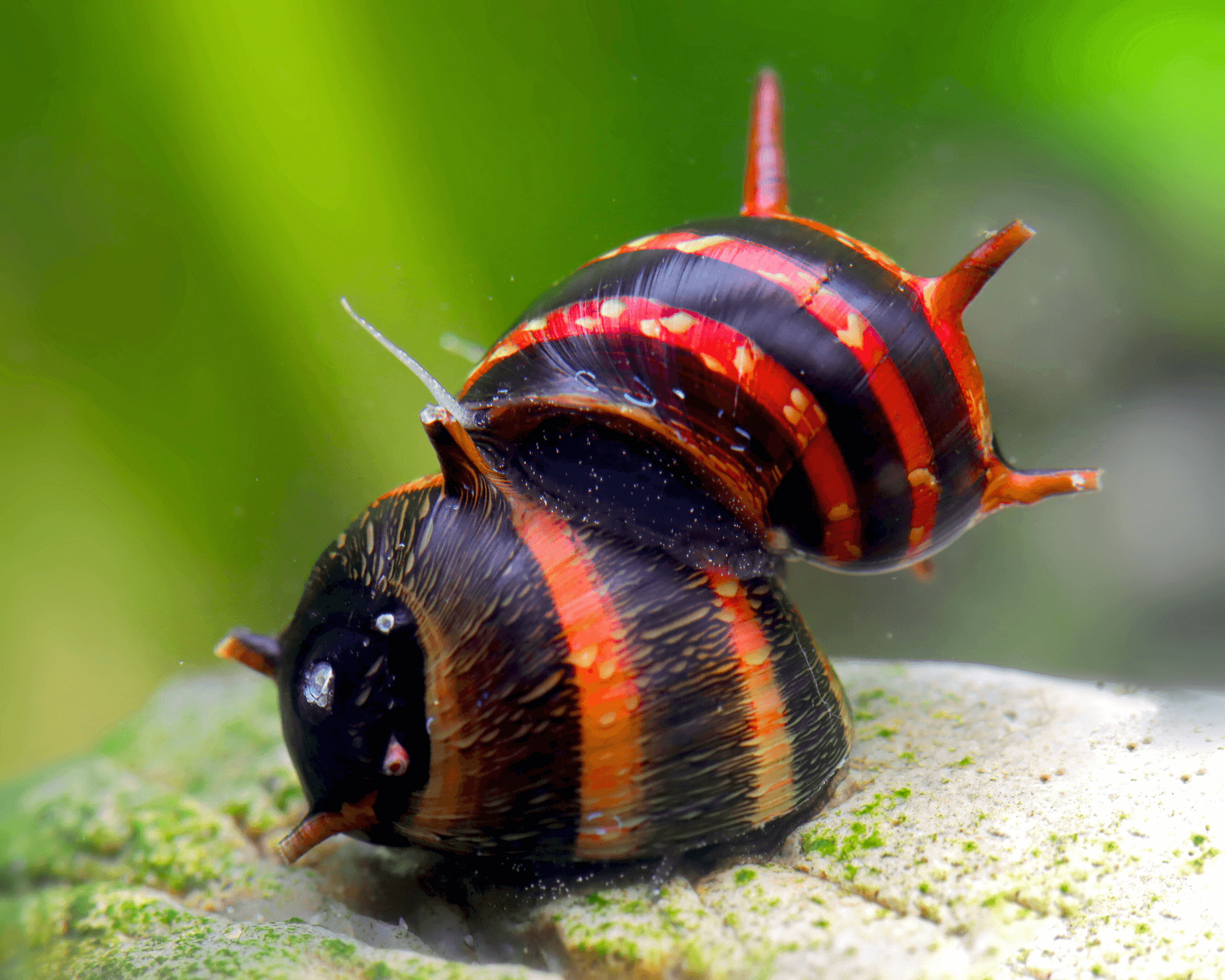
    The Red Venom Geweihschnecke is a striking horned nerite sold for freshwater aquariums. Its dark shell, red-orange bands and small projections make it distinctive, although trade names and shell patterns can overlap among Clithon species. It is mainly a grazer of algae and biofilm, is generally safe with healthy plants, and usually cannot establish a self-sustaining population in freshwater because its larvae require different conditions.
  • Geweihschnecke Volcano Red (Clithon sowerbianum)

    Geweihschnecke Volcano Red (Clithon sowerbianum)

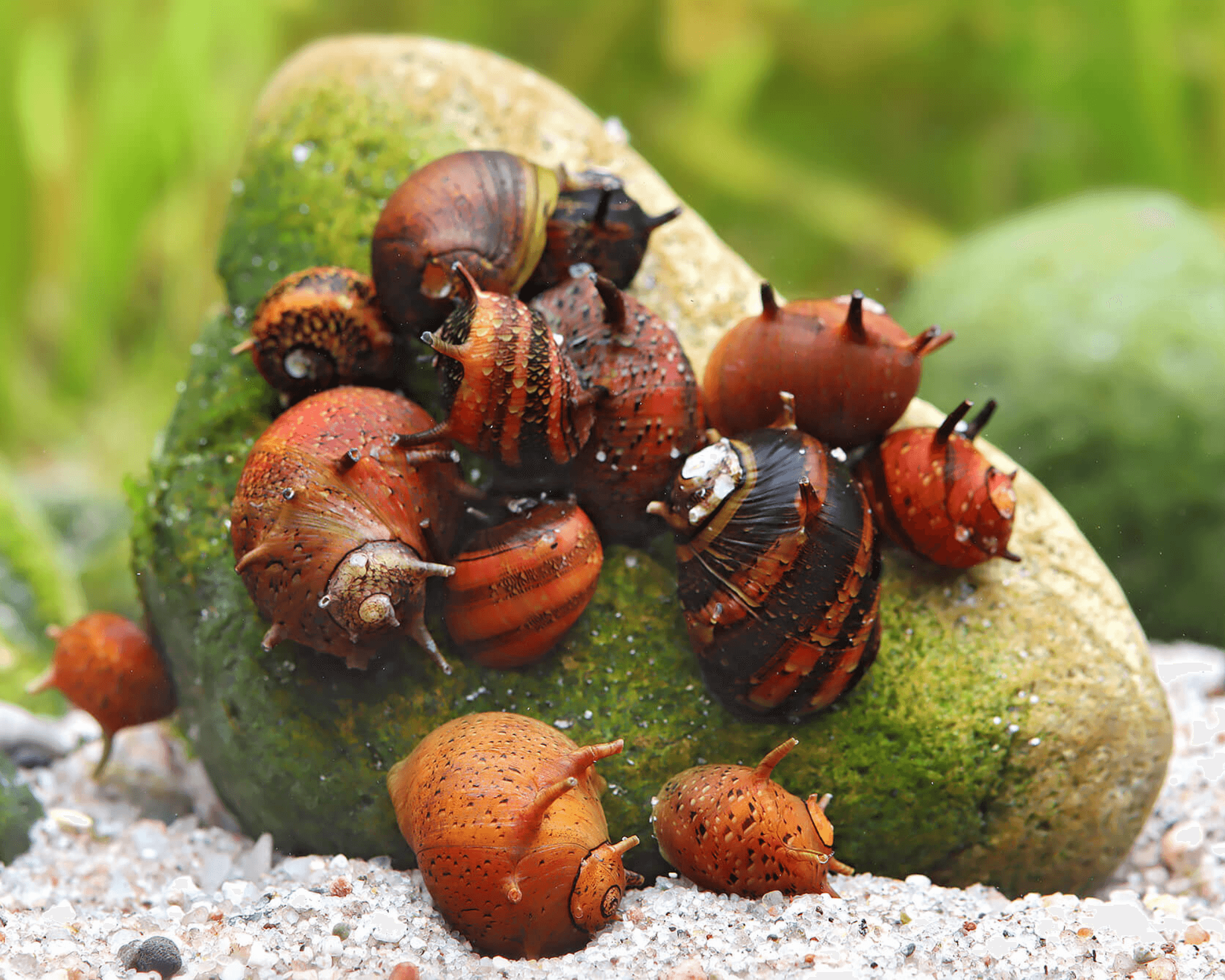
    The Volcano Red Geweihschnecke is a small freshwater nerite-type snail sold under the scientific name Clithon sowerbianum. Its shell commonly shows red, orange, brown, and dark patterns, with horn-like projections in some individuals. It grazes algae and biofilm from hard surfaces without normally damaging healthy plants. Identification and the exact validity or spelling of the supplied scientific name should be treated with some caution because aquarium trade names and Clithon nomenclature are not always used consistently.
  • Yellow Baby Poso Snail, Tylomelania sp.

    Yellow Baby Poso Snail, Tylomelania sp.

    The Yellow Baby Poso Snail is a juvenile Tylomelania identified in the trade as Tylomelania sp. Its yellow to golden body contrasts with a dark, strongly ribbed shell. The “Poso” name suggests a Sulawesi lake lineage, but the exact species and locality cannot be confirmed from the supplied trade name or photographs alone. This is a freshwater snail for warm, mineral-rich aquariums and should be kept with peaceful tank mates that will not damage its soft body or feelers.
  • Gelbe Rennschnecke (Vittina waigiensis)

    Gelbe Rennschnecke (Vittina waigiensis)

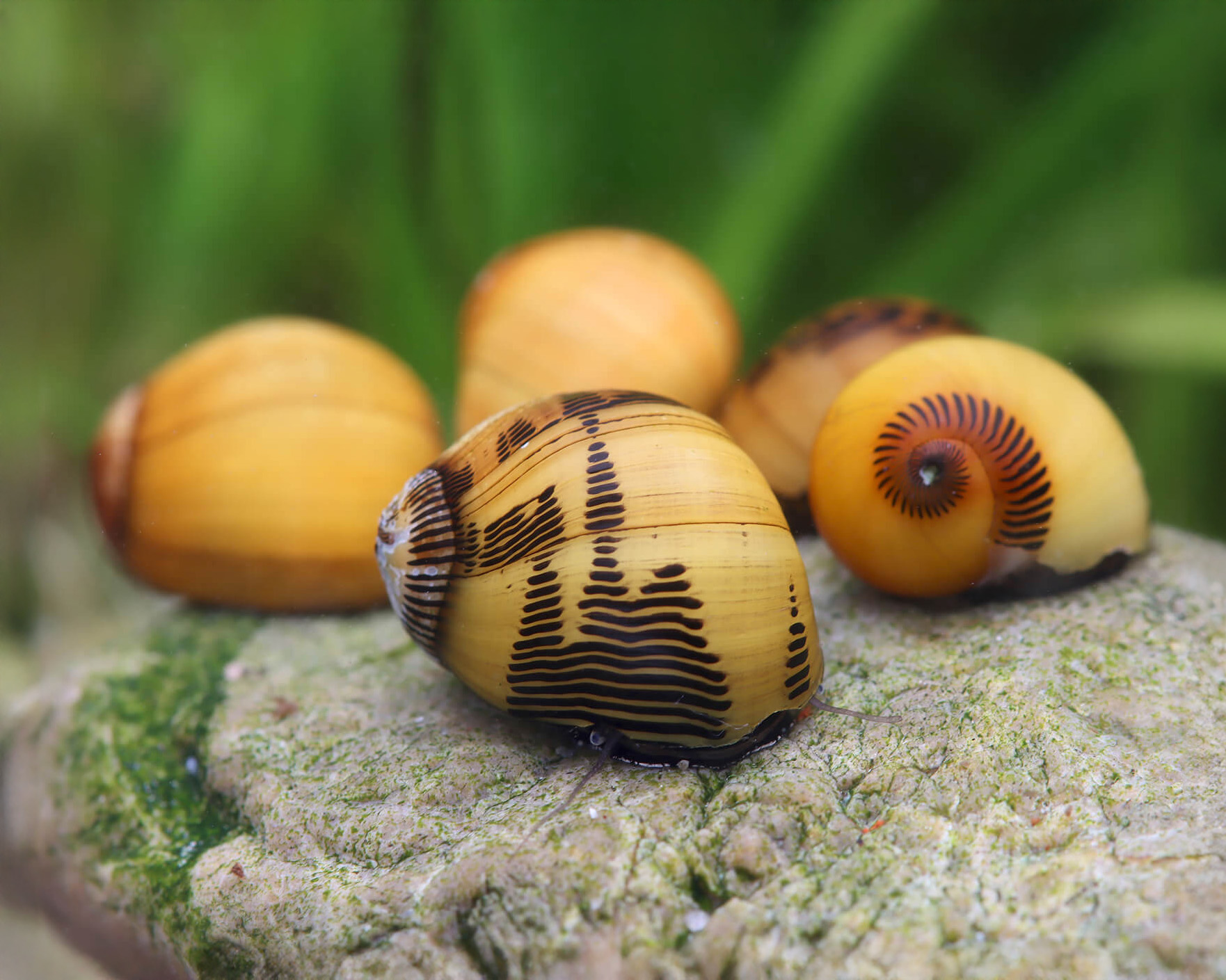
    Vittina waigiensis is a nerite snail kept for grazing algae and biofilm on aquarium glass, rocks and hardscape. Its rounded shell may show yellow, orange or reddish tones with dark markings, but commercial names are not always applied consistently. Identification from photographs alone can be uncertain, so shell pattern should be checked against a reliable taxonomic reference. Adults are generally peaceful and do not normally damage healthy aquarium plants.
  • Devil's Thorn Snail (Faunus ater)

    Devil's Thorn Snail (Faunus ater)

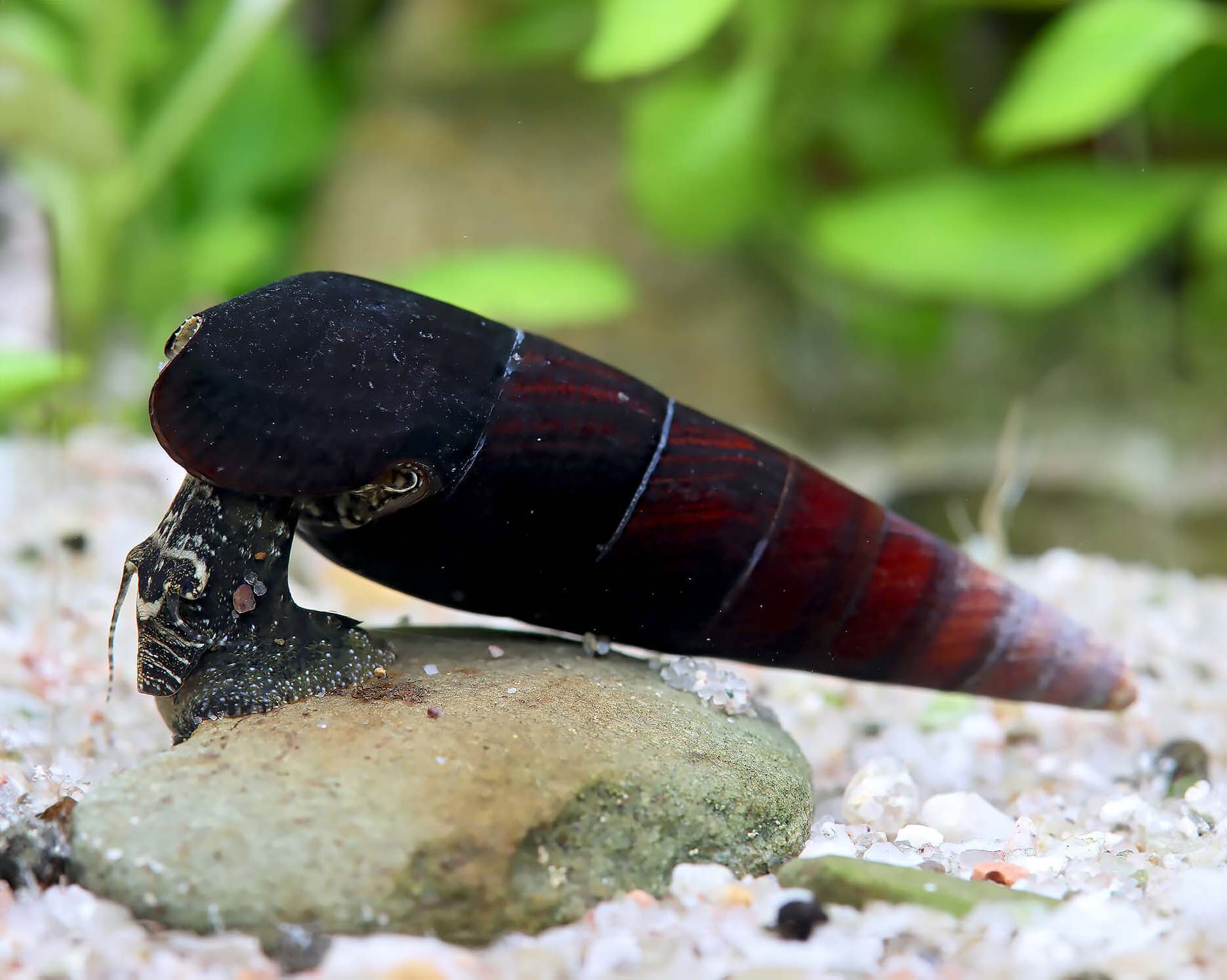
    Faunus ater is a large, elongated pachychilid snail from tropical Indo-West Pacific waters. It is associated with freshwater streams, rivers and estuarine habitats, and aquarium specimens are often kept in freshwater or mildly brackish conditions. Its dark, banded or reddish-brown shell is distinctive, although identification from photographs alone can be uncertain. It is generally peaceful, plant-safe and slow to reproduce in typical freshwater aquaria.
  • Deadpool Rennschnecke (Vittina waigiensis)

    Deadpool Rennschnecke (Vittina waigiensis)

    Vittina waigiensis is a nerite snail sold in the aquarium trade under names such as Deadpool Rennschnecke, usually referring to a striking red shell with dark patterning. It is a peaceful algae grazer that generally leaves healthy plants alone. Adults can live in freshwater aquariums, but successful reproduction requires brackish or marine conditions during the larval stage. The trade name and shell pattern are not sufficient for absolute identification, so the species assignment should be treated as provisional unless confirmed by specialist examination.