Taxonomy and identification
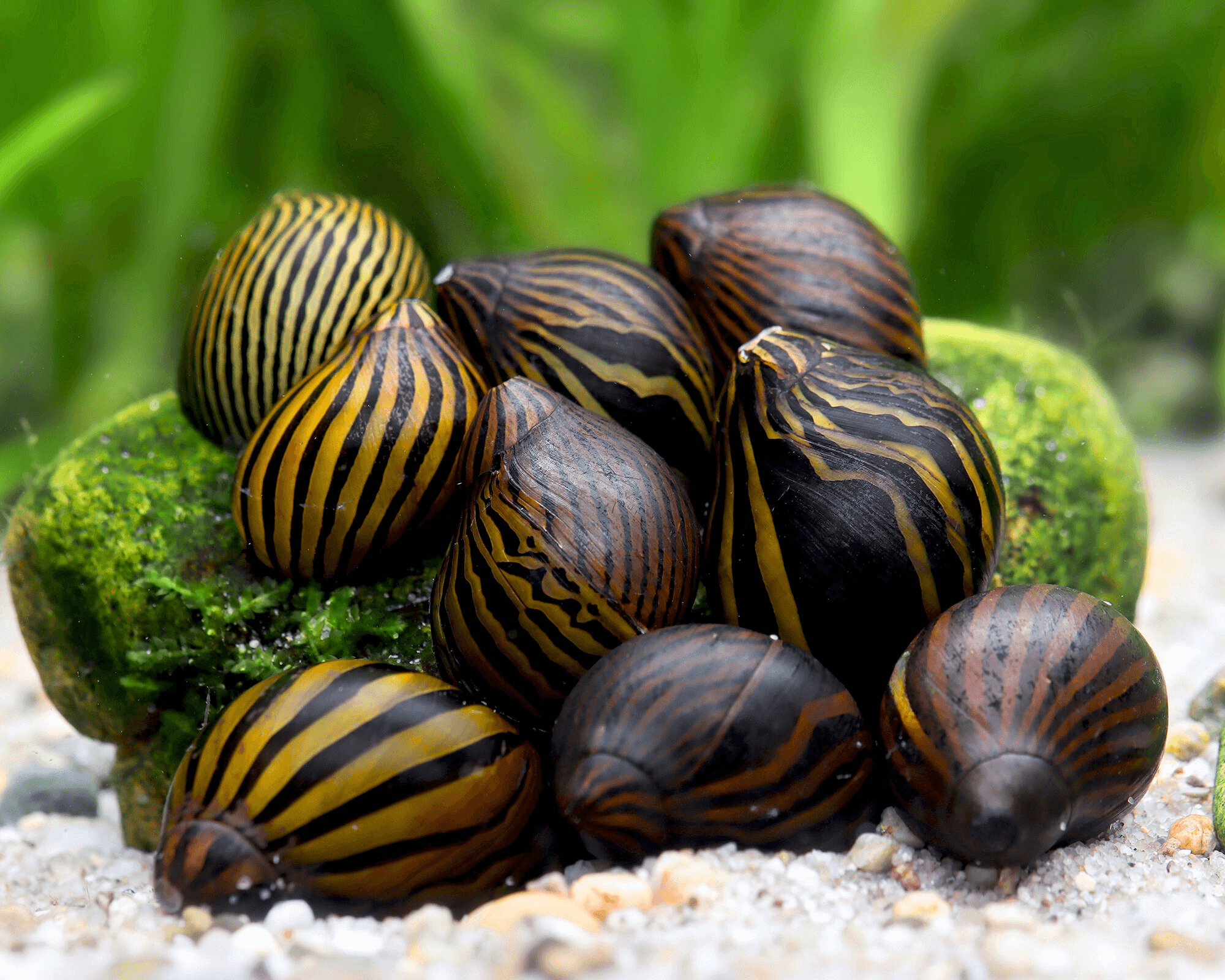
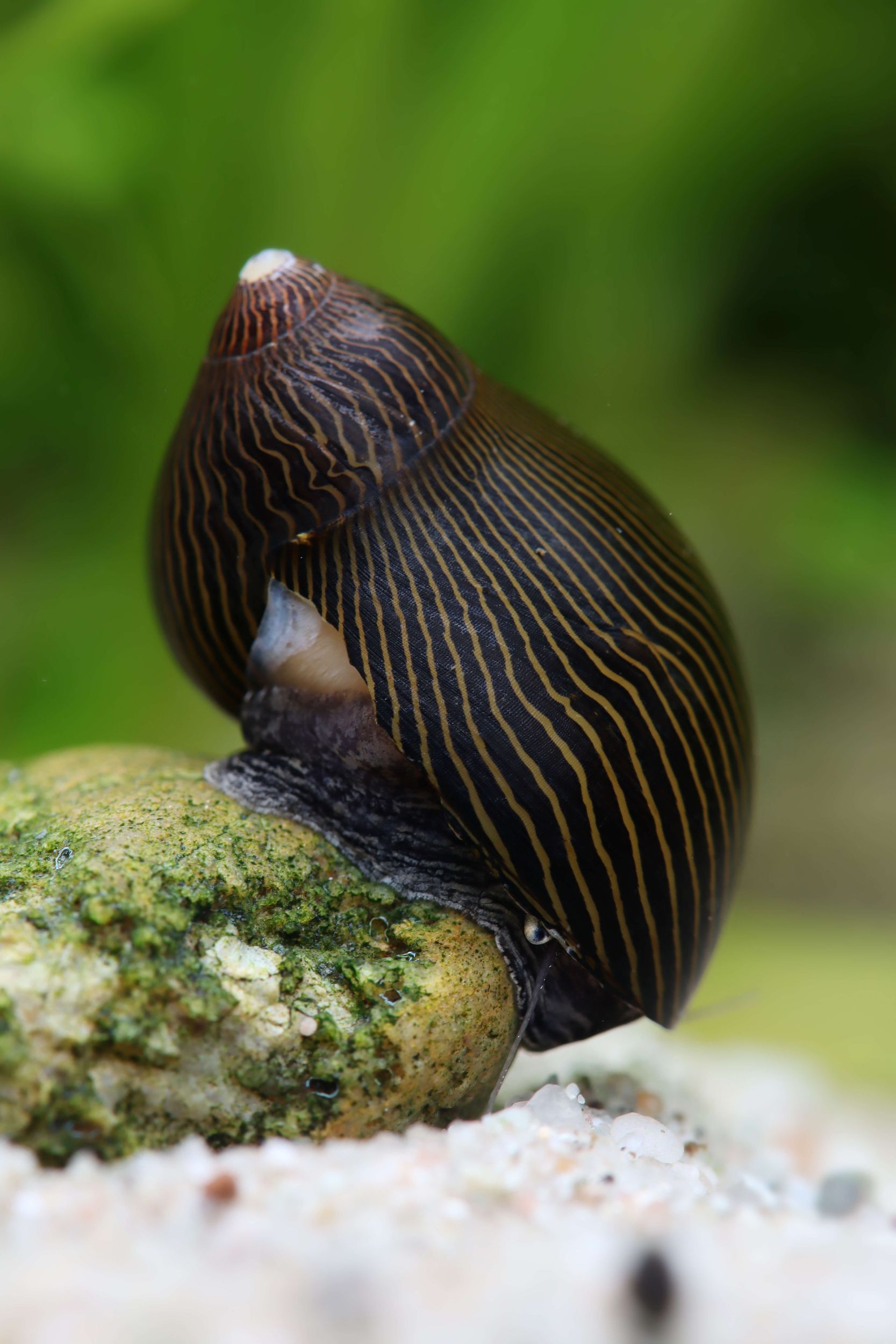
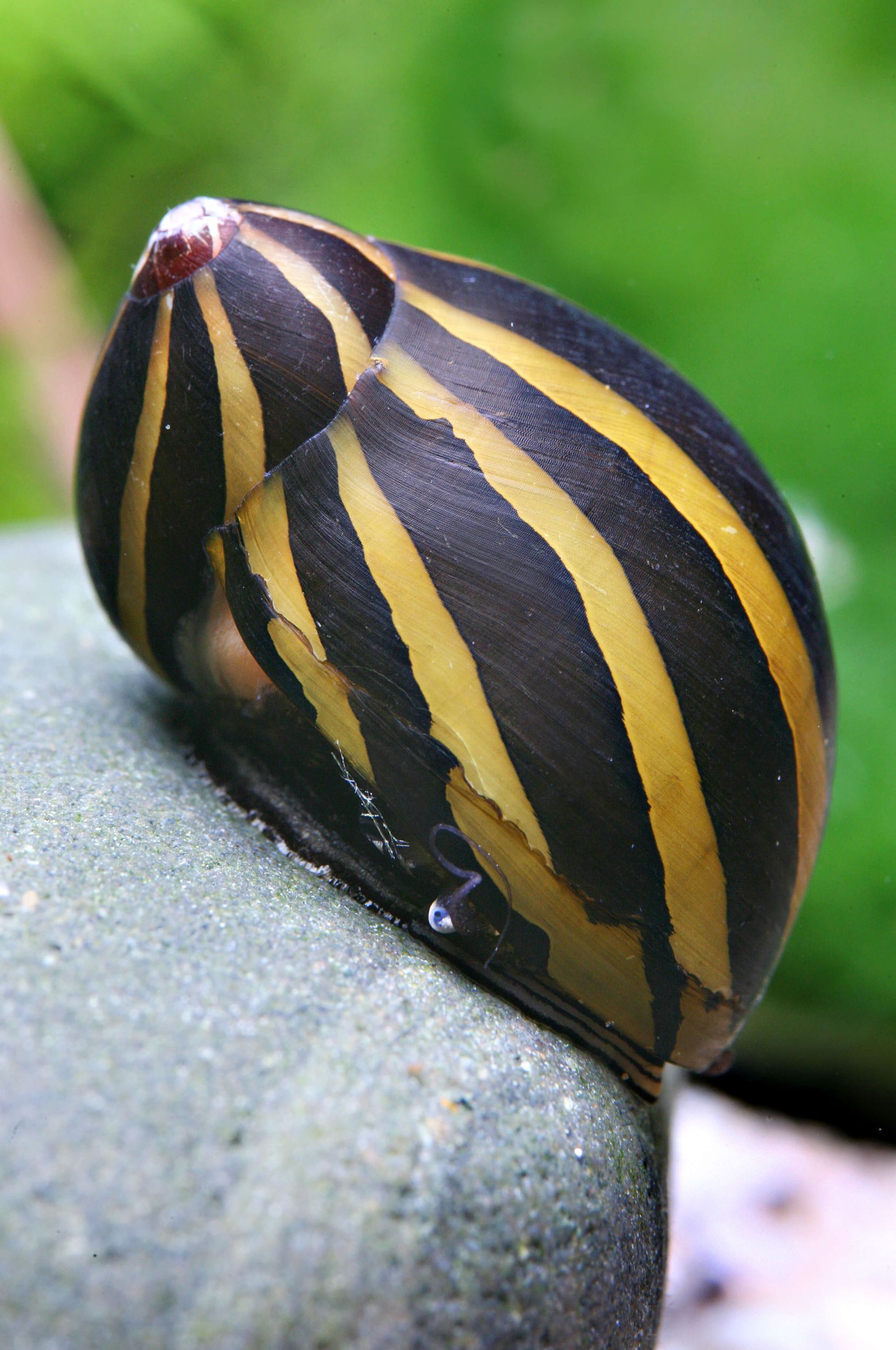
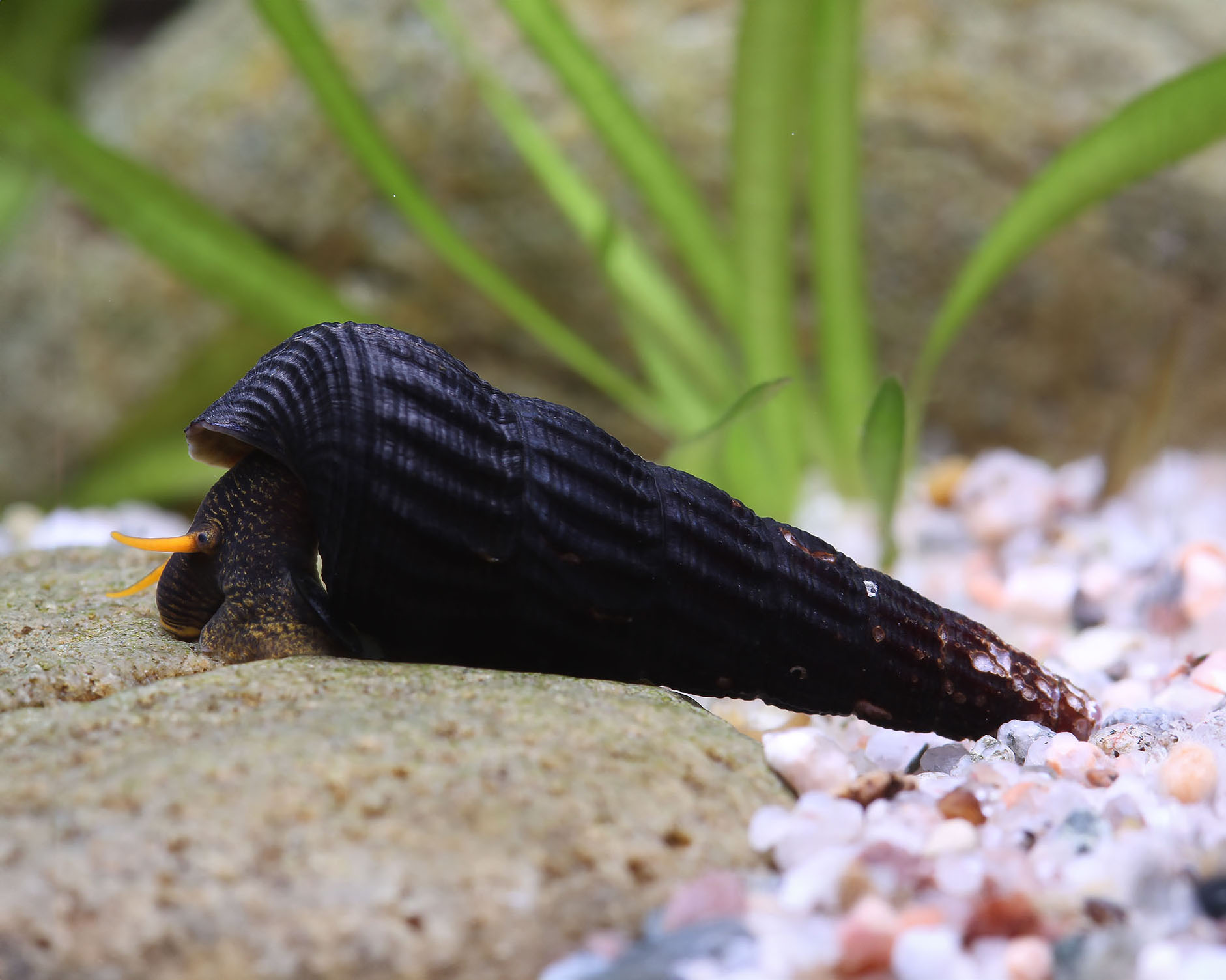
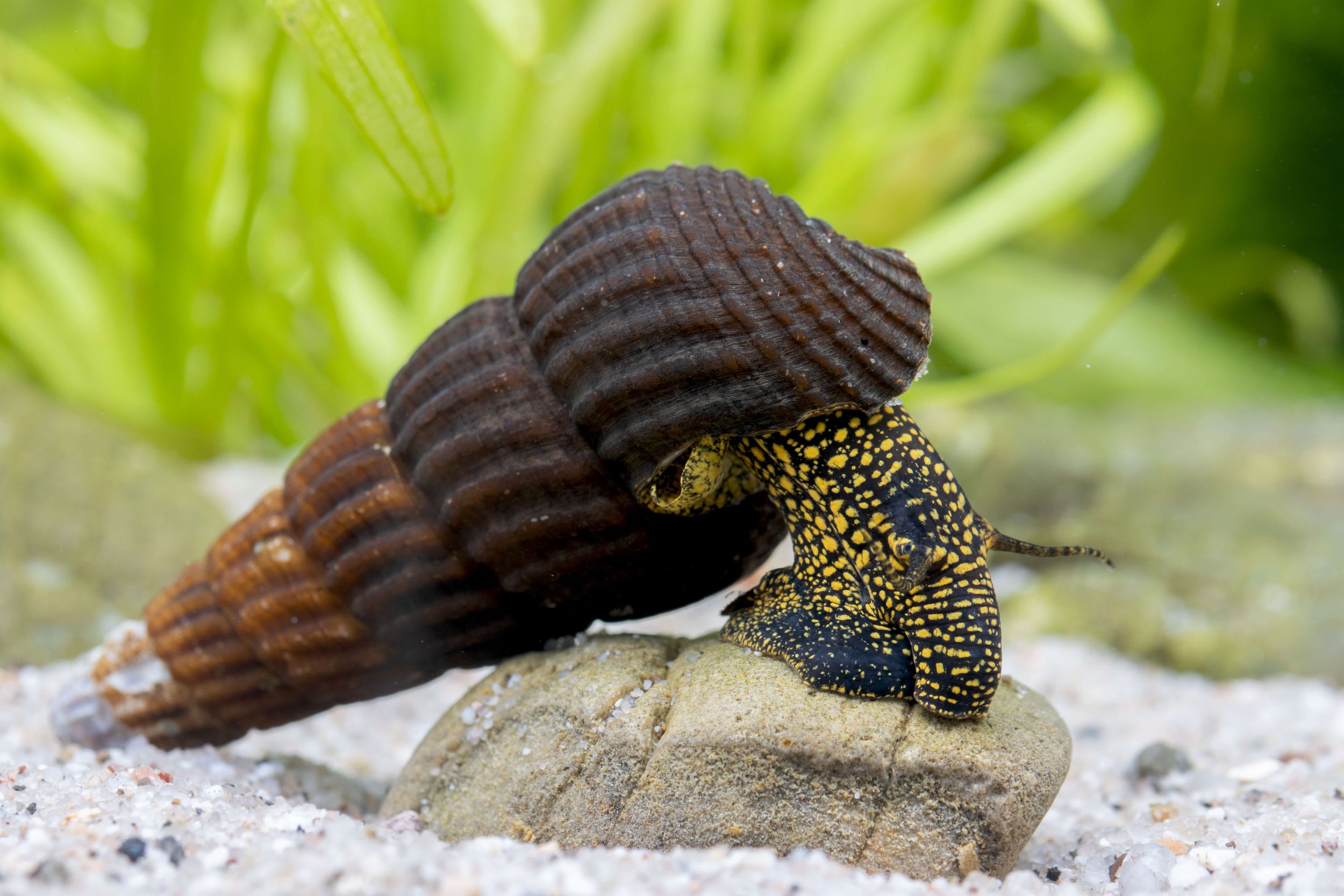
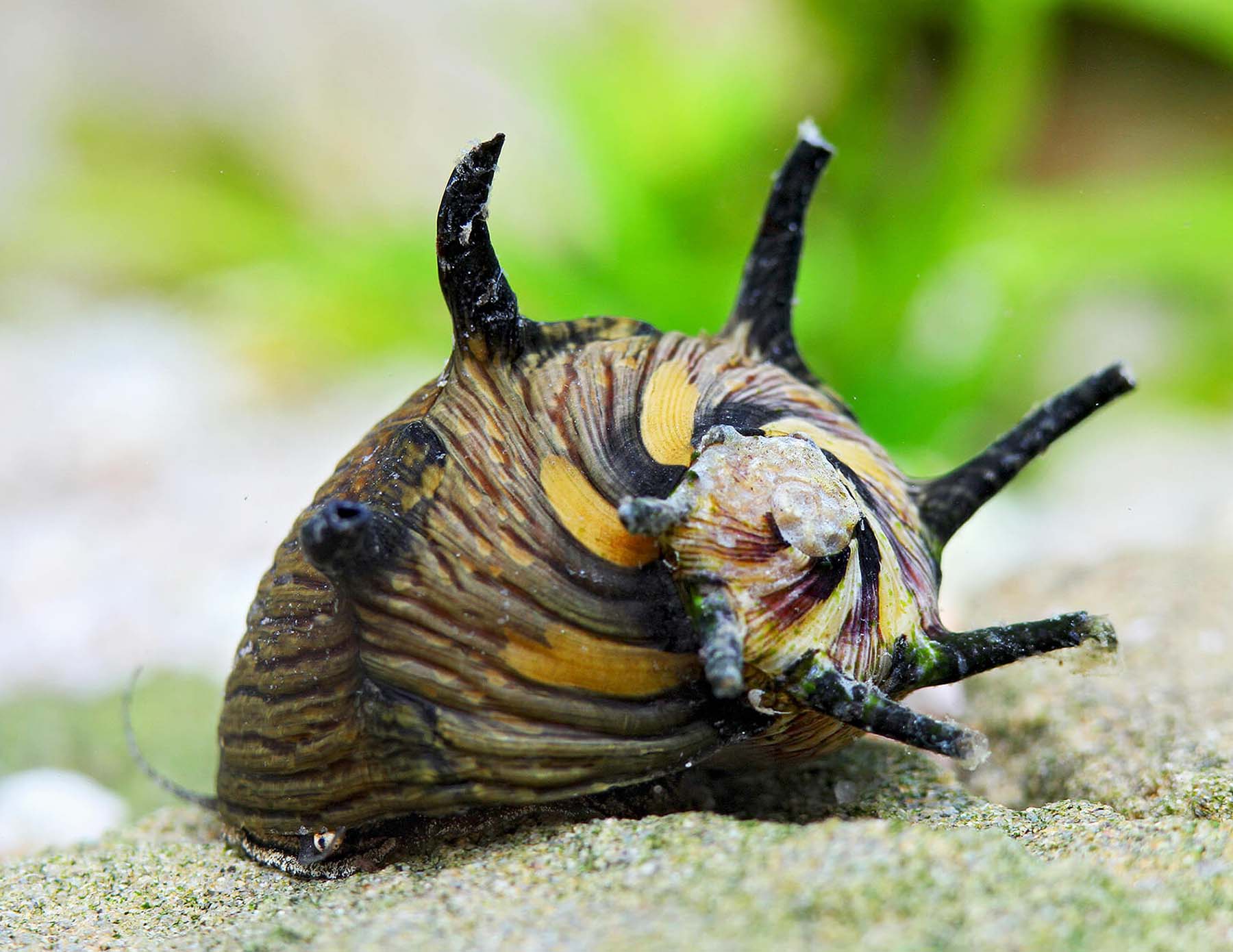
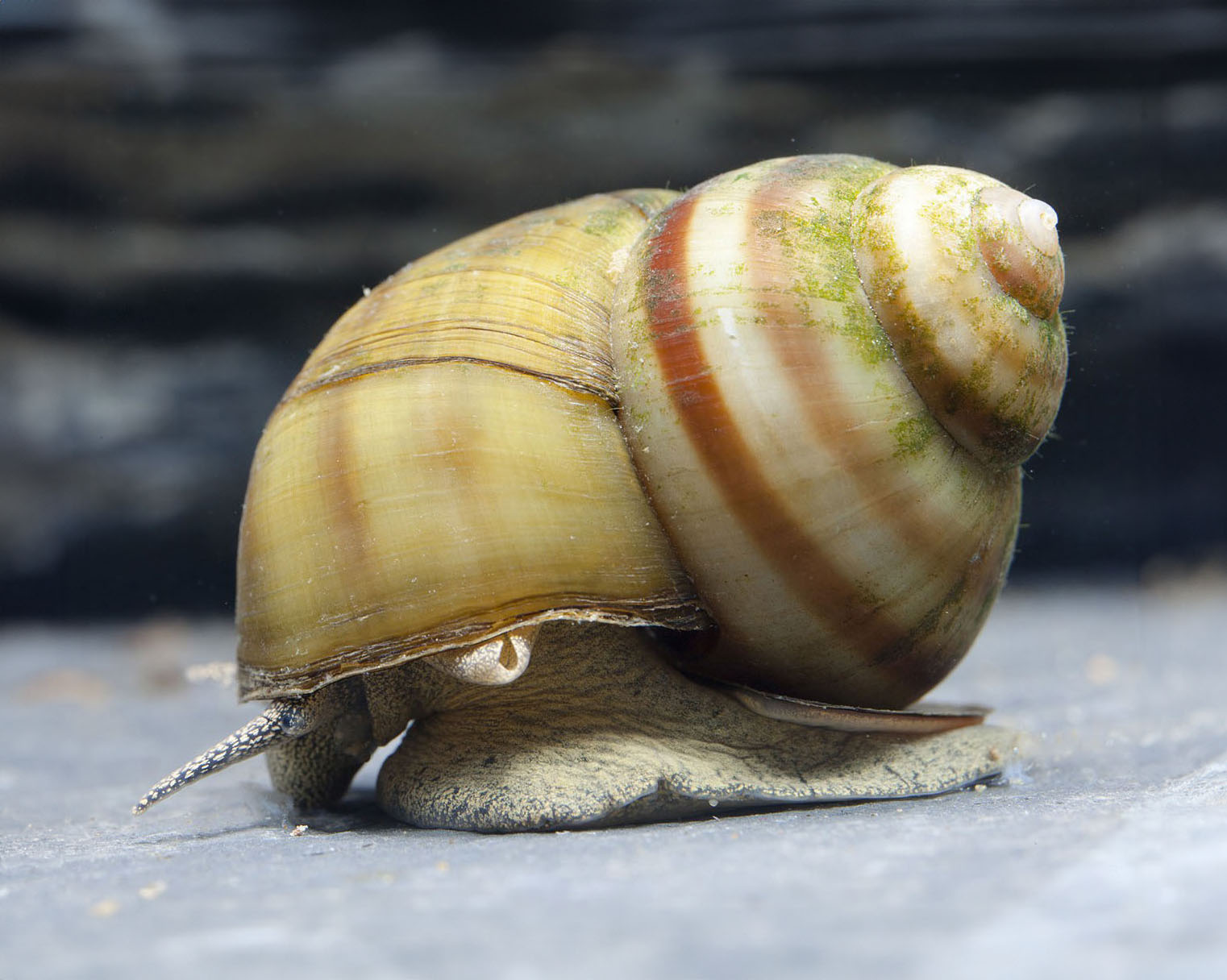
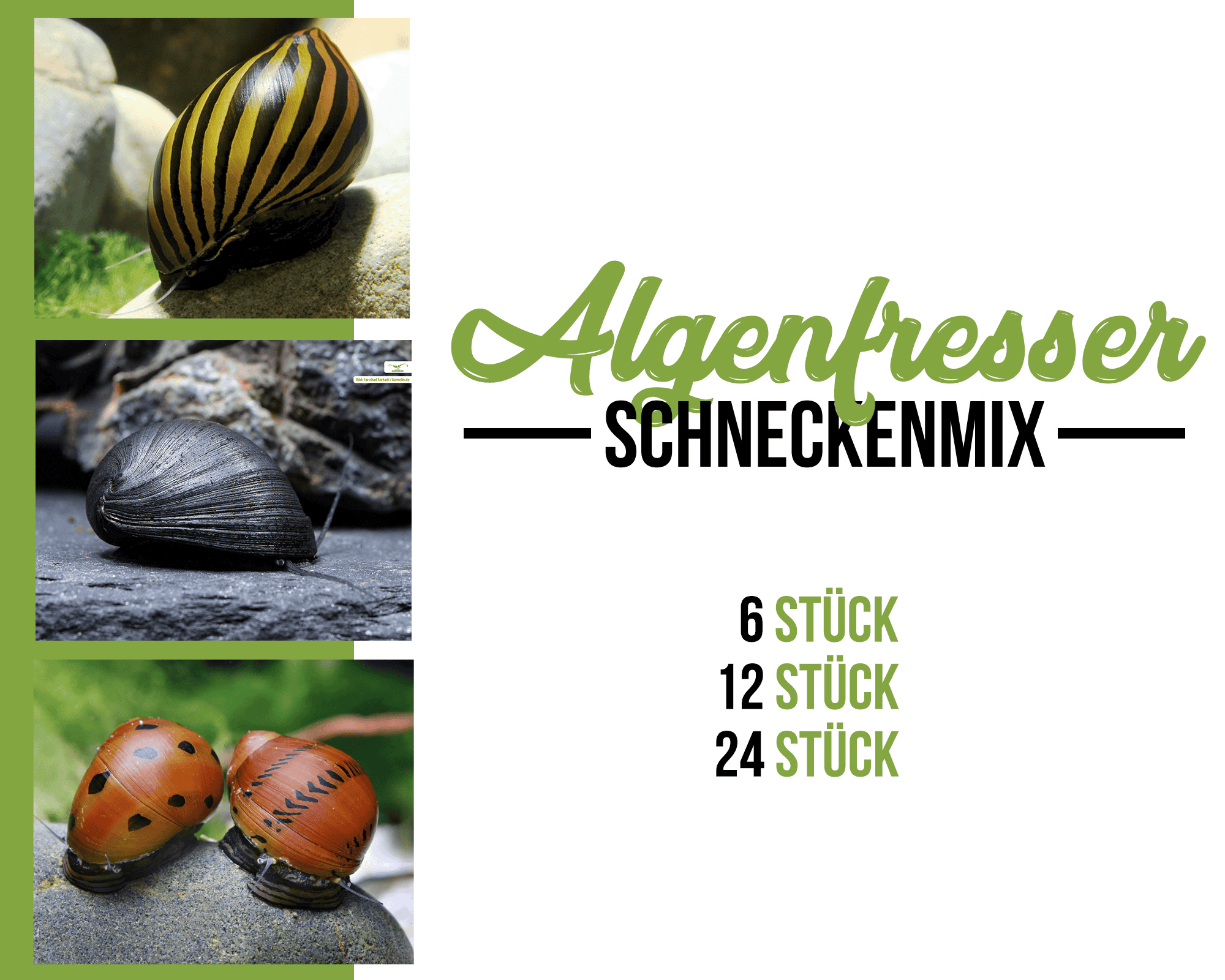
Vittina turrita is a nerite snail in the family Neritidae. The common name zebra racing snail refers to the contrasting dark shell and yellow or golden longitudinal stripes. Shell pattern varies, and trade labels are not always reliable, so a photograph or retail identification alone may not establish the species with certainty.

Natural habitat
This species is associated with tropical flowing waters and coastal or island drainage systems in the Indo-Pacific region. Nerite snails commonly use hard surfaces in streams, rivers and estuarine areas. Adults can live in freshwater, but their life cycle includes a dispersive larval stage that requires more saline water.
Aquarium conditions
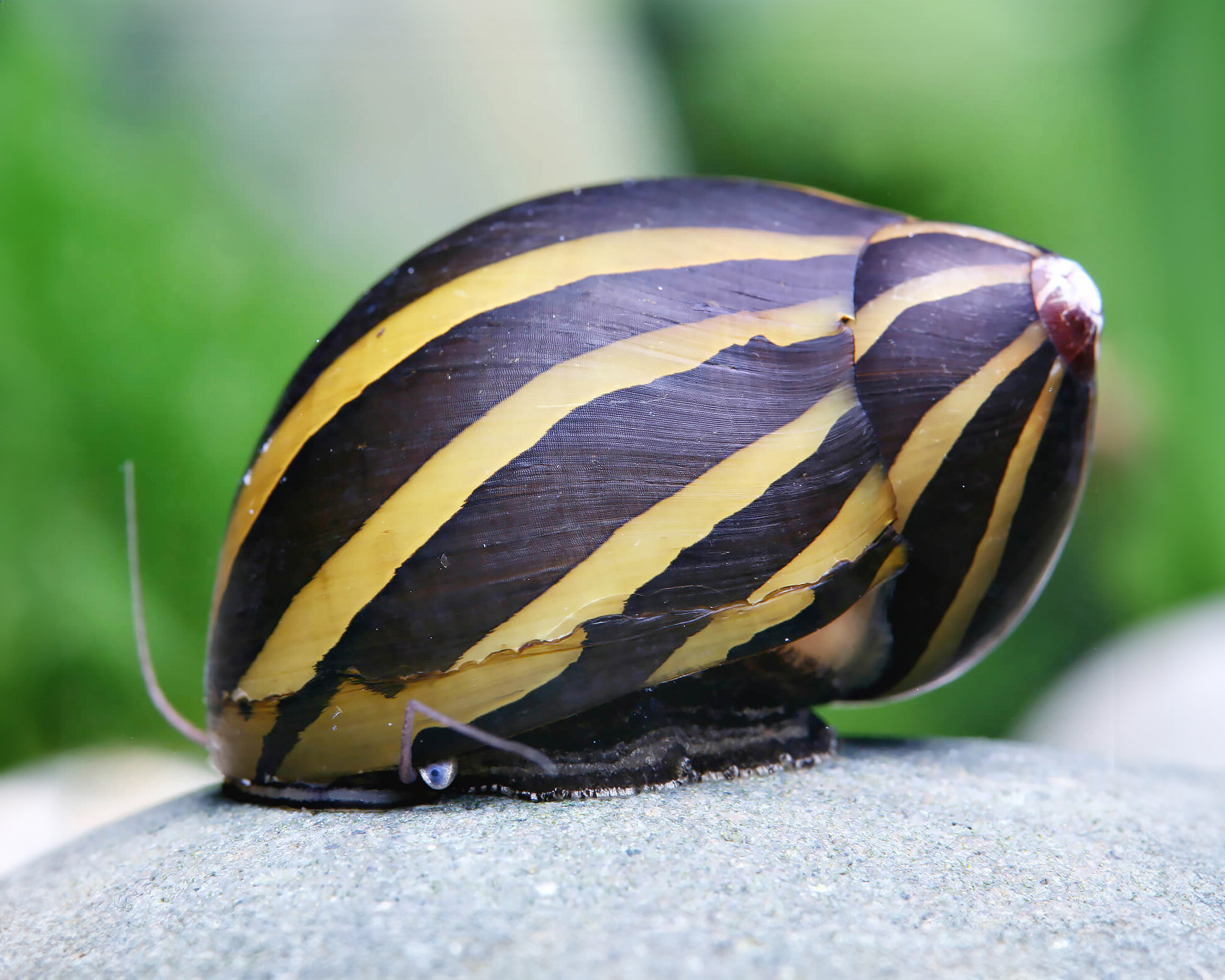
Use mature, well-filtered water with stable chemistry, good oxygenation and numerous grazing surfaces. Moderately hard, alkaline water helps maintain the shell. Avoid acidic, very soft water and sudden changes in temperature or mineral content. A secure lid is useful because nerites may climb above the waterline; leave a small air gap and return escaped snails promptly.
Feeding
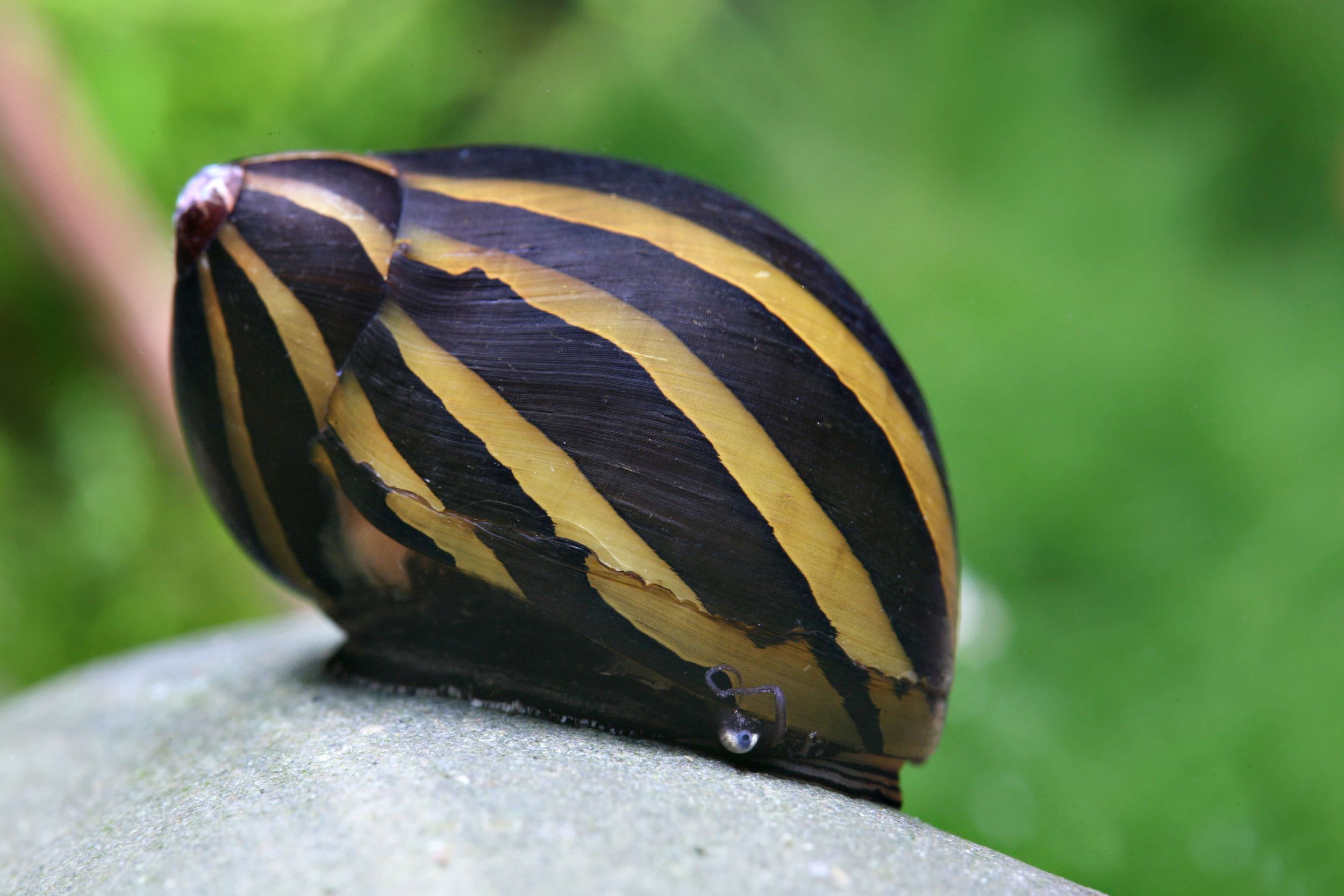
The main food is naturally growing algae and biofilm on glass, rocks, wood and other hard surfaces. In a clean or newly established aquarium, provide supplemental algae wafers or other invertebrate foods containing vegetable matter. Offer small portions and remove leftovers. Calcium and adequate mineral content support shell maintenance, but excess food can degrade water quality.
Plant safety
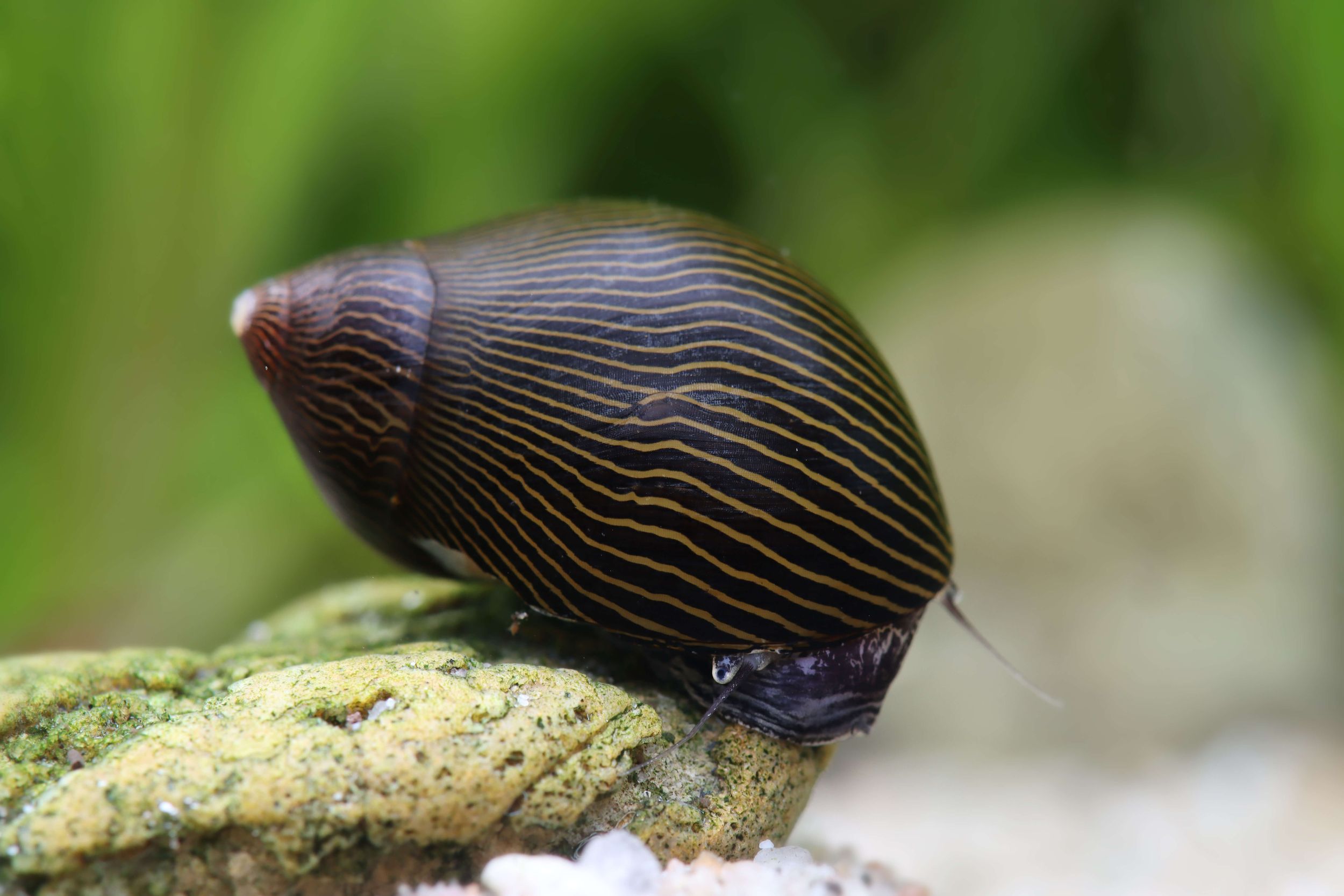
Vittina turrita is considered plant-safe. It grazes algae and surface films rather than healthy aquatic plant tissue, so it is suitable for planted aquariums. It may crawl over delicate leaves or disturb loose plants while searching for food, but it does not normally chew intact foliage.
Reproduction
Individuals have separate sexes and breeding requires a male and female. Females attach small, hard, pale egg capsules to glass, rock, wood and equipment. Eggs may appear in freshwater, but the larvae generally cannot complete development there; successful rearing requires carefully managed brackish or marine conditions and appropriate microscopic food. Consequently, routine freshwater aquariums usually do not produce a growing population of juveniles.
Population control and safety
Population growth is normally limited by the larval requirements, but unwanted adults can be removed by hand and rehomed rather than released. Scrape egg capsules from decorations or equipment if their appearance is undesirable. Control excess numbers by avoiding overfeeding and by maintaining a suitably sized grazing population. Do not use copper-based medications or other molluscicides in a tank containing nerites.
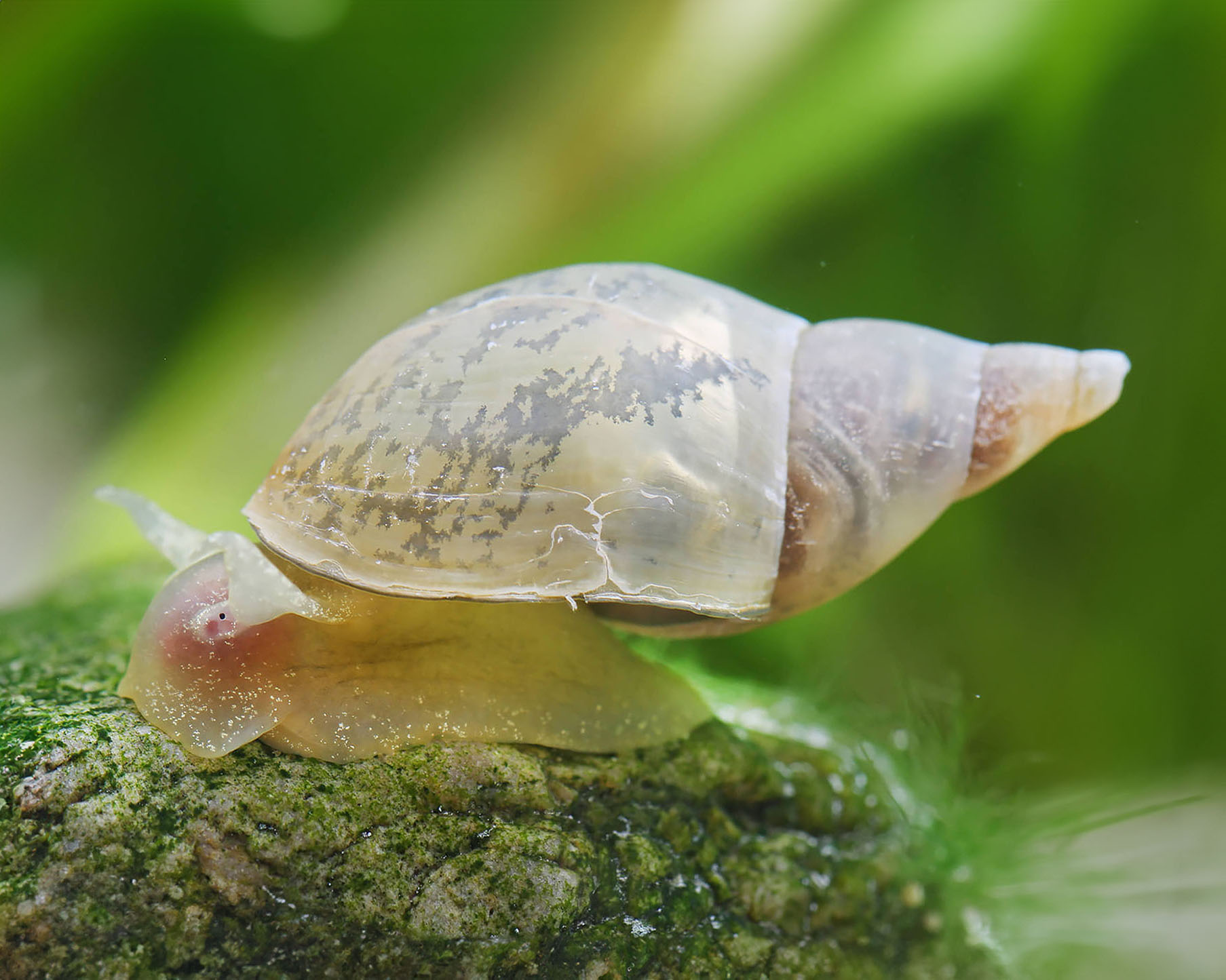
 - Radix balthica - 1.webp)
 - 1.webp)
Leave your comments