Taxonomy and identification
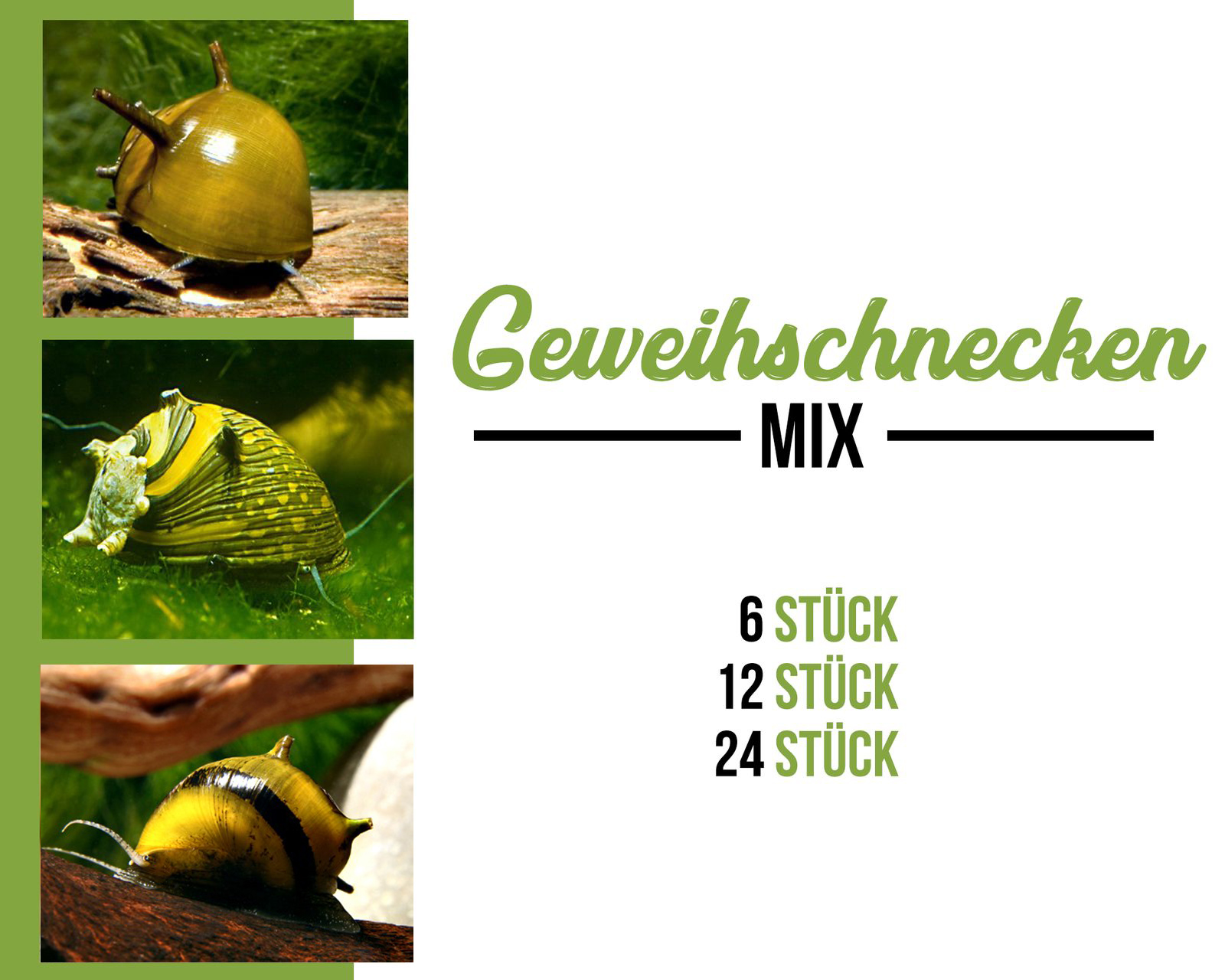
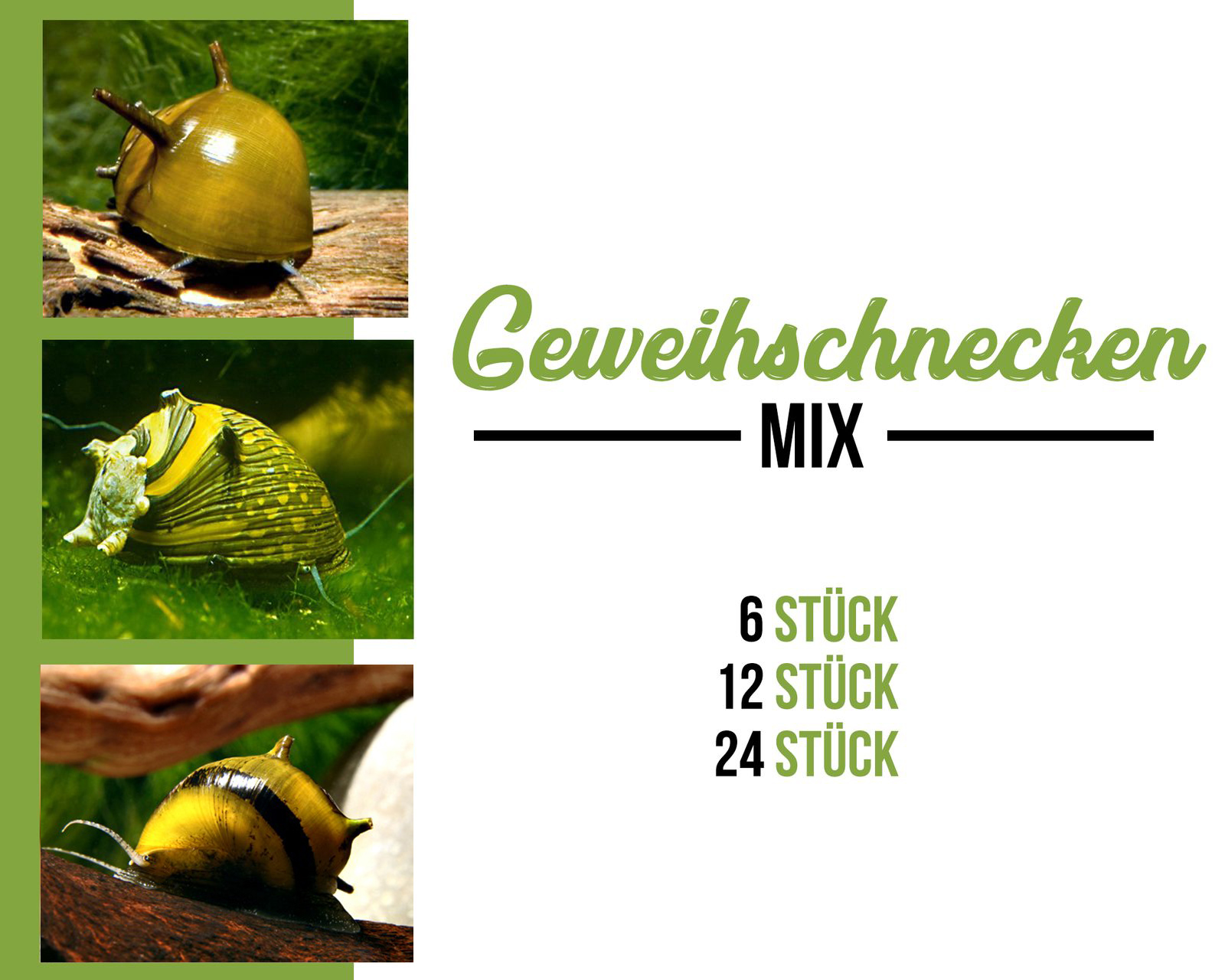
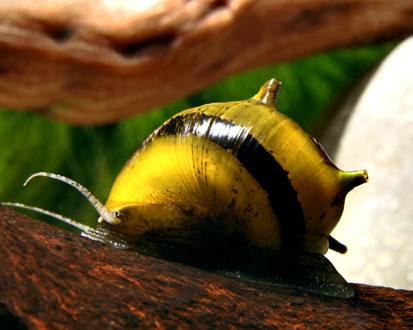
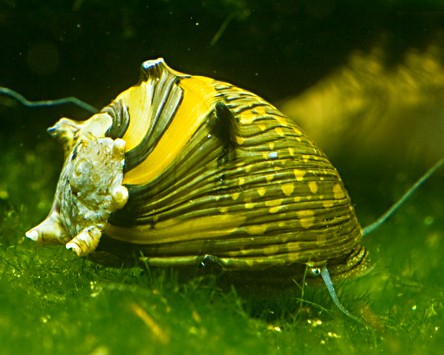
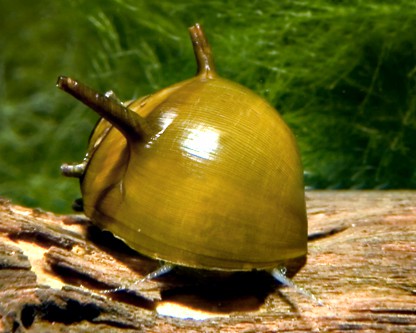
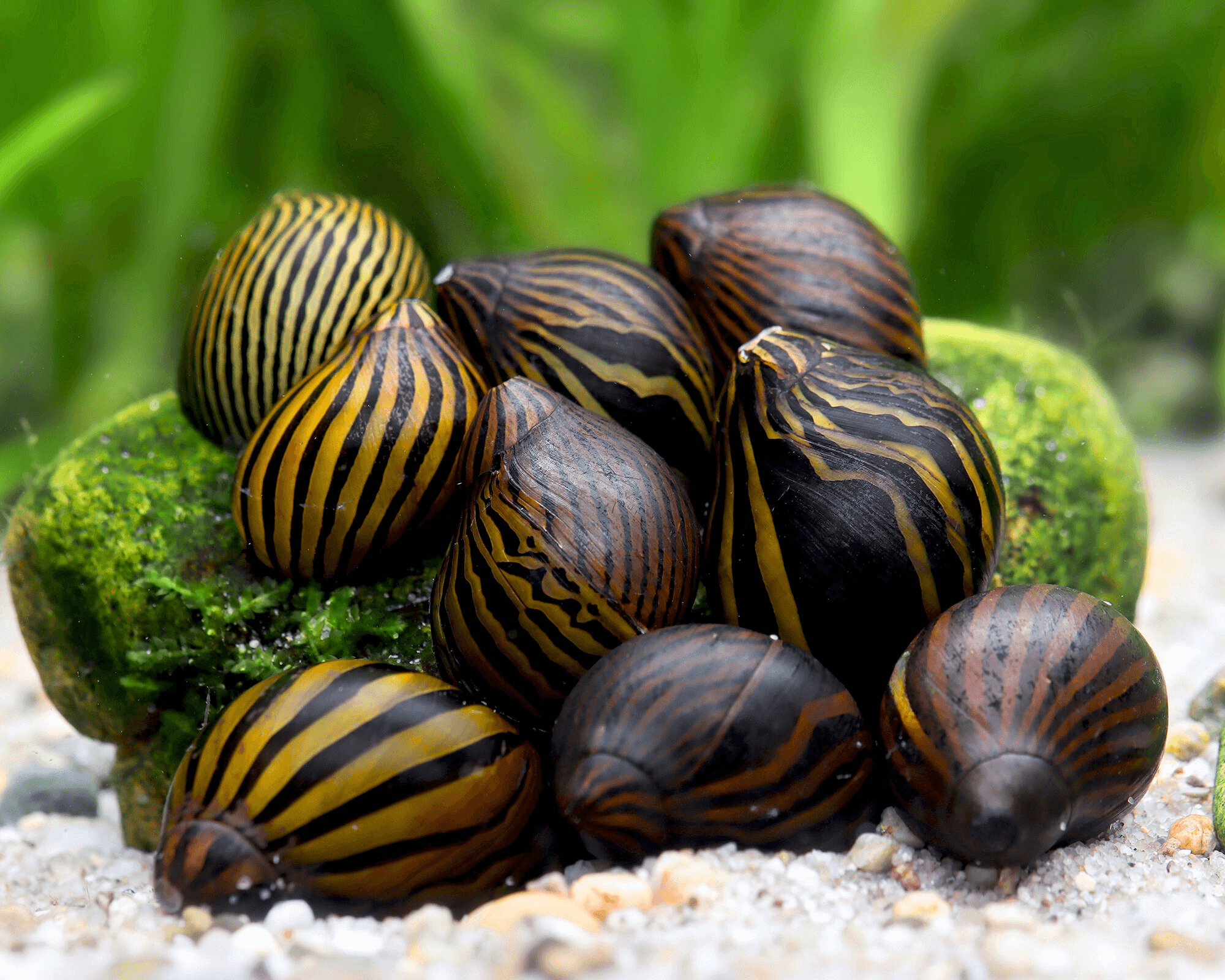
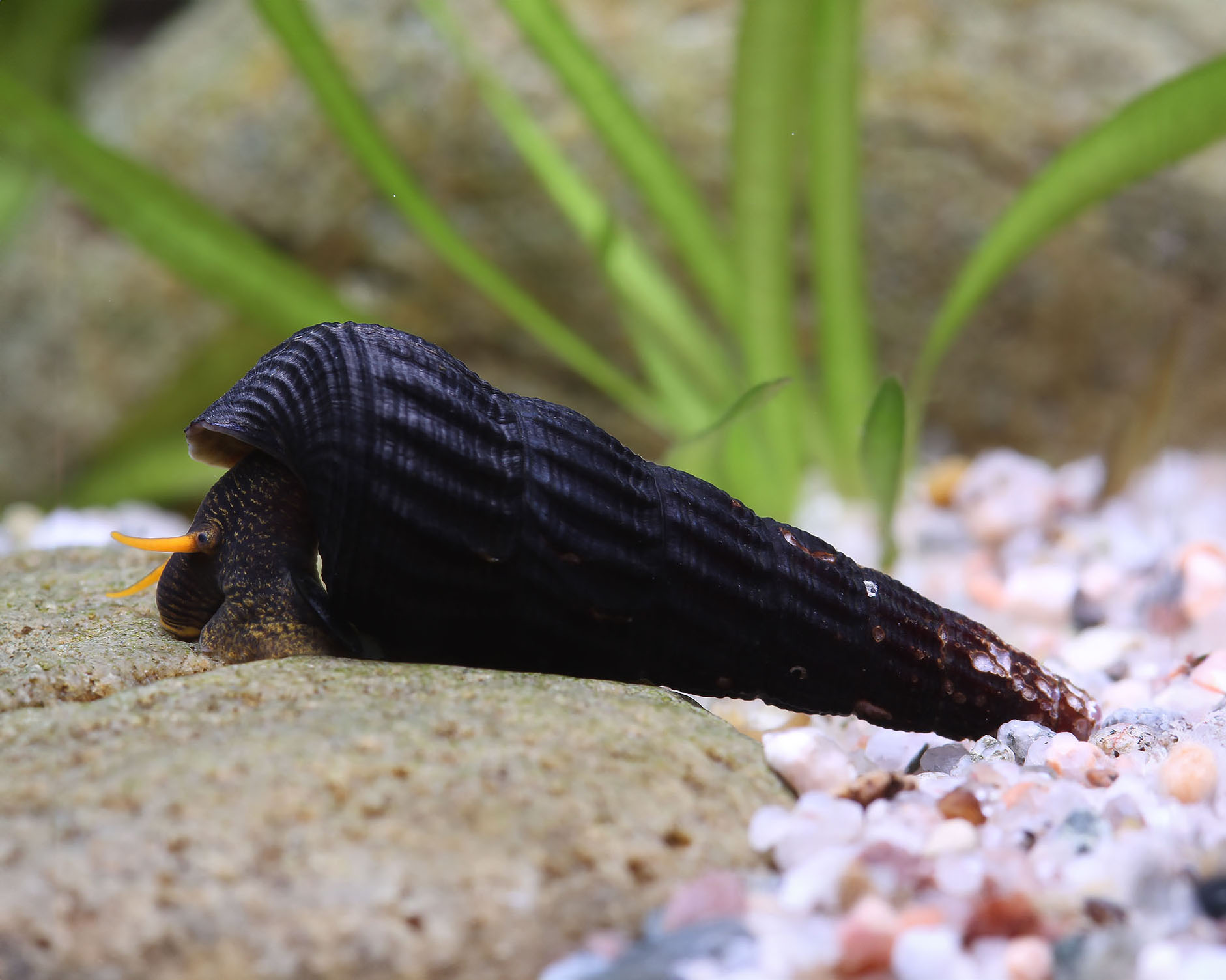
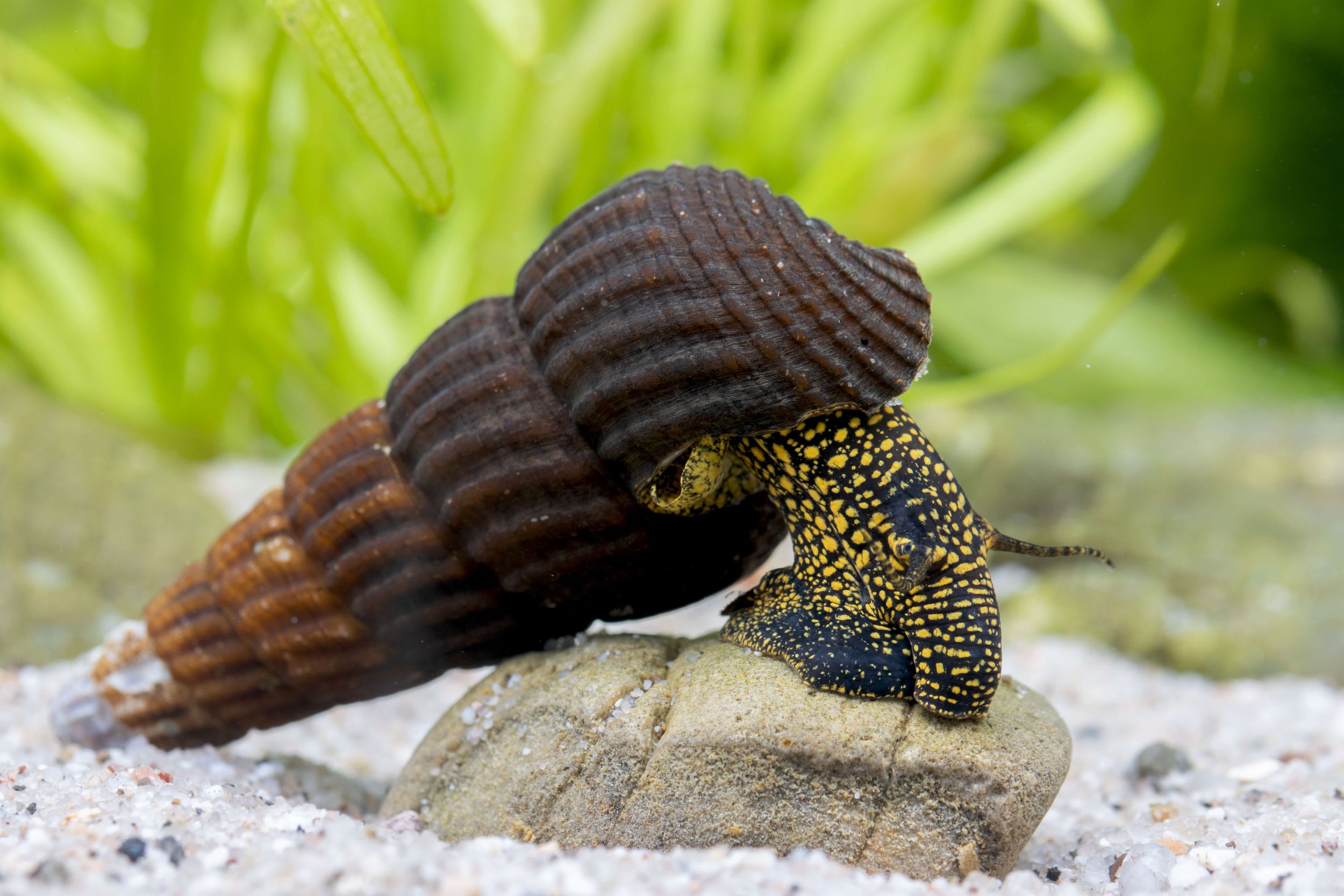
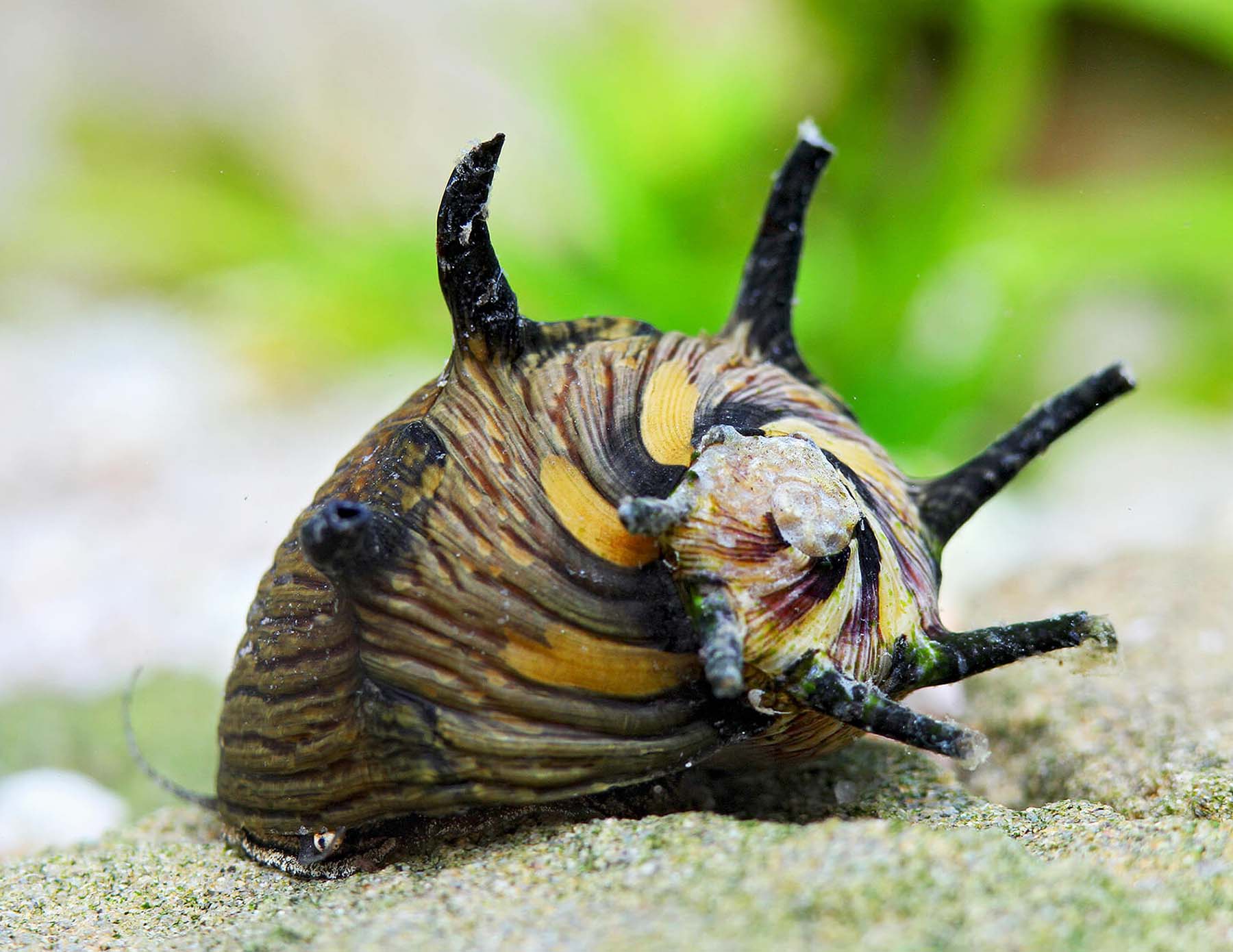
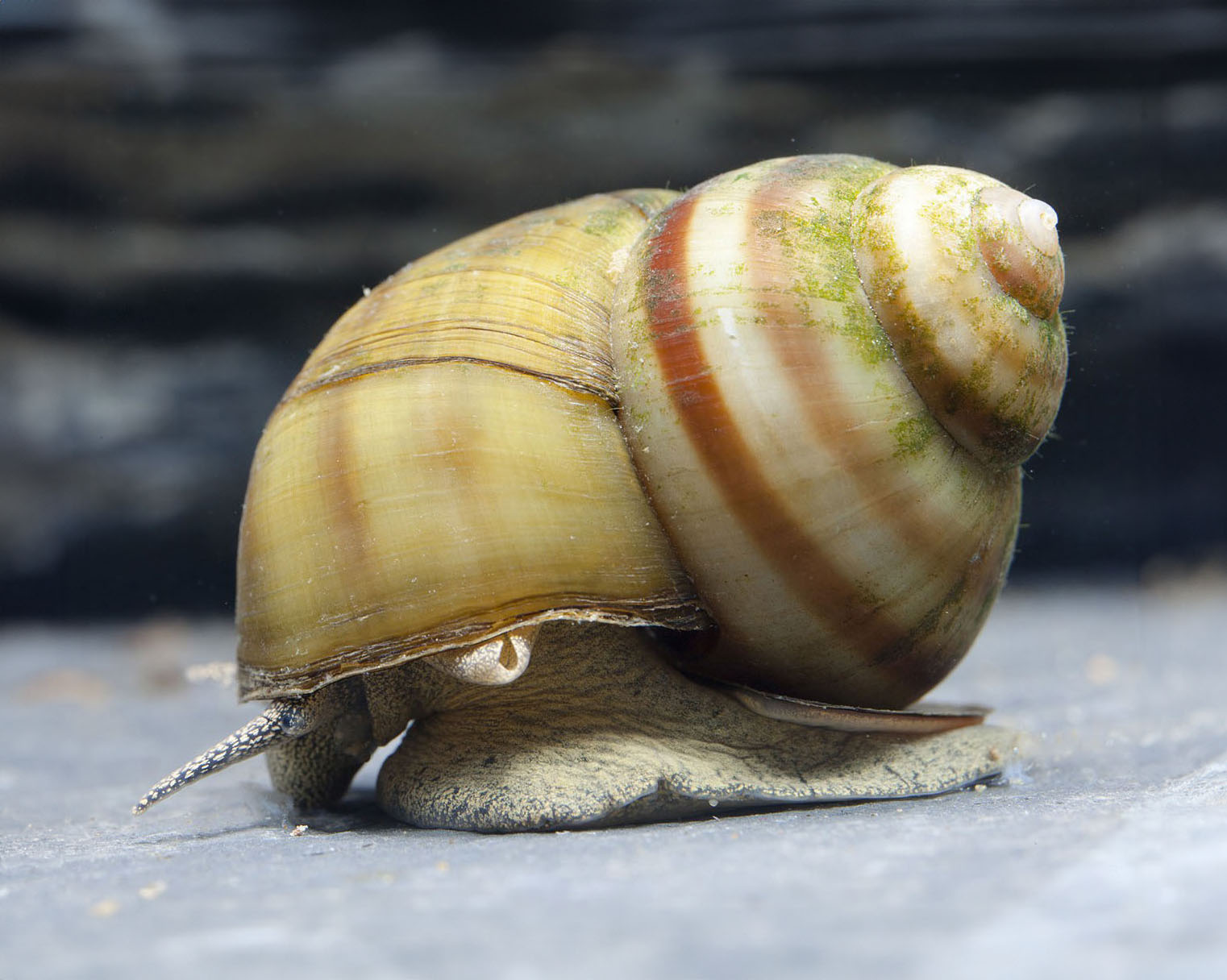
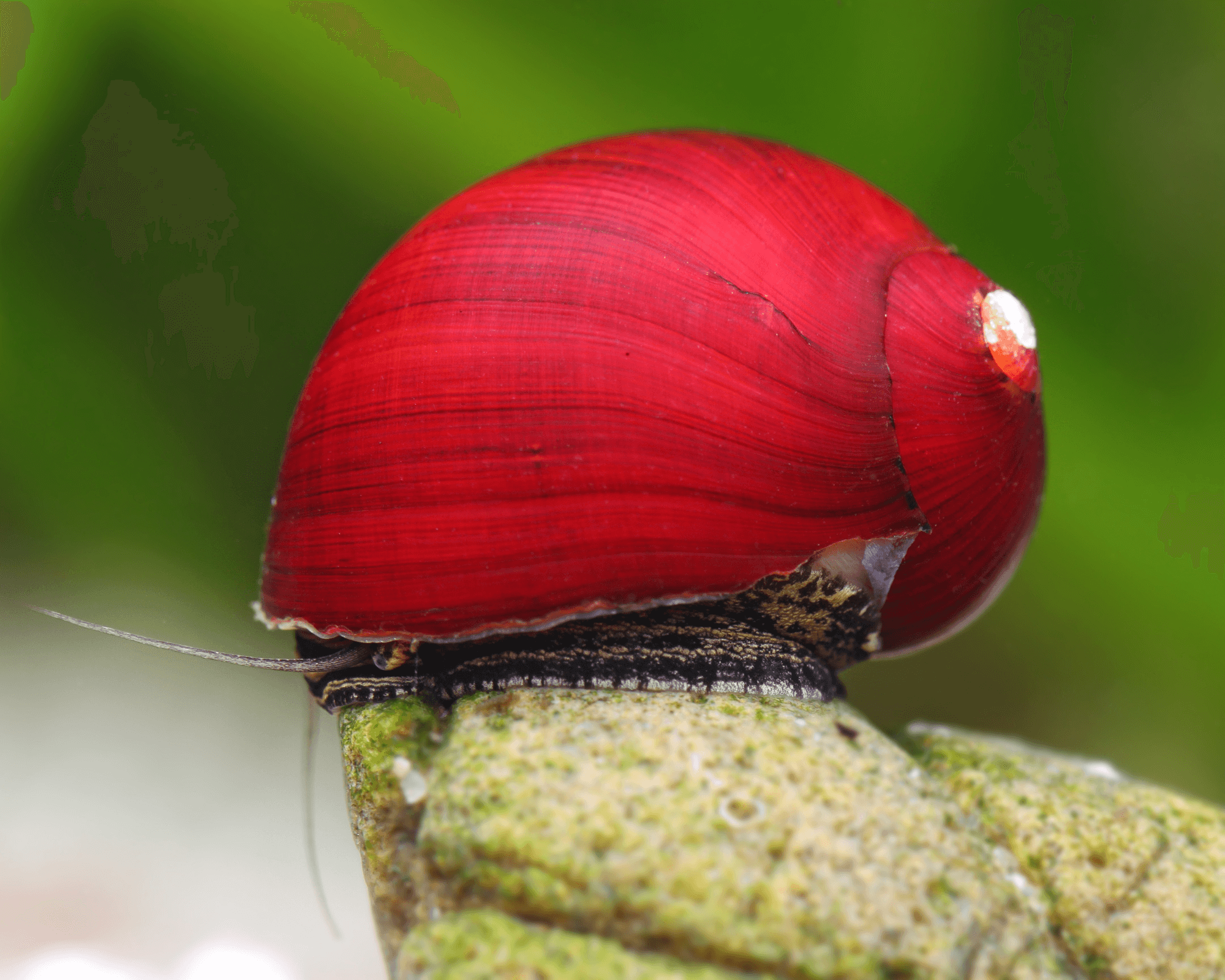
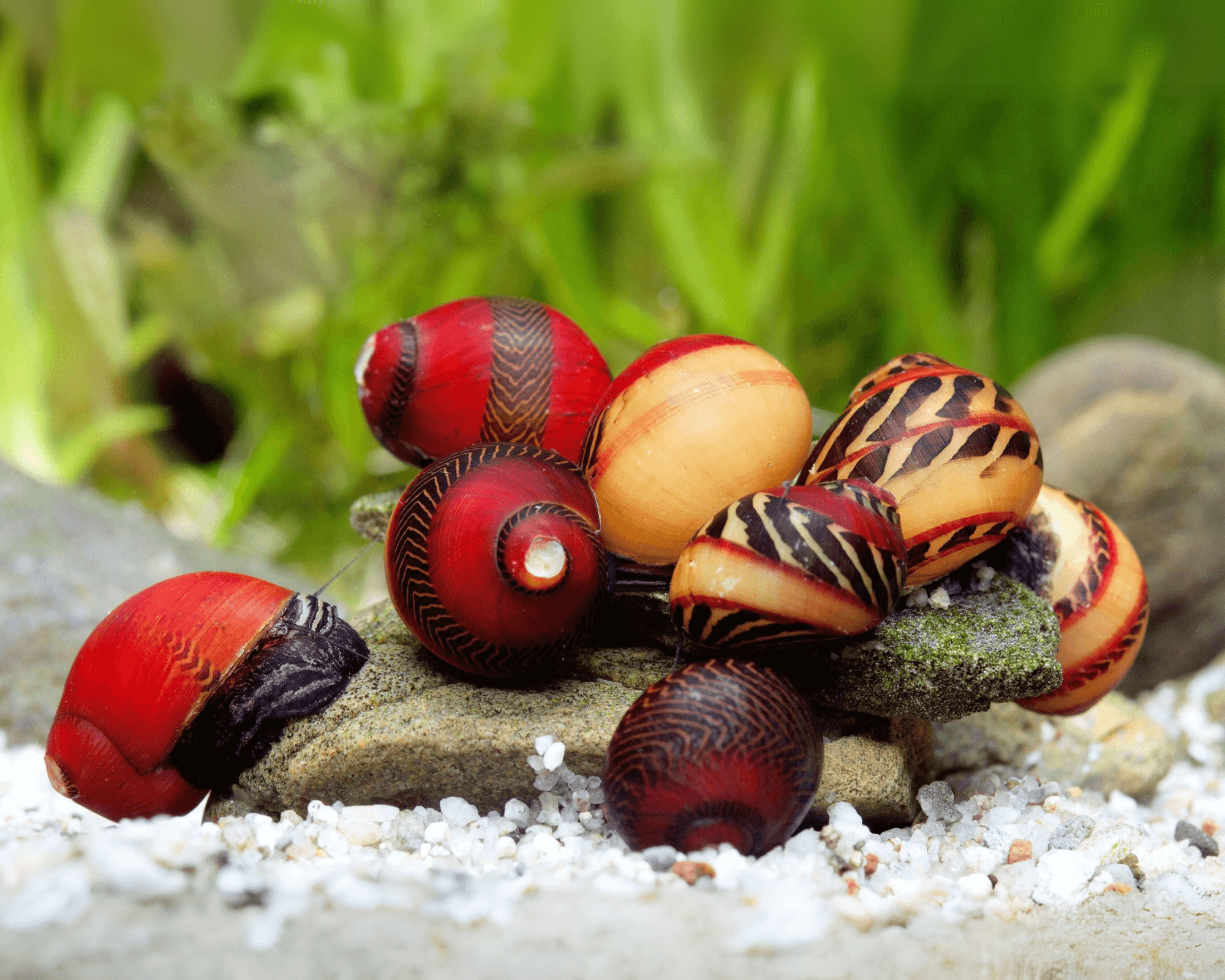
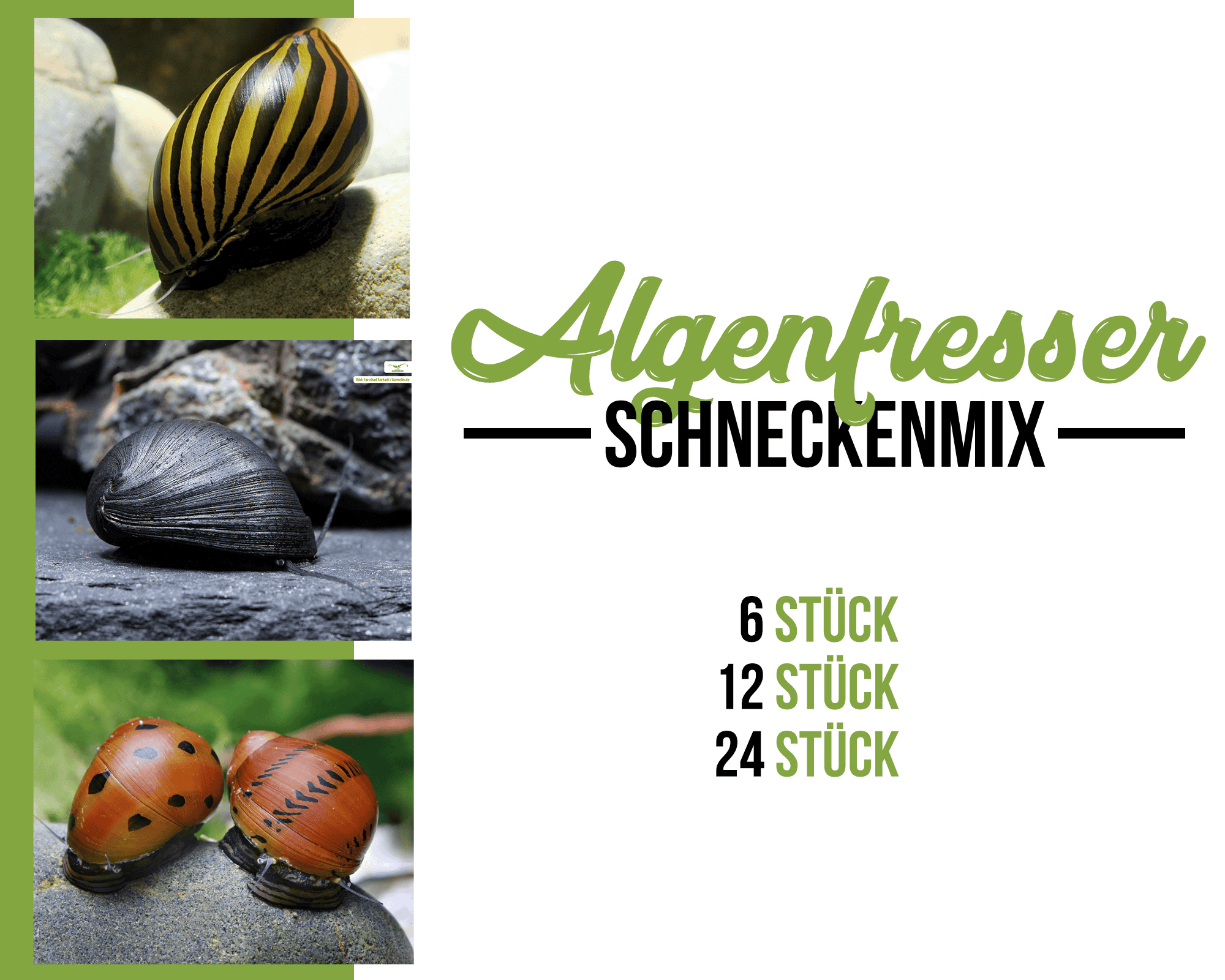
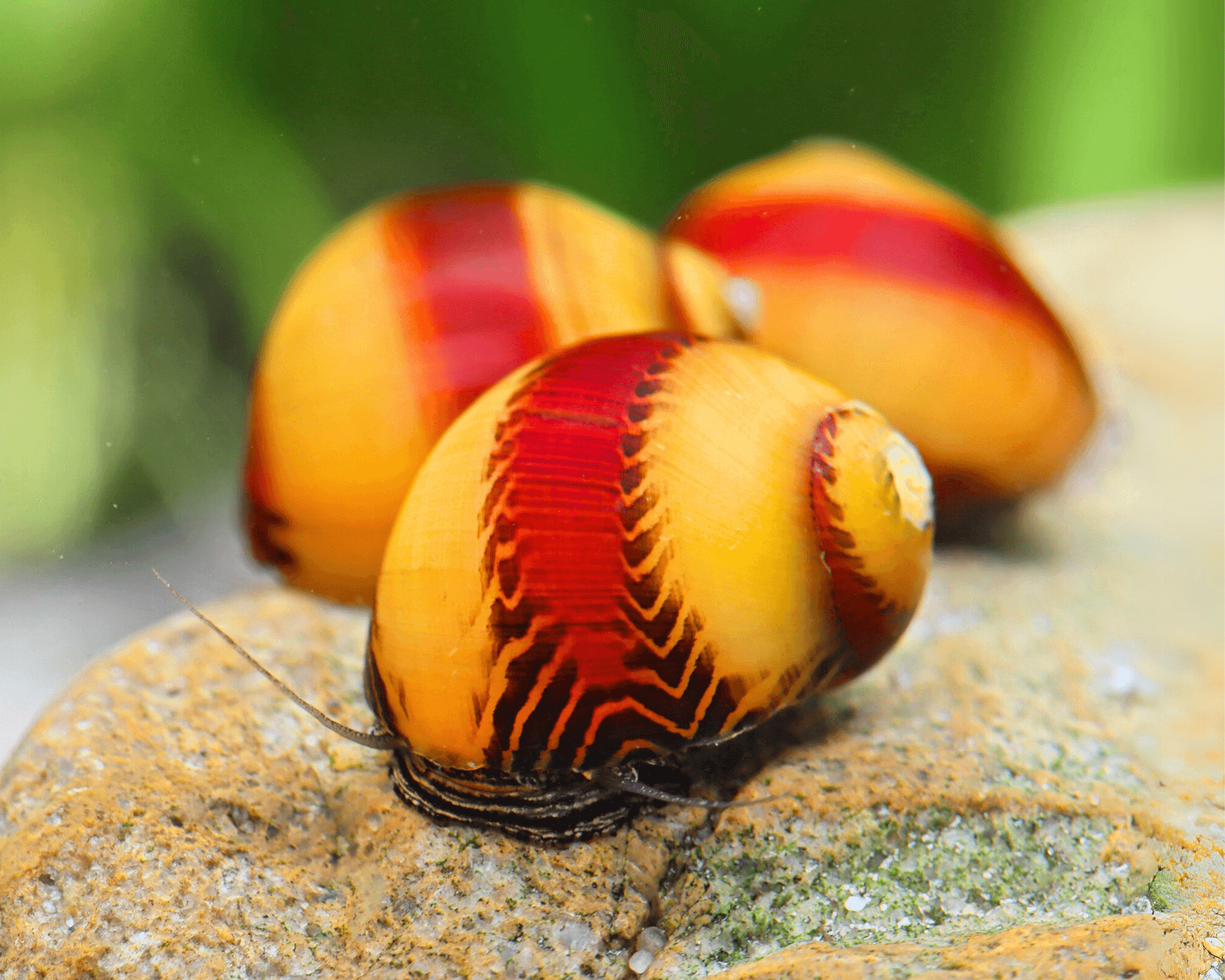
These animals are best treated as a mixed group of horned nerite snails, commonly sold under the trade name staghorn snails. They are gastropod molluscs in the family Neritidae and are often associated with the genus Clithon, but the images and trade label do not establish an exact species. Horn-like shell projections, rounded nerite shells and patterned surfaces are characteristic features. Individual appearance varies considerably within mixed shipments.
Natural habitat
Neritid snails commonly inhabit shallow, well-oxygenated streams, rivers and coastal-influenced waters. Many Clithon-type snails occur where freshwater meets brackish conditions, with adults grazing on submerged surfaces, wood and rocks. Provide good circulation, stable water quality, access to hard surfaces and a secure lid because nerites can climb above the waterline.
Water parameters
Keep the water warm and stable at approximately 22–28 °C, with a pH around 7.0–8.4. Moderate to hard water and adequate calcium and carbonate availability help maintain the shell. Avoid prolonged acidic, very soft water, sudden parameter changes, copper-based medications and detectable ammonia or nitrite. They tolerate freshwater as adults, although some individuals may fare well in mildly brackish conditions; do not add salt to a community aquarium without checking the needs of all tank inhabitants.
Feeding
The main diet is naturally growing algae, diatoms and biofilm on glass, rock, wood and other hard surfaces. A mature aquarium with established growth is important; a spotless tank may not provide enough food. If natural growth is insufficient, offer algae wafers or other invertebrate-safe foods and remove uneaten portions. Blanched vegetables can be used occasionally, but feeding should not create excessive organic waste.
Plant safety
Staghorn nerites are generally safe with healthy aquarium plants. They scrape films from surfaces rather than chewing sound leaves, so they are useful in planted aquariums. They may graze on soft algae attached to leaves and can dislodge very delicate plants while climbing, but holes or rapid plant damage usually indicate another cause such as nutrient deficiency, decay or a different animal.
Reproduction
These snails have separate sexes, and females may deposit small, hard white egg capsules on glass, wood, rocks and equipment. Eggs can be conspicuous and difficult to remove without scraping. Hatching and development normally require brackish or marine conditions, so eggs laid in a freshwater aquarium generally do not produce a growing freshwater population. A freshwater aquarium can therefore contain egg deposits without experiencing normal population growth.
Population control
Because successful reproduction is usually limited in freshwater, numbers are mainly controlled by the number introduced. Avoid buying more than the aquarium can support with its available algae and biofilm. Remove unwanted adults by hand, scrape egg capsules from hard surfaces, limit excess feeding and quarantine new plants or décor when practical. Never release unwanted snails or aquarium water into natural waterways.
 - Radix balthica - 1.webp)
 - 1.webp)
Leave your comments