Taxonomy and identification
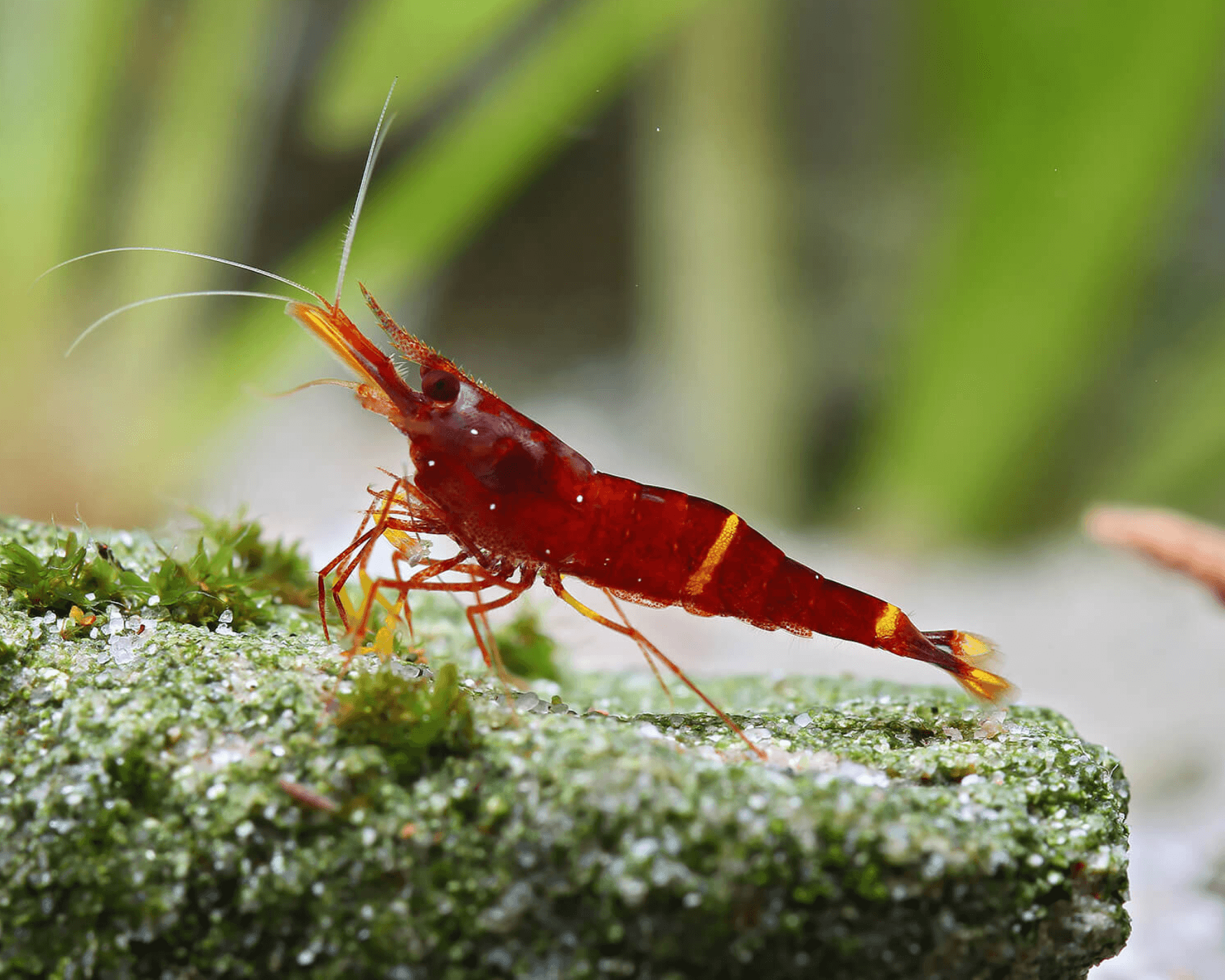
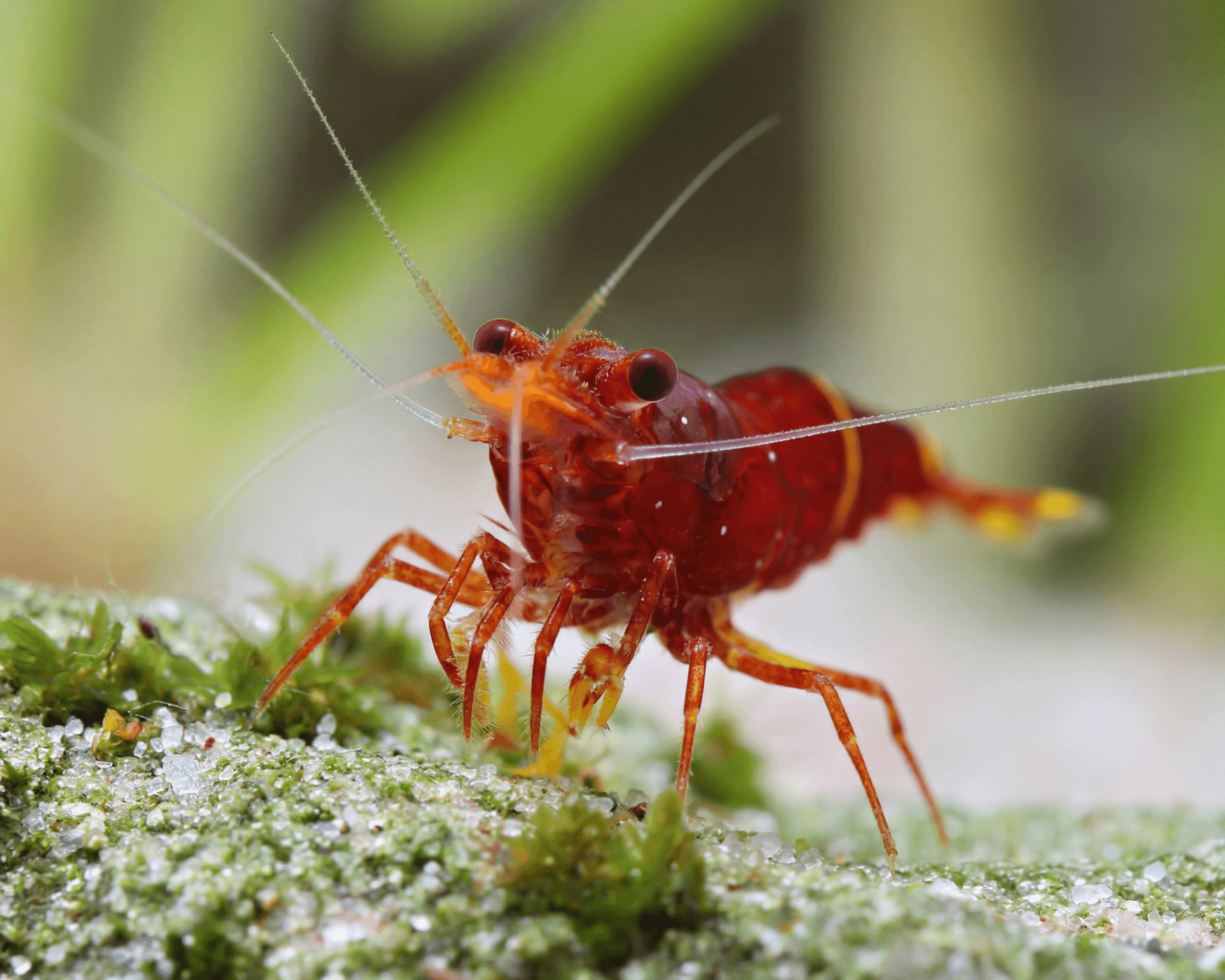
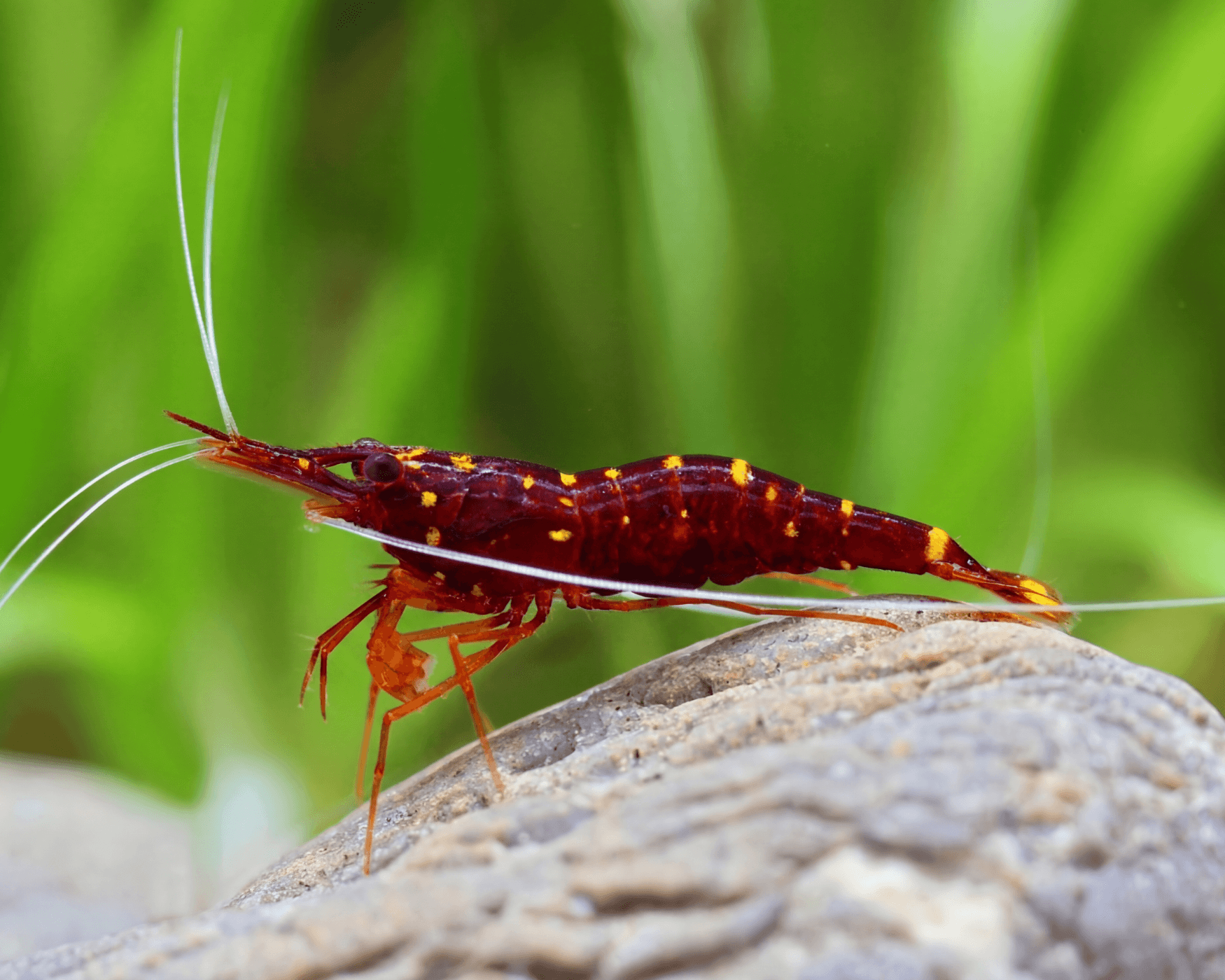
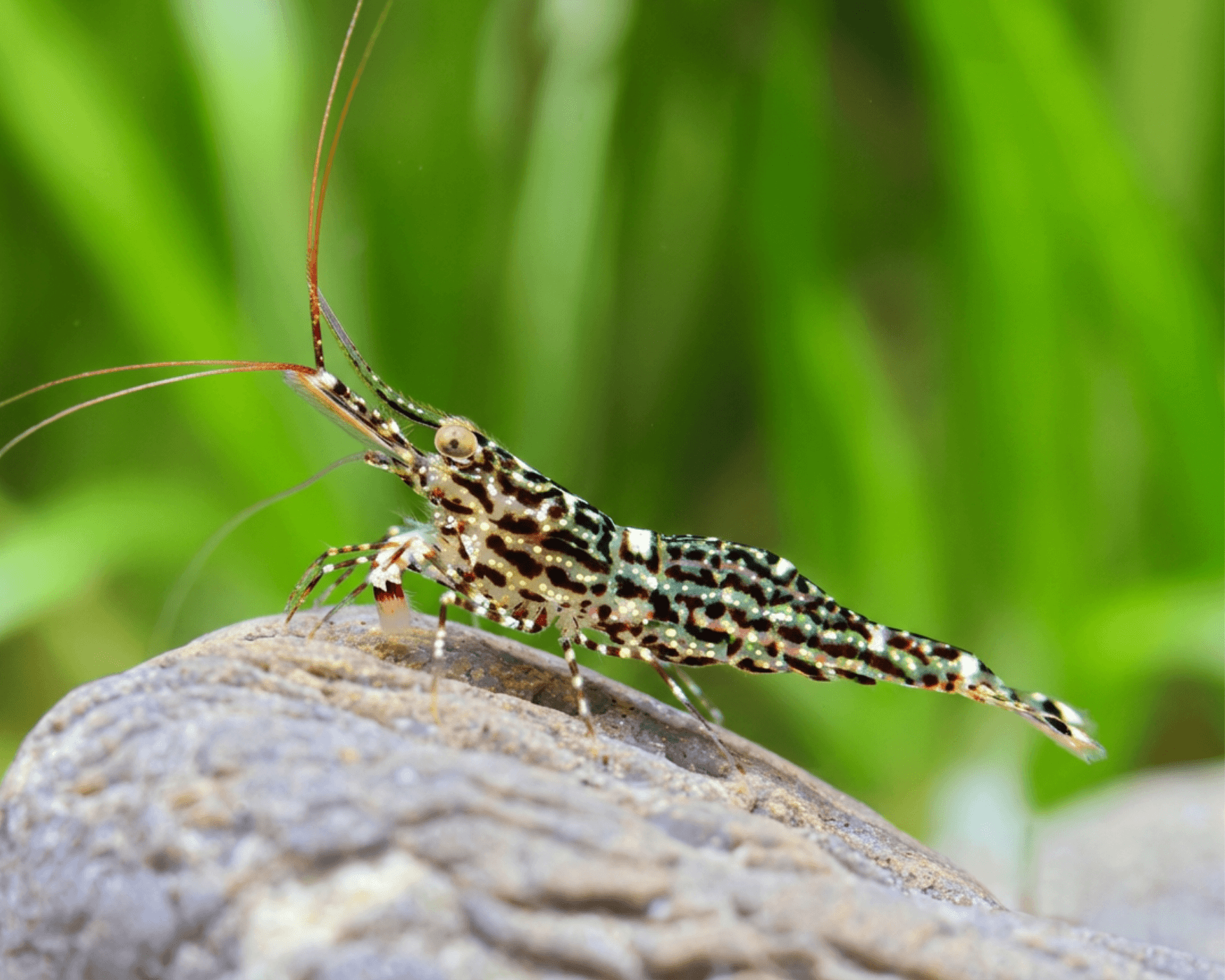
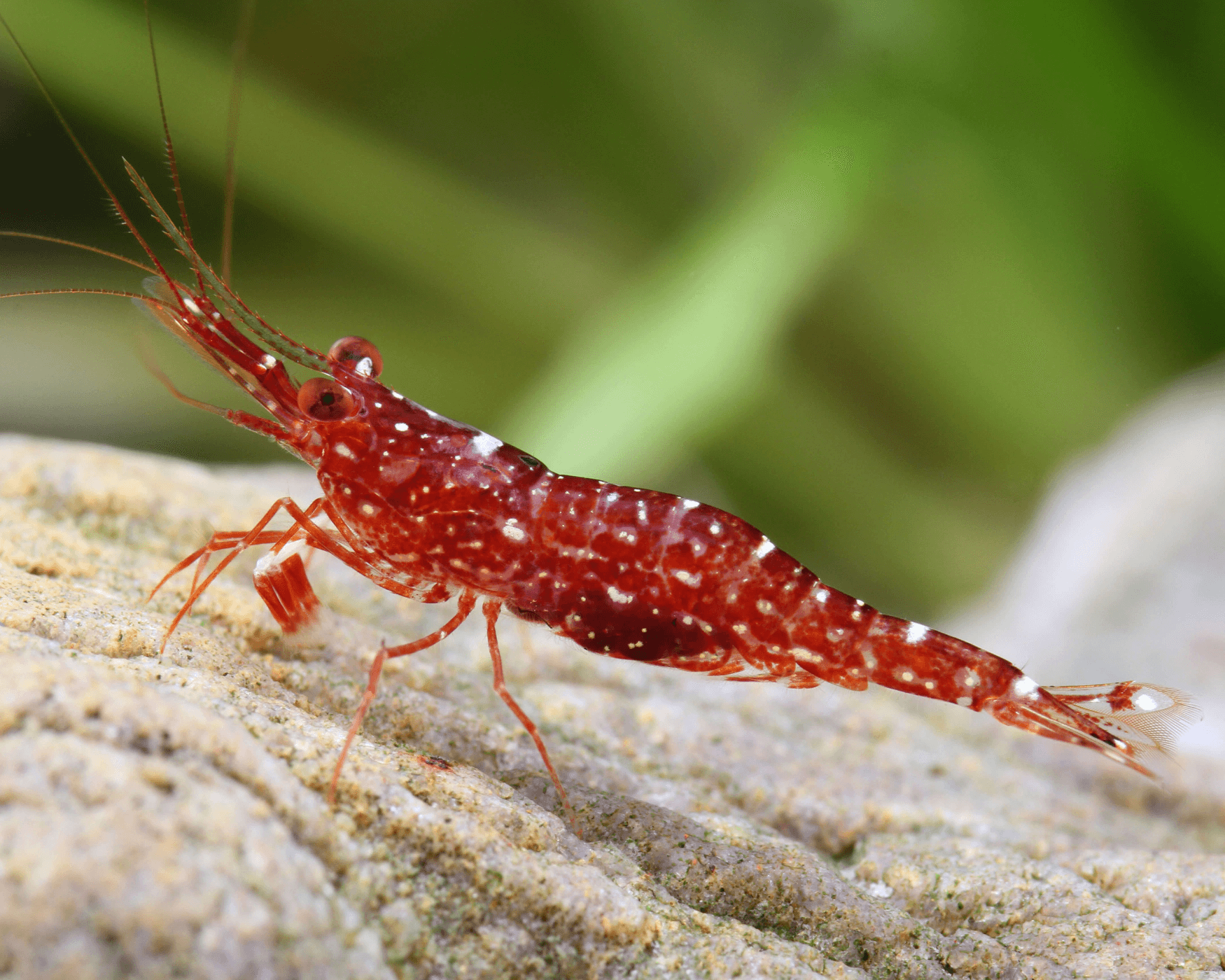
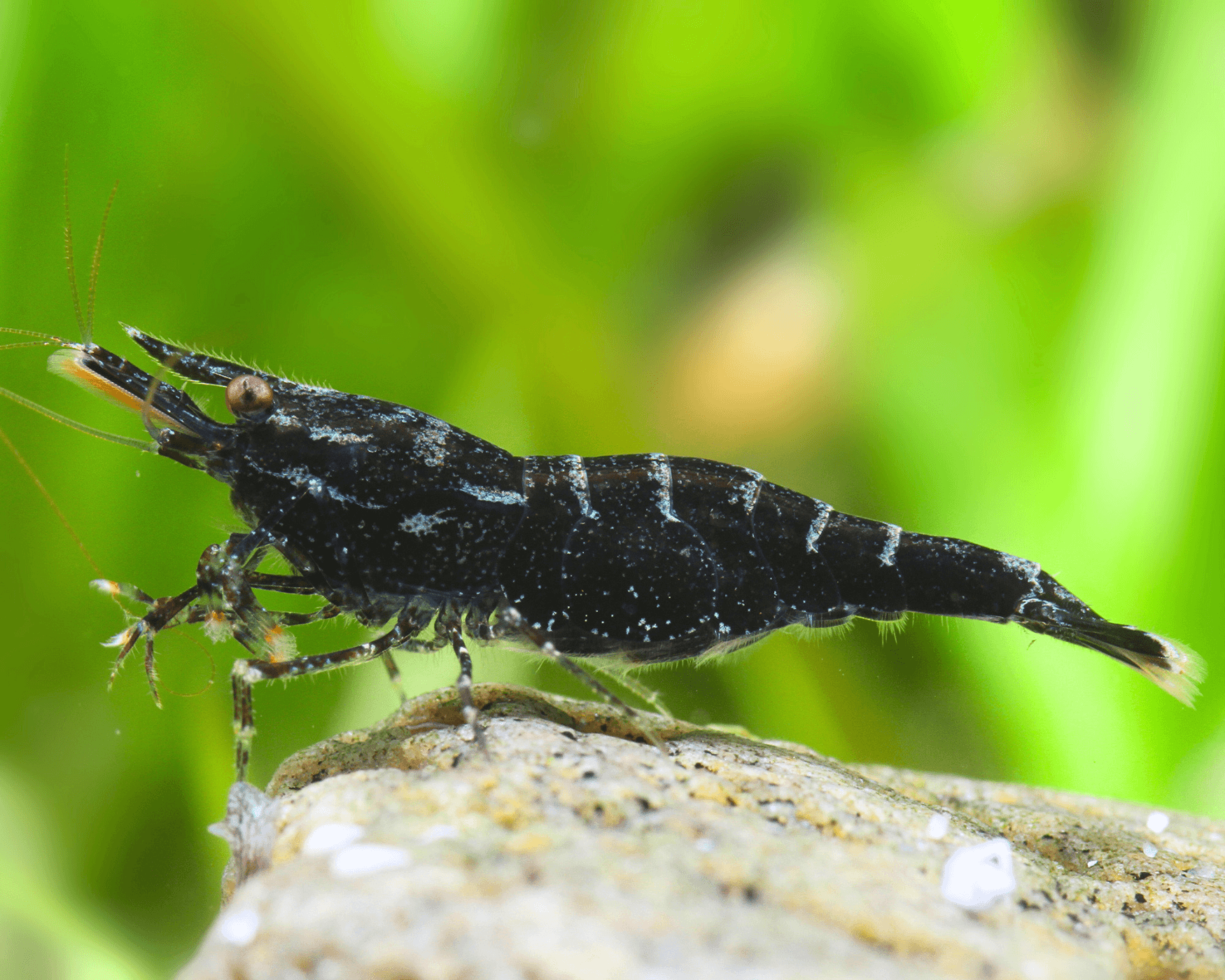
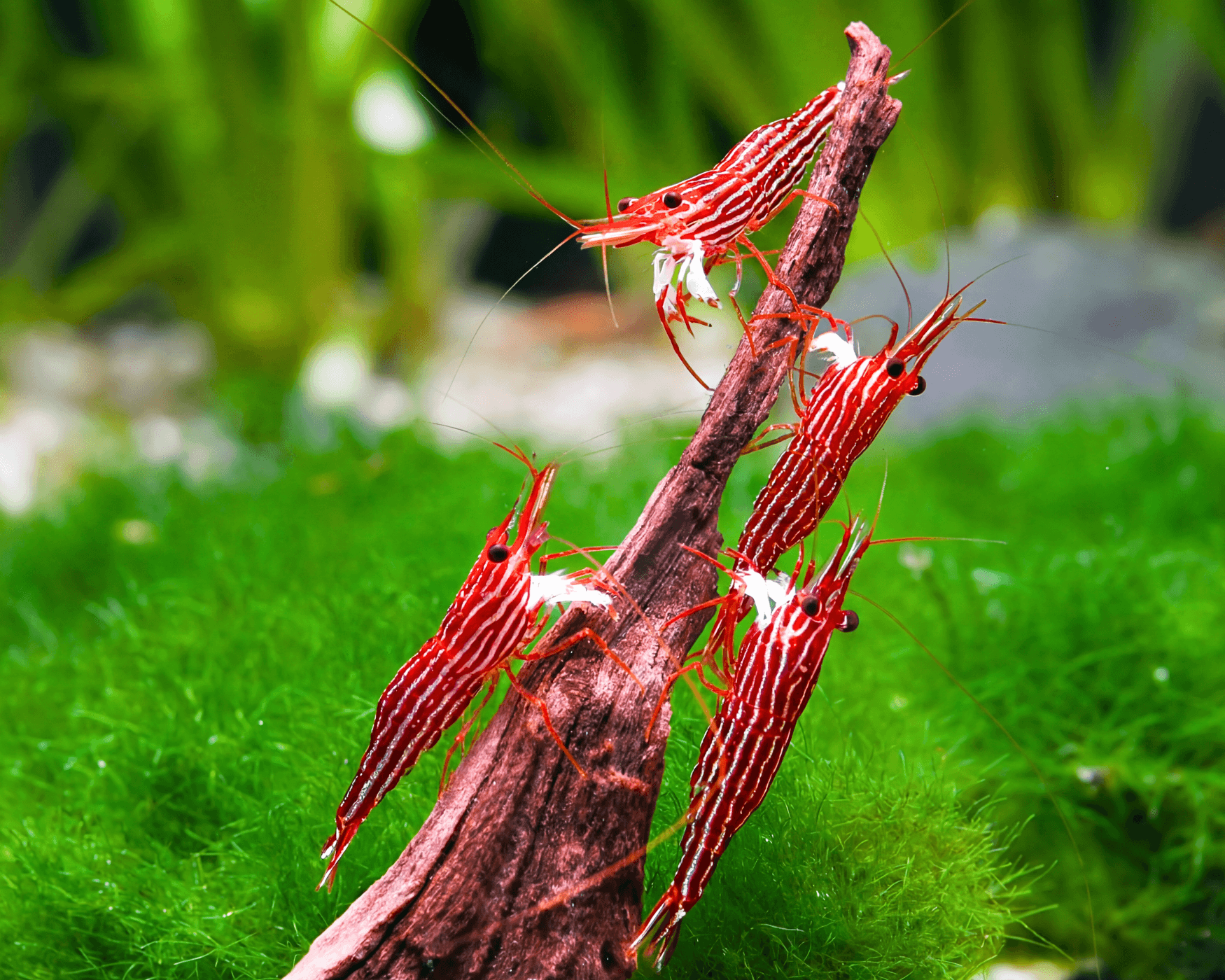
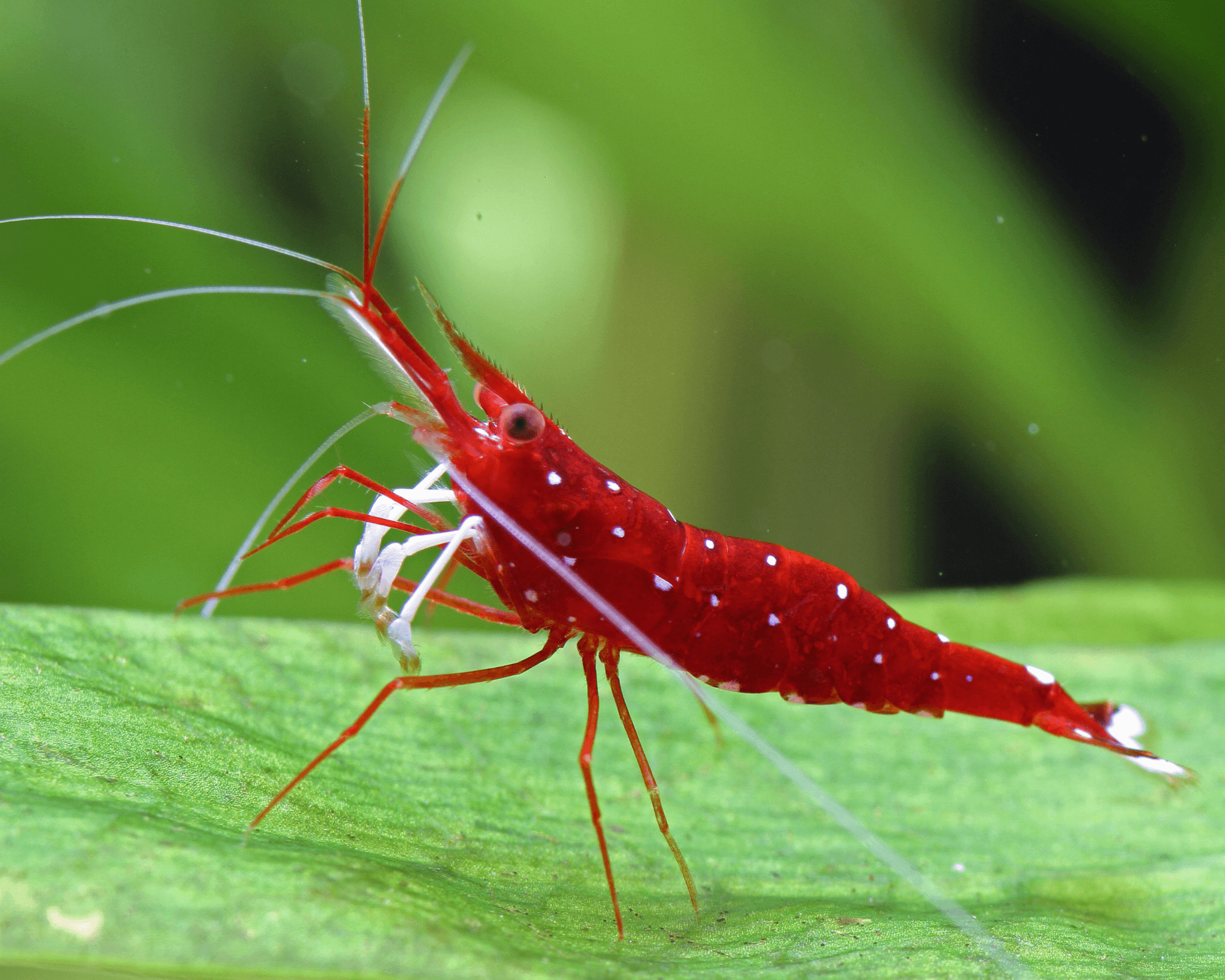
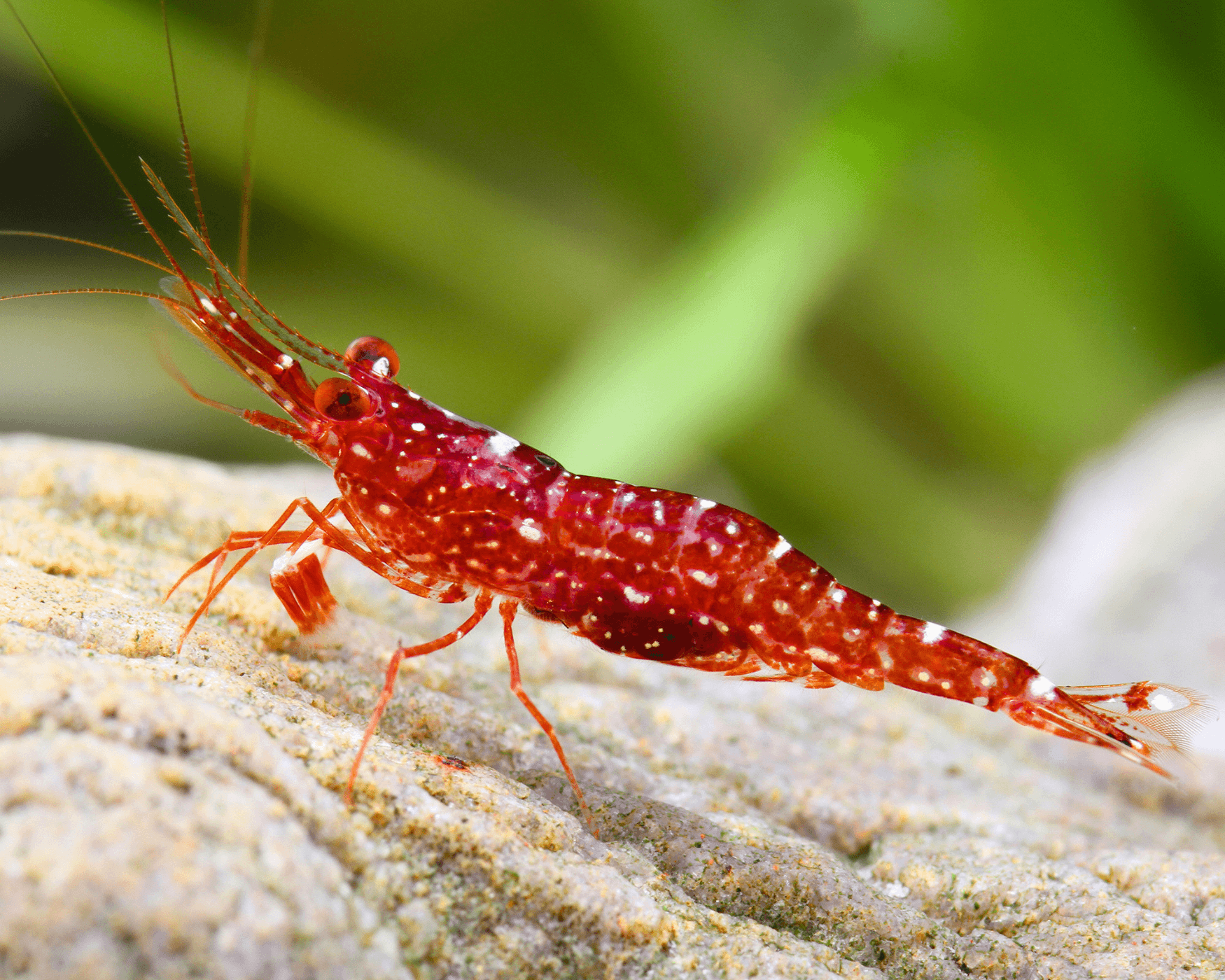
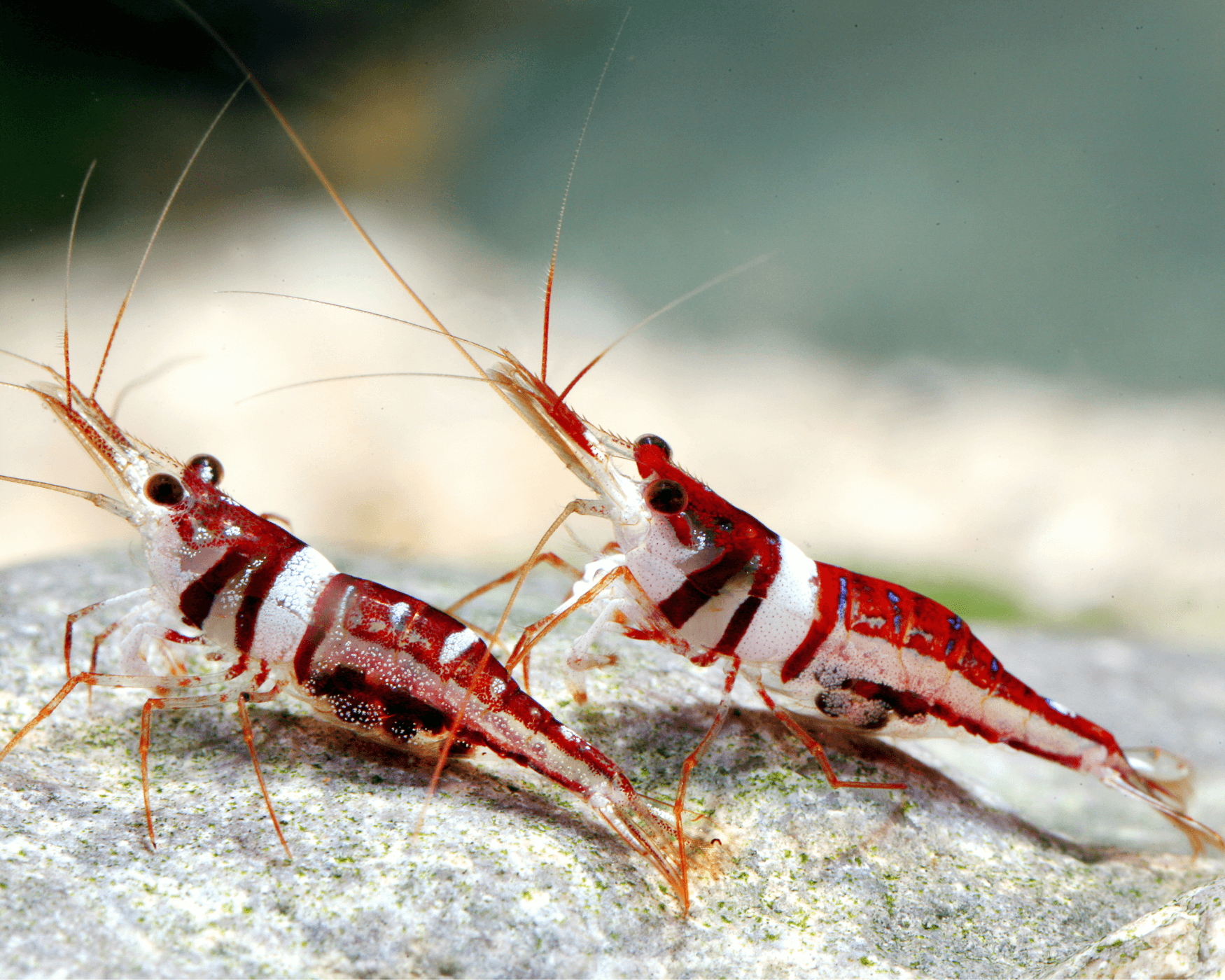
The supplied name places this shrimp in the genus Caridina and species Caridina spinata. It is commonly called the Sulawesi Yellow Ring Shrimp. The reported appearance is a strongly colored body with contrasting yellow rings or bands. Common names can be applied inconsistently in the aquarium trade, and the supplied images alone are not sufficient for definitive identification; specimens should be verified against specialist taxonomic references when accuracy is important.
Natural habitat
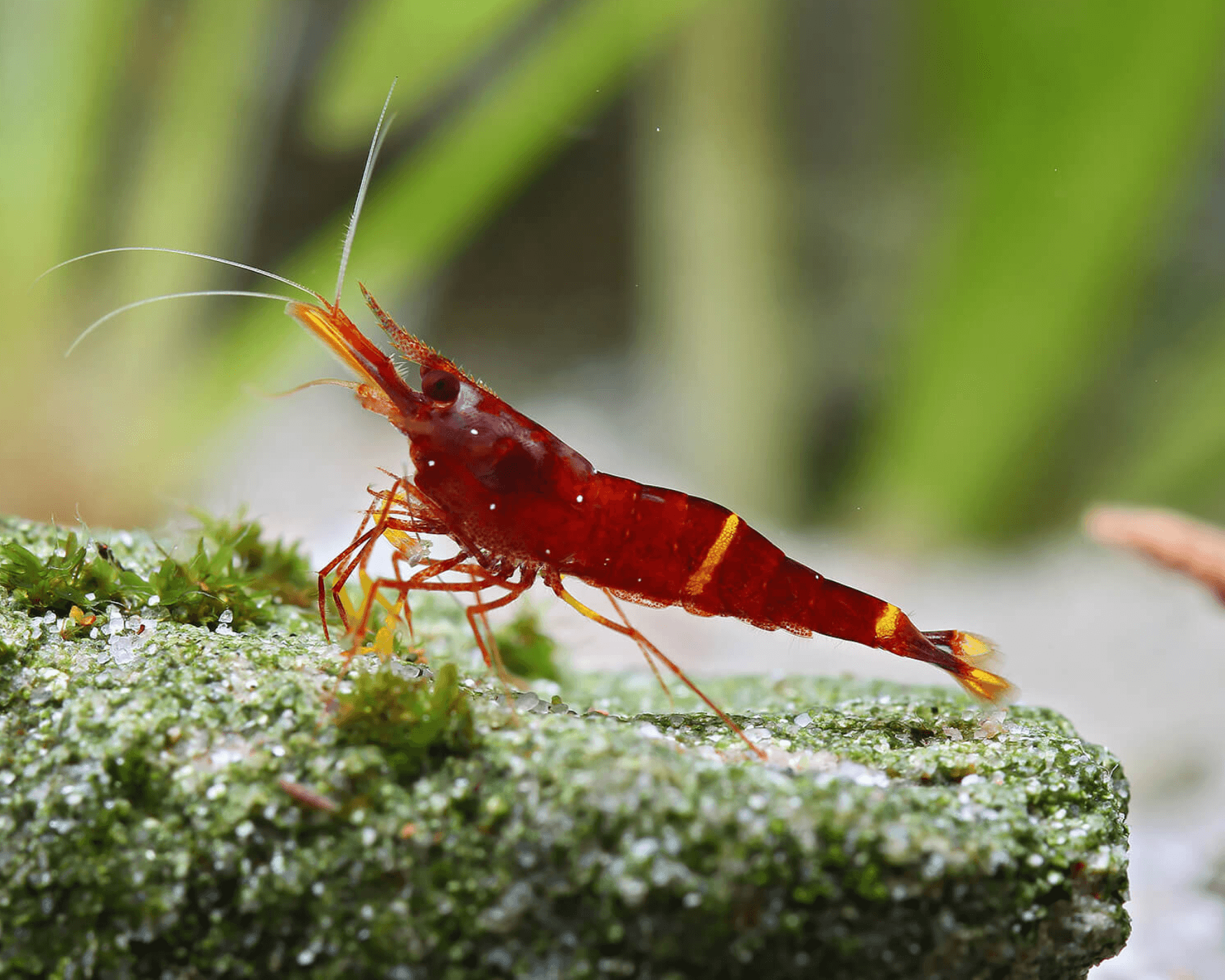
Caridina spinata is associated with the freshwater habitats of Sulawesi, Indonesia, a region known for warm water, alkaline conditions and substantial mineral content. Sulawesi shrimp inhabit rocky or sheltered areas where biofilm and aufwuchs develop. An aquarium should provide mature biological surfaces, gentle circulation, hiding places and excellent oxygenation while avoiding sudden changes in temperature or water chemistry.
Aquarium and water parameters
Use a fully cycled aquarium with stable warm water, efficient filtration and a covered top to reduce escape risk. A practical target is 27–30 °C and pH 7.8–8.5. Maintain moderate-to-high general hardness and carbonate buffering appropriate for Sulawesi shrimp; exact hardness targets vary among keepers and products. Ammonia and nitrite must remain undetectable, nitrate should be kept low, and water changes should closely match the aquarium in temperature and chemistry. Avoid copper-based medications and abrupt adjustments.
Feeding
The shrimp graze on biofilm, microorganisms and algae growing on hard surfaces. Supplement this natural grazing with small portions of a quality shrimp food containing plant matter and appropriate protein. Blanched vegetables or specialized mineral and grazing foods may be offered occasionally. Feed sparingly, remove uneaten food and avoid allowing decomposing food to reduce oxygen or water quality. A mature aquarium is particularly valuable because it supplies continuous low-level grazing.
Tank mates
The safest tank mates are other compatible Sulawesi shrimp of the same species or carefully selected peaceful, non-predatory invertebrates. A species-only aquarium gives the best chance of observing natural behavior and raising young. Avoid fish, crayfish, large snails and boisterous invertebrates that may eat, injure or outcompete the shrimp. Do not mix closely related Caridina forms if maintaining a controlled breeding line is important, because trade identifications and hybridization risks may be uncertain.
Molting and health
Shrimp periodically shed their exoskeleton to grow. They are vulnerable immediately afterward, so provide dense cover such as rock crevices, plants or shrimp shelters and avoid handling them. A complete mineral supply, stable hardness and a varied diet support normal exoskeleton formation. Do not remove a shed exoskeleton unless it fails to decompose or contributes to a water-quality problem. Sudden losses are often associated with unstable parameters, poor acclimation, overheating, low oxygen or contaminants.
Breeding
Breeding requires a mature, stable species aquarium with suitable warmth, mineral availability, biofilm and minimal disturbance. After mating, the female carries eggs beneath the abdomen and fans them with her pleopods until they hatch. Young shrimp need fine grazing surfaces and protection from filtration intakes; use a prefilter sponge or similarly safe intake guard. Keep maintenance gentle around berried females, avoid large chemistry changes and provide only small, clean feedings. Precise reproductive details and population performance can vary among lineages, so the trade name should not be treated as a substitute for verified species identification.
 - 1.webp)
 - 1.webp)

Leave your comments