Identification
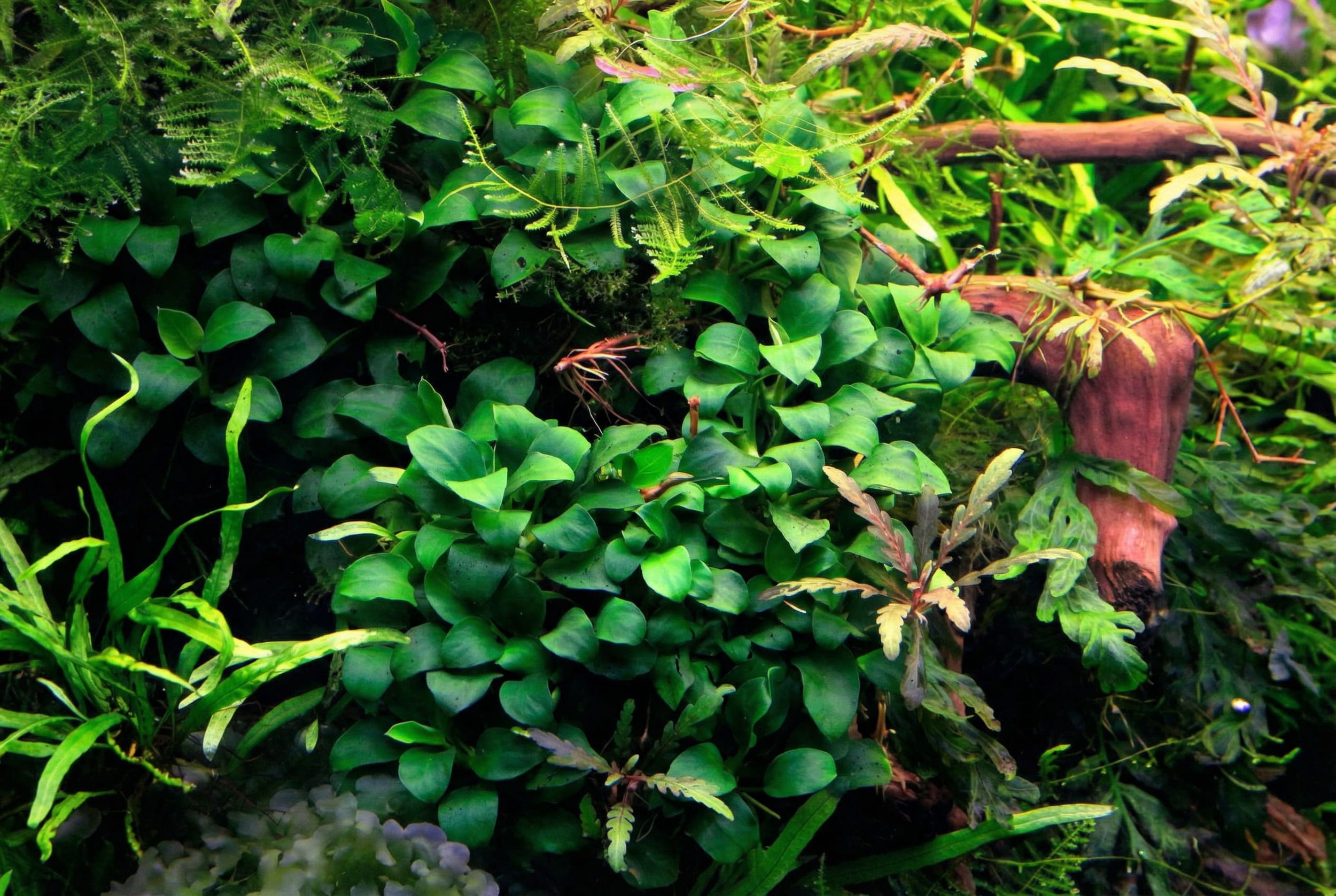
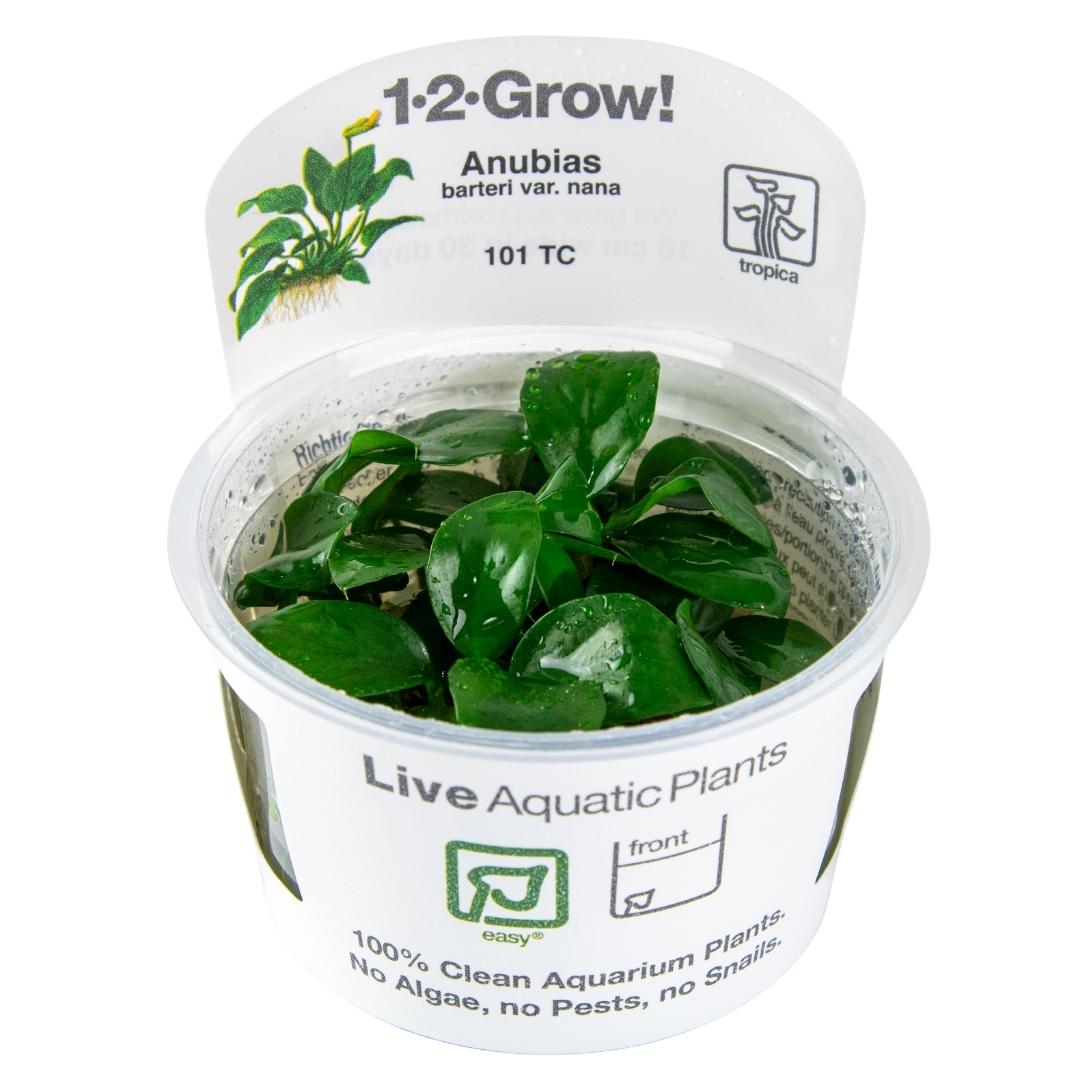
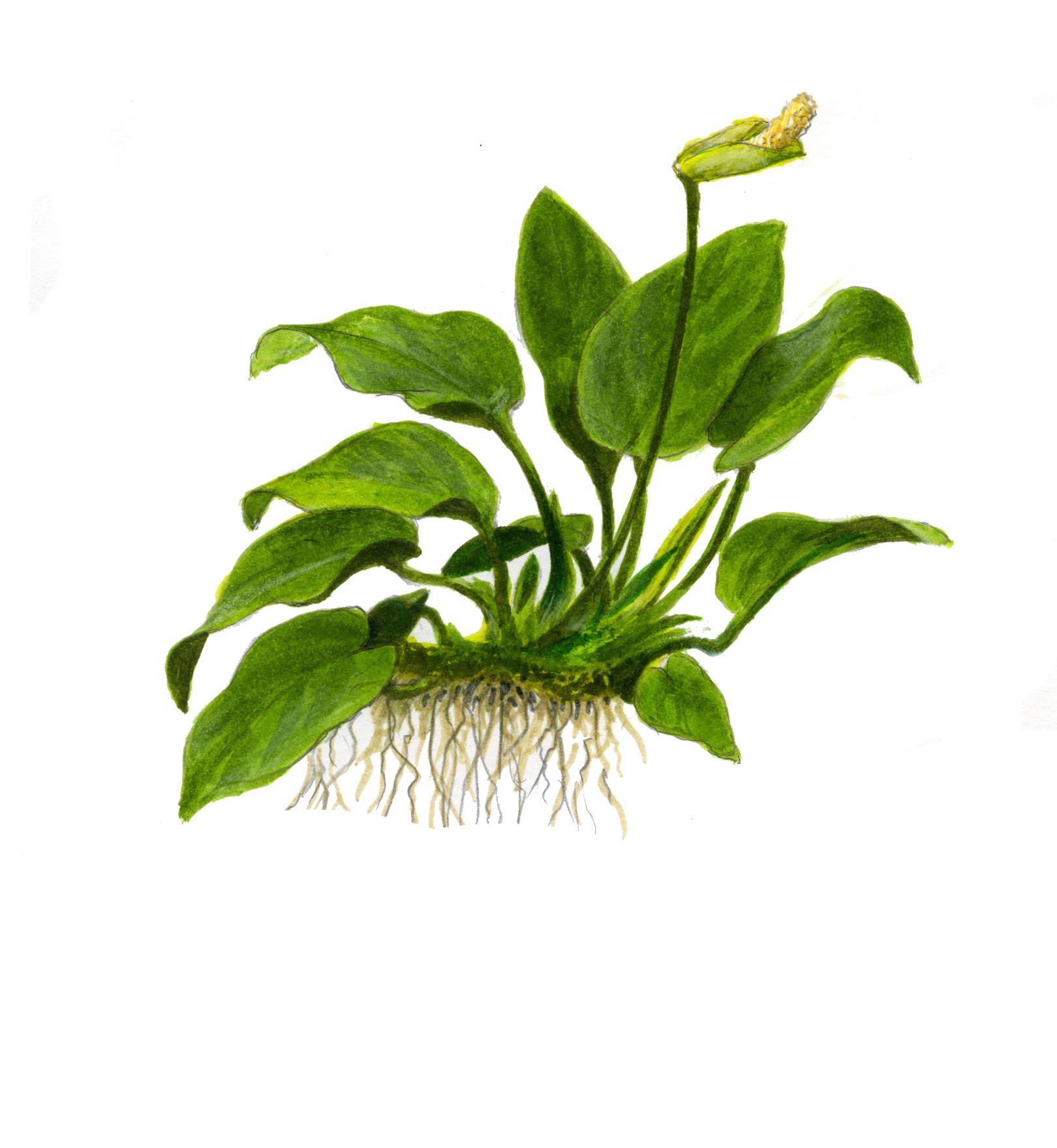
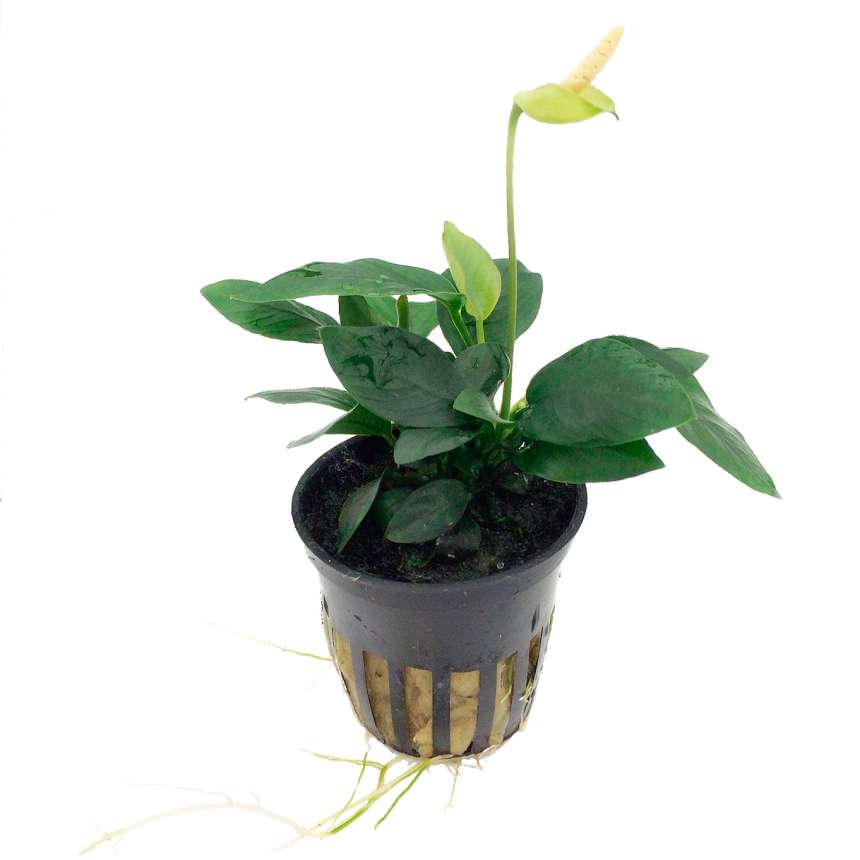
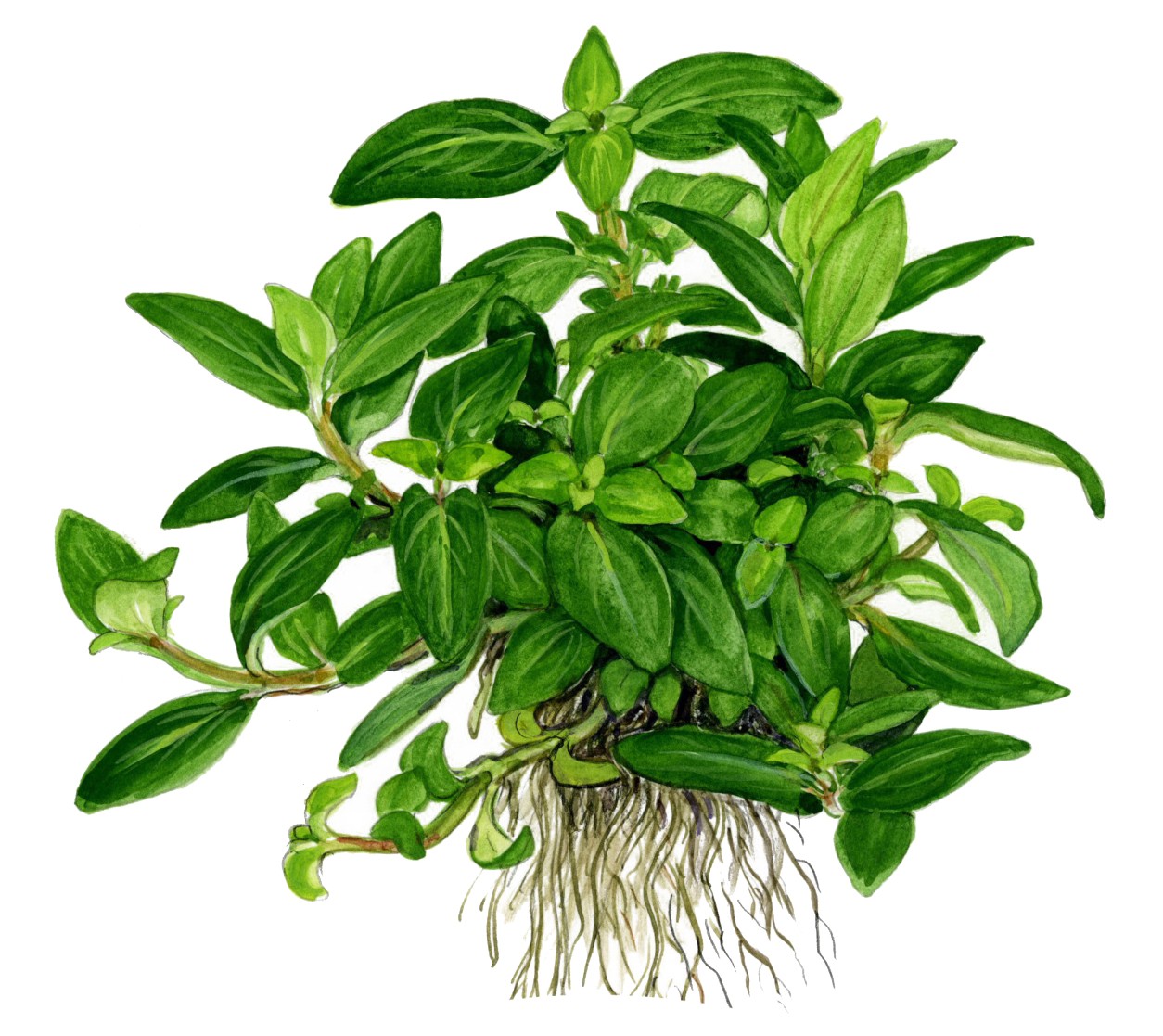
This plant has a creeping rhizome, leathery oval to broadly lance-shaped leaves, and robust individual leaf stalks. The supplied product label names Anubias barteri var. nana. It is treated here conservatively as the common dwarf form of Anubias barteri; a particular commercial clone or cultivar cannot be verified from the available images alone.
Placement and planting
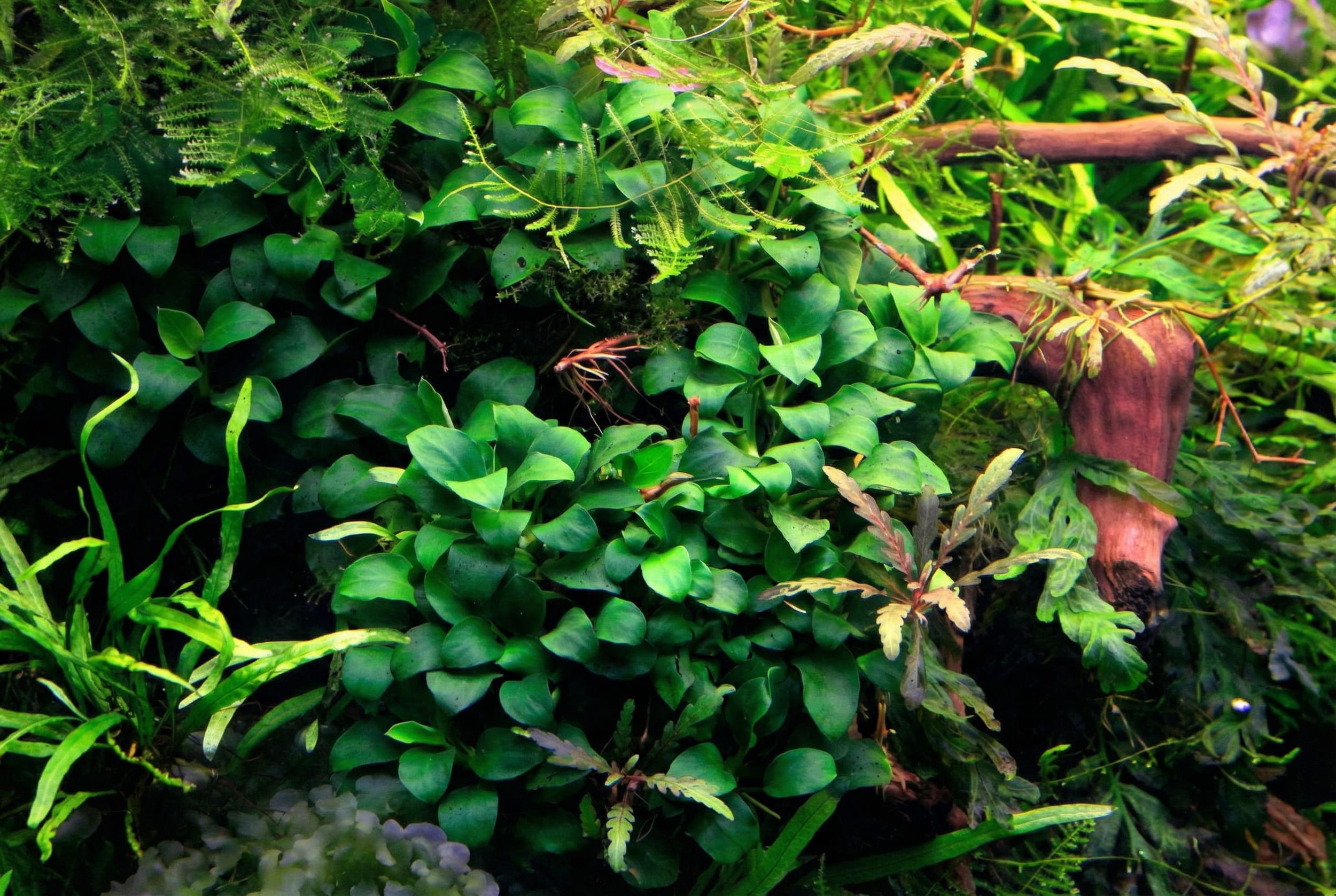
Attach the rhizome to driftwood, rock, or another solid surface with thread or aquarium-safe adhesive. Do not bury the rhizome in substrate, because prolonged burial can cause it to rot. Roots may grow into the substrate after the plant is secured. It suits foreground, sheltered midground, and shaded hardscape positions.
Light and water
Low to moderate aquarium lighting is generally sufficient. Strong light is not required and may encourage algae on the slow-growing leaves. Stable, clean freshwater with regular maintenance supports reliable growth. It tolerates a broad range of normal community-aquarium conditions, but sudden changes and persistent poor water quality should be avoided.
Nutrition and carbon
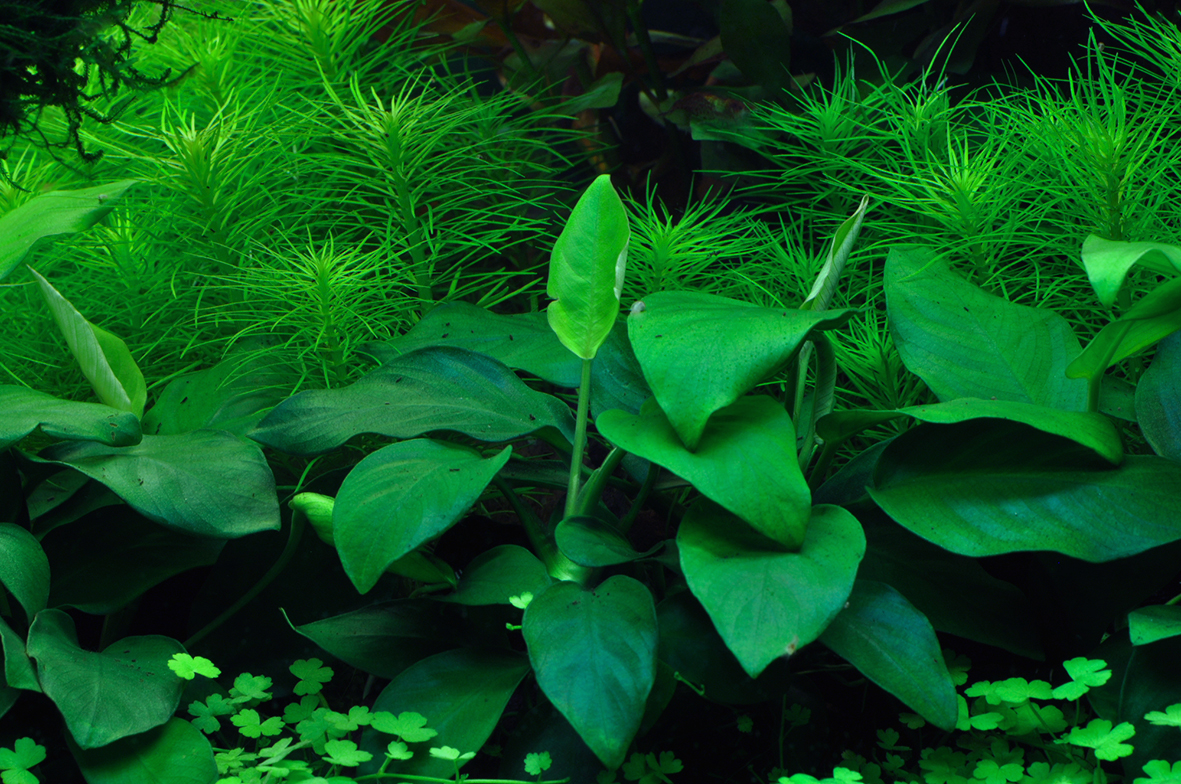
Anubias absorbs nutrients through both its roots and water column. Routine fertilisation with a balanced aquarium fertiliser can support new growth, especially in sparsely stocked aquariums. Added carbon dioxide is not essential, although consistent supplementation may improve growth. Avoid placing the plant directly under intense light or in stagnant areas where debris collects.
Propagation and maintenance
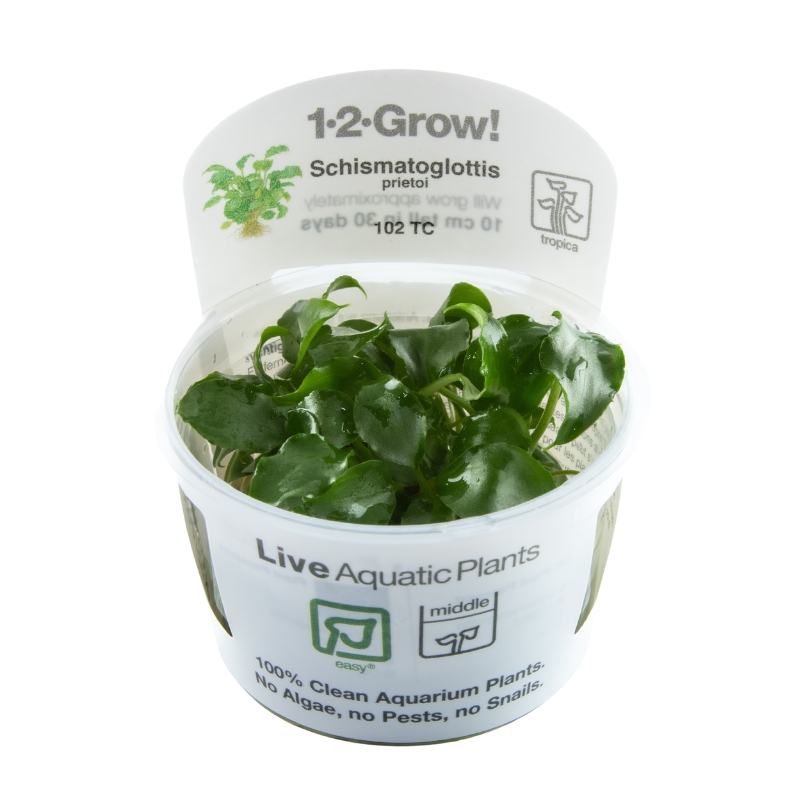
Propagation is normally by cutting the rhizome into sections, with each section retaining roots and several healthy leaves. New leaves appear slowly, so pruning should be limited to damaged or heavily algae-covered foliage. Remove old leaves cleanly with scissors and keep the rhizome exposed. Tissue-culture plants should be rinsed free of growing gel before planting.

Leave your comments