 - 1.webp)
Taxonomy and identification
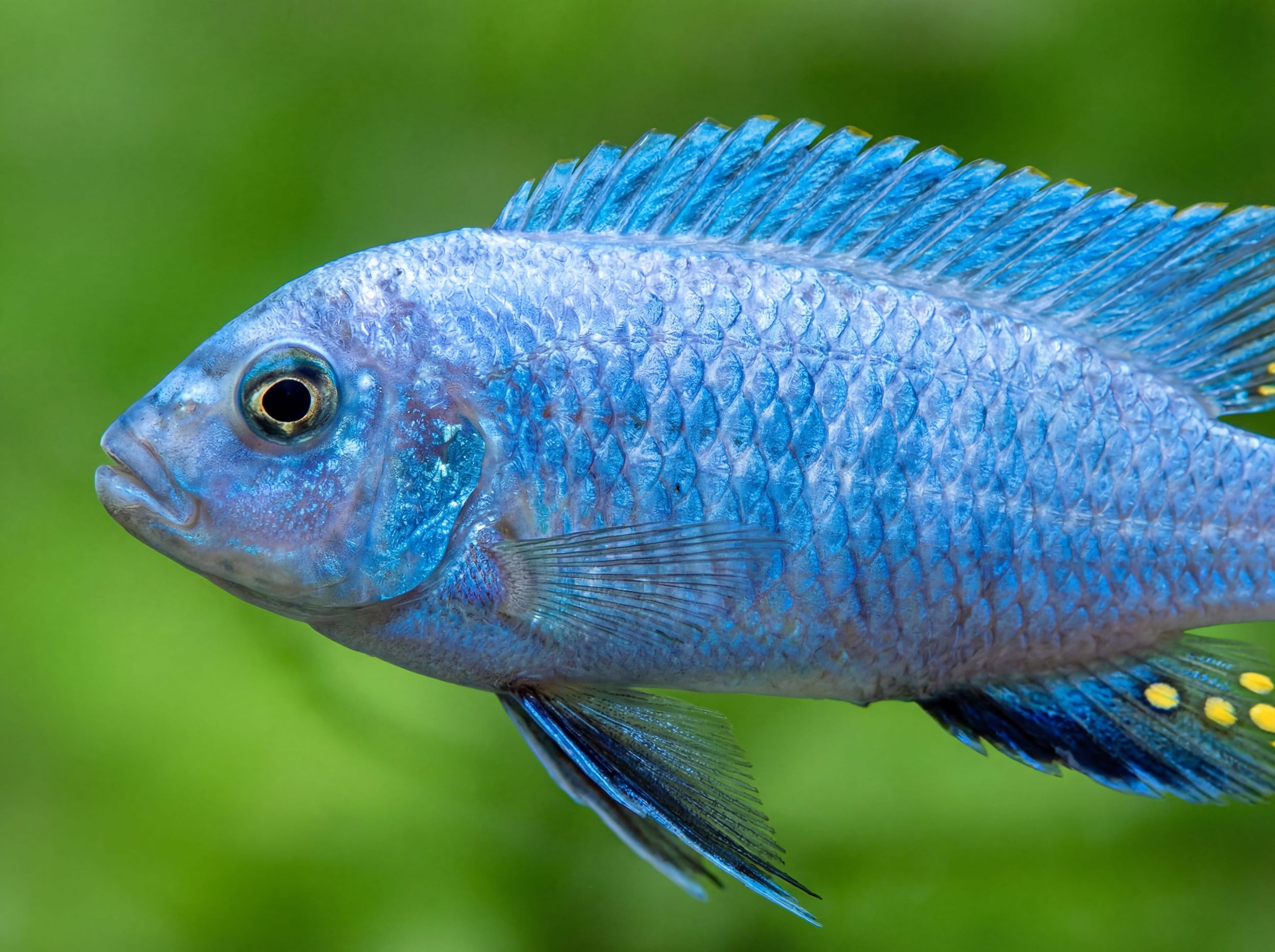
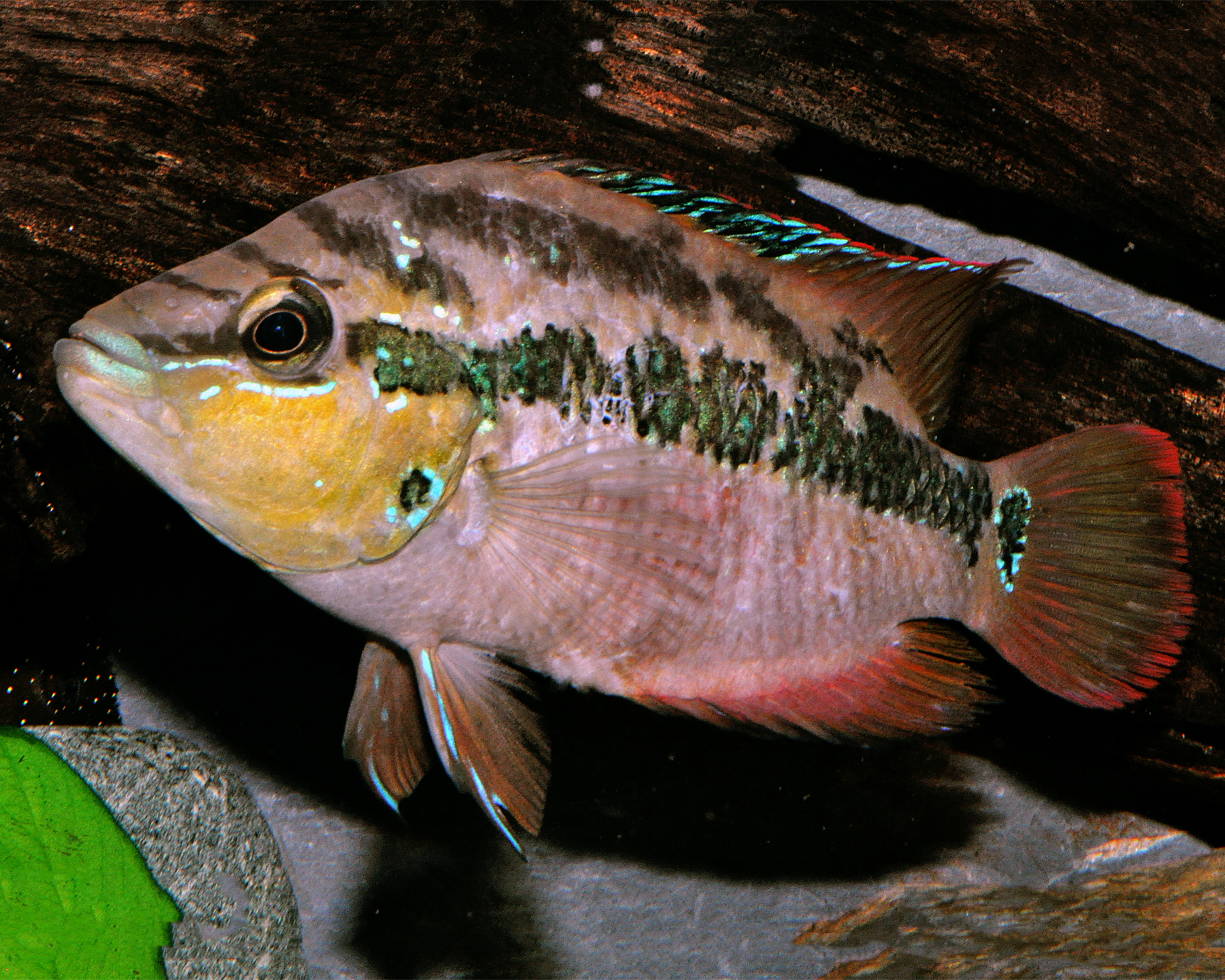
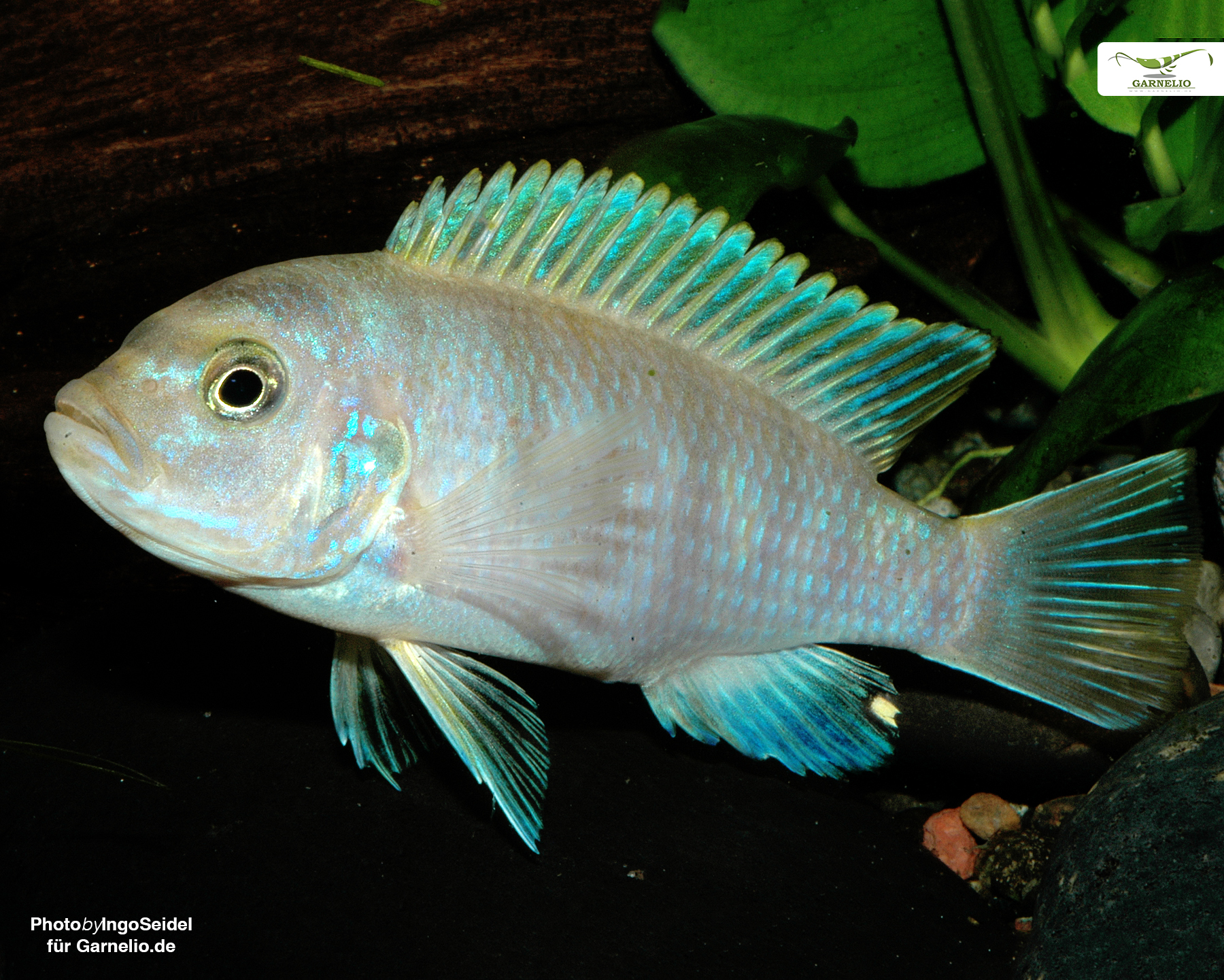
This fish is widely sold under the name Pseudotropheus estherae. Current aquarium and taxonomic references commonly place it in the genus Maylandia, as Maylandia estherae. It belongs to the family Cichlidae and the mbuna group of rock-associated Lake Malawi cichlids. Trade names such as Red Zebra and Blue Zebra can be inconsistent, so body color alone should not be used for exact identification. The supplied images appear consistent with a blue color form, but image-based identification cannot confirm locality or genetic line.
Distribution and habitat
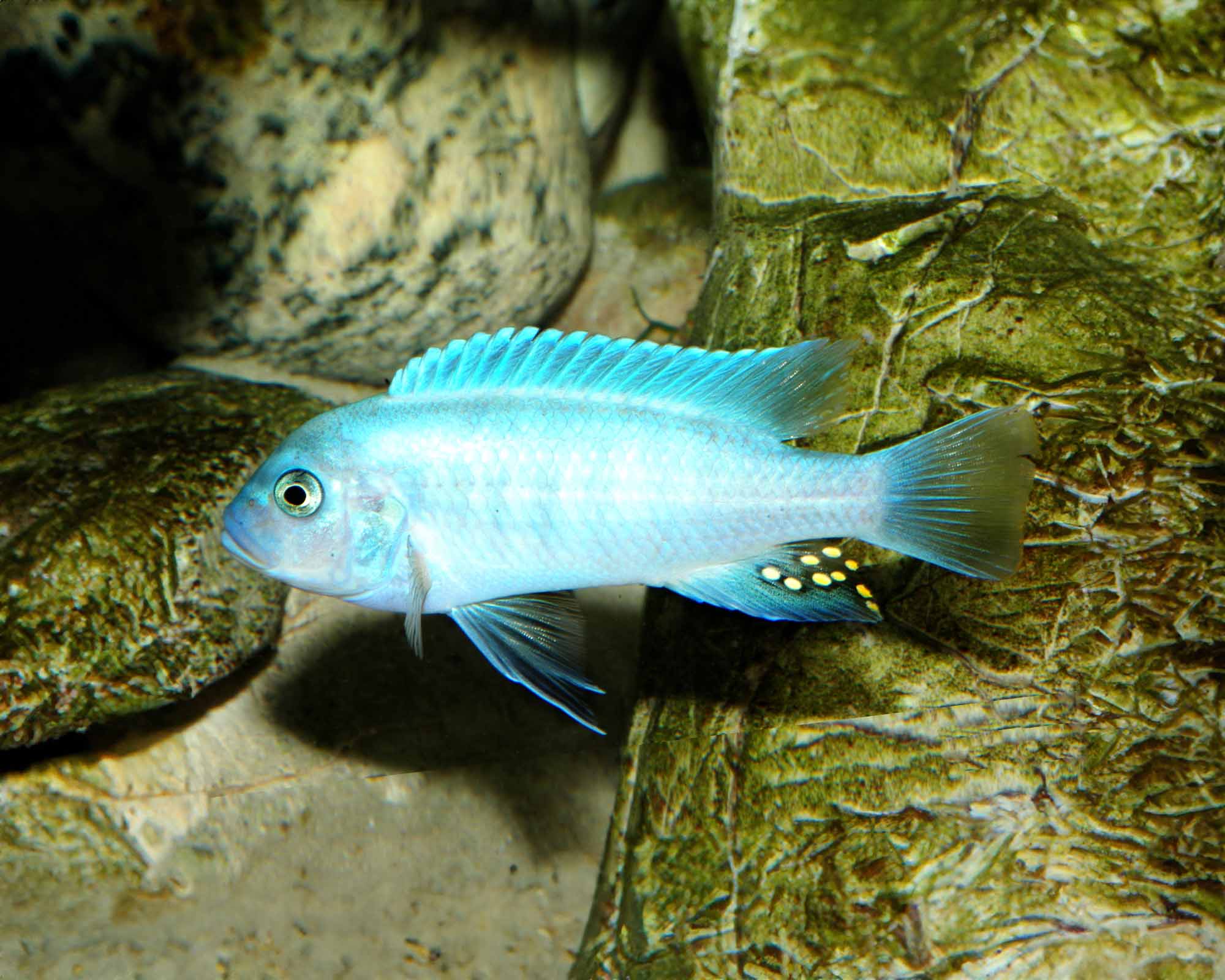
Maylandia estherae is endemic to Lake Malawi in East Africa. It inhabits shallow, rocky shoreline environments where it grazes algae and aufwuchs from rock surfaces. Aquariums should therefore provide abundant rockwork, caves and visual barriers, with open areas for swimming and a stable, well-oxygenated alkaline water chemistry.
Behavior and temperament
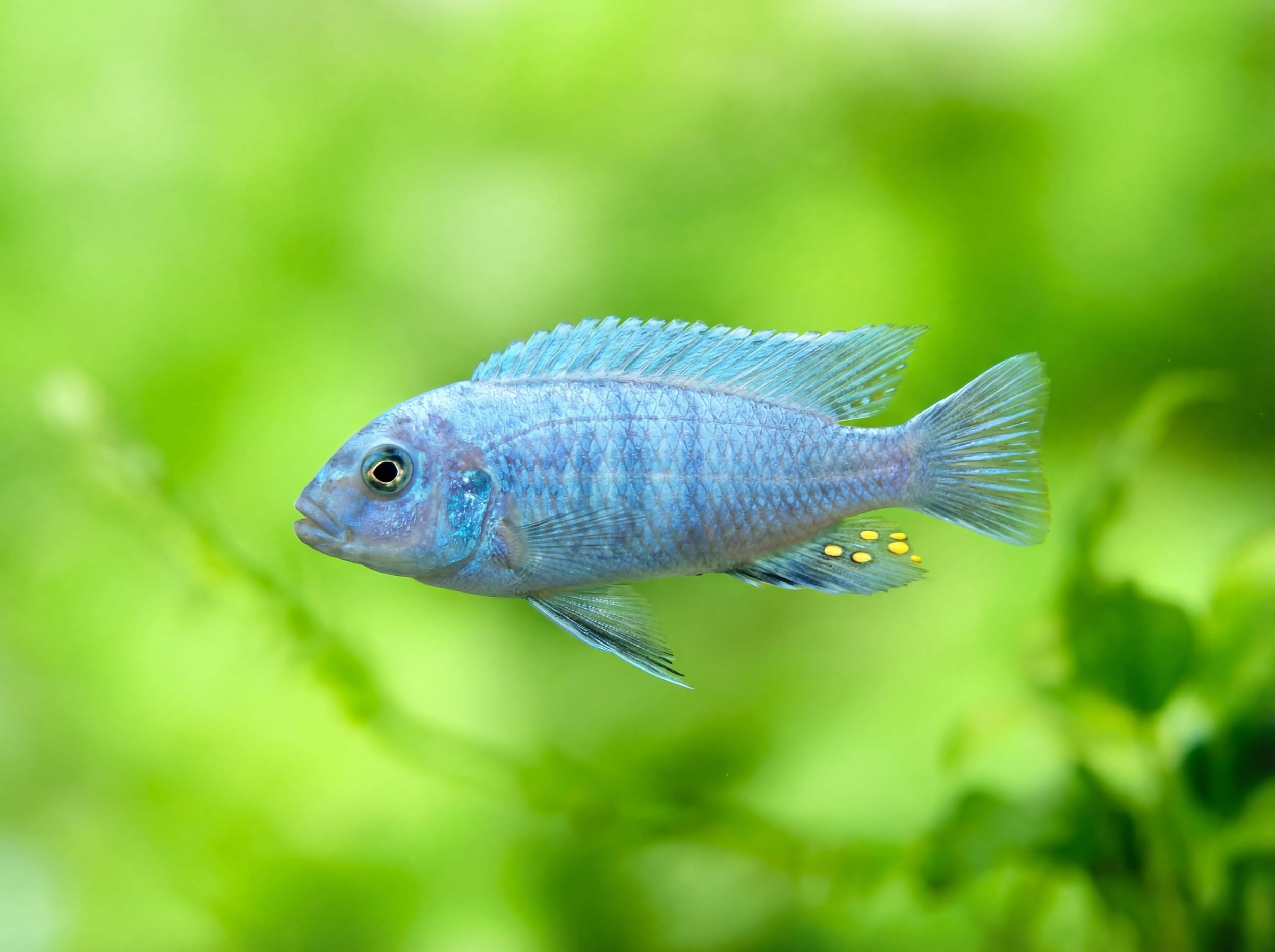
This is a strongly territorial mbuna. Males defend feeding and spawning areas, and aggression can increase when space, shelter or females are limited. A group described as two females and one male may work temporarily, but the male can focus excessive attention on the available females. Larger groups, careful aquascaping and frequent observation are preferable. Remove or separate any fish that is persistently injured or unable to feed.
Tank size and aquascape
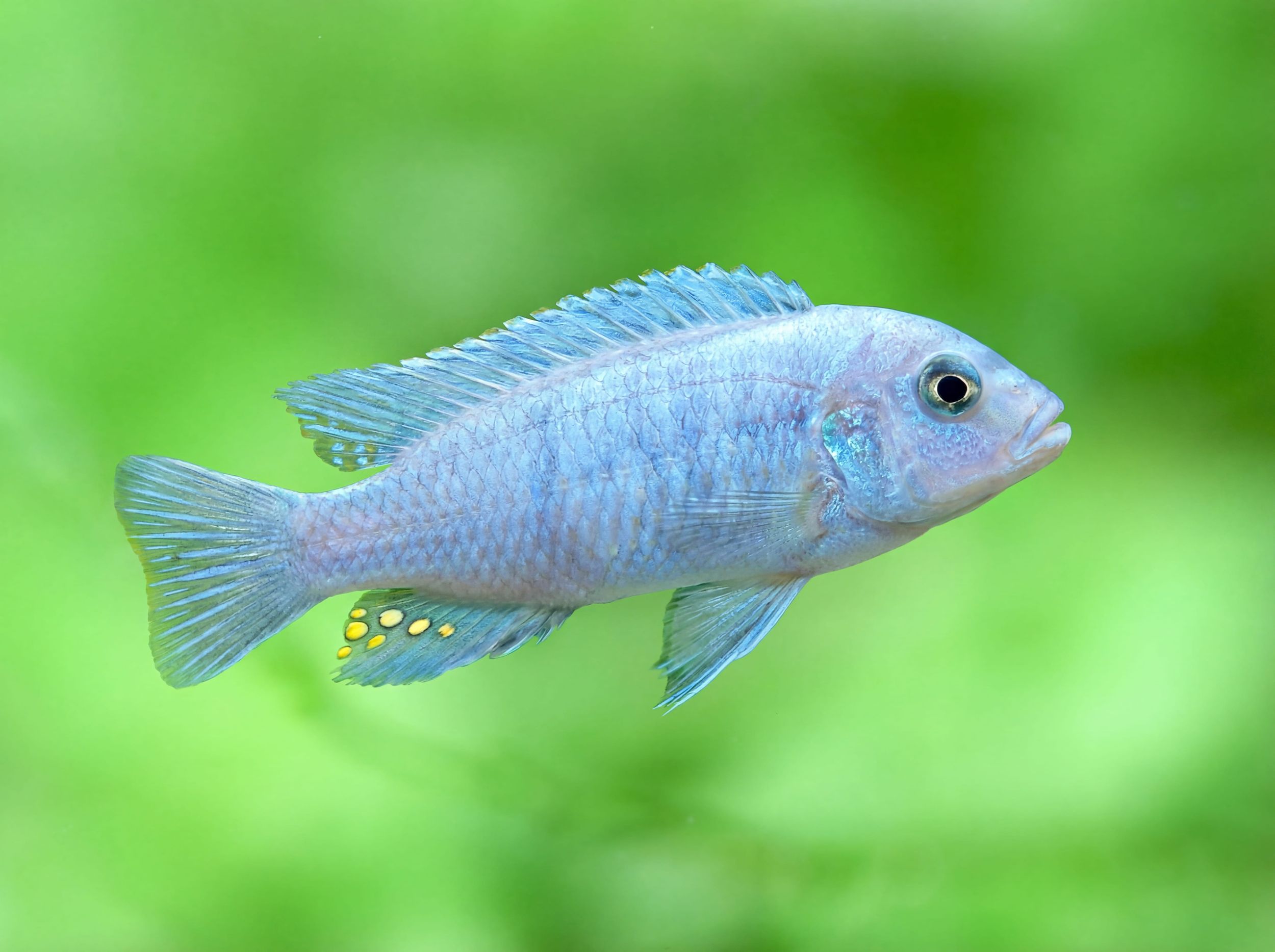
A practical minimum for a trio is about 200 litres, provided the aquarium has substantial floor area and strong filtration; a larger aquarium is safer for a long-term mbuna community. Use a sand or fine-gravel substrate and arrange rounded rocks into caves and broken sightlines, placing them securely on the tank base before adding substrate. Leave swimming space and avoid sharp décor. A tight-fitting lid is recommended.
Water parameters
Maintain warm, hard, alkaline water at 24-28 °C and pH 7.6-8.6. Stability is more important than pursuing a precise number. Ammonia and nitrite must remain undetectable, while nitrate should be controlled with regular partial water changes and moderate stocking. Strong biological filtration, good surface agitation and dependable oxygenation are important for an active mbuna aquarium.
Diet and feeding
Feed a predominantly herbivorous diet based on quality spirulina or other algae-containing flakes and pellets. Small portions offered two or three times daily are preferable to one large feeding. Supplement occasionally with suitable vegetable matter, such as blanched leafy greens. Avoid making meaty foods, mammal-derived foods or rich frozen foods a regular part of the diet, because an inappropriate diet may contribute to digestive problems commonly associated with herbivorous Malawi cichlids.
Compatibility
Keep this species with robust Lake Malawi mbuna of similar size and comparable water requirements. Compatible stocking depends on aquarium volume, sex ratios, rockwork and individual temperament; it is not reliably peaceful. Avoid delicate community fish, slow feeders and peaceful soft-water species. Do not mix with very similar color forms if preventing hybridization is important, and do not combine unrelated African lake communities solely because their water chemistry overlaps.
Breeding
This species is a maternal mouthbrooder. During courtship, the male defends a site and the female collects fertilized eggs into her mouth. She incubates the brood and releases free-swimming fry after several weeks, though the exact duration varies with temperature and conditions. Provide caves, visual barriers and high-quality algae-based food. A female carrying eggs may be left with the group if she is safe, or transferred to a separate mature aquarium; moving her can cause stress and premature release. Fry can be raised on finely crushed spirulina-based food and small suitable fry foods.
 - DNZ 4 cm - 1.webp)
 - 1.webp)
 - DNZ 4 cm - 1.webp)
Leave your comments