It’s time to help contribute for biggest aquarium gallery online

SUBMIT HEREVIEW GALLERY

Hyphessobrycon herbertaxelrodi (Black Neon Tetra)

Overview

The Black Neon Tetra (Hyphessobrycon herbertaxelrodi) is an incredibly popular freshwater fish in the aquarium hobby. Despite its common name, it is not in the same genus as the standard Neon Tetra, though it shares a similar torpedo-like body and schooling nature. Its hardiness, stunning contrast, and peaceful demeanor make it an excellent choice for both beginner and experienced aquarists.

Distribution and Habitat

This species is endemic to the Paraguay River basin in southern Brazil. In the wild, they inhabit small tributaries, flooded forests, and slow-moving creeks. These waters are often tinted brown with tannins from decaying organic matter, creating a slightly acidic, soft-water environment shaded by dense canopy cover.

Description of Black Neon Tetra

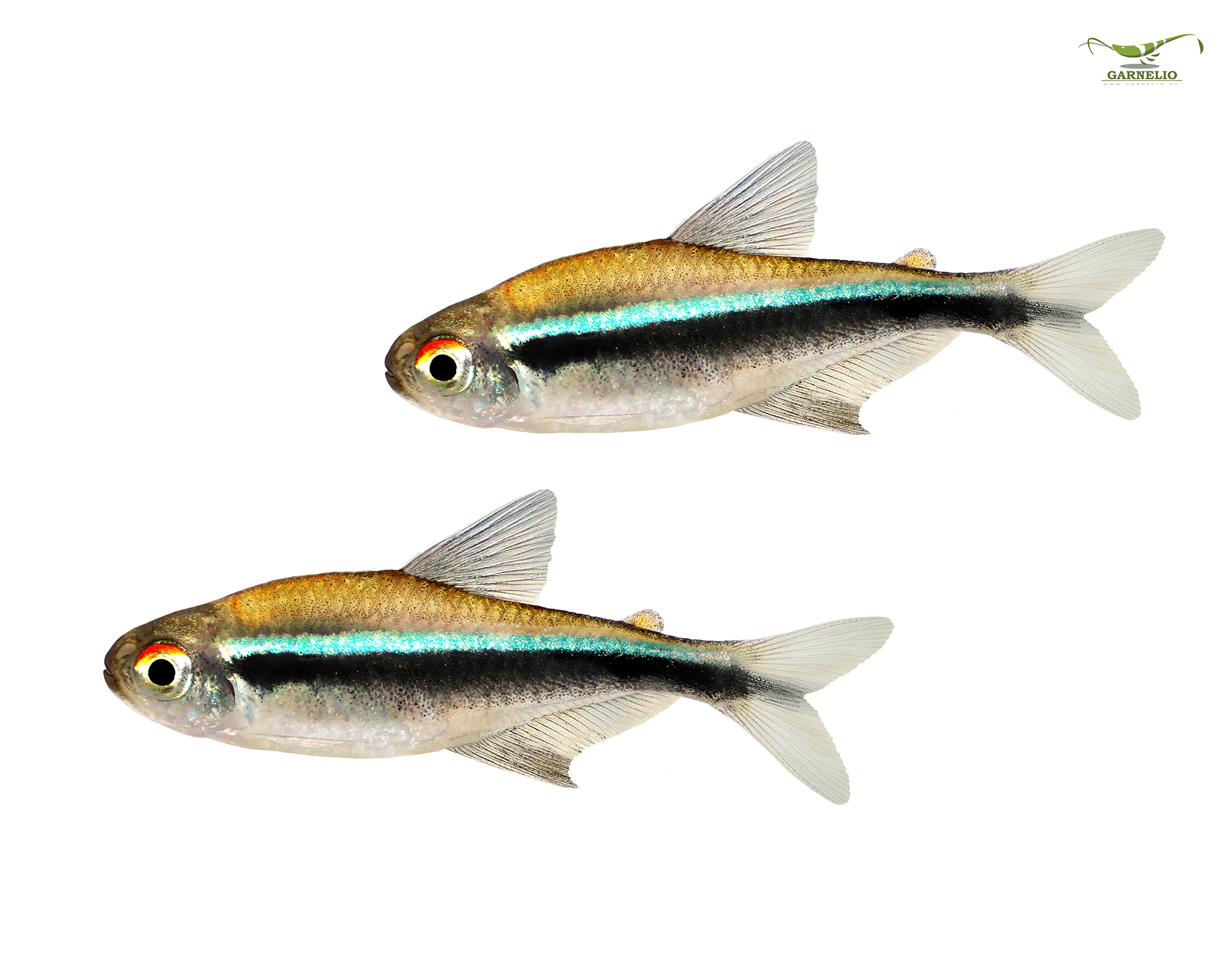
Image of neon black hyphessobrycon herbertaxelrodi dnz

The Black Neon Tetra is admired for its subtle yet striking beauty, which stands out brilliantly against the dark substrate and green foliage of a planted tank.

Body shape:

They possess an elongated, somewhat laterally compressed, torpedo-shaped body that is typical of many small characins.

Color:

The defining feature is a bold, velvety black horizontal stripe running from behind the gills to the base of the tail. Immediately above this is a brilliant, iridescent greenish-white or silvery stripe. The belly is silvery-white, and the back is a muted brownish-olive.

Barbels:

Like all tetras, this species does not possess any barbels.

Snout:

They have a short, rounded snout with a small, terminal mouth designed for picking small food particles from the water column.

Eyes:

The eyes are relatively large and feature a distinctive, bright red or fiery orange crescent in the upper part of the iris.

Fins:

The fins are mostly transparent with a slight yellowish or whitish tint. They possess a small adipose fin between the dorsal and caudal fins.

The Tail:

The caudal fin (tail) is deeply forked and largely transparent, aiding in their quick, darting swimming motions.

Temper

Black Neon Tetras are exceptionally peaceful and timid. They do not bother other fish and are easily intimidated by larger or more aggressive tank mates.

Sociality

They are highly social, obligate schooling fish. To feel secure and display their best colors and natural behaviors, they must be kept in groups of at least 6 individuals, though larger schools of 10 to 20 or more are highly recommended.

Activity

These tetras are active mid-to-top level swimmers. They will constantly dart around the aquarium, often schooling tightly when feeling threatened and dispersing slightly when relaxed.

Keeping and Caring for Black Neon Tetra

Caring for Black Neon Tetras is relatively straightforward. They are adaptable to a range of conditions, making them a staple for community aquariums.

Tank size:

A minimum tank size of 60 liters (15 gallons) is recommended to provide adequate swimming space for a proper school.

Water Parameters:

While adaptable, they thrive best when kept in conditions that mimic their natural South American habitats.

Temperature

Maintain the water temperature between 23-27°C (73-81°F).

pH

They prefer slightly acidic to neutral water, with a pH range of 5.5 to 7.5.

Hardness

Soft to moderately hard water is ideal, generally between 2 and 15 dGH.

Ammonia, Nitrite, Nitrate

Ammonia and Nitrite must always be at 0 ppm. Nitrates should be kept as low as possible, ideally below 20 ppm, through regular water changes.

Lighting

Dim to moderate lighting brings out their iridescent stripes best. Floating plants can be used to diffuse bright aquarium lights.

Water flow

They prefer gentle to moderate water flow, mimicking the slow-moving streams of their native habitat.

Decorations and Plants

A heavily planted tank with dark substrate provides the best backdrop for their colors. Adding driftwood and dried Indian almond leaves can create a natural blackwater environment while releasing beneficial tannins.

Diet

Black Neon Tetras are omnivorous micro-predators. In captivity, they eagerly accept high-quality crushed flake foods and micro-pellets. To ensure optimal health and coloration, supplement their diet with live or frozen foods such as daphnia, brine shrimp, and bloodworms.

Some Feeding Tips

Feed them small amounts 1 to 2 times a day, offering only what they can consume within a couple of minutes. Because they have small mouths, ensure all food particles are appropriately sized.

Breeding

Breeding is possible in a separate breeding tank. They are egg scatterers and exhibit no parental care. The breeding tank should have very soft, acidic water, dim lighting, and fine-leaved plants like Java Moss or a spawning mop. Once eggs are scattered, adult fish must be removed immediately to prevent them from eating the eggs. The fry hatch in about 24-36 hours and become free-swimming a few days later, requiring infusoria or specialized liquid fry food.

Conclusion

The Black Neon Tetra is a fantastic addition to any peaceful community aquarium. Their resilience, minimal care requirements, and striking visual contrast make them a rewarding species for aquarists of all skill levels. When provided with a proper school and a well-planted environment, they will bring years of active beauty to your tank.
Fish info

Care level: Easy
Temperament: Peaceful
Adult size: 3-4 cm
Life expectancy: 3-5 years
Fish type: Tetra
Temperature : 23-27°C
pH: 5.5-7.5
Color Form: Black, Green, Silver, White
Leave your comments
Lastest on Fishs
  • Apteronotus albifrons (Black Ghost Knifefish)

    Moderate - Difficult
    Tetra
    The Black Ghost Knifefish, scientifically known as Apteronotus albifrons, is a mesmerizing nocturnal species native to the Amazon Basin. Renowned for its unique, undulating swimming style and striking black body with contrasting white bands, this scaleless fish uses a weak electrical organ to navigate and hunt, captivating advanced aquarists.
  • Puntius semifasciolatus (Gold Barb)

    Easy
    Tetra
    The Gold Barb, a stunning captive-bred variant of the Chinese Barb, is a highly popular and active schooling fish. Known for their brilliant golden-yellow coloration and peaceful nature, they are exceptionally hardy, making them a fantastic choice for both beginner and experienced aquarists looking to add vibrant movement.
  • Barbodes semifasciolatus (Brocade Barb)

    Easy
    Tetra
    The Brocade Barb, widely recognized by its captive-bred golden variant, is a hardy and active schooling fish native to Southeast Asia. With their peaceful demeanor and striking metallic coloration, they are incredibly popular among aquarists, perfect for adding vibrant movement to unheated or community aquariums.
  • Moenkhausia pittieri (Brilliant Tetra / Diamond Tetra)

    Easy
    Tetra
    The Brilliant Tetra, widely known as the Diamond Tetra (Moenkhausia pittieri), is a stunning freshwater fish celebrated for its iridescent, jewel-like scales. Native to Venezuela, this active and peaceful schooling fish brings a captivating sparkle to community aquariums, making it highly popular among both beginner and experienced aquarists.
  • Hyphessobrycon socolofi (Brazilian Cherry Spotted Tetra)

    Easy
    Tetra
    The Brazilian Cherry Spotted Tetra (Hyphessobrycon socolofi) is a captivating freshwater fish prized for its striking bright red flank spot and peaceful demeanor. Native to South American river basins, this active schooling fish adds a brilliant flash of color and lively energy, making it a highly popular choice for community aquariums.
  • Melanotaenia lacustris (Blue Rainbowfish)

    Easy - Moderate
    Tetra
    The Blue Rainbowfish, endemic to Lake Kutubu in Papua New Guinea, is celebrated for its stunning, shifting blue and turquoise hues. This peaceful, active schooling fish is highly sought after by aquarists. Captive-bred specimens (DNZ) are particularly hardy and adaptable, making them a vibrant addition to planted community aquariums.
  • Knodus borki (Blue Peru Tetra)

    Easy - Moderate
    Tetra
    The Blue Peru Tetra (Knodus borki) is a stunning, highly active schooling fish native to the Peruvian Amazon. Known for its brilliant iridescent blue lateral stripe, this peaceful yet energetic species has gained immense popularity among aquarists seeking vibrant colors and lively movement for their planted community aquariums.
  • Paracheirodon simulans (Blue Neon Tetra)

    Moderate
    Tetra
    Originating from the blackwater streams of the Orinoco and Negro rivers, the Blue Neon Tetra is a captivating schooling fish. Highly popular among aquascapers, its brilliant, continuous blue-green iridescent stripe pops beautifully in planted nano tanks. They are peaceful, active, and bring a stunning splash of color to soft-water aquariums.
  • Hyphessobrycon melanostichos (Blue Black Banded Tetra)

    Easy - Moderate
    Tetra
    The Blue Black Banded Tetra (Hyphessobrycon melanostichos), often called the Lapis Tetra, is a striking addition to the aquarium hobby. Originating from Brazil's Rio Tapajós basin, this peaceful schooling fish captivates aquarists with its brilliant iridescent blue body, bold black lateral stripe, and active, engaging schooling behavior.
  • Hyphessobrycon callistus (Blood Tetra Extra Red)

    Easy
    Tetra
    Originating from the lush Amazon basin, the Extra Red Blood Tetra is a remarkably striking, active schooling fish. Known for its intensely deep crimson coloration and playful energy, this hardy species adds vibrant movement to community aquariums, making it an incredibly popular choice for both beginner and experienced aquarists alike.
  • Hemigrammus stictus (Blood Tail Tetra)

    Easy - Moderate
    Tetra
    Originating from the slow-moving, tannin-stained waters of South America, the Blood Tail Tetra is a peaceful and active schooling fish. Known for its striking red caudal peduncle and distinct black humeral spot, this hardy species adds a subtle yet captivating splash of color to any planted community aquarium.
  • Astyanax mexicanus (Blind Cave Tetra)

    Easy
    Tetra
    The Blind Cave Tetra is a fascinating oddball fish that has evolved without eyes or pigmentation to survive in pitch-black subterranean caves. Relying on an advanced lateral line system to navigate and find food, this hardy, active schooling fish makes a captivating and unique addition to the home aquarium.
  • Chilatherina bleheri (Bleher's Rainbowfish)

    Easy - Moderate
    Tetra
    Chilatherina bleheri, commonly known as Bleher's Rainbowfish, is a stunning freshwater species native to Lake Holmes in Papua, Indonesia. Known for its striking split coloration—featuring a greenish-blue front and a vibrant red-orange back—this active, peaceful schooling fish is highly prized by aquarists for adding dynamic movement and color.
  • Trigonostigma truncata (Truncate Harlequin Rasbora)

    Easy
    Tetra
    The Truncate Harlequin Rasbora, often referred to as the Blaustrich Keilfleckbarbe, is a captivating and peaceful schooling fish native to Southeast Asia. Known for its distinct black wedge-shaped marking and vibrant orange hues, this active cyprinid is highly popular among aquarists for its hardiness and striking appearance in planted aquariums.
  • Channa andrao (Blue Snakehead)

    Moderate
    Tetra
    The Blue Snakehead (Channa andrao) is a captivating dwarf species highly sought after by aquarium enthusiasts. Originating from the swamps of India, this rare gem boasts mesmerizing blue hues and fascinating behaviors. Despite its predatory nature, its manageable size makes it an incredible centerpiece for dedicated keepers.
  • Moenkhausia sp. (Blue-Eye Kogal Tetra)

    Easy - Moderate
    Tetra
    The Blue-Eye Kogal Tetra, an undescribed Moenkhausia species, is a stunning and active schooling fish prized for its striking bright blue eyes and shimmering golden-silver body. Originating from South America, this peaceful yet energetic tetra adds a captivating gleam and dynamic movement to any well-planted community aquarium.