AquaLibs presents AquaRank Discover the world’s leading aquascapers

Explore transparent rankings built from published results across the world’s leading aquascaping contests.

Blue Gourami (Trichogaster trichopterus) Care Guide

Taxonomy and identification

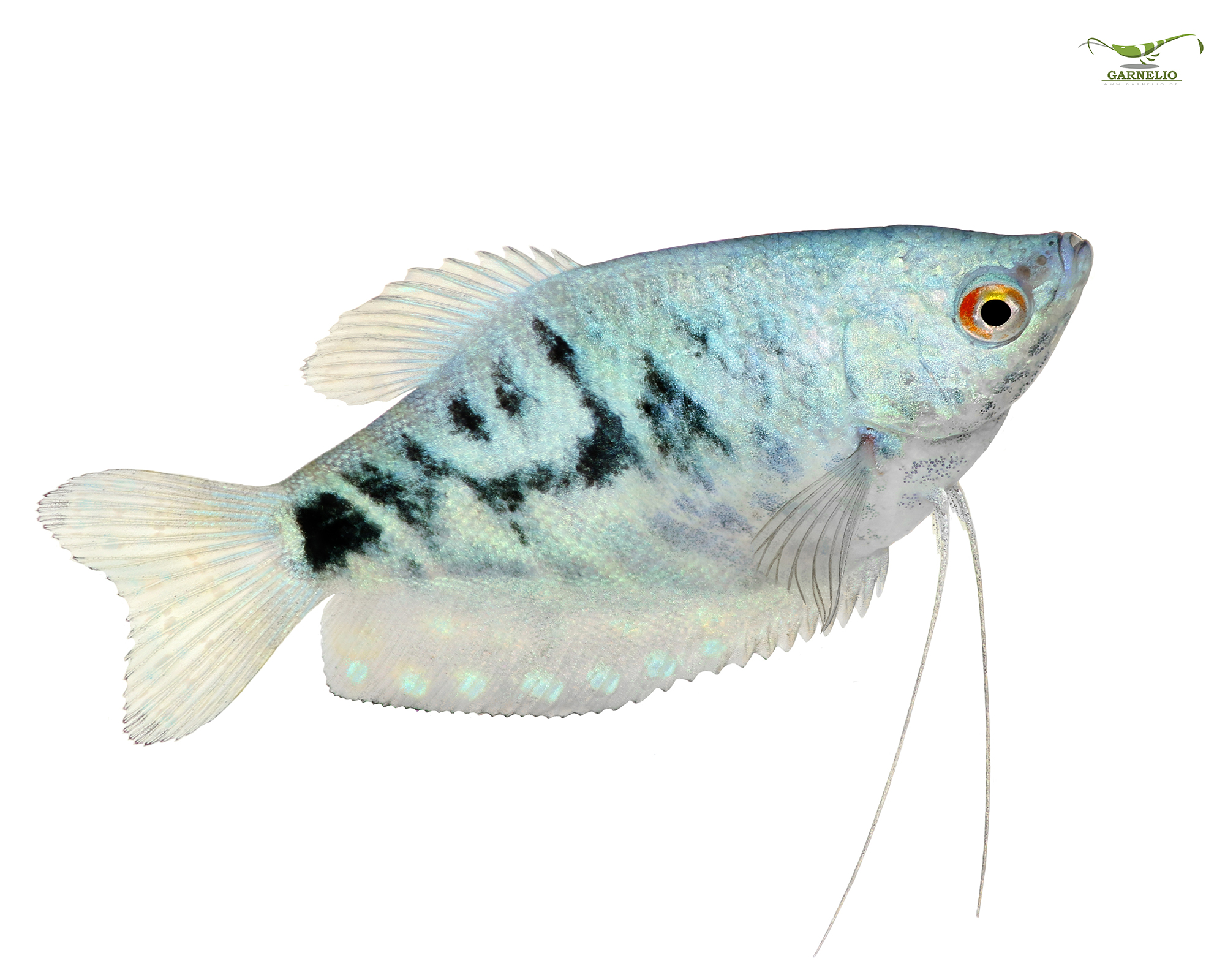
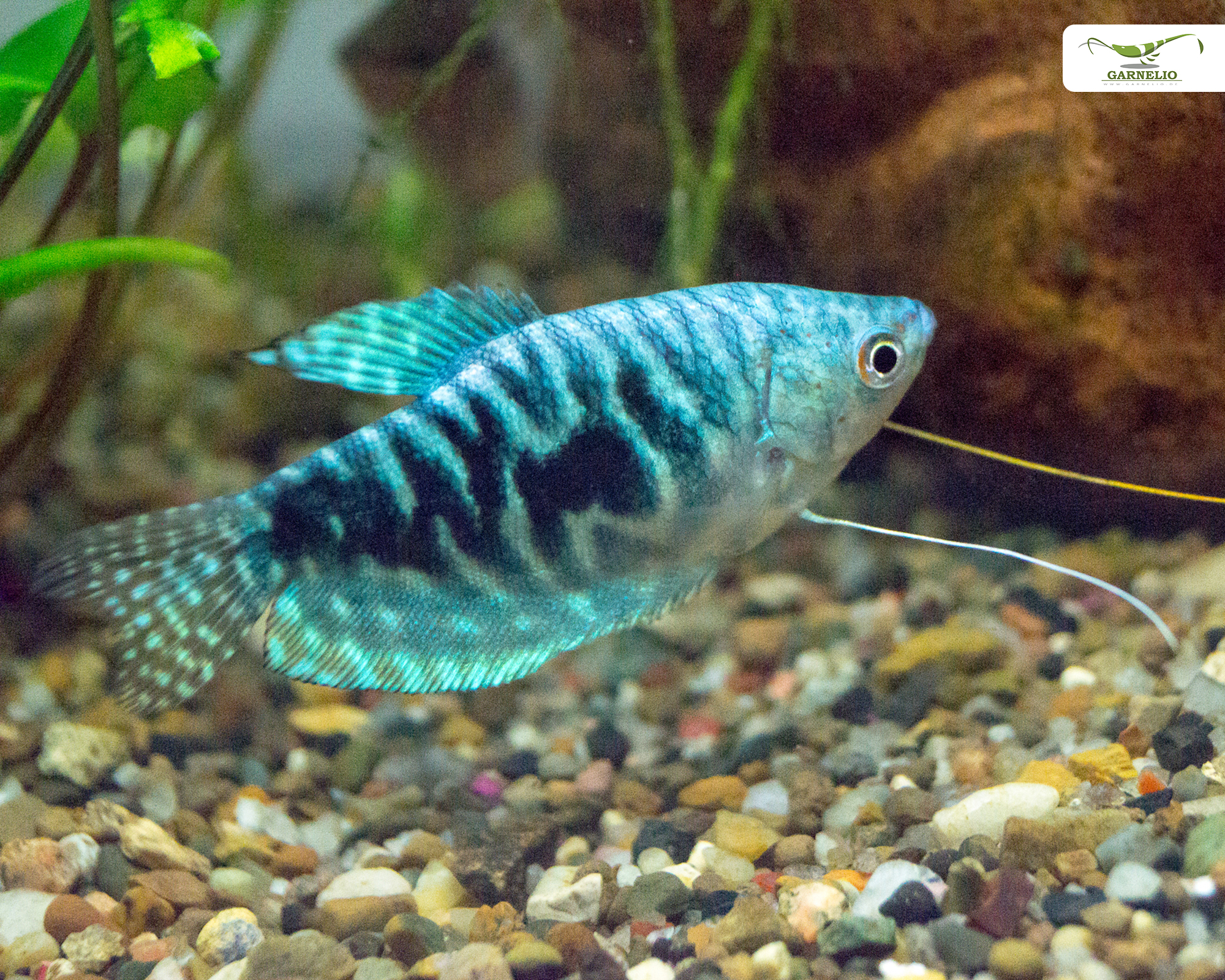
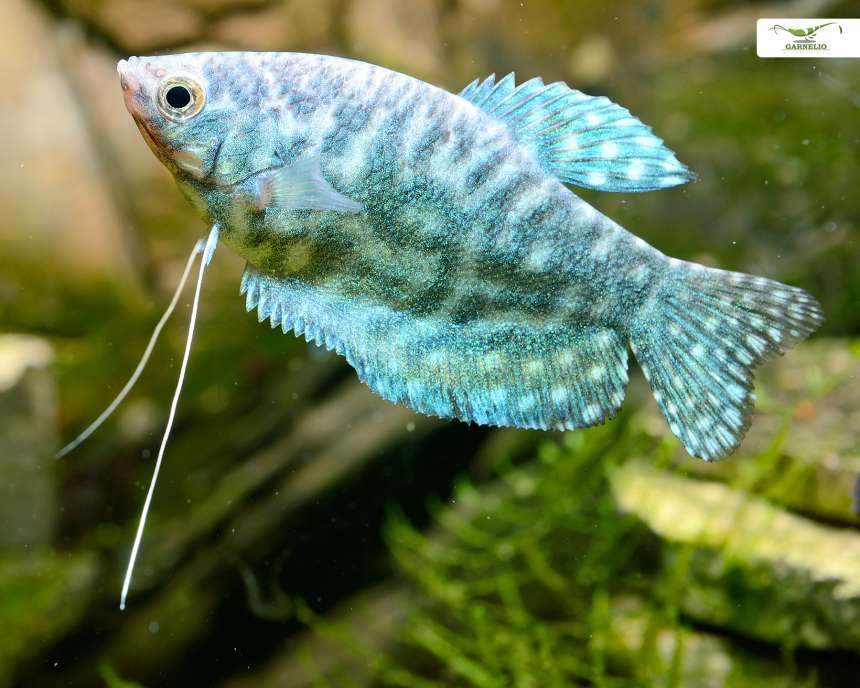
The supplied name is Trichogaster trichopterus, commonly called blue gourami or three-spot gourami. Current aquarium and taxonomic references may place this species in the genus Trichopodus, as Trichopodus trichopterus. It belongs to the family Osphronemidae and order Anabantiformes. The species has an elongated, laterally compressed body, long thread-like pelvic fins, and a labyrinth organ that allows it to use atmospheric oxygen. The blue form commonly shows a blue to blue-gray body with darker markings; color intensity changes with mood, age, and water conditions.
Taxonomy and identification

Distribution and natural habitat

This species is native to mainland and island Southeast Asia, including slow-moving freshwater habitats in areas associated with Thailand, Cambodia, Laos, Vietnam, Malaysia and Indonesia. It occurs in vegetated ponds, marshes, swamps, canals, rice-field habitats and sluggish streams. Aquarium populations and introduced populations may occur beyond the native range, so a captive fish should not be released.
Distribution and natural habitat

Behavior and temperament

Blue gouramis usually occupy the middle and upper levels and frequently visit the surface to breathe. They are not schooling fish, although juveniles may tolerate one another. Adults can be territorial, with males commonly more aggressive toward other males and sometimes toward females or slow, long-finned tank mates. Dense planting, wood, floating cover and broken lines of sight reduce conflict. A pair may work in a large, structured aquarium, but the female must have refuge if the male becomes persistent.
Behavior and temperament

Aquarium and tank size

For a pair, use at least 100-120 litres, with a longer aquarium preferred over a tall, narrow one. Larger volumes are safer for community arrangements or multiple gouramis. Use a secure lid because gouramis jump and need warm, humid air above the water for normal labyrinth-organ function. Provide open swimming space, sturdy plants, floating plants, shaded areas and gentle circulation. Avoid strong surface turbulence, which can make surface breathing and bubble-nest construction more difficult.
Aquarium and tank size

Water parameters

Maintain stable, clean, well-oxygenated water at 24-30 °C and pH 6.0-8.0. A moderate hardness range is generally tolerated, but stability is more important than chasing a particular number. Ammonia and nitrite should remain at zero, with nitrate kept low through regular partial water changes and sensible stocking. Acclimate new fish gradually and avoid abrupt temperature or chemistry changes.

Diet

Blue gouramis are omnivorous. Offer a quality small floating or slow-sinking staple pellet or flake, supplemented with frozen or live foods such as bloodworms, brine shrimp, daphnia and mosquito larvae. Small portions once or twice daily are preferable to overfeeding. Occasional suitable vegetable matter or algae-containing foods can add variety, but uneaten food should be removed promptly.

Compatibility

Choose peaceful to moderately assertive tank mates of similar size that prefer warm, calm community conditions. Suitable examples may include robust rasboras, larger peaceful tetras, peaceful barbs, livebearers and bottom-dwelling catfish, provided the individual combination is monitored. Avoid fin-nippers, very boisterous fish, tiny species that may be intimidated, and other gouramis unless the aquarium is large and carefully arranged. Do not house them with aggressive cichlids or fish that compete intensely at the surface.

Sexing and breeding

Mature males generally develop a longer, more pointed dorsal fin, while females usually have a shorter, rounder dorsal fin and a fuller body when carrying eggs. Individual variation makes sexing immature fish unreliable. For breeding, use a separate, calm, planted aquarium with floating material, gentle filtration and a slightly warmer temperature within the normal range. The male builds a bubble nest at the surface, courts the female and gathers fertilized eggs into the nest. Remove the female after spawning if she is harassed. The male may guard and tend the nest, but he should be removed after the fry become free-swimming to prevent predation. Newly free-swimming fry require very small foods, such as infusoria or a suitable first fry food, followed by larger foods as they grow.

Health and routine care

Purchase active fish with intact fins, clear eyes and normal breathing, and quarantine new arrivals when possible. Common problems include stress, poor water quality, bacterial or parasitic disease, and damage from fin-nipping tank mates. Maintain biological filtration, perform regular partial water changes, keep the surface accessible, and observe appetite and behavior daily. Because this species can breathe air, surface access must never be blocked by a sealed internal obstruction or excessive floating cover.
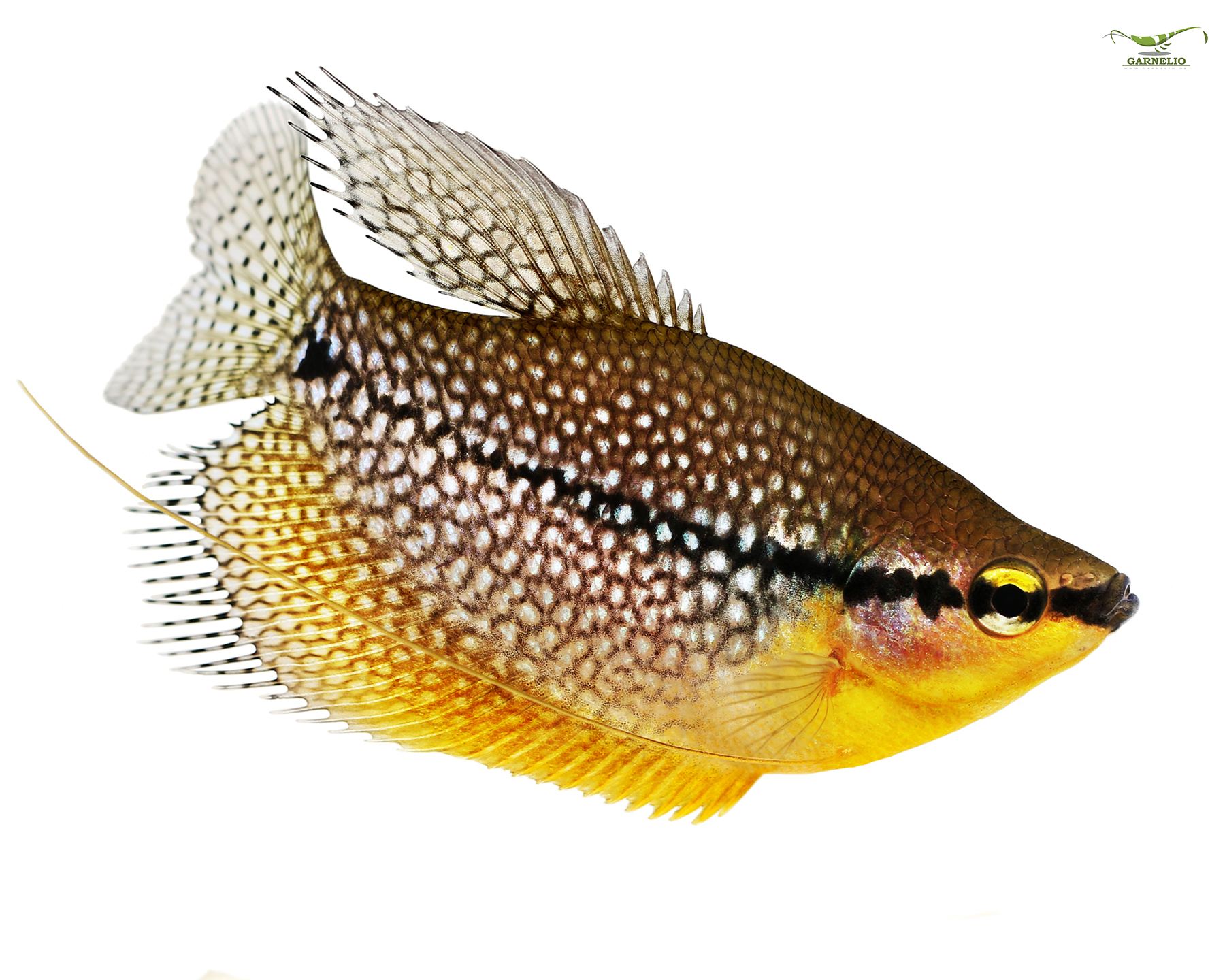
Fish info

  • Care level: Easy - Moderate
  • Temperament: Semi-aggressive
  • Adult size: 12-15 cm
  • Life expectancy: 4-6 years
  • Fish type: Labyrinth fish; freshwater anabantoid
  • Temperature : 24-30 °C
  • pH: 6.0-8.0
Leave your comments
Latest on Fishs
  • Nicaraguan Cichlid (Hypsophrys nicaraguensis)

    Nicaraguan Cichlid (Hypsophrys nicaraguensis)

    Moderate - Difficult
    Large Central American cichlid
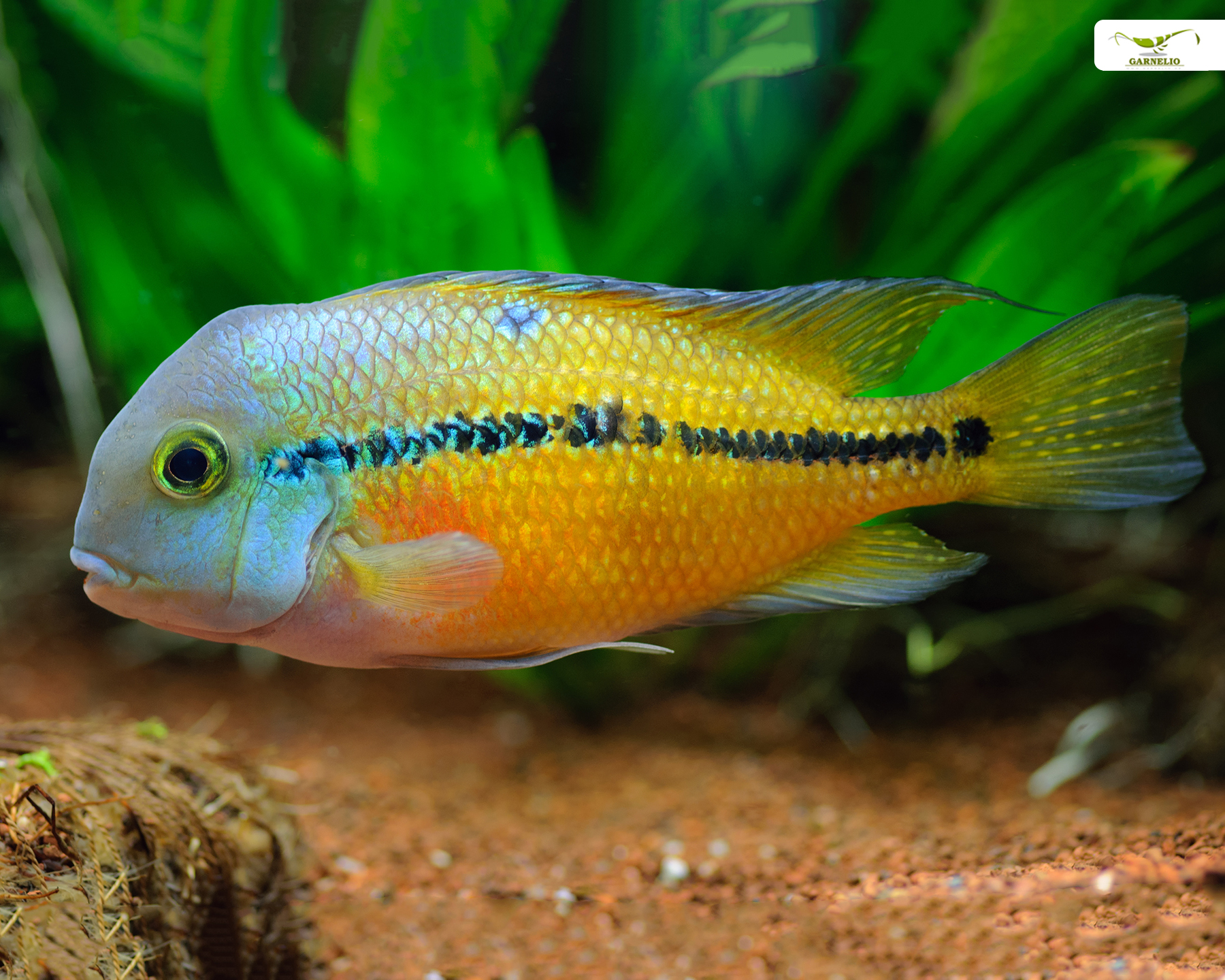
    The Nicaraguan cichlid is a robust Central American species known for its changing gold, orange, blue and black patterning. It is often sold under the older name Cichlasoma nicaraguense, while Hypsophrys nicaraguensis is the generally accepted current placement. This is a territorial fish requiring substantial space, strong filtration and carefully planned tank mates. The supplied listing describes a pair, but sex, compatibility and breeding condition cannot be independently verified from the source image alone.
  • Pearl Gourami (Trichogaster leerii)

    Pearl Gourami (Trichogaster leerii)

    Easy - Moderate
    Peaceful freshwater labyrinth fish
    The pearl gourami is a peaceful, labyrinth fish recognized by its pearly spots, dark midlateral stripe, and warm orange throat. It originates in vegetated, slow-moving waters of Southeast Asia and is generally suitable for a calm community aquarium. A pair needs stable, warm water, dense cover, gentle flow, and access to atmospheric air at the surface.
  • Moonlight Gourami (Trichogaster microlepis)

    Moonlight Gourami (Trichogaster microlepis)

    Moderate
    Southeast Asian labyrinth fish
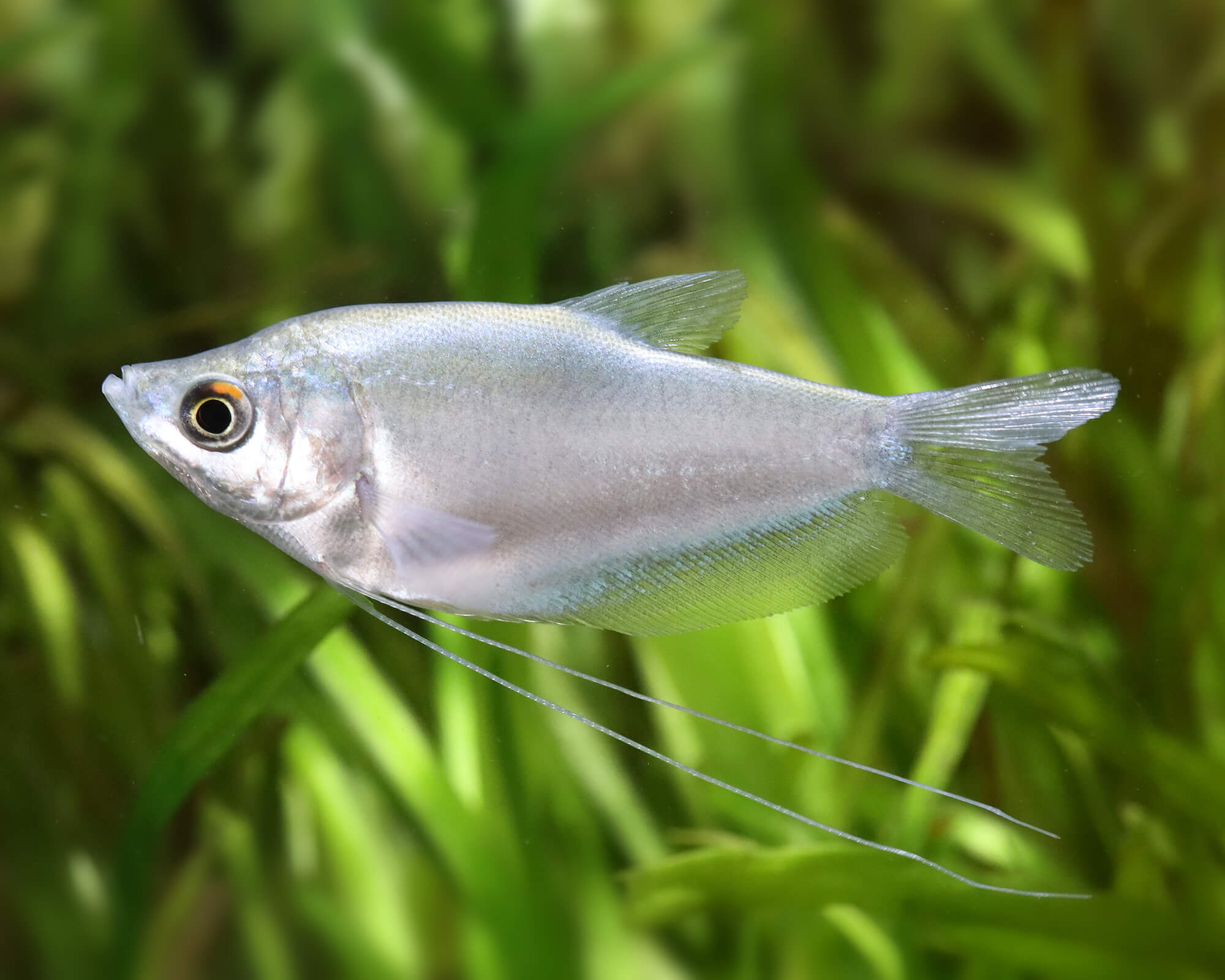
    The moonlight gourami is a peaceful, laterally compressed labyrinth fish from mainland Southeast Asia. Its silvery body, long thread-like pelvic fins and calm, deliberate swimming make it a distinctive community-aquarium species. Although the supplied source identifies a pair, sex cannot be confirmed reliably from the images alone. Provide a spacious, mature aquarium with gentle flow, dense planting and access to humid air above the water. It is generally hardy once acclimated, but it appreciates stable conditions and should not be housed with fin-nipping or highly aggressive tank mates.
  • Keyhole Cichlid (Aequidens maronii)

    Keyhole Cichlid (Aequidens maronii)

    Moderate
    South American freshwater cichlid
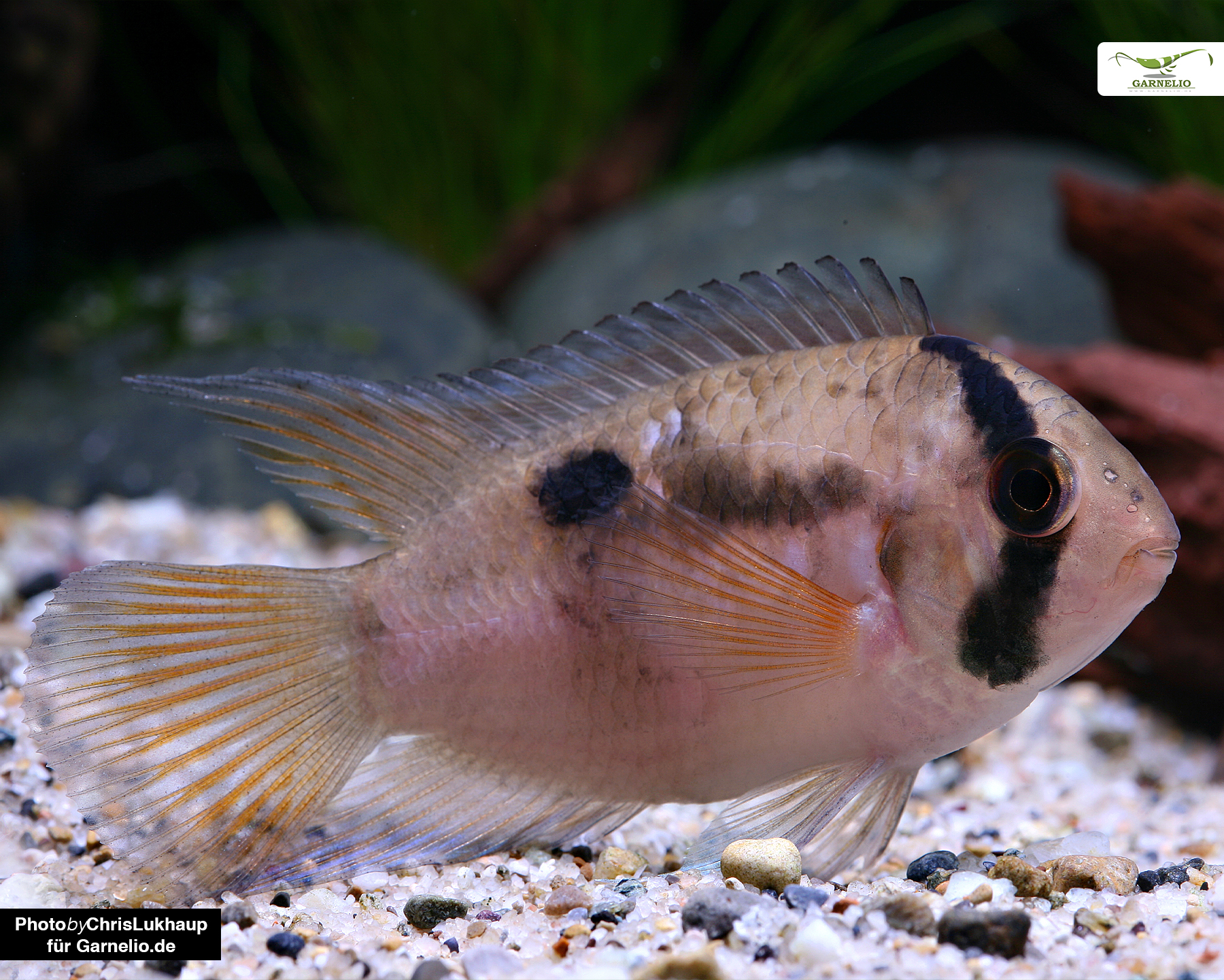
    The fish supplied is consistent with the keyhole cichlid, commonly listed as Aequidens maronii and currently placed by many authorities in the genus Cleithracara. It is a relatively peaceful South American cichlid recognized by its dark keyhole-shaped marking, subdued body coloration and interesting parental care. A pair needs a mature, well-filtered aquarium with soft surroundings, hiding places and stable water quality. Although generally manageable, it becomes territorial while spawning and should not be kept with boisterous or fin-nipping tank mates.
  • Marble Gourami (Cosby Gourami), Trichopodus trichopterus

    Marble Gourami (Cosby Gourami), Trichopodus trichopterus

    Easy - Moderate
    Freshwater labyrinth fish
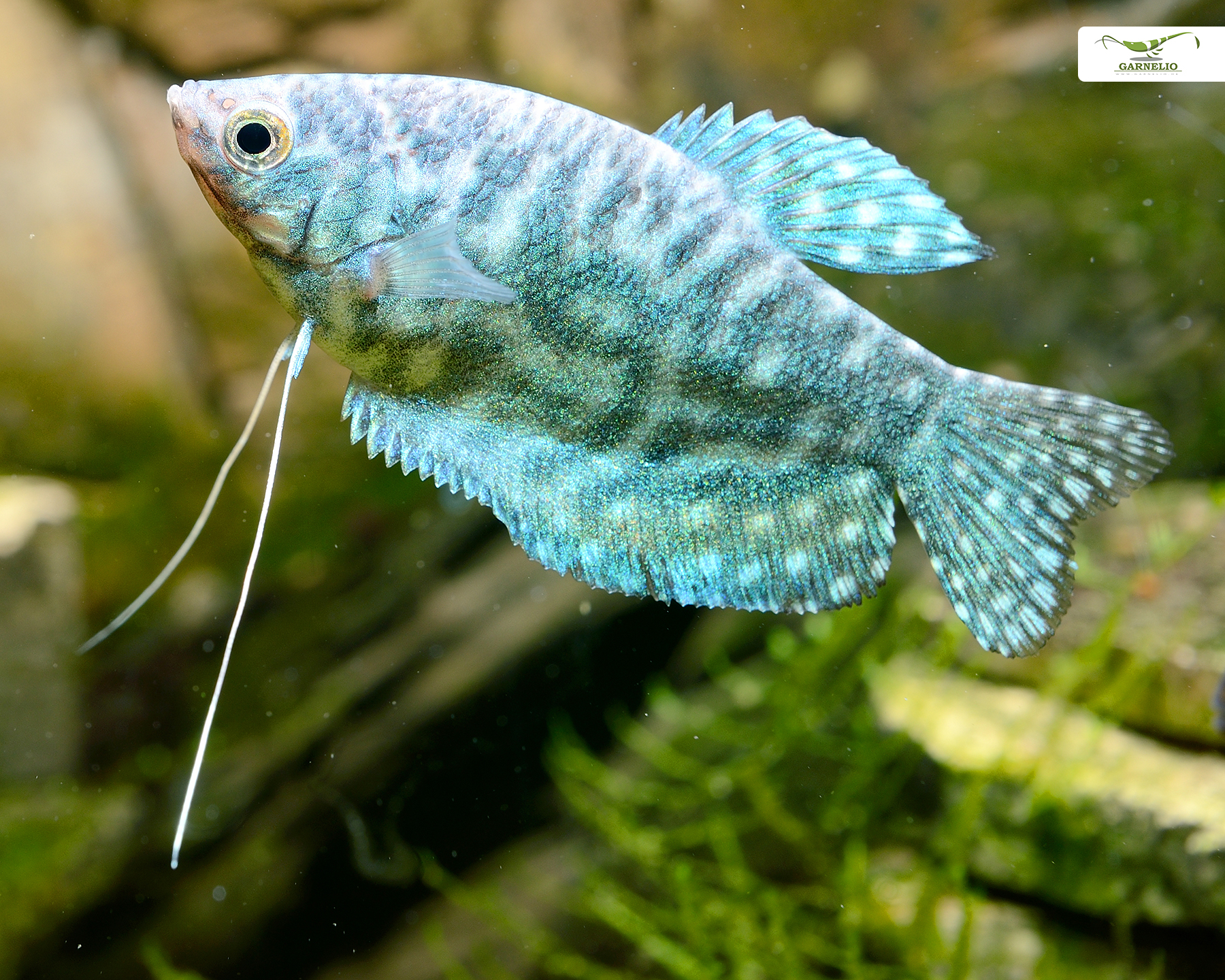
    The marble gourami, commonly sold as the Cosby gourami, is a selectively bred color form of the three-spot gourami, Trichopodus trichopterus. It is a labyrinth fish that can breathe atmospheric air and generally occupies the upper and middle levels of a planted aquarium. This species is usually hardy, but adult males may become territorial, particularly when spawning. The supplied images show several color forms, so exact strain identification is not certain; the fish are best treated as marble or related cultivated forms of T. trichopterus.
  • Marble Gourami, Gold-Orange Form (Trichogaster trichopterus)

    Marble Gourami, Gold-Orange Form (Trichogaster trichopterus)

    Easy - Moderate
    Freshwater labyrinth fish
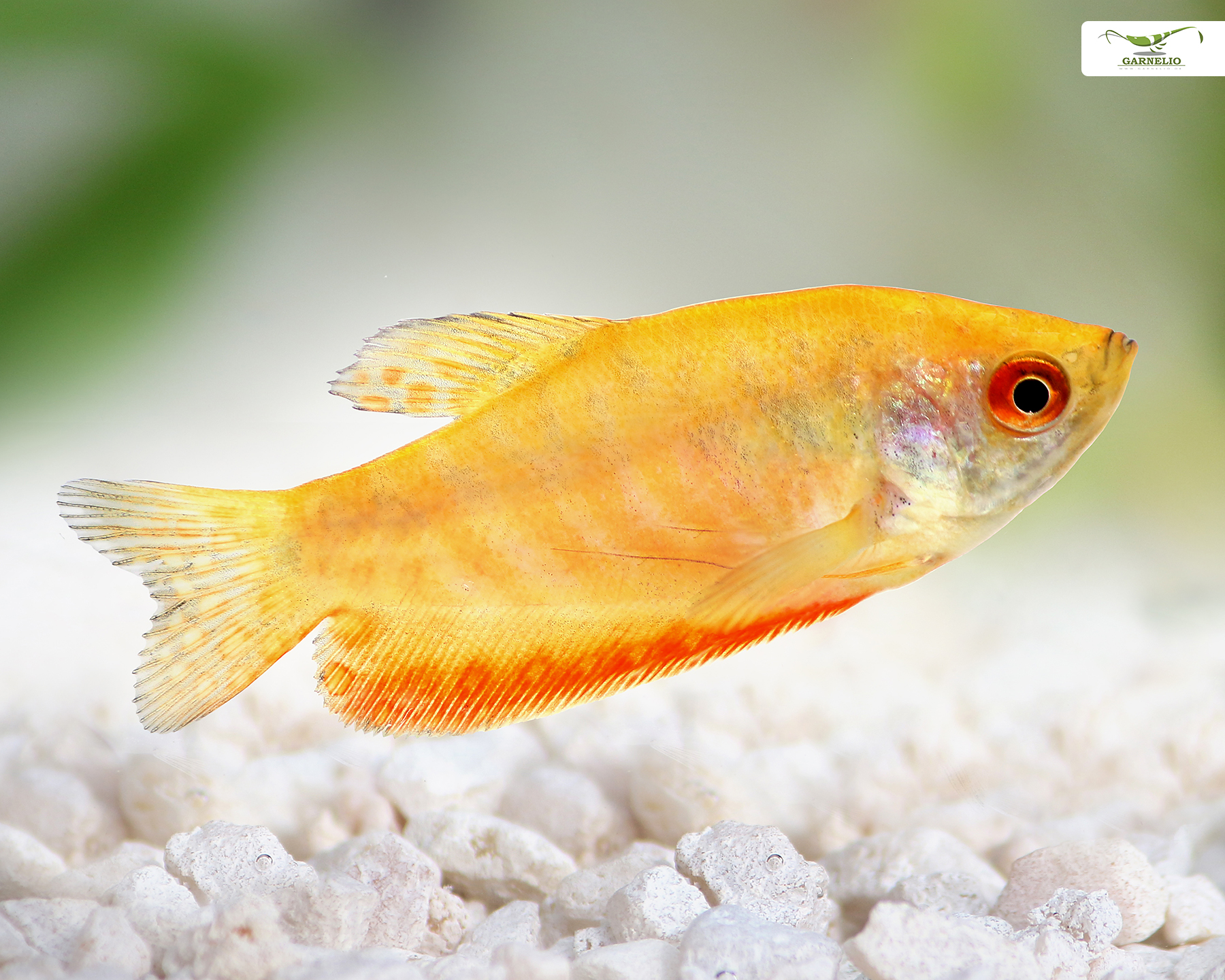
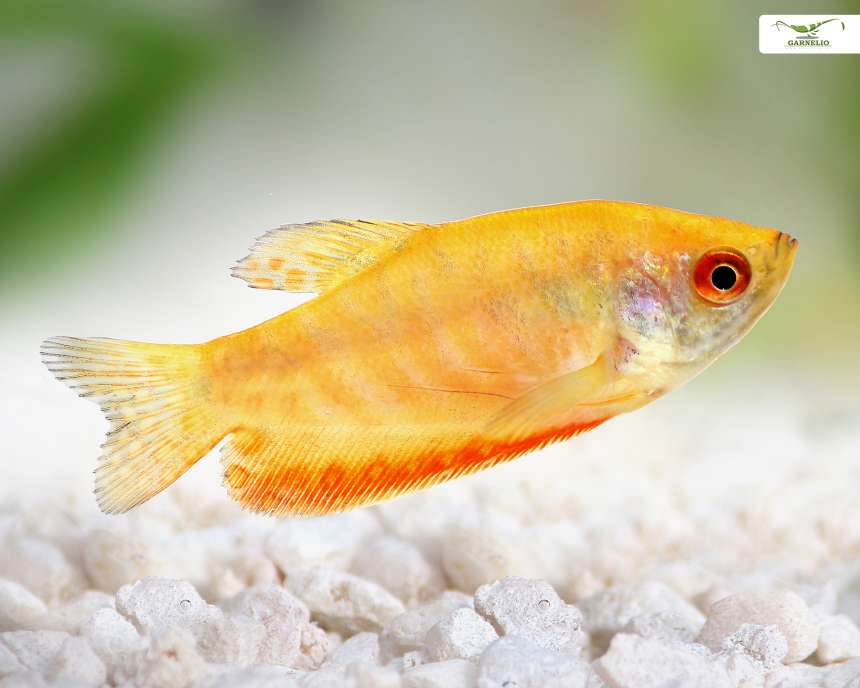
    The marble gourami is a selectively bred color form of the three-spot gourami, a labyrinth fish from mainland and island Southeast Asia. The supplied trade label identifies these fish as a gold-orange pair, although commercial names and appearance can vary, so the exact cultivated form is not fully certain. They are generally hardy community fish, but males may become territorial, especially when spawning. Provide warm, stable water, surface access, dense planting, and gentle filtration.
  • Honey Gourami Gold (Trichogaster chuna)

    Honey Gourami Gold (Trichogaster chuna)

    Easy - Moderate
    Small freshwater labyrinth fish
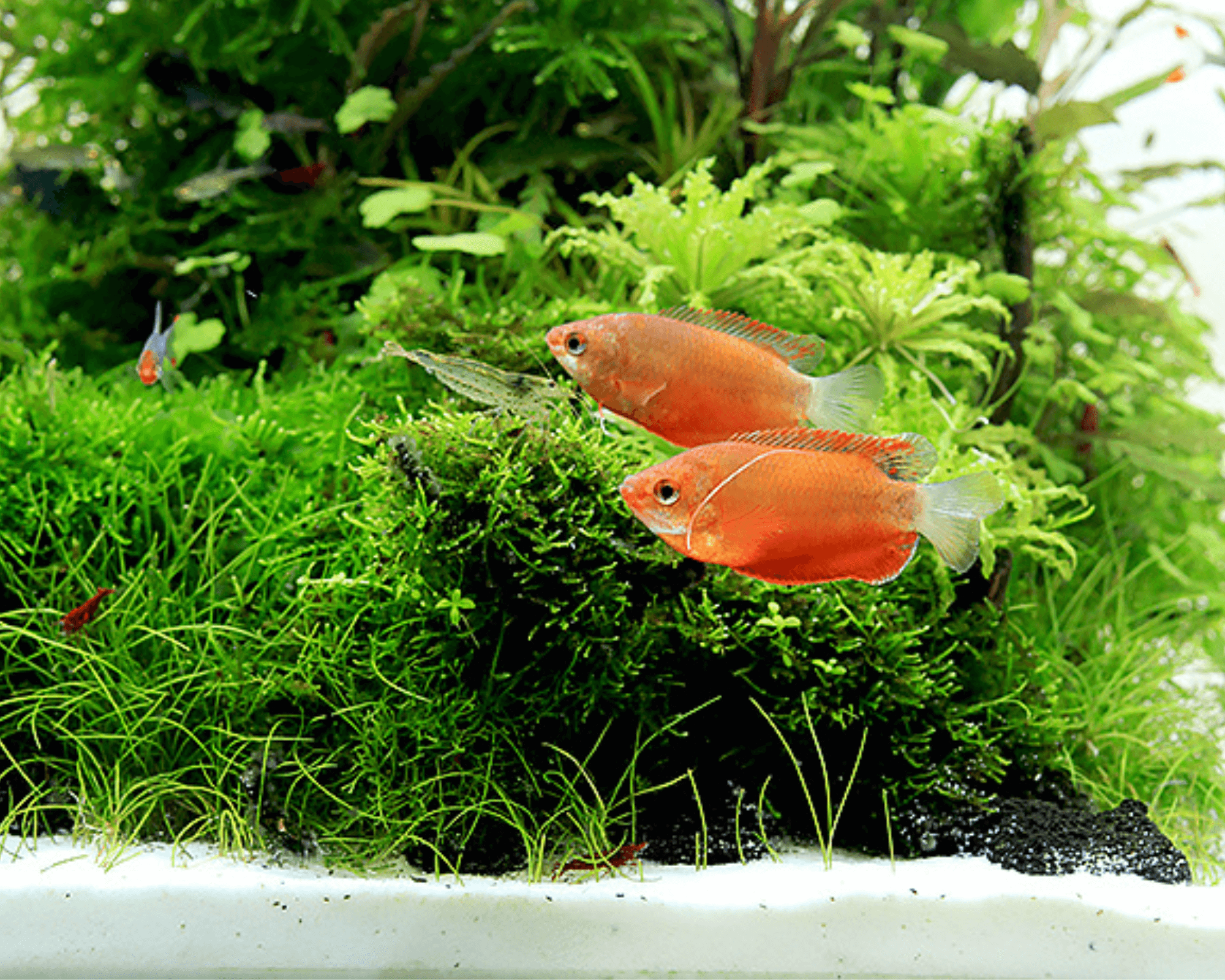
    The honey gourami is a small, peaceful labyrinth fish suited to planted freshwater aquariums. The supplied source identifies a gold pair as Colisa chuna, an older name now generally treated as Trichogaster chuna. The photographs show orange-gold individuals, but sex and exact variety cannot be confirmed from the images alone. Provide gentle flow, surface access, dense cover and calm tank mates for best results.
  • Honey Gourami (Colisa chuna) Care Guide

    Honey Gourami (Colisa chuna) Care Guide

    Easy - Moderate
    Small freshwater labyrinth fish
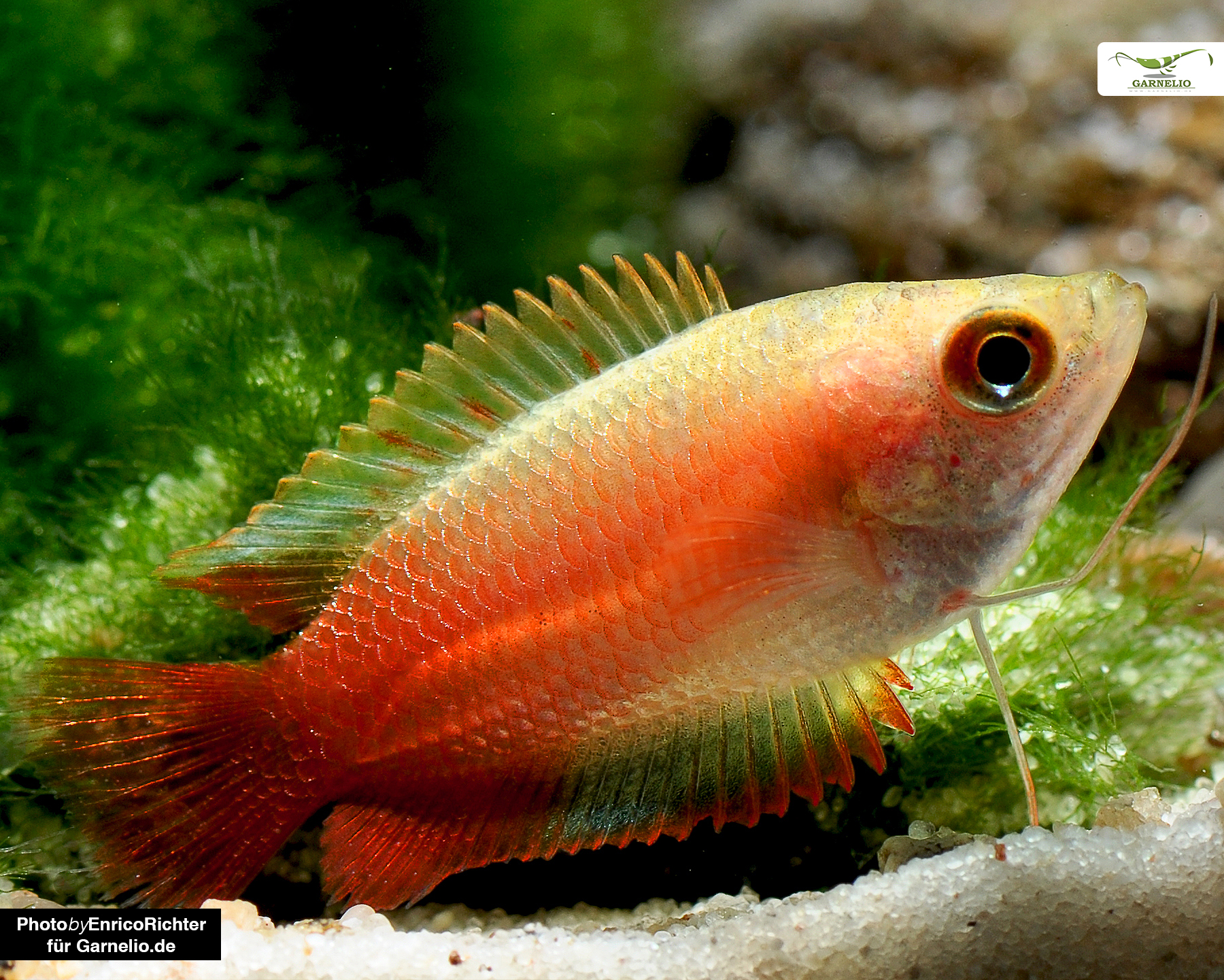
    The honey gourami is a small, peaceful labyrinth fish from the slow-moving waters of South Asia. Aquarium specimens may be natural honey-colored fish or selectively bred red and orange forms, like those shown here. The supplied images appear consistent with honey gourami, although sex cannot be confirmed reliably from the photographs. A planted aquarium with gentle flow, surface cover, stable warm water and calm tank mates suits this species well.
  • Giraffe Perch (Nimbochromis venustus) Care Guide

    Giraffe Perch (Nimbochromis venustus) Care Guide

    Difficult
    Lake Malawi predatory haplochromine cichlid
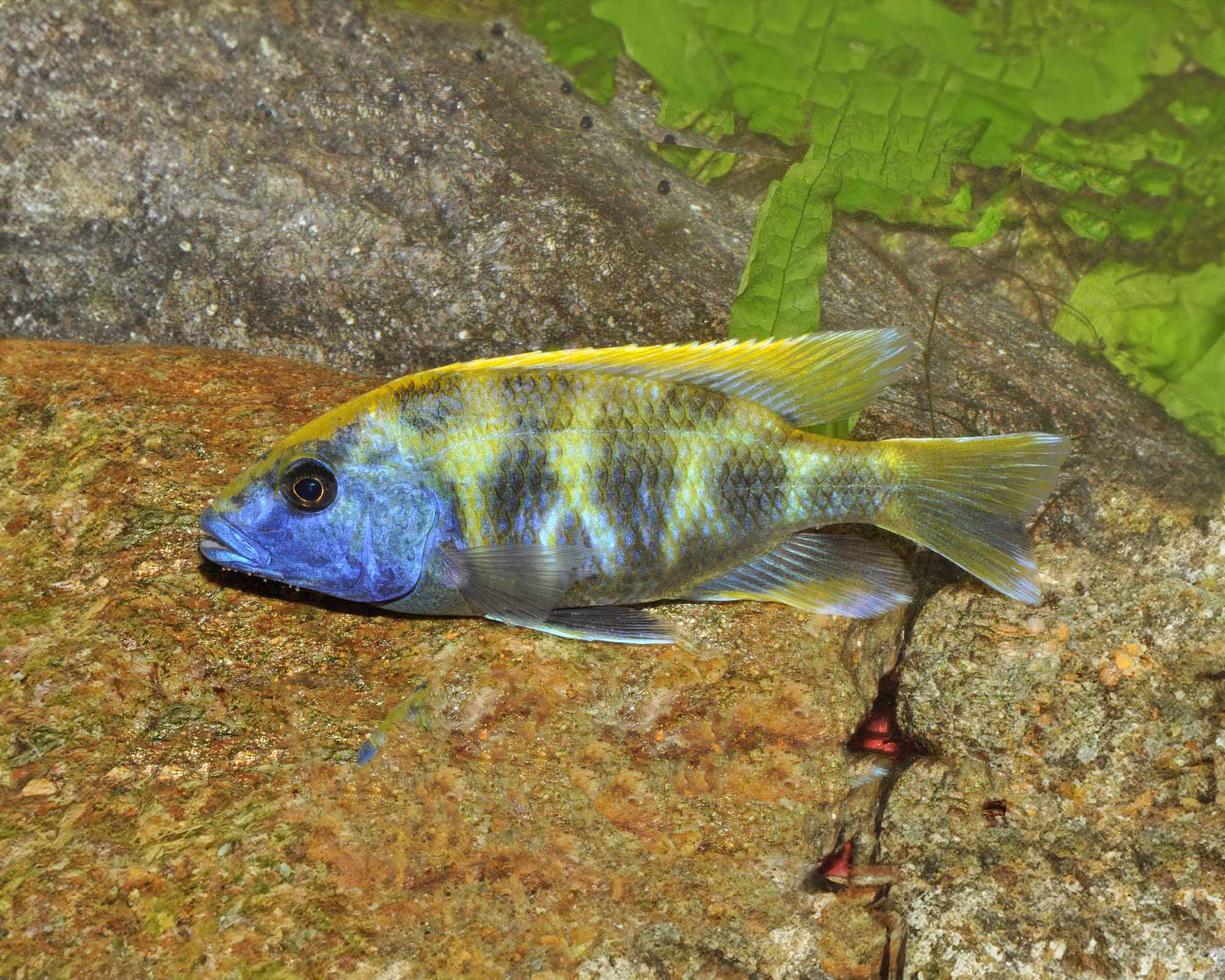
    Nimbochromis venustus is a large predatory haplochromine cichlid from Lake Malawi, known in aquariums as the giraffe perch or giraffe cichlid. Juveniles are comparatively subdued, while adults develop blue facial tones and yellow, olive or gold body coloration with darker markings. The supplied listing describes two 4 cm fish as a pair, but sex cannot be confirmed reliably at that size. This species requires a spacious, rocky aquarium and carefully selected tank mates.
  • Dwarf Gourami (Trichogaster lalius)

    Dwarf Gourami (Trichogaster lalius)

    Moderate
    Small freshwater labyrinth fish
    The dwarf gourami is a small labyrinth fish from vegetated, slow-moving waters of South Asia. Trichogaster lalius is generally peaceful, colorful and suitable for a planted community aquarium, although males can become territorial, especially around a bubble nest. A pair needs warm, stable water, gentle circulation, surface access and plenty of cover. The supplied identification is consistent with dwarf gourami, though color varieties and sex should be confirmed by physical examination.
  • Five-Bar Cichlid (Neolamprologus tretocephalus)

    Five-Bar Cichlid (Neolamprologus tretocephalus)

    Difficult
    Lake Tanganyika rock-dwelling cichlid
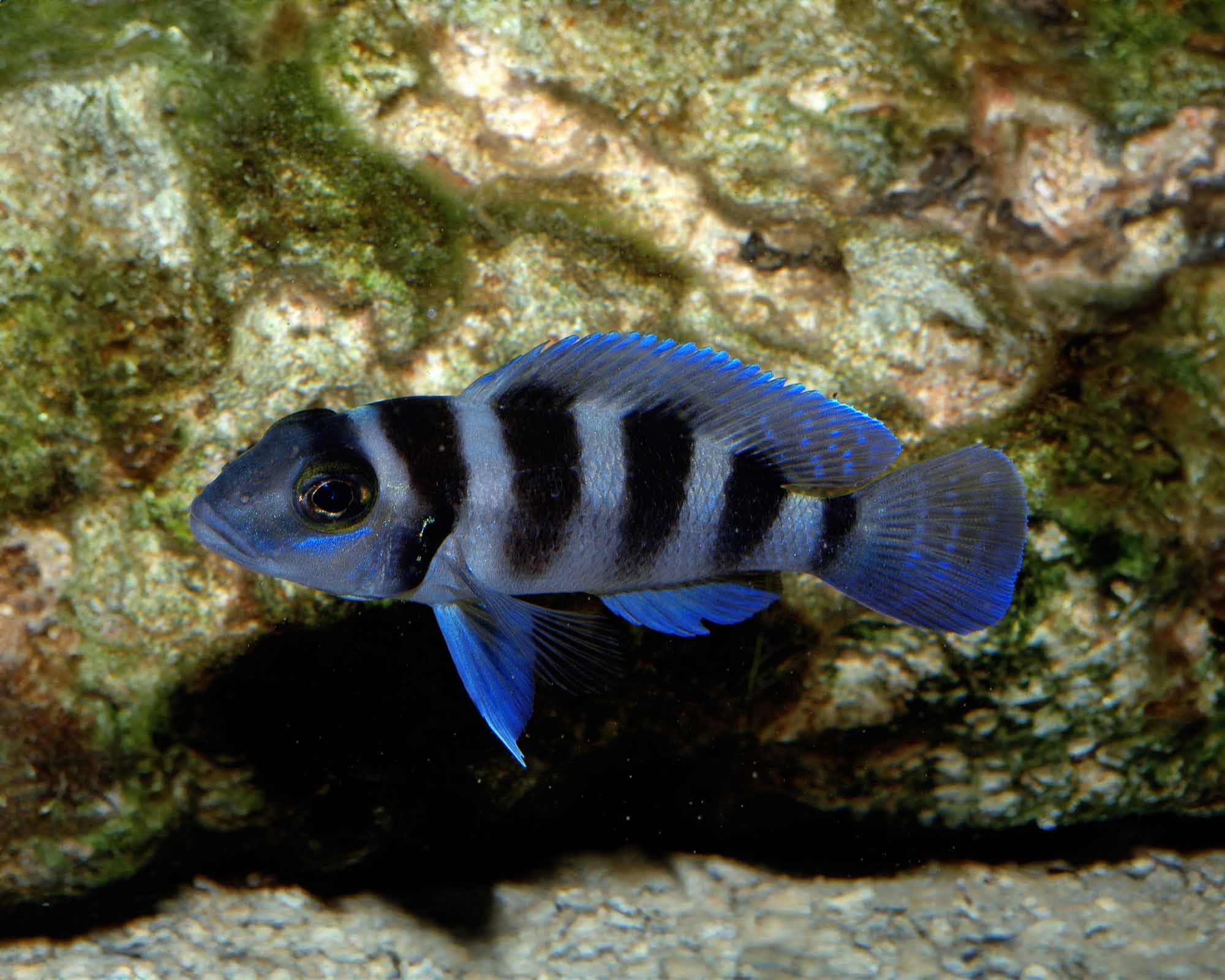
    The five-bar cichlid, also called the five-striped cichlid, is a robust Lake Tanganyika predator with a dark blue-gray body marked by five broad black bars. Neolamprologus tretocephalus is territorial and can become highly aggressive, particularly when spawning. It suits experienced aquarists who can provide a spacious, rock-structured aquarium, alkaline hard water, and carefully selected tank mates. The supplied label identifies this fish as a pair, but sex and exact locality cannot be confirmed from the available information.
  • Gardner’s Splendid Carp (Fundulopanchax gardneri)

    Gardner’s Splendid Carp (Fundulopanchax gardneri)

    Moderate
    West African killifish
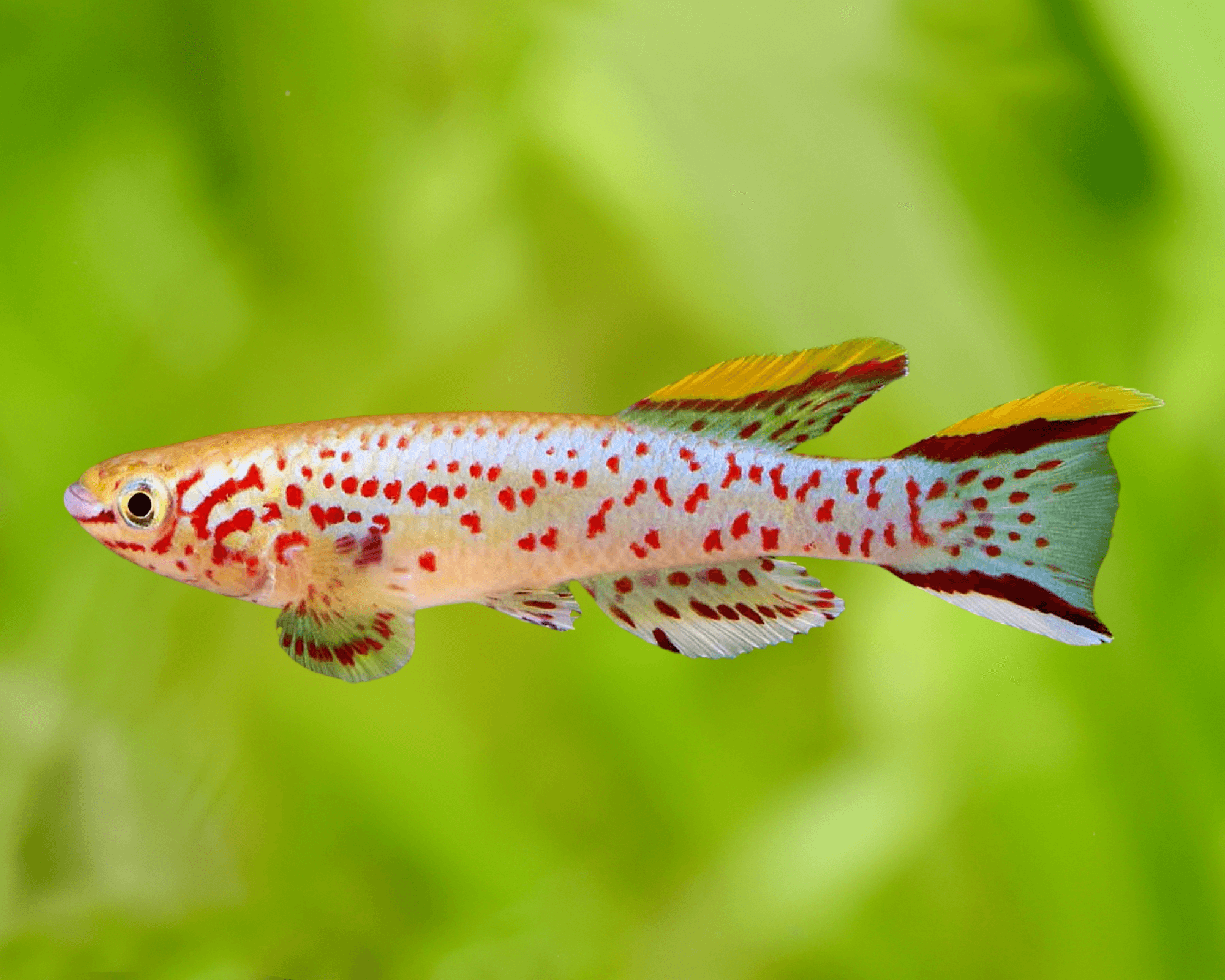
    Gardner’s splendid carp is a small West African killifish valued for its iridescent body, red markings and patterned fins. The supplied image appears to show a brightly colored male, while the source identifies a pair; exact locality form and sex of every fish cannot be confirmed from the available evidence. It is generally peaceful, though males may spar, and it is best kept in a covered, mature aquarium with gentle flow, subdued lighting and abundant plant cover.
  • Pelvicachromis taeniatus Nigeria Red

    Pelvicachromis taeniatus Nigeria Red

    Moderate
    West African dwarf cichlid
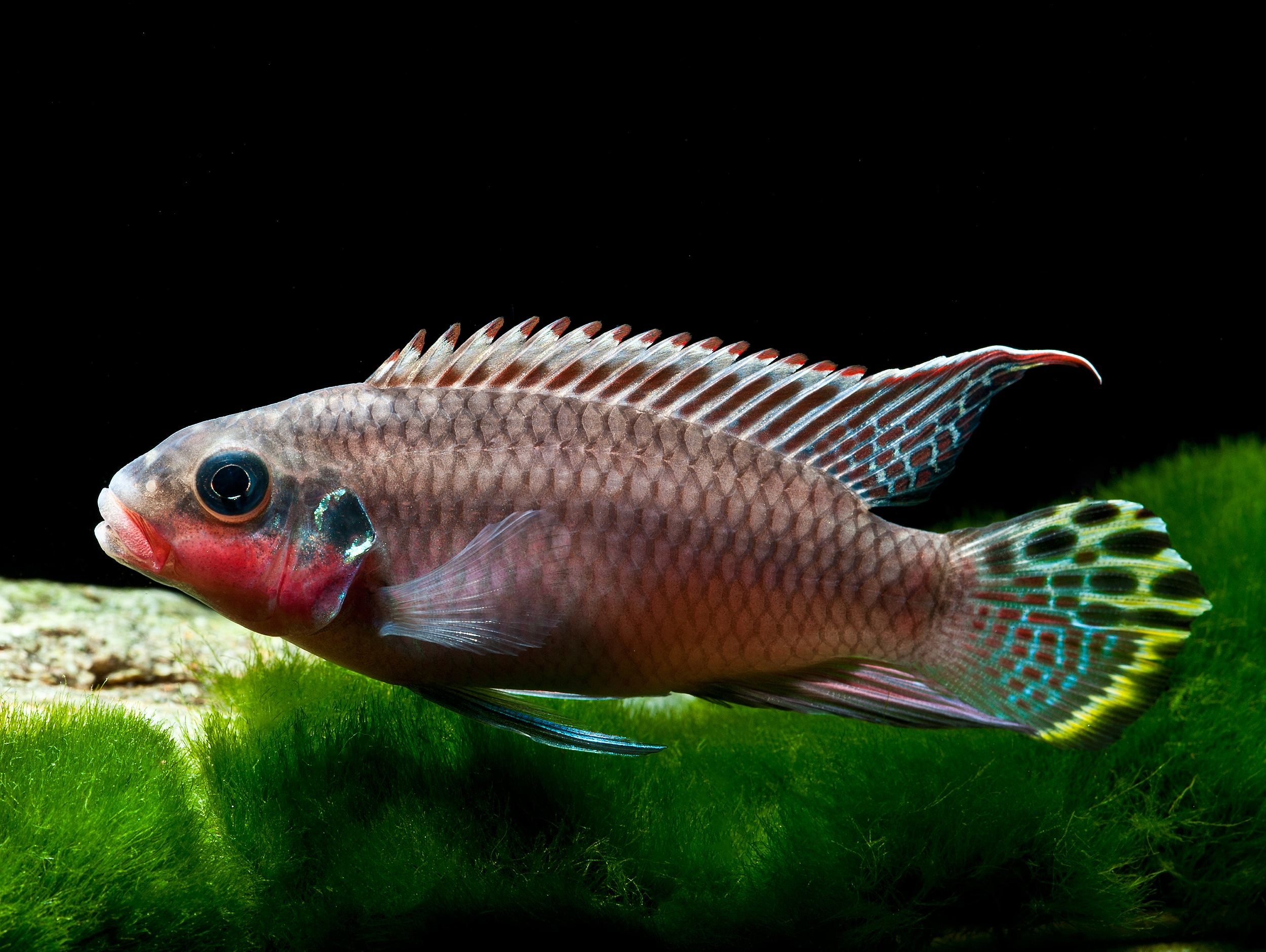
    Pelvicachromis taeniatus, commonly known as the striped krib or taeniatus cichlid, is a small West African riverine cichlid valued for its parental behavior and locality-based color variation. “Nigeria Red” identifies a trade form or collection locality rather than a separate species. The supplied source label also calls these fish emerald perch, but that common name is not a standard scientific name. This species is generally manageable for experienced beginners when provided with stable, clean water, hiding places and a carefully planned community aquarium.
  • Apistogramma agassizii ‘Fire Red’

    Apistogramma agassizii ‘Fire Red’

    Moderate
    South American dwarf cichlid
    Apistogramma agassizii is a small South American cichlid valued for its intricate markings, elongated fins and interesting parental behavior. “Fire Red” is a selectively bred aquarium color form rather than a separate species. The supplied listing describes a pair, although sex, locality and breeding-line identity cannot be confirmed from the available material. This species suits a mature, planted aquarium with soft, clean water, subdued lighting, cover and a fine substrate.
  • Cockatoo Cichlid Orange (Apistogramma cacatuoides)

    Cockatoo Cichlid Orange (Apistogramma cacatuoides)

    Easy - Moderate
    South American dwarf cichlid
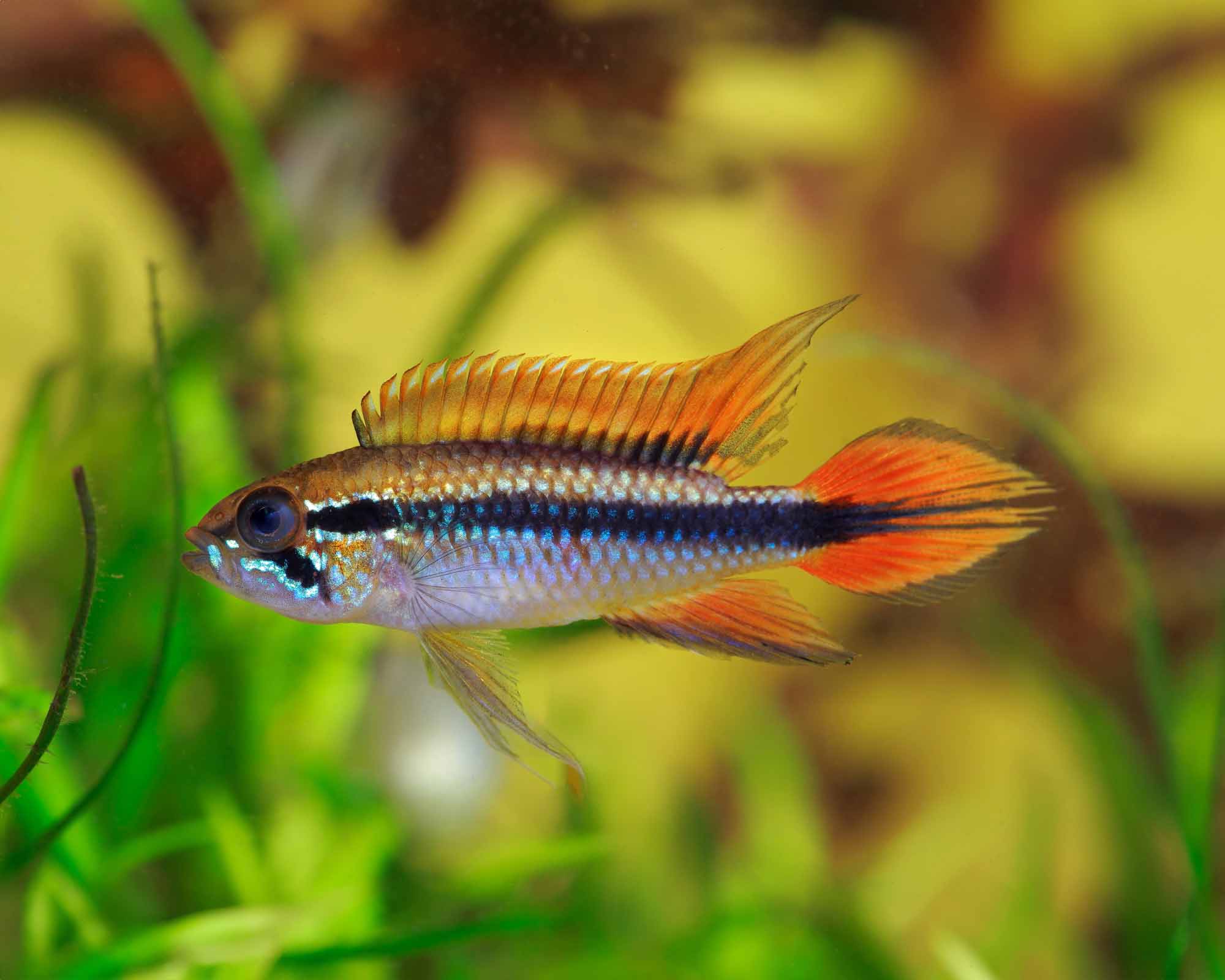
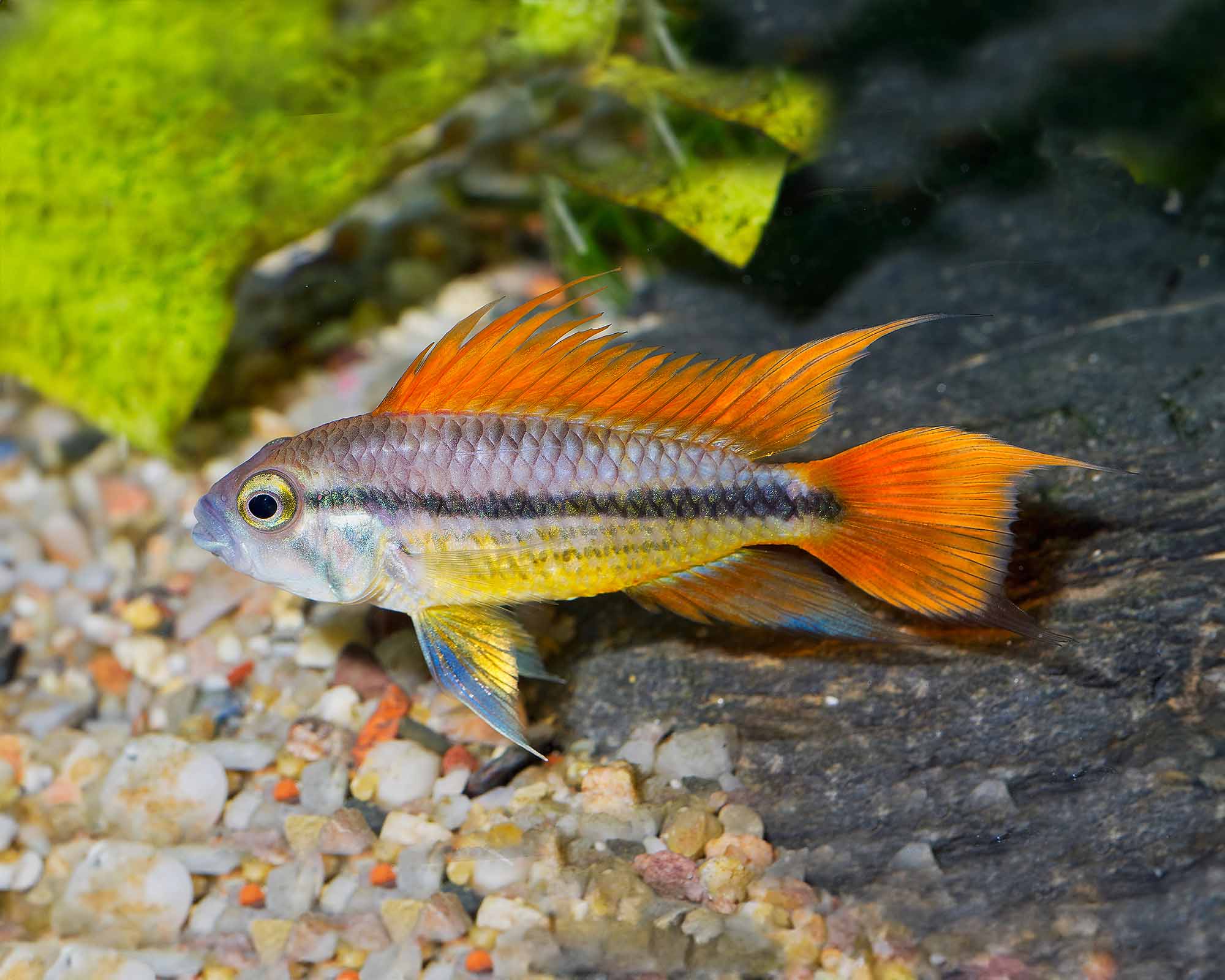
    The Cockatoo Cichlid is a small South American dwarf cichlid known for its elongated dorsal fin, bold facial markings and colorful orange fin forms. Apistogramma cacatuoides comes from slow-moving waters and tributaries of the upper Amazon basin, where it shelters among leaf litter, roots and submerged vegetation. It is generally manageable for an aquarist who provides soft, clean water, caves and visual barriers. The supplied listing describes an orange pair, but sex and exact form should be confirmed by the seller because photographs alone are not definitive.
  • Dwarf Gourami Red (Trichogaster lalius)

    Dwarf Gourami Red (Trichogaster lalius)

    Easy - Moderate
    Asian labyrinth fish
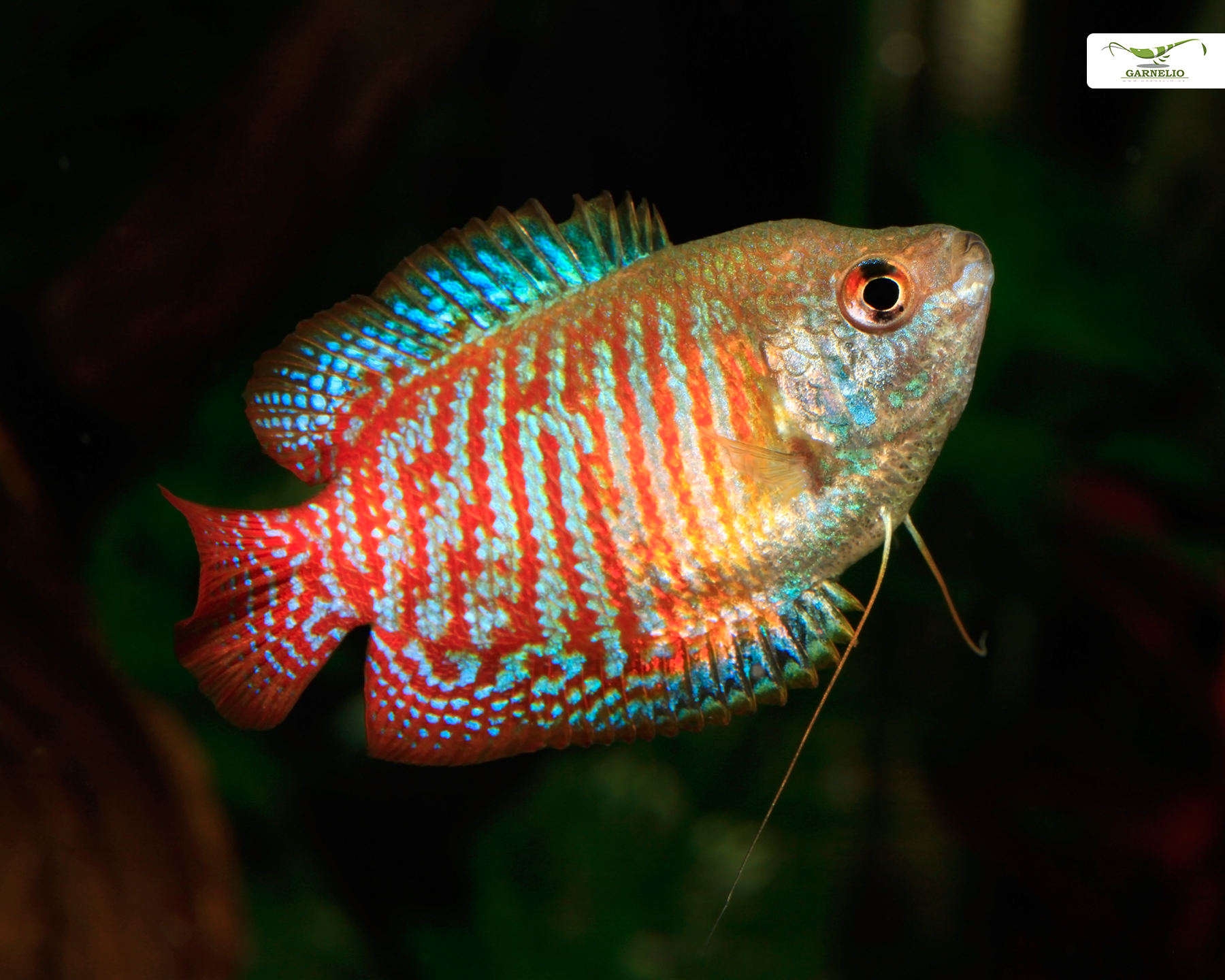
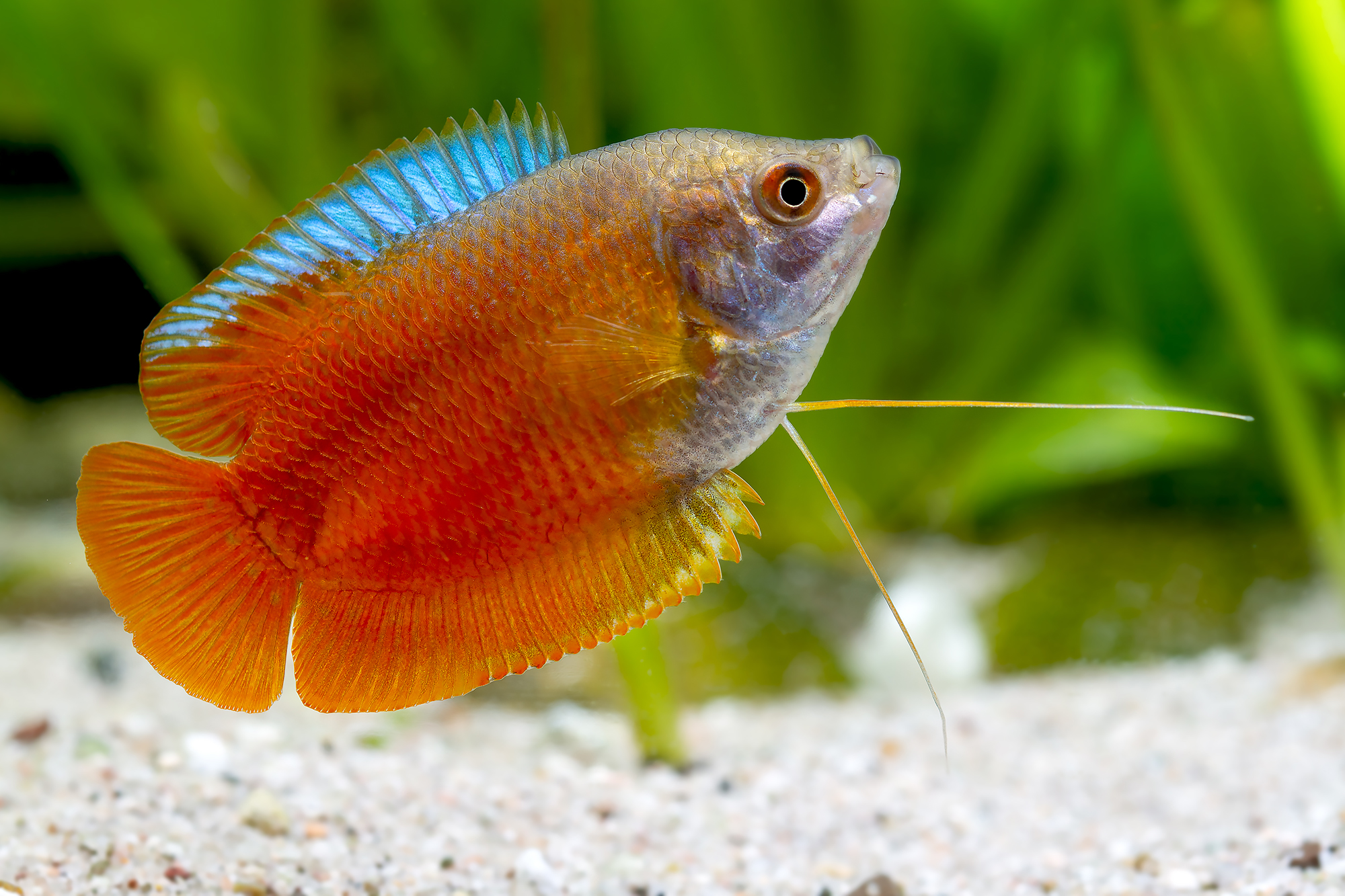
    The red dwarf gourami is a selectively bred color form of the dwarf gourami, a small labyrinth fish formerly widely known as Colisa lalia. It is suited to mature, planted community aquariums with gentle water movement and calm tank mates. Males can be territorial, especially when kept with females in confined conditions, so cover, visual barriers, and careful observation are important for a pair.