It’s time to help contribute for biggest aquarium gallery online

SUBMIT HEREVIEW GALLERY

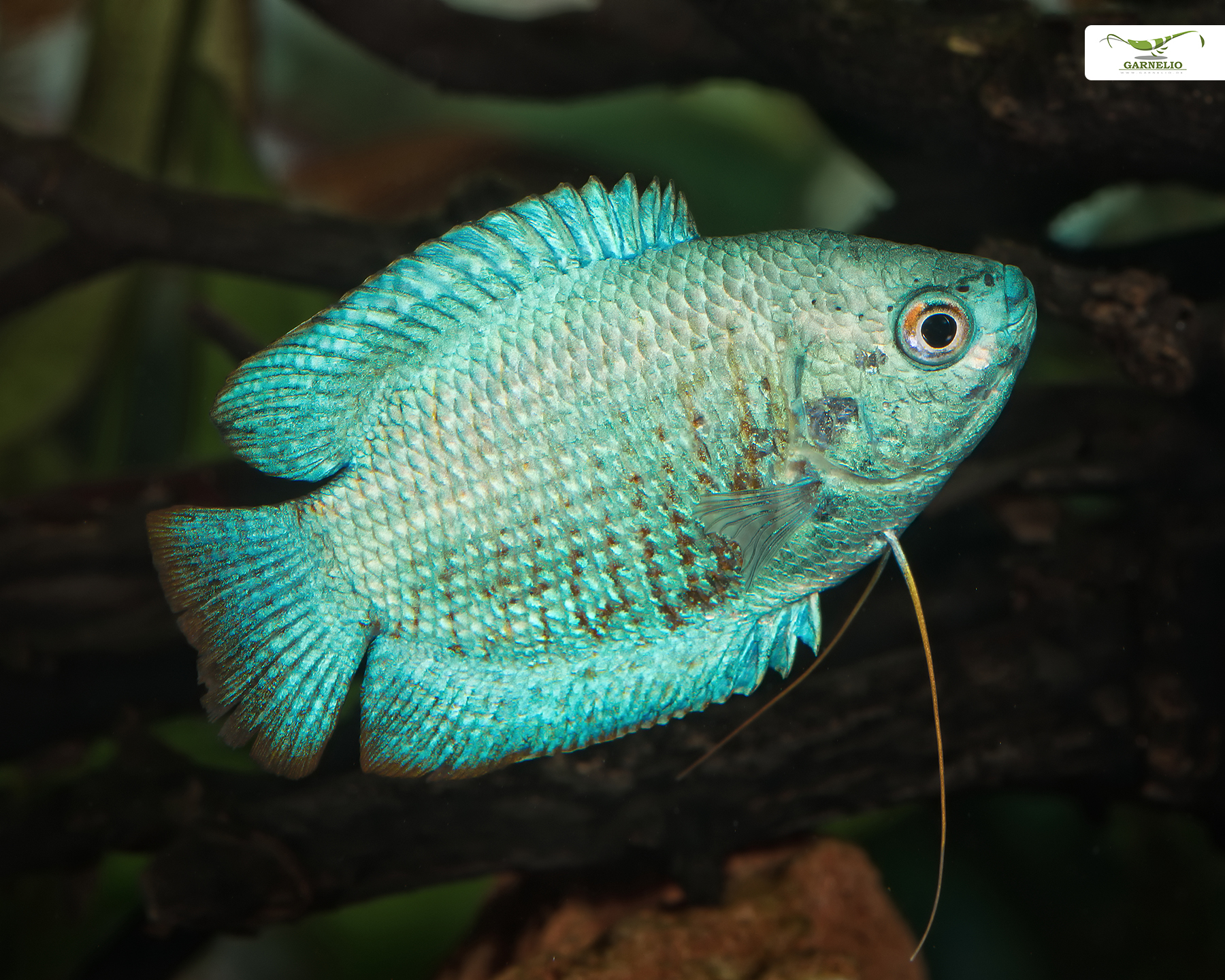
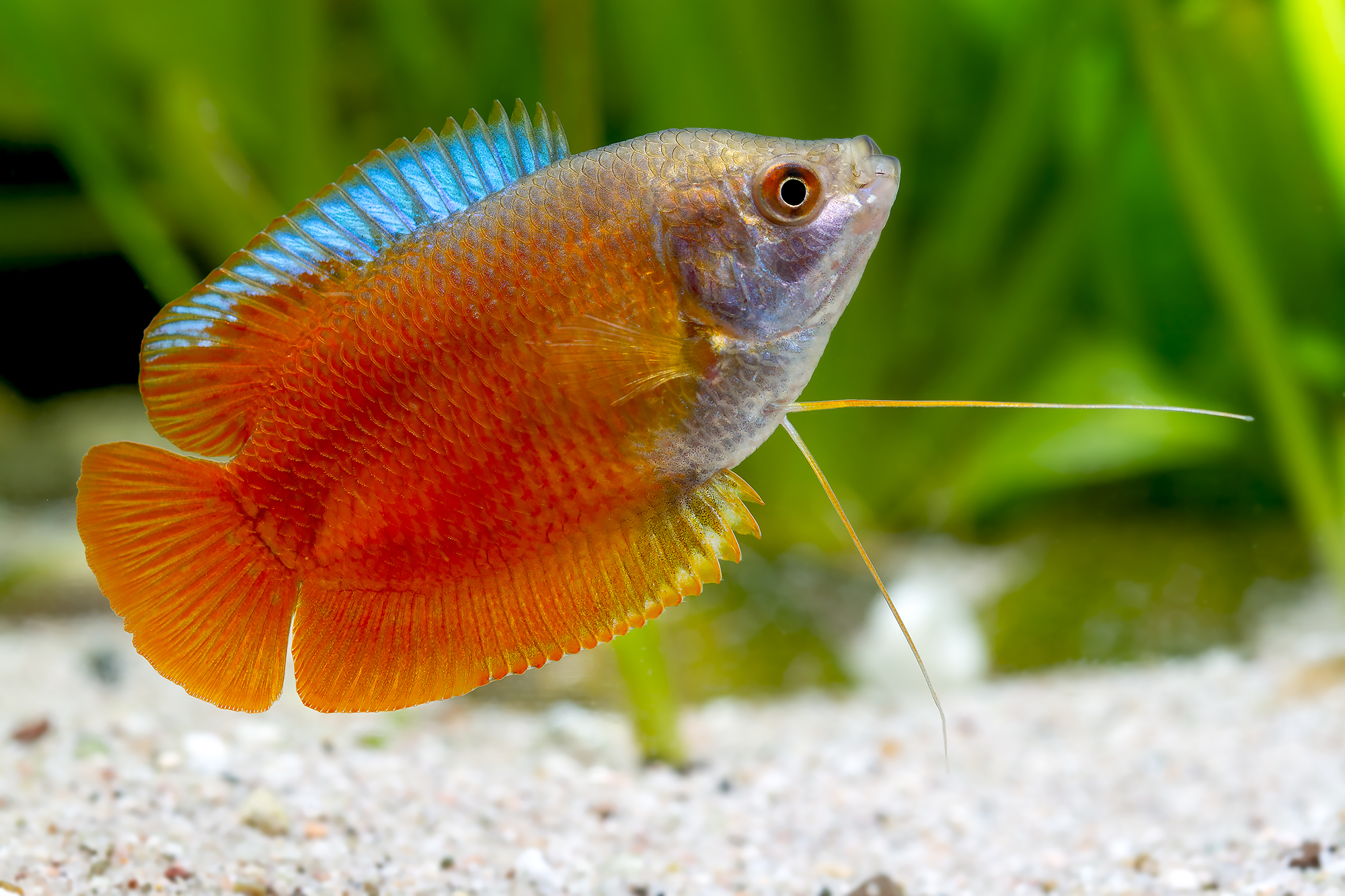
Flame Dwarf Gourami

Peaceful, by nature, Gouramis are an excellent addition to any community aquarium with fish of like temperament and size. Dwarf varieties only reach 2" in size. Though territorial at times, many Dwarf Gouramis do best when kept in groups, provided there are more females than males.

Originating from India, Bengal, and Bangladesh, wild Dwarf Gouramis are found in heavily vegetated waters. Here, they feed on small insects and larvae on the water's surface and algae that gathers on plants. In the home aquarium, they do best in highly filtered water with neutral pH and water hardness.

Feed flake, algae pellets, and frozen or freeze-dried foods, supplemented with an occasional live worm. They like open swimming areas with spots to hide amongst plants, decorations, or rocks. It is especially beneficial to have floating plants that cover part of the water's surface.

When bred, pairs of Dwarf Gouramis create spectacular bubble nests amongst plant leaves at the water's surface and engage in a delicate, graceful spawning process that lasts up to four hours. After spawning, however, the female needs to be removed from the aquarium and the male will care for the eggs. While defending his brood, a male Dwarf Gourami will become very aggressive towards other fish.

As with all fish, Dwarf Gouramis require excellent water conditions. They do not handle fluctuations in water parameters well. However, for any aquarist, Dwarf Gouramis are an essential aquarium addition.
Fish info

Care level: Moderate
Temperament: Peaceful
Adult size: 5.08
Life expectancy: 5
Fish type: Belontiidae
Color Form: Blue, Red
Leave your comments
Lastest on Fishs
  • Metynnis fasciatus (Striped Silver Dollar)

    Moderate
    Belontiidae
    The Striped Silver Dollar (Metynnis fasciatus) is a captivating, rare freshwater fish native to the Amazon basin. Known for its distinct vertical black stripes over a shimmering silver, disc-shaped body, this peaceful schooling fish is highly sought after by aquarists looking to add dynamic movement to large community aquariums.
  • Metynnis maculatus (Spotted Silver Dollar)

    Moderate
    Belontiidae
    The Spotted Silver Dollar (Metynnis maculatus) is a captivating, disc-shaped characin native to South America. Known for its striking silver body adorned with dark spots, this peaceful schooling fish adds dynamic movement to large aquariums. Though considered a rarity in the hobby, its hardy nature makes it highly rewarding.
  • Osteoglossum bicirrhosum (Silver Arowana)

    Difficult
    Belontiidae
    The Silver Arowana, occasionally referred to as the Gabelbart, is a majestic and ancient fish native to the Amazon Basin. Renowned for its metallic scales and unique surface-hunting behavior, it is highly prized among experienced aquarists who can accommodate its massive size and specialized care requirements.
  • Mormyrus kannume (Freshwater Dolphin / Tapir Trunkfish)

    Moderate - Difficult
    Belontiidae
    The Mormyrus kannume, commonly known as the Freshwater Dolphin or Tapir Trunkfish, is a fascinating oddball from the river basins of Africa. Renowned for its unique trunk-like snout and highly intelligent, inquisitive nature, this nocturnal species uses weak electrical impulses to navigate, making it a captivating choice for expert aquarists.
  • Pseudomugil furcatus (Forktail Blue-eye)

    Moderate
    Belontiidae
    The Forktail Blue-eye (Pseudomugil furcatus) is a captivating, highly active nano fish native to the rainforest streams of Papua New Guinea. Renowned for their striking neon blue eyes, bright yellow finnage, and peaceful schooling behavior, they have become incredibly popular additions to planted community aquariums among dedicated aquarists.
  • Hemigrammus caudovittatus (Flamingo Tetra)

    Easy
    Belontiidae
    The Flamingo Tetra, scientifically known as Hemigrammus caudovittatus, is a robust and lively freshwater fish native to South America. Known for its energetic schooling behavior and hardy nature, it makes an excellent addition to larger community aquariums, though its fin-nipping tendencies require careful selection of tank mates.
  • Rasbora trilineata (Scissortail Rasbora)

    Easy
    Belontiidae
    Originating from the fast-flowing streams of Southeast Asia, the Scissortail Rasbora is an active, schooling fish renowned for its striking, scissor-like tail movements. Their peaceful nature, hardy constitution, and sleek, torpedo-shaped bodies make them a highly popular and captivating addition to community freshwater aquariums.
  • Epalzeorhynchos bicolor (Red Tail Shark)

    Moderate
    Belontiidae
    The Red Tail Shark, native to Thailand, is a striking and highly popular freshwater fish. Known for its deep velvety black body and vibrant red tail, this semi-aggressive cyprinid adds dynamic movement and a touch of drama to sufficiently large, well-structured community aquariums.
  • Pao baileyi (Hairy Pufferfish)

    Moderate - Difficult
    Belontiidae
    The Hairy Pufferfish (Pao baileyi), native to the rocky rapids of the Mekong basin, is a highly unusual and captivating freshwater puffer. Known for its unique epidermal outgrowths resembling hairs, this aggressive ambush predator requires a dedicated, species-only setup but rewards keepers with fascinating, interactive, "water dog" behavior.
  • Badis ferrarisi (Ferrari's Badis)

    Moderate
    Belontiidae
    Badis ferrarisi, commonly known as Ferrari's Badis, is a rare and strikingly beautiful micro-predator native to Myanmar. Known for its brilliant red and black striped pattern, this small chameleon fish exhibits fascinating behaviors. Due to its specific dietary requirements and shy nature, it is a rewarding species for dedicated aquarists.
  • Dichotomyctere ocellatus (Figure 8 Pufferfish)

    Moderate
    Belontiidae
    The Figure 8 Pufferfish, native to Southeast Asia, is a captivating and highly intelligent species. Known for the distinctive markings on its back resembling the number eight, this slightly brackish water fish boasts an interactive personality, making it a beloved yet moderately challenging pet for dedicated aquarium enthusiasts.
  • Polypterus endlicheri (Endlicher's Bichir)

    Moderate
    Belontiidae
    Hailing from the rivers and swamps of Africa, Endlicher's Bichir, or the Saddled Bichir, is a fascinating ancient oddball. Known for its dinosaur-like appearance, prominent dorsal finlets, and striking dark vertical bands, this bottom-dwelling predator is highly prized by aquarists looking for a captivating, prehistoric centerpiece fish.
  • Nematobrycon palmeri (Emperor Tetra)

    Easy - Moderate
    Belontiidae
    The Emperor Tetra (Nematobrycon palmeri) is a stunning, peaceful freshwater fish native to the Atrato and San Juan river basins in Colombia. Known for its regal purple and blue iridescence, striking black lateral stripe, and unique trident-shaped tail in males, it is a highly popular choice for planted community aquariums.
  • Gnathonemus petersii (Elephant Trunk Fish)

    Moderate - Difficult
    Belontiidae
    Originating from the murky rivers of West and Central Africa, the Elephant Trunk Fish is a fascinating oddball species. Known for its trunk-like appendage used to forage and its unique ability to generate weak electrical fields, it remains a captivating but demanding choice for experienced freshwater aquarists.
  • Oliotius oligolepis (Island Barb)

    Easy
    Belontiidae
    The Island Barb, also known as the Checkered Barb, is a peaceful and active schooling fish native to Indonesia. Known for its striking checkerboard pattern and vibrant reddish fins, this hardy cyprinid is incredibly popular among both beginner and experienced aquarists looking to add life to planted community tanks.
  • Eirmotus octozona (Eight-banded Barb)

    Moderate
    Belontiidae
    The Eight-banded Barb is a peaceful, shy, and captivating schooling fish native to the blackwater swamps of Southeast Asia. Known for its striking vertical black stripes over a semi-transparent body, it is a highly sought-after species for aquarists looking to build a serene, planted, or biotope aquarium.