AquaLibs presents AquaRank Discover the world’s leading aquascapers

Explore transparent rankings built from published results across the world’s leading aquascaping contests.

Hygrophila lancea 'Araguaia' (Araguaia Hygrophila)

Identification

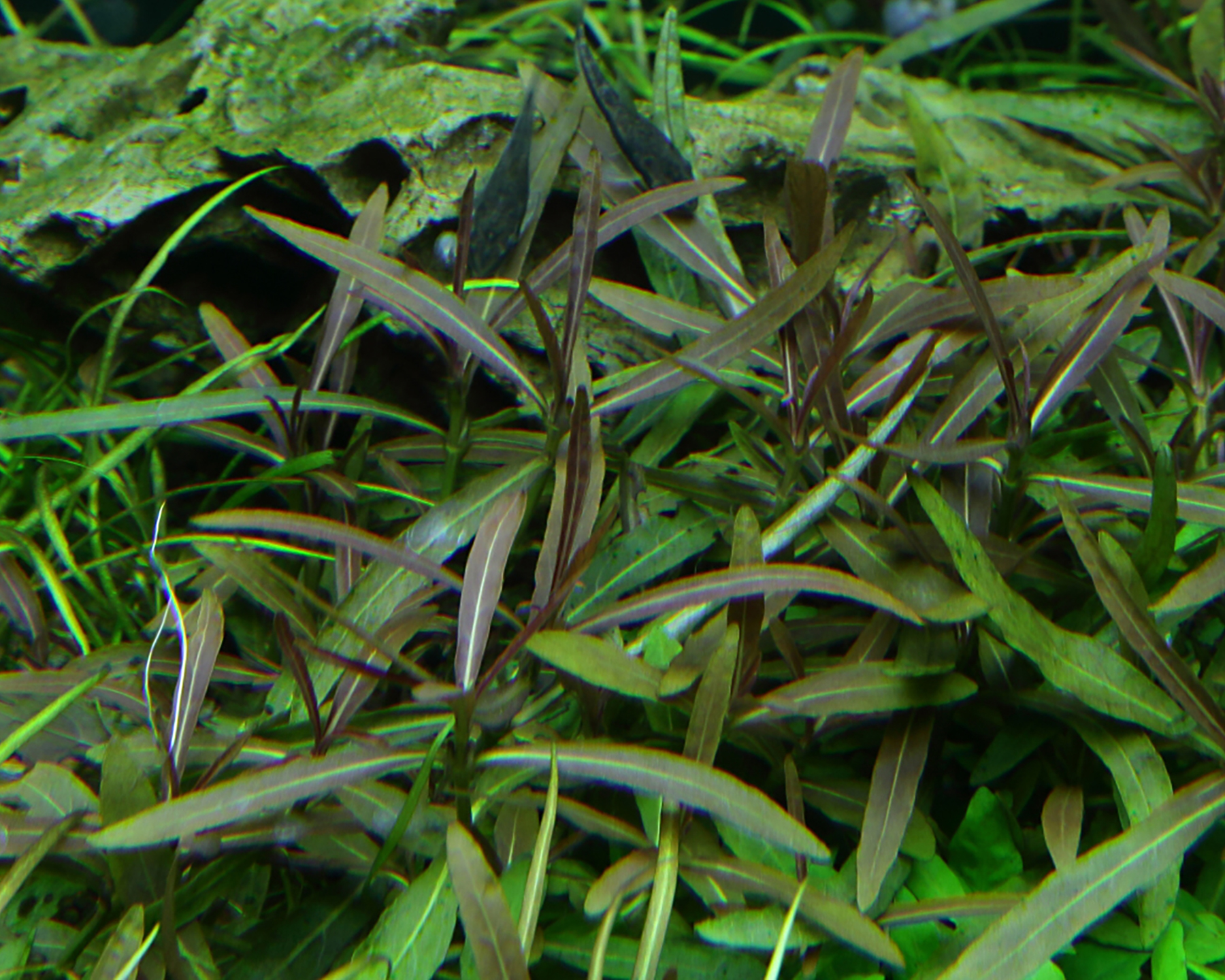
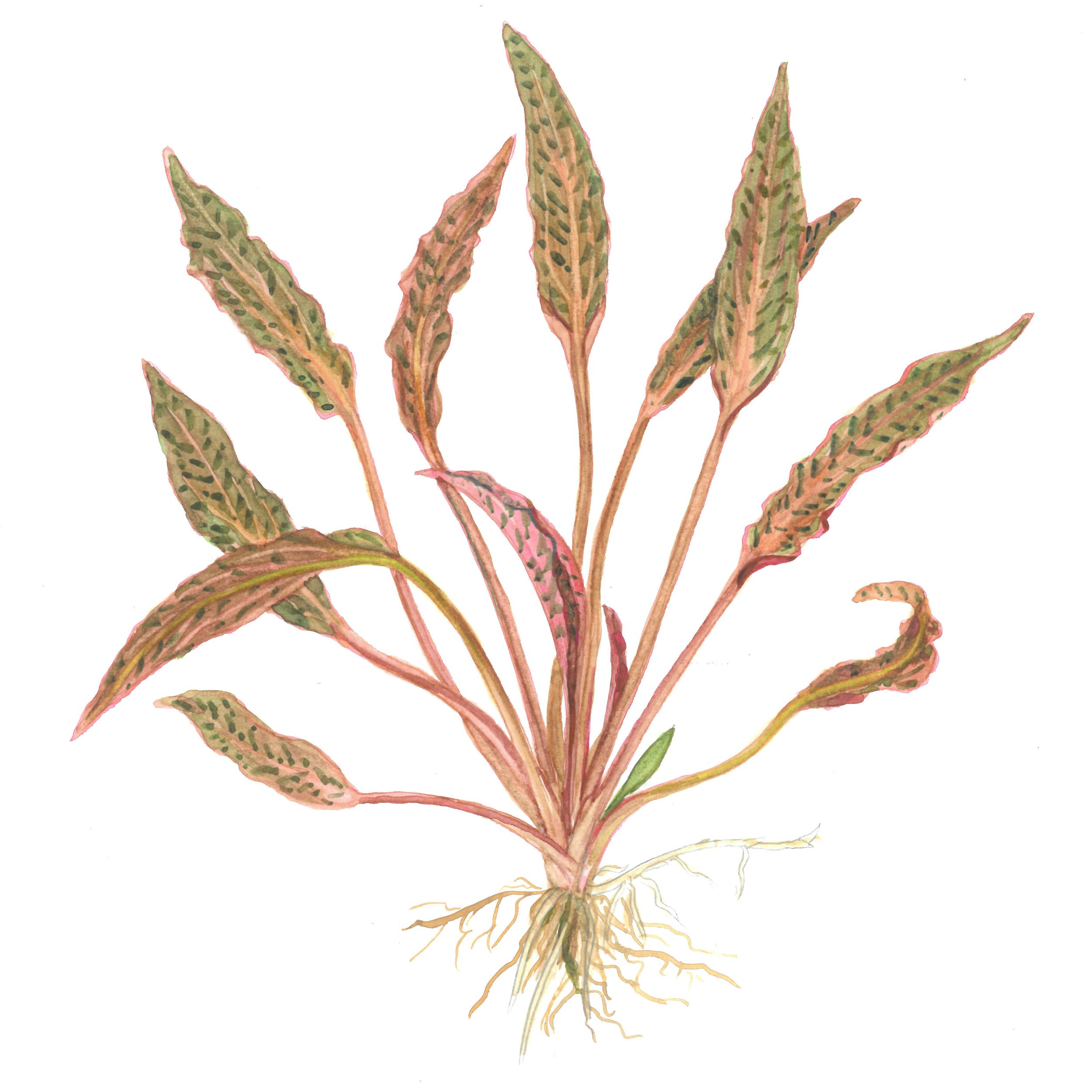
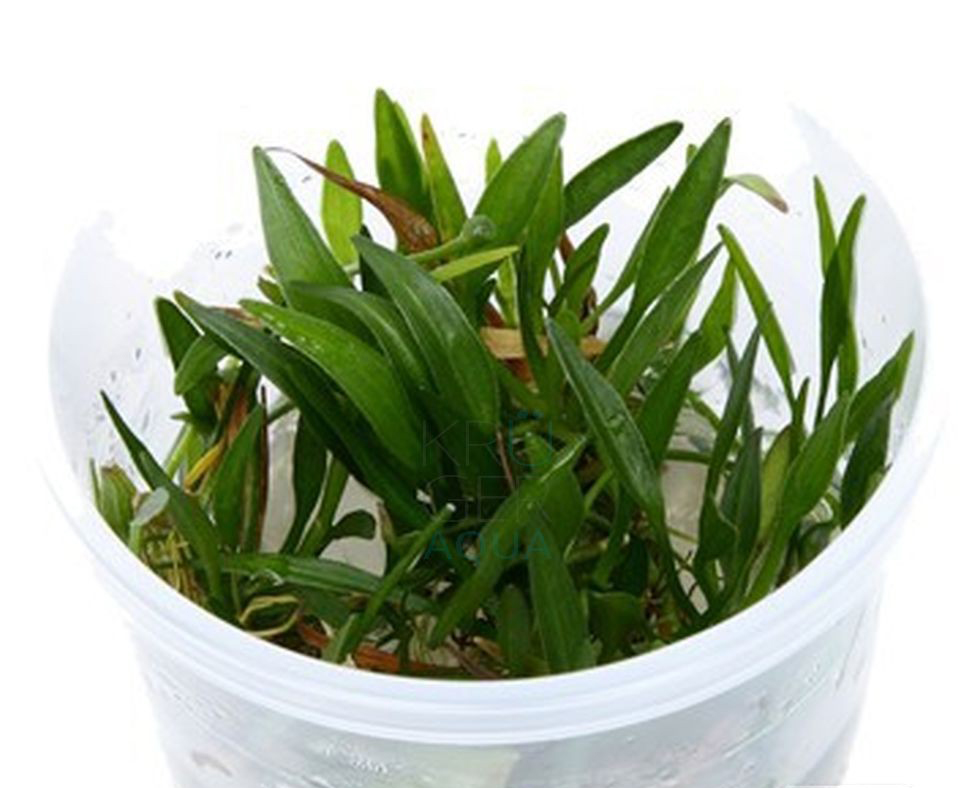
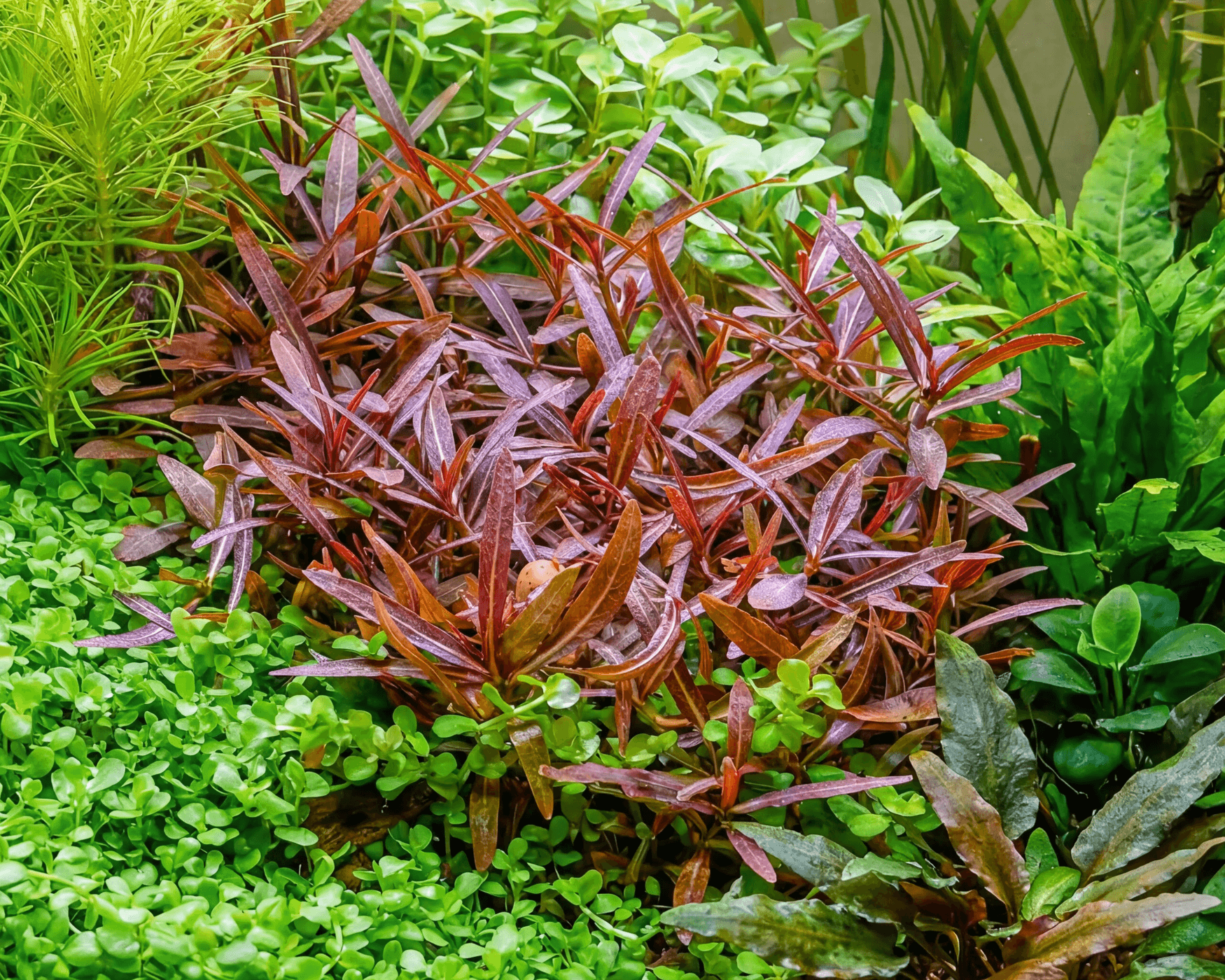
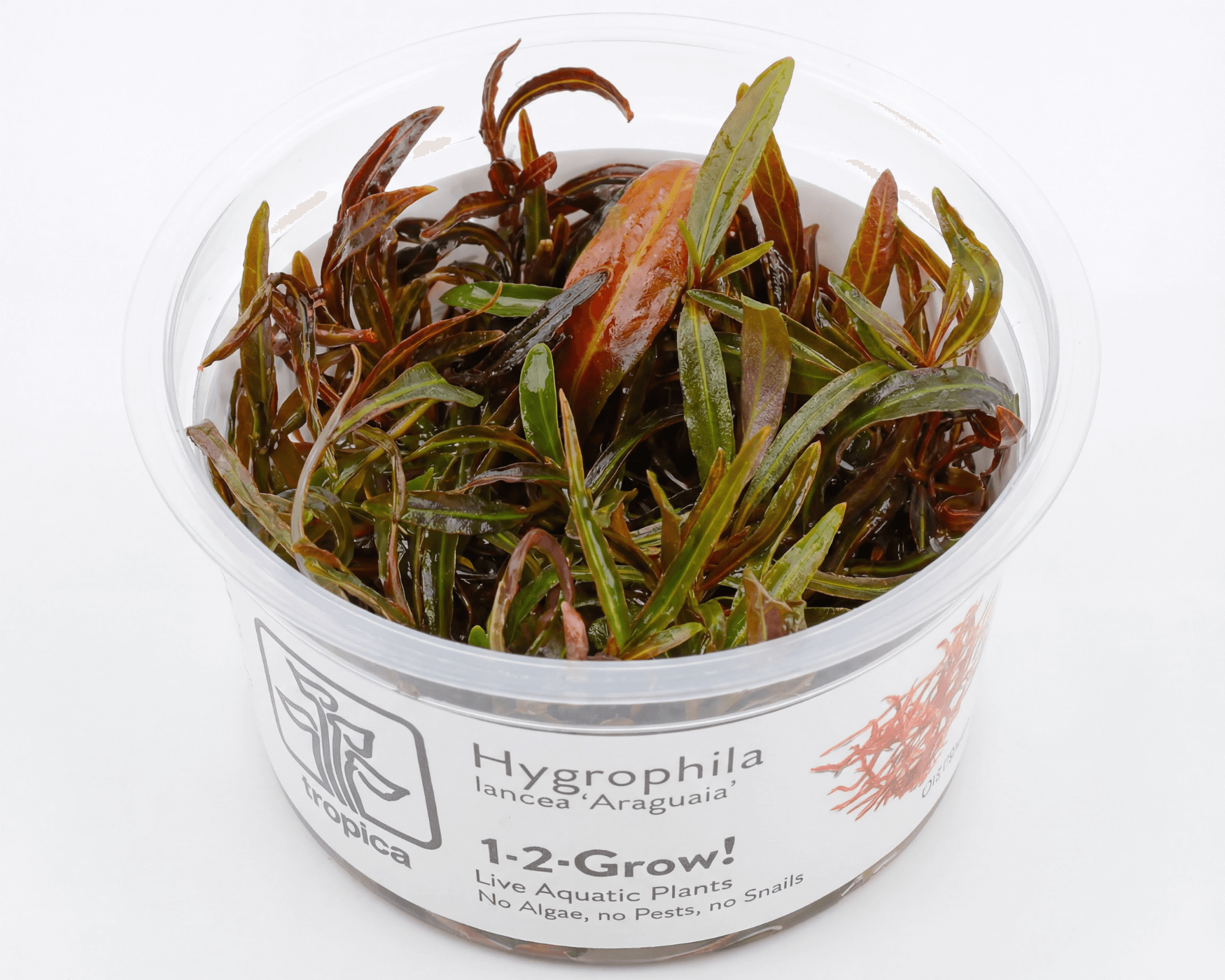
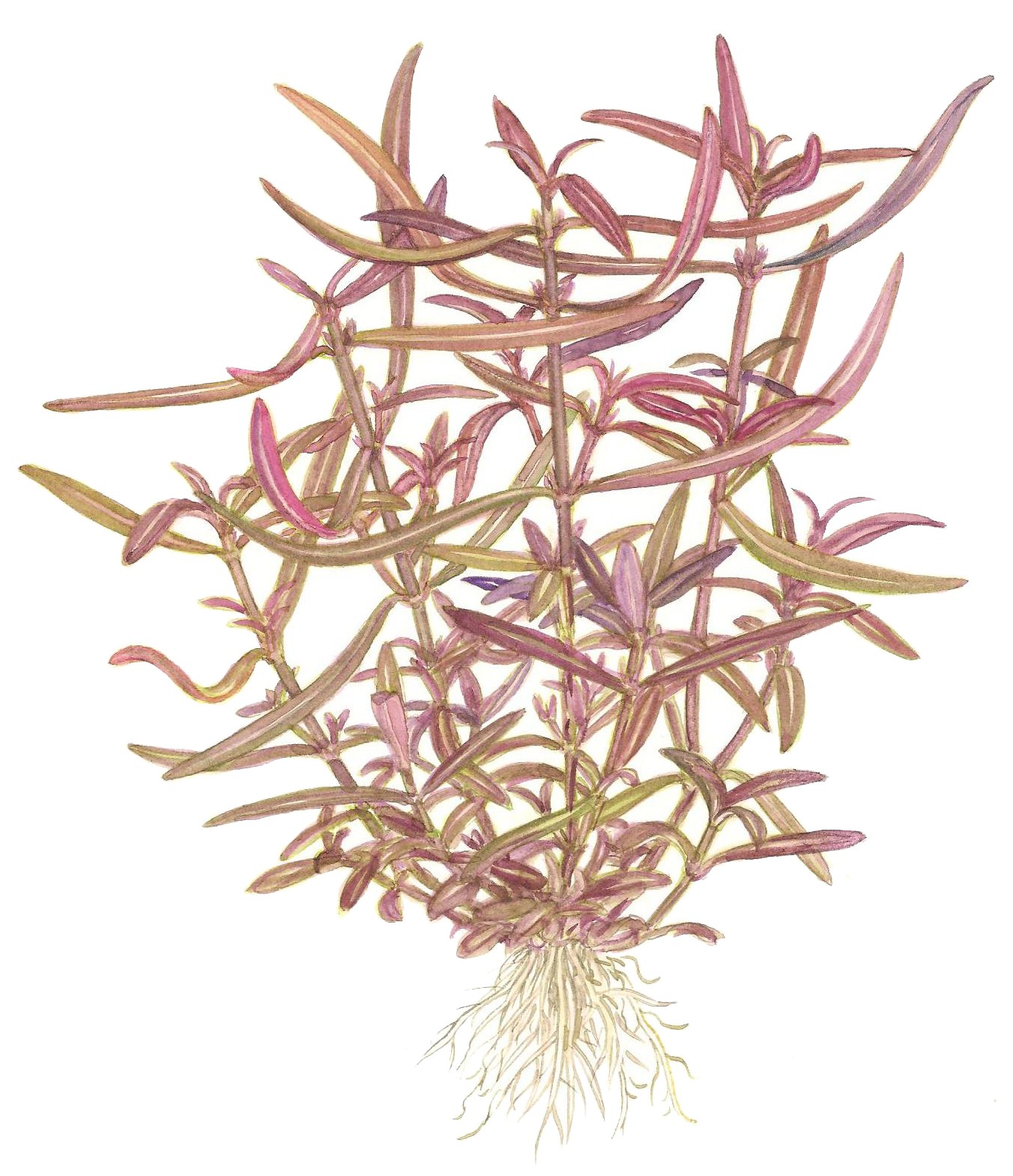
The plant is best treated as Hygrophila lancea 'Araguaia', a cultivated aquarium form sold under the trade name Araguaia. Its narrow, lance-shaped leaves are borne in opposite pairs on branching stems. Leaf color may range from green and bronze to red or pink depending on light, nutrients, and growth conditions. The cultivar designation and relationship to wild populations should not be assumed to establish a precise natural origin.

Identification

Placement and planting

Use it as a midground stem group in small to large aquariums. Separate the supplied stems and plant them individually with a small gap between plants, burying the lower nodes while keeping leaves above the substrate. Avoid planting the entire mass as one tight clump, since poor circulation around the stems can encourage decay and shading.
Placement and planting

Light and carbon

Strong aquarium lighting is generally needed to maintain the most intense red and pink tones and compact growth. Under weaker light, stems may become longer and greener. Carbon dioxide is beneficial and improves growth, color, and recovery after trimming, although the plant can survive with lower carbon availability if light and nutrient levels are kept moderate.
Light and carbon

Substrate and nutrients

A nutrient-containing substrate or regular complete water-column fertilization supports active growth. Provide nitrogen, potassium, and trace elements without allowing nutrients to become severely depleted. Stable conditions are preferable to large fluctuations. Remove damaged or melting leaves and check that neighboring plants do not shade the lower stems.

Trimming and propagation

When stems reach the desired height, cut just above a healthy node. The remaining rooted portion can produce side shoots, while the healthy tops can be replanted as new stems. Repeated topping and replanting gradually creates a dense group. Remove weak, bare lower sections when they no longer produce useful shoots.

Identification confidence

Confidence is moderate to high for the aquarium trade identity Hygrophila lancea 'Araguaia', based on the supplied label and visible narrow-leaved red stem form. The images alone cannot verify a formal cultivar description, wild provenance, or whether the trade name is applied consistently by all suppliers.

Plant info

  • Colors: Green, Red, Pink
  • Difficulty: Medium
  • Origin: Cultivar
  • Usage: Middleground
  • Type: Stem plant
  • Growth rate: Fast
  • Height: 10-30 cm
  • Light demand: High
  • CO2: Medium
Leave your comments
Latest on Plants
  • Cryptocoryne parva (Dwarf Water Trumpet)

    Cryptocoryne parva (Dwarf Water Trumpet)

    Medium
    Foreground
    Cryptocoryne parva is a small, slow-growing rosette plant suited to the foreground of freshwater aquariums. It forms narrow green leaves from a compact crown and remains one of the smallest commonly cultivated Cryptocoryne species. It is generally adaptable, but steady conditions and a nutrient-rich substrate help it establish. Like other Cryptocoryne, it may shed older leaves after planting or changes in water conditions before producing new submerged growth.
  • Gratiola viscidula (Sticky hedgehyssop)

    Gratiola viscidula (Sticky hedgehyssop)

    Medium
    Foreground
    Gratiola viscidula is a small North American stem plant sold in the aquarium trade as Klebriges Gnadenkraut, or sticky hedgehyssop. Its narrow leaves form dense green shoots that can be maintained as a low foreground or short midground planting. The aquarium form is typically grown fully submerged, where regular trimming encourages branching and a compact appearance. Identification from trade photographs alone is not absolute, so the stated name should be retained when purchasing from a reputable source.
  • Taxiphyllum barbieri (Java moss)

    Taxiphyllum barbieri (Java moss)

    Easy
    On rock or root
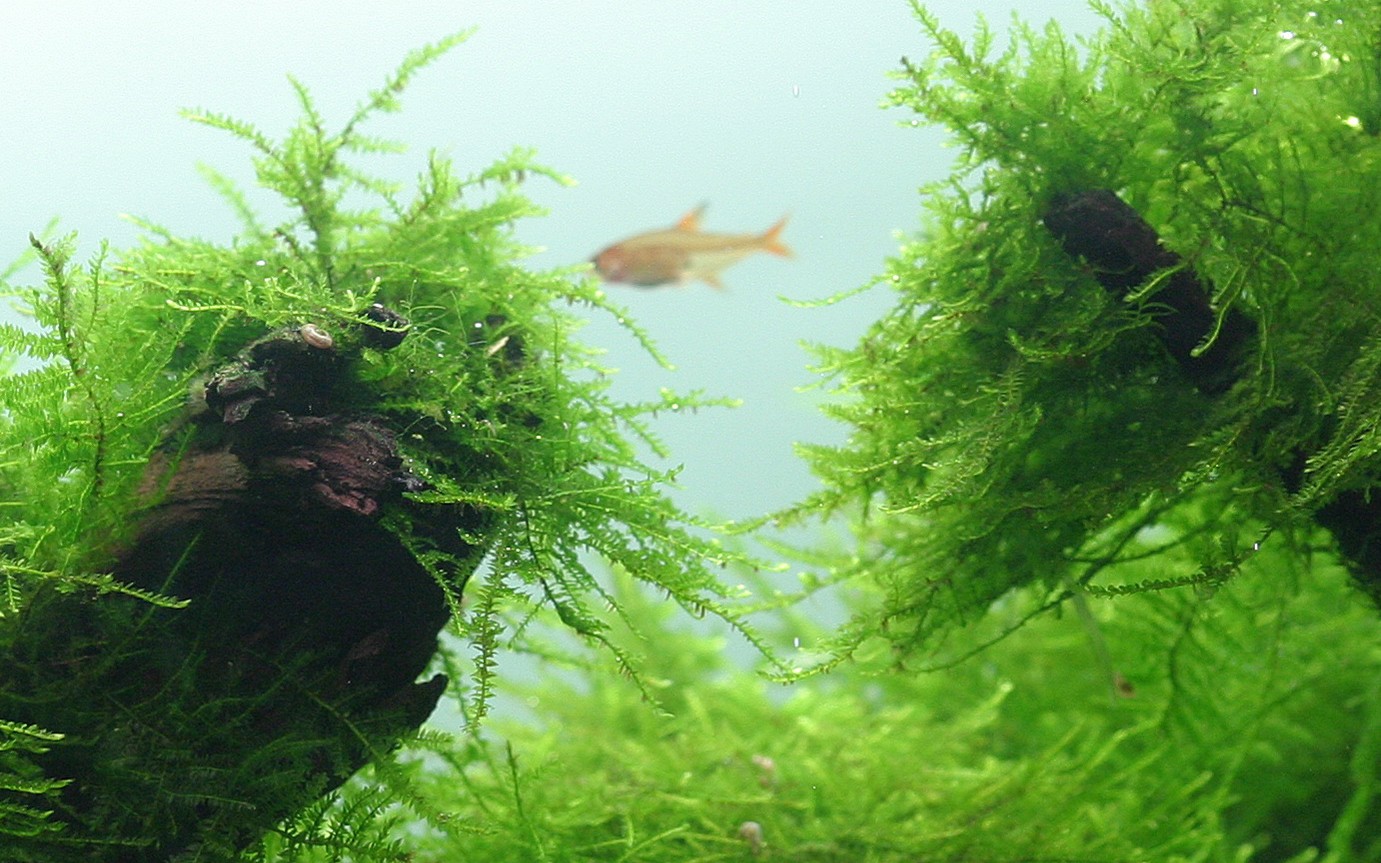
    Java moss is a hardy aquatic moss with finely branched, trailing shoots that attach readily to wood, rock and other surfaces. It tolerates low light and does not require a nutrient-rich substrate, making it suitable for beginners and low-tech aquariums. The supplied source identifies it as Taxiphyllum barbieri; visual appearance alone cannot reliably distinguish this moss from several similar aquarium mosses.
  • Rotala macrandra 'Japan' (Japanese loosestrife)

    Rotala macrandra 'Japan' (Japanese loosestrife)

    Advanced
    Background
    Rotala macrandra 'Japan' is a red-leaved aquarium stem plant sold under the common name Japanese loosestrife. It is generally regarded as a demanding form of Rotala macrandra and needs strong light, reliable carbon dioxide and consistent nutrition to maintain compact growth and good coloration. The supplied images support this identification, but cultivar names in aquarium commerce are not always standardized, so the exact form cannot be confirmed from images alone.
  • Pogostemon deccanensis (Indian star plant)

    Pogostemon deccanensis (Indian star plant)

    Advanced
    Background
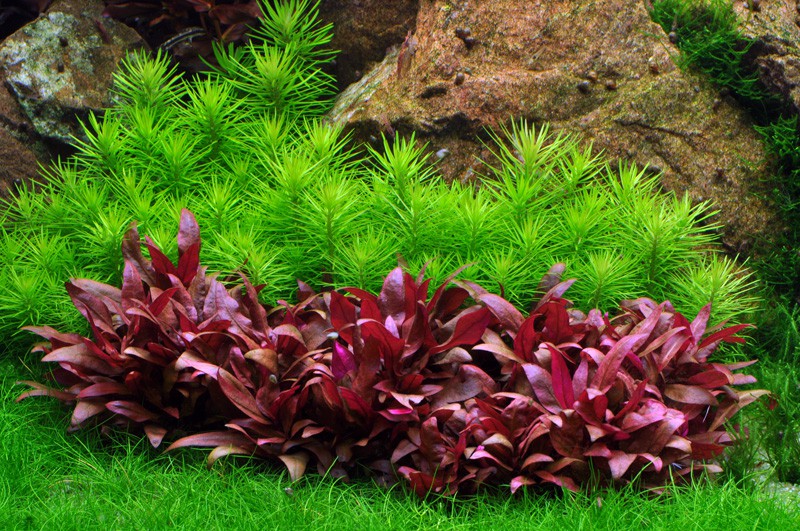
    Pogostemon deccanensis is a bright green Asian stem plant with narrow leaves arranged in dense whorls around upright stems, creating a star-like appearance. It is best suited to planted aquariums with strong lighting, reliable carbon dioxide and regular fertilisation. Healthy growth depends on stable conditions, while trimming encourages branching and keeps dense groups from shading lower stems.
  • Hygrophila pinnatifida

    Hygrophila pinnatifida

    Medium
    On rock or root
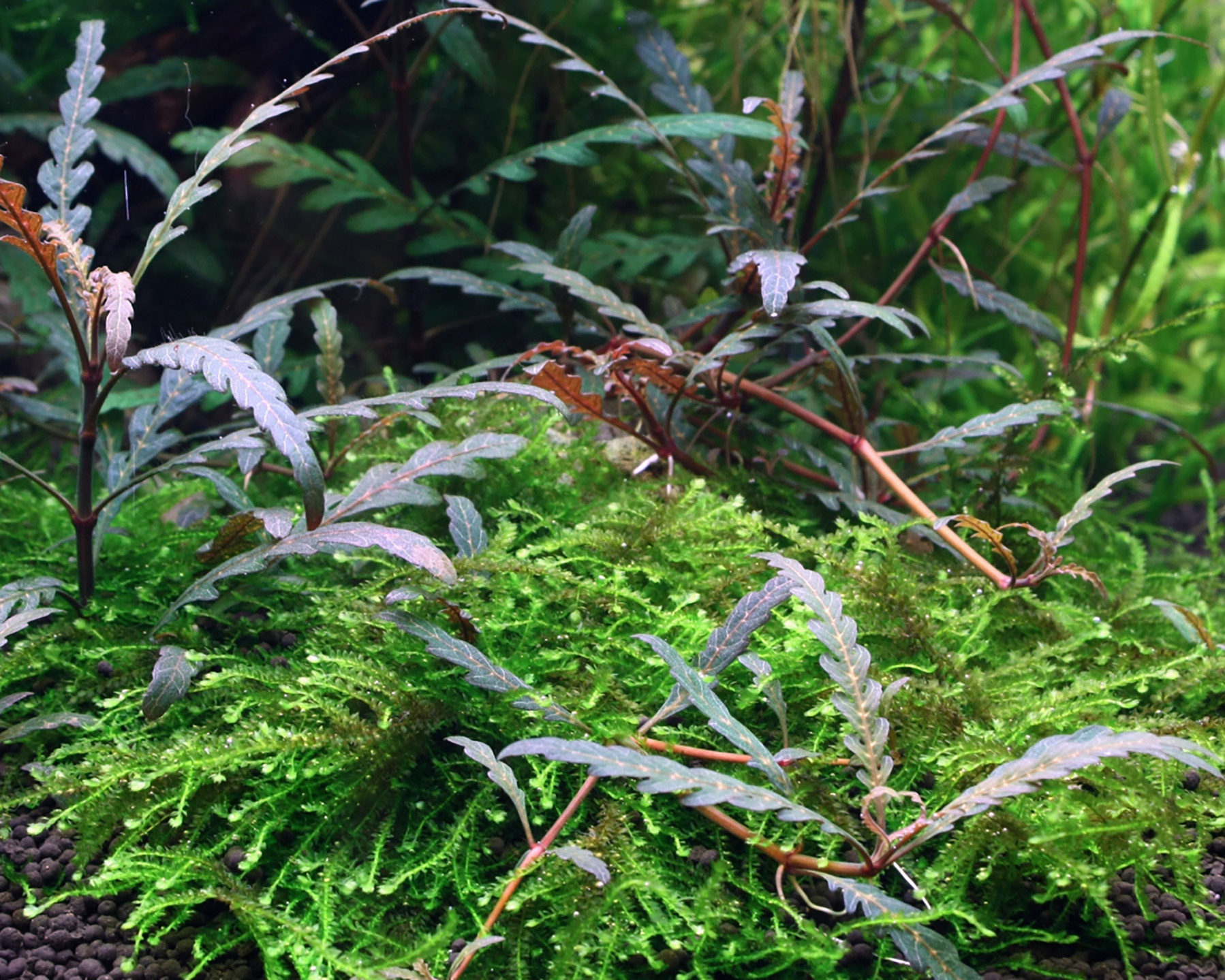
    Hygrophila pinnatifida is a distinctive Asian stem plant recognized by its deeply lobed leaves, contrasting veins and reddish stems. In aquariums it can grow as an upright plant or be trained across hardscape when side shoots are secured to rock or wood. Color and compactness vary with light, nutrients and carbon availability. The supplied image is consistent with this identification, although cultivar or regional form cannot be confirmed from an image alone.
  • Hygrophila lancea 'Araguaia'

    Hygrophila lancea 'Araguaia'

    Medium
    Middleground
    Hygrophila lancea 'Araguaia' is a narrow-leaved stem plant valued for its green to reddish-brown foliage and upright, branching growth. It is commonly sold under this name, although the identity and relationship of the aquarium form to formally described Hygrophila lancea should be treated cautiously. With strong light, adequate nutrients and carbon dioxide, it develops deeper coloration and compact growth. Regular trimming encourages side shoots and helps maintain a dense group in the middle or rear of an aquarium.
  • Hygrophila difformis (Water Wisteria)

    Hygrophila difformis (Water Wisteria)

    Easy
    Background
    Hygrophila difformis is a fast-growing stem plant with distinctive deeply divided submerged leaves. It is commonly sold as water wisteria and is suitable for beginners when provided with adequate light and nutrients. Young tissue-culture plants may initially have emersed-form leaves, which can change substantially after submersion. Regular trimming helps maintain a compact group and encourages branching.
  • Hottonia palustris (Water Violet)

    Hottonia palustris (Water Violet)

    Easy
    Background
    Hottonia palustris is a delicate European stem plant with finely divided, feather-like leaves arranged along upright shoots. It is sold by Tropica as a 1-2-GROW! InVitro plant and is suitable for the background or middle of a planted aquarium. The supplied label supports the identification, although aquarium-grown specimens can vary in leaf form during transition from emersed to submerged growth.
  • Cryptocoryne nurii (Heart-leaf Water Trumpet)

    Cryptocoryne nurii (Heart-leaf Water Trumpet)

    Medium
    Foreground
    Cryptocoryne nurii is a small, slow-growing rosette plant from Asia, valued for its textured, often wavy leaves and tolerance of subdued aquarium lighting. The supplied label supports identification as C. nurii, although the exact cultivated form cannot be confirmed from the available material. It is best planted in the foreground or middle of a mature aquarium and should be disturbed as little as possible after planting.
  • Helanthium tenellum 'Green' (Green Dwarf Chain Sword)

    Helanthium tenellum 'Green' (Green Dwarf Chain Sword)

    Easy
    Foreground
    Helanthium tenellum 'Green' is a small, grass-like rosette plant used mainly in the foreground of freshwater aquariums. It spreads through slender runners and can form a low, connected carpet when planted in suitable substrate. The supplied source identifies it as the green cultivar, although cultivation conditions can make its leaf width and height variable. It is generally adaptable, but stronger light, adequate nutrients and added carbon support denser growth.
  • Najas guadalupensis 'Guppy Grass' (Guppy Grass)

    Najas guadalupensis 'Guppy Grass' (Guppy Grass)

    Easy
    Supporting plants
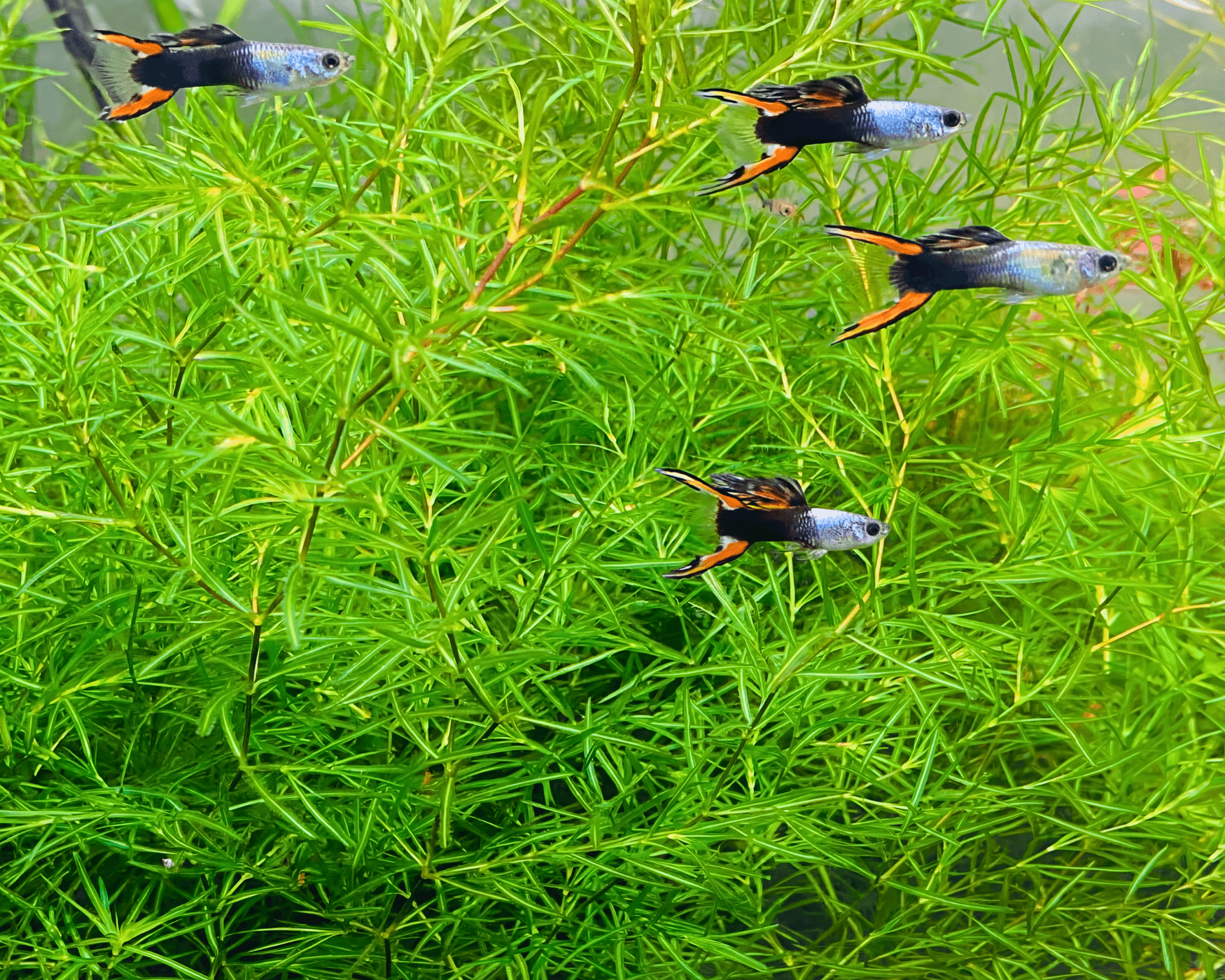
    Guppy Grass is a fast-growing, delicate submerged stem plant identified here as Najas guadalupensis 'Guppy Grass'. It produces narrow, flexible green leaves along branching stems and forms dense cover for small fish and fry. It is generally undemanding, grows floating or planted, and can quickly fill open water. The exact horticultural distinction of the quoted form cannot be confirmed from the supplied material alone.
  • Helanthium bolivianum 'Quadricostatus' (Dwarf Chain Sword)

    Helanthium bolivianum 'Quadricostatus' (Dwarf Chain Sword)

    Easy
    Foreground
    Helanthium bolivianum 'Quadricostatus' is a small rosette plant used mainly in the foreground of planted aquariums. It produces narrow, bright-green leaves and can spread by runners to form a low carpet or grouped ground cover. The supplied source identifies it as this cultivar; aquarium plants sold under similar chain-sword names can be difficult to distinguish without a verified specimen, so the identification is treated as probable rather than definitive.
  • Cryptocoryne wendtii 'Green' (Green wendtii water trumpet)

    Cryptocoryne wendtii 'Green' (Green wendtii water trumpet)

    Easy
    Middleground
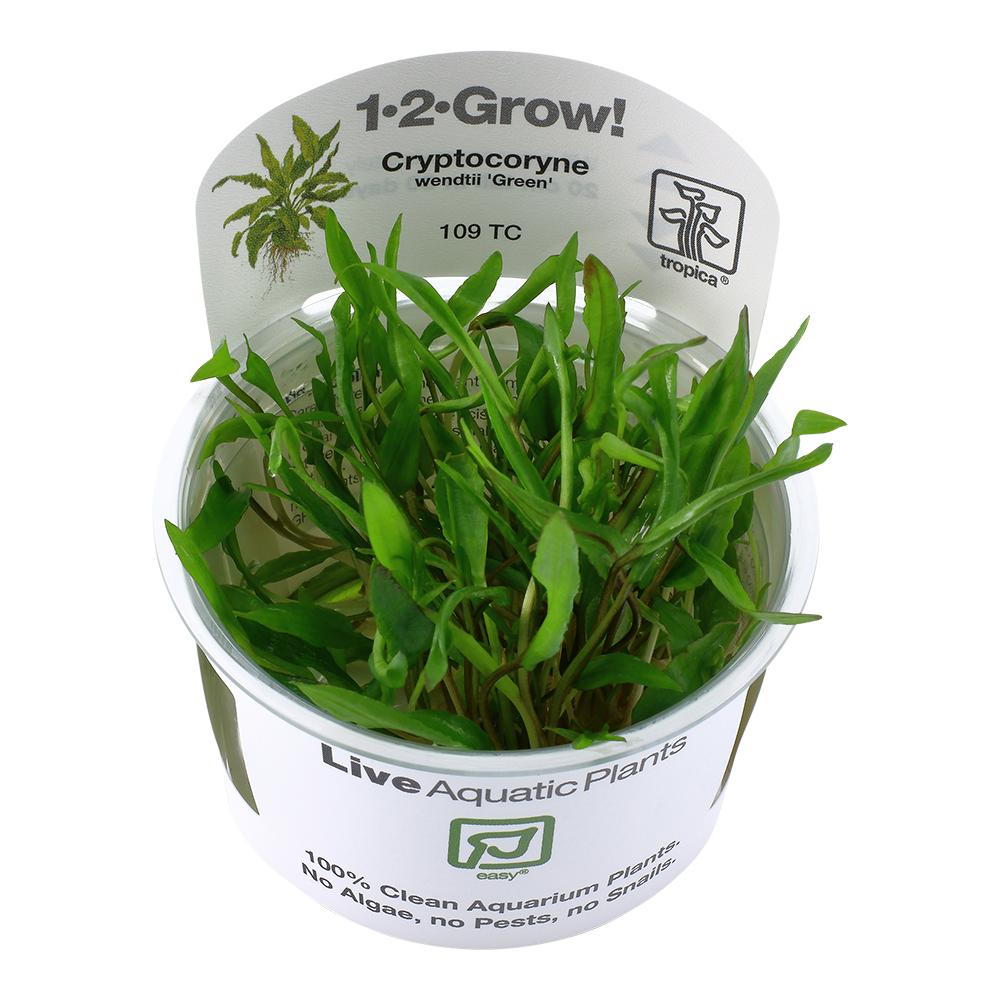
    Cryptocoryne wendtii 'Green' is a cultivated green form of the adaptable wendtii water trumpet. It develops a compact rosette of narrow to moderately broad, gently textured leaves and is suitable for many freshwater community aquariums. It grows from a rooted crown and generally performs best when left undisturbed in a nutrient-containing substrate. The identification follows the supplied label; cultivar boundaries within commercially sold Cryptocoryne wendtii forms can be difficult to verify from photographs alone.
  • Utricularia graminifolia (Grassy water hose)

    Utricularia graminifolia (Grassy water hose)

    Advanced
    Foreground
    Utricularia graminifolia is a small aquatic bladderwort valued for its fine, grass-like foliage and low carpet-forming habit. It is a carnivorous plant with minute bladder traps, but these do not pose a practical risk to aquarium fish or shrimp. This species is best suited to established, stable aquariums where strong light, carbon dioxide and consistent nutrition support dense growth.
  • Eleocharis acicularis (Dwarf Hairgrass)

    Eleocharis acicularis (Dwarf Hairgrass)

    Medium
    Foreground
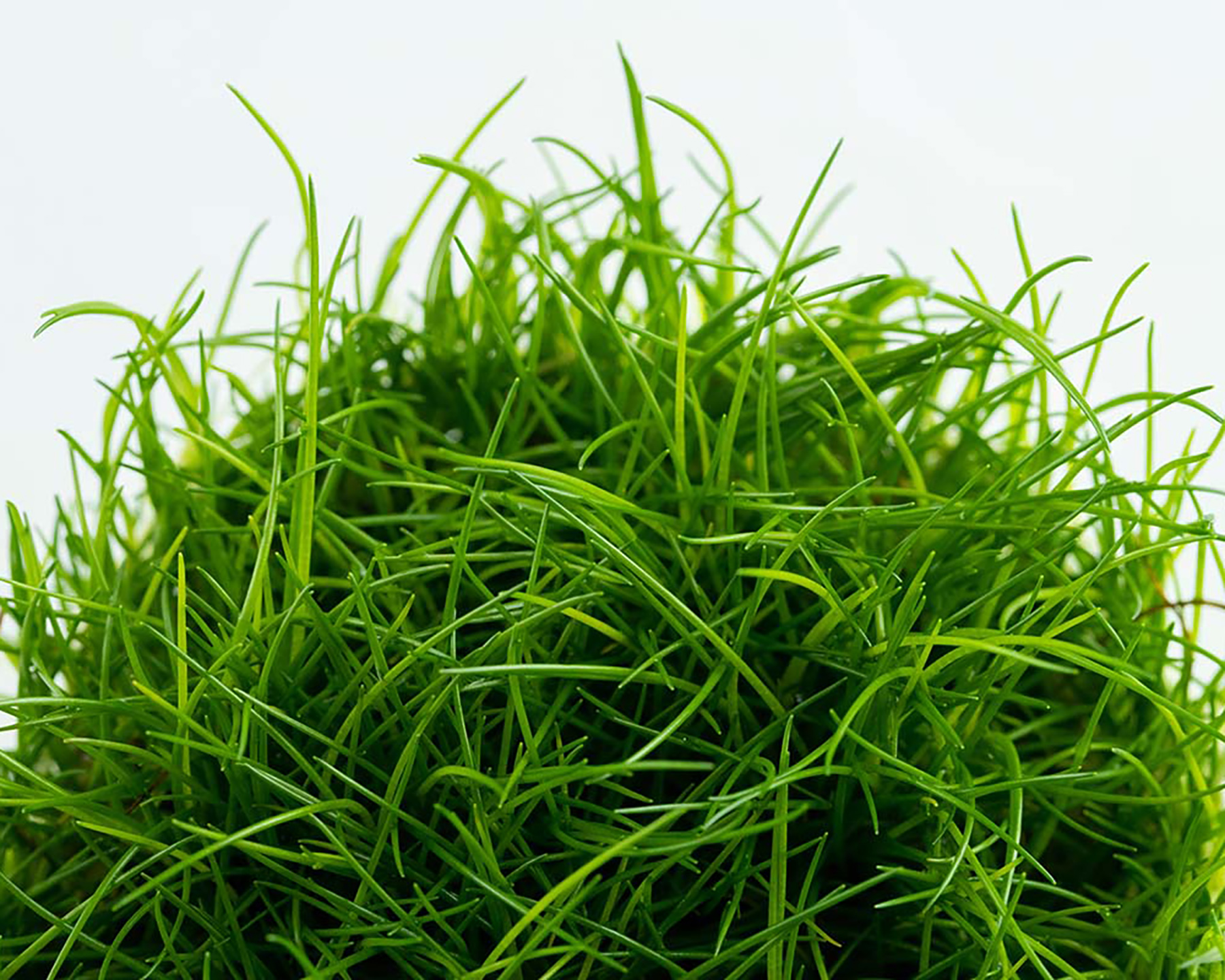
    Eleocharis acicularis is a fine-leaved sedge used as a foreground carpeting plant in freshwater aquariums. It spreads through slender runners and can form a low, grass-like cover when given suitable light, nutrients, and stable conditions. The supplied 1 2 GROW! material is labelled E. acicularis; confirmation of the exact commercial form from photographs alone is limited.